Gravel Bike Groupsets
SRAM Red XPLR Review: A 13-Speed Gravel Groupset With a Wider Range
SRAM Red XPLR moves to 13 speeds with a 10-46 cassette and a frame-mounted rear derailleur. Here is how it rides and who it suits.
Introduction
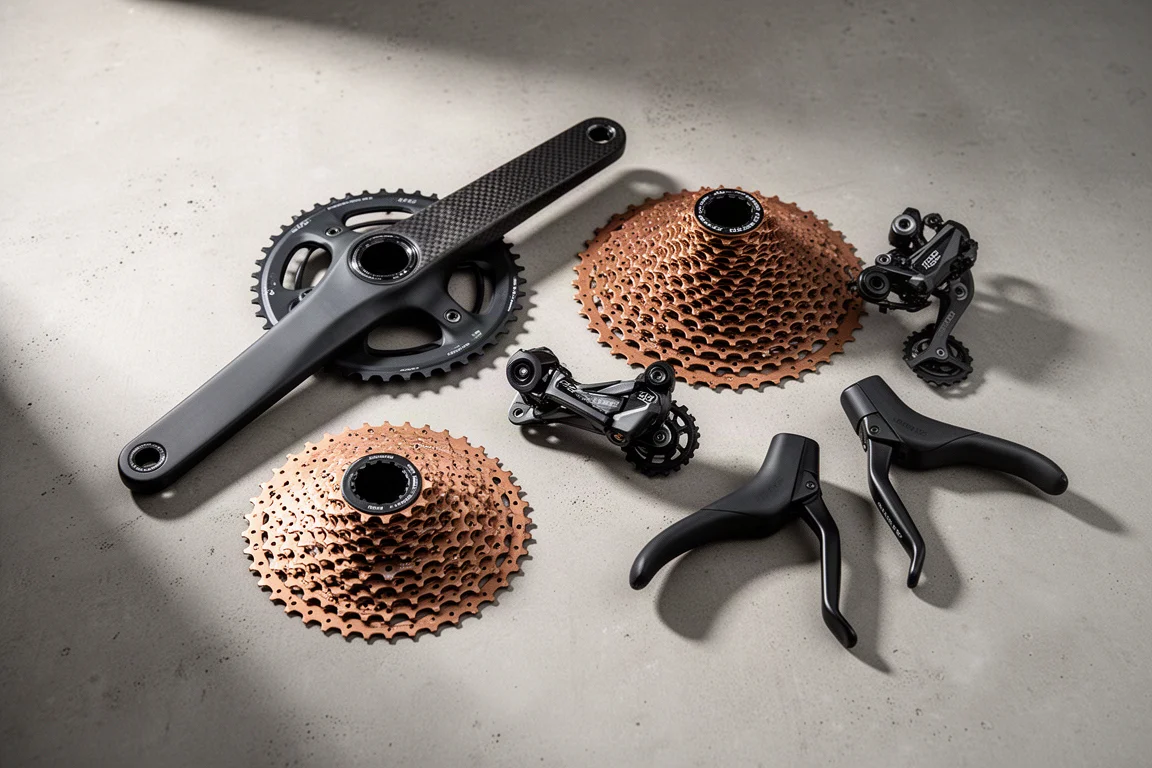
SRAM’s Red XPLR gravel groupset now runs 13 speeds. The headline changes are a wider 10-46 cassette and a rear derailleur that bolts directly to the frame instead of hanging from a replaceable mech hanger. The groupset was ridden over three days across the Tyrol region of Austria and into southern Germany, finishing in Munich, on a mix of smooth gravel tracks, long alpine climbs, forest roads and one genuinely rocky descent.
The thinking behind the extra gear is straightforward. A 13-speed cassette lets SRAM extend the range at the easier end of the block while keeping the spacing between individual sprockets the same as before. In practice that means an easier climbing gear without the large jumps between ratios that usually come with a wider cassette.
The test build was a Canyon Grail CFR with 40mm slick tyres, a fast gravel platform and a reasonable match for the riding this groupset is aimed at. What follows is what stood out over three days, and what is worth checking before you commit.
Who the SRAM Red XPLR Groupset Is For
This groupset suits riders who already own, or are buying, a modern gravel frame with a UDH dropout, because the derailleur mounting standard is a hard requirement. It is also aimed at riders who want a wide gear range from a single chainring setup but are not willing to accept big steps between gears.
It is a good fit for mixed-surface riding where you move between tarmac, smooth gravel and steeper loose climbs in the same ride. The brake and hood design comes from SRAM’s Red AXS road groupset, so riders who already like that lever shape will feel at home straight away.
It is less relevant if you want the widest range available, or if your frame predates the UDH standard. Older bikes cannot take the new rear derailleur, which limits the upgrade path considerably.
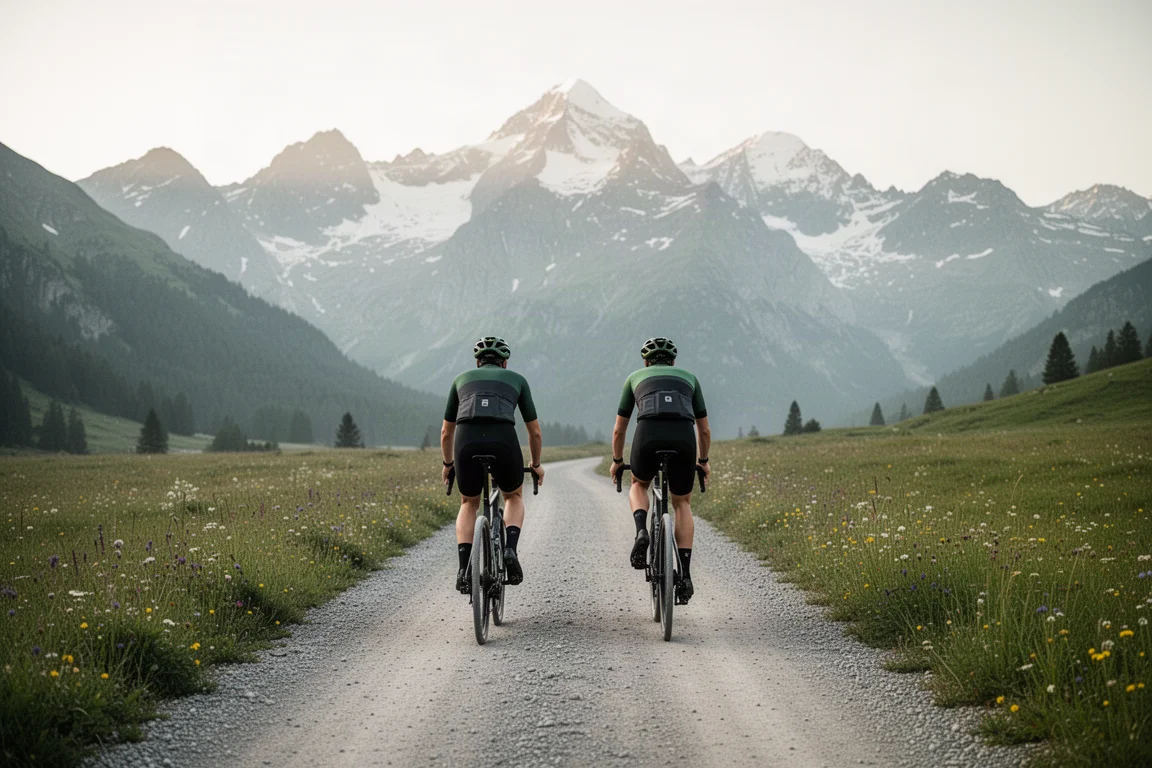
Riders who mostly spin along fast, smooth gravel will still appreciate the drivetrain, but the extra climbing gear matters most on sustained alpine ascents and steep loose pitches.
Main Strengths
Three areas stood out over the course of the ride.
A 13-Speed Cassette With a Wider Range
The new cassette runs from 10 to 46 teeth, compared with 10 to 44 on the previous XPLR cassette. It is the first Red-level cassette in the range and is considerably lighter than the Force and Rival equivalents.
Moving to 13 speeds did not require a narrower chain. The chain is the same as the 12-speed Red AXS and the existing XPLR groupsets, and the spacing between sprockets is unchanged. SRAM has used the extra sprocket to add range rather than to squeeze in more ratios, which is why the cadence steps across the block stay smooth and predictable.
There is only one cassette option, the 10-46. Riders hoping for a 13-speed 10-44, or a wider 10-48, will not find one in this groupset.
Shifting Speed and the Frame-Mounted Derailleur
The rear derailleur borrows its mounting approach from SRAM’s mountain bike Transmission groupset. It attaches directly to the frame, which removes the replaceable mech hanger from the system entirely. Mech hangers bend easily, whether in transit or when a bike goes down, and they are designed to break as a sacrificial part. Taking that link out of the component chain makes the interface between derailleur and frame more robust and more precise.
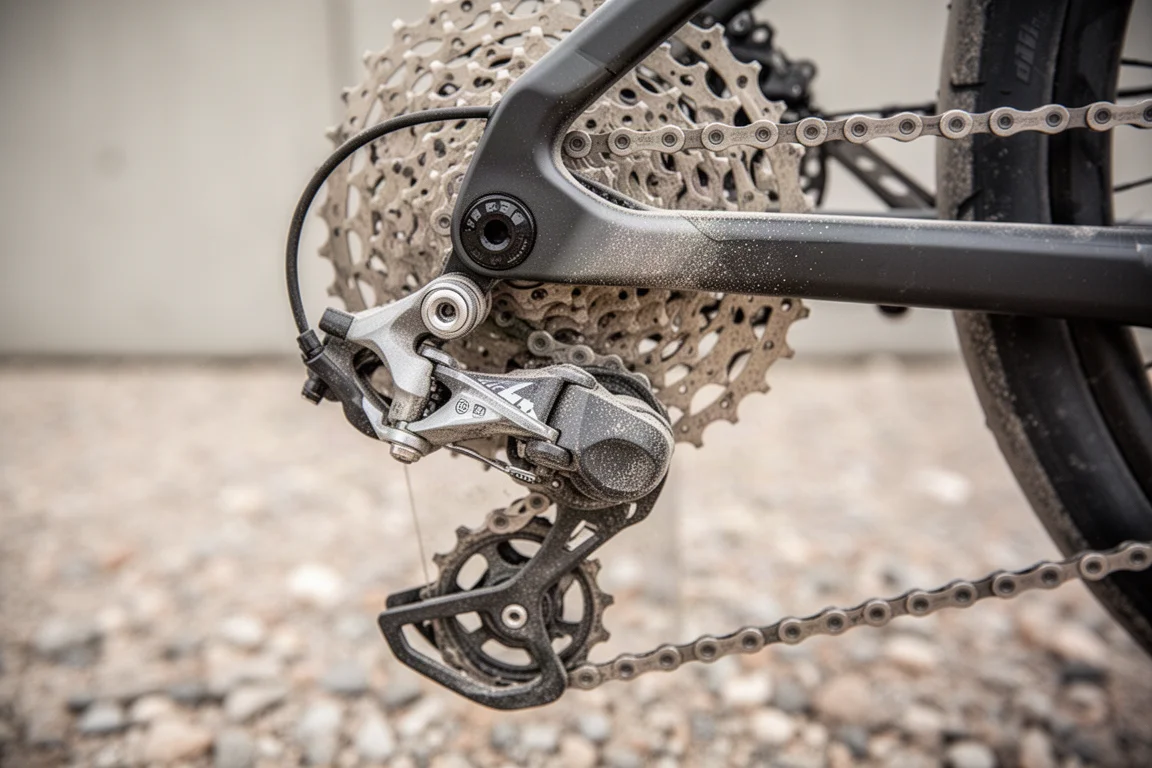
The new derailleur looks similar to the mountain bike version but is tuned differently. Where the mountain bike unit prioritises shifting under load, this one is optimised for fast shifting, and SRAM claims it is about as quick as the current XPLR groupset. A stronger spring clutch improves chain retention, and oversized jockey wheels are used to improve chain efficiency.
Setup is simpler too. There are no high, low or B-tension adjustment screws, because the mounting interface fixes the derailleur position relative to the cassette. The derailleur is also designed to be fully serviceable, with damaged parts replaceable rather than requiring a whole new unit. A further detail keeps the chain moving if a stick jams into the lower jockey wheel.
Braking Power and Hood Comfort
The hoods use the same ergonomics as the Red AXS road groupset, so the shape is familiar and comfortable over long distances. Braking is a strong point. The levers are powerful with a light action, and one-finger braking makes a real difference when the bike is sliding around on loose surfaces and both hands are busy keeping things upright.
Real-World Riding Impressions
The first day covered smooth gravel tracks in the Tyrol with snow-capped peaks in the background, then a long climb into the Karwendel valley, a protected natural park where cars are not permitted. The 10-46 cassette earned its place on that climb. On paper the step from a 44 to a 46-tooth easiest gear looks small, but on a long alpine ascent it makes a noticeable difference to how much suffering the final pitches involve.
Shift speed was the other surprise. Concerns that the transmission-style derailleur might feel slow did not hold up in practice. Pressing the shift paddle produced an immediate gear change, with no sense of it lagging behind the current XPLR groupset.
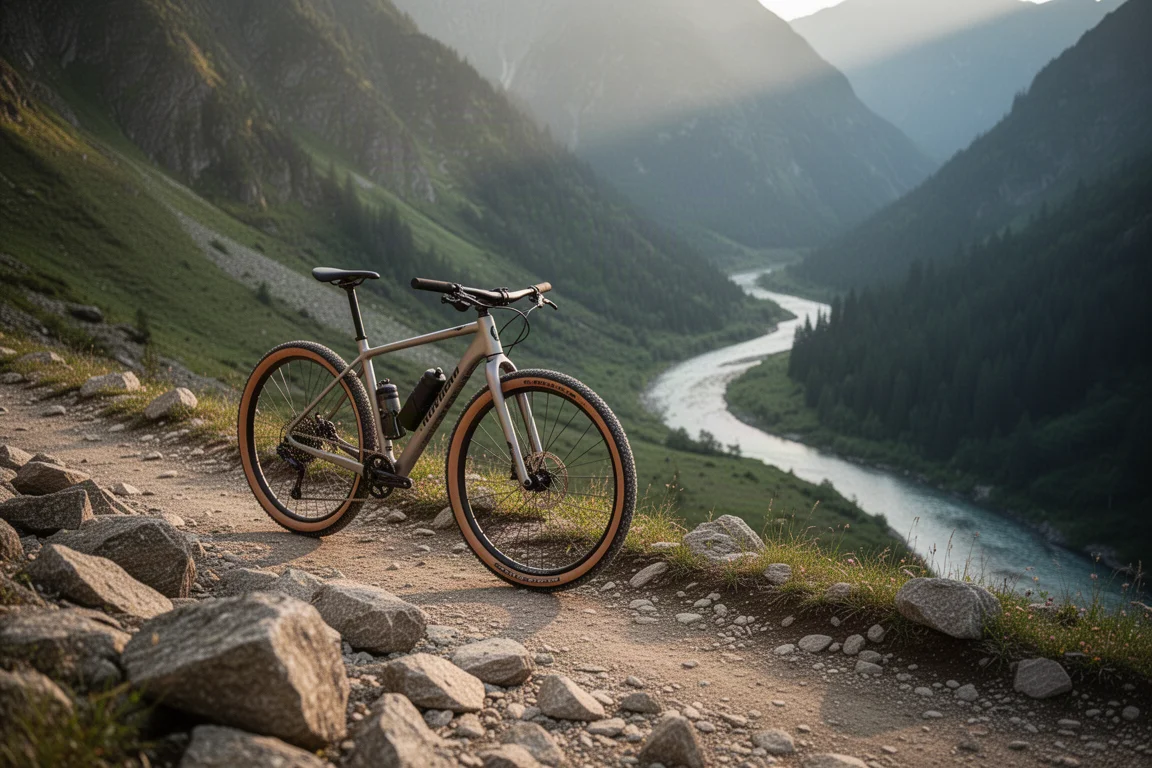
Across the three days the riding moved from steep loose climbs to fast flat sections and shaded forest tracks, and there was never a sense of being stuck between gears. On the rocky, technical descent the groupset was not the limiting factor: braking and chain retention held up on chunky, loose rock where a gravel bike is working hard.
On faster, smoother trails the drivetrain simply got out of the way. Gears changed when asked, the chain stayed put, and the brakes gave enough control to keep speed high without feeling exposed.
Things to Consider Before Buying
The clearest limitation is compatibility. The new rear derailleur needs a frame with a UDH dropout. Many current gravel frames now use that standard, but older bikes cannot be upgraded to this groupset.
Range is the second consideration. A 13-speed 10-46 setup gives a wider range than the outgoing 10-44, but it does not match a mountain bike transmission setup with a 10-52 cassette and its larger rear derailleur. If maximum range is the priority, that route still goes further.
Finally, there is only one cassette ratio available. Riders who prefer a different spread, or who want a narrower range for flatter terrain, have no alternative within this groupset.
Buying Advice
For riders on a modern UDH gravel frame, the 10-46 cassette paired with a 40-tooth chainring is likely to be the sweet spot. It covers steep climbs and fast flat sections without the gaps that make a wide cassette feel awkward to live with.
If you need the widest possible range for loaded riding or very steep terrain, a 10-52 mountain bike transmission setup remains the better answer. If your frame does not have a UDH dropout, this groupset is not an upgrade option, however appealing the shifting and braking sound.
For everyone else, the appeal is straightforward: more climbing range, no compromise on cadence, a derailleur that is harder to damage and easier to service, and brakes that give you more control when the surface gets loose.
Conclusion
SRAM Red XPLR is a meaningful step forward for gravel drivetrains. The move to 13 speeds delivers a genuinely easier climbing gear while keeping the cadence quality that made the previous XPLR cassette pleasant to ride, and the frame-mounted derailleur addresses a long-standing weak point on modern bikes.
The main caveats are honest ones. You need a UDH frame, there is a single cassette option, and a mountain bike transmission setup still offers more total range. For riders who match those requirements, the combination of wider gearing, fast shifting and confident one-finger braking makes this an easy groupset to recommend.
Product link
View more details for SRAM RED XPLR
This product is mentioned in the review. Check the specifications, options, and compatibility before buying.
View more details for SRAM RED XPLRFurther reading
Related Reviews
Gravel Bike Groupsets
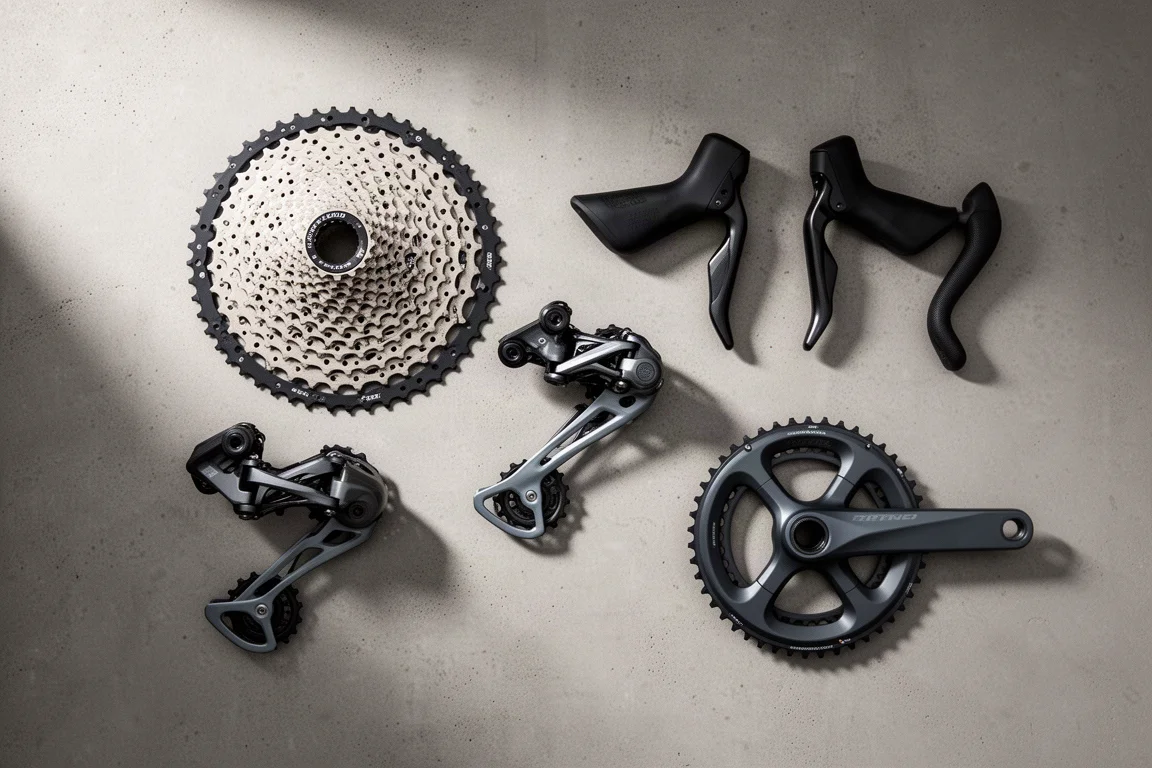
Shimano GRX 12-Speed Review: Mechanical Gravel Gearing With a 10-51 Cassette
Shimano's mechanical 12-speed GRX brings a 10-51 tooth cassette and wide-range 1x gearing to gravel and bikepacking bikes. Here is what it offers, and who it suits.
Gravel Bike Groupsets
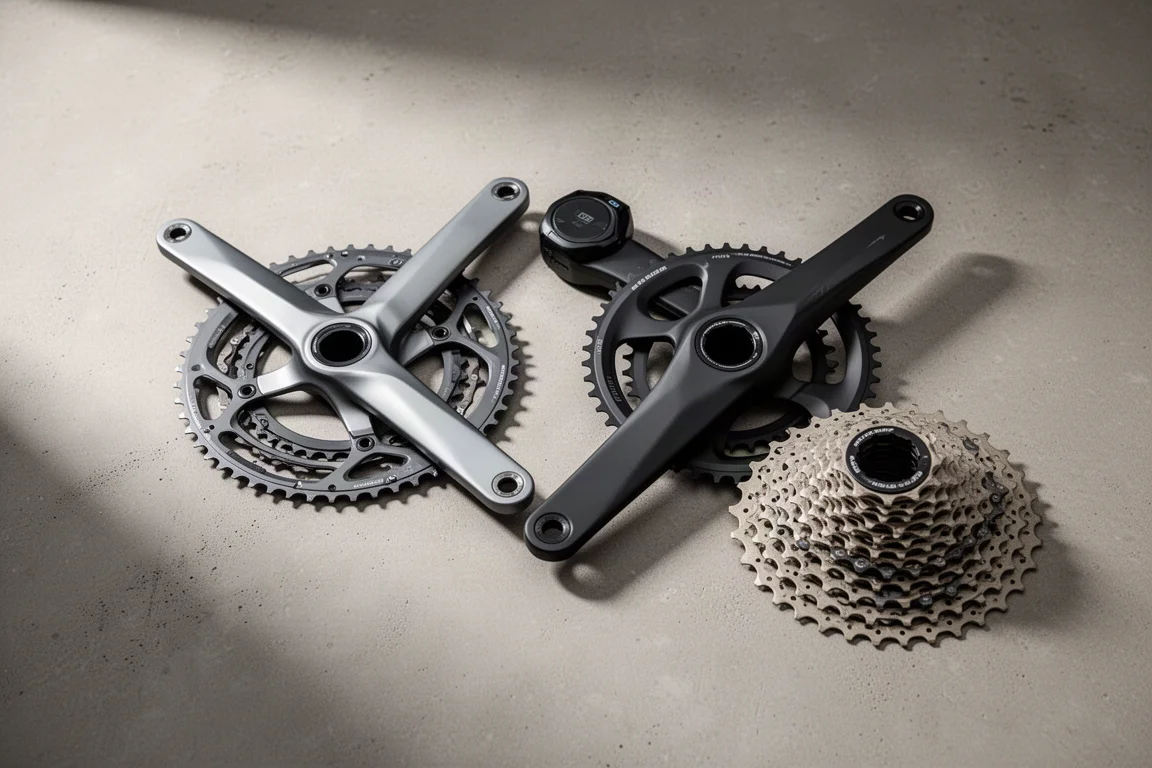
Shimano GRX 400 vs SRAM Red Eagle XX1 Mullet: Does a Premium Groupset Ride Better?
Two identical gravel bikes, one with a roughly £600 Shimano GRX 400 build and one with a roughly £3,500 SRAM Red Eagle XX1 mullet build. Here is what the gap in price actually buys.
Gravel Bike Groupsets
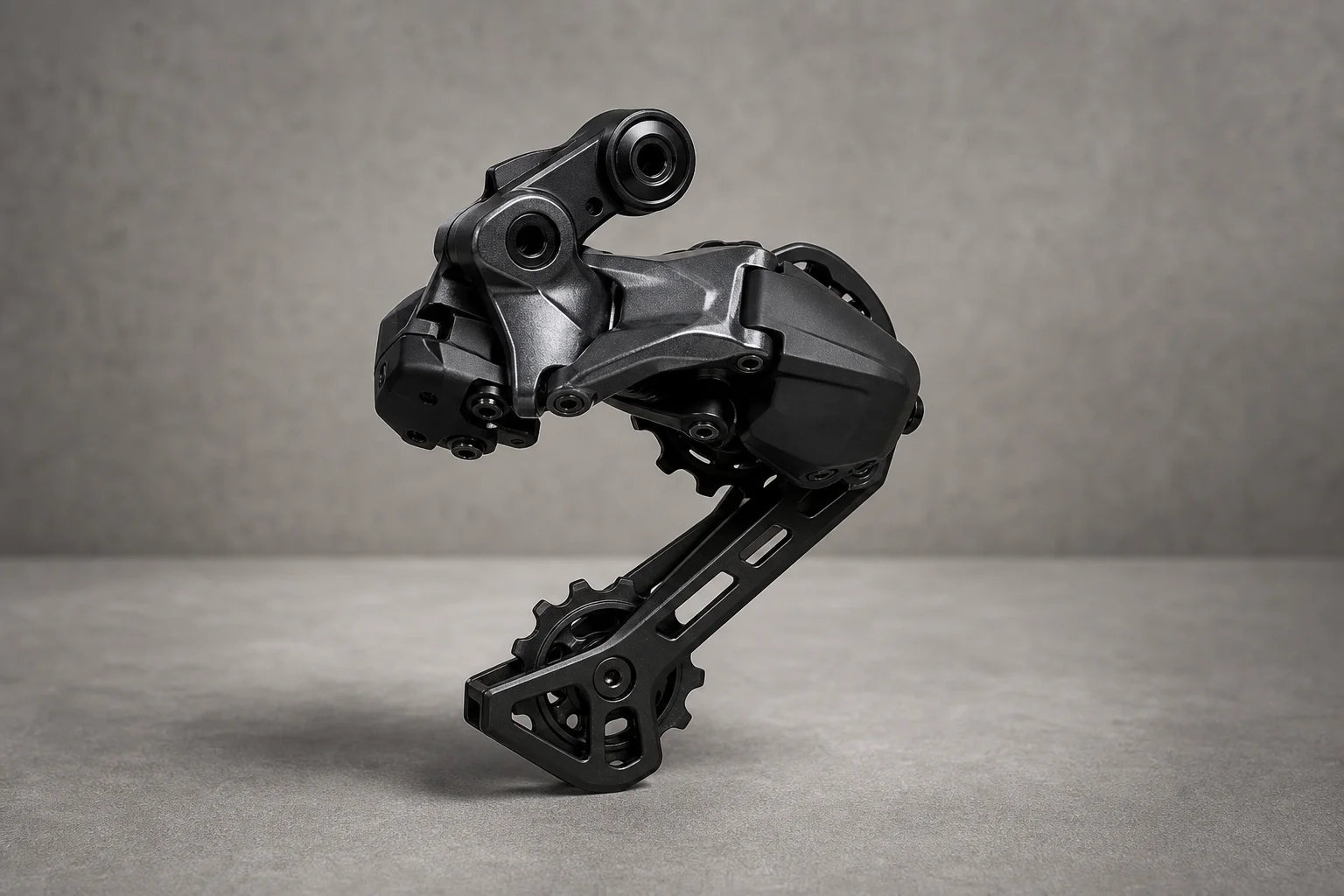
Shimano GRX Di2 Wireless Review: Fast Shifting, Real Trade-Offs
Shimano's first wireless drop-bar groupset delivers very fast shifting and a wide 1x range, but the rear derailleur design and missing options deserve a close look.