Cycling Groupsets
SRAM Force AXS vs Shimano Ultegra Di2: Weights, Changes and What to Buy
A component-by-component weight comparison of the SRAM Force AXS and Shimano Ultegra Di2 groupsets, plus the design changes worth understanding before you commit to either.
Introduction
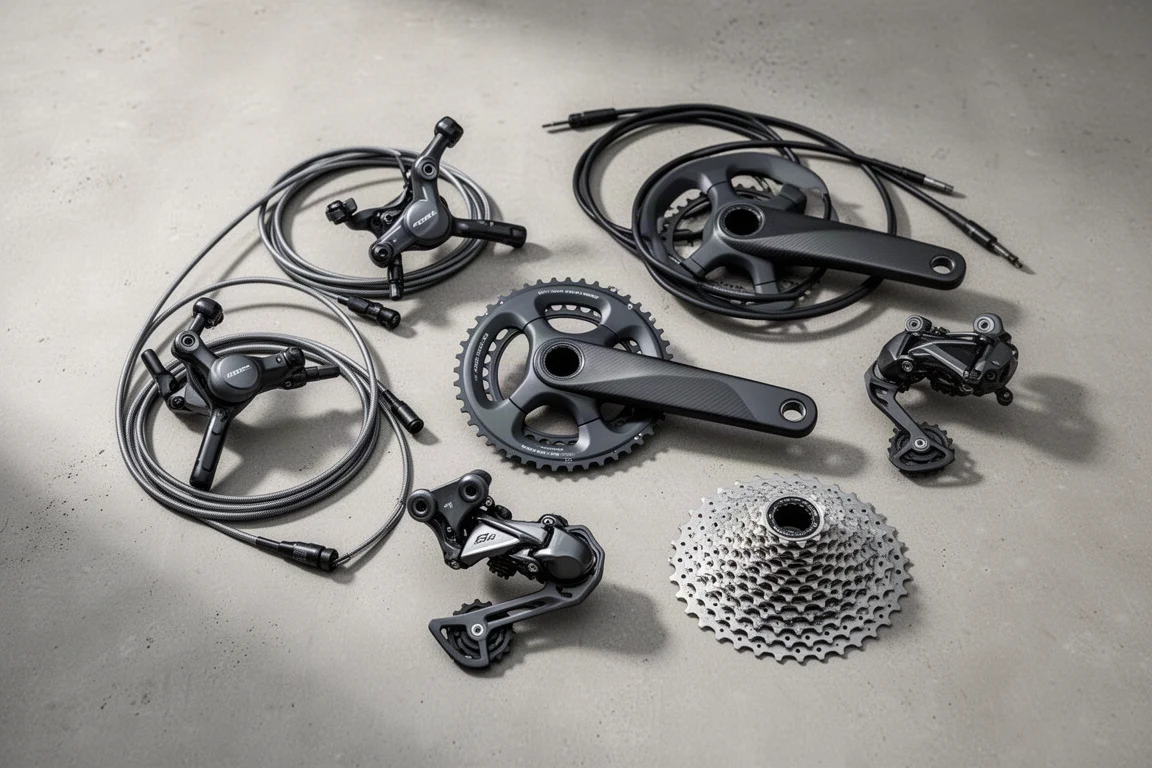
Choosing between SRAM Force AXS and Shimano Ultegra Di2 comes down to more than badge loyalty. Both sit in the same tier of the market: electronic, high-end road groupsets with technology that has trickled down from each brand’s flagship range. Weight, gearing range, shifting logic and the small design details all shape how a build feels once it is on the road.
SRAM’s Force AXS is the American brand’s second-tier groupset, sitting below the top-end Red group, and it borrows several features from that range. Shimano’s Ultegra Di2 is the most direct rival, which makes it the natural benchmark for a weight comparison.
Below, the two groupsets are compared component by component, with the measured weights, the design changes SRAM introduced for this generation, and the trade-offs worth understanding before you commit to either.
What SRAM Changed With Force AXS
The hood shape on the new Force shifters is carried over from SRAM’s Rival group, which is a sensible move given how well that smaller profile was received. Look closer and the lever itself is different: it is carbon, with a thinner profile at the top, and the paddle has been redesigned with the tail end removed for a little extra knuckle clearance when braking.
Some functions have been dropped along the way. The auxiliary port that once accepted Blips is gone, and SRAM now lets you connect up to six AXS wireless shifters instead. Pad contact point adjustment has also been removed, leaving reach adjustment as the only lever position adjustment. On the scales, the right shifter comes in at 234 g, and a pair weighs 468 g.

The rear derailleur is the least changed part of the group. There is a new design and a new logo, but little beyond that. A 1x-specific version is available for 10-44 and 10-36 cassettes, while the standard 2x model works with cassettes from 28 to 36 teeth. It weighs 328 g. The front derailleur is where more work has gone in, with a new cage design that shifts very well from the small ring to the big ring. The inner cage has been reworked, with the bolt now sitting inside the cage rather than outside it, plus a slightly redesigned lower half. With a battery fitted, it weighs 182 g. Both SRAM derailleurs carry their own batteries, whereas Shimano uses an external battery, which is one reason the SRAM units will always weigh a little more.
Shimano Ultegra Di2: The Benchmark Build
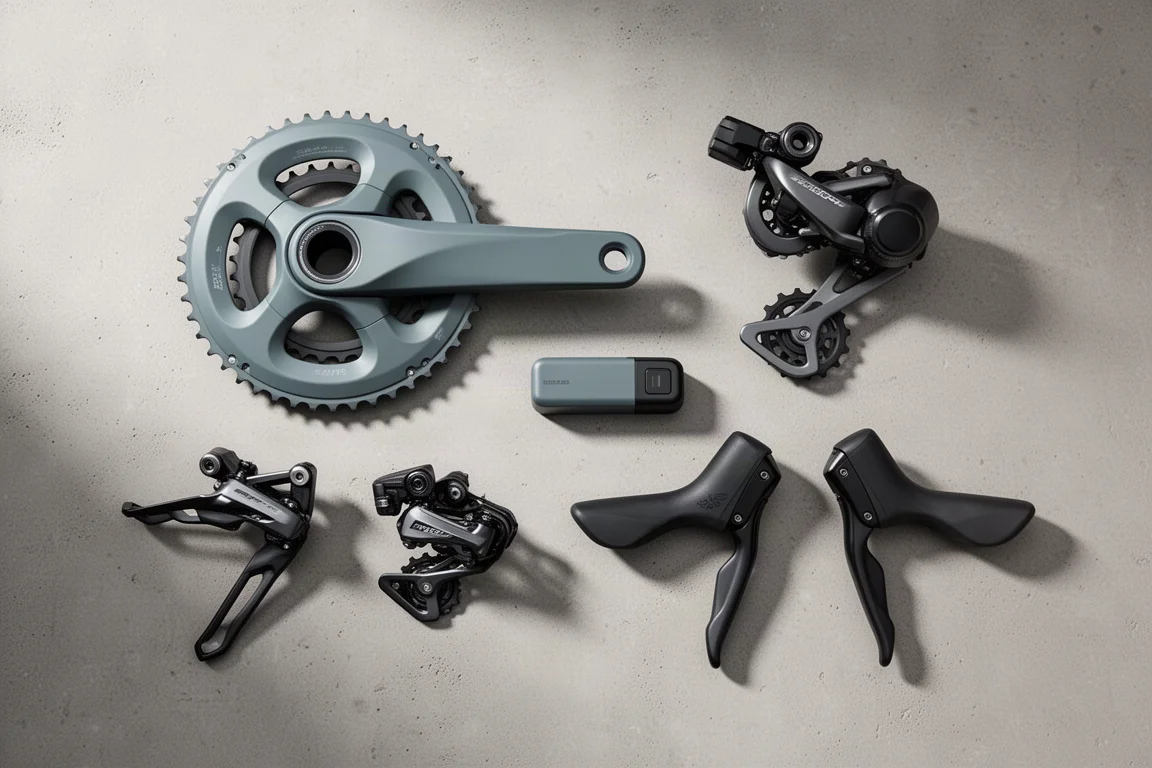
Ultegra Di2 is the closest rival on the market, which makes it the reference point for this comparison. Its measured components add up to 2,577 g in total, although that figure was recorded without a bottom bracket, which is worth keeping in mind.
Individually, the shifters weigh 385 g, the rear derailleur 261 g, and the crankset with 52/36 chainrings and 172.5 mm arms 749 g. The 11-34 cassette comes in at 340 g, the brake calipers at 240 g for the pair, the rotors at 108 g each, and the chain at 240 g. Those numbers set the baseline against which every Force AXS component can be judged.
Drivetrain Weights Compared
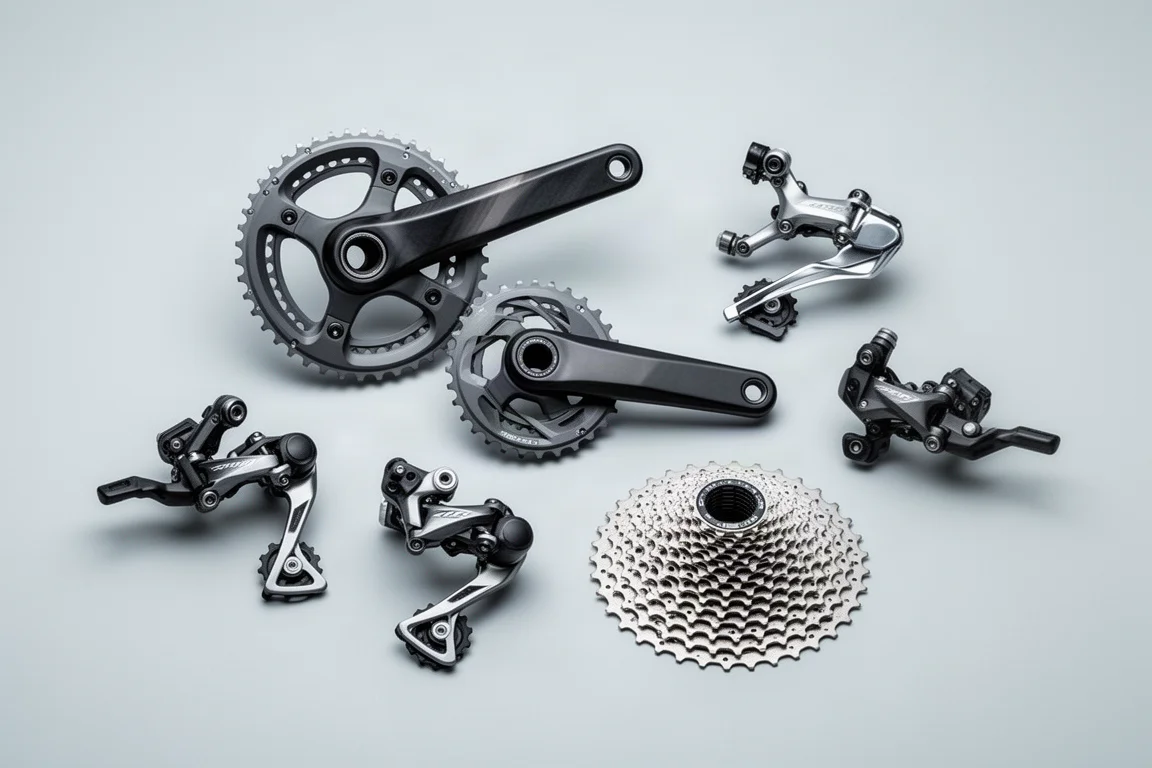
The shifter comparison is the most decisive one. A pair of Force AXS shifters weighs 468 g against 385 g for Ultegra Di2, so the SRAM levers are a fair bit heavier. The rear derailleur follows the same pattern: 328 g for Force against 261 g for Ultegra. SRAM’s front derailleur weighs 182 g with its battery, and the Ultegra equivalent was not weighed in this comparison.
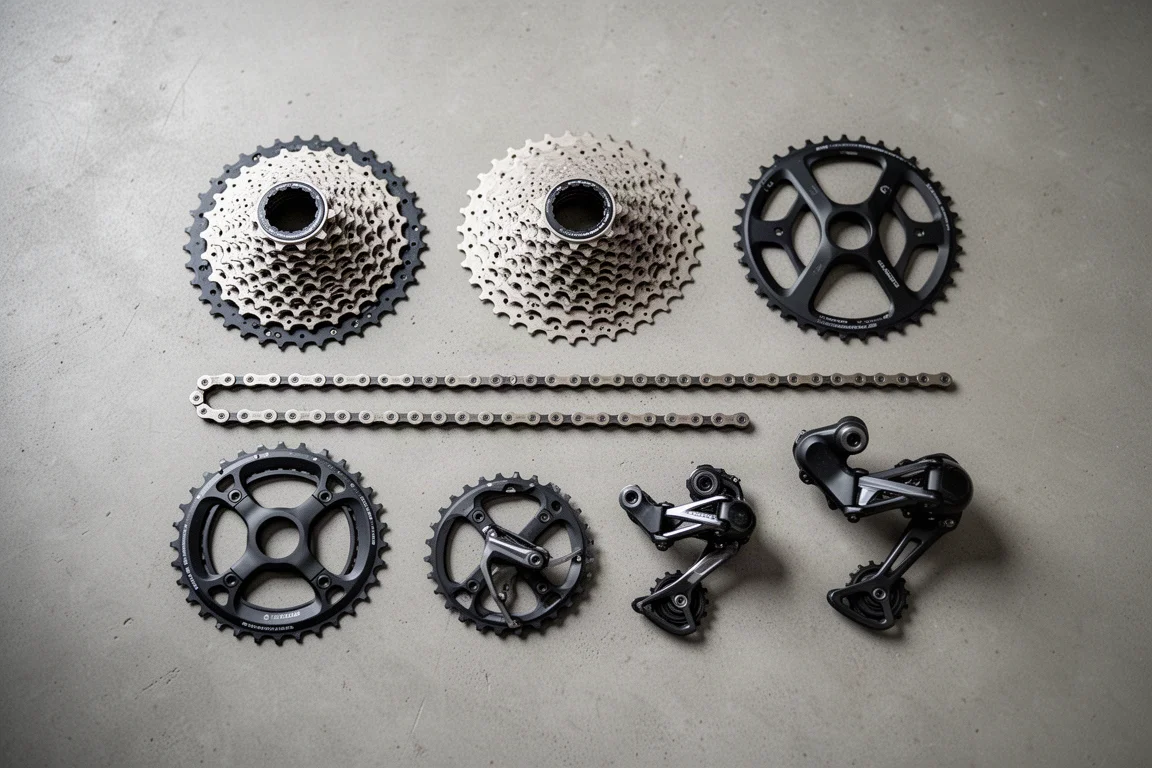
The cranksets are effectively level. The Force chainset with 48/35 chainrings and a power meter weighs 748 g, while the Ultegra crankset with 52/36 chainrings and 172.5 mm arms weighs 749 g. The chains are just as close: 242 g for SRAM’s flat-top design against 240 g for Ultegra.
The cassette is where SRAM pulls ahead. The Force 10-33 cassette weighs 273 g, while the Ultegra 11-34 cassette weighs 340 g, a significant saving. Force keeps the mini cluster construction, with the four smallest cogs machined from a single block of steel and the remaining eight pinned in place, which keeps costs down compared with the fully machined Red cassettes. An oil slick cassette is also available to buy as a Red-level upgrade if you want to change the look and weight of your build.
Brakes, Rotors and Total Build Weight
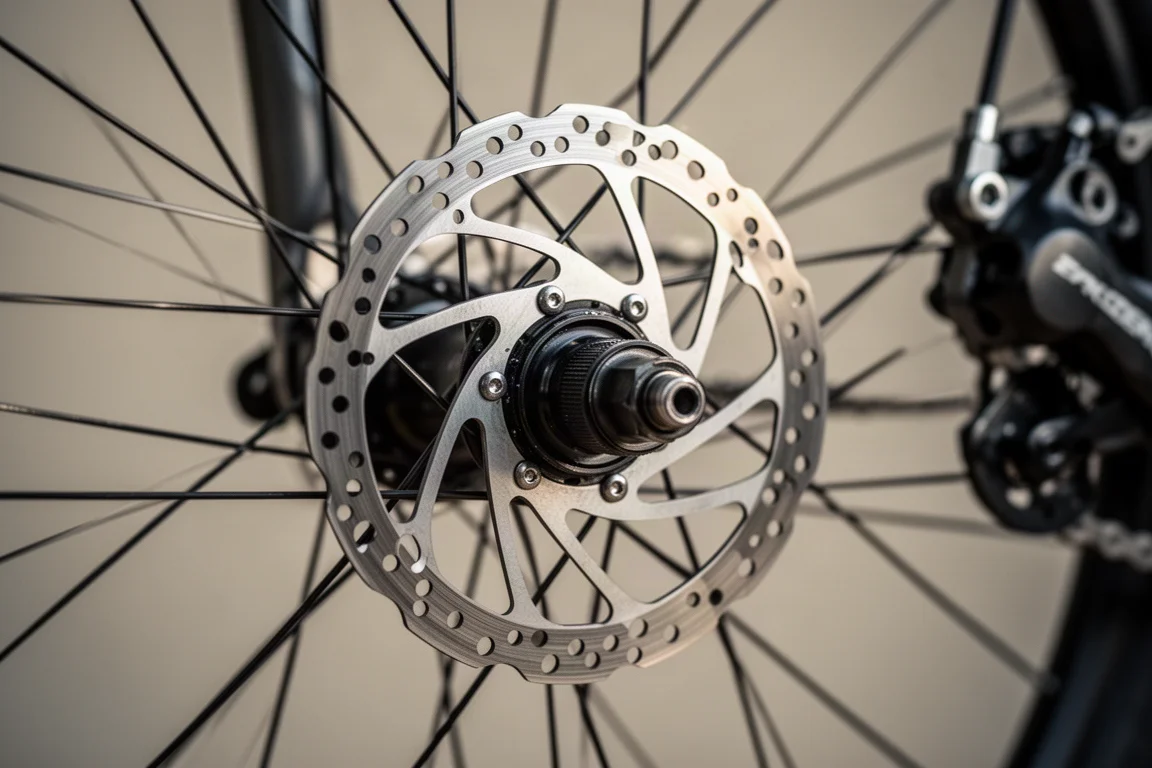
The Force brake calipers use a two-piece design that was originally released in February 2020. SRAM says this construction method allows for more accurate drilling of the piston boreholes, which should mean less brake rub after periods of prolonged heavy braking. It was a rolling change, and every bike fitted with the new Force group has them.
On the scales, the front caliper with its hose and fluid weighs 130 g, and the rear caliper with bolts, fluid and hose weighs 156 g, for 286 g the pair. Ultegra calipers came in at 240 g for the pair, so the SRAM calipers are slightly heavier. The 160 mm rotors weigh 160 g each, or 320 g for the pair, compared with 108 g each for the Ultegra rotors.
The bottom bracket is the SRAM DUB unit at 76 g. Add everything together and the Force AXS group comes to 2,922 g, including the bottom bracket and with hoses and fluid in the calipers. Ultegra Di2 measured 2,577 g, but without a bottom bracket. Force AXS is therefore a little heavier overall, though the two totals do not contain exactly the same parts.
Chainset Options and Gearing
One of the strengths of Force AXS is how many builds it covers. The 2x chainset comes in a standard road model with a new 50/37 tooth option that was previously reserved for the Red level group, plus a wide 2x option with 40/33 chainrings for gravel bikes. Both are available with or without a power meter.
The 1x-specific chainset follows the same pattern, with standard and wide options, again in power meter and non-power versions. The integrated chainring design is carried over from the top-end Red group, and the new rings are a visual highlight of the group. The chain keeps SRAM’s familiar flat-top design, which contributes to what is a very quiet groupset.
How the Totals Were Measured
It is worth being precise about what the totals include. SRAM’s derailleurs each hold their own battery, while Shimano’s battery sits externally, so SRAM’s derailleurs will always carry a little extra weight for that reason alone. The Force AXS figure of 2,922 g includes a 76 g DUB bottom bracket and brake hoses filled with fluid. The Ultegra Di2 figure of 2,577 g was recorded without a bottom bracket.
That does not change the overall picture, but it does mean the gap between the two groupsets is slightly smaller than a straight reading of the numbers suggests. Component by component the pattern is consistent: Ultegra is lighter at the shifters, rear derailleur, calipers and rotors, while Force AXS is lighter at the cassette.
Overall Buying Advice
If the lightest possible build is the goal, Ultegra Di2 has the edge in the components measured here, and its total weight is lower. If cassette weight matters to you, Force AXS saves a significant amount there, and the integrated chainring design is a genuine step up from the previous generation.

Gearing range is another deciding factor. Force AXS covers a wide spread of setups, from standard road 2x through wide gravel ratios to dedicated 1x builds, all with optional power meters. That breadth means it will suit riders who want one groupset to cover several bikes or riding styles.
Pricing is the final consideration. The prices on the new Force AXS group remain the same as the outgoing version, which is a notable position given how much prices have risen generally across the market. For riders who like SRAM’s shifting logic, with the right hand shifting harder and the left hand shifting easier, and who value the front derailleur’s shift quality from small ring to big ring, Force AXS makes a strong case. If weight is the deciding factor and you are comparing like for like, Ultegra Di2 remains the lighter option across most of the areas that were measured.
Conclusion
Both groupsets are electronic, high-end options that will serve most riders well for years. The measured differences are real but modest: SRAM Force AXS is a little heavier overall, saves weight at the cassette, and brings useful trickle-down features from the Red range. Shimano Ultegra Di2 is lighter in more of the individual components and in total. Which one makes sense for your build depends on whether you prioritise the lowest possible weight or the widest gearing coverage and stable pricing.
Further reading
Related Reviews
Cycling Groupsets
Affordable Road Bike Groupsets: Shimano 105 and SRAM AXS Compared
Shimano 105 Di2, SRAM Apex AXS and SRAM Rival AXS deliver close to flagship performance at a fraction of the price. Here is what to weigh before your next upgrade.
Cycling Groupsets
Shimano 105 Di2 vs SRAM Rival AXS: Which Electronic Groupset Is Right for You?
A practical comparison of Shimano 105 Di2 and SRAM Rival AXS covering shifting, gearing, braking, weight, connectivity, and price.
Cycling Groupsets
Shimano XT vs SRAM XPLR: Running a 1x Groupset on a Drop Bar Bike
A practical look at two 1x drivetrain routes for all-road and light gravel bikes: a Shimano XT mountain bike derailleur with a 9-45 cassette, and SRAM's dedicated XPLR 1x13 setup.