E-Bike Components
SRAM Eagle Powertrain Review: Automatic Shifting for E-Mountain Bikes
SRAM's Eagle Powertrain brings a 90 Nm motor, wireless Pod controls, and two automatic shifting functions to e-mountain bikes. Here is how the system behaves on real trails.
Introduction
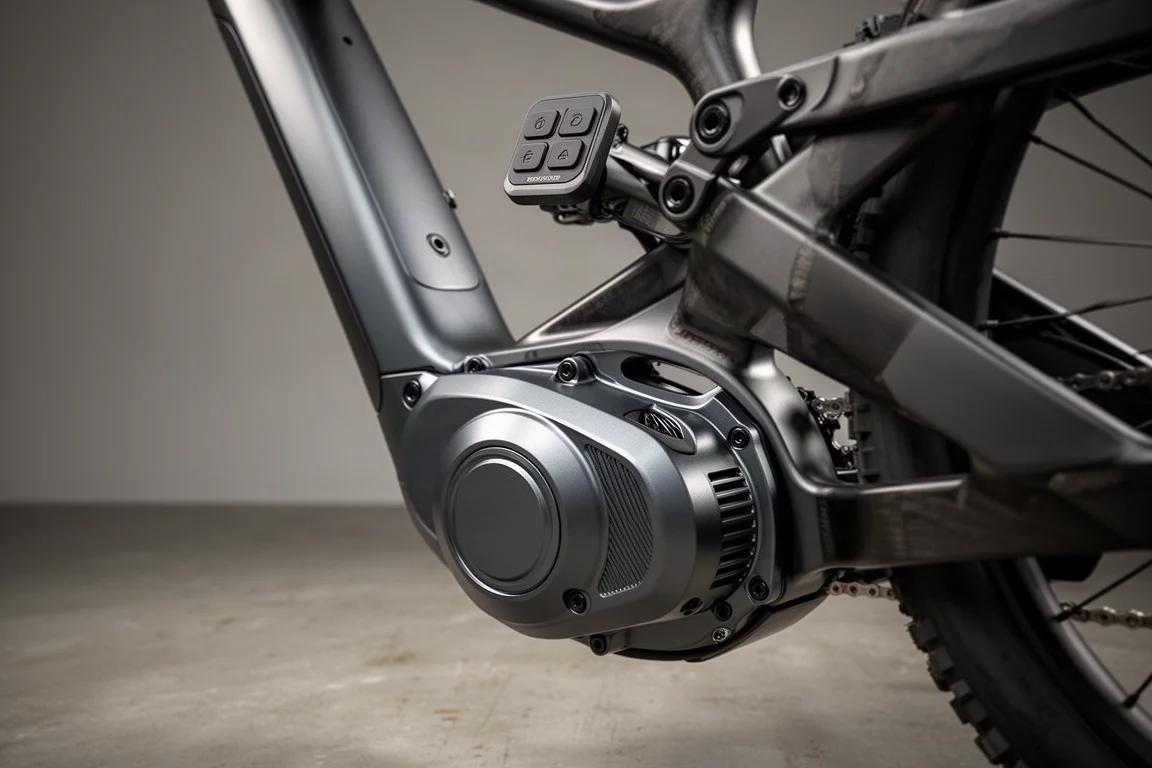
SRAM’s Eagle Powertrain fills a gap that has been visible in the company’s range for some time. Until now, a rider could assemble a bike almost entirely from SRAM and RockShox parts, from the chain up through the gearing and the suspension, but not around a motor. Powertrain completes that picture, and it does so with a level of component integration that is unusual in the e-bike market.
The drive unit is rated at 90 Nm of torque and 680 W of peak power. It works with two battery options, a 630 Wh pack or a 720 Wh pack, and an optional range extender adds capacity for longer rides. The most interesting part of the system, though, is automatic shifting, which is split into two separate functions: Auto Shift and Coast Shift. Both aim to keep the rider’s legs turning at a comfortable rate, and both change the character of a ride in ways that are not immediately obvious.
Who This System Is For
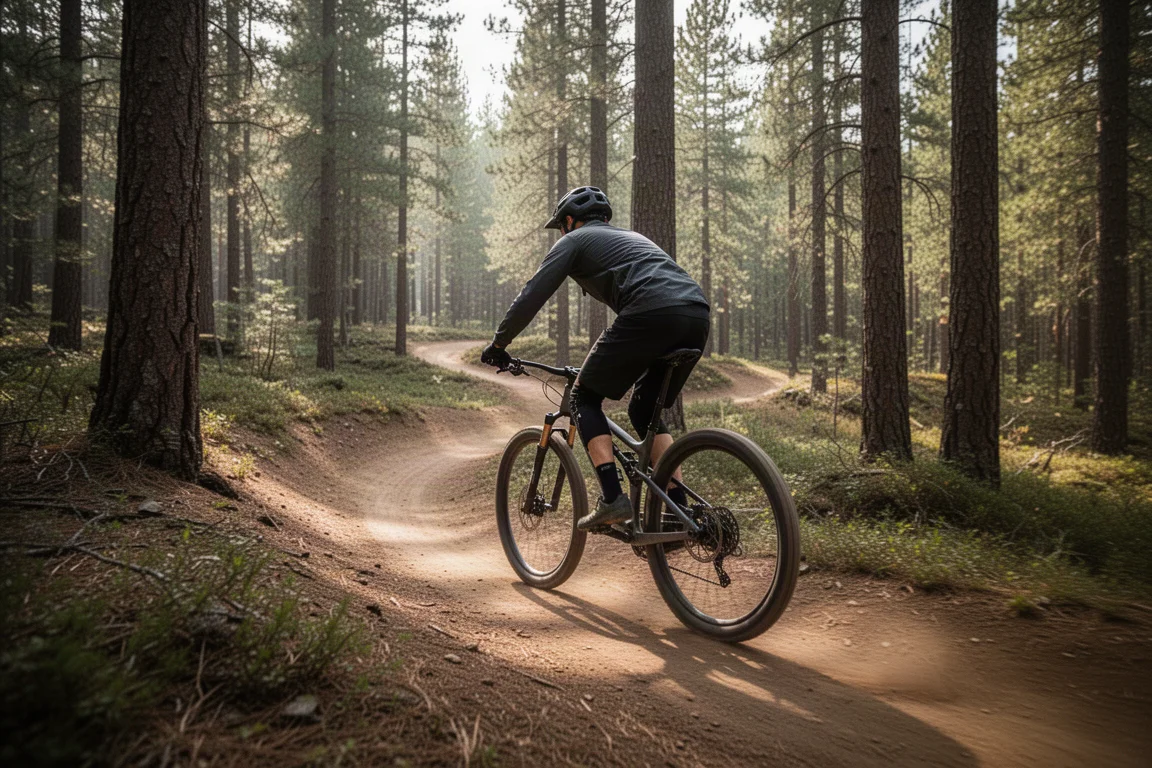
Powertrain makes most sense for riders who want the bike to handle the mundane parts of shifting so they can concentrate on the trail. It suits e-mountain bikers who ride flowing, undulating terrain, where the automatic shifting is at its most seamless and the system’s timing is difficult to fault.
It also suits riders who already own wireless SRAM and RockShox components. A Reverb AXS seatpost, a Flight Attendant fork and shock, and Transmission gearing all connect to Powertrain and are controlled through the same Pod controllers, which means the whole bike can be managed from two small buttons on the bars. Anyone who dislikes cable clutter will appreciate the result: an e-bike with only brake hoses running to the front end looks remarkably clean next to most current offerings.
The system rewards a certain amount of trust. Riders who instinctively manage their own gears will find themselves fighting the algorithm at first, and learning when to leave it alone takes a few rides.
What the Eagle Powertrain Includes
The Powertrain drive unit produces 90 Nm of torque and 680 W of peak power, and SRAM applies its own custom tune to the motor hardware, which is claimed to be more powerful than the drive unit it is based on. Two riding modes are available. Range delivers less assistance and is designed to conserve battery, while Rally draws on the full power of the motor at the cost of range. Both can be customized through sliders in the AXS smartphone app, so assistance can be tuned to personal preference rather than accepted as delivered.
Battery capacity comes in two sizes, 630 Wh and 720 Wh, and an optional range extender can be added. Control is handled by the Pod controllers rather than a bar-mounted screen. The integrated AXS Bridge display shows three pieces of information: assistance mode, auto shift status, and battery percentage. Automatic shifting sits on top of all of it, with a cadence window that can be set across seven positions.
Automatic Shifting and Coast Shift in Practice
Auto Shift relies on software to choose a gear. It selects a ratio based on the rider’s current pedalling rhythm and changes cogs regardless of how many watts the rider or the motor is producing, so it works the same whether you are spinning gently or pushing hard. The cadence window can be adjusted across seven settings, which is what makes the feature feel personal rather than imposed.
Coast Shift takes a different approach. It uses the motor to rotate the chainring and cassette independently of the cranks, which means it can change gear while the rider is not pedalling at all. Freewheel downhill and it moves into harder gears as speed builds. Slow down and it works the other way, shifting into easier ratios as speed drops. Manual control is never lost: pressing the shift button on the Pod controller overrides the system at any point.
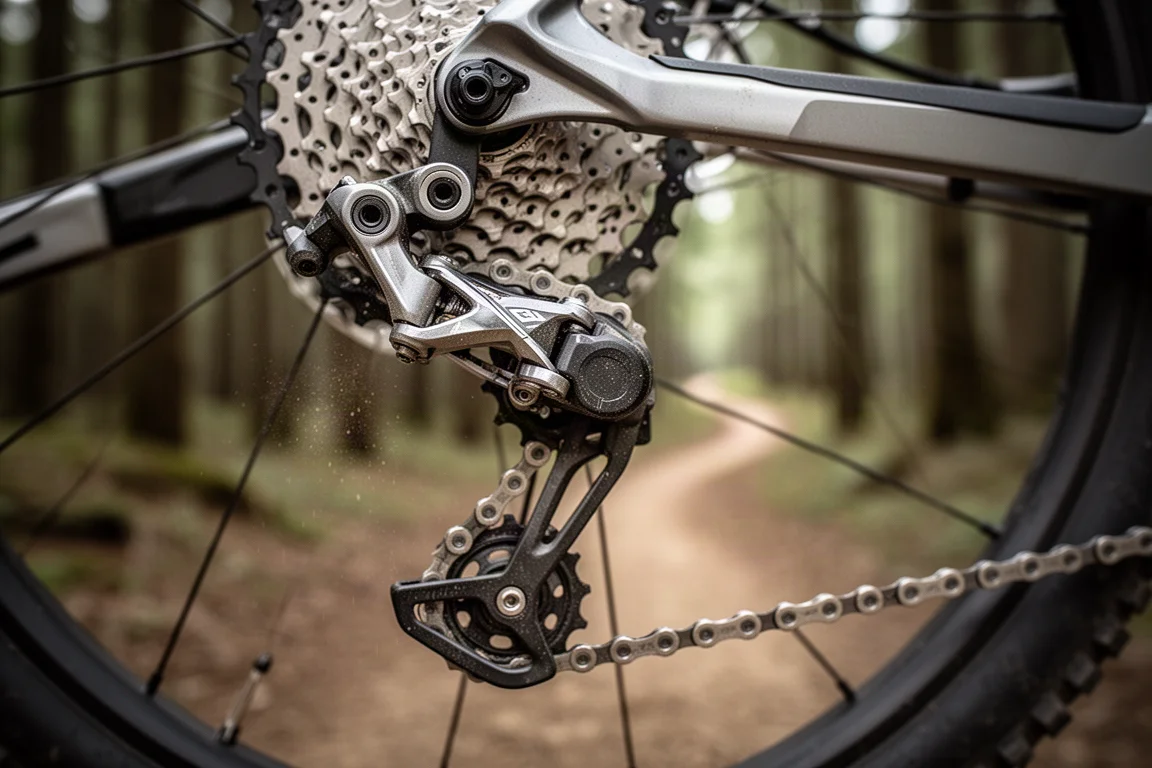
On the trail, the shifts themselves are discreet. They arrive without glitch, grind, or hesitation, and the derailleur moves at the moment you would have chosen. On undulating trail centre terrain, where the track flows and speed changes constantly, the automatic shifting is genuinely impressive, quietly placing the bike in the right gear beneath you while you concentrate on the ride.
Two scenarios expose the limits. The first is a short, sharp ramp. Approaching one in an easier gear, Auto Shift tends to select the next hardest ratio rather than holding the current one, even when set to its most conservative position. Pushing the low gear button preempts the shift, but remembering to do it does not feel natural at first. The second is a fast descent into a steep climb. Coast Shift cannot always keep pace with rapid deceleration, and it can struggle to reach a low enough gear in time, producing a low-RPM grind until Auto Shift catches up. Choosing the ratio yourself before the descent ends avoids the problem entirely.
Underneath both functions is a single behavioural trait worth understanding: the system reacts to what is happening rather than anticipating what is about to happen. Its sensors report the present, not the trail ahead, so it cannot know about a gradient until the bike is already on it.
Motor Performance, Power Delivery, and Noise
The motor’s assistance builds smoothly rather than arriving in one hit. Push through the pedals and the output ramps up towards the full 90 Nm, and wheelspin stays easy to manage as a result. Rally mode in particular has plenty of muscle on tap, with punchy and consistent torque that can either grind up a climb or spin up it depending on rider preference.
Like most e-bike motors, there is a cadence sweet spot where assistance feels at its best. Go too far below it and the motor can bog down; spin too quickly and it runs out of puff. Auto Shift neatly sidesteps this by keeping the legs turning within the motor’s preferred range. It is worth noting that the assistance levels themselves are constant rather than terrain-responsive. They do not increase or decrease according to rider input, so the system does not adapt its output the way some rival trail and eMTB modes do. On raw assistance and mapping feel, the Bosch Performance Line CX remains the benchmark.
Where Powertrain stands apart is noise. The whole system is remarkably quiet on rough trails: chain slap is controlled, the motor has no freewheel clack or rattle, and it emits a consistent whirring tone rather than the fluctuating gobble some drive units produce. It is lower in pitch and less intrusive than the motors it will inevitably be compared with, and over a long ride that calm soundtrack is a genuine comfort.
Wireless Integration and the AXS Ecosystem
The Pod controllers sit at the centre of the experience. Four buttons handle shifting, seatpost control, and other functions, and each one can be reassigned through the AXS smartphone app to match personal preference. Long and short presses are intuitive in both feel and function, and the ergonomics are sound enough that the controls disappear from conscious thought after a ride or two.

Because everything communicates wirelessly, the front end of a Powertrain bike is strikingly tidy. There are no shift cables and no bar-mounted screen, only brake hoses. The AXS Bridge display is integrated into the bike rather than bolted on, showing assistance mode, auto shift status, and battery percentage, which is enough information without becoming a distraction.
Reverb AXS seatposts, Flight Attendant forks and shocks, and Transmission gearing all tie into the same system, so a single set of controls manages the entire bike. That level of integration is unusual, and it is the strongest argument for building a bike around SRAM components from the ground up.
Things to Consider Before Buying
Automatic shifting changes how much attention you give to your gears, and not every rider will want that. Freeing up the mental bandwidth reserved for shifting is the core appeal, but changing gear is second nature for most experienced riders, so the benefit comes down to personal priorities. Riders who like to be fully in control of every ratio may find the system’s decisions frustrating in the handful of situations where they would have chosen differently.
The reactive nature of the system is the main limitation to weigh. It cannot read the trail ahead, so it cannot shift preemptively for a gradient it has not yet reached. Riders who want a truly predictive experience will be left wanting more until the technology can anticipate how a rider and a bike will interact with terrain they have not yet ridden.
There is also a learning curve around overriding the system. Knowing when to cancel a shift, and when to simply let the algorithm work, takes time. By the end of a few rides the timing becomes easier to read, but the first hours are an adjustment.
Buying Advice
Powertrain is at its best when it is left alone on flowing, undulating terrain, and it is at its weakest when it is asked to anticipate a trail it cannot see. Buyers who ride trail centre loops, who value a clean cockpit, and who already own or plan to own other AXS components will get the most out of it.
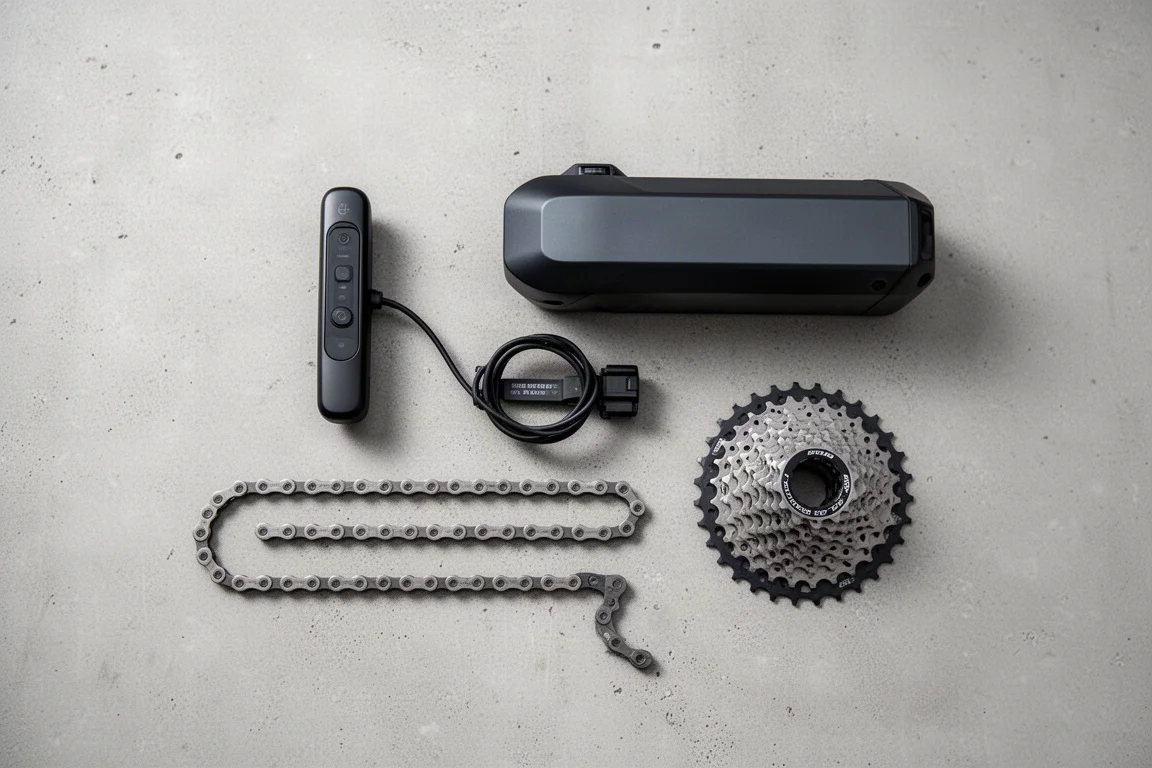
Battery choice is the other decision worth thinking through. The 630 Wh and 720 Wh packs offer different balances of weight and range, and Rally mode draws on capacity more quickly than Range mode. Riders who prefer maximum assistance for short, intense rides will lean one way; riders covering long distances with lighter assistance will lean the other. The optional range extender adds a further option for big days out.
For anyone weighing up whether automatic shifting is worth having, the honest answer is that it depends on how much you enjoy managing your own gears. Riders who are happy to hand that job over will find a system that is quiet, powerful, and unusually well integrated with the rest of the bike. Riders who are not will still get a strong motor and a very tidy build, but they will be paying for a feature they may rarely use.
Conclusion
Eagle Powertrain is a significant addition to SRAM’s range, and not only because it fills the obvious gap. The automatic shifting is smooth and discreet on the terrain it understands, the motor is quiet and generously powered, and the wireless integration across the AXS ecosystem produces one of the cleanest cockpits available on an e-mountain bike. The trade-off is a system that reacts rather than predicts, and a handful of trail situations where a human would have chosen a different gear. Within those limits, it is a convincing step towards a bike that handles the mundane and leaves the extraordinary to the rider.
Product link
View more details for SRAM Eagle Powertrain
This product is mentioned in the review. Check the specifications, options, and compatibility before buying.
View more details for SRAM Eagle PowertrainFurther reading
Related Reviews

Backpacking Gear
Building a 10 lb Base Weight: An Ultralight Backpacking Gear List
A practical walkthrough of the ultralight pieces behind a 10 lb base weight, from a 765 g pack and a roomy one-person tent to a full camp chair and a dependable water filter.

Road Bikes
10 New Road Bikes Worth Watching: Aero, Titanium, Steel and Endurance Standouts
A practical roundup of 10 new road bikes, from aero flagships chasing single-watt gains to titanium, steel and endurance platforms built for real roads.
Bikepacking Gear
11 Bikepacking Essentials for Long-Distance Cycling
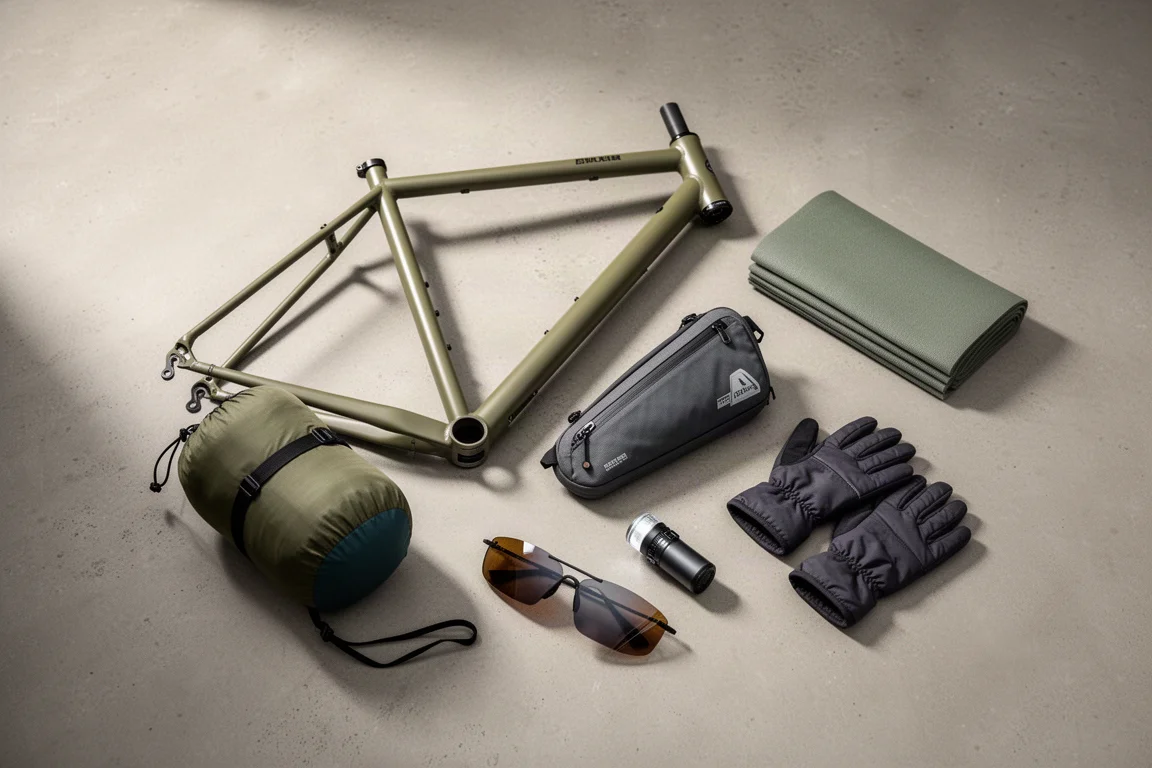
Eleven bikepacking essentials for long-distance cycling, from a steel gravel frame and a two-person tent to helmet lights, packable gloves, and a frame bag that puts weight in the right place.