Hi-Fi Audio
SPL Director Mark 2 and Performer S900 Review: Pro-Audio Clarity for the Home
A compact preamplifier with ten inputs and an onboard DAC, paired with a high-current Class AB amplifier that stays cool while delivering serious headroom.
Introduction
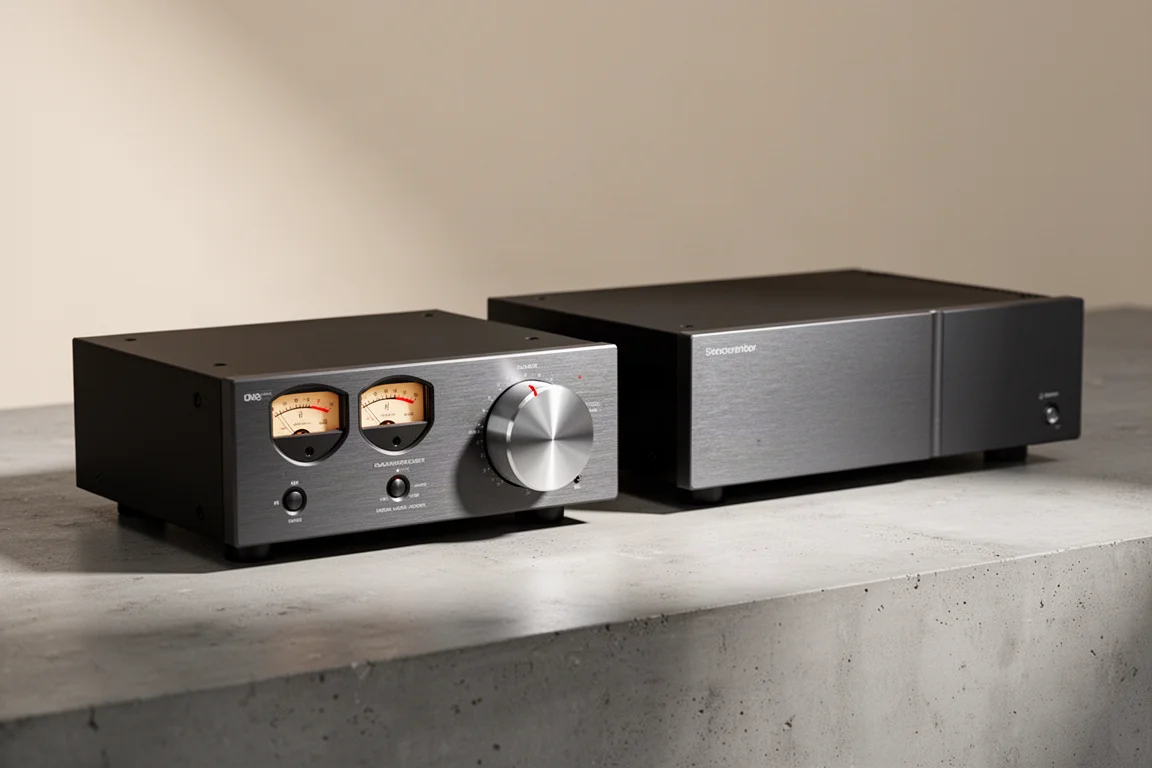
SPL has been building audio equipment since 1983, and its roots sit firmly in the professional studio world: compressors, equalizers, and mastering gear. That side of the business still accounts for roughly two thirds of its sales, with the remaining third aimed at home listeners. The Director Mark 2 preamplifier and the Performer S900 power amplifier belong to that consumer-facing side, and both are far smaller than their capabilities suggest. Each chassis is just 278 mm wide, around 11 inches, so the pair occupies less space than a great many high-end separates.
What makes these two worth a closer look is that they carry studio engineering into a domestic system without asking the listener to give up convenience. The preamplifier offers ten inputs and an onboard digital-to-analog converter. The amplifier delivers 200 watts per channel into 8 ohms from a genuinely high-current design. Together they represent a particular philosophy about how amplification should behave, and that philosophy is worth understanding before deciding whether it fits your system.
Why SPL’s VOLTAIR Design Matters
Every SPL component, professional or consumer, runs on what the company calls VOLTAIR. In practical terms, that means internal supply rails of plus and minus 60 volts, for 120 volts in total. Most competing designs operate at much lower internal voltages, typically plus and minus 15, 20, or 30 volts. SPL states that the higher rails deliver more headroom, lower distortion, and a better signal-to-noise ratio.
The catch is that standard op-amp chips cannot operate at those voltages, which is why SPL developed its own proprietary op-amps instead of relying on off-the-shelf parts. Those parts are specific to SPL components rather than general-purpose building blocks.
That engineering decision runs through both the Director Mark 2 and the Performer S900. It also explains the character of the sound: this is studio-derived electronics rather than a conventional audiophile design with a house tone.
SPL Director Mark 2: Inputs, DAC, and Daily Handling
The Director Mark 2 is generous with connectivity. There are ten inputs in total, six analog and four digital. The digital set covers AES, coaxial, optical, and USB. On the analog side you get two XLR inputs and four sets of RCA inputs. Stereo outputs are available on both XLR and RCA, and there are tape monitor in and out jacks for anyone still running a recording loop.
The built-in DAC handles high-resolution PCM up to a 768 kHz sampling rate and DSD 256. That is enough flexibility to run a streamer, a disc transport, a computer, and several analog sources without adding an external switcher.
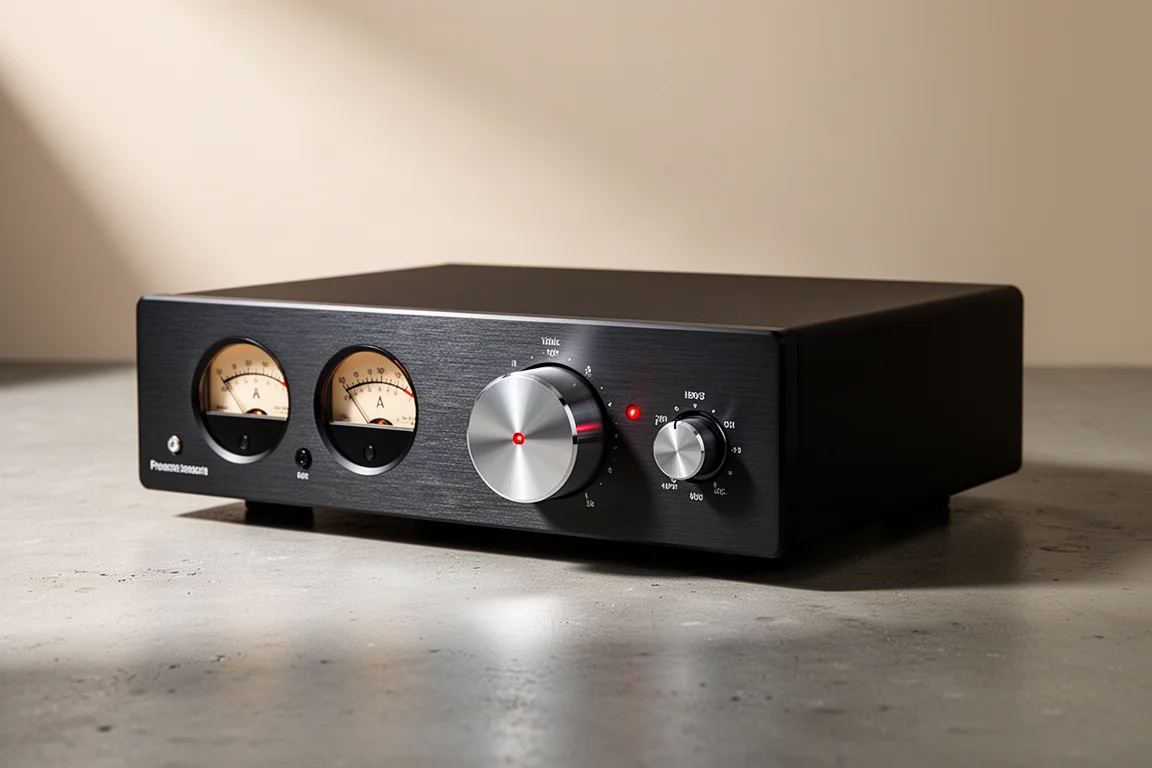
The front panel is where the character shows. The two meters are real mechanical meters rather than LCD displays, which gives the preamplifier a distinctly studio look. The large volume knob is machined from a single piece of aluminum and includes a red LED, so the volume position stays visible from across the room. A second, smaller knob selects among the ten inputs.
One ergonomic quirk is worth flagging: the input numbering runs counterclockwise. Moving from input 1 to input 2 means turning the selector counterclockwise rather than in the clockwise direction most listeners expect. It is easy to adapt to, but it is unusual.
There is no remote control in the box. The preamplifier can, however, learn volume up, volume down, and input selection commands from a remote you already own, and the learning process is straightforward. An optional remote is planned as an accessory.
SPL Performer S900: High-Current Power in a Compact Chassis
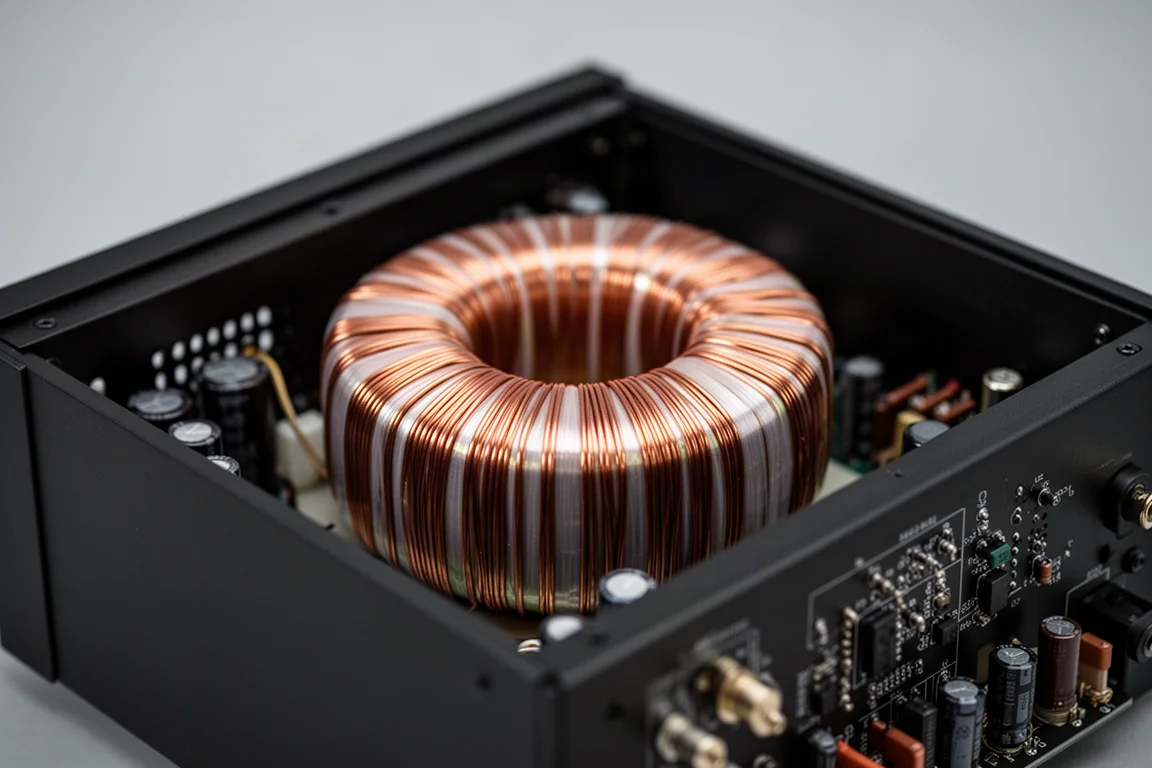
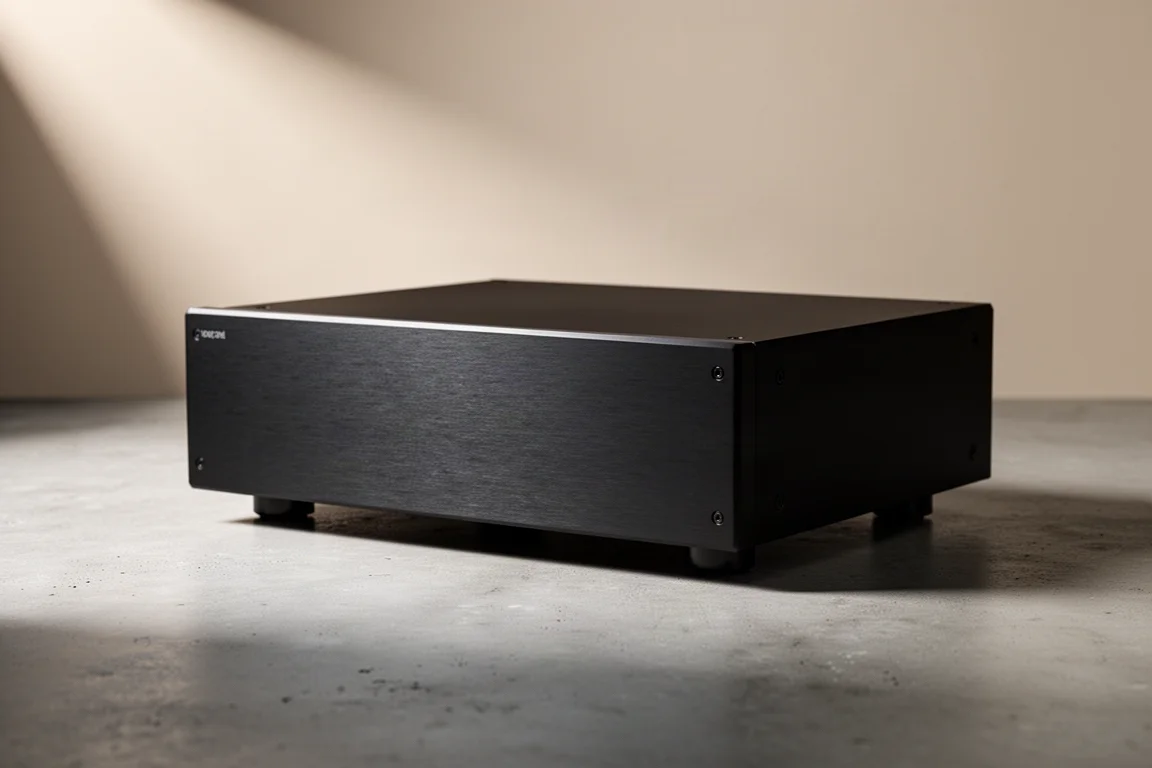
The Performer S900 is built around a high-current design. It is rated at 200 watts per channel into 8 ohms, 370 watts per channel into 4 ohms, and 420 watts per channel into 2 ohms, with the company stating it can sustain that output rather than delivering it only in short bursts. In extended use it never became hot or even particularly warm, helped by heat sinks mounted inside the chassis and a notably large toroidal power transformer.
Inputs are RCA and XLR balanced, and the rear panel includes trim pots for gain adjustment. The standard gain setting is 26 dB, which is a little higher than average, but it can be reduced to 25, 24, or 23 dB to suit high-output sources or unusually sensitive speakers. That flexibility makes the amplifier easier to integrate into an existing system.
For listeners running demanding speakers, the current delivery is the headline feature. It also means the amplifier is likely to stay composed when a speaker’s impedance dips, which is exactly the situation where lesser designs start to sound strained.
Listening: Dynamics, Bass Control, and Drive
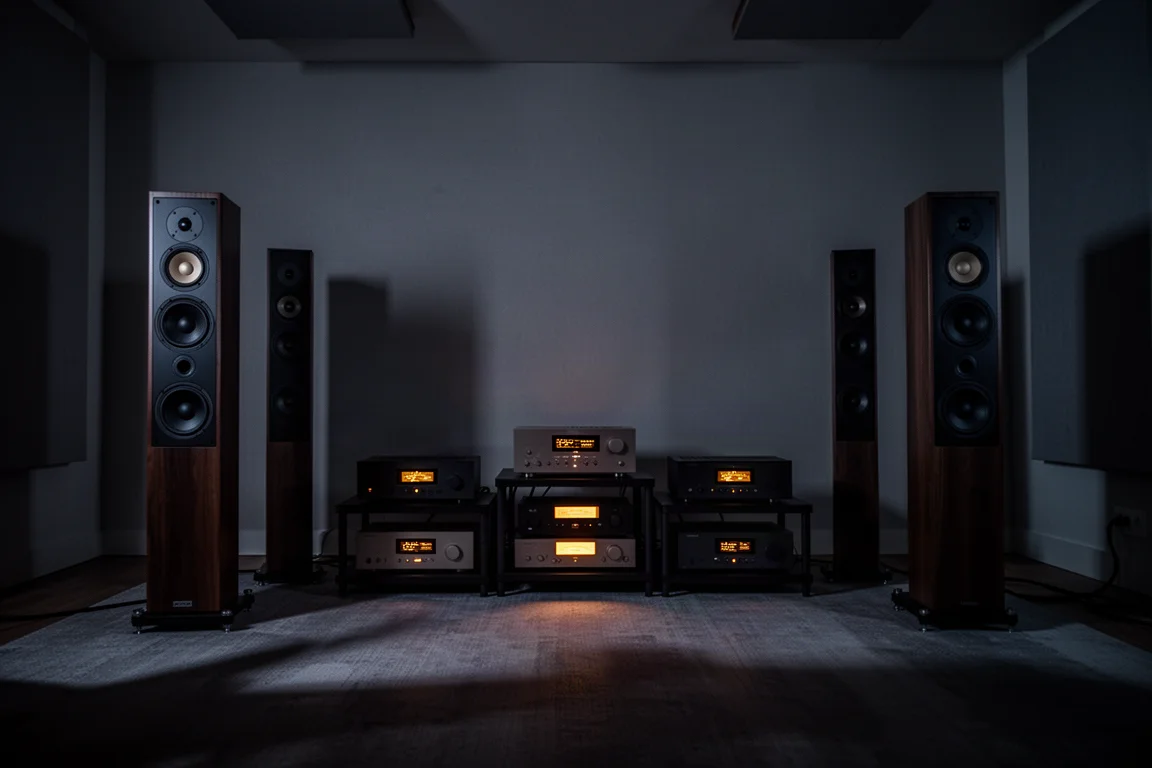
The pair was evaluated with three very different speakers: a full-size, full-range electrostatic model known for low sensitivity and a low impedance curve, a horn-loaded design, and open-baffle reference speakers with 15-inch woofers. Each one asks something different of an amplifier, and the differences were easy to hear.
Against a well-regarded reference solid-state amplifier, the S900 brought more dynamic punch and greater bass impact. The electrostatic speakers are not especially dynamic by nature, yet they lit up more with the S900 in the chain. With the open-baffle speakers, the amplifier’s control over the 15-inch woofers was particularly impressive, and bass-heavy recordings became easier to read into, with vocals sitting more clearly in the mix. The reference amplifier, for its part, sounded mellower and more laid back, which reflects a different set of priorities rather than a shortcoming.
Dense material showed the same pattern. A live 1967 guitar, bass, and drum recording, saturated with distortion in the best sense, revealed more of its layered mix than it had before. A modern bass-forward record demonstrated how much grip the amplifier has at the bottom end.
Listening: Transparency, Detail, and the Built-In DAC
The SPL components lean toward clarity and transparency. Imaging was more precise than with the reference amplifier, and quiet passages carried more inner detail. On the electrostatic speakers, the qualities those speakers are known for, namely purity, clarity, and transient response, were shown off especially well.
The most demanding test was a soundtrack built around Japanese percussion, choral chanting, strings, and brass, played at high volume through an external reference DAC. Detail, clarity, and control over the open-baffle speakers were extraordinary, and on the horn speaker the dynamics were thrilling even without pushing the volume. Just as importantly, the system never became fatiguing, and it stayed tolerable with less-than-perfect recordings, though the reference amplifier was gentler with those.
The Director Mark 2’s internal DAC was compared with a good external converter in the region of $1,000. They sounded different rather than one being clearly better. The external unit was a touch more dynamic, while the built-in DAC had its own strengths and plenty to recommend it. Listeners who already own a preferred converter can choose the Elector preamplifier, which is the same design without the onboard DAC, for $3,400. Those who would rather keep the system simple, with fewer cables and boxes, can stay with the Director Mark 2.
For anyone whose priority is hearing deeper into a mix, that combination of transparency and control is the core appeal of this pairing.
What to Consider Before Buying
- Warranty coverage for all SPL components is two years.
- No remote is included, though the preamplifier can learn commands from an existing remote and an optional remote is planned.
- The input selector numbering runs counterclockwise, which takes some getting used to.
- The built-in DAC is capable, but a dedicated external converter may suit listeners who already have a favorite.
- Prices are $4,700 for the Director Mark 2, $3,400 for the Elector without the DAC, and $5,500 for the Performer S900.
- Both components are 278 mm wide, so they suit smaller racks than typical high-end separates.
Buying Advice
The Director Mark 2 and Performer S900 make most sense for listeners who value transparency, control, and headroom over warmth and richness. If your speakers are demanding, the S900’s current delivery and cool running nature are the strongest arguments in its favor. If you run several digital and analog sources, the Director Mark 2’s ten inputs and high-resolution DAC mean fewer boxes on the shelf.
Choose the preamplifier version deliberately. The Director Mark 2 keeps everything in one chassis with a single set of cables, while the Elector plus an external converter gives you more freedom to shape the sound and upgrade later. Neither route is wrong, and the $1,300 gap between the two versions leaves room for an outboard converter.
Paired together, the two components behave as a system rather than as separate purchases. The amplifier’s adjustable gain and the preamplifier’s input flexibility make them easy to match to a wide range of sources and speakers, and the two-year warranty applies across the line.
It is also worth remembering that this is a presentation built around clarity rather than comfort. Listeners who prefer a mellower, more relaxed character may find a different amplifier better suited to their taste, and that is a legitimate preference rather than a compromise.
Conclusion
The Director Mark 2 and the Performer S900 come from a studio tradition, and they sound like it: transparent, precise, and firmly in control, with dynamics and bass grip that stand out. The compact chassis, the mechanical meters, the ten inputs, and the very cool-running high-current amplifier add up to a coherent package.
They are not the obvious choice for every system, and the missing remote and the counterclockwise input selector are small annoyances rather than deal breakers. For listeners who want pro-audio engineering in a home rack, this pair is a genuinely interesting proposition.
Further reading
Related Reviews
Hi-Fi Audio
Accuphase C-57 vs Allnic H-7000V: Two High-End Phono Stages Compared
A fully balanced solid-state phono stage with a pitch-black noise floor meets a tube design built for well-loved records. Here is how to choose between them.
Hi-Fi Audio
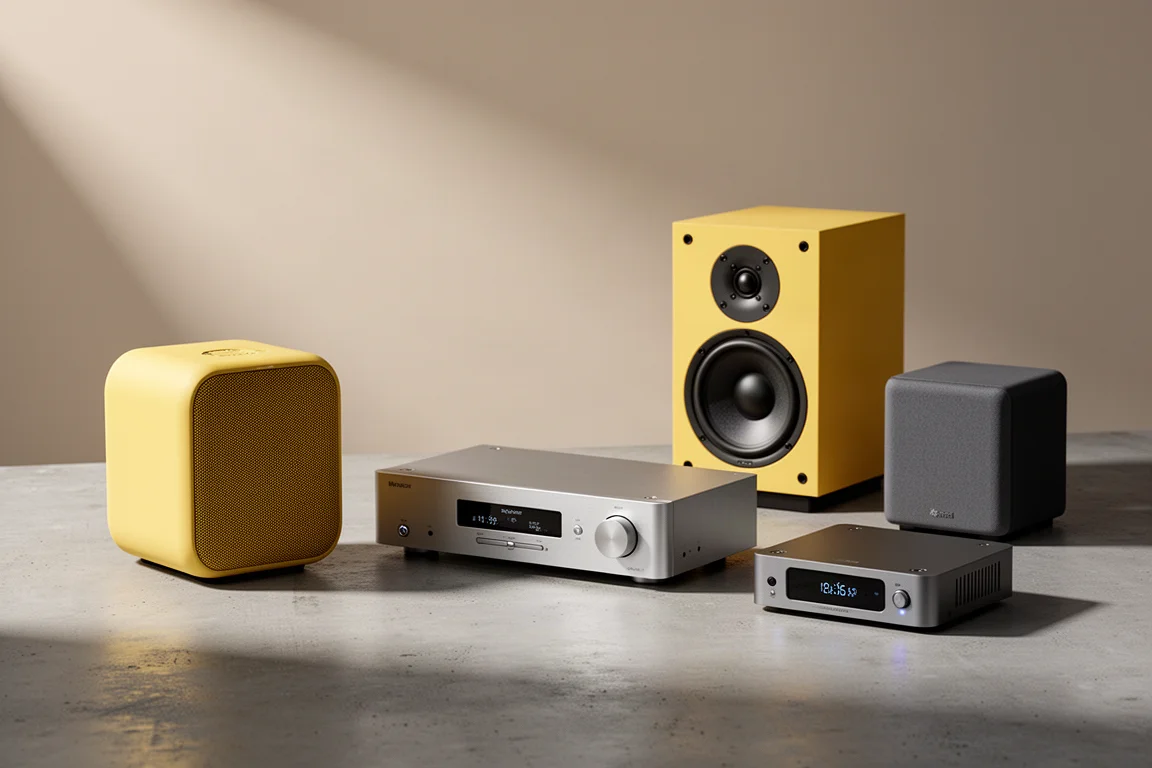
Active vs Passive Hi-Fi: Five Components for a Modern System
Five components that define modern active and passive hi-fi systems, with the strengths, trade-offs and setup details worth weighing before you buy.
Hi-Fi Audio
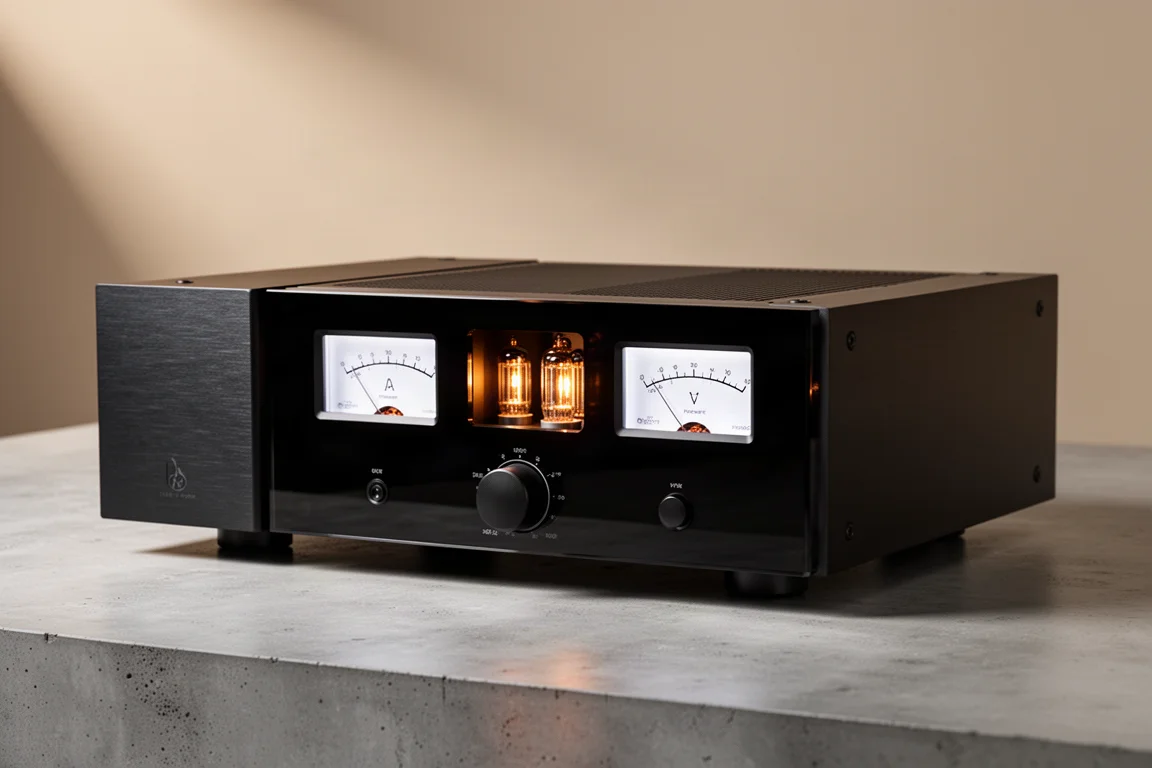
Advance Paris A10 Apex Review: A Hybrid Integrated Amplifier That Covers a Lot of Ground
A French hybrid integrated amplifier with a class A tube preamp stage, analogue power meters, and an internal DAC and phono stage good enough to make extra boxes unnecessary.