Cycling Saddles
Specialized S-Works Power Evo With Mirror Review: A Narrower Power Saddle That Fixes the Wings
Specialized narrows the Power saddle and cuts its flare angle. Here is how the S-Works Power Evo with Mirror performed in pressure mapping, what changed, and who it suits.
Introduction
The Specialized Power has been one of the most widely used short-nosed road saddles, and also one of the most divisive. The complaint is consistent: the widest point of the shell sits far enough back and flares wide enough to catch the rider’s thighs, and in some cases that contact produces sores. The settled nose encourages riders to slide forward onto the front of the saddle, which costs support rather than adding comfort.
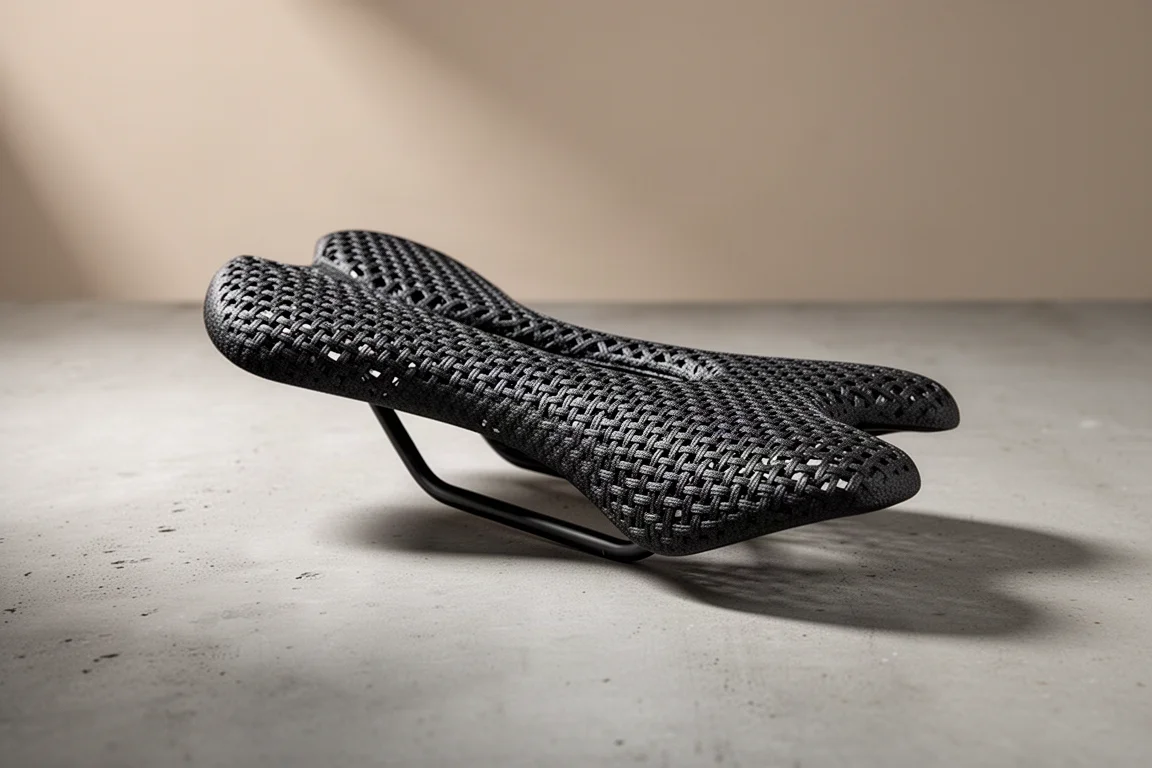
The Specialized S-Works Power Evo with Mirror is the response. Two changes stand out immediately. The saddle is significantly narrower across its widest point, and the flare angle has been dramatically reduced, so the shell no longer sweeps from very narrow at the nose to very wide at the rear. The nose itself is slightly wider and more pronounced, which raises an obvious question about whether front-end pressure becomes the new trade-off.
This review covers what the new shape does well, where it still asks for compromise, and who should consider it.
Who the Specialized S-Works Power Evo With Mirror Is For
The Power Evo is aimed at riders who like the idea of a short-nosed saddle but have never got along with the width of the original Power. If you have felt the rear wings of a saddle digging into the back of your thighs, or found yourself shuffling forward to escape them, the narrower shell and reduced flare are the two changes worth paying attention to.
It also suits riders who are already comfortable on a pressure-relief saddle and want a flatter platform. The Power Evo is noticeably flatter than the previous generation, and flat profiles work well for riders who prefer a stable, consistent contact point rather than a shaped cradle.
Saddle preference is often described as purely personal, but the practical pattern is broader than that. A well-designed short-nosed shape can serve a wide range of riders. As a reference point, the Selle Italia SLR Boost, used here as the comparison benchmark, is a shape that suits roughly three quarters of riders fitted, male or female.
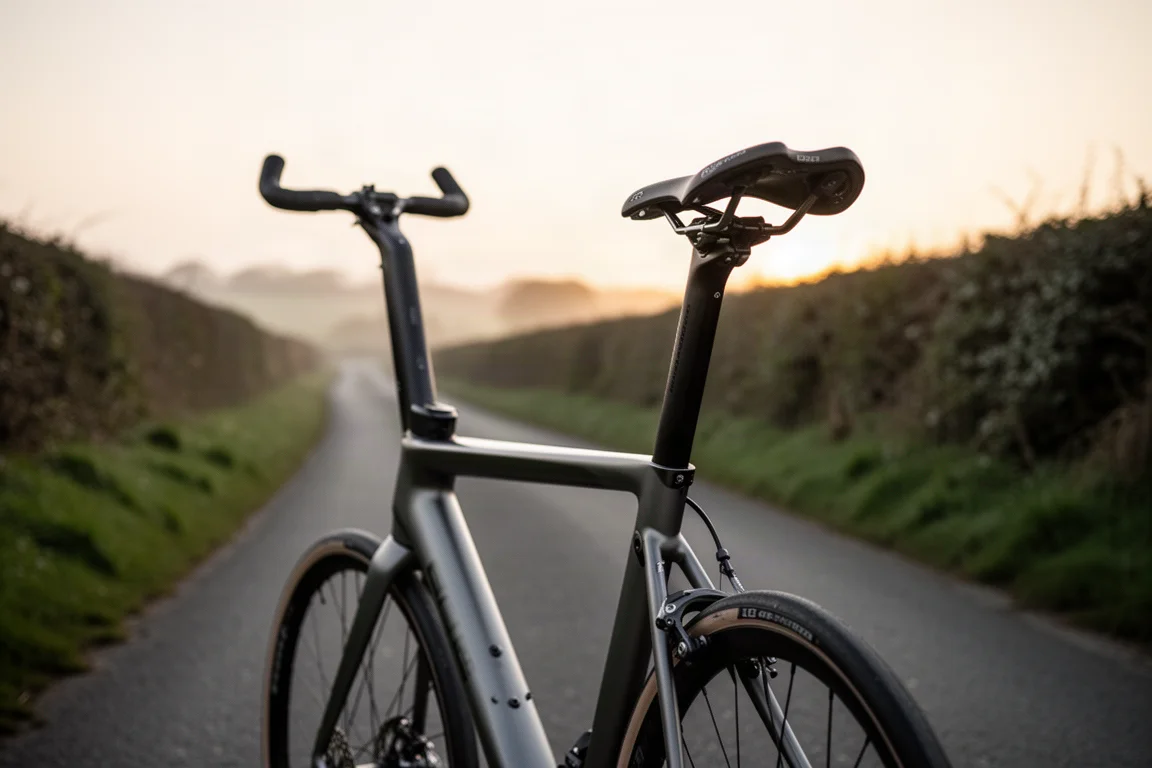
Riders who already get on well with a narrow, flat saddle are the most likely to feel at home straight away. Riders moving from a deeply shaped or heavily padded saddle should expect an adjustment period rather than an instant fit.
Main Strengths: A Narrower, Flatter Profile
The headline strength is geometry. The Power Evo measures 13 mm narrower than the previous generation across the widest point, and the flare angle drops sharply, so the transition from the narrow front to the wider rear is much gentler. On the bike that reads as a saddle that gets out of the way. In testing it felt clearly better than the outgoing shape.
The flatter profile matters too. Saddles with very flat shells tend to create focal points of pressure, while strongly shaped shells chamfer load away from the centre. The Power Evo sits closer to the flat end of that spectrum without losing the chamfered edges that help reduce overall pressure.
The upper uses the same 3D printed Mirror lattice as the rest of the Mirror range, and the shell and upper materials are shared with the Power Pro with Mirror, a saddle that came out on top of a direct comparison between standard and 3D printed versions on pressure alone. The S-Works build also uses carbon rails.
Pressure Mapping: What the Numbers Show
Pressure mapping was used to compare the Power Evo against a benchmark saddle and against earlier Power shapes. It is worth understanding the limits of the method first: the mat carries 30 sensors and they all sit under the central section of the mat, so contact between the rear wings and the rider’s thighs is never captured. That is exactly the contact the original Power was criticised for, which means the numbers can only ever tell part of the story.
Against the benchmark, the Selle Italia SLR Boost produced a balanced left-to-right distribution, two even rounds of pressure and very little load through the nose. That is a useful reference because it represents a shape that works for a large majority of riders.
The Power Pro with Mirror in 143 mm reduced overall pressure compared with the benchmark, but pushed roughly 50 percent more pressure through the nose, showed a longer pelvic movement trace and therefore less stability, and was broadly similar in left-to-right balance. The nose loading matched what the rider felt on the bike, along with the familiar catching at the wings.
The Power Evo improved on that. Pressure dropped at the nose, on the left and on the right, and the position became more stable. A left-to-right imbalance remained, but the direction of travel was clear: reducing saddle width reduces overall pressure.
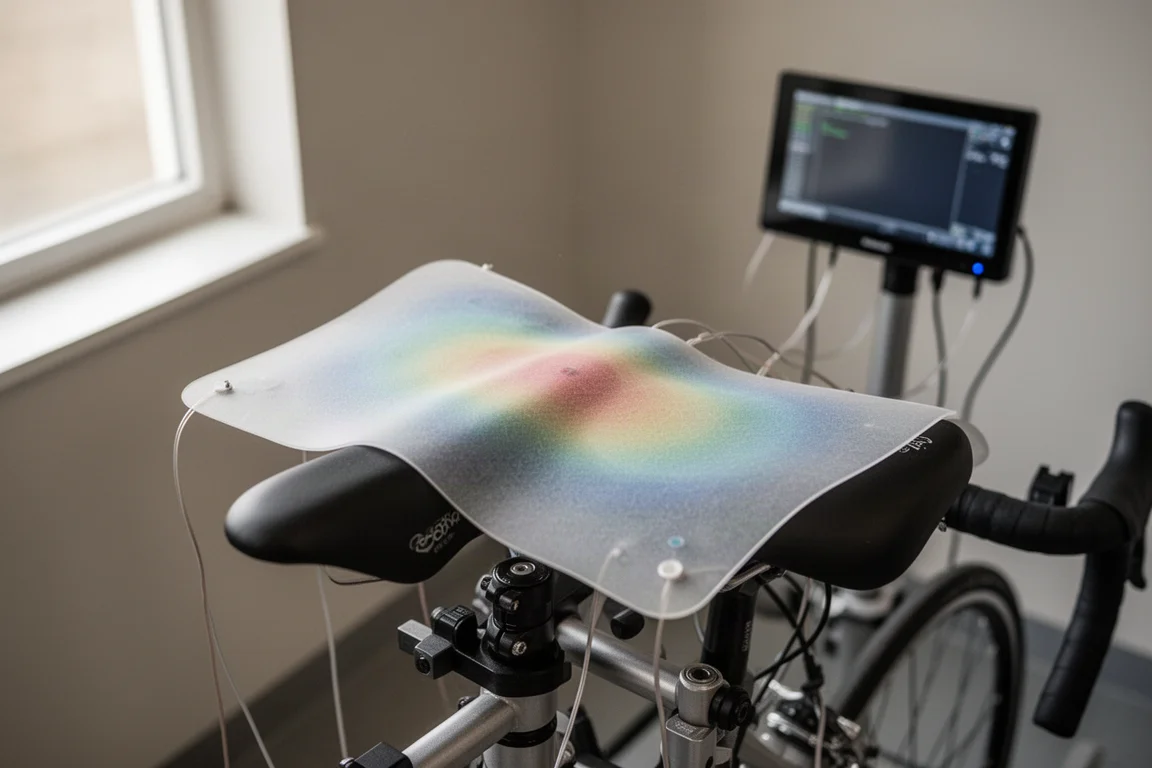
One caveat applies to every pressure map. A tidy, symmetric result does not automatically mean comfort, and an untidy one does not automatically mean discomfort. If a saddle feels wrong during a fitting session, a reading on a screen should not overrule that.
Why the New Shape Matters: Saddle Width and Sitbone Measurement
The width of the original Power was not an accident. It followed a widespread fitting practice of measuring sitbone width with the rider seated upright on a measuring device, then selecting a saddle to match. The problem is that riders do not sit on a bike the way they sit on a measuring stool, so the measurement tends to overstate how wide the saddle needs to be. That practice drove a long trend towards excessively wide saddles.
The Power Evo reverses part of that trend. Narrowing the shell at the widest point is not cosmetic: it directly reduces measurable load and it reduces the chance that the rear wings interfere with the thighs.
There is a second principle worth holding onto. Pressure relief does not make pressure disappear. Moving from a saddle with no relief channel to one with a central cutout redistributes load from soft tissue to the skeleton, and that redistribution can take several rides to get used to. Discomfort during the first week on a relief saddle is not automatically a sign that the saddle is wrong.
Things to Consider Before Buying
The Power Evo is a clear improvement over the previous generation, but it is not a clean sheet.
The rear wings still catch slightly. It is far less pronounced than before, and the effect reduces if you sit further forward on the saddle, but sitting further forward also removes much of the support the saddle is supposed to provide. Riders who are sensitive to any wing contact should test before committing.
The nose is slightly wider and more pronounced than before, which is a deliberate part of the redesign. Pressure through the nose measured lower than the previous generation, but riders who spend long periods on the front of the saddle should still pay attention to how it feels.
Price is the other consideration. The saddle is listed at around £379 in the UK, a significant amount for a bicycle saddle. For context, a best-selling Selle Italia saddle sits at roughly £200, about half the price. The Mirror upper and carbon rails account for part of that gap.
Setup is not always plug and play. Different saddles have different depths, so swapping models changes effective saddle height. Moving from a first-generation saddle to a Specialized Power Pro, for example, drops saddle height by roughly a centimetre. Carbon rails are supported, but very deep 9 mm carbon rails are not.
Saddle pressure is only one input. Arch support in cycling shoes can reduce pressure through the saddle by up to 50 percent, a reminder that a new saddle is not always the first fix for a comfort problem.
How to Set Up and Test a New Saddle
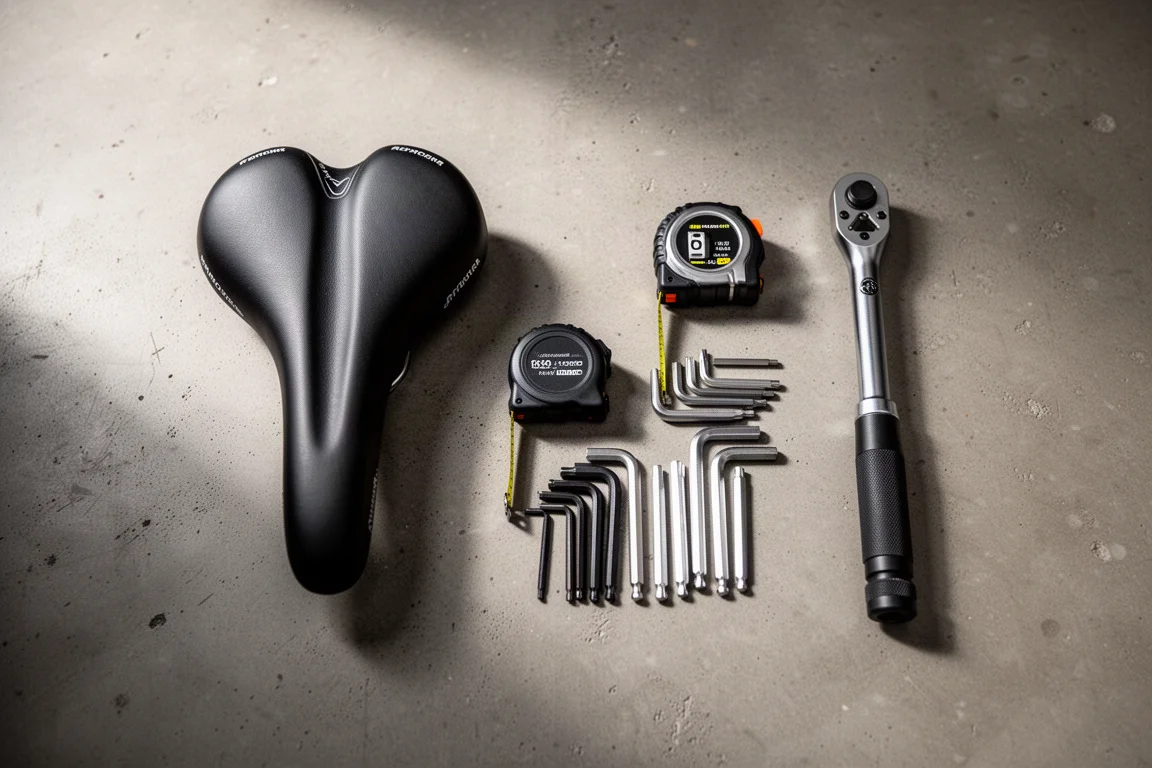
Measure before you swap. Record saddle height from the centre of the bottom bracket to the top of the saddle, and put the new saddle back in the same place. Differences of around 3 mm are not worth chasing, since spinal compression over a long day changes effective position by more than that.
Ride the saddle without any measuring equipment first. Feel is the primary signal, and it is easier to describe what a saddle does when you are not watching a screen. Pressure mapping is most useful afterwards, as a way of confirming or challenging what you already felt.
Keep the rest of the contact points constant while you test. A saddle change on a bike with an otherwise settled position is a clean experiment; a saddle change in the middle of three other adjustments is not.
Buying Advice
Buy the Power Evo if you have wanted to like a short-nosed saddle but found the previous Power too wide at the rear, or if you want a flatter platform with a 3D printed upper and carbon rails. The narrower shell and reduced flare angle are genuine, measurable changes rather than marketing language, and the pressure data supports them.
Look elsewhere if you are happy on a saddle with more shape or a deeper cradle, or if the price is hard to justify for a component you may replace again. The shape is the reason to buy, so it is worth confirming that it suits you before spending at the top of the range.
If the geometry appeals but the price does not, it is worth waiting to see whether the same shape arrives in a cheaper build. A titanium rail version, or one with a conventional foam or gel upper and a large central cutout, would make this profile far more accessible.

Conclusion
The Specialized S-Works Power Evo with Mirror is the version of the Power that the original should have been. It is 13 mm narrower at the widest point, its flare angle is dramatically reduced, and it is flatter than the outgoing shape. In pressure mapping it lowered load at the nose and on both sides, and it held a more stable position than the previous generation.
It is not perfect. The wings still make light contact with the thighs, the nose is a little more pronounced, and at around £379 in the UK it sits firmly at the premium end of the saddle market. As a shape, though, it is a clear step in the right direction.
Product link
View more details for Specialized S-Works Power Evo with Mirror
This product is mentioned in the review. Check the specifications, options, and compatibility before buying.
View more details for Specialized S-Works Power Evo with MirrorFurther reading
Related Reviews
Cycling Saddles
Best Bicycle Saddles Ranked: Ten Models Compared for Comfort and Fit
A practical ranking of ten road and triathlon saddles, from wide flared shapes that rub the thighs to narrow designs that support the rear of the saddle properly.
Cycling Saddles
Best Road Bike Saddles 2026: Choosing the Right Width and Pressure Relief
A practical guide to road bike saddle selection, covering pressure relief, saddle width, and two widely known designs, the Selle Italia SLR Boost and the Specialized Power.
Cycling Saddles
Best Road Bike Saddles Ranked: Nine Options From Worst to Best
A fitter's ranking of nine road bike saddles, from wide flared designs that catch the thighs to the narrow shape most riders end up choosing.