Cycling Saddles
Best Bicycle Saddles Ranked: Ten Models Compared for Comfort and Fit
A practical ranking of ten road and triathlon saddles, from wide flared shapes that rub the thighs to narrow designs that support the rear of the saddle properly.
Introduction
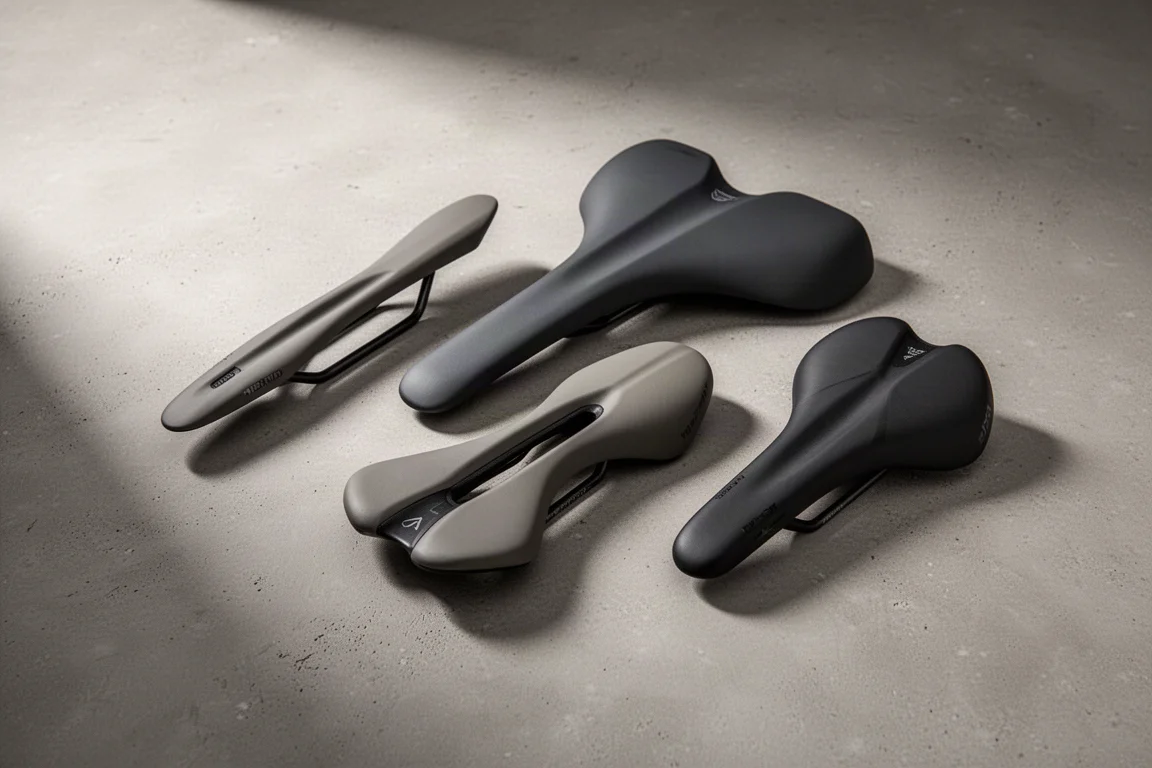
A saddle is the one contact point on a bike that has to match your body rather than your frame, and it is also the part most riders replace first. Width, profile and the angle at which the rear flares outward all change how you sit, how your thighs move, and how much weight ends up on soft tissue.
In recent years saddles have become steadily wider, largely because sit bone measuring systems have pushed riders toward bigger numbers. For many riders that trend has made comfort worse rather than better, because a wider saddle interacts with the thighs and forces weight forward.

This ranking runs from the models that most often cause problems to the one that suits the broadest range of riders. Every entry is judged on the same criteria: width and flare, the way the wings meet the thighs, whether the shape pushes the rider forward onto the nose, and how much support the rear of the saddle really provides.
How This Ranking Works
The order below is not about price or brand prestige. It reflects how each saddle behaves once a rider is actually pedalling, and how much work it creates during a bike fit.
- Width and flare angle: how quickly the saddle widens behind the nose, and whether that width catches the back of the thighs.
- Nose behaviour: whether the shape encourages a rider to slide forward and load an area the saddle was never designed to support.
- Rear support: how well the widest part of the saddle carries the rider’s weight.
- Adjustment range: rail length, and how much of that range is genuinely usable once the saddle is positioned.
- Durability details: rail material and any tendency to creak over time.
A saddle that scores well on all five points is rare. Most riders end up trading one against another.
Specialized Power: Too Wide for Many Riders
The Specialized Power is offered in three width iterations, and all of them sit on the wide side. The bigger issue is the flare angle, meaning the rate at which the saddle widens out toward the rear. That flare produces excessive interaction with the thighs, and riders respond by moving forward.
Once a rider is perched on the nose, the saddle stops offering meaningful support, because the nose is not built to carry weight. A 168 mm example of this model shows the problem clearly: the shape ends up closer to a paddle than to a platform anyone can sit on properly.
It is also worth knowing that this saddle is fitted as original equipment on complete bikes. Curiously, the smaller sizes tend to arrive with the wider versions, which is the opposite of what most riders would expect.
Fizik Arione: Long, Flat, and Asymmetry-Prone
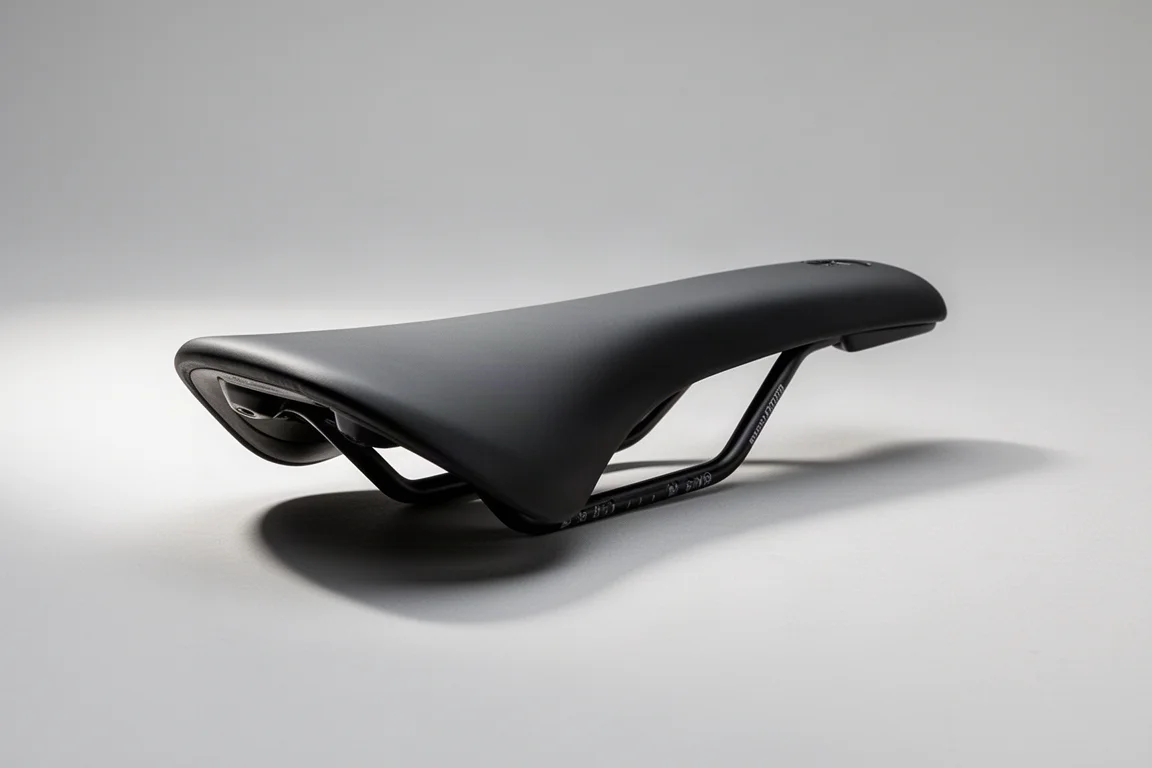
The Fizik Arione is rarely seen on new bikes now. Its long, flat profile lets a rider move between a large number of seated positions with a reasonable degree of comfort, and that is the main argument in its favour.
The problem is what that freedom encourages. Riders often end up sitting off to one side as they search for comfort, and over time that promotes asymmetry. Because a long flat saddle can feel acceptable even with a poor position underneath it, it tends to hide the real problem rather than solve it.
Pro Stealth: Short Fit, Nose-Heavy Feel
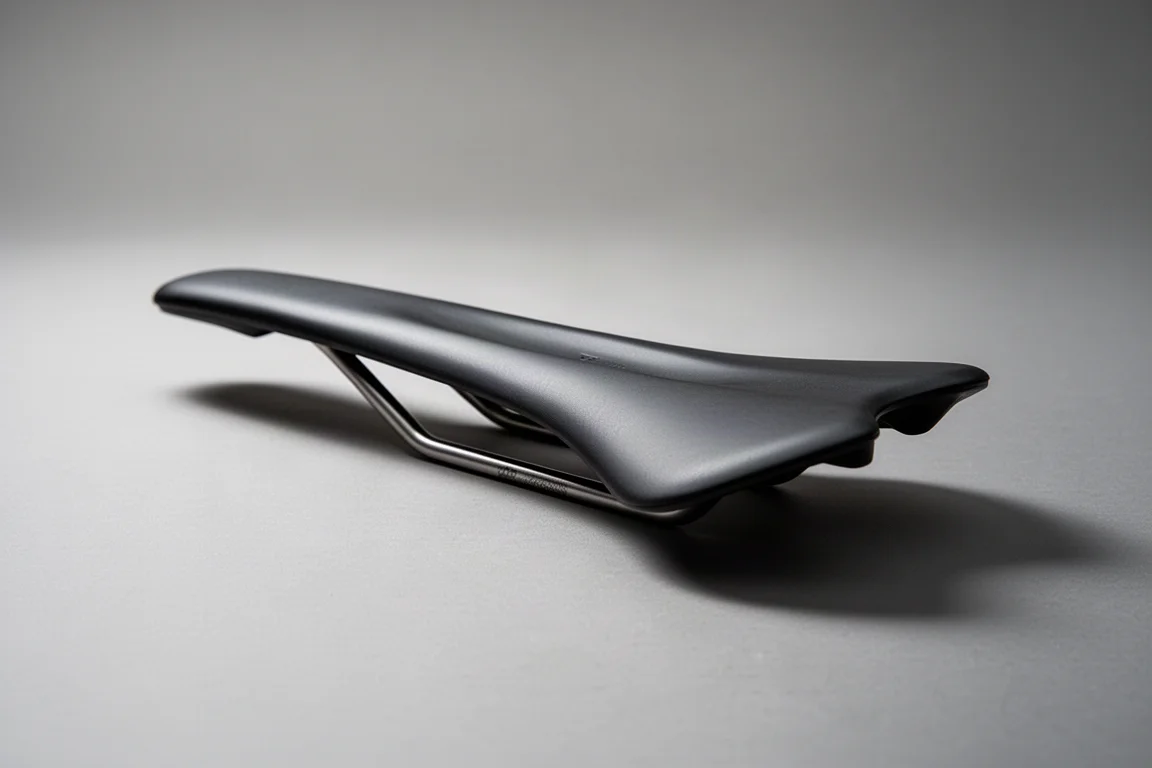
The Pro Stealth is a short fit design, but it runs into trouble at both ends. The wings are wide enough to interfere with the thighs, and the nose is shaped in a way that pulls riders forward onto it.
That combination produces the classic set of saddle complaints: pressure where there should be none, a constant shuffle backward, and a position that drifts over the course of a ride.

A short saddle can work very well, but it needs to leave the thighs clear and give the rider a stable place to sit. Riders who like the short fit concept are usually better served by testing a narrower option before settling on this one.
ISM: A Triathlon Specialist, Not a Road Saddle
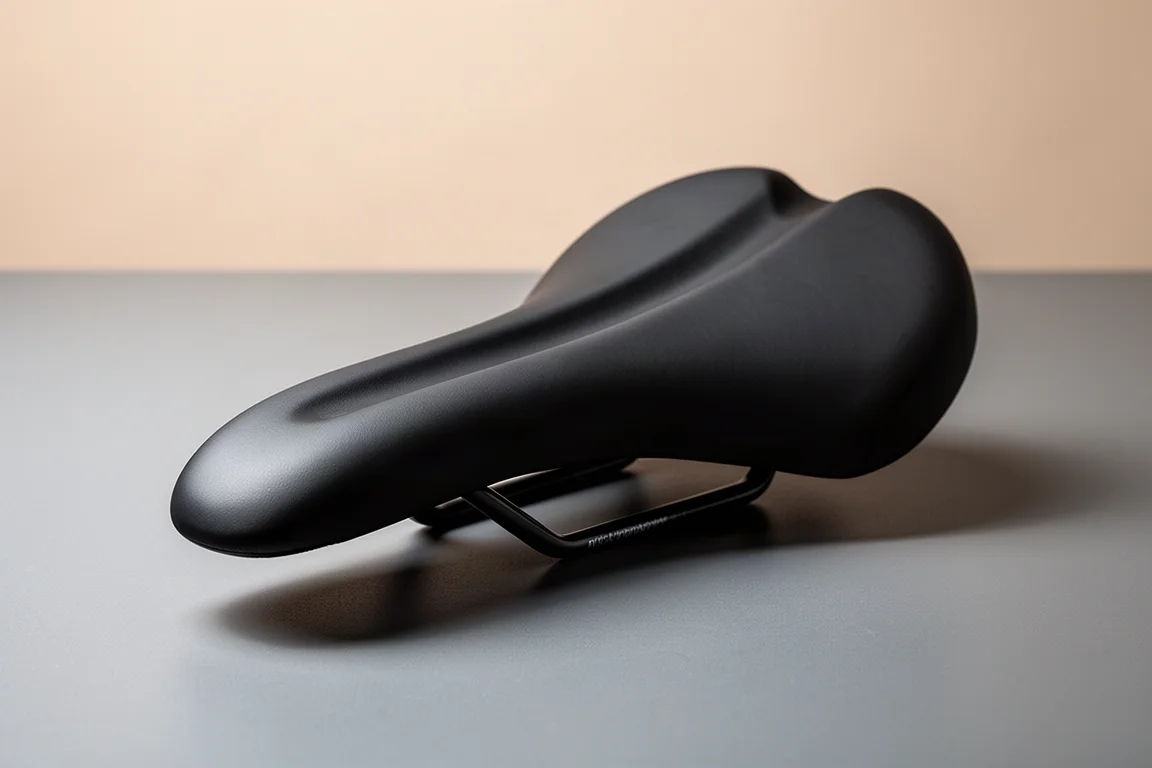
The ISM is not really a road saddle, and it should not be judged as one. It is a triathlon specific design that loads a different part of the pelvis, the ischial pubic rami rather than the sit bones, and it allows more anterior pelvic tilt. That is exactly what a triathlon position asks for.
On a conventional road bike the picture changes. This is one of the few designs that can be fitted to a road bike only with excessive saddle height, and it is usually a sign that the position itself needs attention rather than the saddle.
ESAC Shark: A Bike-Fitting Tool, Not a Saddle Choice
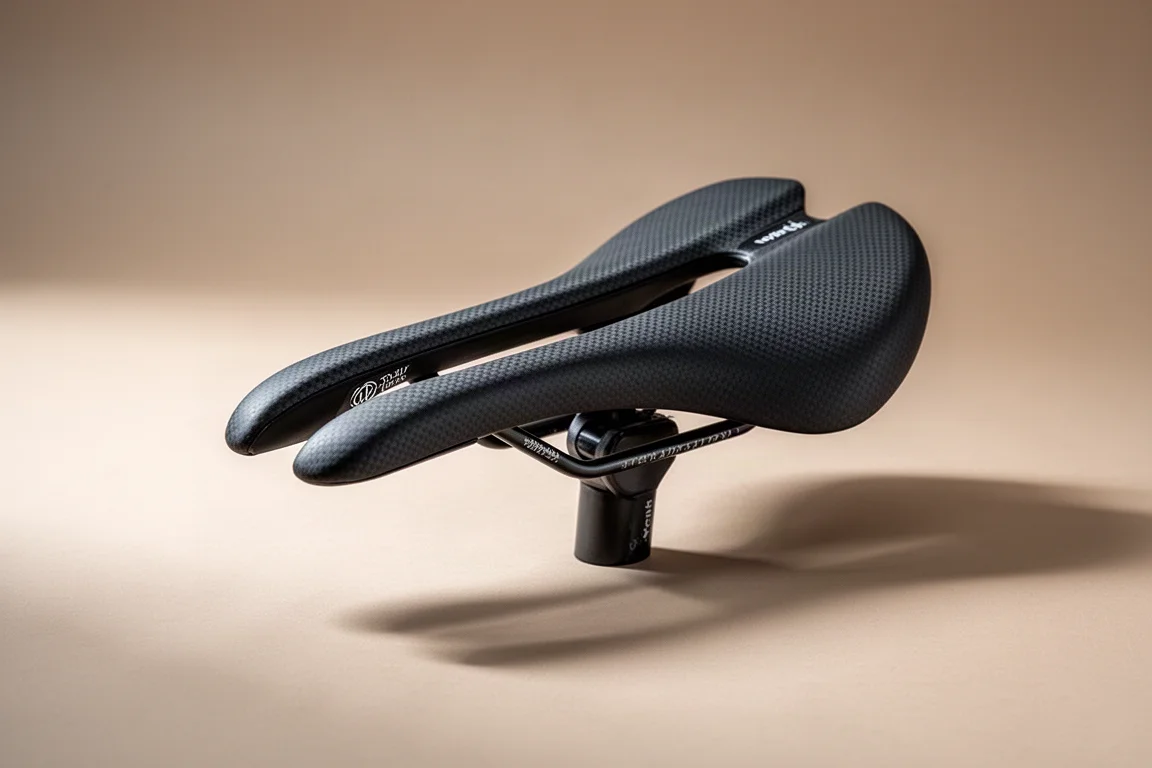
The ESAC Shark is a biomechanical saddle, and it belongs in a different category altogether. It is a fitting aid rather than a saddle to ride every day. Its defining feature is a fin at the rear, designed to sit between the rider’s buttocks and mark the centre line of the saddle.
That matters because riders commonly list to one side, whether from excessive saddle height, insufficient arch support in the shoes, or feet set too close together. Once a rider is stuck in that rut, a fin like this helps them re-establish where the middle of the saddle actually is. As little as 15 to 20 minutes on it can be enough to change the habit.
It is a tool for supervised bike fitting, not a purchase to take home and ride.
Selle SMP Dynamic: Distinctive Shape, Awkward Positioning
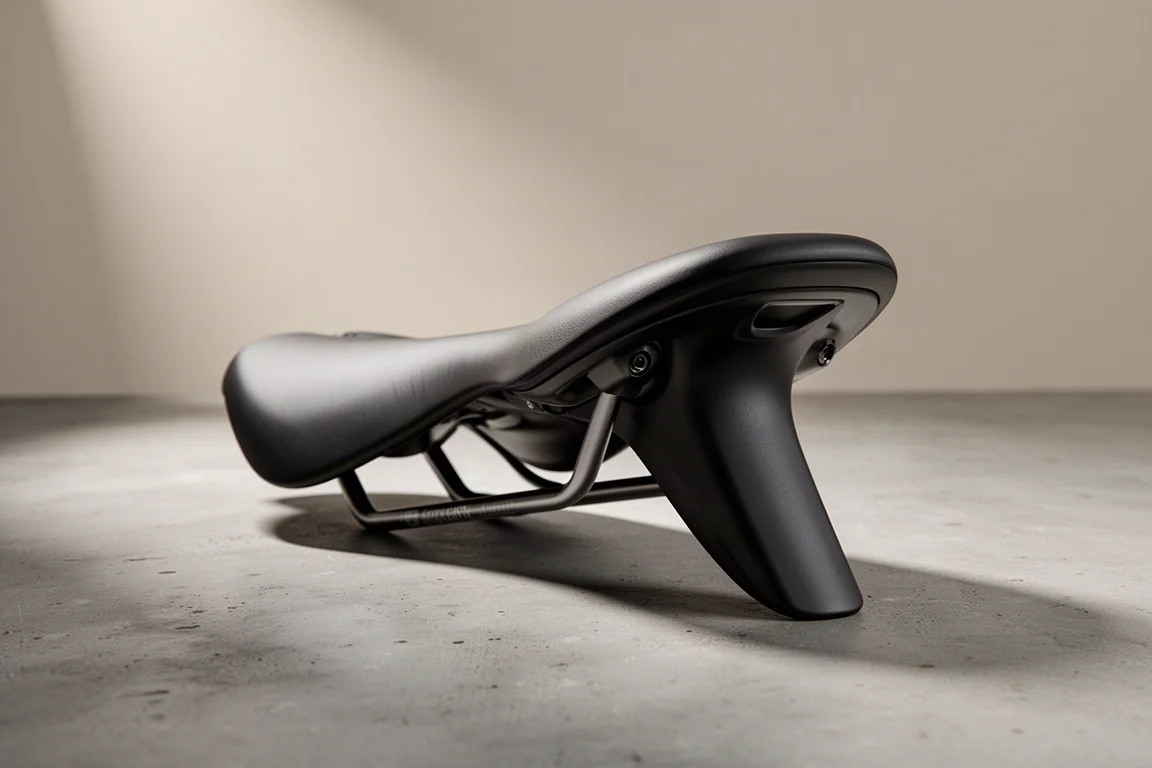
The Selle SMP Dynamic carries the distinctive profile the brand is known for. It can produce decent pelvic interaction, and its rails are very long, which suggests a wide range of fore and aft adjustment.
In practice, much of that range is unusable. The seating portion sits very far back, so the saddle usually has to be run as far forward as it will go. Once it is positioned that way, the long rails no longer offer the flexibility they appear to promise, and the setup brings its own limitations.
That places it in the middle of this ranking: not a bad saddle, but one with a shape that asks a lot of the rest of the fit.
Pro Griffon: Flat, Supportive, and Hard to Find in 130 mm
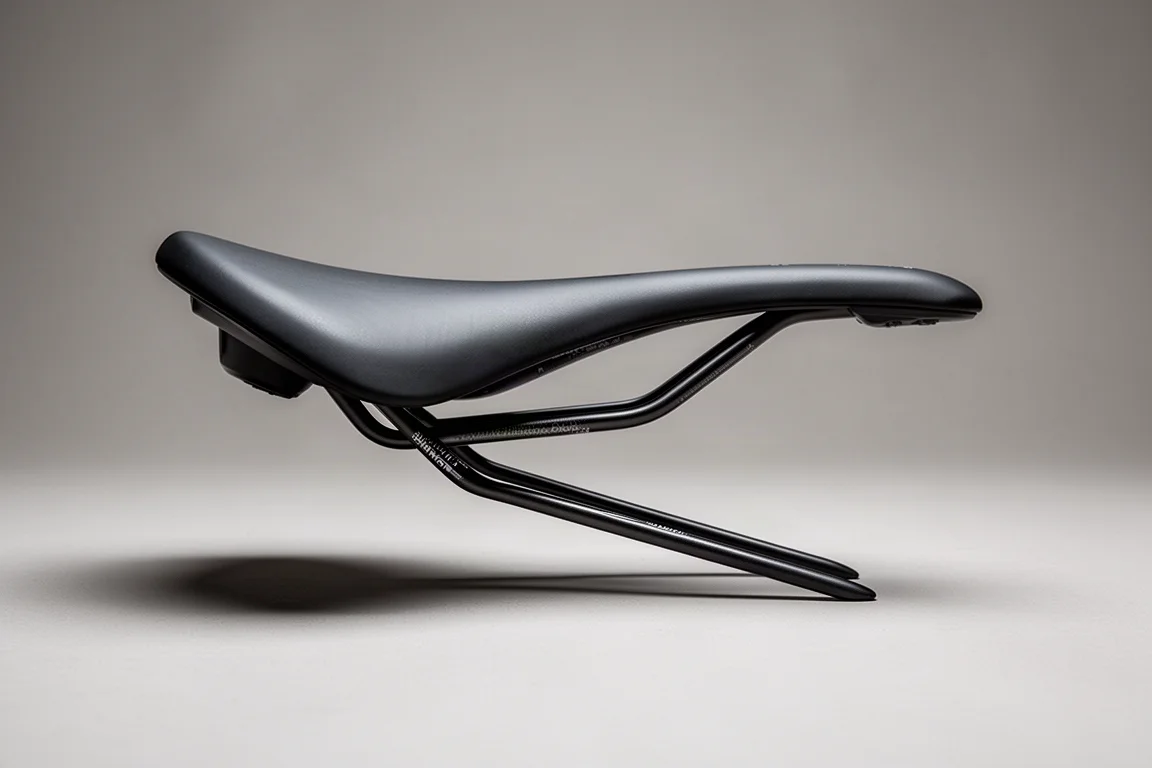
The Pro Griffon is a flat saddle in both planes, across the width and along the length, with a reasonable pressure relief channel. That flat surface gives a stable platform, and it has long been a favourite shape for riders who dislike contour under the sit bones.
It is available in three widths, but the 130 mm version is very difficult to come by, which is a real limitation for lighter or narrower riders. Rail options include carbon and steel, so there is some choice in how much you spend.
Pro Turnix: A More Contoured Option
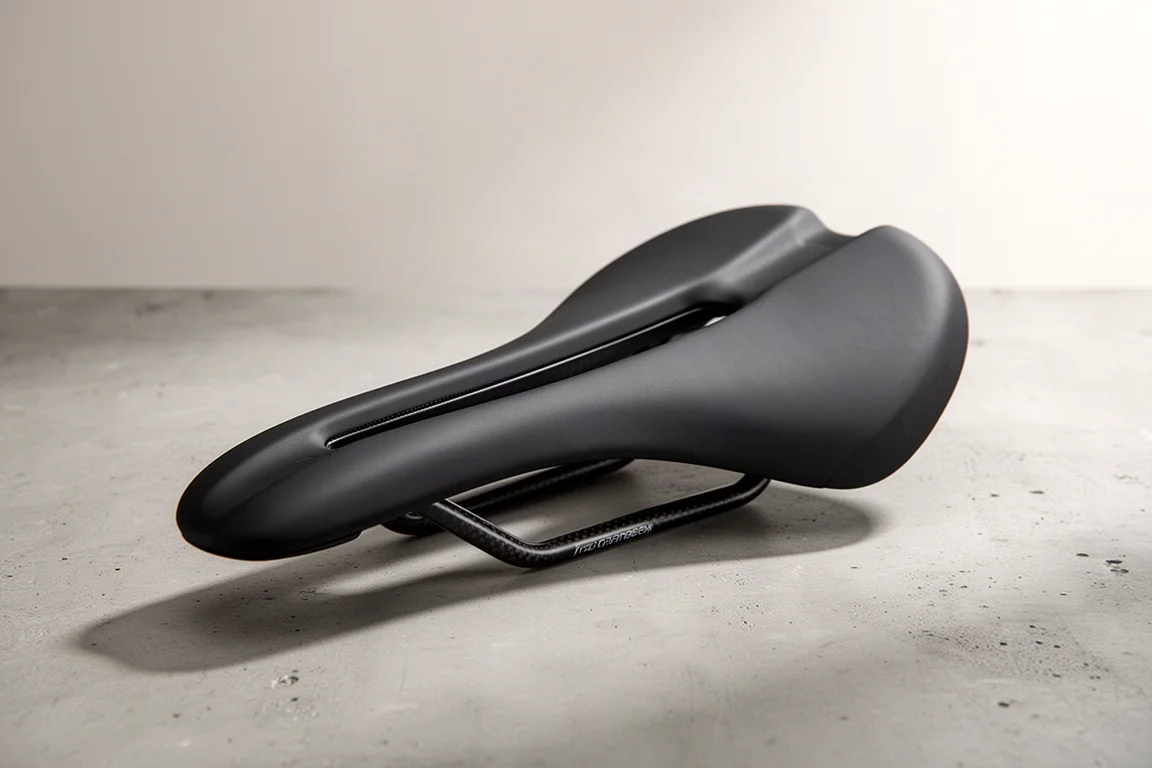
The Pro Turnix takes the opposite approach to the Griffon. It is much more contoured, in both planes, and that extra shaping is what makes it useful.
Riders who suffer from sit bone pressure often get on better with a contoured surface, because the shape spreads load differently from a flat platform. It is not automatically better, but it is a genuinely different option for a specific complaint.
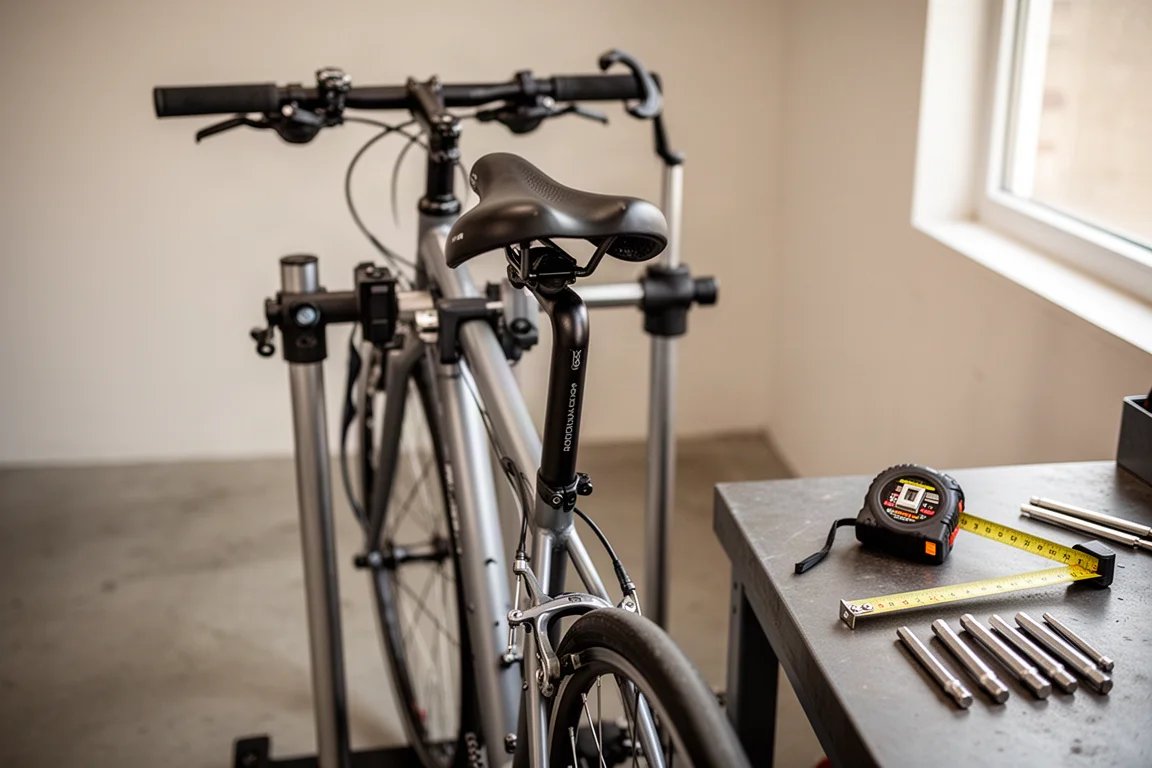
If flat saddles leave you sore at the sit bones after long rides, the Turnix is the shape worth trying before you conclude that saddles are simply uncomfortable.
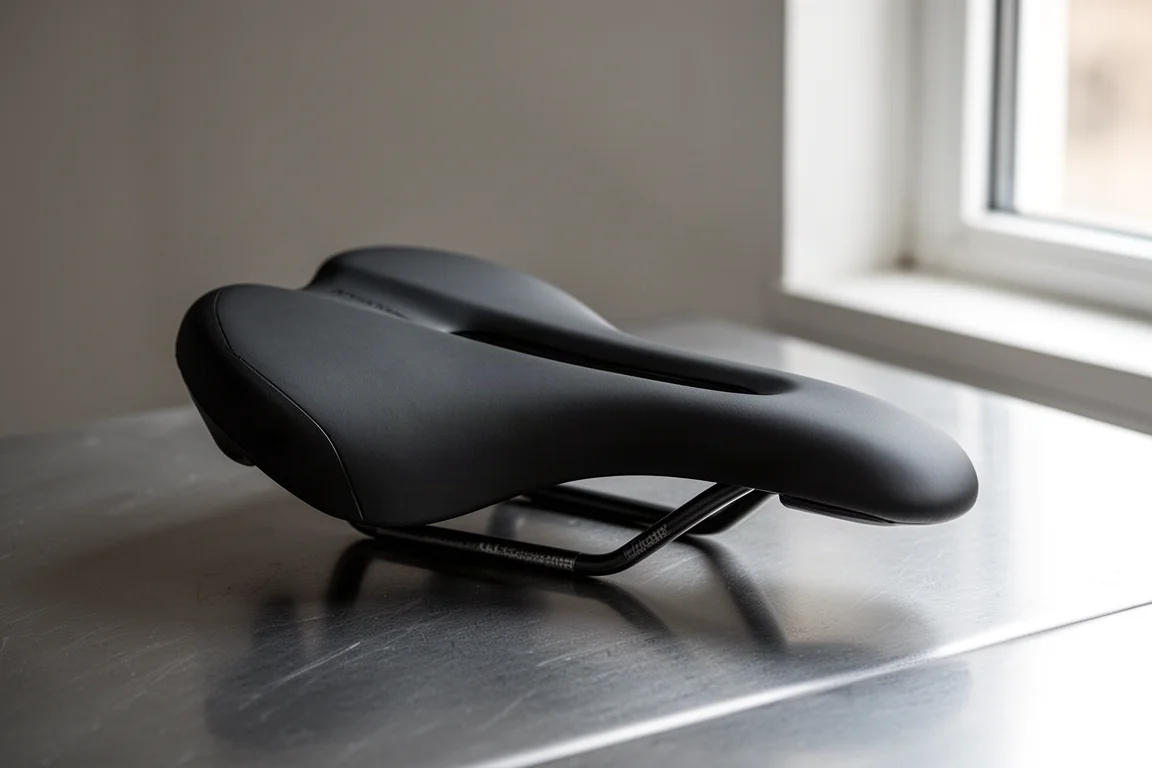
Ergon SR: Flat Rear, Deep Relief Channel
The Ergon SR uses orthopedic foam and combines a flat rear section with a large pressure relief channel at the front. The flat rear gives a stable base, and the channel is generous where riders need it most. In fitting practice, the narrowest version of this saddle produces the best results.
It is also a useful reminder that saddles are not really divided by gender. Many of these are fitted to men’s bikes and many men’s saddles are fitted to women’s bikes. Pressure relief is the requirement on both sides of that line.
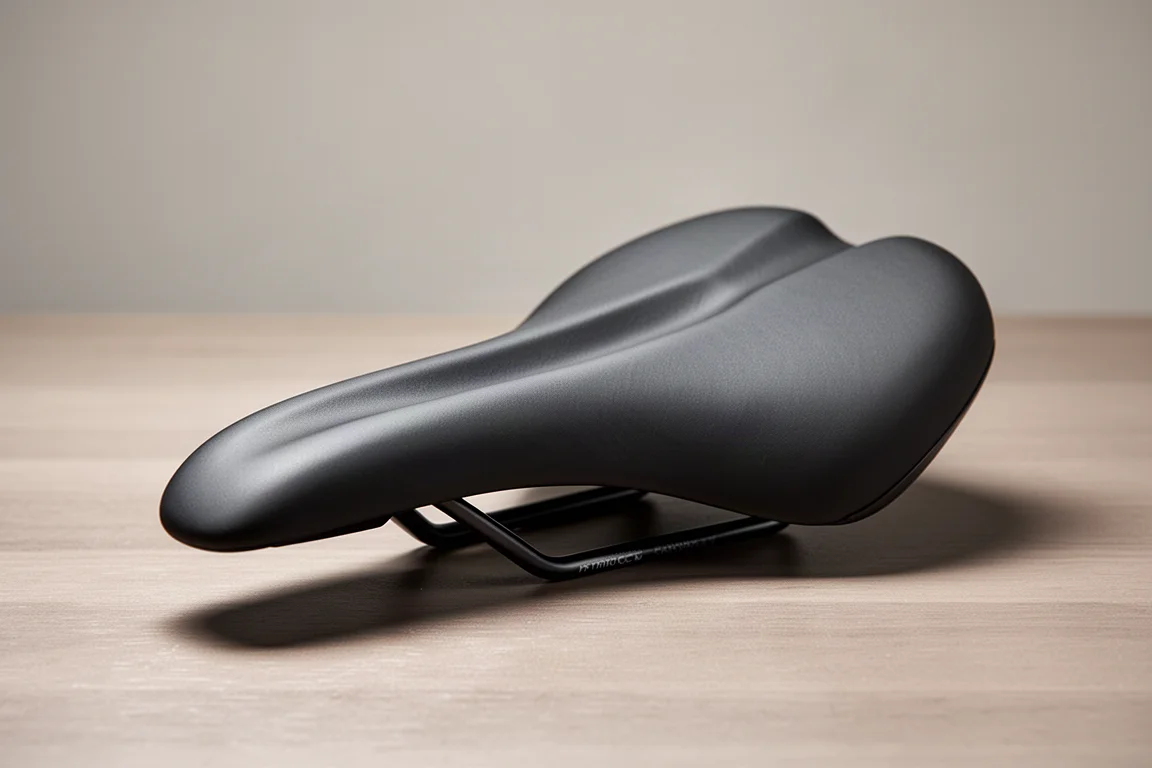
Selle Italia SLR Boost S3: The Standout Pick
The Selle Italia SLR Boost S3 tops this ranking, and the reason is simple: width. The S3 designation refers to the 130 mm version, while the L3 is 145 mm. That narrow profile lets a rider sit on the widest, most supportive part of the rear of the saddle without the wings catching the thighs, which produces a more natural interaction with the saddle and a cleaner pedal stroke.
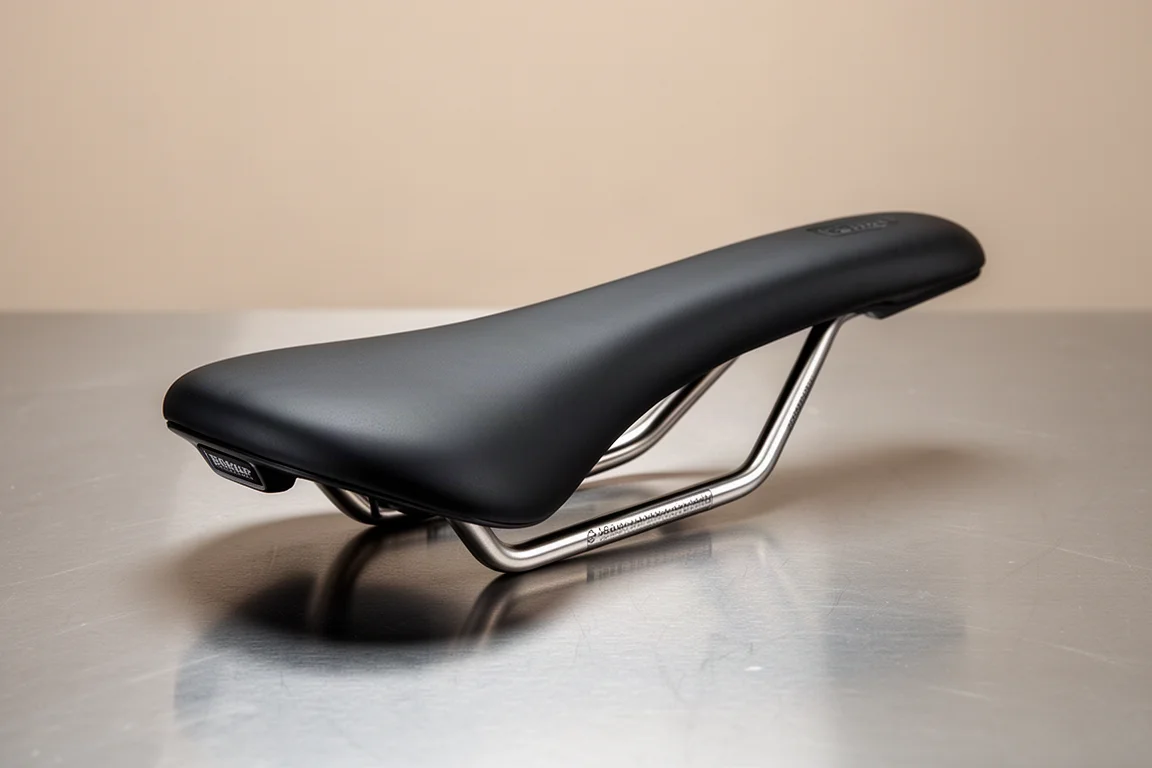
The range has several iterations. The cromoly rail version is acceptable but not especially well made and has a tendency to creak. The endurance model is the one to look for, with a little extra padding and a titanium rail that seems less prone to noise. There is also a carbon version and a 3D printed version, the latter being the least appealing of the group.

Because the model spans a number of versions and price ranges, it is possible to start with a lower cost iteration and move up if the shape suits you. Given how many riders settle on this saddle, that is a sensible place to begin.
Buying Advice: Fix the Position Before the Saddle
The most important point in this ranking is that saddle problems should not be medicated with saddles. Around 90 percent of saddle complaints come from the position on the bike: a saddle set too high, a reach that is too long, a setback that is too great, or feet placed too close together.
There is a striking demonstration of this. Adding proper arch support in the shoes can reduce the pressure going through the saddle by up to 50 percent, without changing the saddle at all.
So before buying several saddles and working through them one by one, have your position checked. A narrow saddle with a supportive rear section is a good starting point for most riders, and the Selle Italia SLR Boost S3 is the model that suits the widest range of people on this list.
Conclusion
Ten saddles, one clear lesson. Width and shape matter more than branding, and the saddles that rank highest here are the ones that stay clear of the thighs and let a rider use the rear of the saddle properly.
If you are shopping, start narrow, check your position first, and treat the shape of the rear of the saddle as the single most important detail. That is what separates the models at the top of this list from the ones at the bottom.
Further reading
Related Reviews
Cycling Saddles
Best Road Bike Saddles 2026: Choosing the Right Width and Pressure Relief
A practical guide to road bike saddle selection, covering pressure relief, saddle width, and two widely known designs, the Selle Italia SLR Boost and the Specialized Power.
Cycling Saddles
Best Road Bike Saddles Ranked: Nine Options From Worst to Best
A fitter's ranking of nine road bike saddles, from wide flared designs that catch the thighs to the narrow shape most riders end up choosing.
Cycling Saddles
Best Selle Italia Saddles: SLR, Novus, and Flite Compared
A practical guide to choosing between the Selle Italia SLR, Novus, and Flite, covering width, shape, cutouts, and saddle setup.