Cycling Saddles
Best Road Bike Saddles Ranked: Nine Options From Worst to Best
A fitter's ranking of nine road bike saddles, from wide flared designs that catch the thighs to the narrow shape most riders end up choosing.
Introduction
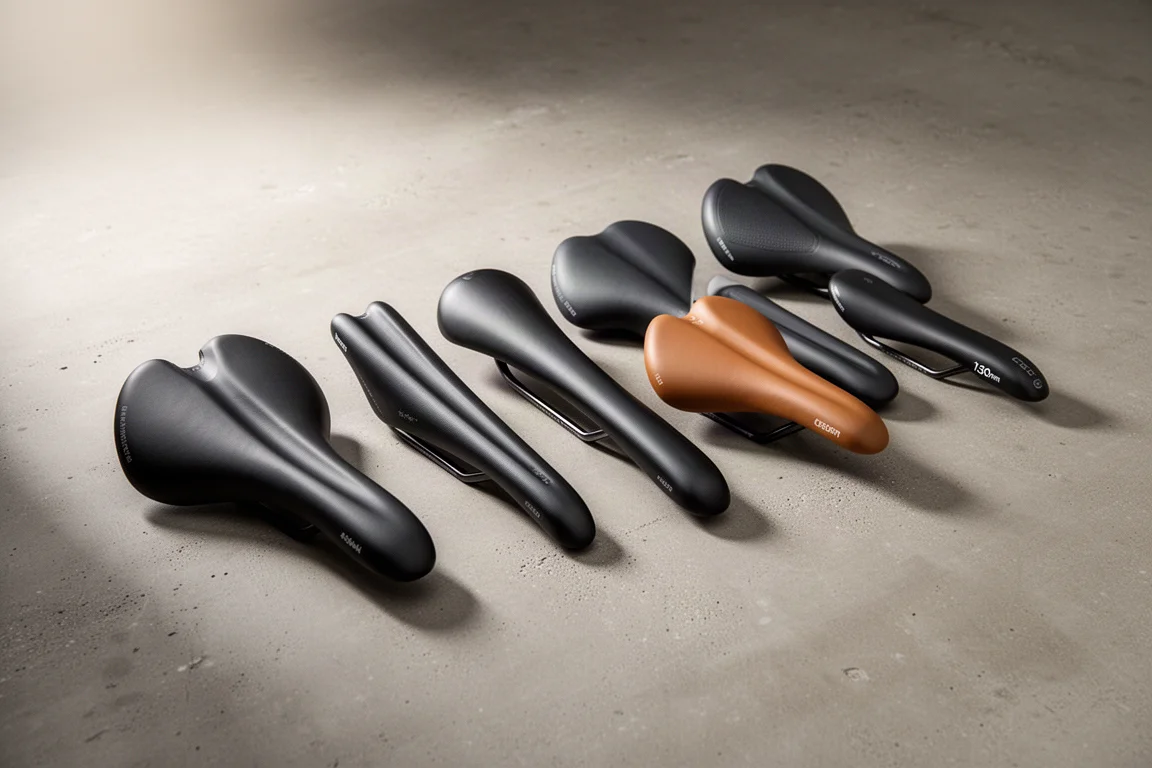
Finding a saddle that genuinely works is one of the harder problems in cycling. There are many brands, many models, and very little agreement about what makes one shape better than another. The ranking below comes from the perspective of professional bike fitting rather than marketing copy, and it runs from the designs that cause the most trouble to the one that ends up on the majority of bikes leaving a fit studio.
Each entry explains what a shape does well, where it falls short, and which riders it tends to suit. Price is not the deciding factor here. Width, contour and position matter far more.
What Actually Causes Saddle Discomfort
Most saddle problems are not saddle problems. Around 90 percent of them trace back to position: a saddle that is too high, a reach that is too long, too much setback, or feet that are too close together. Change any one of those and the pressure a rider feels through the saddle can change completely.
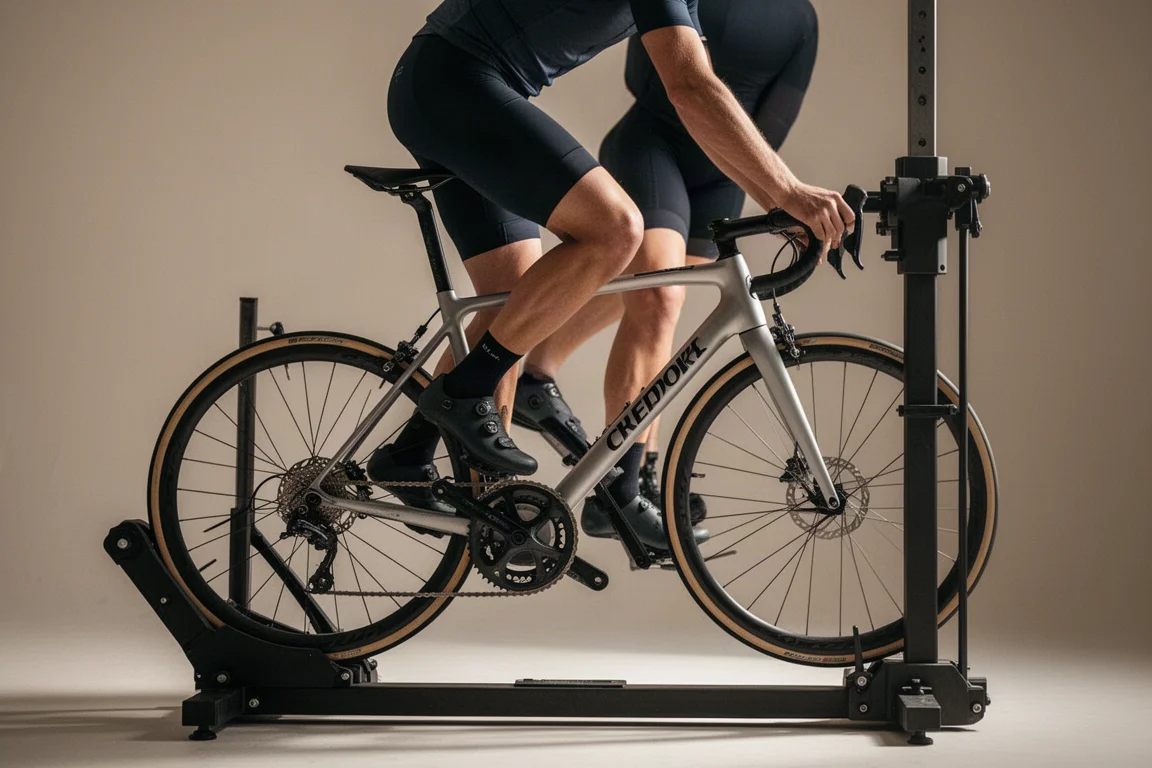
It is also worth questioning the trend toward wider saddles. Measuring sit bone width has become a standard step in the sales process, but it has pushed many riders onto saddles that are wider than they need. Width that extends past the rider’s thigh line creates contact that no amount of padding can fix. Adding proper arch support in the shoes can reduce the pressure going through the saddle substantially, in some cases by around half.
There is one more category to keep in mind. Triathlon-specific designs load a different part of the pelvis to allow more anterior pelvic tilt, and they are built for that discipline. If one is needed to make a conventional road position bearable, the position is usually the place to look first.
Specialized Power: Too Wide for Most Riders
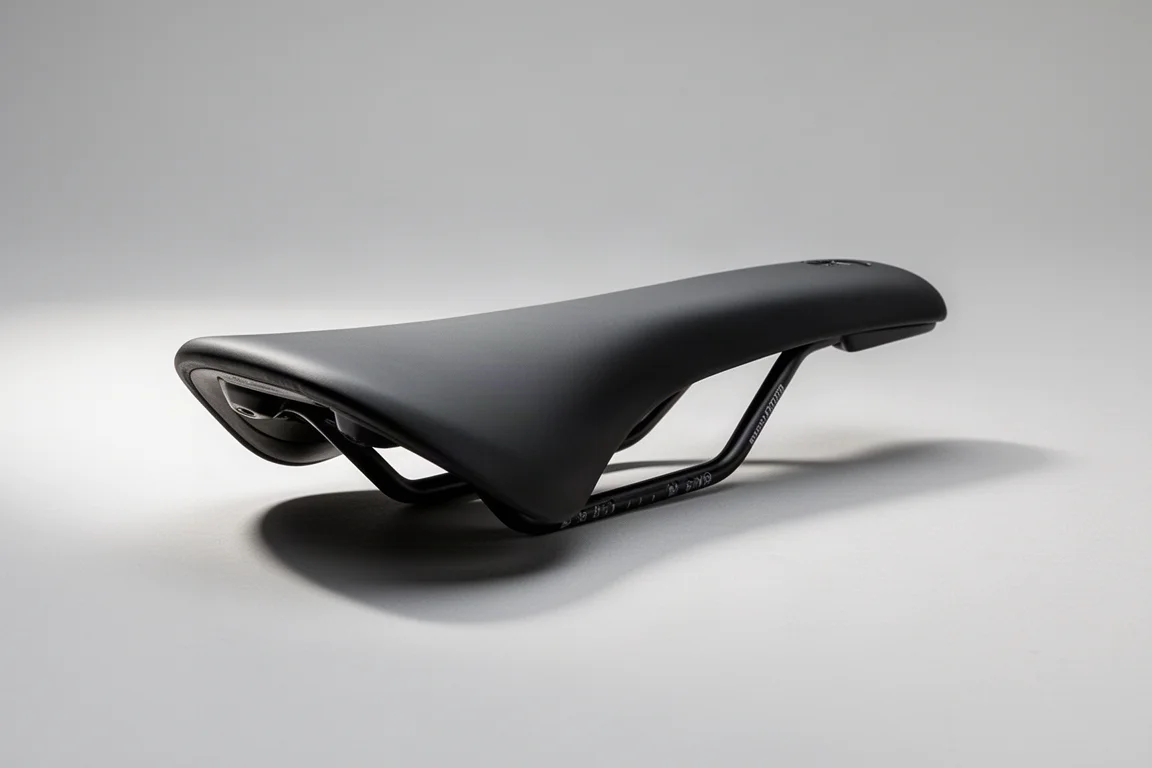
The Specialized Power is available in three widths, and all of them come out wide in use. The main issue is the flare angle, the rate at which the saddle widens toward the rider’s thighs. On this shape the flare produces a lot of interaction with the thighs, and riders tend to respond by sliding forward onto the nose. That is the opposite of what a short-nosed saddle is meant to encourage.
A nose is a poor place to sit. Once a rider has moved forward to escape the wings, there is very little left to support them. The widest version measures 168mm, which makes the problem worse rather than better.
It also appears frequently as original equipment on complete bikes, and the sizing logic is unusual: the smaller the frame, the wider the saddle that ships with it.
Fizik Arione: Comfortable, But It Encourages Asymmetry
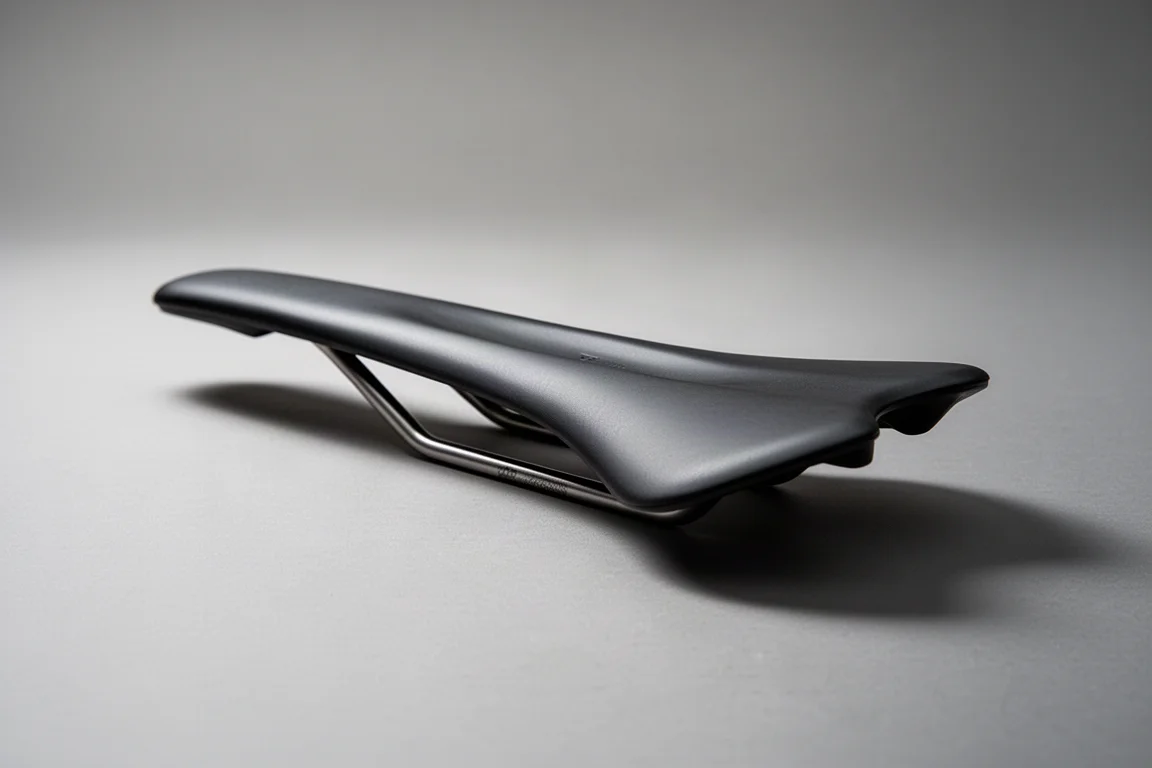
The Fizik Arione is a long, narrow design that is rarely seen on new bikes today. Its shape was built around a single professional rider’s position rather than a broad study of rider anatomy, and that shows in how it behaves.
The benefit is seating freedom. A rider can sit at almost any point along its length and still be reasonably comfortable. The problem is what that freedom encourages. Riders tend to sit off to one side in search of comfort, because the body is not designed to rest its soft tissue on a narrow strip of foam. For riders with a poor bike position, that can feel fine in the short term, but it tends to promote asymmetry over time.
PRO Stealth: A Short Nose That Still Pushes You Forward
The PRO Stealth is a short-fit saddle, and it runs into the same width problem as the Specialized Power, but at both ends. The wings are wide enough to interact with the thighs, and the nose is broad enough that riders gravitate toward it.
The result is over-interaction with the front of the saddle, which produces the general saddle problems that a short nose is meant to reduce. It is worth saying that the wider PRO range has a strong reputation. This particular model is the exception.
ESAC Shark: A Fitting Aid Rather Than a Riding Saddle
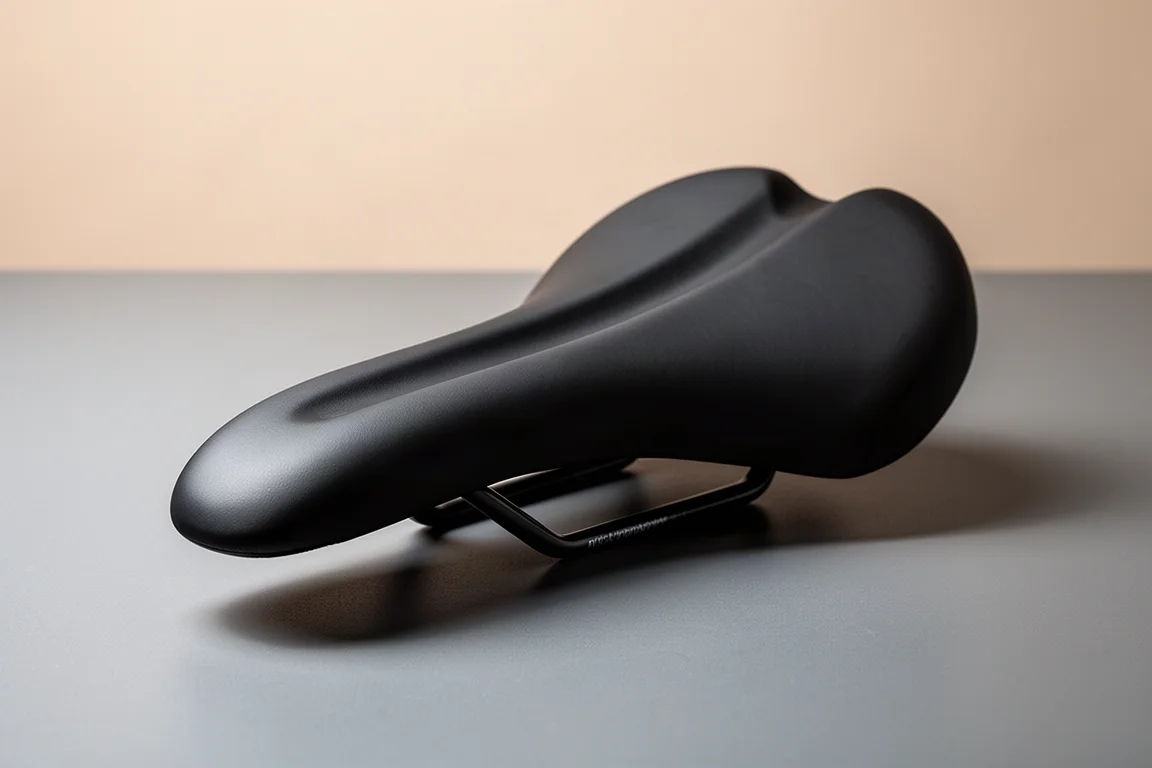
The ESAC Shark is a biomechanical saddle, and it is not really a product to ride. Its defining feature is a fin at the back that sits between the rider’s buttocks and marks the centre line of the saddle.
That fin solves a specific problem. Riders frequently sit off to one side, listing because of excessive saddle height, insufficient arch support, or feet that are too close together, and once that habit sets in it is hard to break. A short session on this saddle, often 15 to 20 minutes, can help a rider re-establish where the middle of the saddle actually is. Before this design existed, fitters improvised by taping a marker to the centre of a saddle.
It is a fitting tool rather than a purchase for home use, and it should only be used under a fitter’s supervision.
Selle SMP Dynamic: Long Rails, Rearward Seating
Selle SMP is known for its distinctive curved profile, and the Dynamic follows that pattern. The design produces decent interaction with the pelvis, and the rails are unusually long, which gives a wide range of fore-aft adjustment.
The catch is where the seating area sits. On this saddle it is set very far back, so riders end up running the saddle as far forward as it will go. The long rails are therefore far less useful in practice than they look on paper.
That does not make it a bad saddle, and it is worth trying if the shape appeals. It simply lands in the middle of the pack: a design with real strengths that is limited by where it puts the rider.
PRO Griffon: Flat, Simple, and Still Effective
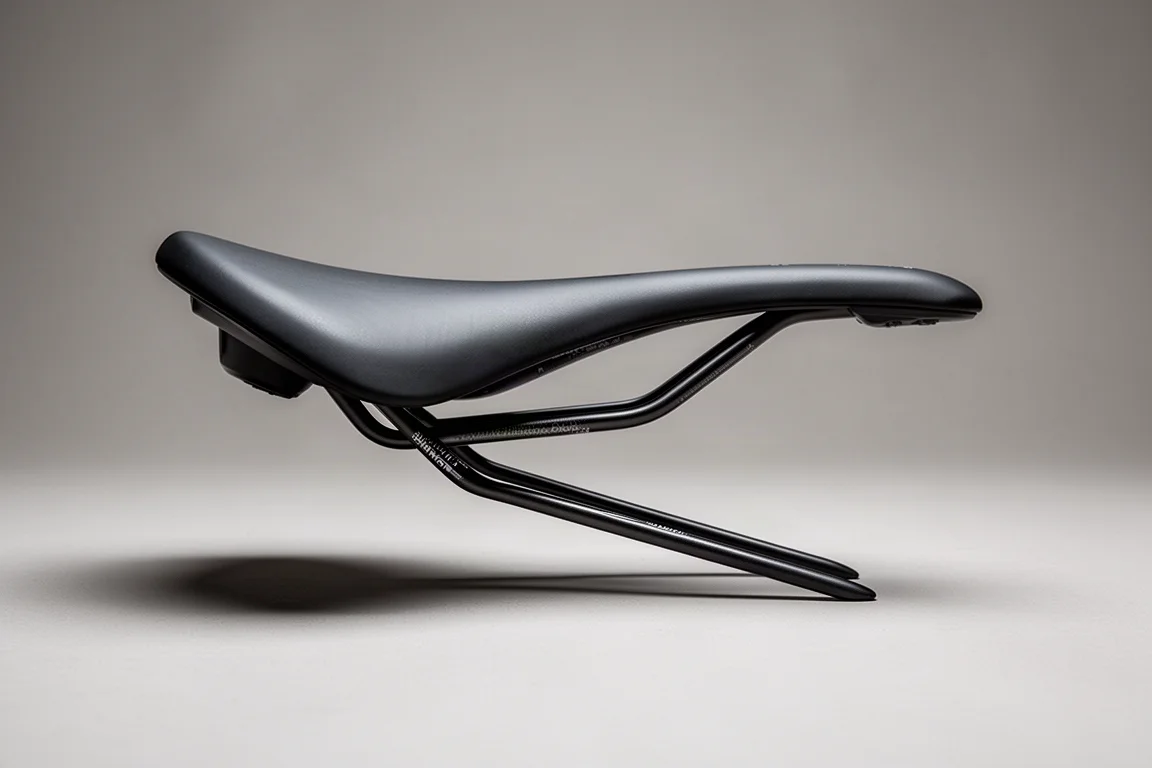
The PRO Griffon is a flat saddle in both directions, across its width and along its length, with a reasonable pressure relief channel running down the middle. It is closely related in shape to the flat-profile saddles that were popular some years ago.
Flat surfaces suit riders who like to shift position and who do not want the saddle dictating where they sit. It is available in three widths, although the narrowest 130mm version is hard to find, and in both carbon-rail and steel-rail versions.
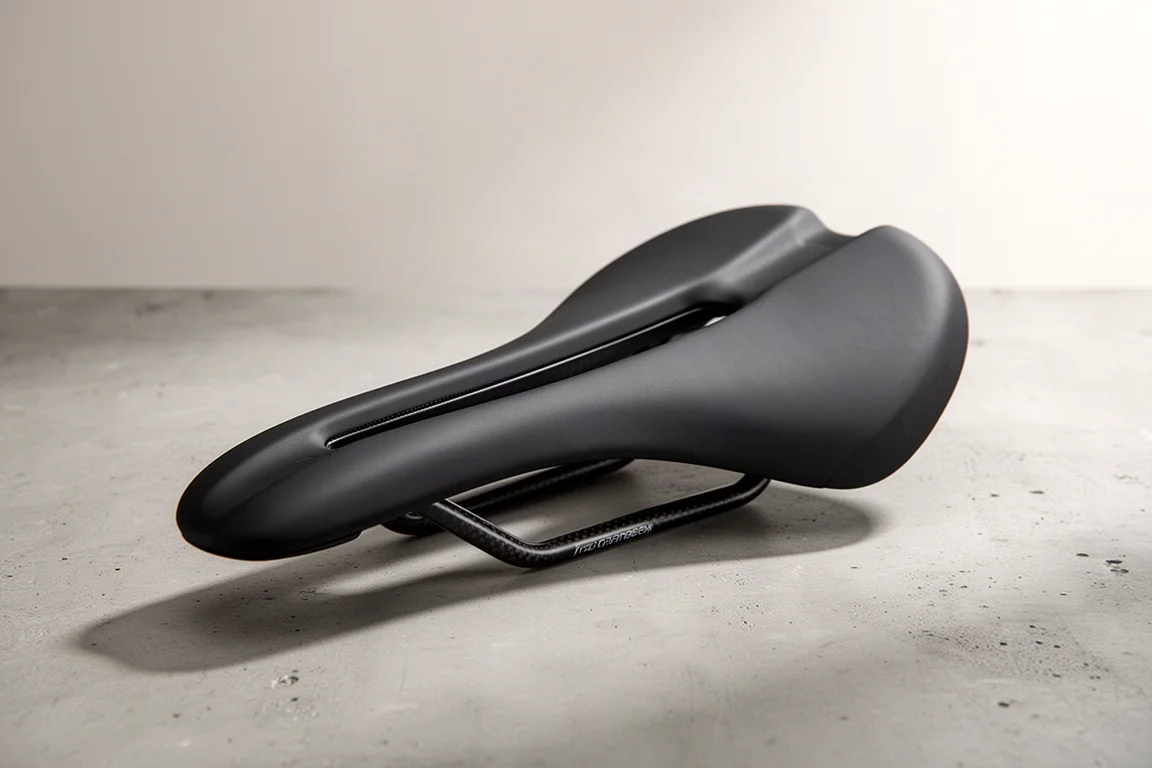
PRO Turnix: More Contour for Sit Bone Pressure
The PRO Turnix is a much more heavily contoured saddle, again in both planes. Where the Griffon is flat, this one has a shaped surface that cradles the rider.
That contour is the point. Riders who suffer from sit bone pressure often get on better with a less flat surface, because the shape spreads load differently. If a flat saddle leaves you sore after longer rides, this is the kind of profile worth testing.

It will not suit everyone, and riders who prefer to move around on the saddle may find the contour restrictive. For a specific and common complaint, though, it is a sensible option.
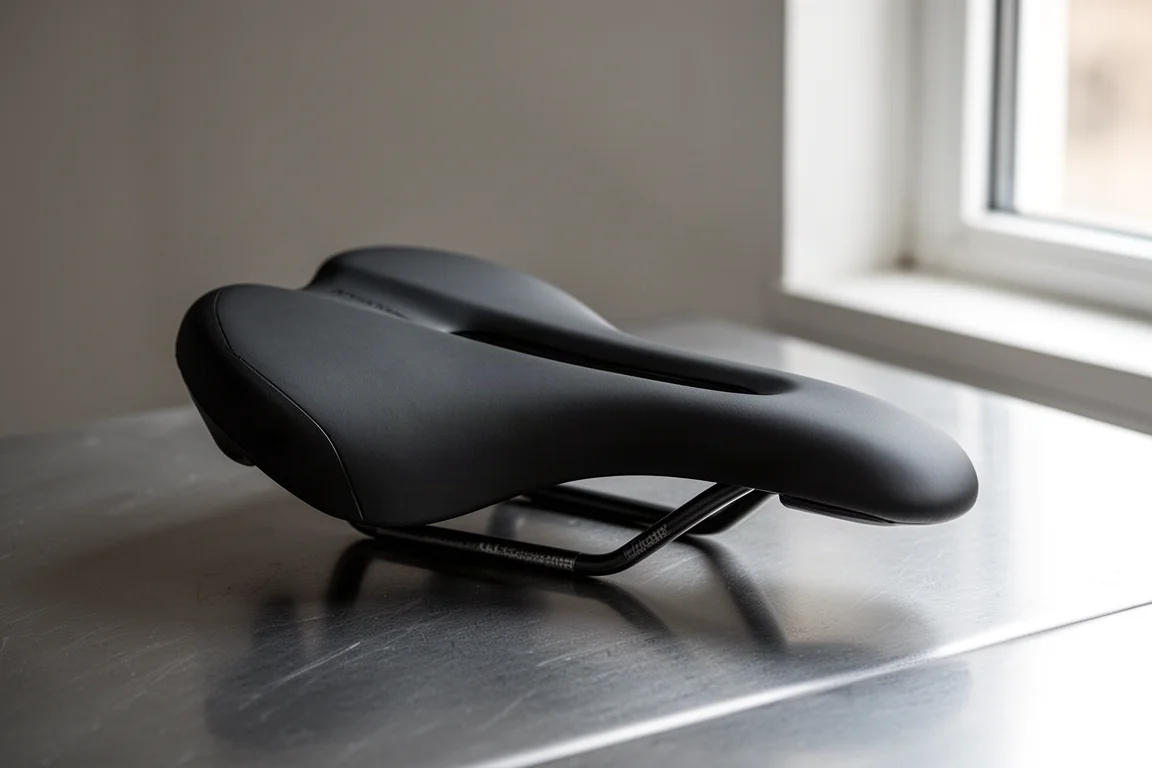
Ergon SR: A Flat Rear and a Deep Relief Channel
The Ergon SR uses orthopedic foam and combines a flat rear section with a large pressure relief channel at the front. The overall shape is well resolved, and the channel does real work on longer rides.
Results tend to be best with the narrowest version in the range. It is also worth noting that this saddle is frequently fitted to men’s bikes, just as many saddles marketed to men are fitted to women’s bikes. Both groups need pressure relief, and the label on the packaging matters far less than the shape under the rider.
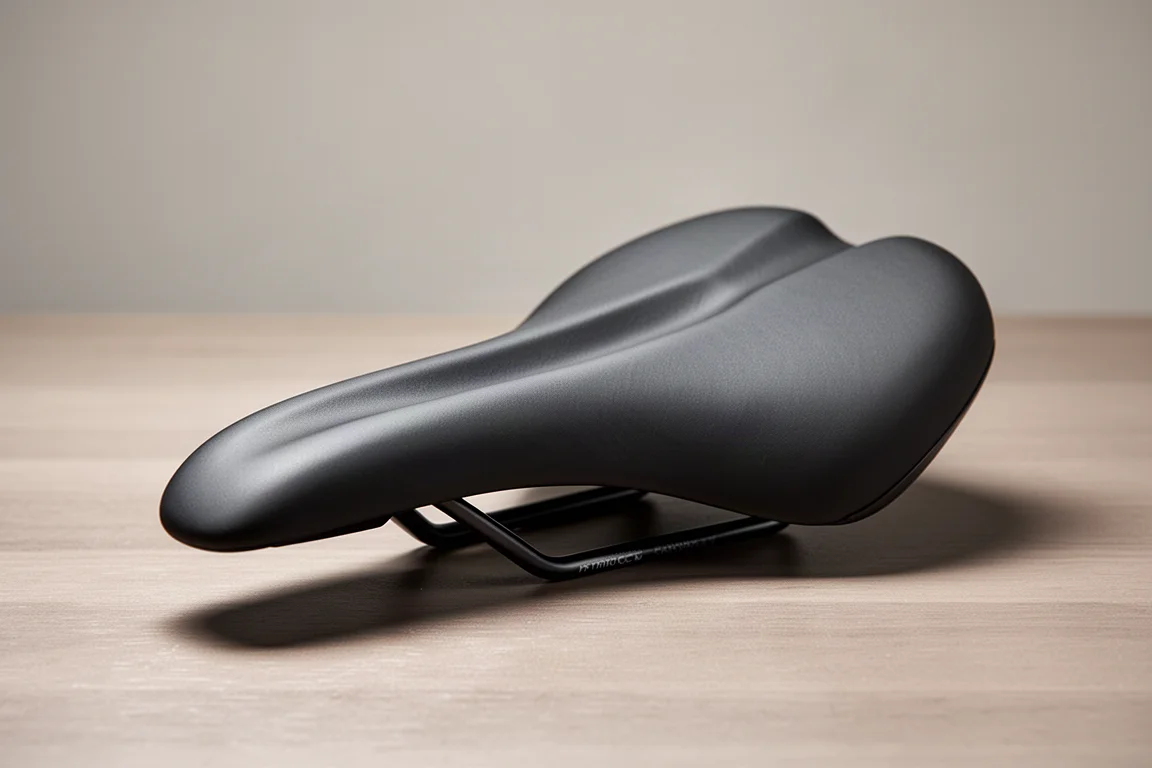
Selle Italia SLR Boost S3: The Best of the Bunch
The Selle Italia SLR Boost S3 is the pick of this list. The S3 in the name refers to the 130mm width; the L3 version measures 145mm. It is the narrowness that makes it work. Because the saddle is so slim, riders can settle onto the rear portion of the shape properly, without the wings catching their thighs, and they can still pedal smoothly through the top of the stroke.
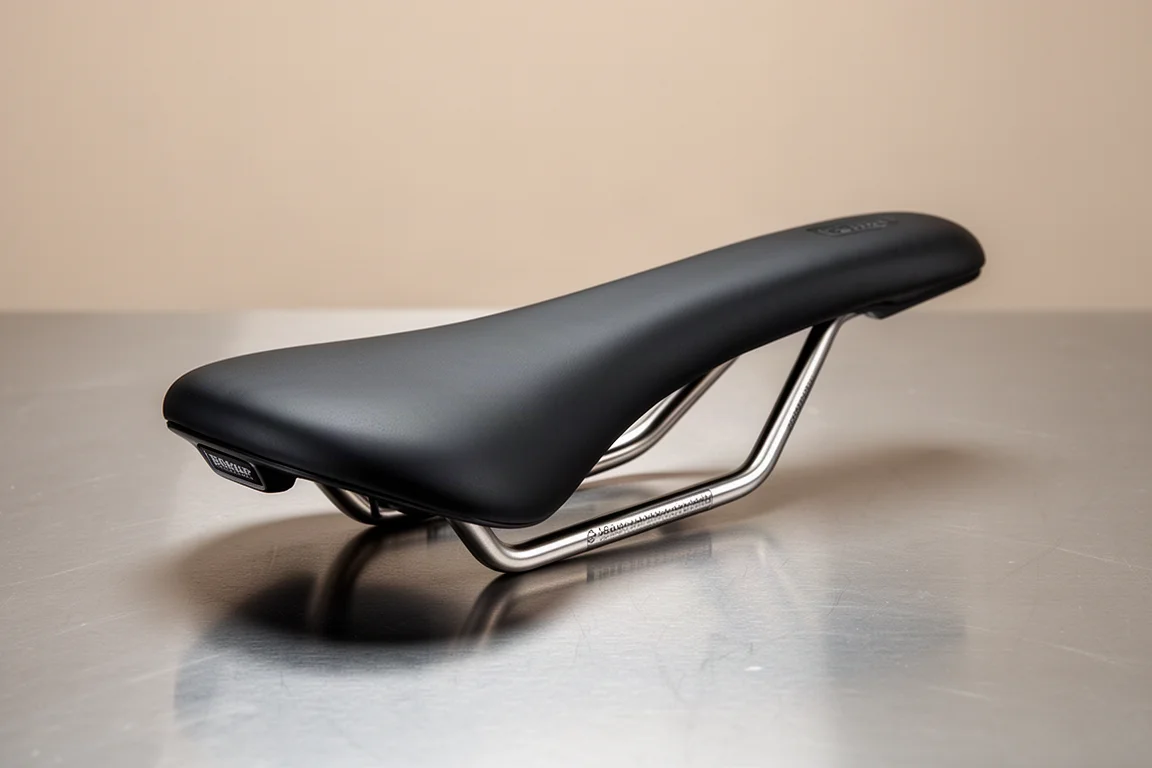
The Boost is sold in several versions. The cromoly-rail model is adequate but not especially well made and has a tendency to creak. The endurance version adds a little padding and uses titanium rails, and it creaks far less. There is also a carbon version and a 3D printed version, the latter being the least appealing of the group.

This is also the saddle that ends up on the majority of bikes leaving a fit studio, close to 70 percent. It comes in a range of versions and price points, which makes it easy to match to a budget.
Conclusion
The pattern across this list is consistent. The saddles that cause trouble are the ones that are too wide at the wings or that push the rider onto the nose. The ones that work are narrow enough to let the rider use the rear of the shape, and flat or contoured in a way that matches their body.
Before spending money on a new saddle, check the position: saddle height, reach, setback and foot alignment. Most discomfort comes from there rather than from the foam. If the position is already sound, the Selle Italia SLR Boost S3 is the shape most riders end up choosing.
Further reading
Related Reviews
Cycling Saddles
Best Bicycle Saddles Ranked: Ten Models Compared for Comfort and Fit
A practical ranking of ten road and triathlon saddles, from wide flared shapes that rub the thighs to narrow designs that support the rear of the saddle properly.
Cycling Saddles
Best Road Bike Saddles 2026: Choosing the Right Width and Pressure Relief
A practical guide to road bike saddle selection, covering pressure relief, saddle width, and two widely known designs, the Selle Italia SLR Boost and the Specialized Power.
Cycling Saddles
Best Selle Italia Saddles: SLR, Novus, and Flite Compared
A practical guide to choosing between the Selle Italia SLR, Novus, and Flite, covering width, shape, cutouts, and saddle setup.