Mountain Bikes
Specialized Epic World Cup vs Trek Supercaliber: Which Short-Travel XC Race Bike Wins?
A head-to-head look at two sub-100 mm cross country race bikes, the 75 mm Specialized Epic World Cup and the 80 mm Trek Supercaliber, and which rider each one suits.
Introduction
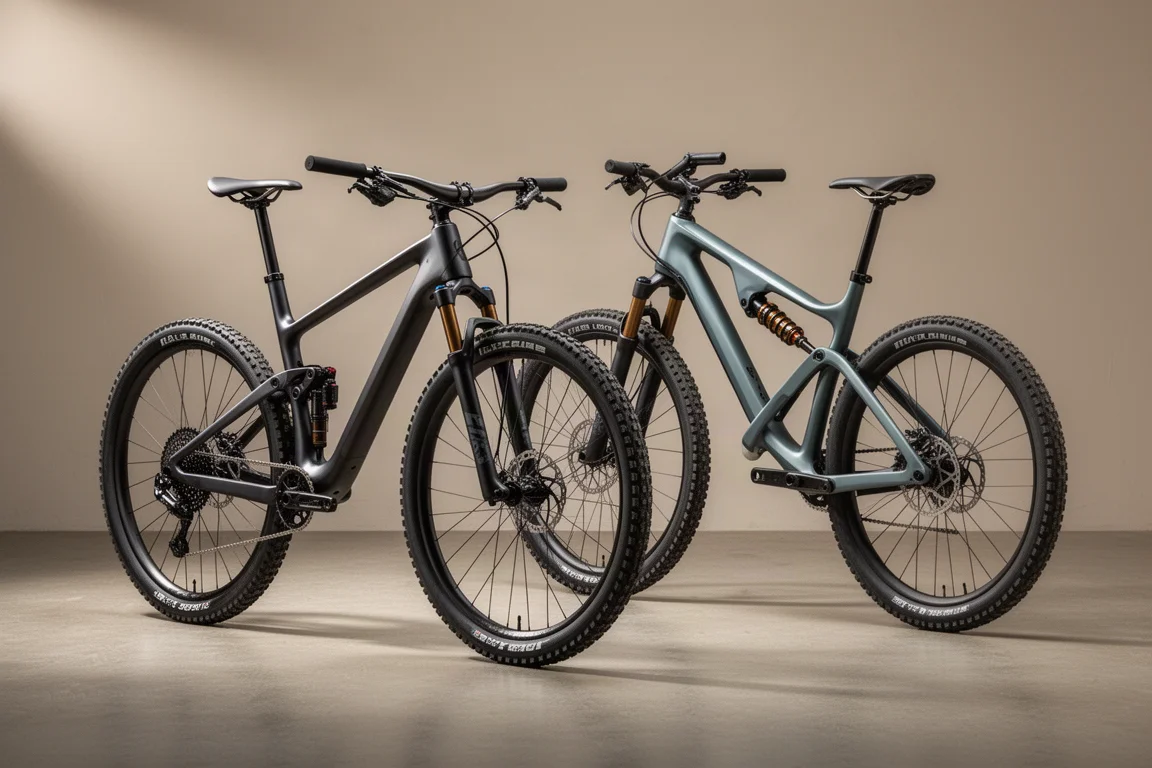
Short-travel cross country race bikes have moved a long way from the traditional hardtail formula. Two machines sit at the sharp end of that shift: the Specialized Epic World Cup with 75 mm of rear travel, and the Trek Supercaliber with 80 mm. Both promise the pedalling efficiency of a hardtail with enough cushioning to stay fast when the course turns rough.
The question worth answering is simple. Are these sub-100 mm race bikes genuinely good, and can they replace a hardtail for riders who race and train on cross country terrain? The two bikes take very different routes to the same goal, and that difference shapes who should buy which.
The Two Contenders at a Glance
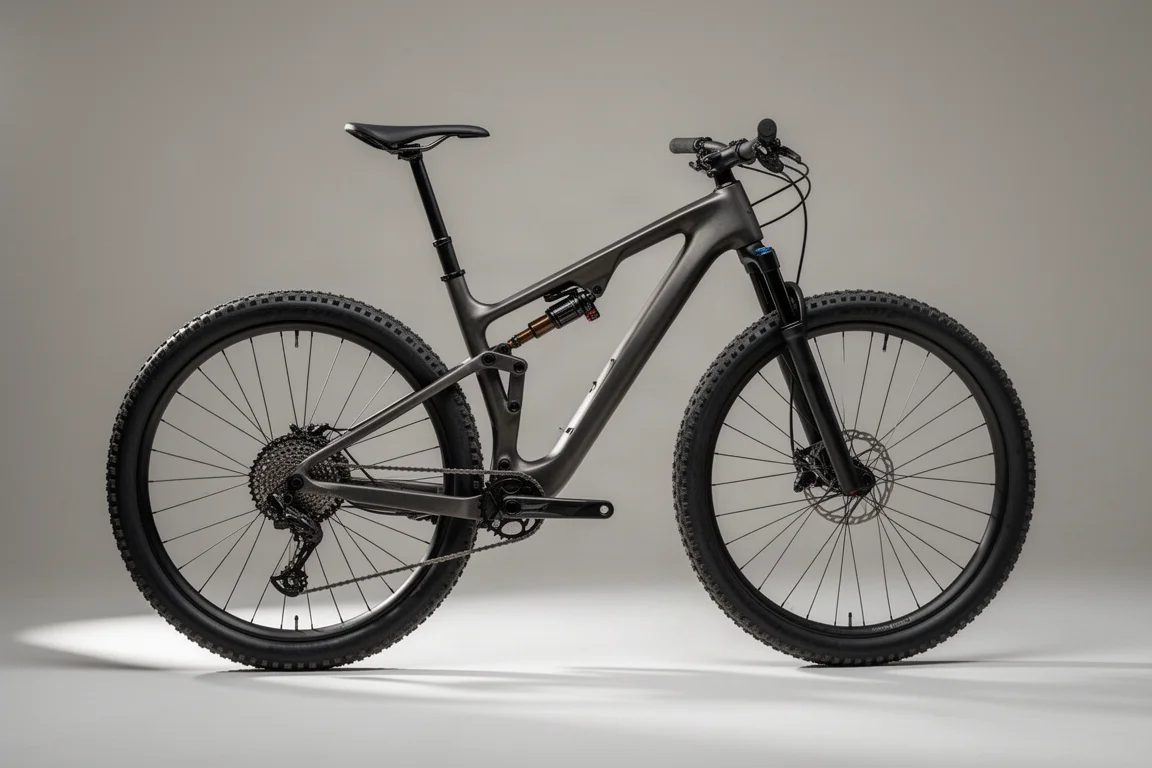
Both frames are built around a 110 mm RockShox SID SL fork, SRAM XX SL Transmission drivetrains, own-brand carbon wheels and lightweight race tires, and both bikes weighed 9.6 kg on the scales. The test sizes differed, with one bike in a large and the other in a medium, so the identical figure is worth reading as a close match rather than an exact tie.
Geometry separates them. The Epic World Cup runs a 66 degree head angle and a 445 mm reach in a medium, with a slightly lower bottom bracket. The Supercaliber is a degree steeper at the front and 5 mm shorter in reach, and both share a 74.5 degree seat angle. The Trek also carries 5 mm more rear travel, which means that once sag is set, the two bikes end up feeling closer than the numbers suggest.
Riders who care about numbers should note one practical point. Sag changes geometry, and the two bikes handle sag very differently, which matters far more on the trail than a single degree of head angle.
Specialized Epic World Cup: Frame and Suspension
The Epic World Cup is built around a 75 mm travel rear end controlled by a custom RockShox SIDLuxe WCID shock, driven by a small linkage tucked under the top tube to add stiffness further forward in the chassis. The S-Works version uses FACT 12M carbon, internal cable routing and headset-routed hoses, and there are two sets of bottle mounts inside the front triangle.
Suspension setup is where this bike stands apart. There is no lockout. Instead, Specialized offers three negative air spring volume settings, described as no gulp, half gulp and full gulp, which deliver between zero and 10 percent sag. In the no gulp setting there is no air in the negative spring and the bike is designed to feel like a hardtail until it meets something big. Pressing the negative air spring valve introduces air for 5 or 10 percent sag and a slightly softer ride. Up front, the Brain damper uses an adjustable inertia valve to separate pedal bob from bump absorption.
Trek Supercaliber: Frame and Suspension
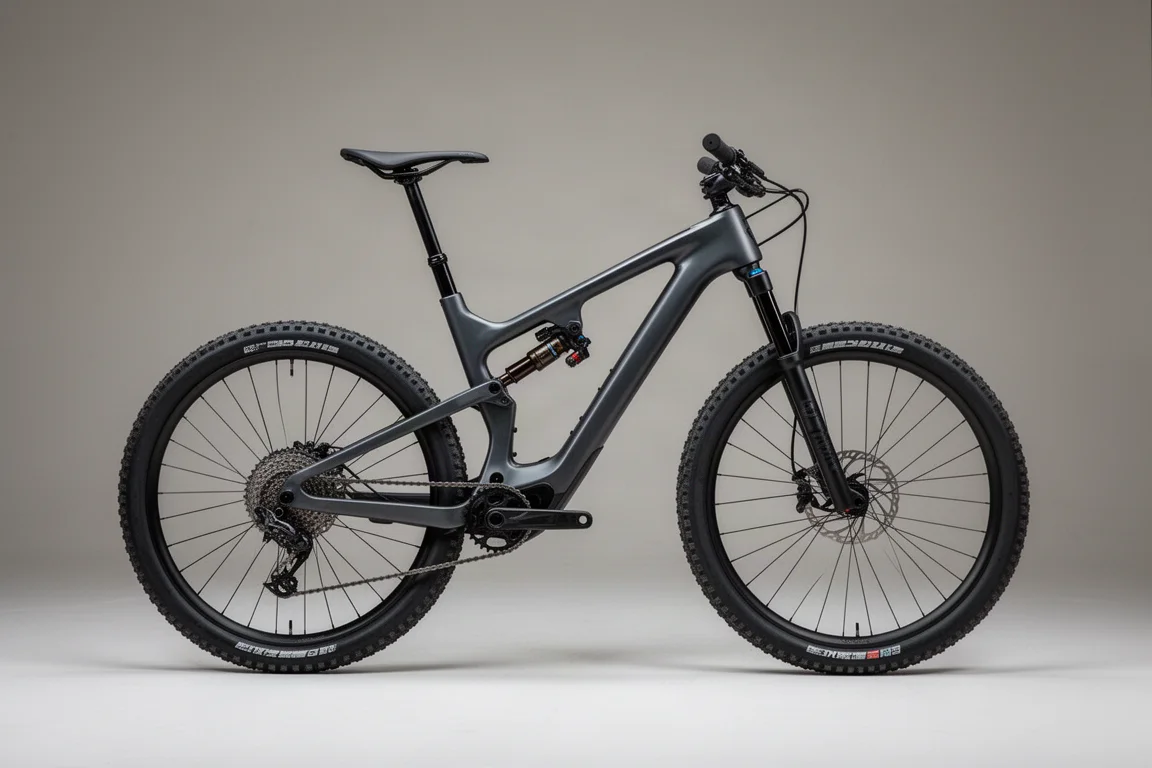
The Supercaliber answers the same brief with 80 mm of travel and a different architecture. Trek worked with RockShox on the IsoStrut shock, which uses SIDLuxe internals, and extended seat stays that wrap around and slide over the shock body. That makes the shock a structural part of the frame, reducing traditional hardware, pivots and links for a stiffer connection between the front and rear triangles and a lower weight. The chainstay wraps around the seat tube in front of the main pivot to add further stiffness, and two bottles still fit inside the front triangle.
The SLR frame tested here is said to be lighter than the SL version, thanks to higher modulus carbon fibre and the absence of internal guide tubes. Setup is closer to a conventional full suspension bike, with up to 35 percent sag, and a two-position lockout that stiffens the shock and fork when the course or the effort calls for it. The fork damper offers open and lock positions, and a third setting would make fine tuning easier.
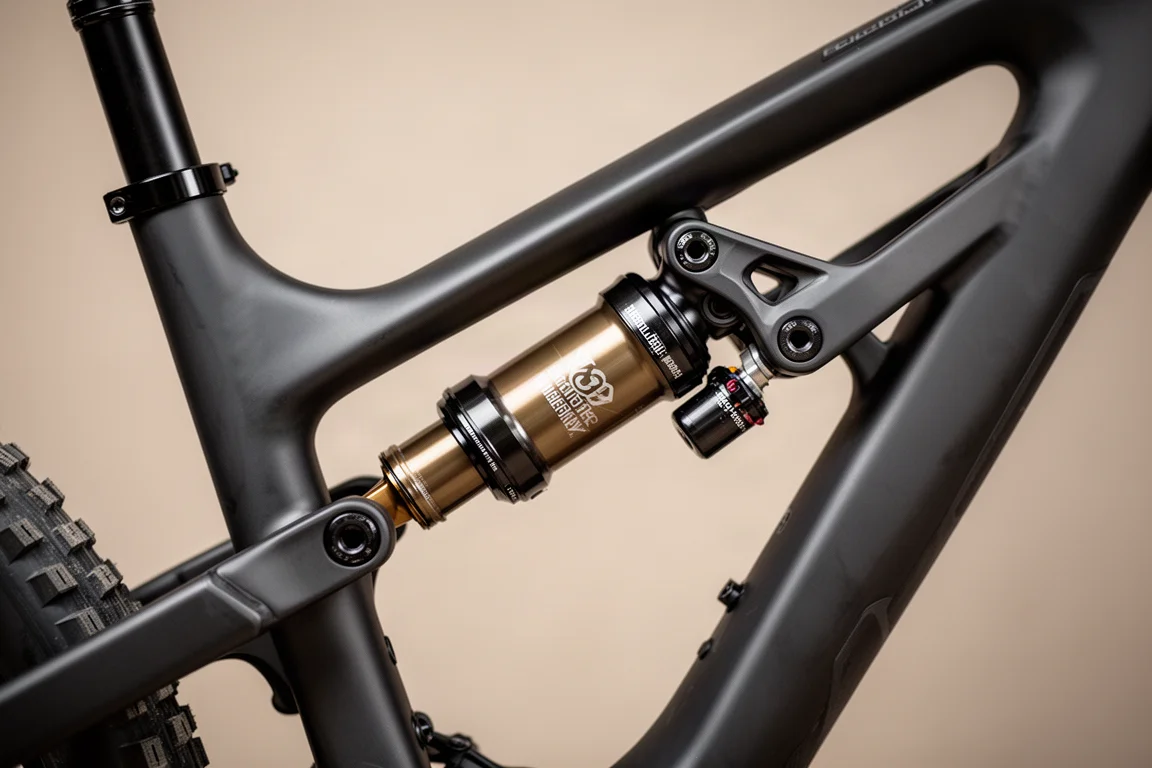
That more familiar suspension feel is central to how the bike behaves, and it shapes everything from climbing support to how confident it feels when the trail drops away.
Climbing and Sprinting Performance
Out of the gate, the Supercaliber stays planted when sprinting, with the rear end holding solid and barely any movement. Despite narrow tread, its tires grip well on hardpack and fine gravel. The Epic World Cup matches that composure, but in the no gulp setting it is even more extreme: there is zero give, and the rear tire scrabbles for traction on looser surfaces. Adding a hint of sag transforms that, boosting grip while the frame still feels tight. On hard, punchy climbs the Epic World Cup transfers power like a hardtail, with instant reactions to pedal input, and on steep technical climbs it claws its way up once sag is introduced.
The Supercaliber settles deeper into its travel but keeps a stable pedalling platform with plenty of support, so it feels sprightly and eager on almost any incline. It also lets the rear wheel move freely enough over rock steps to take the edge off impacts, boost traction and keep the rider in control. The trade-off is adjustment: changing the rear feel on the Epic World Cup means stopping, reaching for a shock pump and pressing a valve, while the Supercaliber’s two-position lockout can be changed with a twist of the wrist mid-ride.
Descending and Control
On paper the Epic World Cup has the better descending numbers: slacker head angle, longer reach and a lower bottom bracket. In practice, its low sag settings steepen those angles as the fork compresses, and the bike sits higher in its travel. That leaves plenty of travel for big hits, but the first impact can feel like a trapdoor, dropping quickly into the stroke after a hardtail-like start. It works well over repeated hits, and the frame shape and the wide 2.4 inch tires help a great deal.
The Supercaliber takes a more conventional approach. The suspension quells impacts rather than absorbing them in a buttery way, which means more trail feedback through the chassis, balanced by enough progression to use all 80 mm well. With a dropper post fitted, the riding position out of the saddle is more centred, and the larger four-piston calipers add confidence when conditions get treacherous. Wider tires made a significant difference to descending performance on the Epic World Cup.
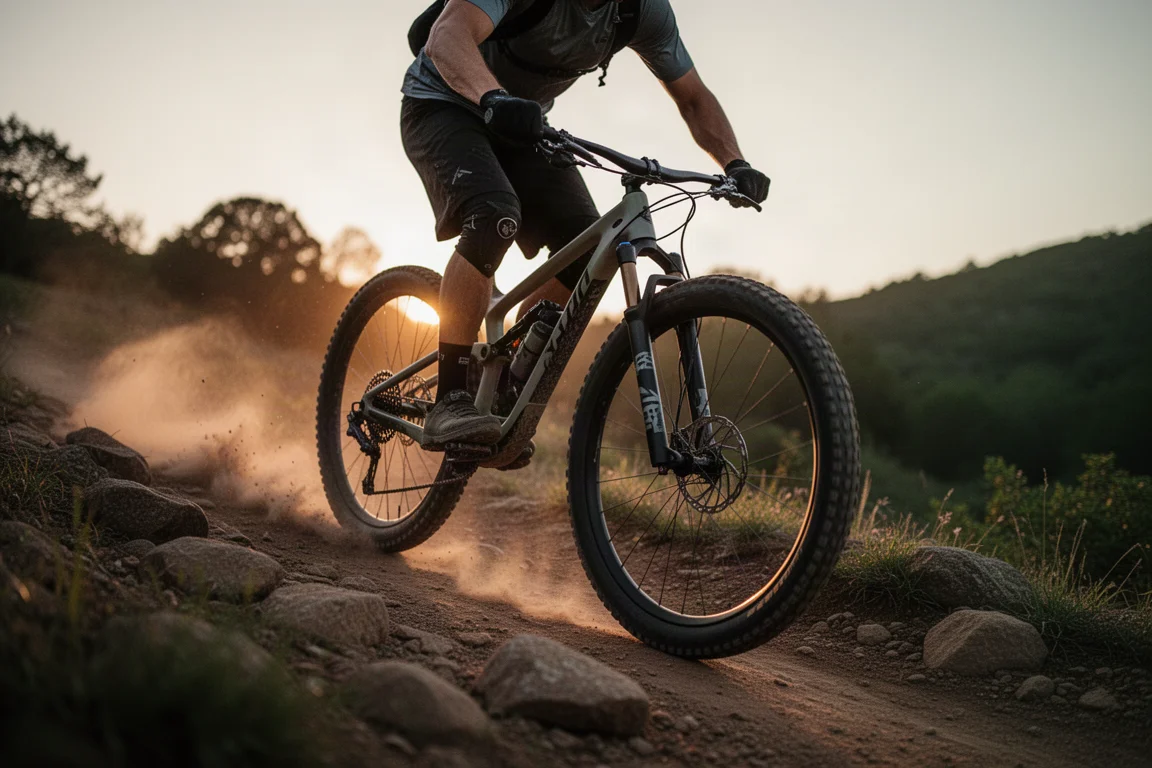
Neither bike flatters a rider’s descending skills. They take the edge off rough ground while still asking for line choice and commitment, which is exactly the character short-travel race bikes are built around.
Cockpit, Kit, and Everyday Practicality
Both bikes use integrated bar and stem cockpits, which means no easy adjustment of reach or bar width, and neither setup suited every rider. The Epic World Cup test bike carried a rigid carbon seatpost and a power meter in the chainset, along with four-piston SRAM Level Ultimate Stealth brakes that are claimed to be lighter than the less powerful two-piston versions. The Supercaliber came with a Fox Transfer SL dropper post, which adds control on descents and is a meaningful advantage for riders who mix racing with general trail riding.
Buying Advice: Which Bike Suits Your Riding
The Supercaliber is arguably the more versatile machine. Its 80 mm of travel is delivered in a way that softens impacts, improves comfort on longer rides and works with the dropper post to raise control, while still surging forward at speed when power goes down.
The Epic World Cup is, to all intents and purposes, a niche bike. Short course cross country racers who enjoy pushing at full effort lap after lap will love its tenacious attitude to speed. Marathon racers may prefer more travel for long days and prolonged climbs, and riders looking for a relaxed cruise will find themselves pushed harder than they intended.
Conclusion
Both bikes deliver on the promise of hardtail efficiency with a cushion against rough terrain, and the choice comes down to how you ride. The Supercaliber edges ahead for most riders because it feels closer to a regular full suspension bike while keeping a genuine racing attitude, and that extra versatility counts over a full season. The Epic World Cup is the sharper instrument for short course racing, but its narrow focus makes it harder to recommend as an only bike.
Further reading
Related Reviews
Mountain Bikes
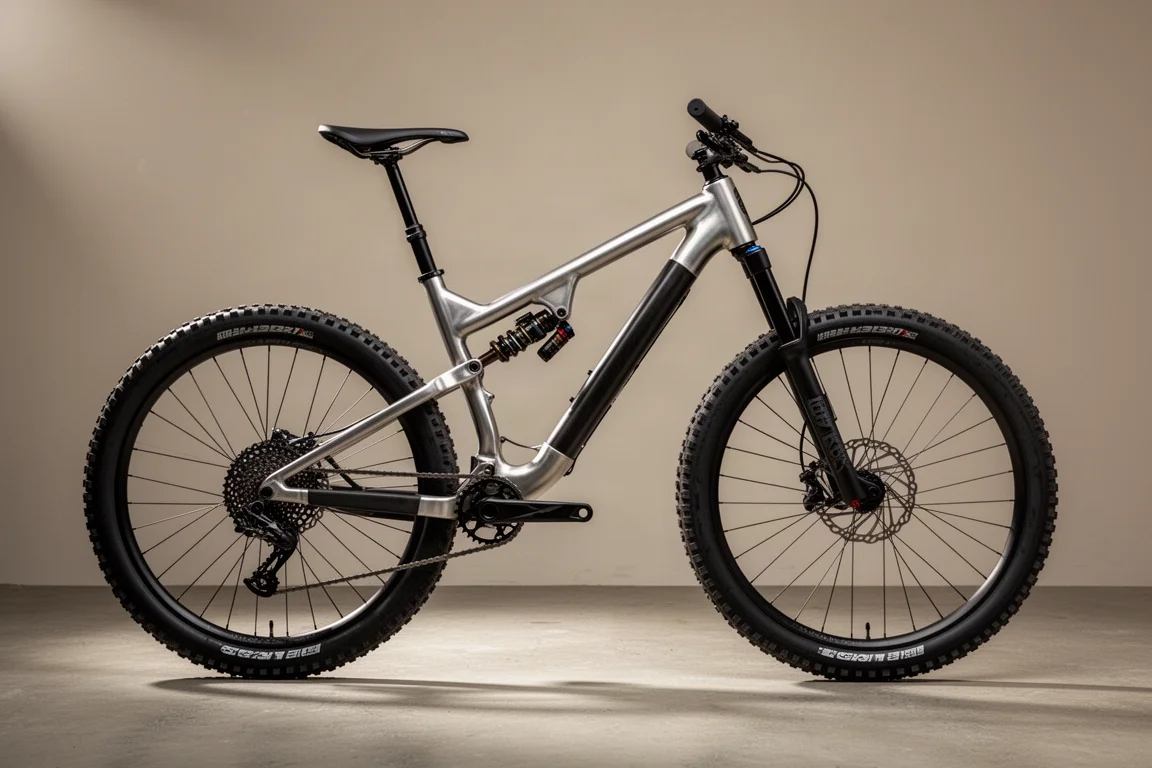
Atherton AM.130 Review: 3D-Printed Titanium Lugs and a 130mm Trail Bike That Descends Like a Bigger Machine
The Atherton AM.130 pairs 3D-printed titanium lugs with carbon tubes and a DW6 suspension platform. Here is how it rides, what the build delivers, and who it suits.
Mountain Bikes
Beginner Mountain Bike Buying Guide: What to Look For in a Trailworthy Hardtail
A practical framework for evaluating beginner mountain bikes, whether new or used, by examining key components that indicate real trail capability.
Mountain Bikes
Best Aluminum Mountain Bikes 2026: Five Alloy Bikes Worth Your Attention
Five aluminum mountain bikes that show how far alloy has come, from a 120mm trail bike and a versatile machined frame to a 180mm freeride machine.