Hi-Fi Speakers
Speaker Price Tiers Compared: KEF Q Concerto Meta, MoFi SourcePoint 888, and KEF Blade 2 Meta
Three class-leading speakers at three very different prices, compared on linearity, directivity, bass extension, dynamic range, and distortion so you can see what each step up actually buys.
Introduction
Three speakers, three price tiers, and one practical question: what do you actually gain when you move from about $1,300 a pair to about $5,000, and then again from $5,000 to roughly $28,000 to $29,000? Each of these three models is a class leader in its own bracket, so the comparison isolates the qualities that genuinely improve with price rather than the ones that simply differ.
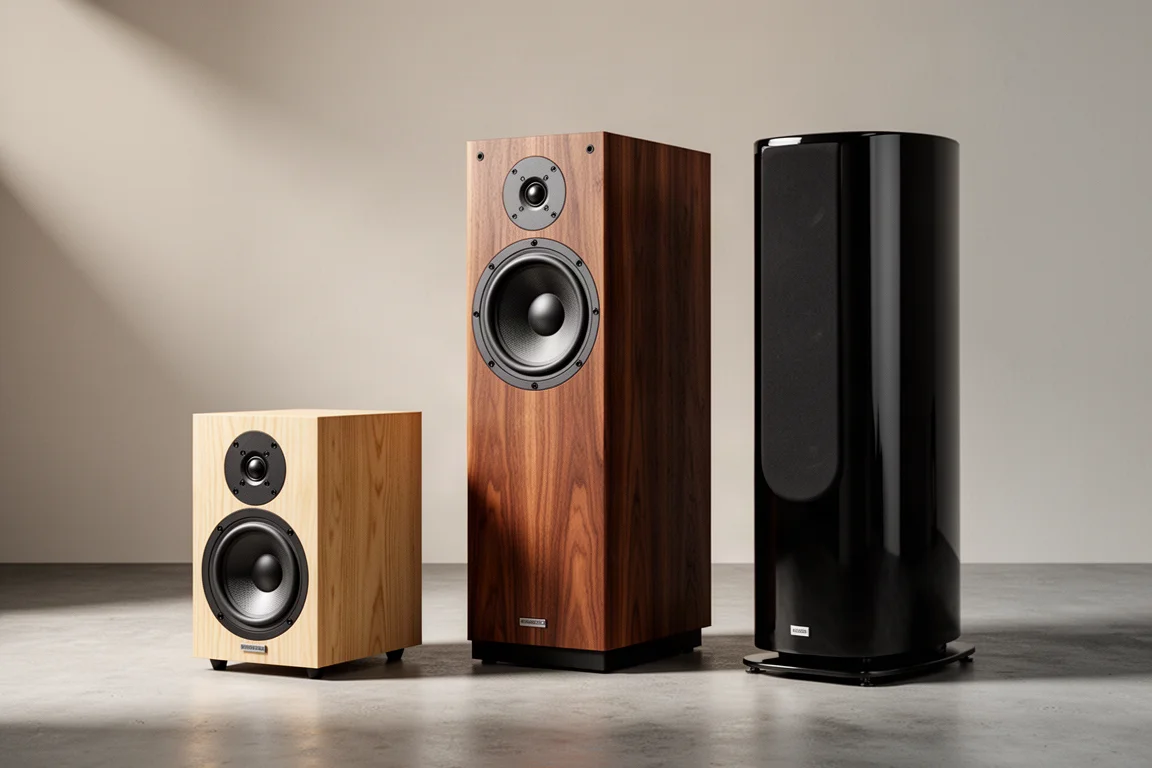
The KEF Q Concerto Meta is a compact bookshelf design at around $1,300 per pair. The MoFi SourcePoint 888 is a walnut-finished floorstander at about $5,000 per pair. The KEF Blade 2 Meta sits at the top at roughly $28,000 to $29,000 per pair. The short version is that linearity, directivity, dynamic range, and distortion all improve as you climb, while the size of each improvement shrinks relative to the size of the price jump.
What Each Price Step Actually Buys
The practical sweet spot for performance without paying a premium for cabinetry sits around $500 to $1,000 per pair, where well-executed bookshelf speakers can deliver genuinely strong results. Above that line, a growing share of the price goes toward finish and visual design. Take a capable $500 design in a flat MDF enclosure, give it a high-gloss finish, and the same acoustic performance can end up costing twice as much.
That does not mean the higher tiers are only about looks. The measured differences in this comparison show up in four areas: how flat the response stays on and off axis, how closely the reflected sound tracks the direct sound, how much dynamic range the speaker delivers before compression sets in, and how low multitone distortion stays under realistic musical load.
Directivity is the thread that ties the listening impressions together. When the energy arriving off the side walls, floor, and ceiling closely matches the direct sound, the reflected energy reinforces the same tonal balance instead of colouring it. When it does not, the early reflections drift away from the on-axis response, and the result can sound hollow in some regions or short on attack in others. In a room with nearby walls, those reflections also add a sense of space. On an open showroom floor with no side walls, a very well-behaved speaker can actually sound smaller than it measures.
Bass extension and placement flexibility matter just as much. The two floorstanders both reach roughly 30 Hz in room, but their low-frequency profiles differ in the 40 to 50 Hz region, and that difference affects how close to a wall each one can realistically sit.
KEF Q Concerto Meta: Class-Leading Value at the Entry Point
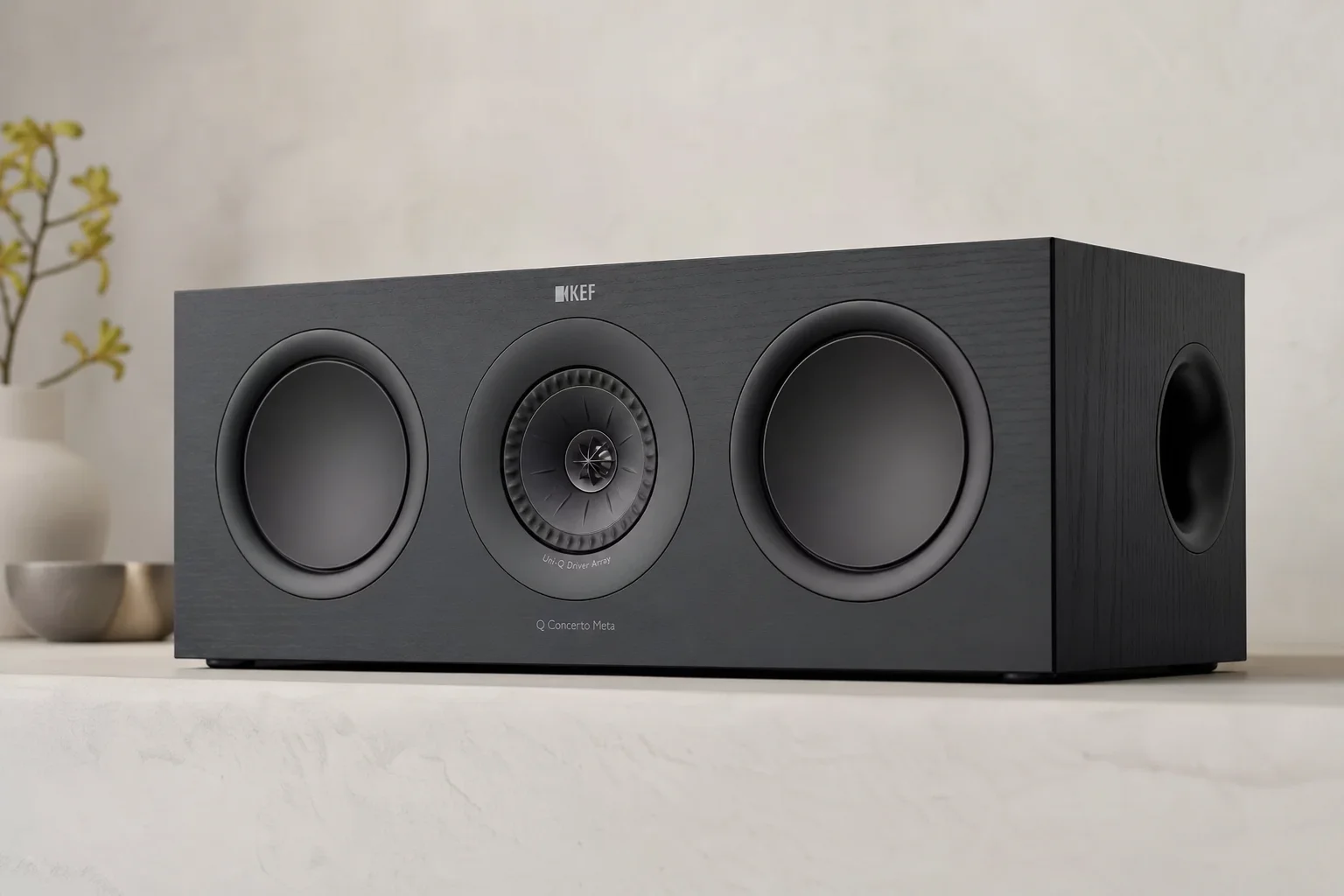
At about $1,300 per pair, the Q Concerto Meta is a bookshelf speaker with a veneer finish offered in several colours. Its mid-range is largely well behaved, with a dip around 200 Hz, so male vocals may not carry quite as much chest weight as a perfectly flat on-axis response would suggest. The high frequencies sit roughly 2 to 3 dB below the mid-range, which is the main reason this speaker can come across as a little dark rather than bright.
Bass extension lands with an F3 around 53 Hz and an F10 around 35 Hz, so the roll-off begins somewhere in the 40 to 50 Hz region. Sensitivity is about 84.2 dB. Horizontal coverage is roughly plus or minus 55 degrees and narrows as frequency rises, which is typical of a design that is not constant directivity. The vertical response shows a dip in the handoff between the midwoofer and the coaxial driver, plus a mild bloom around 2 to 3 kHz.
In-room behaviour is where the tonal character becomes clear. The predicted in-room response is tilted downward and shows a mild upper mid-bass dip, which again takes a little weight away from vocals. Compression performance is good, and multitone distortion is the highest of the three speakers here, though still respectable for the price. The practical takeaway is room dependent: in a smaller space with reflective surfaces nearby, this speaker sounds well balanced and cohesive. In a large, open room with no walls close by, it may not project the sense of space some listeners expect.
MoFi SourcePoint 888: More Output, Lower Distortion, and a More Spacious Presentation
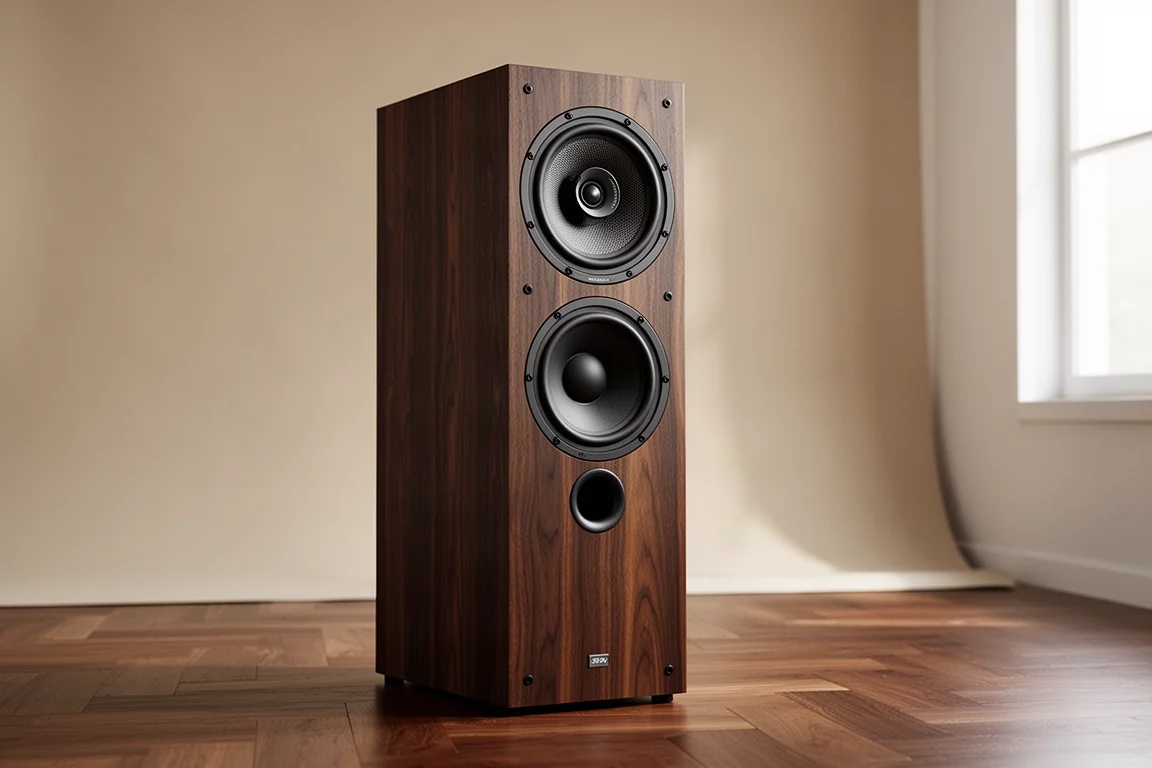
The SourcePoint 888 costs about $5,000 per pair and arrives in a walnut finish that reads as a clear step up in furniture terms, though the cabinet is less sleek than the top-tier design here. Sensitivity rises to roughly 85.6 dB, and bass extension improves substantially, with F3 around 34 Hz and F10 around 26 Hz. In practice that translates to roughly 30 Hz of in-room extension without much fuss.
The trade-offs are tonal rather than structural. There is a slight hollow in the mid-range, on the order of a decibel, and the upper mid-range lacks a little bite. That is most audible in a direct A/B comparison; on its own, without a reference, many listeners would not notice it. What the design gains in exchange is envelopment. The mid-range and upper mid-range feel more spacious, and horizontal dispersion is a little wider, although it narrows quickly above roughly 12 kHz.
Early reflections are not perfectly linear, with a small deviation through the mid-range and the upper mid-range to lower treble, and the vertical response shows some diffraction-related structure. The predicted in-room slope is more mellow than the entry-level model’s, with a slight hollow in the vocal region around 600 Hz and a little less attack in the upper mid-range and lower treble. Compression is better than the Q Concerto Meta’s, so dynamic range is greater, and multitone distortion is lower. Low-frequency output is also more filled in through the 40 to 50 Hz region, which means the cabinet benefits from a bit more space around it.
KEF Blade 2 Meta: Directivity and Linearity at the Top
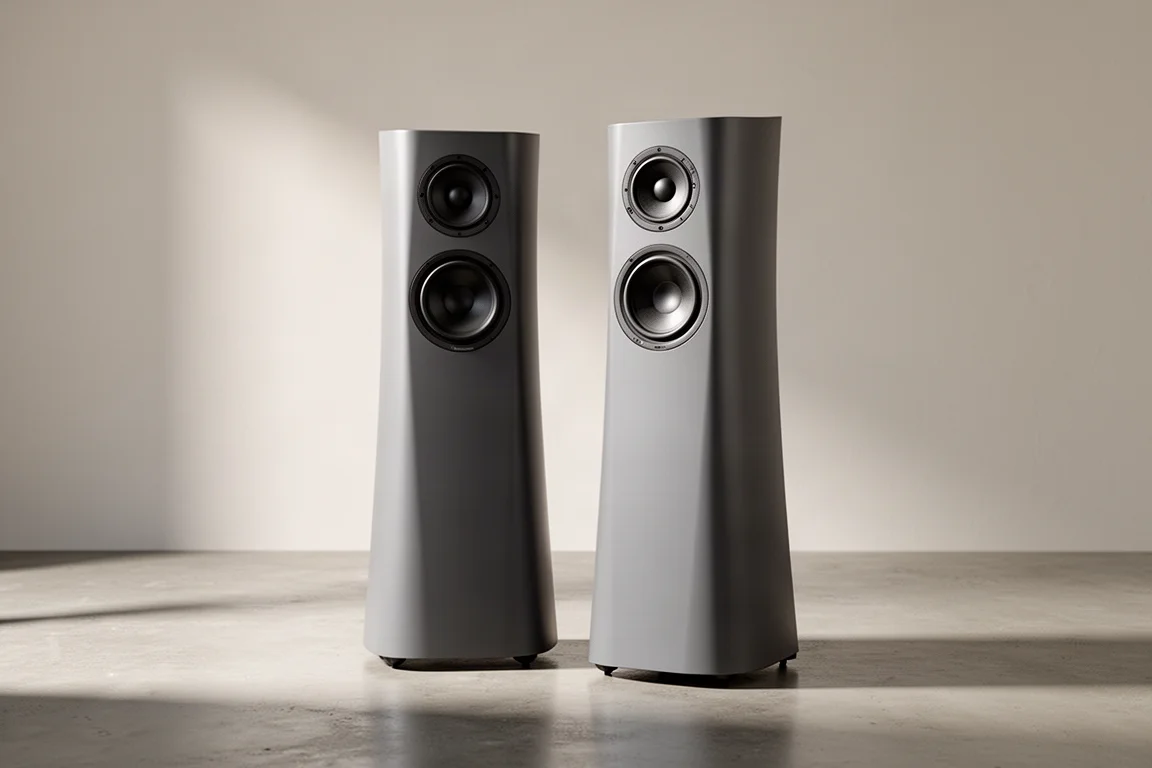
The Blade 2 Meta is the outlier in both price and appearance, at roughly $28,000 to $29,000 per pair. Its tall, architectural cabinet is a love-it-or-not design, and the finish is aimed squarely at rooms where a speaker is meant to be looked at as well as listened to.
Measured performance is where the price gap becomes concrete. Average sensitivity is about 86.8 dB, and the response is extremely linear for a passive loudspeaker. Early reflections track the direct sound almost perfectly, which is about as good as passive designs get. Horizontal directivity is close to textbook: slightly narrower than the SourcePoint 888, but the most consistent of the three. Vertical response is equally strong, with wide windows, so standing up, walking around, or moving off the tweeter axis barely changes the tonal balance.
In-room linearity is excellent, with deviations so small that most listeners would not identify them in normal listening. Bass extension is roughly 30 Hz in room, similar to the SourcePoint 888, but the profile dips a little around 40 to 50 Hz, which in practice means this speaker can sit somewhat closer to a wall. Compression is the best of the three, giving a large amount of usable dynamic range, and multitone distortion is the lowest, particularly through the mid-range.
Subjectively, the combination of linearity and class-leading directivity produces a remarkably cohesive soundstage, with everything presented on a single plane and layering that shifts with the recording rather than with the speaker. Listeners who prefer a wider, more diffuse presentation may still gravitate toward the mid-tier floorstander, and that is a legitimate preference rather than a shortcoming.
Buying Advice: Matching the Speaker to the Room
The right choice here depends far more on the room and the listening habits than on the price tag alone. All three are strong performers, and each one is strongest in a different set of conditions.
If space is limited and the walls are close, the Q Concerto Meta is the value pick. Its downward-tilted in-room response and narrower high-frequency radiation work in its favour in a smaller, more reflective room, and its compression and distortion behaviour are solid for the money. Buyers who want a bright, forward top end should listen first, because the treble sits below the mid-range rather than above it.
Moving up to the SourcePoint 888 buys bass depth, greater sensitivity, more output, lower distortion, and a wider, more enveloping presentation. It suits larger rooms where the speaker can be placed with some breathing room behind and around it, and where the extra low-frequency output is genuinely usable.
The Blade 2 Meta is the choice for listeners who want the most linear passive speaker in this comparison, the most consistent directivity, the lowest distortion, and the most precise imaging. It also offers a little more placement freedom in the low frequencies. Whether that combination justifies a price roughly six times the mid-tier model is a personal calculation, but the measured gains are real and consistent rather than cosmetic.
Conclusion
Each step up in this comparison buys measurable improvement: better linearity, more consistent directivity, more dynamic range, and lower distortion. What changes most is the size of the increment relative to the money spent. The Q Concerto Meta delivers class-leading performance for about $1,300 a pair. The SourcePoint 888 adds bass depth, output, and spaciousness for about $5,000. The Blade 2 Meta pushes linearity and directivity to the top of what passive designs achieve.
If the goal is the best performance per dollar, the entry point in this group is hard to argue with, provided the room is not too large and the slightly relaxed treble suits your taste. If the goal is the most accurate reproduction regardless of cost, the top tier is the one that earns it.
Further reading
Related Reviews
Hi-Fi Speakers
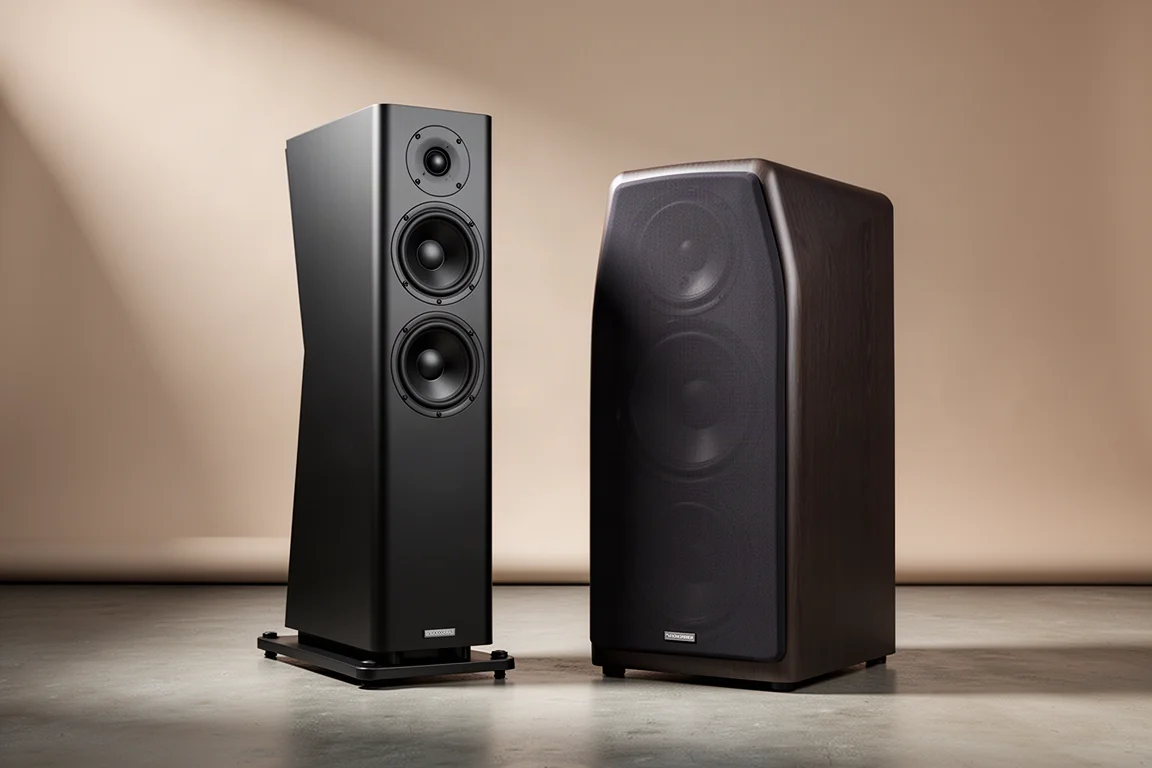
1723 THX Tower vs 1528 Bookshelf: Which Speaker Fits Your Room?
Two speakers at roughly the same price, built very differently. How the 1723 THX tower and the 1528 bookshelf compare on construction, bass, power needs, and sound.
Hi-Fi Speakers
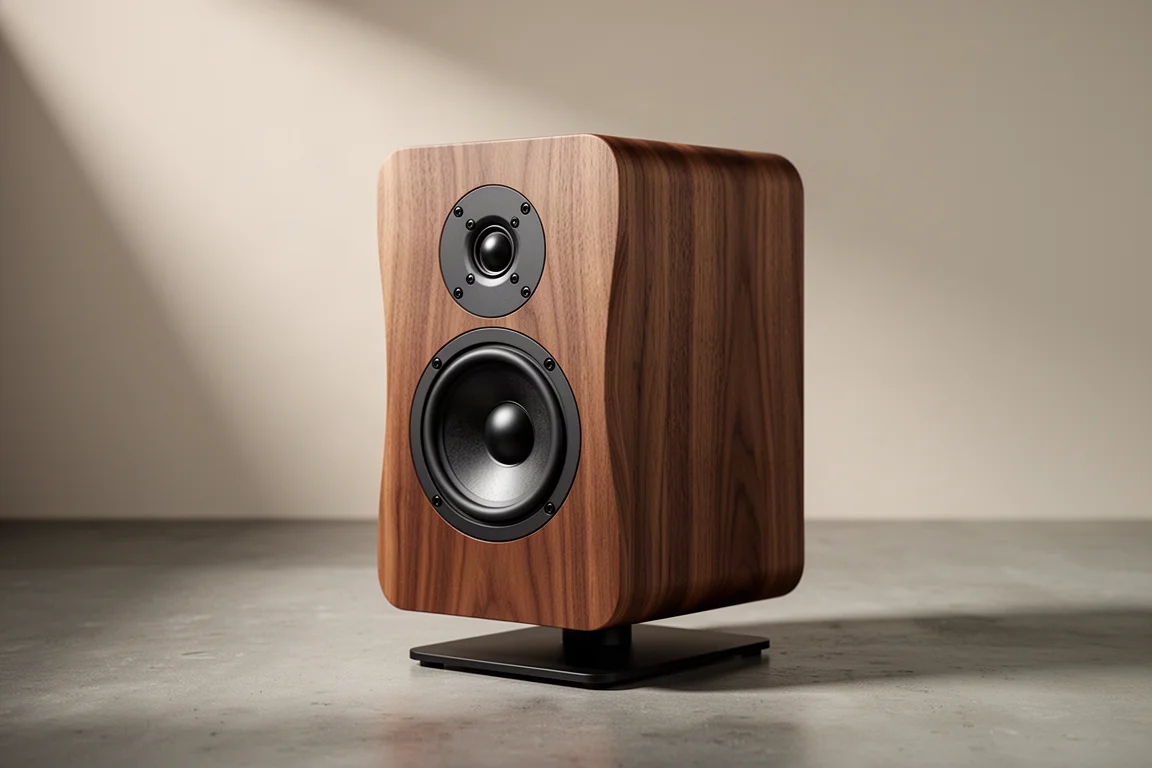
Acoustic Energy AE 300 Review: Deep Bass From a Compact Standmount
A two-way standmount with real wood veneer, surprising low-end weight, and a warm, easygoing character. Here is what to know before buying.
Hi-Fi Speakers
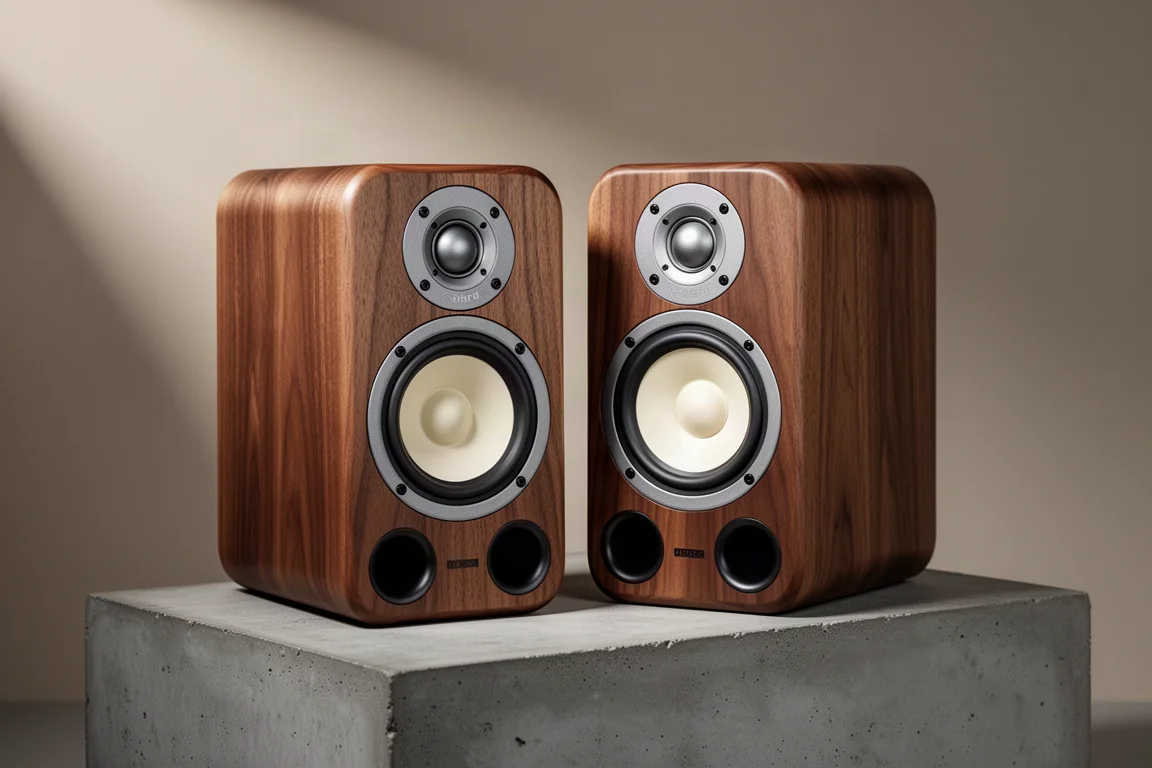
Acoustic Energy AE1 40th Anniversary Review: A Modern Take on a British Classic
A compact standmount that revives a 1980s favorite with all-new parts, a warm mid-centric balance, and a price of £1,499 per pair.