Speaker Isolation
Speaker Isolation Feet Compared: AV Room Service EVP vs IsoAcoustics Orea Bronze
Two vibration-absorbing speaker footers, what blind listening trials actually revealed, and how to decide whether isolation is worth trying on your own speakers.
Introduction
Speaker isolation sits in one of the more contested corners of hi-fi audio. The available options run from metal spikes and cones to polymer pucks, foam blocks, sprung feet, and wooden footers, and nearly every design arrives with a theory that claims to explain why it works. Those theories cannot all be correct, which makes the topic a good candidate for a direct test rather than an argument.
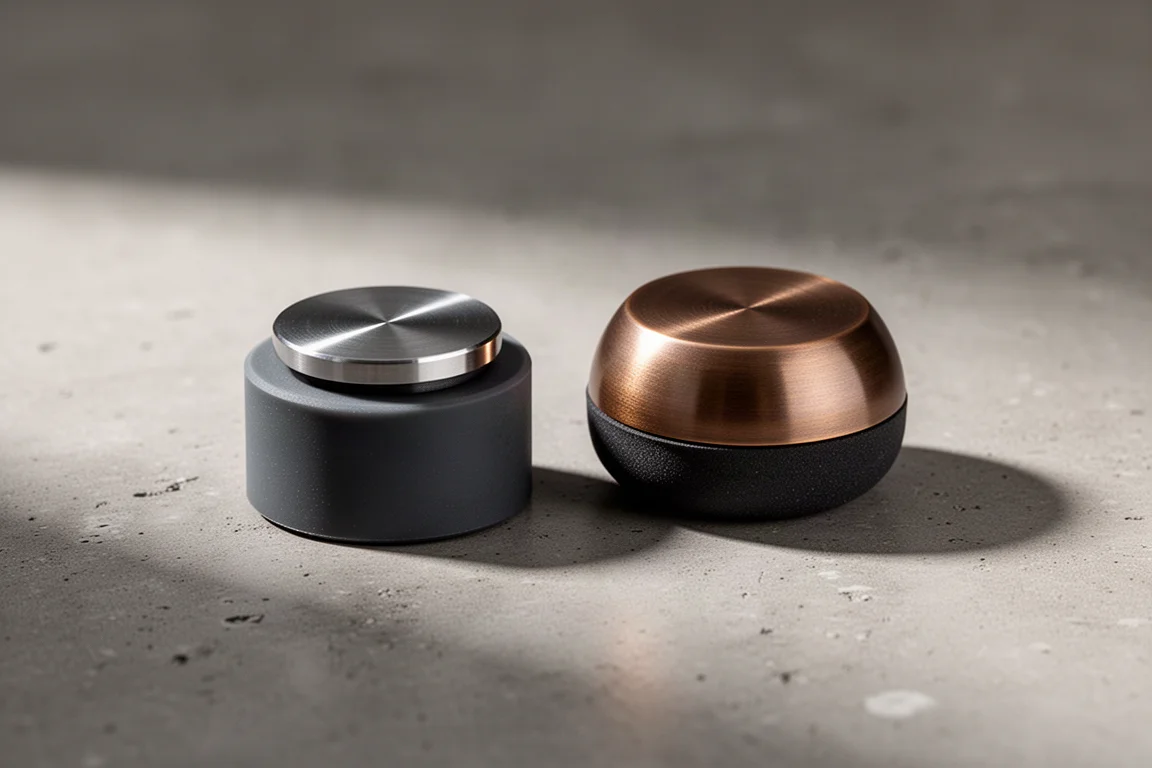
The question worth answering is narrower than the marketing suggests. On a stand-mount speaker that already sits on a heavy, well-damped stand, does a set of isolation feet change anything you can genuinely hear? That is the setup examined here, using two products chosen for the purpose: AV Room Service EVP feet and IsoAcoustics Orea Bronze feet.
How Speaker Isolation Is Meant to Work
Two schools dominate the conversation. One holds that the speaker should be coupled firmly to the floor so the drive units have something solid to push against. The other holds that the speaker should be decoupled, so cabinet vibration does not travel into the floor and walls and then return to the speaker.
Spikes and cones belong to the coupling school. The classic argument is that a spike behaves like a one way valve: vibration travels down and out through the point and cannot come back. Measurement work published by IsoAcoustics and by AV Room Service points in a different direction, indicating that spikes do not isolate at all. They change what gets transmitted into the structure, but they do not prevent transmission.
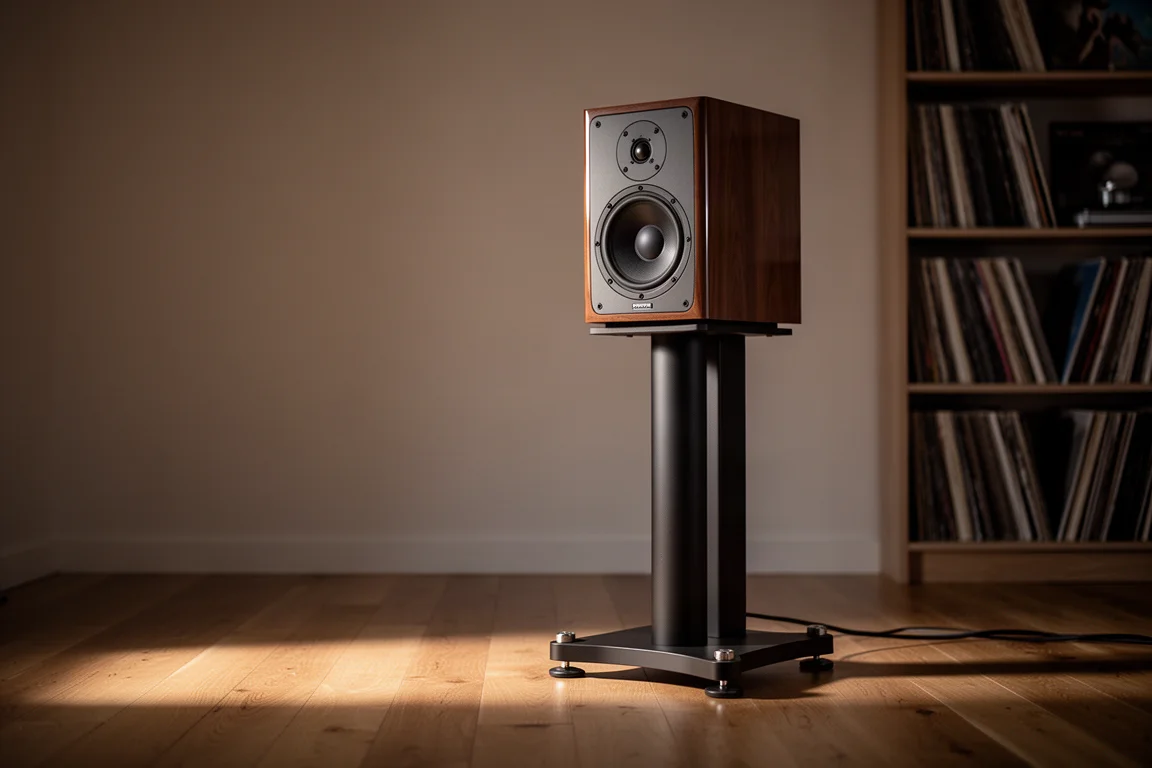
The comparison often used is a unipivot tonearm. A hard, sharp point resting in a cup is not isolation, and nobody describes it that way. A turntable standing on spikes is a similar case, which is probably why spikes under turntables have largely fallen out of favour.
What absorbing feet are intended to do instead is interrupt the path in both directions. They limit how much energy from the speaker reaches the floor and the surrounding structure, and they also limit how much energy from the room, the floor, or a subwoofer travels back up into the speaker.
AV Room Service EVP Feet
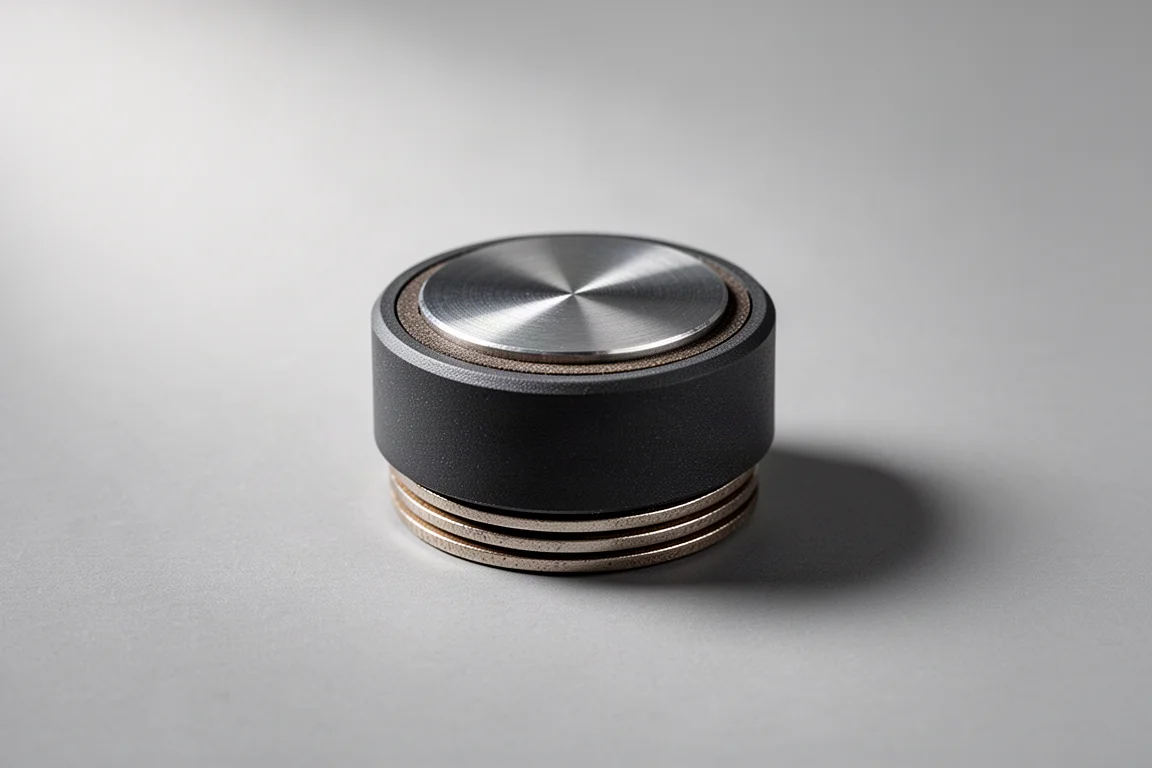
AV Room Service EVP feet are designed to sit between the speaker and whatever supports it, absorbing vibration rather than passing it into the supporting surface. They were one of the two isolation products selected for this test, alongside a set of IsoAcoustics feet, and both were run against a set of spikes as the reference.
In listening comparisons, the EVP feet were judged better than the spikes rather than merely different, with most of the change showing up in the size and focus of the soundstage rather than in tonal balance.
IsoAcoustics Orea Bronze
IsoAcoustics Orea Bronze belongs to a family of footers sold in several load ratings, and the variant matters. The correct amount of compression depends on the weight of the speaker and on how much bass it produces, so matching the footer to the speaker is part of the setup rather than an optional detail. The Bronze model was the appropriate match for the stand-mount speakers used here.
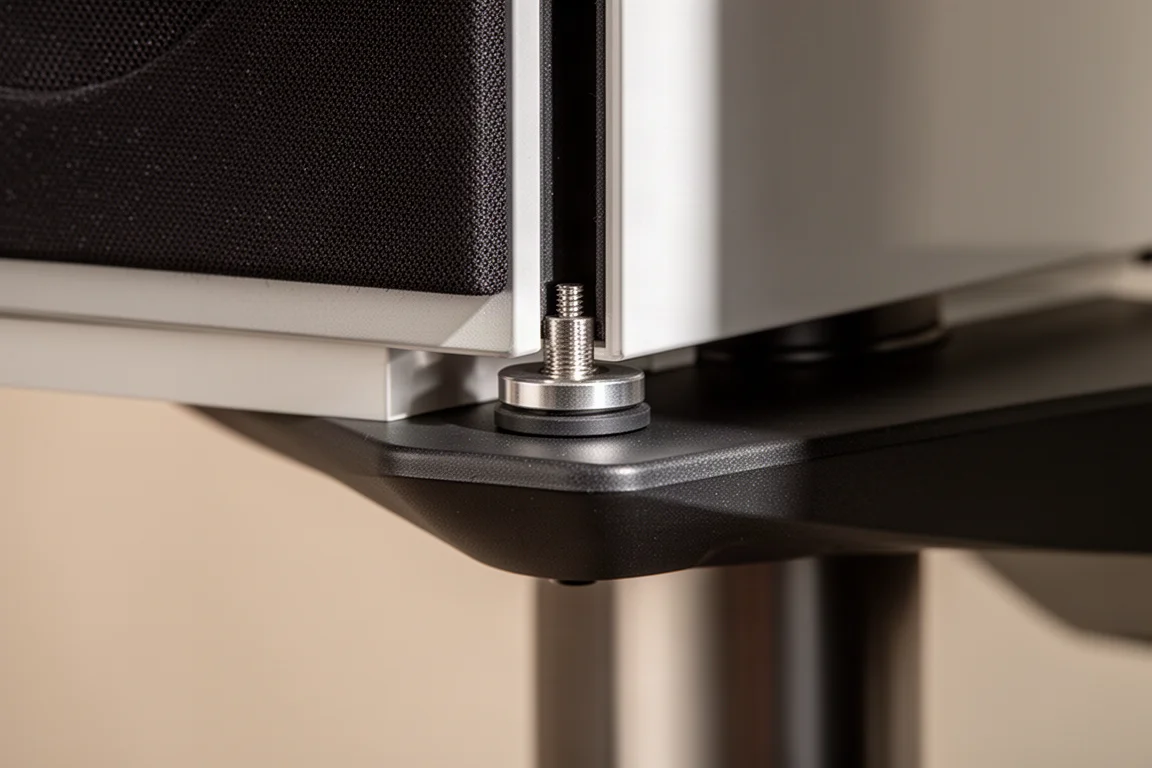
The IsoAcoustics feet are what started the investigation. An initial measurement session with a calibrated microphone and room analysis software suggested a flatter response between roughly 40 Hz and 200 Hz, with peaks and dips reduced by about 1.5 to 2 dB. A later attempt to replicate that result, across about a dozen measurements, found no measurable difference at all.
In listening, the IsoAcoustics feet were preferred overall in an informal session, with a little more precision in the sense of focus.
Why Spikes and Cones Behave Differently
Spikes and cones remain common because the coupling argument is intuitive, and because a rigid connection feels more solid than a soft one. There is a second argument in their favour as well: a firm platform stops the cabinet from wobbling, so the woofers have something to push against and the speaker should sound more dynamic.
The catch is that the same rigidity that makes a spike feel solid also gives vibration a direct path into the floor and the walls. In rooms with suspended wooden floors, that path can turn the floor and walls into a sounding board, and the result is a boomier, muddier presentation that loses clarity. Under large floor-standing speakers, replacing spikes with absorbing feet has been observed to clean up that effect considerably.
The stand-mount speakers used in this test had stands filled with roughly two thirds sand and one third lead. That construction already soaks up a great deal of vibration before it can reach the floor, which is exactly why the audible changes here were smaller than they might be in a less damped setup.
What Careful Listening Revealed
The test was a series of blind ABX trials. One device was placed under the speakers and a track was played, then a second device was swapped in and the same track was played again. Finally one of the two devices was installed without the listener knowing which, and the listener, working blindfolded, had to say whether the final configuration was the first or the second.
Three tracks were chosen for the sessions, each with deep bass, a vocal, and a wide, immersive soundstage. Five trials were run in total, which turned out to be close to the limit of comfortable concentration. All five answers were correct. One of those trials was a control in which no device was changed at all, and the correct answer was that there was no difference to hear, which is what the listener reported. That control also helped rule out small shifts in speaker position as the cause of what was being heard.
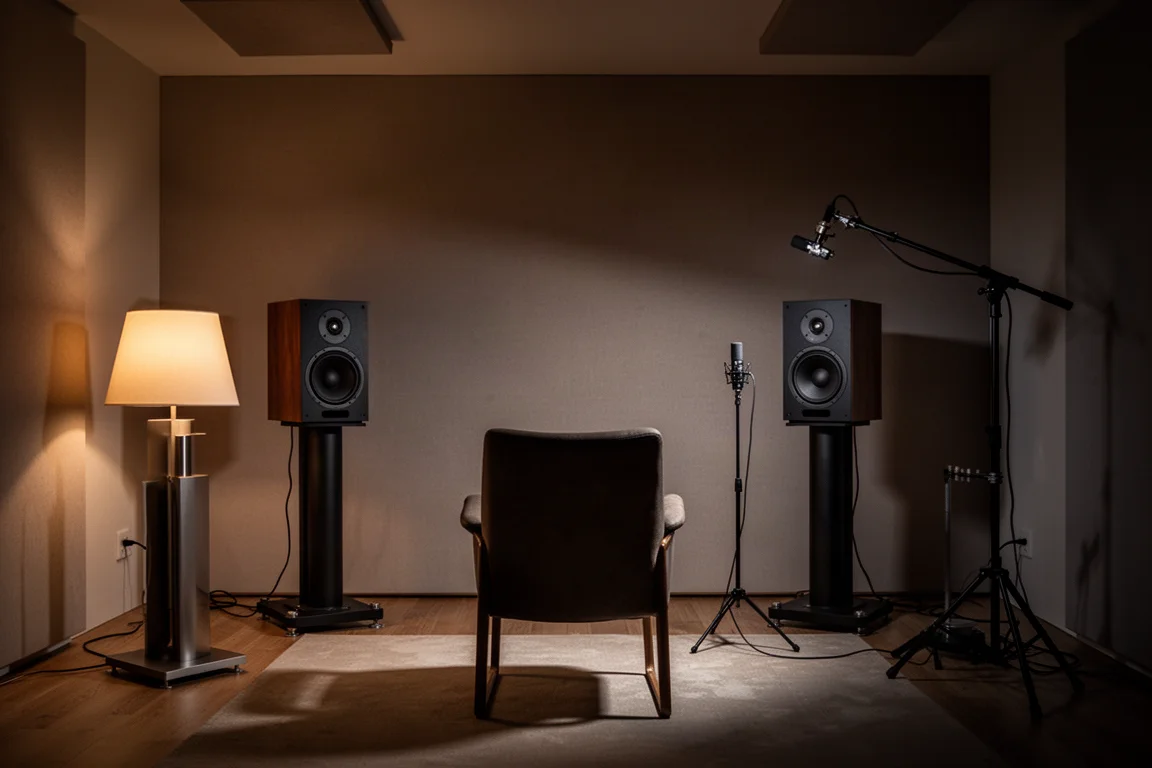
What was actually audible came down to the soundstage. With the absorbing feet in place, it seemed more expansive and more focused, particularly toward the corners and off to the sides of the speakers. On one track, an effect placed near the wall could be pointed to directly and followed as the mix moved it around the stage. The difference was consistent but subtle, which is unsurprising given how heavily damped the stands already were. On floor-standing speakers, or in a room with a lively wooden floor, the same change would likely be far more obvious.
Matching Feet to Your Speakers and Stands
Two practical points matter more than brand preference. The first is load matching. Isolation feet are not a one size fits all product. Each model is built to work within a weight range, and the amount of compression needs to suit both the mass of the speaker and the amount of bass it produces. Choosing a footer that is too stiff or too soft for the load undermines the whole exercise.
The second point is the support itself. Where a stand or a floor is already doing a good job of soaking up vibration, the improvement from adding isolation is likely to be small. Where a speaker sits on a suspended wooden floor, where the walls join in, or where a subwoofer is sharing the same room, the case for an absorbing footer becomes considerably stronger.
Buying Advice
If you are currently running spikes or cones, an absorbing footer is the more interesting experiment, because that is the comparison where the difference was clearest in listening. The goal is to keep vibration out of your floor and room structure, and to keep the energy that is already in the room from travelling back up into the speaker.
Between the two products tested, both were judged better than spikes rather than simply different, and the IsoAcoustics feet had a slight edge in focus during the informal session. Anyone weighing the two should start with load matching, since the correct footer for a given speaker depends on its weight and bass output rather than on the badge on the box. If your stands are already heavy and damped, set expectations accordingly and listen for changes in soundstage shape rather than for a dramatic tonal shift.
Conclusion
Isolation on a stand-mount speaker sitting on a well-damped stand is a small, real effect rather than a transformation. It showed up in blind listening as a more expansive and better focused soundstage, and it was consistent enough to be identified repeatedly. Measurements did not confirm the result in the replication round, which is a fair reminder that this is a subtle area of the hobby.
The practical takeaway is straightforward. Absorbing feet such as the AV Room Service EVP and the IsoAcoustics Orea Bronze were preferred over spikes in listening, and the biggest gains are likely to appear in rooms where floors and walls are already colouring the sound. If your setup already sits on a massive sand and lead filled stand, the change may be modest. If it does not, it is worth finding out.
Further reading
Related Reviews
Speaker Isolation
IsoAcoustics Gaia 2 and Aperta 300: Speaker Isolation for Floors and Desktops
A practical look at two IsoAcoustics isolation products: the Gaia 2 foot for floor-standing speakers and the Aperta 300 platform for center channels and desktop monitors.

Backpacking Gear
Building a 10 lb Base Weight: An Ultralight Backpacking Gear List
A practical walkthrough of the ultralight pieces behind a 10 lb base weight, from a 765 g pack and a roomy one-person tent to a full camp chair and a dependable water filter.

Road Bikes
10 New Road Bikes Worth Watching: Aero, Titanium, Steel and Endurance Standouts
A practical roundup of 10 new road bikes, from aero flagships chasing single-watt gains to titanium, steel and endurance platforms built for real roads.