Speaker Isolation
IsoAcoustics Gaia 2 and Aperta 300: Speaker Isolation for Floors and Desktops
A practical look at two IsoAcoustics isolation products: the Gaia 2 foot for floor-standing speakers and the Aperta 300 platform for center channels and desktop monitors.
Introduction
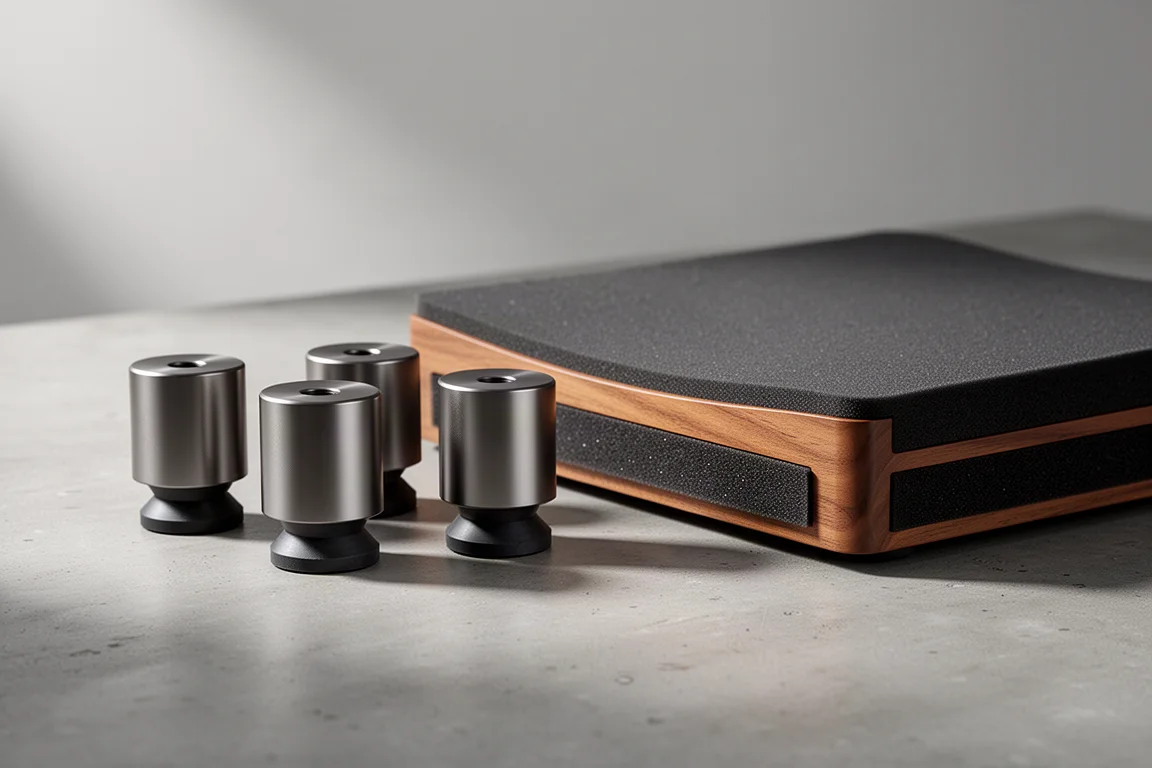
The IsoAcoustics Gaia 2 and the IsoAcoustics Aperta 300 solve the same underlying problem in two different ways. Both are built to decouple a speaker from whatever surface it rests on, so less energy from the cabinet travels into a floor, a media cabinet, or a desk and comes back into the room as unwanted coloration.
The Gaia 2 is a threaded foot that replaces the spiked feet under a floor-standing speaker. The Aperta 300 is a platform that a center channel or a desktop monitor sits on, with a built-in tilt. They suit different speakers and different rooms, so it is worth understanding each one before deciding.
How the Gaia 2 and Aperta 300 Differ
The two products share a similar idea at the contact point. The Gaia 2 has a soft, rubbery base that is slightly inverted, so it grips the floor rather than sliding across it. The Aperta 300 uses spongy pads on both its top and bottom faces, also inverted, so the platform holds onto the surface below and the speaker above.
The installation approach is where they part ways. The Gaia 2 threads into the base plate of a speaker and takes the place of its existing feet, one per corner. The Aperta 300 is a separate base that the speaker simply rests on, and it can raise the front or the rear of the speaker by roughly six degrees to aim it up or down.
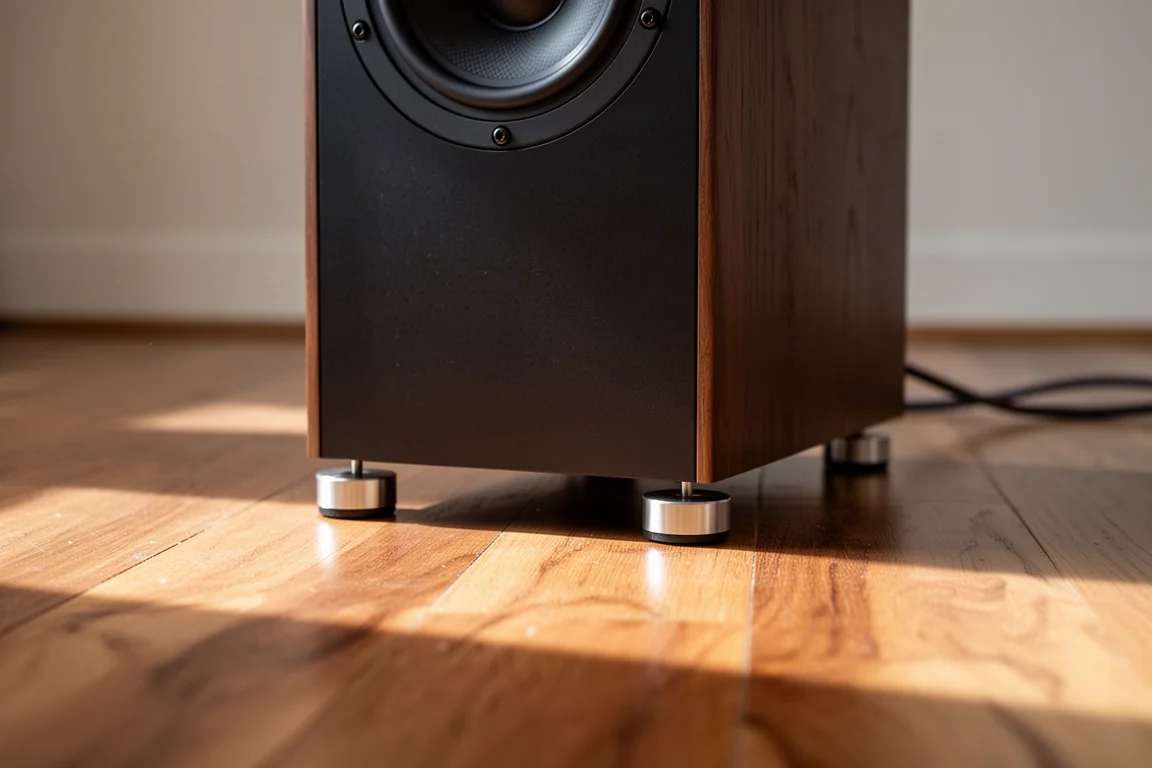
That difference in form factor decides the match. A floor-standing tower with threaded inserts takes the Gaia 2. A center channel sitting on a cabinet, or a pair of monitors on a desk, takes the Aperta 300.
IsoAcoustics Gaia 2: Decoupling Floor-Standing Speakers
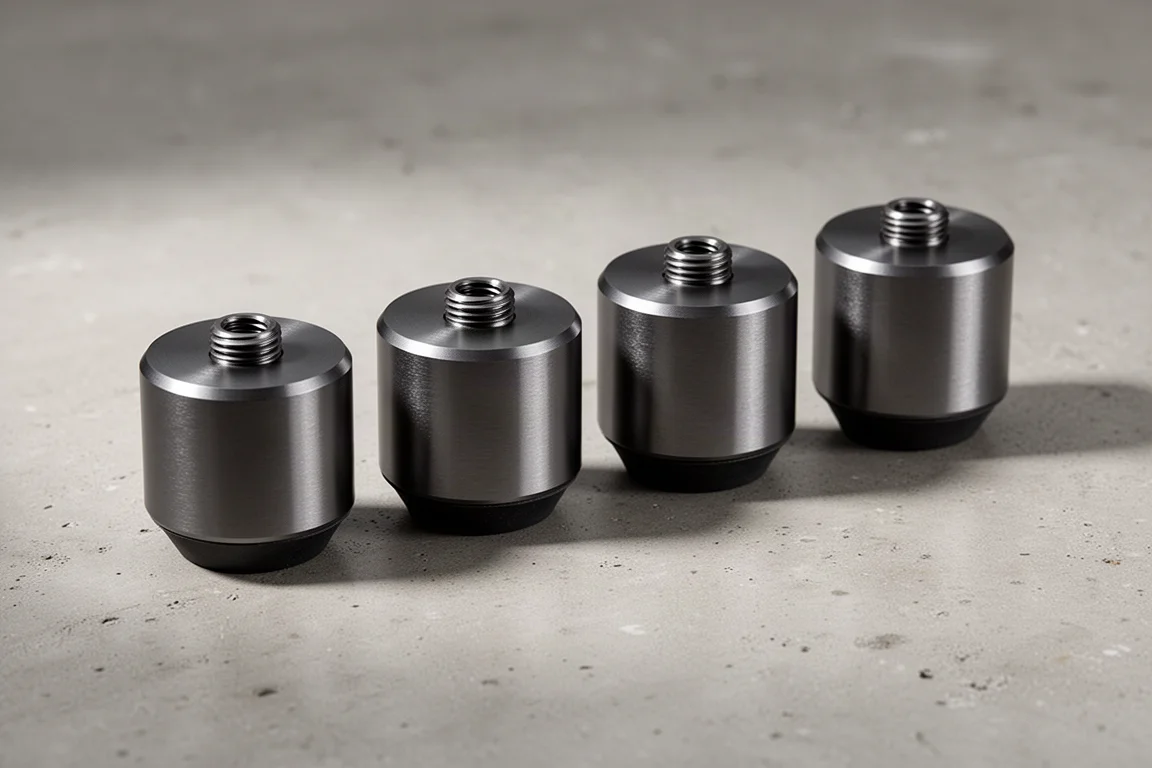
Each Gaia 2 foot is a compact cylinder with a gunmetal finish and branding on the top face, measuring about two inches wide and 1.7 inches tall. The threaded insert sits at the very top, and the soft inverted base underneath provides the grip that keeps it planted. IsoAcoustics rates each foot at up to 120 pounds of support, and the Gaia line comes in three sizes, with the Gaia 2 as the middle option.
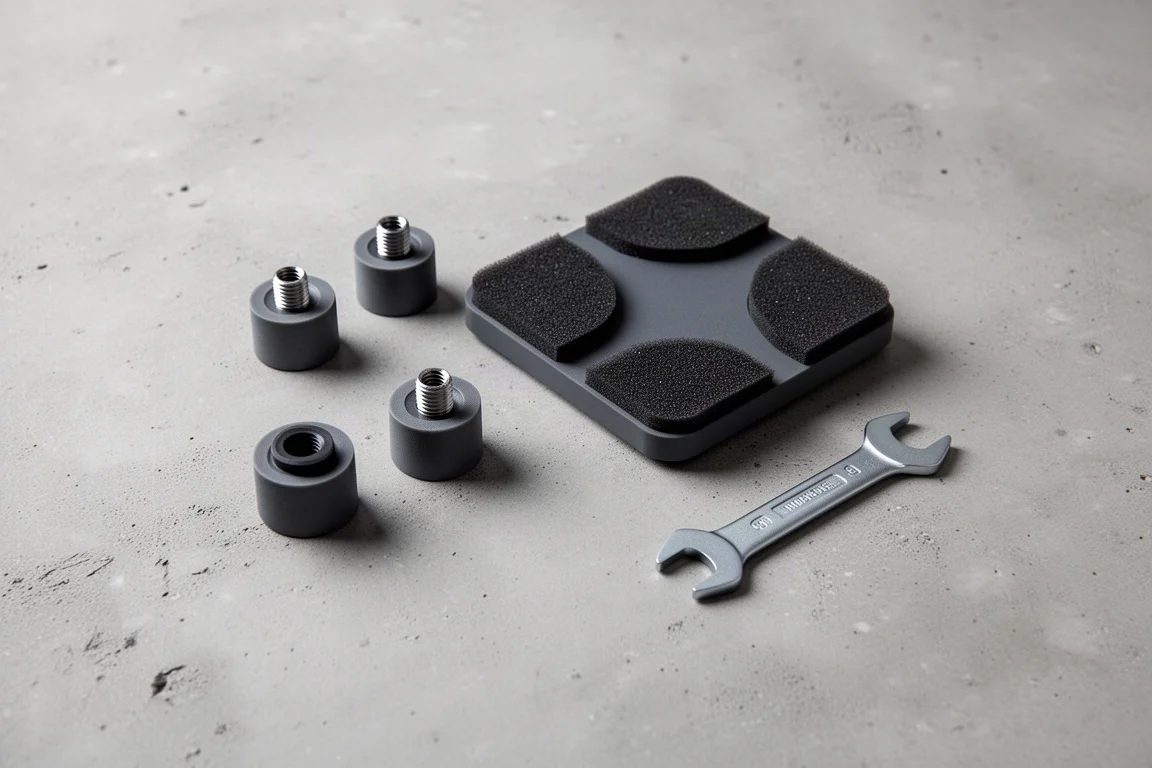
The set ships as four feet, which covers one speaker. Inside the box there are M6 and M8 thread adapters, each roughly a quarter inch long, along with a spanner wrench for tightening everything down. Longer adapters, such as an M8 at around one and a quarter inches, are sold separately if a speaker needs more thread depth.
Listening Notes with the Gaia 2
With compact tower speakers standing on spiked feet over a wooden floor, the spikes pushed energy straight into the boards, and that resonance travelled up the walls and into nearby furniture. Fitting the Gaia 2 feet largely removed that path.
The most consistent change was in the low end. Bass became tighter and cleaner, with less of the bloom that appears when the room joins in, and the midrange gained clarity as cabinet and floor coloration dropped away. The presentation also opened up, with a broader soundstage and instruments sitting more clearly apart from one another.
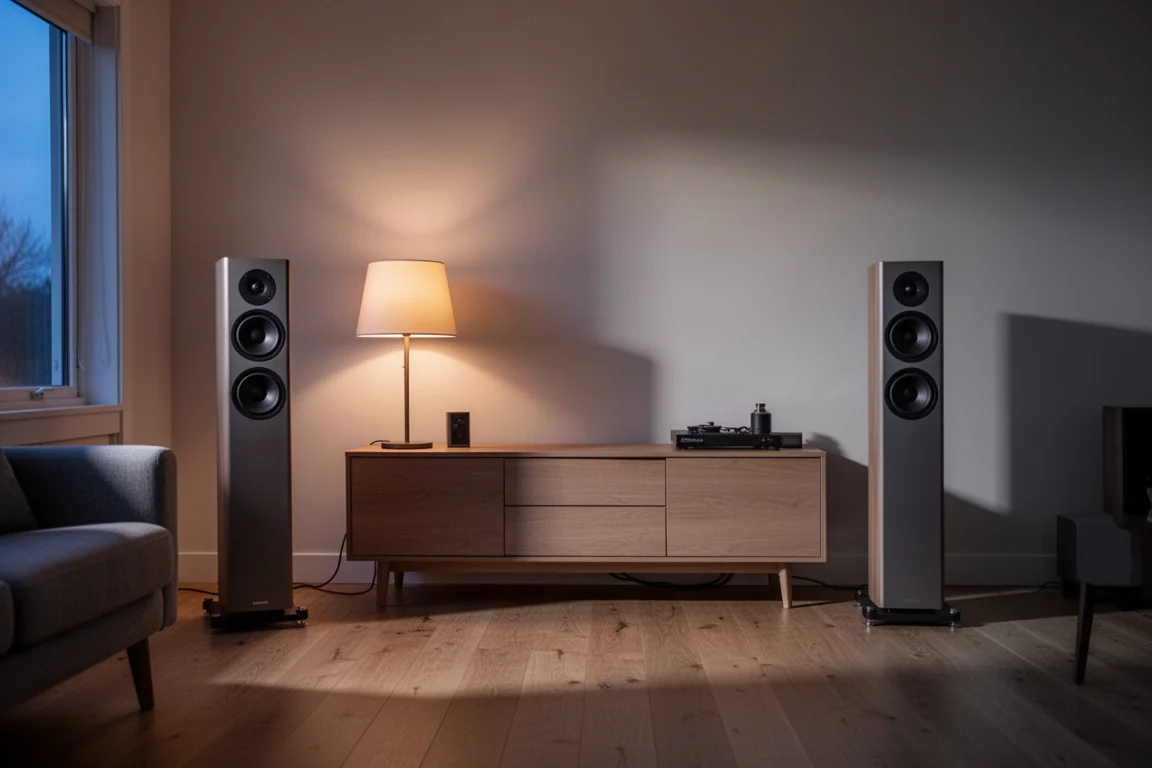
Not every listener will prefer the result. With pop and rap material, the extra energy that a spiked speaker pushes into the floor can feel exciting, almost as though a subwoofer is running. Removing it trades some of that effect for accuracy, which tends to suit jazz and classical listening more than it suits a room that is meant to shake.
IsoAcoustics Aperta 300: Center Channel and Desktop Support
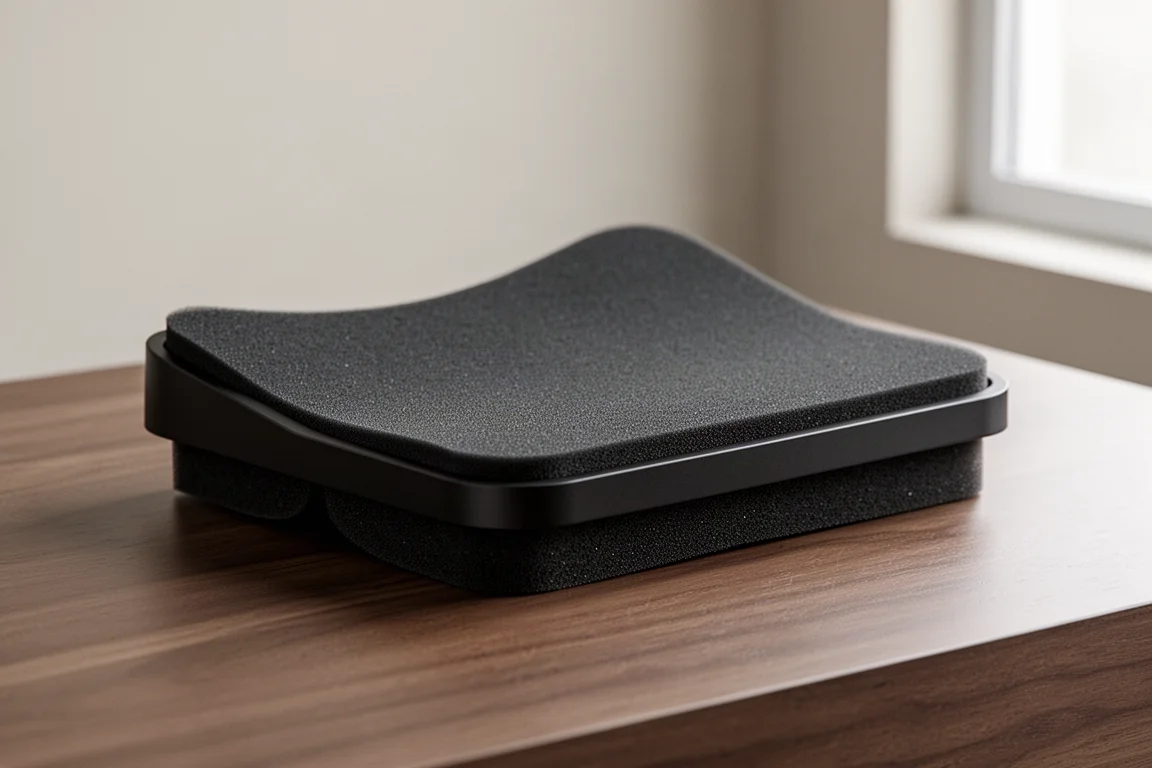
The Aperta 300 is a low-profile base rather than a foot. A spongy layer sits on the top face for the speaker and another on the underside for the supporting surface, both shaped so the platform resists sliding. Removing the top cap and loosening the internal parts lets the platform be raised, and refitting the cap locks in an upward tilt of about six degrees. The same adjustment can be reversed so the speaker aims downward instead.
That makes it a natural fit for a center channel resting on a media cabinet, where the goal is to lift the speaker off the cabinet and angle it toward the listening position. The same logic applies to desktop monitors, where a desk surface otherwise adds its own resonance to everything the speakers do.
Listening Notes with the Aperta 300
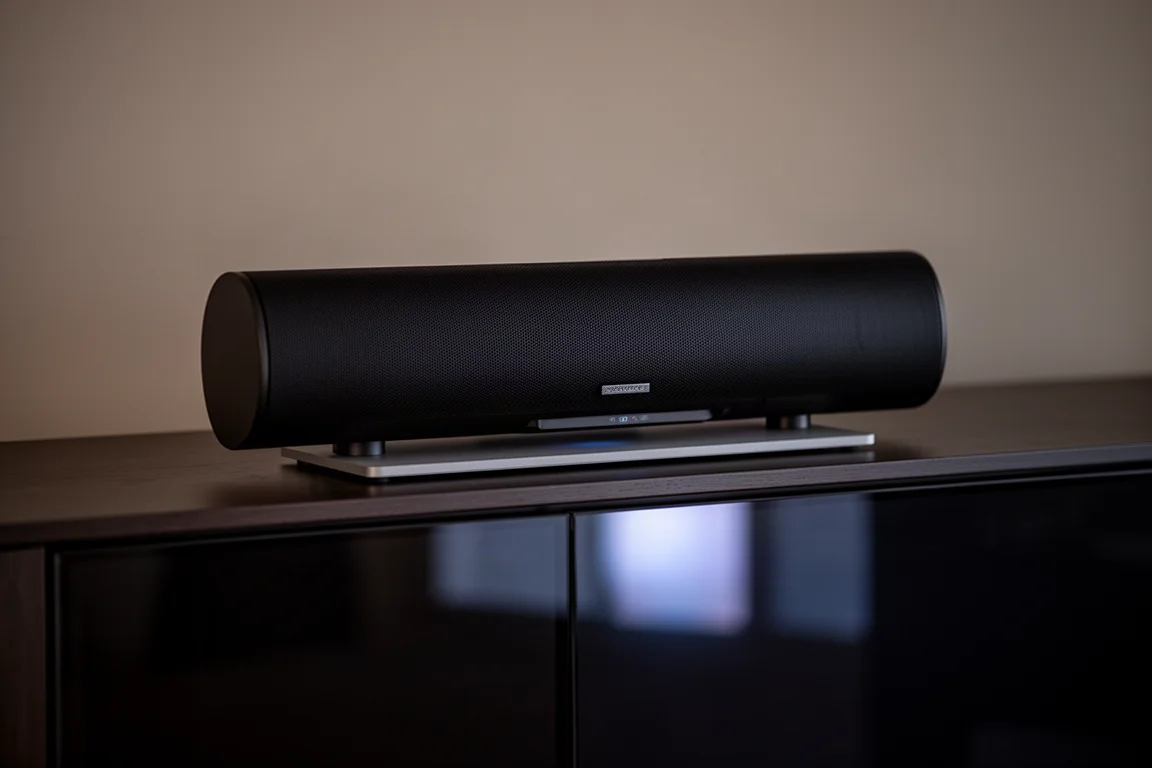
The change here was the easiest to hear. Raising the center channel off the tabletop and decoupling it stopped vibrations from passing between the speaker, the surface beneath it, and the equipment on the shelves below.
Dialogue intelligibility improved noticeably, midrange presence projected further into the room, and high frequency detail came through cleaner. It was the kind of difference a second listener in the room picked up on immediately, which is a useful sign that the effect is audible rather than imagined.
Installation and Setup Notes
Fitting the Gaia 2 takes a few steps per corner. A knurled nut and a hex nut go onto the thread adapter, the assembly drops into the foot, and the whole unit screws into the speaker base plate. Keeping the branding facing the front of the speaker is part of the setup, then the top cap goes on and the included wrench tightens everything down. Repeating that on all four corners completes the job.
The Aperta 300 is simpler: set the platform in place, adjust the tilt while it is unloaded, then seat the speaker on top. Because the included thread adapters for the Gaia 2 are short, it is worth checking the depth of a speaker’s inserts before installing, since longer adapters may be required.
Buying Advice
The decision comes down to which speaker is causing the problem. For a floor-standing pair on a wooden or suspended floor, the Gaia 2 addresses bass coloration and room interaction directly, and it is the more surgical of the two upgrades. For a center channel on a cabinet, or monitors on a desk, the Aperta 300 delivers the more obvious improvement, largely because a tabletop or cabinet is a far worse surface for a speaker to sit on.
Budget matters as well. The Aperta 300 is priced at 159 dollars for a single unit. The Gaia 2 is sold in packs of four, so a stereo pair needs two packs, and the total scales with how many speakers you own.
Expectations should stay realistic. These are not new speakers, and the effect is room dependent. The home theater application, with a center channel lifted off a cabinet, produced the clearest change. The tower speaker application was more a matter of taste, with accuracy gained and some room-filling energy lost.
Conclusion
The IsoAcoustics Gaia 2 and Aperta 300 both do what they set out to do, decoupling a speaker from the surface it sits on and reducing the coloration that comes back from it. The Gaia 2 is the right call for floor-standing speakers that need tighter, less room-influenced bass, while the Aperta 300 is the stronger buy for center channels and desktop setups where dialogue clarity and midrange presence matter most.
Further reading
Related Reviews
Speaker Isolation
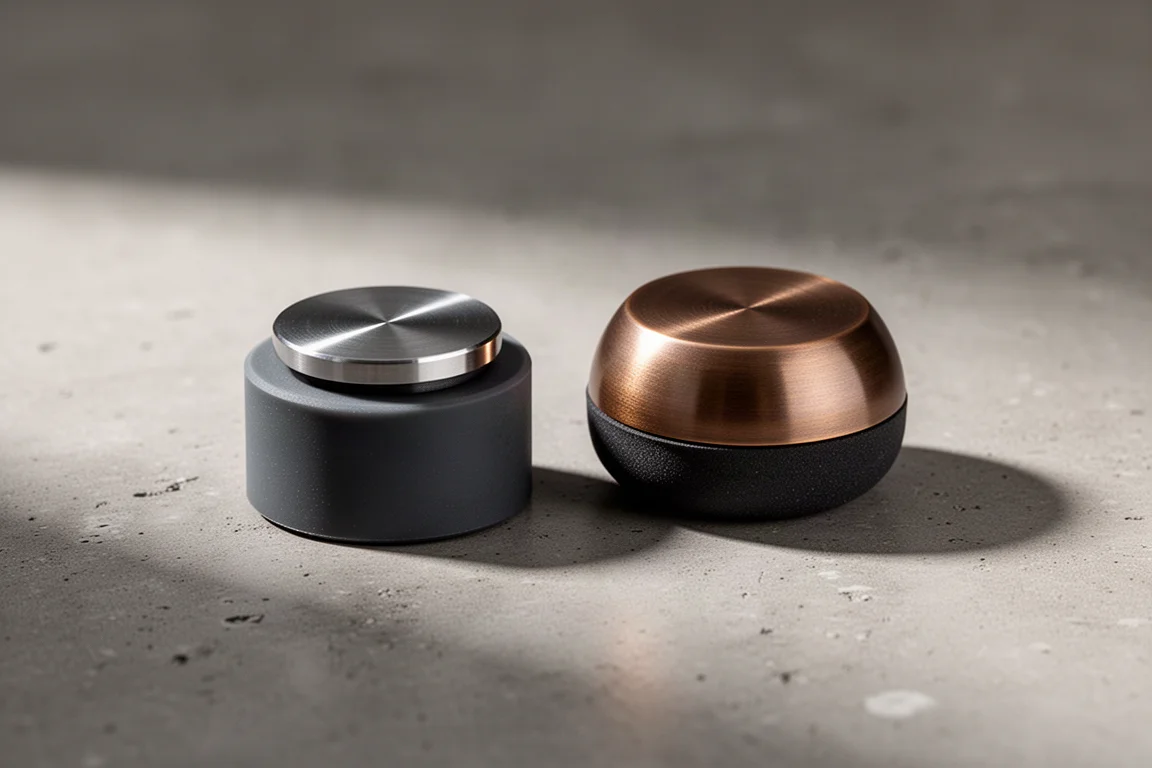
Speaker Isolation Feet Compared: AV Room Service EVP vs IsoAcoustics Orea Bronze
Two vibration-absorbing speaker footers, what blind listening trials actually revealed, and how to decide whether isolation is worth trying on your own speakers.

Backpacking Gear
Building a 10 lb Base Weight: An Ultralight Backpacking Gear List
A practical walkthrough of the ultralight pieces behind a 10 lb base weight, from a 765 g pack and a roomy one-person tent to a full camp chair and a dependable water filter.

Road Bikes
10 New Road Bikes Worth Watching: Aero, Titanium, Steel and Endurance Standouts
A practical roundup of 10 new road bikes, from aero flagships chasing single-watt gains to titanium, steel and endurance platforms built for real roads.