Audio Plugins
Sound Theory Gullfoss Review: An Intelligent EQ Built for Masking Problems
Sound Theory Gullfoss is an EQ plugin that recalculates its frequency response more than 300 times per second, targeting the masking problems fixed EQ tools handle poorly.

Introduction
Masking is the reason a mix can feel crowded even when every track sounds good on its own. When two elements share a frequency range, the denser or louder sound can hide part of the quieter one. The tones are still present. The ear simply stops resolving them.
Sound Theory Gullfoss takes a different route than a conventional parametric EQ. It is an EQ plugin built around a computational model of how people perceive sound, and it recalculates its frequency response more than 300 times per second. Rather than holding a fixed curve, it selects which frequencies to control as the material changes.
That distinction matters most on real recordings, where the target keeps moving.

The sections below cover who the plugin suits, where it is strongest, and what to weigh before buying.
Who This Product Is For
Gullfoss suits mixing engineers and producers who already handle the fundamentals and want help with the problems those fundamentals cannot reach. Dense arrangements are the obvious case: several instruments, each carrying energy across many frequencies, all competing for the same space.
It also suits home studio work, where room reflections, phase interference and comb filtering leave a smeared quality in the midrange that no reasonable number of EQ bands will clean up. Recordings of polyphonic instruments, such as an acoustic guitar playing full chords, are a natural fit because the masking points shift every time the chord changes.
If you are looking for a character compressor or a tone-shaping saturator, this is not that tool. It is aimed at people who want a finishing stage after corrective EQ and dynamics processing.
Main Strengths
Adaptive Processing That Responds to Changing Material
A traditional parametric EQ holds its frequency and gain settings still. That works well when a source resonates at the same fundamental every time, such as a kick drum. Carving a fixed notch out of a bass track to make room for the kick is a straightforward move for exactly that reason.
It stops working when the masking source moves. A bass line whose fundamental changes from bar to bar would need a new cut at each new frequency, or one wide cut that quickly damages the sound of whatever it was meant to protect. Gullfoss adapts instead, choosing which frequencies to control as the material develops.
The plugin also accounts for the way masking spreads. Sound in one frequency range can hide content just above and below it, and higher frequencies are masked more effectively than lower ones, especially as level increases. Stack enough tones across the spectrum and the spaces between them fill in.
How the Tame and Recover Controls Work
Two controls carry most of the work. Tame reduces the frequencies that are masking other elements. Recover boosts the frequencies that are being masked. A frequency range parameter lets you point the processing at a specific region when you already know where the trouble sits.
It is worth being precise about what the plugin does not do. It is not a compressor, and it does not add harmonic character to a signal. It is an EQ whose response changes more than 300 times per second, cutting or boosting a problem frequency once that frequency becomes a problem.
One practical detail is the loudness compensation. Perceived level stays consistent when the plugin is bypassed or engaged, which makes A/B comparison far more trustworthy. A louder signal is easy to mistake for a better one, and that trap is closed here.
Where Gullfoss Fits in a Mixing Workflow
Sibilance is a good illustration of where fixed tools struggle. Harsh vocal consonants vary in character, moving between sh, s and t sounds, so a single de-esser setting rarely covers a whole performance. De-essers also work by compressing the signal, which can introduce audible harmonic distortion. A dynamic EQ narrows the problem but remains limited to the fixed frequency ranges you define yourself.
Set the frequency range parameter to the sibilance region and Gullfoss will boost or cut according to its model of perception, acting only where the problem appears. The same logic applies to the messy midrange of a room-recorded acoustic guitar, where the interactions between the instrument, the microphone position and the room create masking that would otherwise need dozens of EQ bands and heavy automation.

The intended placement is a finishing touch, not a replacement. Corrective EQ and dynamics processing still come first. Gullfoss then handles the complex, moving problems that are impractical to chase by hand.
Things to Consider Before Buying
Gullfoss is not a substitute for the mixing process. It is designed to sit after the corrective work you would do anyway, so it will not rescue a track that has not been balanced.
It is an EQ, not a compressor or a saturation tool. If what you want is warmth, glue or harmonic colour, this plugin will not provide it, and expecting it to will lead to disappointment.
Decisions still rest with you. The plugin reduces the burden of setting parameters, but the frequency range, the balance between Tame and Recover, and the judgement about whether the result is genuinely better all remain your call. Material matters too: on an already clean recording there may be little for it to do.
Buying Advice
The most reliable way to judge Gullfoss is to try it on the material that is giving you trouble. A free trial is available, and the plugin is at its most convincing on dense arrangements, polyphonic instruments and room-recorded tracks with a smeared midrange.
When you test it, compare bypassed and engaged states at matched loudness. The plugin compensates for level automatically, so any difference you hear should be a difference in clarity rather than volume. If a mix suddenly feels less crowded and individual elements sit more clearly, that is the effect working as intended.
A 40% discount is available for a limited time, ending November 30.

If your problems are masking-related and you have already done the standard corrective work, Gullfoss addresses a category of issue that fixed EQ, de-essers and dynamic EQ handle poorly. If your mixes are mostly clean and you are still learning the fundamentals, the money is better spent elsewhere for now.
Conclusion
Masking is a psychoacoustic problem, not a purely technical one. The tones that seem to vanish are still in the file. What changes is whether the ear can resolve them.
Sound Theory Gullfoss is built around that idea. By adapting its frequency response more than 300 times per second and working from a computational model of perception, it tackles moving, complex masking problems that would be impractical to solve with static EQ curves. Used as a finishing stage after corrective EQ and dynamics processing, it can make a dense mix easier to hear into.
Product link
View more details for Sound Theory Gullfoss
This product is mentioned in the review. Check the specifications, options, and compatibility before buying.
View more details for Sound Theory GullfossFurther reading
Related Reviews

Audio Plugins
Oeksound Bloom and Soothe 2: Adaptive Mixing Plugins Explained
A practical look at two Oeksound plugins, the adaptive tone shaper Bloom and the dynamic resonance suppressor Soothe 2, and where each one fits in a modern mix.

Studio Headphones
AIAIAI TMA-2 Studio Wireless Plus Review: Low-Latency Wireless That Works in the Studio
A studio-focused wireless headphone set with a low-latency lossless transmitter, Bluetooth and wired modes, plus the trade-offs worth knowing before buying.
Music Production
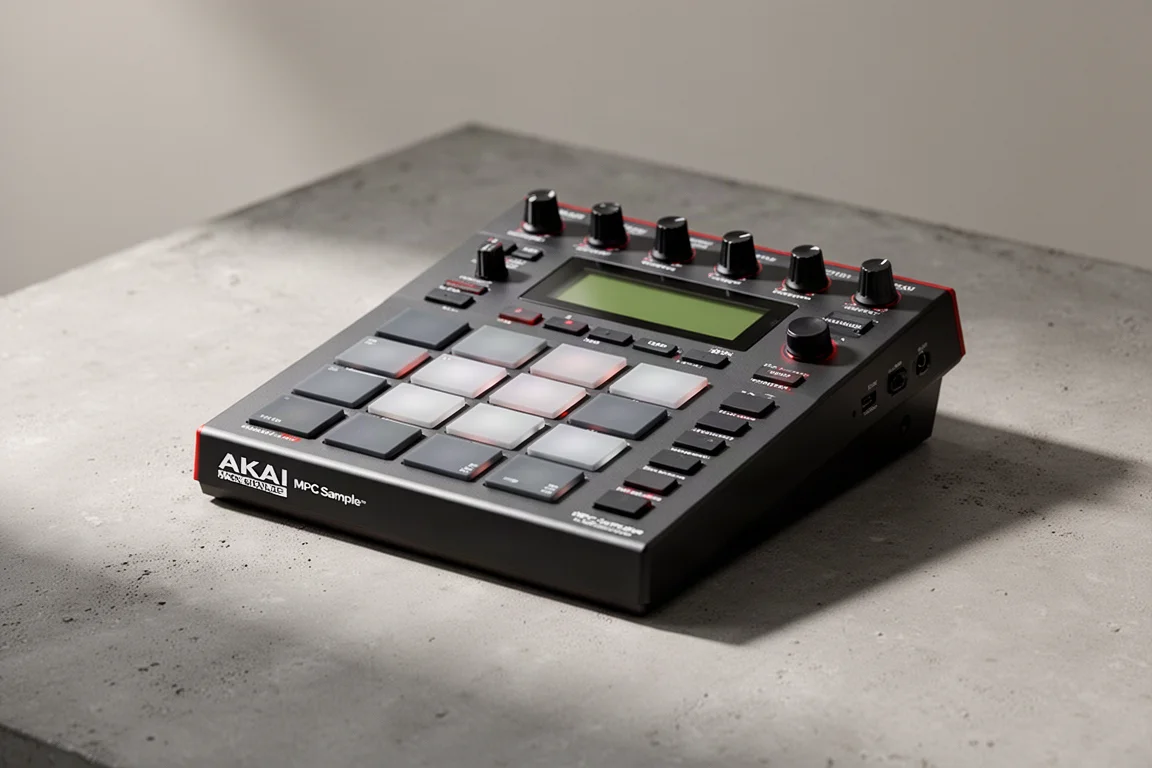
Akai MPC Sample Review: A Portable Beatmaking Powerhouse
The Akai MPC Sample brings the classic MPC workflow into a portable, standalone device with a built-in speaker, mic, and battery. Here is our full review.