Televisions
Sony X95L Review: A Flagship Mini LED 4K TV That Earns Its Size
Sony's 85-inch flagship mini LED delivers strong brightness, near-calibrated color out of the box, and refined backlight control. Here is who should buy it and what to weigh first.
Introduction
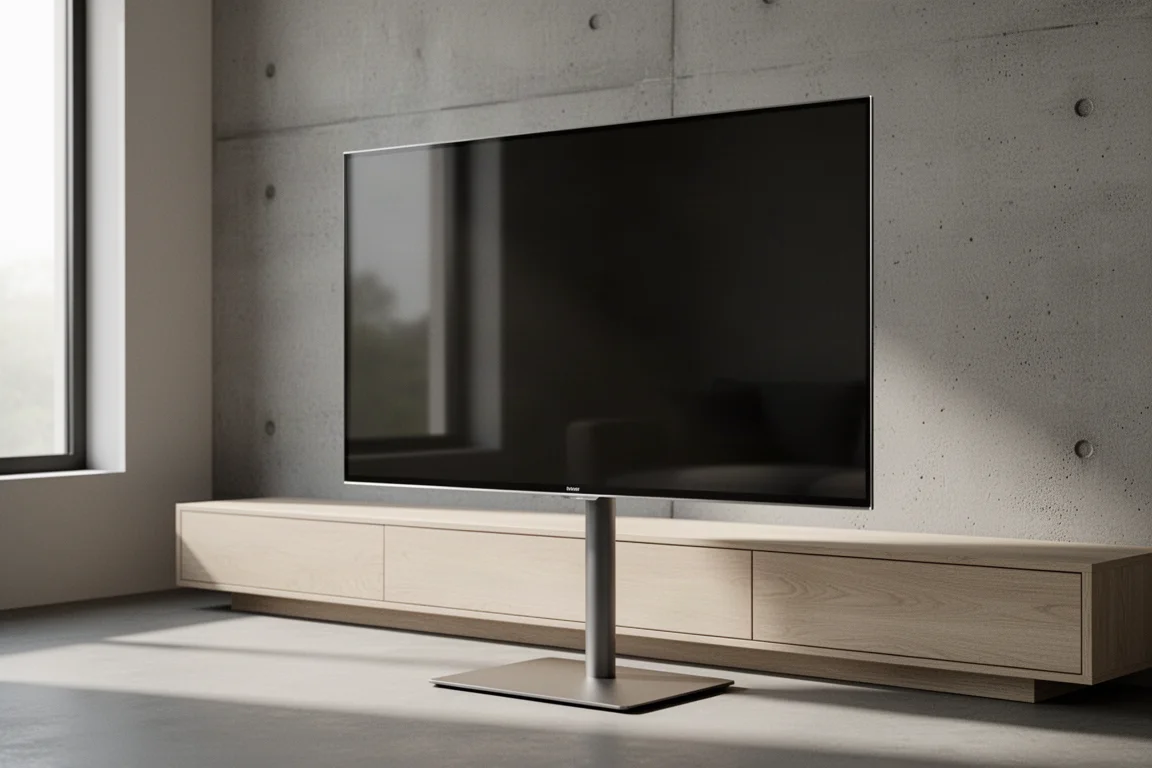
Sony’s X95L is the company’s flagship mini LED 4K television for 2023, and it arrives in a single size: 85 inches. It replaces the X95K, a set that served as a reference point through most of 2022, and it makes a specific argument. Rather than chasing the largest possible diagonal, the X95L bets that better backlight control, higher brightness, and more accurate color can be just as immersive as extra inches.
That argument matters if you are weighing an 85-inch mini LED against a 98-inch alternative, or wondering whether it is worth stepping away from OLED. This review covers what the X95L does well, where it still trails OLED, and who should actually consider it.
Who This TV Is For
The X95L suits viewers who want a very large screen without moving to the extremes of a 98-inch panel. It is aimed at movie and series watchers who care about contrast and color accuracy straight out of the box, at households with bright rooms where ambient light and reflections are a constant problem, and at casual console gamers who want 4K 120Hz with VRR and ALLM.
It also makes sense for anyone already inside Sony’s ecosystem. The set integrates unusually well with Sony receivers and soundbars, which is a real convenience when the rest of a home theater is built around a Sony amplifier.
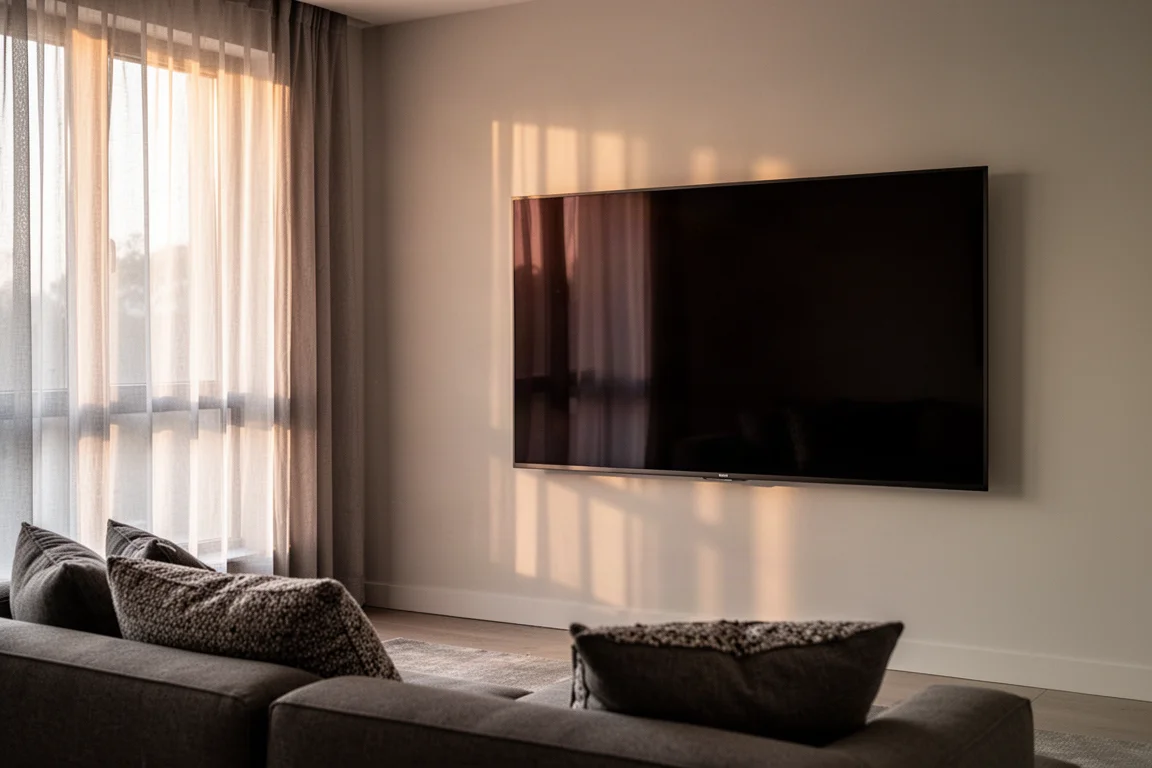
It is less compelling for buyers who watch almost exclusively in a dark room and prioritize perfect black levels. OLED still holds the edge there, and the X95L’s strengths are most visible in mixed lighting and brighter spaces.
Main Strengths
Picture Quality and Backlight Control
The X95L is a true 4K mini LED backlit display with XR Backlight Master Drive handling zone control. Sony does not publish the exact number of zones, but states that there are 20 percent more than the previous generation.
In practice that shows up as tighter control over blooming, which is improved over the outgoing X95K and among the best seen from a mini LED panel. It is not OLED-level precision, but the gap only becomes obvious in demanding low-light scenes. Uniformity is strong as well, and the panel handles the dirty screen effect better than the TCL and other LED-based televisions in the same class.
Out of the box, the Custom picture profile is the most accurate option, measuring a Delta E of just over 3 for grayscale and 2 for color. Anything under 3 is generally treated as calibrated, which makes Custom a strong starting point for buyers who do not want to pay for professional calibration. A full manual calibration brings grayscale and color accuracy down to a Delta E of around 1, placing the X95L among the most accurate televisions measured, though not quite at the very top. Darker test patterns between 15 and 30 IRE showed some low-light irregularities that keep it short of the best result.
The practical takeaway is that a modest setup gets you close to a calibrated image. With the Custom profile, brightness at maximum, gamma at zero, and dynamic contrast and local dimming set to medium or low, most viewers would struggle to tell a factory sample from a fully calibrated one.
Brightness and HDR Performance
Brightness is one of the X95L’s headline traits. Peak brightness clears 1,000 nits without much effort, and real-world full-screen brightness holds between roughly 500 and 700 nits depending on the profile and settings. That is enough to fight ambient light and strong window reflections, although a darkened room still delivers the best experience.
Pushing local dimming to its highest setting produces a brighter image, but the brightness shift becomes more noticeable with certain content, so medium or low is the safer choice for consistent viewing.
Colors carry more depth and gradation than the large TCL LED set, and highlight contrast is stronger across a range of sources. Dolby Vision content showed inky black levels, though extreme low-light scenes exhibited mild black crush with subtle lifting as the image approached 50 percent gray. This is the area where OLED, and the LG C2 specifically, still holds an advantage. Outside of that, the picture is difficult to fault.
Skin tones and textures are rendered naturally, and the set looks more organic than comparable Samsung models. Sony also handles upscaling well. Older films in standard and high definition looked sharper and more detailed without turning artificial or losing their natural grain.
Motion, Gaming, and Connectivity
Motion performance is a strong point. Fast-paced sports and action content showed no perceivable judder or excess artifacts, and gaming was smooth. On a PS5, Overwatch 2 and The Last of Us Part One ran at maximum quality settings with no added lag and no dropped frames.
Gamers get 4K 120Hz in HDR along with VRR and ALLM.
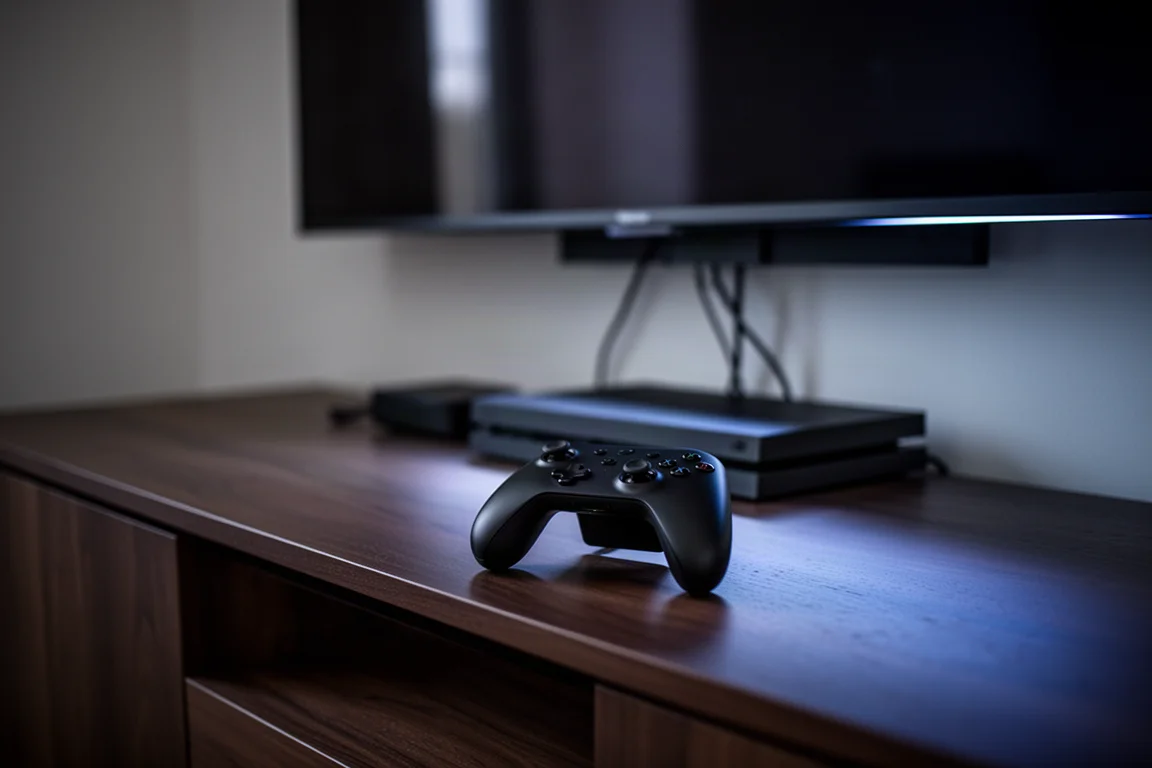
The catch is connectivity. There are four HDMI inputs, but only two are HDMI 2.1, and one of those doubles as the ARC/eARC port. If that port goes to a soundbar or receiver, anyone who prefers a hardwired console connection is left with a single 2.1 input. A 2.1-capable receiver solves the problem, but the layout is worth planning around.
Sound, Smart Features, and Sony Integration
Google TV handles the interface and provides access to the major streaming apps, plus Bravia Core, Sony’s higher-quality streaming platform. The set supports Dolby Atmos and Dolby Vision, along with IMAX Enhanced content and a Netflix calibrated mode that only functions inside the Netflix app. Connectivity covers Ethernet, Wi-Fi, Bluetooth, AirPlay 2, and Chromecast, with Google Home, Alexa, and Apple Home support for smart home setups. An auto room calibration routine is included as well.
The most distinctive feature is how the X95L works with Sony receivers and soundbars. Everyday receiver functions and controls appear inside the television’s quick menu, which removes the usual hassle of switching inputs just to adjust audio settings. The TV can also act as a center speaker when connected to a compatible Sony receiver or soundbar using an S-Center cable, keeping dialogue anchored to the middle of the screen. That feature does not work wirelessly.
Setup is a two-person job. The X95L weighs close to the 98-inch set it replaced and needs a substantial mount, with Kanto Pro mounts recommended for wall installs. Sony includes adjustable feet for cabinet placement, and the legs can be raised for extra soundbar clearance.
Things to Consider Before Buying
- Only two HDMI 2.1 inputs, one of which is shared with ARC/eARC.
- Sony does not disclose the exact number of dimming zones.
- Extreme low-light scenes show mild black crush and lifting compared with OLED.
- The 85-inch panel is heavy and demands a serious mount and enough wall space.
- Local dimming at maximum can introduce a noticeable brightness shift.
- The set is priced as a flagship, and the cost reflects that positioning.
Buying Advice
If you already own an X95K, there is no urgent reason to upgrade. The X95L is not a dramatic leap, but the improvements in backlight control and local dimming are real, and they matter most for viewers who watch a lot of subtitled content or older non-4K material. In brighter rooms and with HDR sources, the extra brightness helps as well.
Against Samsung’s 8K 900B, the X95L gives up some raw punch and brightness, but it is more accurate out of the box and renders primary colors and skin tones more naturally. It is also a reasonable alternative for buyers considering Samsung’s S95C OLED, particularly when size and brightness matter more than perfect blacks.
The comparison that stings is the 98-inch TCL. The larger screen is genuinely more immersive, and it remains excellent for late-night viewing. Even so, for the same amount of money the Sony is the better television overall, and its finer rendering and attention to detail are what close the size gap.
Smaller spaces have their own answer. The 65-inch Sony A95K OLED is close to ideal for a bedroom or apartment, and it is plenty bright, though its glass screen is more vulnerable to reflections than the mini LED’s coating. The LG C2 remains capable of the best accuracy of the group once it is dialed in, but it takes more work to get there. The X95L’s appeal is that it looks right almost immediately.
Conclusion
The X95L makes a persuasive case that size is not everything. It is bright, accurate, and carefully controlled, and it delivers a cinematic image without the tuning effort some rivals require. Buyers who want the biggest possible screen at a given price should still look hard at the 98-inch alternatives. Buyers who want the best-looking image at 85 inches, in a room that is not always dark, will find the X95L hard to beat.
Product link
View more details for Sony X95L
This product is mentioned in the review. Check the specifications, options, and compatibility before buying.
View more details for Sony X95LFurther reading
Related Reviews
Televisions
LED vs OLED TVs: Choosing the Right Sony Model for Your Room
How LED and OLED televisions differ, the five factors that decide the right panel, and where the Sony X90K, X95K, Z9K, and A95K each fit.
Televisions
Samsung QN900B Review: The 8K QLED Flagship, Tested
A native 8K QLED with mini LED backlighting, measured brightness upwards of 1,800 nits, and an automatic calibration routine that genuinely delivers reference-grade accuracy.
Televisions
Sony Bravia 2026 Lineup: True RGB Explained Across Four Models
Sony's 2026 Bravia range brings true RGB backlighting to four models. Here is what the technology changes, and which television fits which room.