Home Audio
Sony Theater Bar 6 vs Sony Theater System 6: Which Compact Sony Sound System Fits Your Room?
Two compact Sony home audio systems with Dolby Atmos and DTS:X support, compared on design, immersion, setup, and everyday usability.
Introduction
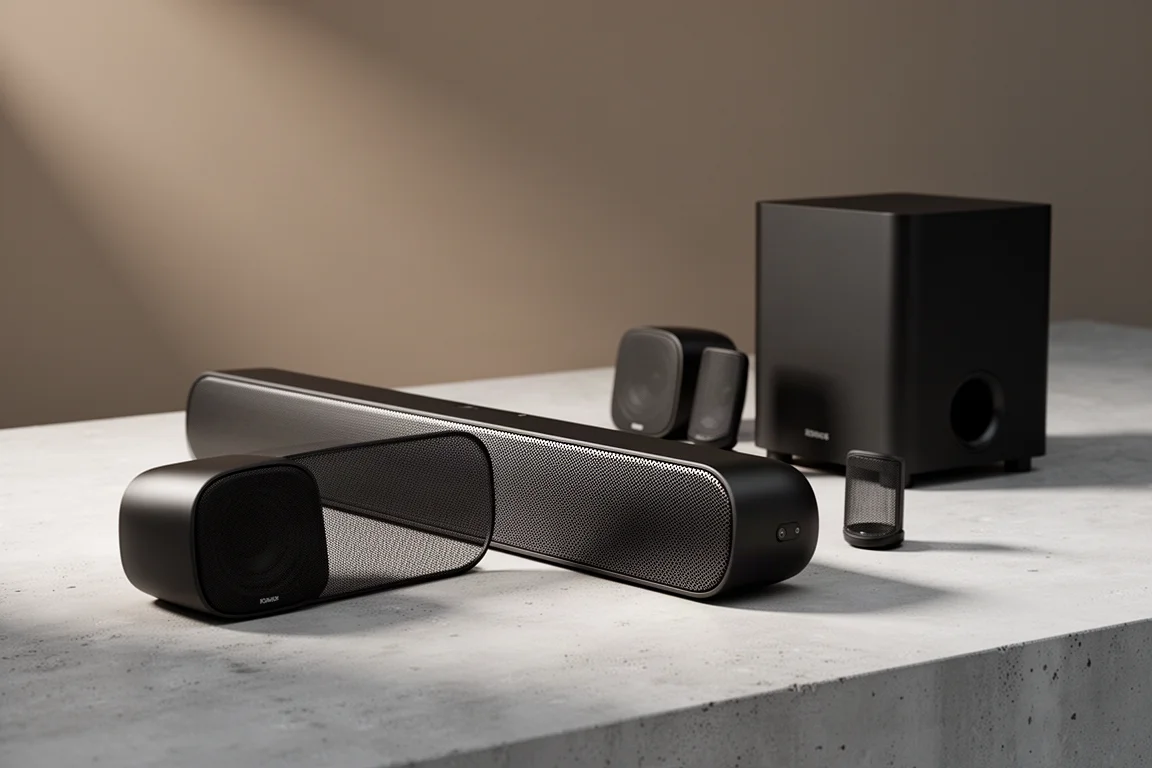
Sony’s Theater Bar 6 and Theater System 6 both aim at the same promise: immersive surround sound with Dolby Atmos and DTS:X support in a package that does not take over the room. They simply take different routes to get there.
The Bar 6 is the smaller, simpler option, sitting below the Bar 8 and Bar 9 in Sony’s soundbar lineup. The Theater System 6 keeps a similar bar but adds two compact rear speakers and a more powerful subwoofer for a more traditional 5.1 layout. Which one makes sense depends less on raw specification and more on the room you actually have.
How the Two Systems Compare
The clearest way to separate these two is to look at where each one invests its hardware budget. The Bar 6 relies on two upfiring height speakers built into the top of the bar, which bounce vertical effects off the ceiling. The Theater System 6 drops those height drivers entirely and instead puts real speakers behind your seating position, backed by a larger subwoofer.
Both systems lean on Sony’s S-Force Pro Front Surround to widen the sound stage and the Vertical Surround Engine to simulate a taller audio field. Both are designed for people who want a meaningful upgrade over television speakers without building out a receiver-based system, and both are available as compact alternatives to larger Sony models.
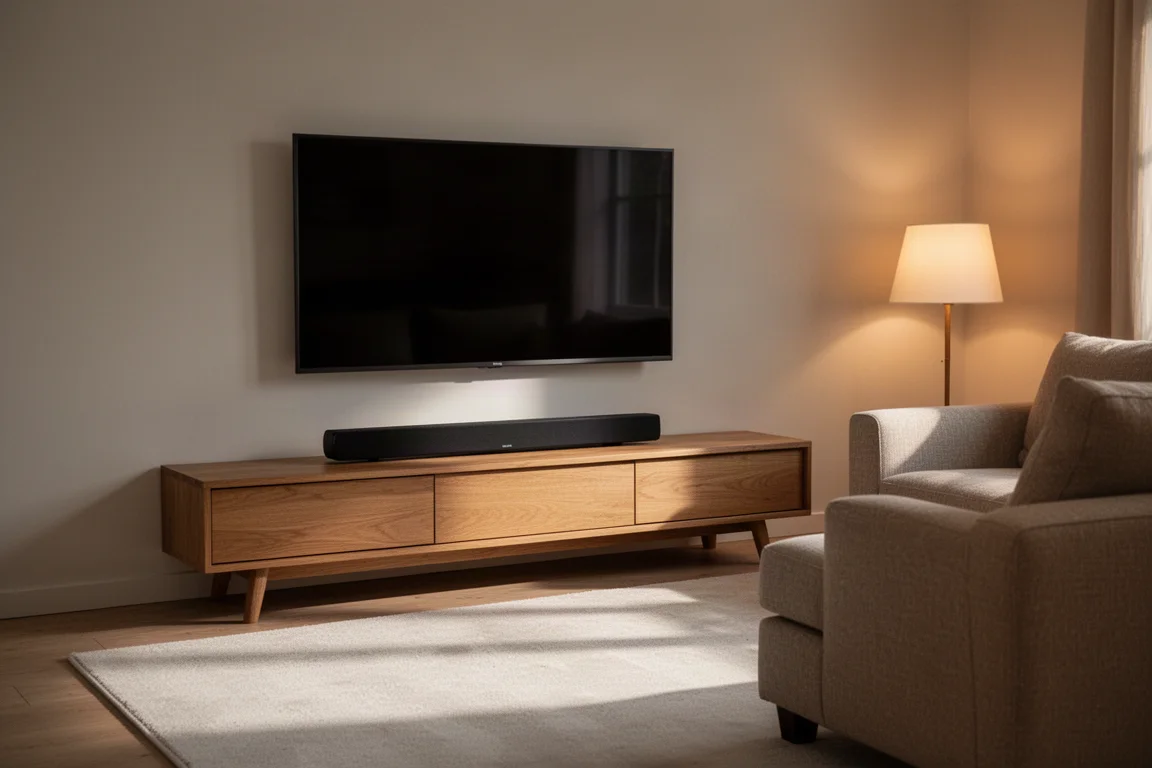
That difference in approach is worth holding on to as you read the rest of this comparison. One system is built around what happens above you. The other is built around what happens behind you.
Sony Theater Bar 6: Compact Atmos in a Small Package
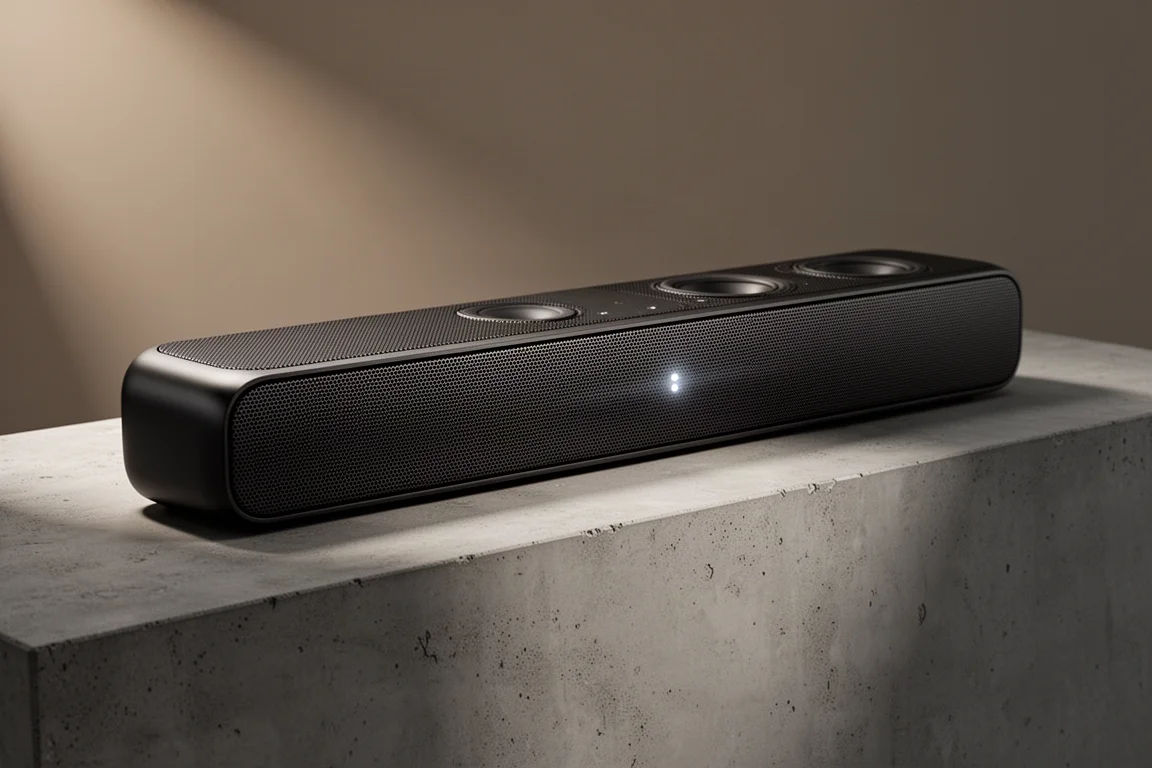
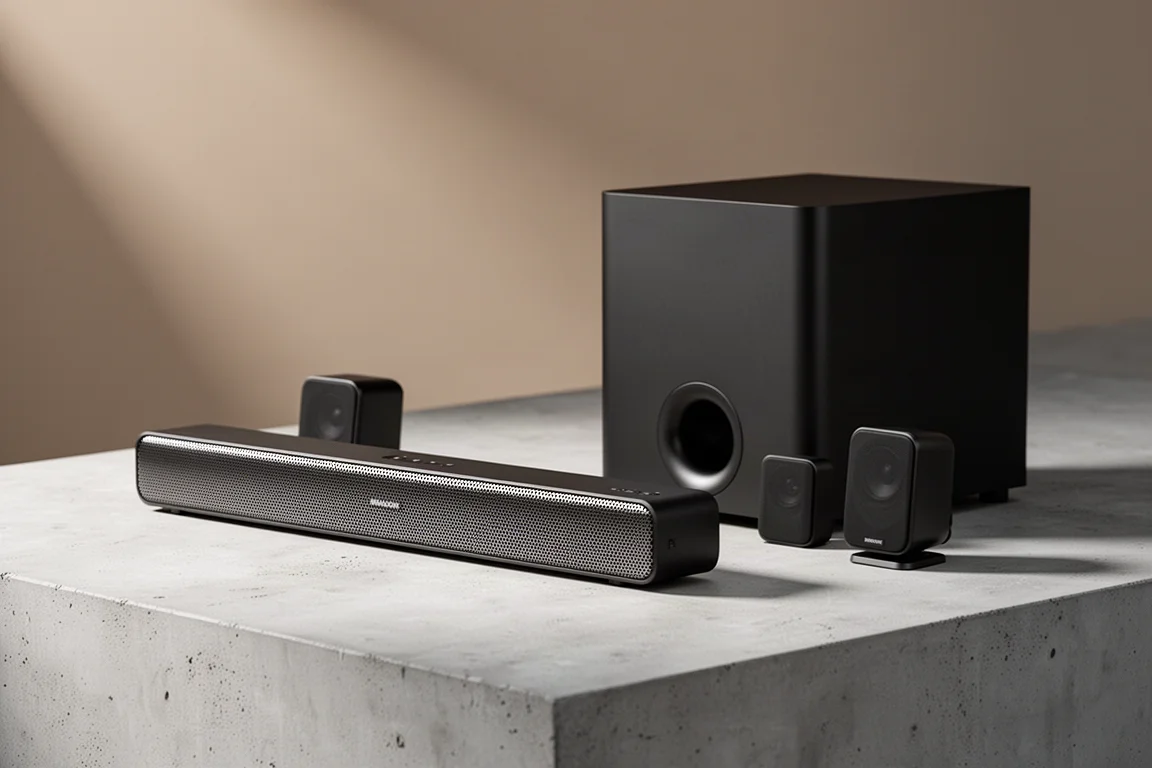
The Bar 6 measures roughly 38 inches wide and 2.6 inches tall, and weighs about 7 pounds. That profile slides under most televisions or mounts neatly on a wall, which makes it a natural fit for smaller rooms, offices, and secondary setups. The finish is matte black with rounded corners and a metal mesh grille across the front and the top, the latter covering the height speakers.
There is no full display on the front, only a small LED indicator that lights up at power-on, changes color when you adjust volume, and glows blue when connected over Bluetooth. If the light is distracting, it can be switched off entirely.
Inside, five speakers handle the work: left, center, right, and the two upfiring height drivers. A wireless subwoofer is included, using a 6-inch front-ported driver, weighing about 17 pounds and measuring roughly 8.3 inches wide by 15.2 inches tall by 15.2 inches deep. Connections on the back are limited to power, optical, and a single HDMI eARC port. There is no HDMI passthrough, which is worth noting if you have multiple devices or a console you would rather route through the bar.
Sony Theater System 6: Real Rear Speakers in a Compact Frame
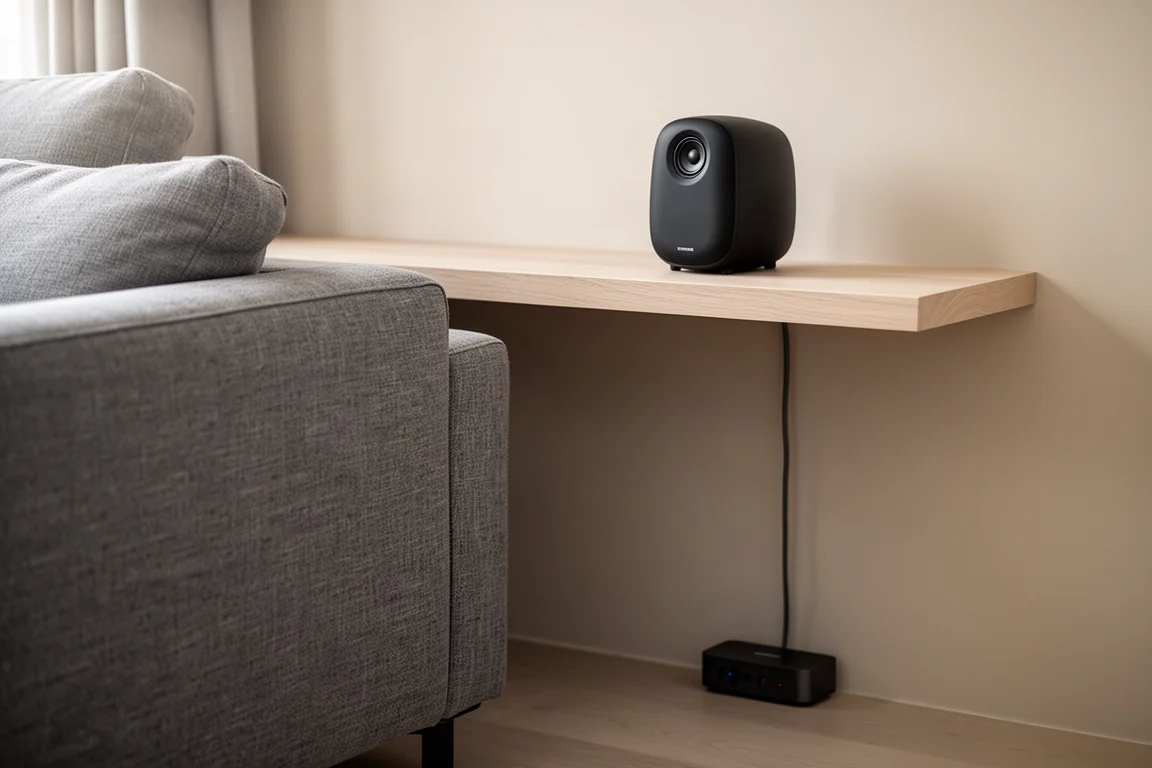
The Theater System 6 builds on the Bar 6 by adding two compact wireless rear speakers and a more powerful subwoofer. The rear speakers are small enough to sit discreetly on shelves or mount on a wall behind the listening position, though they are not fully wireless: each connects by a short cable to an included hub that acts as the amplifier and connection unit for the pair, syncing wirelessly with the rest of the system.
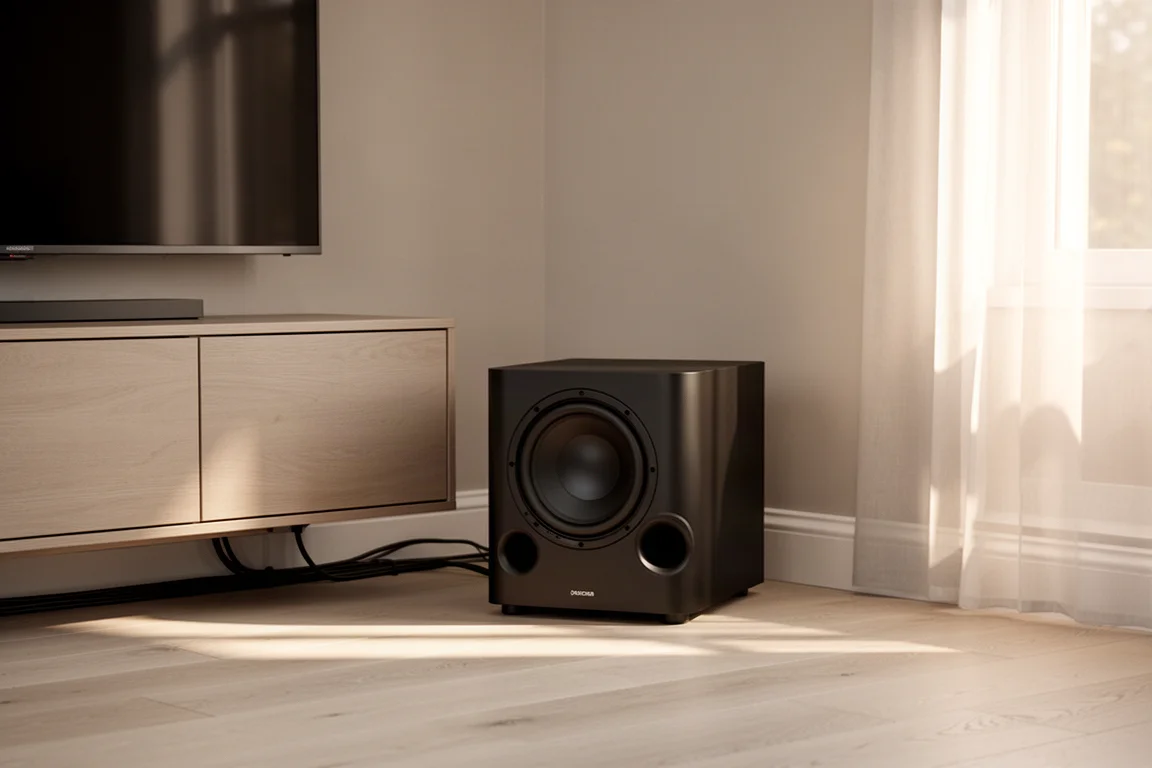
One notable difference is where the inputs live. On the Theater System 6, the HDMI eARC, optical, and 3.5 mm aux connections are on the rear of the subwoofer rather than the bar. Your television plugs into the subwoofer, the subwoofer passes the signal to the soundbar over a wired connection, and the rear hub receives audio wirelessly. In practice this constrains where the subwoofer can go, since the cables from the television and the soundbar need to reach it. If the subwoofer is going to sit next to the television anyway, that is unlikely to be a problem.
The soundbar itself still uses five speakers, but in a different arrangement. The upfiring height drivers are gone, replaced by left, right, and center woofers across the front plus dedicated tweeters at the far left and right to spread sound around the listener. The system also includes a multi stereo mode that plays full-range audio from every speaker at once, which suits parties or casual listening where even coverage matters more than directional effects. Integrated keyholes on the back make wall mounting straightforward.
Sound Quality and Immersion
The Bar 6 sounds considerably larger than its dimensions suggest. The sound stage is wide for a bar this size, midbass lands with a satisfying thump, and directional effects track smoothly across the front. Raising the bass a couple of notches, to roughly plus two or plus three, tends to be the sweet spot. Dialogue clarity has long been a Sony strength and this bar is no exception, and the included subwoofer makes a substantial difference to the overall weight of the sound. Sony’s upmixer also does useful work on older DVDs and television shows that were never mixed in surround.
The Theater System 6 wins on the bed layer. With speakers genuinely positioned behind you, footsteps creeping up in horror films and bullets passing in action scenes land with a realism a bar alone cannot reproduce. Its Atmos presentation is convincing, but not quite as good as the Bar 6’s, because the vertical effects rely on processing rather than upfiring drivers.
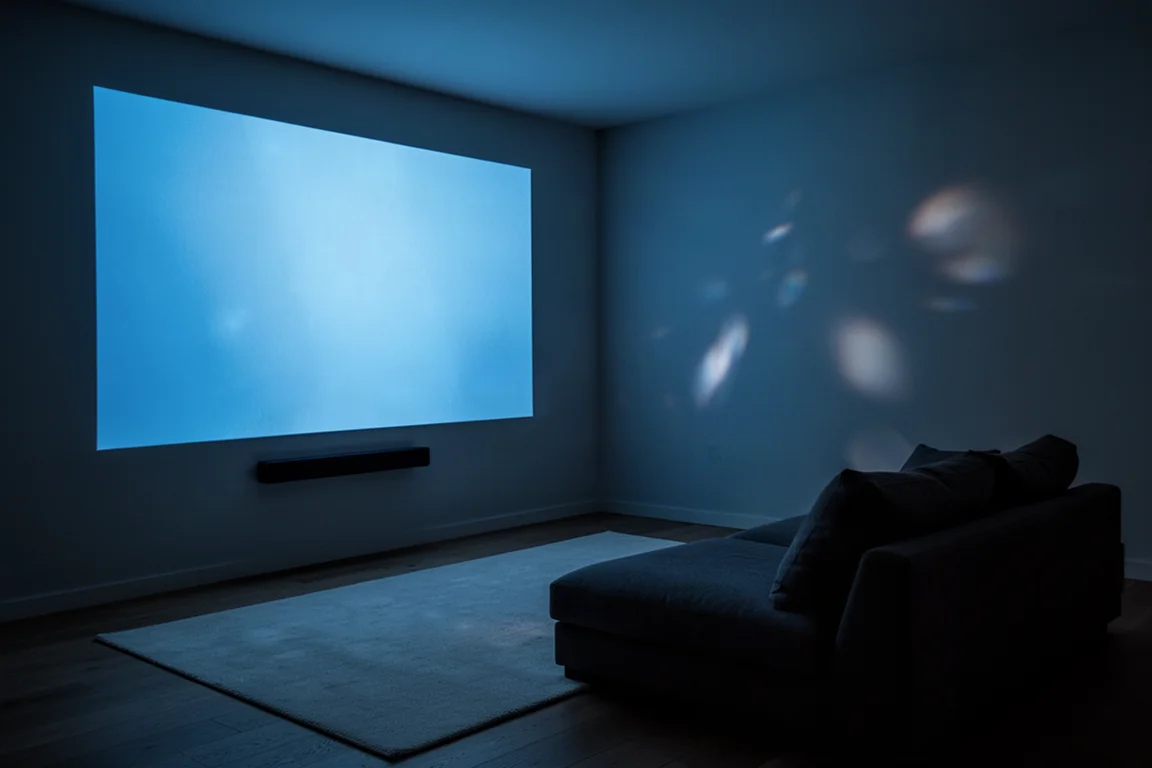
It is worth trying the available virtual surround modes in your own room. The Vertical Surround Engine delivered the strongest sense of height and depth in testing, ahead of Dolby Speaker Virtualizer and DTS Neural:X, but room shape and speaker placement change the result. Note that upfiring height effects work best when nothing sits on top of the bar and the ceiling is around 10 feet or lower, with a clear path for sound to bounce back down.
Setup, Connectivity, and Daily Use
Setup differs meaningfully between the two. The Bar 6 is the simpler proposition: place the bar, place the subwoofer, connect one cable. The Theater System 6 requires finding good positions for the rear speakers, running their cables to the hub, keeping the subwoofer close to the television, and connecting both the television and the soundbar to the subwoofer. Rear speakers work best just behind the main seating area at ear level and angled slightly inward, which may mean buying stands or wall mounts.
Sony’s Bravia Connect app handles configuration for both systems. It walks through pairing the subwoofer and then asks for a few key room measurements, including the distance from your seat to the soundbar and subwoofer and the height between the bar and the ceiling. Rather than a full microphone calibration, it uses preset distances, which keeps the process quick.
Neither system includes built-in Wi-Fi, so there is no AirPlay, Chromecast, or direct Spotify Connect support. Streaming goes through your television, over Bluetooth from your phone, or via a connected device such as an Apple TV. Firmware updates also need to be applied manually from a USB stick, which feels dated next to more connected systems.
Voice Zoom 3 is one of the more useful features in daily use. Paired with a compatible Sony Bravia television, it uses AI to isolate dialogue from background effects, which helps in scenes with soft or muffled speech, and it can be adjusted to taste. Without a Sony television, a basic voice mode remains available through the app or the remote, and the included remote can also reach the menus.
Who Should Buy Which
The Theater Bar 6 suits anyone who values clean design, quick setup, and compact living. It is a strong choice for a smaller room, an office, or a bedroom where you mainly stream content and want Atmos effects without extra speakers or extra clutter. The upfiring drivers create spatial effects that the system’s simplicity does not compromise, and the included subwoofer adds real punch during action movies.
The Theater System 6 is for buyers who want something closer to true surround sound but still in a compact package. It needs a room with enough space to place rear speakers behind the listening position, and in return it delivers a deeper sense of immersion in films and games, plus more impactful low-end rumble from the larger subwoofer. It is the better pick if a realistic bubble of sound matters more to you than a minimal footprint.
Compared with a traditional receiver and wired speaker setup, the honest answer is that separates still win on ultimate control and sound quality. These Sony systems get you part of the way there at a fraction of the cost and complexity, and they make excellent secondary setups. If you later want more power and flexibility, the Bar 8 and Bar 9 sit above both of these in Sony’s range.
Conclusion
Both systems are a major step up from television speakers, and both carry Sony’s signature processing. Choose the Bar 6 if your priority is a compact, simple setup with the better vertical Atmos effect. Choose the Theater System 6 if you have the space for rear speakers and want the more convincing surround experience. Match the system to the room and either one will feel like money well spent.
Further reading
Related Reviews
Home Audio
Aperion Novus Tower and Center Review: Punchy Home Theater Sound With Real Refinement
A close look at the Aperion Novus tower and center speakers, from their layered paint finish and punchy bass to the 4-ohm load and what the price actually buys.
Home Audio
Arendal 1610 Tower Review: Flagship Dynamics in a Room-Friendly Tower
A compact floorstanding tower with three 8-inch aluminium woofers, a 5-inch carbon midrange, and the kind of bass heft usually reserved for much larger speakers.
Home Audio
Arendal 1723 S THX Review: A Reference Speaker Built Like a Tank
A practical look at the Arendal 1723 S THX, a sealed, THX-certified speaker with exceptional build quality, a very flat top end, and a midrange that responds beautifully to EQ.