AV Receivers
Sony STR-AZ7000ES Review: A 13-Channel Flagship Built for Serious Installations
A measured look at Sony's 13-channel flagship AV receiver, covering amplifier output, HDMI 2.1 switching, center channel tools, and what the numbers mean for real rooms.
Introduction
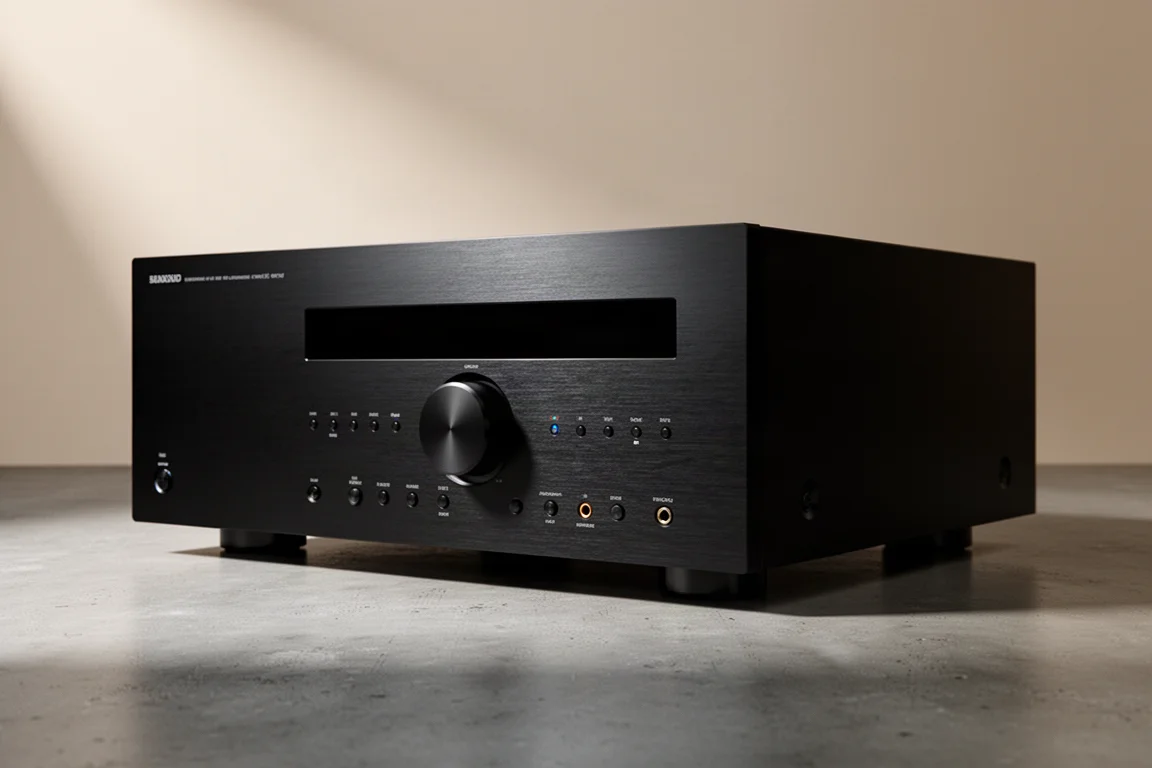
The Sony STR-AZ7000ES is a 13-channel flagship AV receiver whose feature list is shaped as much by custom installation needs as by home theater specifications. It carries Dolby Atmos, DTS:X and DTS:X Pro, IMAX Enhanced, HDMI 2.1 switching with 8K support, and a set of Sony-only processing tools built around the reality that most center channels end up in the wrong place.
Sony rates the amplifier at 140 watts per channel into 8 ohms with two channels driven. The receiver sells for around $3,999, which places it below the most expensive flagship receivers from competing brands and alongside the step-down models in those same lineups. It weighs 48 pounds, includes a five-year warranty, and is clearly designed with control systems in mind.
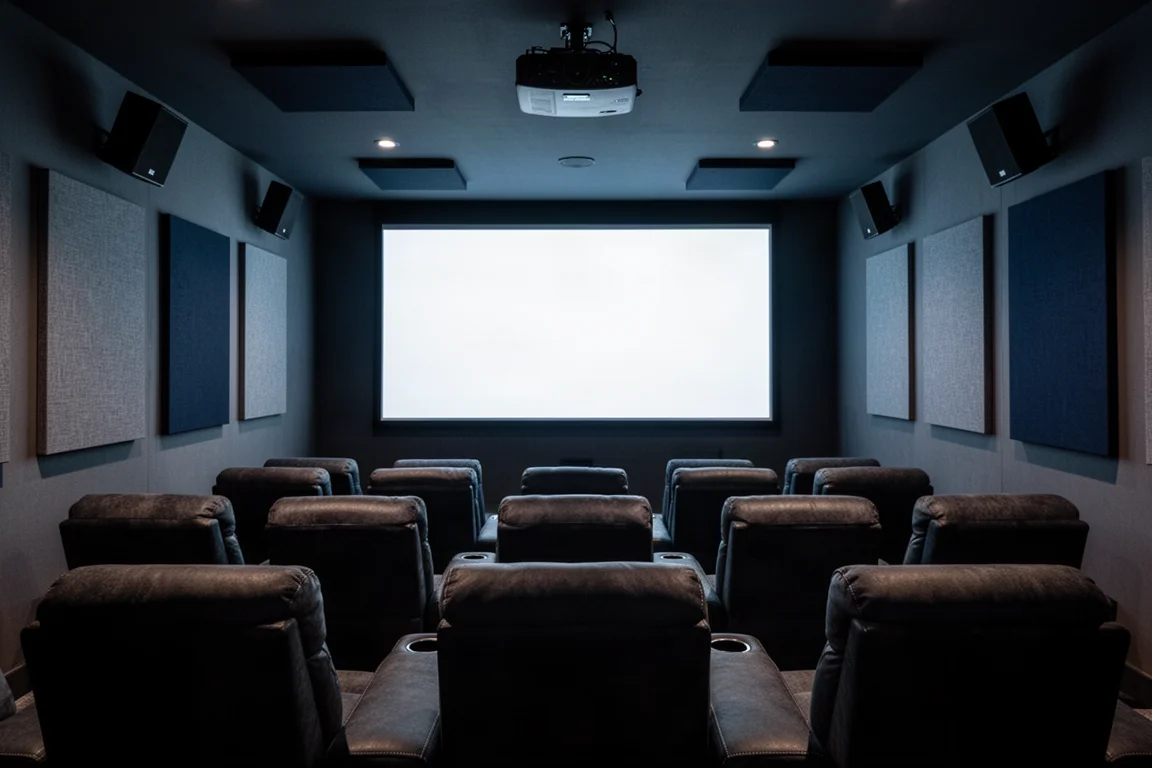
That combination of power, integration and price is what makes it worth a closer look. The interesting questions are not really about the spec sheet. They are about how much current the amplifier can actually deliver, how clean the preamp section is, and whether the room correction and center channel tools earn their place in a real system.
Who this product is for
This receiver suits anyone building or upgrading a dedicated multichannel system with more than nine channels of speakers. Thirteen channels of amplification plus a full 13-channel preamp output means it can drive a large Atmos or DTS:X layout directly, or feed external amplifiers for the main channels while keeping the rest of the system on board.
It also makes sense for owners of a Sony Bravia television with acoustic surface technology. The receiver can sync with the TV so the screen itself contributes center channel information, which is a genuinely useful option when the center speaker has to sit above or below the display.
Installers are plainly part of the target audience. Support for Control4, Crestron and Savant, RS232C, IR connections, 12-volt triggers and OvrC remote monitoring all point to a product meant to be deployed and managed rather than set up once and forgotten. Three-zone, three-source multizone operation with powered stereo output for Zone 2 extends it well beyond a single room.
Main strengths
Power and amplifier performance
Measured output is strong for a receiver in this class. With two channels driven into 8 ohms, the amplifier produced roughly 175 watts at 0.1 percent distortion, with a conservative clipping knee around 120 watts. Into 4 ohms it reached about 250 watts at 0.01 percent and around 300 watts at 0.1 percent.
Seven channels driven is the harder test, and the receiver delivered close to 100 watts at 0.1 percent, with a knee around 90 watts. Very few systems will ever ask that much of seven channels at once, so the headroom available here is more than most rooms will ever use.
At roughly one watt into 8 ohms, SINAD measured 91.5 dB A-weighted, with THD plus noise at minus 82 dB. The best noise performance appeared near maximum output, where around 109 watts produced 84 dB SINAD and a 94 dB signal-to-noise ratio.
Features and system integration
HDMI 2.1 switching covers seven inputs and two outputs, with a front-panel input for quick temporary connections. Four of the inputs and both outputs handle 8K, while the remaining three inputs are 4K. HDCP 2.3, HDR10, Dolby Vision, HLG, IMAX Enhanced, variable refresh rate, auto low latency mode and eARC are all supported, and HDMI dual zone switching lets different sources feed different zones.
Streaming and control coverage is broad: Chromecast, Google Assistant, Spotify Connect, Apple AirPlay 2, Bluetooth, Roon and Sonos Port compatibility, with the Music Center app handling control and linking the receiver into Sony’s wider ecosystem of wireless speakers. Sony’s 360 Reality Audio is on board as well, though it requires a subscription to a compatible online music service.
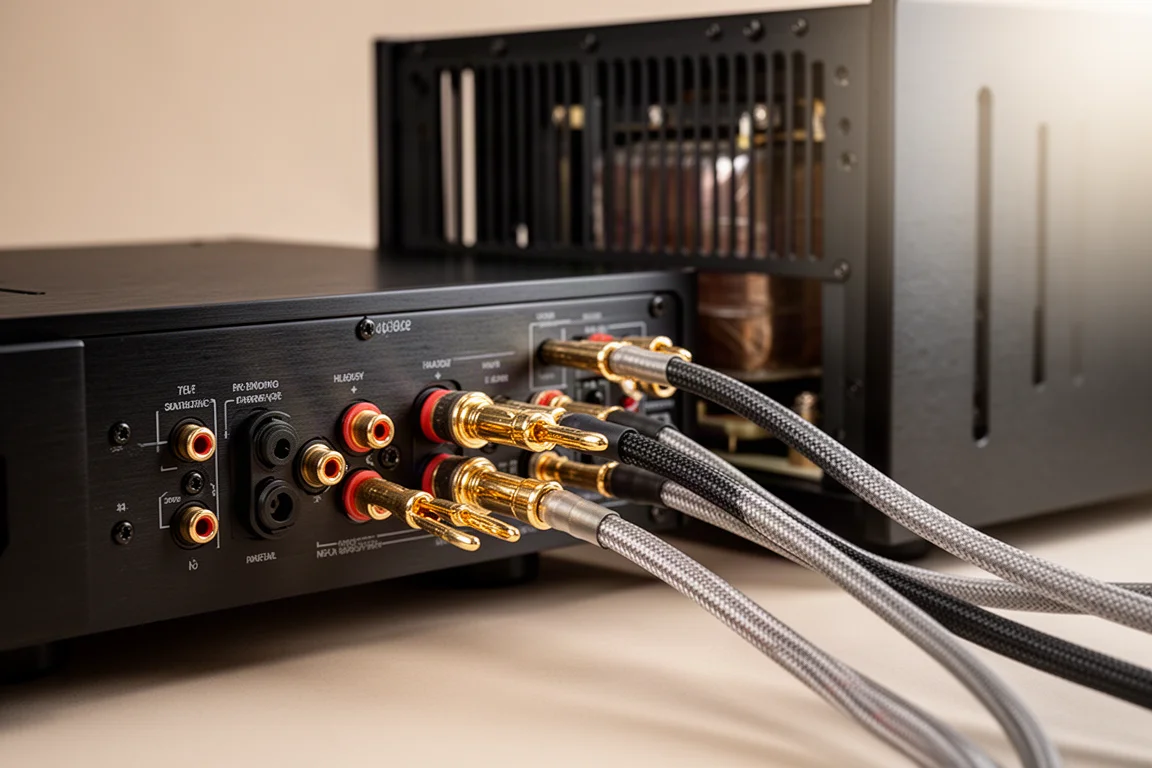
The 13-channel preamp output uses fixed assignments for the front left, center and right, the surround and back surround pairs, and three height channels. Those outputs cannot be reassigned, so routing extra subwoofer outputs through them is not an option. A 32-bit DAC, a substantial power supply with a large transformer and capacitors, and a removable front panel that hides secondary controls round out a clean, modern design.
Center channel tools and calibration
Sony’s Digital Cinema Auto Calibration 9 uses a stereo microphone to build what Sony calls 3D spatial mapping. Three related features address center channel placement: Center Channel Speaker Lift Up, Bravia Acoustic Center Sync, and Dual Center Speaker. The lift-up approach sends only a portion of the center information to the TV or an upper speaker in order to raise the perceived height of the image, which is a practical answer to a very common problem.
Bass management behaves as expected. With the crossover set to 80 Hz, the measured crossover points landed where they should and rolled off at the expected rate. In Pure Direct mode the frequency response stayed flat to very high frequencies with no visible out-of-band noise. With Pure Direct switched off, the response rolls off at around 22 kHz.
Things to consider before buying
What the measurements do and do not say
The preamp section performs above average among receivers on the market, but it is not state of the art. Around 90 dB SINAD is respectable, and line level performance through the two strongest HDMI inputs measured 89.3 dB SINAD with a 95.4 dB signal-to-noise ratio at a two-volt output. Some older high-end receivers have exceeded 100 dB SINAD, and current products that beat this one do so by only a small margin.
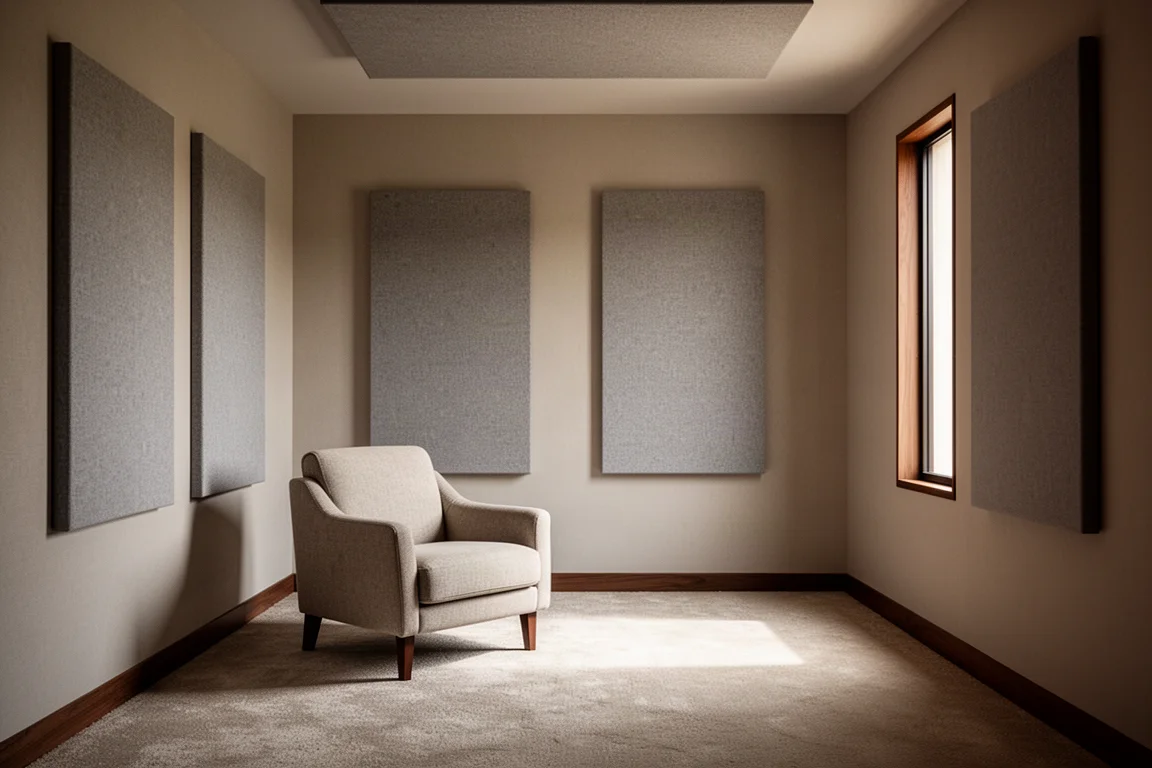
Whether that gap matters depends almost entirely on the room. In an ordinary living room, the ambient noise floor masks low-level hiss and distortion almost completely. In an exceptionally quiet, treated theater, a 90 dB SINAD figure can become audible as hiss. That is a reasonable trade for most buyers, but it is worth knowing before committing.
Room correction and fixed outputs
The receiver relies on Sony’s proprietary room correction rather than Dirac or Audyssey. How well it corrects bass response and applies a sensible room curve will matter a great deal, because those are the adjustments that make the biggest audible difference in most rooms.
There are two other points to weigh. The preamp outputs cannot be reassigned, so anyone who wants more than three height channels or additional subwoofer outputs will need to work around that limitation. And 360 Reality Audio depends on a streaming subscription, so it is not a feature that works out of the box with local files alone.
Buying advice
At around $3,999, the STR-AZ7000ES occupies a specific spot in the market. It undercuts the most expensive flagship receiver from the major competing brand, which offers more power, more channels and slightly better measurements. Instead, this receiver lines up against the step-down models in those lineups, and against equivalent offerings from Marantz and Yamaha at a similar price.
Build quality holds up in that company. The chassis, power supply and overall finish are comparable to a near-top-of-the-line Marantz processor at a similar price, even though the industry has broadly shifted toward lighter materials. The binding posts are good rather than exceptional, which is typical for receivers in this class.
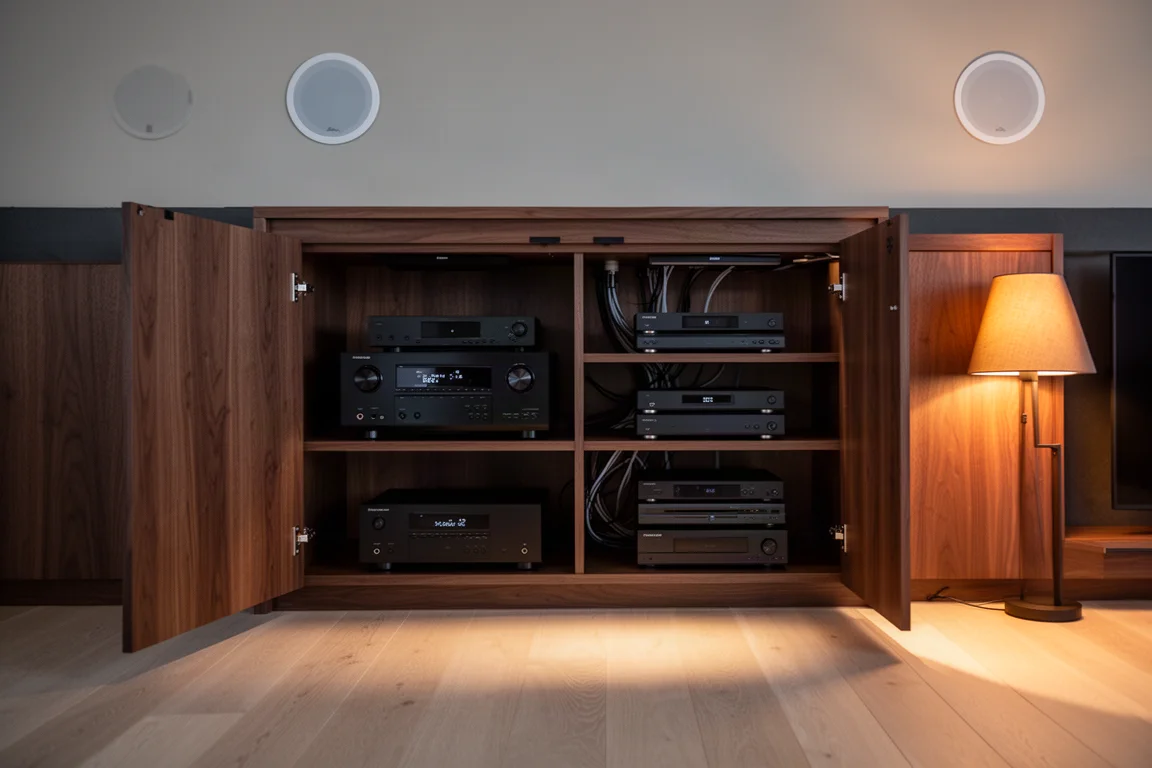
The decision comes down to priorities. Buyers who need 13 channels, deep control system integration, multizone flexibility and center channel tools that solve a real installation problem will find a lot to like here. Buyers chasing the very best measured preamp performance, or who specifically want Dirac or Audyssey, should weigh what the alternatives offer.
Conclusion
The Sony STR-AZ7000ES measures well enough to be a genuinely capable flagship receiver, with an amplifier section that equals or exceeds much of its competition and a feature set aimed at real installation problems. Its preamp performance is above average rather than class-leading, and the room correction system remains the main open question for buyers who care about bass accuracy.
For a large multichannel system where channel count, integration and center channel placement matter most, this receiver makes a strong case for itself. For a buyer focused purely on the lowest possible noise floor, the alternatives deserve a look.
Product link
View more details for Sony STR-AZ7000ES
This product is mentioned in the review. Check the specifications, options, and compatibility before buying.
View more details for Sony STR-AZ7000ESFurther reading
Related Reviews
AV Receivers
Anthem MRX 740 8K Review: Composed Home Theater Sound With a Few Rough Edges
A close look at Anthem's mid-tier MRX 740 8K receiver, covering its sound, ARC Genesis room correction, HDMI 2.1 features and the daily quirks worth knowing before you buy.
AV Receivers
Anthem MRX 740 vs MRX 1140: Which AV Receiver Fits Your System?
A measured look at the Anthem MRX 740 and MRX 1140, covering preamp output performance, amplifier behaviour, bass management, and expansion headroom.
AV Receivers
Best AV Receivers for Home Theater: Denon, Onkyo, Marantz and Yamaha Compared
Four home theater receivers compared on features, sound character, setup and value, with clear guidance on which one fits which kind of buyer.