Home Theater Receivers
Sony STR-AZ5000ES Review: An 11-Channel Receiver Built for Serious Home Theater
A detailed look at the Sony STR-AZ5000ES, an 11-channel AV receiver with HDMI 2.1, Dolby Atmos and DTS:X, wireless surround options, and an unusually thorough calibration routine.
Introduction
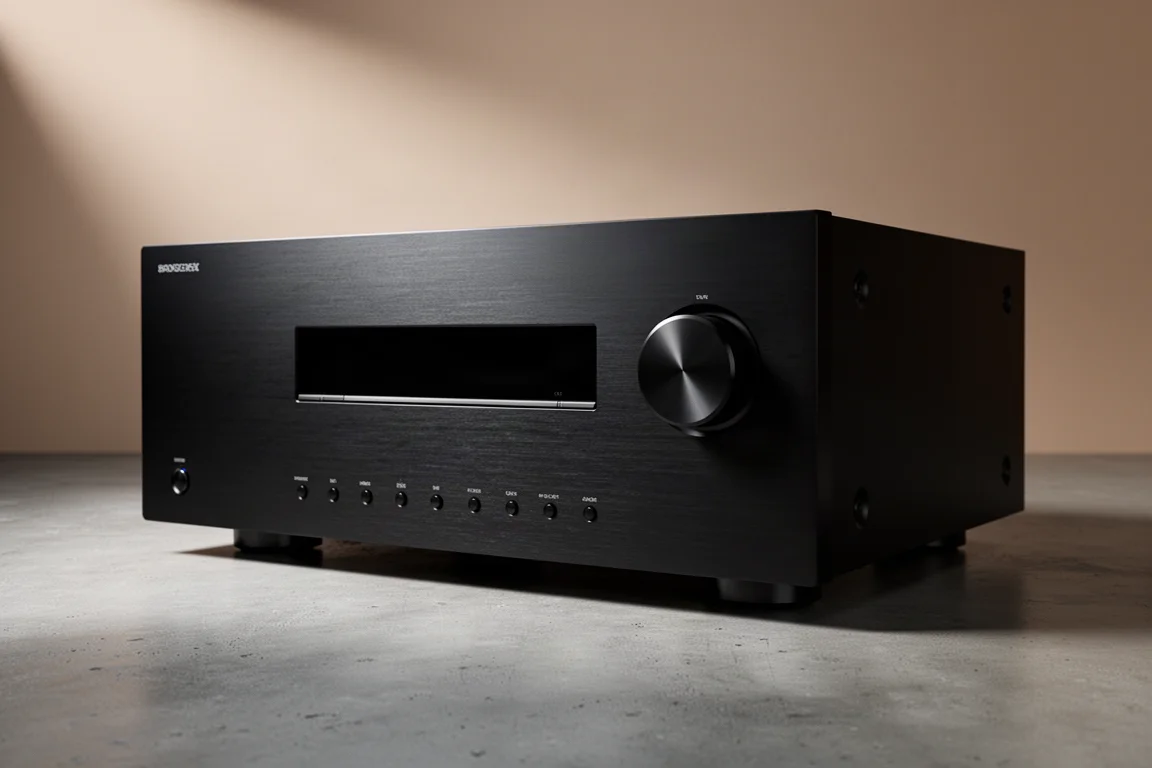
Sony has returned to the home theater receiver category with a family of four new models that span a wide price range while sharing much of the same core technology. The STR-AZ5000ES is the one that stands out for value, because it brings an 11-channel amplifier section and the full processing feature set into a single chassis.
It has been close to a decade since Sony introduced new receivers, and the previous generation arrived just as Dolby Atmos was establishing itself. A great deal has changed since then, and this receiver addresses most of it: modern HDMI connectivity, immersive audio processing, network streaming, and a calibration routine that asks for more room data than nearly any competitor.
Who This Receiver Is For
With 11 powered channels built in, the STR-AZ5000ES lets you assemble a fully immersive system with front left and right, center, surrounds, rear surrounds, and two pairs of overhead Atmos speakers, all driven from one unit.
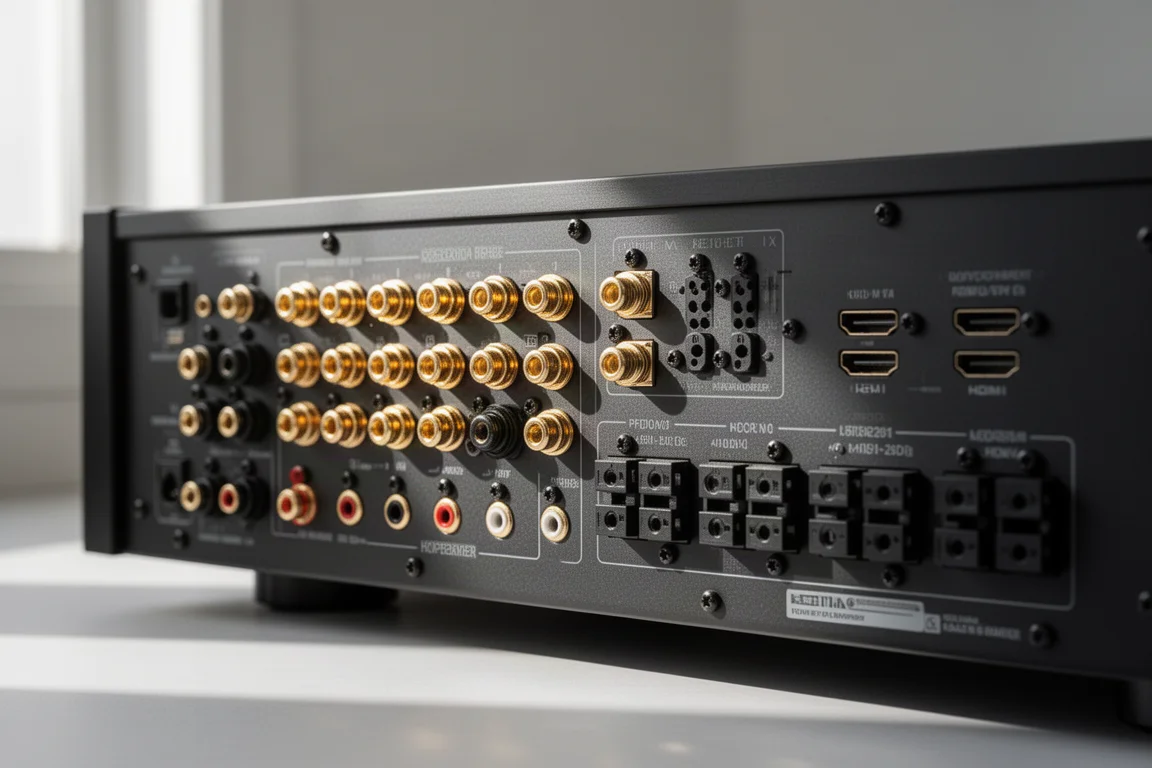
That channel count matters most to listeners who want both height effects and proper rear surround coverage in the same room. The amplifier section is rated at 130 watts per channel with two channels driven, and the power supply is substantial enough that the receiver weighs 42 pounds. That combination points to genuine headroom with harder-to-drive speakers. If you ever want more power, preamp outputs are provided for every channel, so external amplification remains an option later.
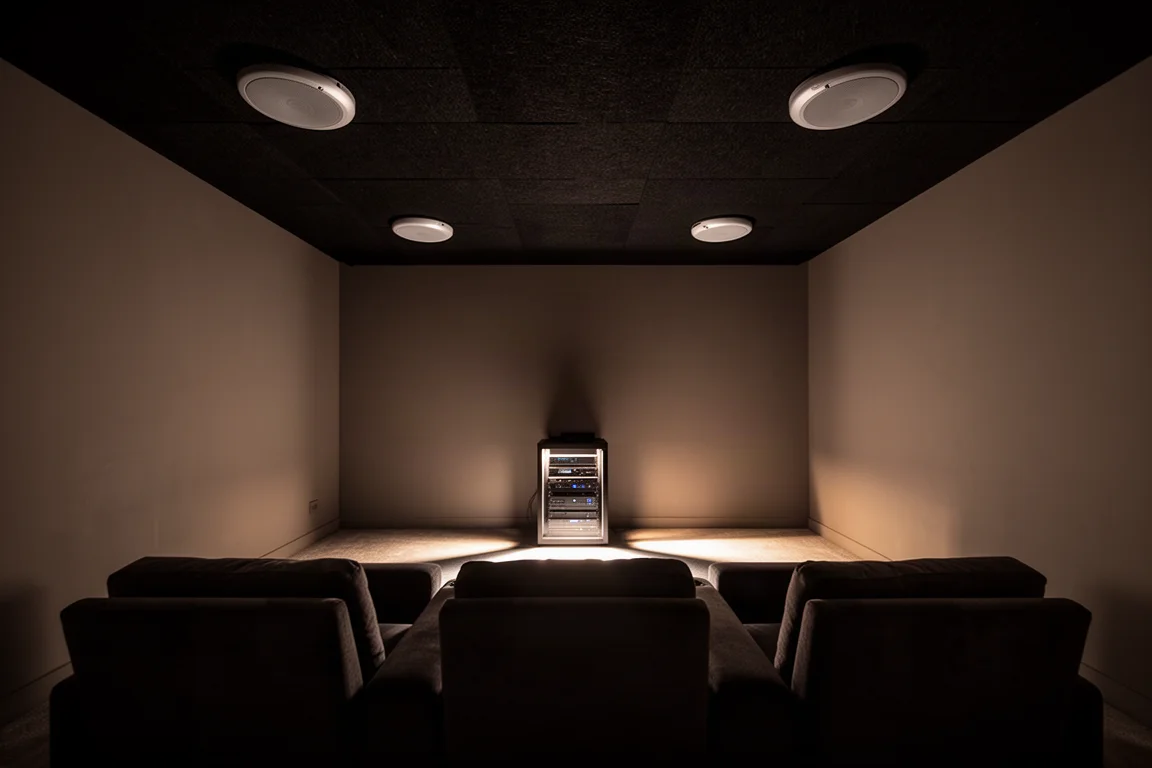
This is also a strong candidate for anyone who cannot run speaker cable to every position. The receiver supports Sony’s wireless surround speakers and wireless subwoofers, which makes immersive audio realistic in apartments, rented spaces, and finished rooms where pulling cable is simply not practical. A compatible Sony television can even supply the center channel, and a phantom rear speaker mode can simulate rear speakers within a seven-channel bed layer. Neither approach replaces properly placed speakers, but both extend the range of rooms where a full Atmos layout is possible.
Main Strengths
The heart of this receiver is its power supply and amplifier design. A large transformer, a rigid chassis, and a 42-pound overall weight suggest a unit built to stay composed under demanding loads rather than one that merely lists an impressive channel count on a spec sheet.
Around that foundation, Sony has layered a feature set that covers an unusually wide range of real-world installations, from conventional wired theaters to rooms where wireless is the only option.
Immersive Audio Options for Difficult Rooms
Dolby Atmos and DTS:X are both supported, as expected at this level. What sets the receiver apart is how many paths it offers to immersive sound. Sony’s wireless surround speakers and wireless subwoofers can be added without running cable to the rear of the room, and the phantom rear speaker mode fills in rear effects when physical rear speakers are not an option. In testing, that simulated rear channel approach worked convincingly, and it should work even better with the newer setup routine.
Video and Gaming Connectivity
The video section is current across the board. You get 8K and 4K 120 Hz HDMI connectivity with HDMI 2.1 and HDCP 2.3, plus support for Dolby Vision, HDR10, Hybrid Log Gamma, and IMAX Enhanced. Four rear inputs handle 8K, while two rear inputs and the front convenience port handle 4K 120 Hz. The 4K 120 Hz inputs support Auto Low Latency Mode and Variable Refresh Rate, which is exactly what modern consoles and gaming PCs want.
Setup, Calibration, and Sound Field Precision
Input management is unusually flexible. A large on-screen grid lets you assign video and audio to any input or build a custom mix, so you can watch a game while listening to a different audio source. Each input can carry its own offset levels, default surround mode, subwoofer output state, and up to a 300 millisecond delay for lip sync correction.
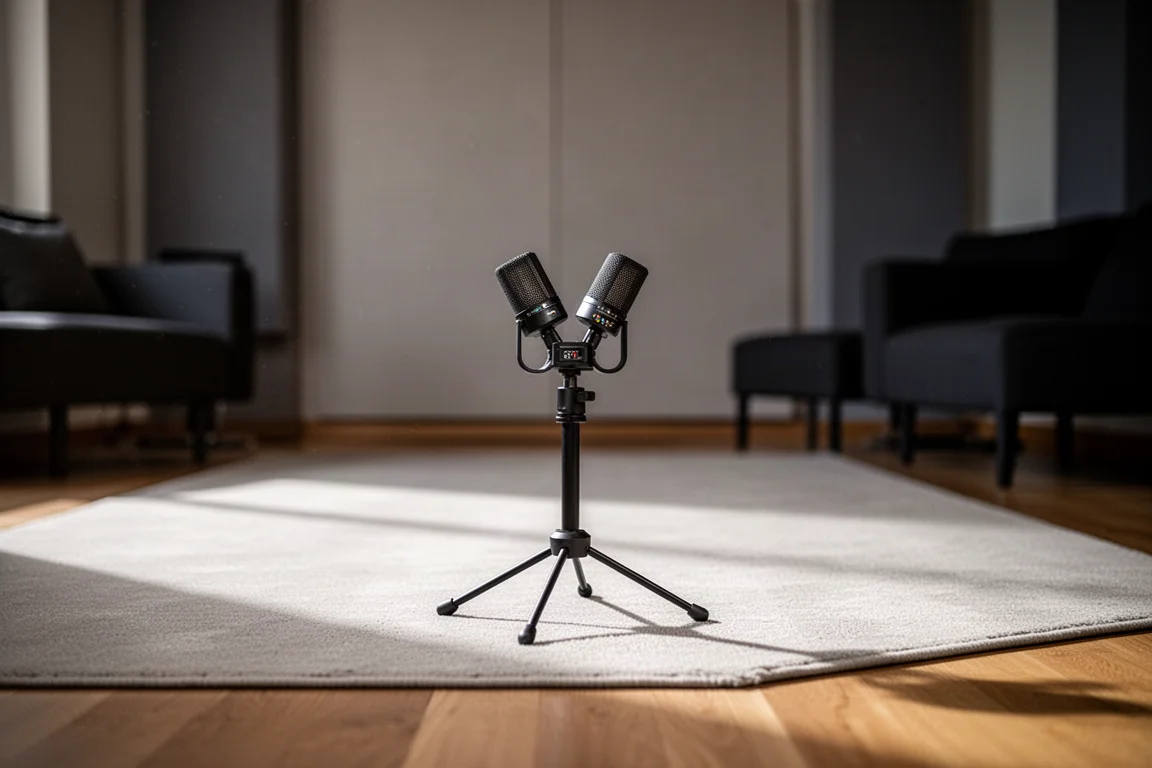
Speaker setup goes further than most receivers. Beyond the usual distance from each speaker, the receiver also asks for each speaker’s distance from the screen, its height off the floor, and your ear height relative to both floor and ceiling. That extra data feeds Digital Cinema Auto Calibration IX and 360 Spatial Sound Mapping. The supplied microphone has two wings with clearly labelled left and right capsules, and calibration runs two passes at two positions using a stand with cutouts and a threaded insert for a tripod. It is more work than a one-button auto setup, and the payoff in listening tests was one of the most precise sound fields we have heard from a receiver, with objects placed convincingly in space.
Build Quality and Internal Design
The chassis was made noticeably thicker for the 2023 generation to stabilize the components and the large power supply, and it sits on anti-resonant feet. The digital circuit board uses fins of different lengths to reduce resonance, the 32-bit DAC has its own analog power supply for a cleaner feed, and the signal path uses high-copper resistors alongside a high-purity solder developed for Sony’s ES line.
Real World Performance
Two-channel listening revealed a neutral character that leans neither warm nor bright, with strong rhythm and pacing for an AV receiver. In a theater setting, the dive bomber sequence from Midway tracked bullets and shell fire above and around the listening position with startling accuracy. Gaming held up equally well: in Call of Duty Warzone, footsteps and reload sounds were placed precisely enough to help pinpoint other players.
Things to Consider Before Buying
The clearest limitation is subwoofer output. There are two parallel sub outputs rather than independent outputs that allow each subwoofer to be calibrated on its own. Given how many current subwoofers include their own room correction, this is a modest rather than serious drawback.
Setup is more involved than most buyers will be used to. The receiver asks for a series of measurements, so a laser tape measure is genuinely useful before you begin, and it helps to work through the on-screen steps methodically rather than rushing them.
Wireless surround speakers are a real convenience, but if your room allows it, matching speakers to your main set will usually sound more cohesive. Using a compatible Sony television as the center channel is a neat fallback for rooms with no space for a center speaker, though it should be treated as a compromise rather than a first choice.
Finally, this is a premium receiver. The justification is the channel count, the power supply, and the processing depth you get for the money rather than a low entry price.
Buying Advice
Buy the STR-AZ5000ES if you are building a theater with a high channel count and want immersive height and rear effects without adding external amplification for every position. It makes the most sense for a 7.x.4-style layout, or for a room where wireless surrounds and wireless subwoofers are the difference between a full Atmos system and no height channels at all.
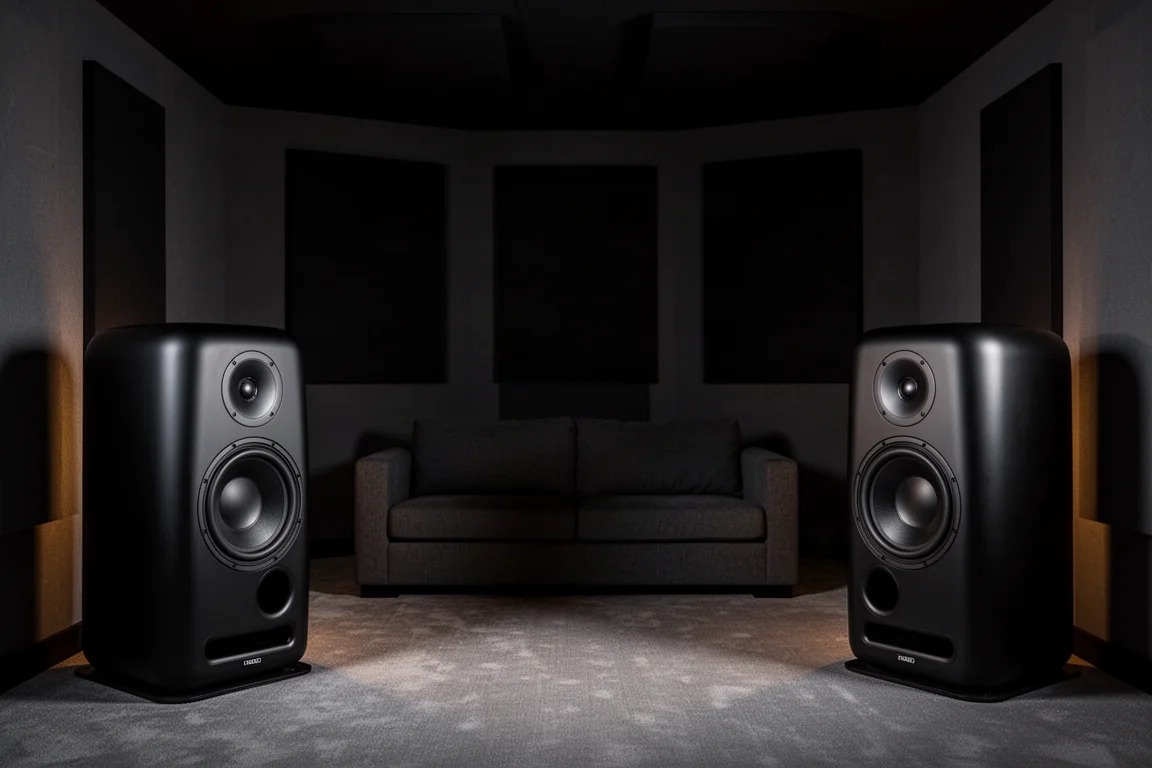
It is also a sensible pick if gaming and film both matter in the same room, since the 4K 120 Hz inputs with Auto Low Latency Mode and Variable Refresh Rate cover consoles properly while the audio processing handles Atmos and DTS:X. Plan for the calibration time, budget for a laser tape measure, and if you run dual subwoofers, choose models with their own room correction to work around the parallel sub outputs.
Conclusion
The STR-AZ5000ES is a well-executed return to form for Sony in the home theater receiver space. Its 11 channels of amplification, thorough power supply, current HDMI 2.1 connectivity, and unusually detailed calibration routine combine into a receiver that delivers a precise, neutral, and genuinely immersive result. The trade-offs are limited and specific: parallel subwoofer outputs and a setup process that rewards patience. For anyone assembling a higher channel count theater, it is one of the strongest values available in its class.
Product link
View more details for Sony STR-AZ5000ES
This product is mentioned in the review. Check the specifications, options, and compatibility before buying.
View more details for Sony STR-AZ5000ESFurther reading
Related Reviews
Home Theater Receivers
Arcam AVR11, AVR21, AVR31 and AV41: Inside the Current Home Theater Lineup
Three AV receivers and one surround processor share Arcam's house sound and a complete modern feature set. Here is how they differ and which one fits your room.
Home Theater Receivers
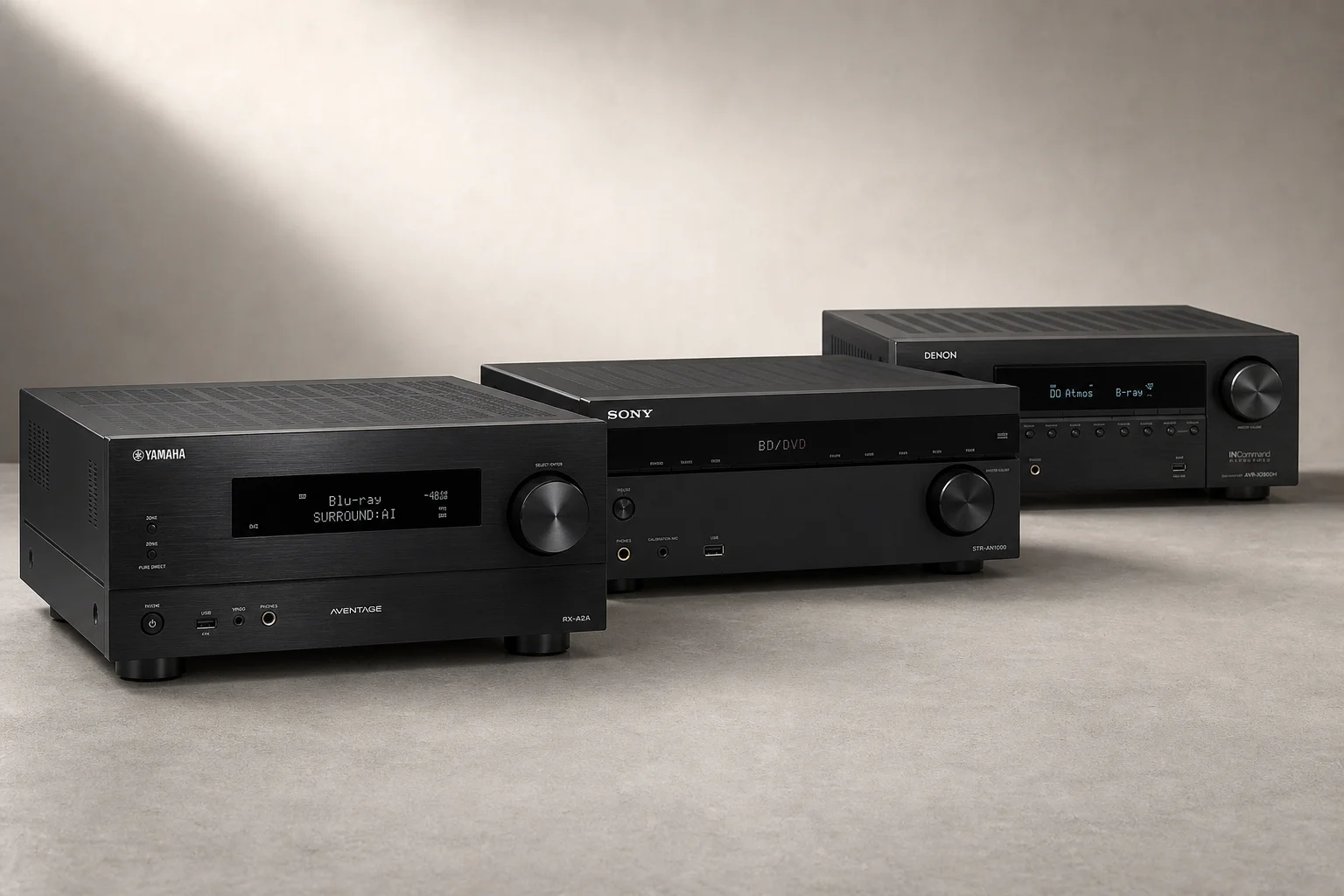
Best Home Theater Receivers 2026: Ten Picks From Entry Level to Flagship
A practical roundup of ten home theater receivers, from an affordable 5.1.2 model to a 15-channel flagship, with the features that matter most before you buy.
Home Theater Receivers
Best Home Theater Receivers: Eight Picks From Entry Level to Audiophile
Eight home theater receivers compared on channels, amplifier headroom, room correction, subwoofer outputs, and expansion, from an entry-level pick under $750 to audiophile flagships.