Home Theater Receivers
Sony ST-A1000 Review: Spatial Audio and HDMI 2.1 for Under a Grand
A close look at Sony's ST-A1000 receiver, covering its spatial audio processing, HDMI 2.1 gaming features, and the speakers it can and cannot drive.
Introduction
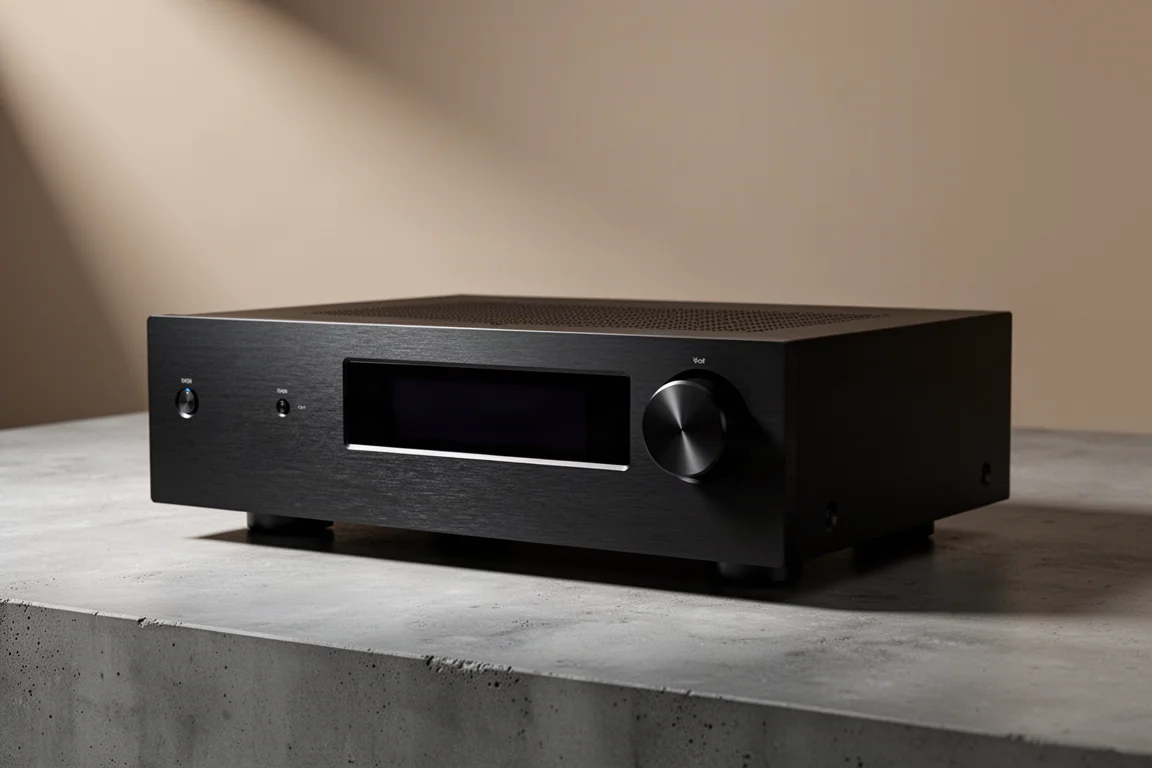
Sony’s STR-DN1080 was the budget home theater receiver that a great many enthusiasts built their first serious system around. Released in 2017, it stayed a default recommendation for years because it delivered the essentials at a friendly price. The ST-A1000 is the receiver that now occupies that slot, and the first thing you notice is how familiar it looks. The chassis is essentially unchanged from the model it replaces, but the internals are not.
The ST-A1000 is a 7.1-channel receiver with Dolby Atmos and DTS:X decoding, HDMI 2.1 features that include upscaling to 8K60, VRR and ALLM, and HDR support with Dolby Vision. It also carries Sony’s 360 Spatial Sound Mapping and 360 Reality Audio support, the same spatial processing found on Sony’s considerably more expensive ES receivers. It is rated at 120 watts in stereo, and Sony recommends speakers rated 6 ohms and above.
Who the Sony ST-A1000 Is For
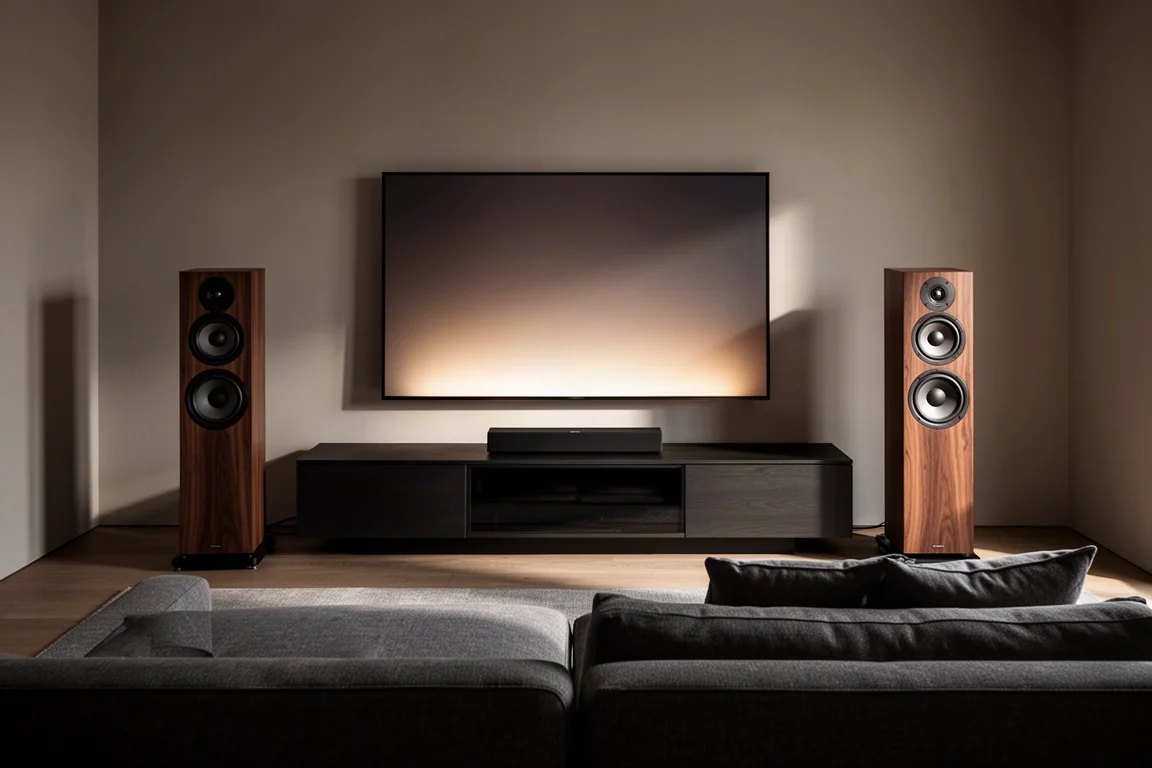
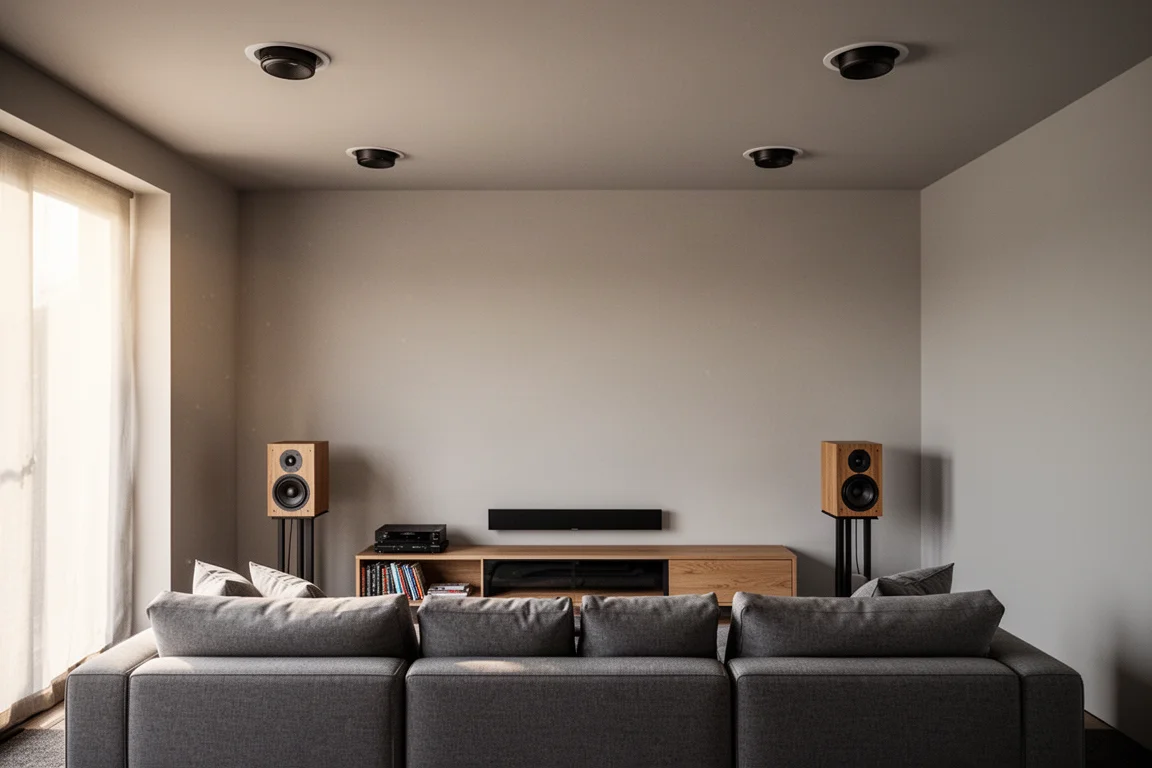
If your speakers are budget-friendly or mass-market models rated 6 ohms or higher, the ST-A1000 has more than enough power to drive them. It was paired successfully with Klipsch RP-8000F towers and a matching RP-500C center, Mission LX-2 towers and center, and Definitive Technology Dimension towers, with Klipsch in-ceiling speakers handling surround and height duties. Every one of those combinations worked well.
The receiver also makes sense for existing STR-DN1080 owners who are happy with their speakers and want newer processing and connectivity without rebuilding a whole system. Swapping only the receiver is a straightforward path.
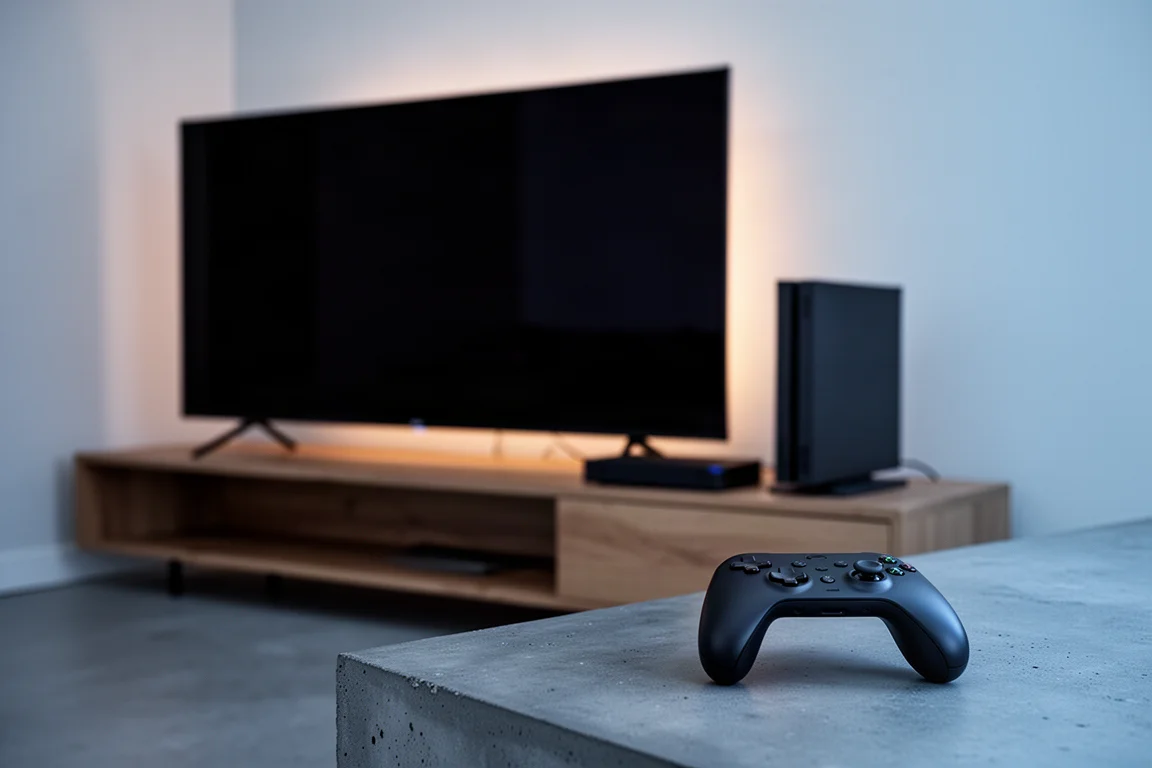
PS5 owners are another natural fit. The ST-A1000 supports 4K at 120Hz with HDR, VRR and ALLM, so the gaming features people bought HDMI 2.1 displays for are fully covered.
What Changed From the STR-DN1080
On paper the power figures look like a step backward. The STR-DN1080 was rated at 165 watts with one channel driven, while the ST-A1000 is rated at 120 watts in stereo. Those are not the same measurement, and Sony does not publish a full multichannel breakdown, so the two numbers cannot be compared directly. In practice, the ST-A1000 drove every speaker on hand except true 4-ohm designs.
What genuinely changed is the feature set. The ST-A1000 adds 360 Spatial Sound Mapping and 360 Reality Audio support, HDMI 2.1 with 8K60 upscaling, VRR and ALLM for gaming, and wireless pairing with certain Sony speakers and subwoofers. Streaming and voice control are well covered too, with Google Home, Alexa, AirPlay 2, Bluetooth, Spotify Connect and Works with Sonos all on board.
Main Strengths
Spatial audio that transforms a modest setup
Sony’s 360 Spatial Sound Mapping is the headline feature. With suitable speakers, a basic 5.1.2 Atmos layout sounds noticeably more enveloping than a conventional setup with the same channel count. The scale and placement of effects come close to what Sony’s far more expensive ES receivers deliver, and the spatial mapping processing is distinct from simply supporting 360 Reality Audio content.
Setup is quick, if not endlessly adjustable
The automatic calibration routine asks for a lot of room measurements, so a laser measuring tool speeds things up considerably. Once the numbers are entered, calibration finishes faster than Audyssey or Dirac. The trade-off is manual control: the resulting curves cannot be adjusted to the same depth that higher-end Audyssey or Dirac receivers allow.
A neutral, detail-first tone
Tonally the ST-A1000 leans neutral rather than warm or laid-back. The mid-range is colorless and faithful to the source, and dialogue clarity is exceptional. Several processing options can lift dialogue so it appears to come from the screen rather than from a speaker below it, and Acoustic Center Sync works with compatible Sony displays. Bass through a matching Sony subwoofer was agile and firm.
Gaming and video switching
Switching between HDMI inputs is seamless and quick. 4K at 120Hz with HDR worked without issue, and Sony’s spatial processing makes locating opponents in first-person shooters noticeably easier. The on-screen menus are carried over from the ES line, and the Sony Music app adds a good amount of control without leaving your seat.
Stereo listening holds up
Two-channel performance is enjoyable for a receiver in this class. Spatial mapping and virtualization can be applied to stereo sources, which firms up center imaging and enlarges the sound stage in a way traditional stereo setups rarely match. Dedicated two-channel enthusiasts will still prefer their own systems, but the gap is smaller than expected.
Things to Consider Before Buying
The most important caveat is speaker matching. The ST-A1000 does not handle true 4-ohm loads well. Sony recommends 6 ohms and above, and 4-ohm speakers such as the Martin Logan Motion XT series produced a harsher, stranger sound. Buyers with speakers like those should be looking at Sony’s ES 5000 or ES 7000 instead.

Vinyl fans should note there is no built-in phono preamp. Records can be played over a Bluetooth connection, and Sony turntables can connect directly, but anything else needs a turntable with its own phono stage or a separate external preamp.
Wireless speaker support comes with limits. Certain Sony wireless speakers and subwoofers can be paired, and the SW5 subwoofer is an excellent match. The RS5 surrounds are a different story: they repeatedly lost sync with the receiver even after the wireless optimization routine was run three times, and they cannot expand the channel count, so the system stays at 5.1.2.
There is no dual center channel support, which matters if you run two centers. The remote is a carryover from the ES line and remains a weak point, and the front panel display is difficult to read at a glance. The treble can also sound a little thin once volume climbs past roughly 90 dB. Finally, there are no full preamp outputs, so adding external amplification later is not an option.
How the Sony ST-A1000 Compares
Against the Yamaha V6A, Yamaha gives you more for the money in connections and flexibility, including a pair of stereo preamp outputs, a built-in phono preamp, and Yamaha’s typically deep manual control. Even so, Sony’s sense of spaciousness and its more dynamic cinematic presence are hard to argue with.
The Yamaha A4A costs roughly double and does not deliver double the perceived performance. It does offer full preamp outputs for future expansion, but if expansion is the goal, Sony’s ES 5000 is the more sensible comparison.
The Denon X1700H is the value play. It offers similar power output, the same channel count and a comparable feature set for less money. It is a great receiver at $699, but it is simply not as exciting as the Sony.
The Marantz Cinema 60 costs around $1,000 more and brings full preamp outputs, dual subwoofer outputs, a phono preamp and more adjustability. It is built to a higher standard and has a richer sound that two-channel enthusiasts may gravitate toward. Whether that doubles the enjoyment is a personal call.
The Onkyo NR6100 shares Sony’s neutral, dynamic character and adds THX certification. It lacks Sony’s spatial mapping processing and costs less, but the Sony is worth the extra outlay of roughly $200.
Buying Advice
For the vast majority of buyers, the ST-A1000 is the right pick in its price bracket. At under $1,000 it delivers spatial audio processing, HDMI 2.1 gaming features and a full streaming feature set, which is a lot for the money.
If you need future expansion, own difficult 4-ohm speakers, or want extra composure in the high frequencies, step up to the ES line. The ES 5000 is the sensible entry point there, and the ES 7000 is the flagship if budget allows. The ES 3000 is easy to skip, since it does not offer enough beyond the ST-A1000 apart from a longer warranty.
Existing STR-DN1080 owners with speakers they like should feel confident upgrading. The processing and connectivity gains are things the 1080 will never have, and keeping the speakers keeps the cost reasonable. If you bought a 1080 at a heavily discounted price years ago, it is worth keeping expectations in check, since paying full retail for a new receiver will always feel different from the bargain you remember.
Conclusion
The ST-A1000 is not a dramatic reinvention, and that is fine. It keeps what made the STR-DN1080 a favorite and adds the modern features that matter most today: spatial audio processing, HDMI 2.1 gaming support and broad streaming compatibility. Pair it with speakers rated 6 ohms or higher, skip the wireless surrounds, and it stands out as one of the more engaging receivers you can buy without breaking the bank.
Product link
View more details for Sony ST-A1000
This product is mentioned in the review. Check the specifications, options, and compatibility before buying.
View more details for Sony ST-A1000Further reading
Related Reviews
Home Theater Receivers
Arcam AVR11, AVR21, AVR31 and AV41: Inside the Current Home Theater Lineup
Three AV receivers and one surround processor share Arcam's house sound and a complete modern feature set. Here is how they differ and which one fits your room.
Home Theater Receivers
Best Home Theater Receivers 2026: Ten Picks From Entry Level to Flagship
A practical roundup of ten home theater receivers, from an affordable 5.1.2 model to a 15-channel flagship, with the features that matter most before you buy.
Home Theater Receivers
Best Home Theater Receivers: Eight Picks From Entry Level to Audiophile
Eight home theater receivers compared on channels, amplifier headroom, room correction, subwoofer outputs, and expansion, from an entry-level pick under $750 to audiophile flagships.