Bookshelf Speakers
Sony SSCS5 vs Sonus Faber Lumina II Amator: Can a $150 Speaker Compete With a $1,500 Speaker?
A side-by-side look at the Sony SSCS5 and the Sonus Faber Lumina II Amator, covering specifications, build quality, and how each handles bass, mid-range, and treble.
Introduction
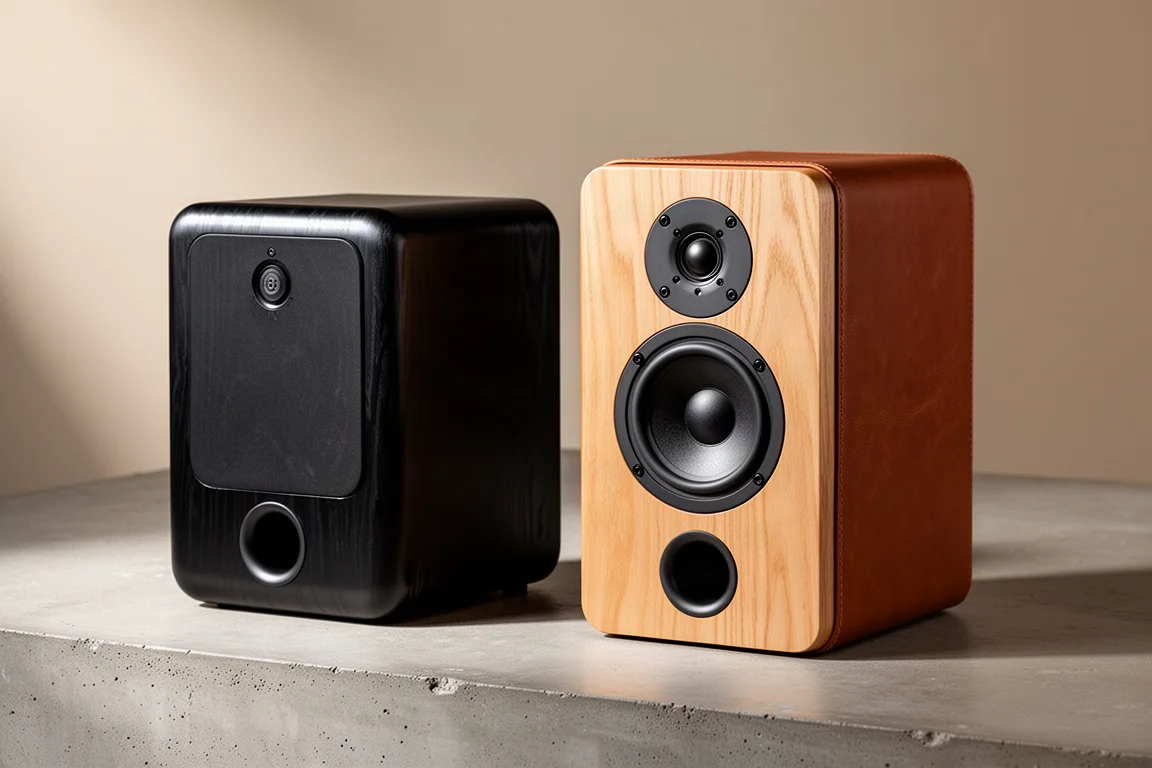
Two bookshelf speakers, one priced at roughly $150 and one at $1,500, make an unusually clean test of what extra money actually buys in hi-fi. The Sony SSCS5 is a compact two-way design that has sold for as little as $80 during major sale events. The Sonus Faber Lumina II Amator is a handmade-in-Italy speaker that sits at ten times the price.
Both are genuinely good products within their own brackets, which is exactly what makes the comparison interesting. This guide breaks down the specifications, the cabinet construction, and the listening character of each, so you can decide which one belongs in your room.
What Sets These Two Speakers Apart
The two designs are closer on paper than their prices suggest. The Sony SSCS5 combines a 0.75-inch super tweeter and a 1-inch soft dome tweeter with a 5.25-inch paper cone woofer. It is rated at 6 ohms nominal impedance with 87 dB sensitivity, and its stated low-frequency rolloff is 53 Hz.
The Sonus Faber Lumina II Amator uses a 29 mm DAD high-definition driver alongside 150 mm paper cone drivers. It is rated at 4 ohms nominal with a stated sensitivity of 86 dB, and a stated rolloff of 55 Hz.
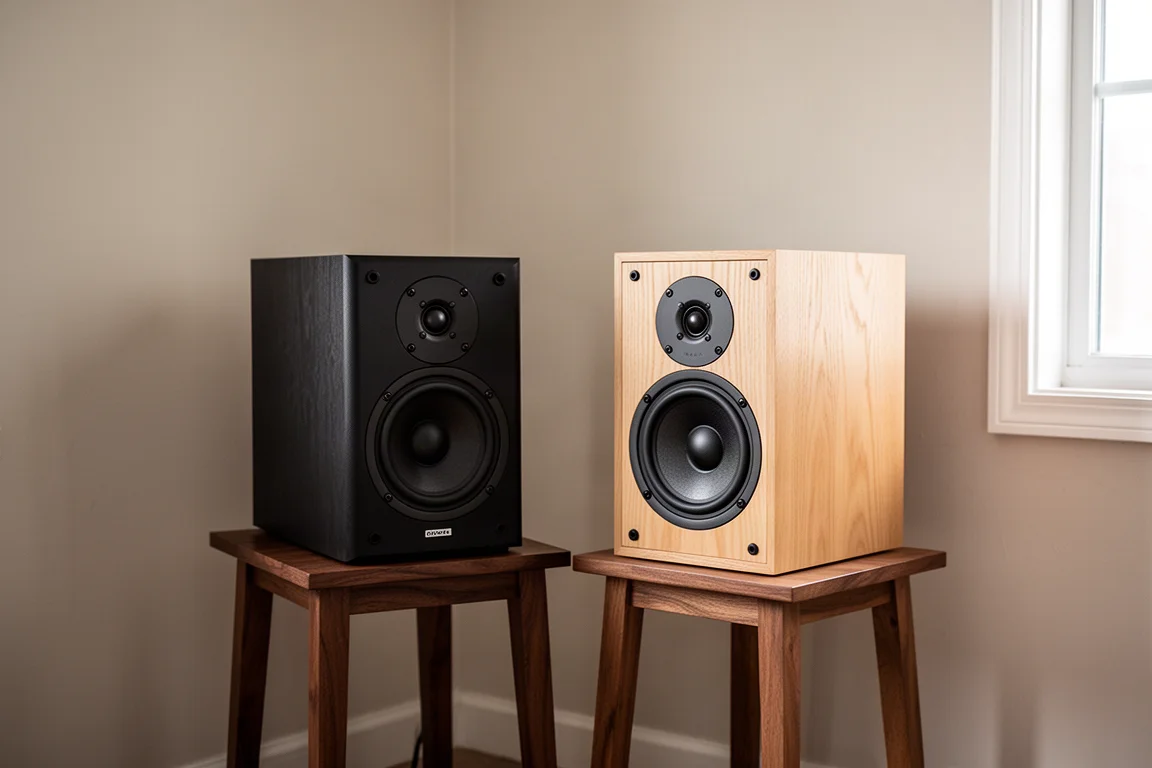
Those figures imply that the Sonus Faber should be the harder speaker to drive and the Sony the louder one for a given input. In a direct comparison the Sonus Faber actually sounded louder, which is a useful reminder that sensitivity ratings are a rough guide rather than a strict ranking.
Sony SSCS5: The Affordable Overachiever
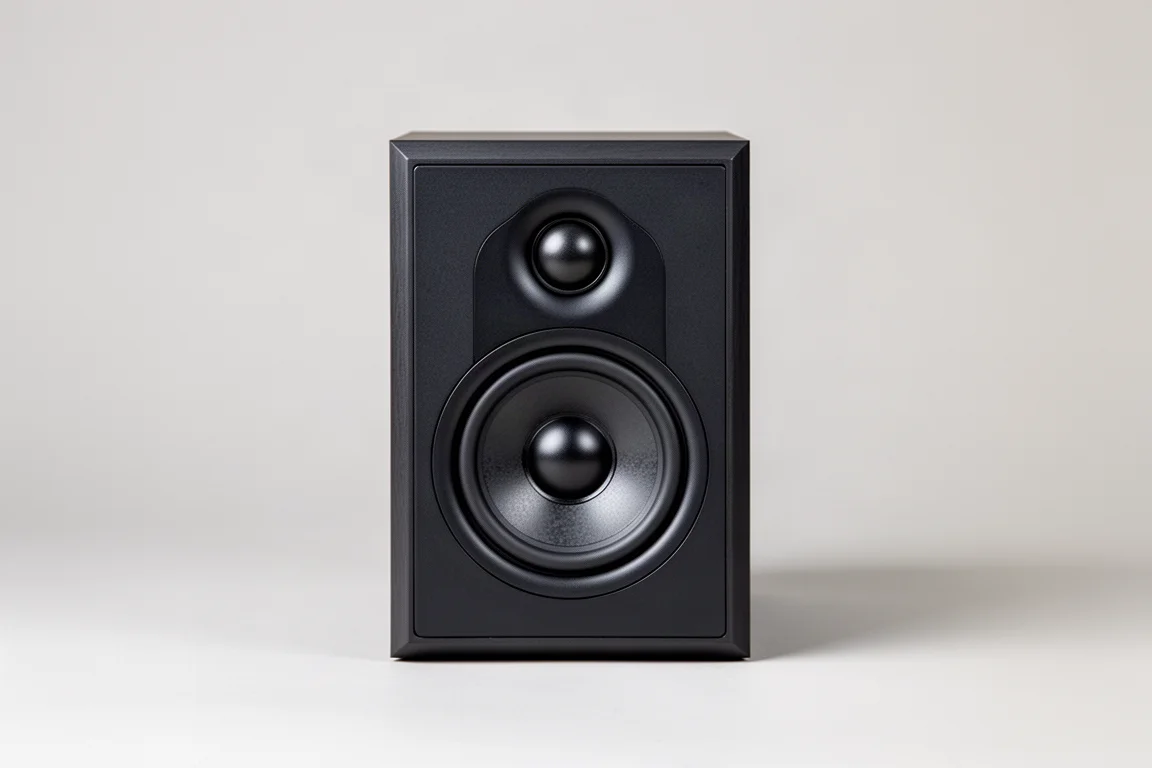
The Sony SSCS5 is a lightweight, shoebox-style cabinet with a rear port and binding posts that are better than the price suggests. A moulded plastic trim ties the front together, and the wrap has a subtle texture. It feels like a speaker that could easily cost two or three times as much, which is high praise at this price.
Inside, the cabinet has reasonable bracing and a crossover that is more competent than budget speakers often manage. It is manufactured in China and it is not trying to be a luxury object. It is trying to sound good, and it largely succeeds.
On its own, the Sony is articulate, quick, and airy in the lower registers, and it throws a surprisingly wide soundstage. Female vocals in particular come through with a bit of edge and excitement when a singer pushes into the upper register.
Sonus Faber Lumina II Amator: Handmade in Italy
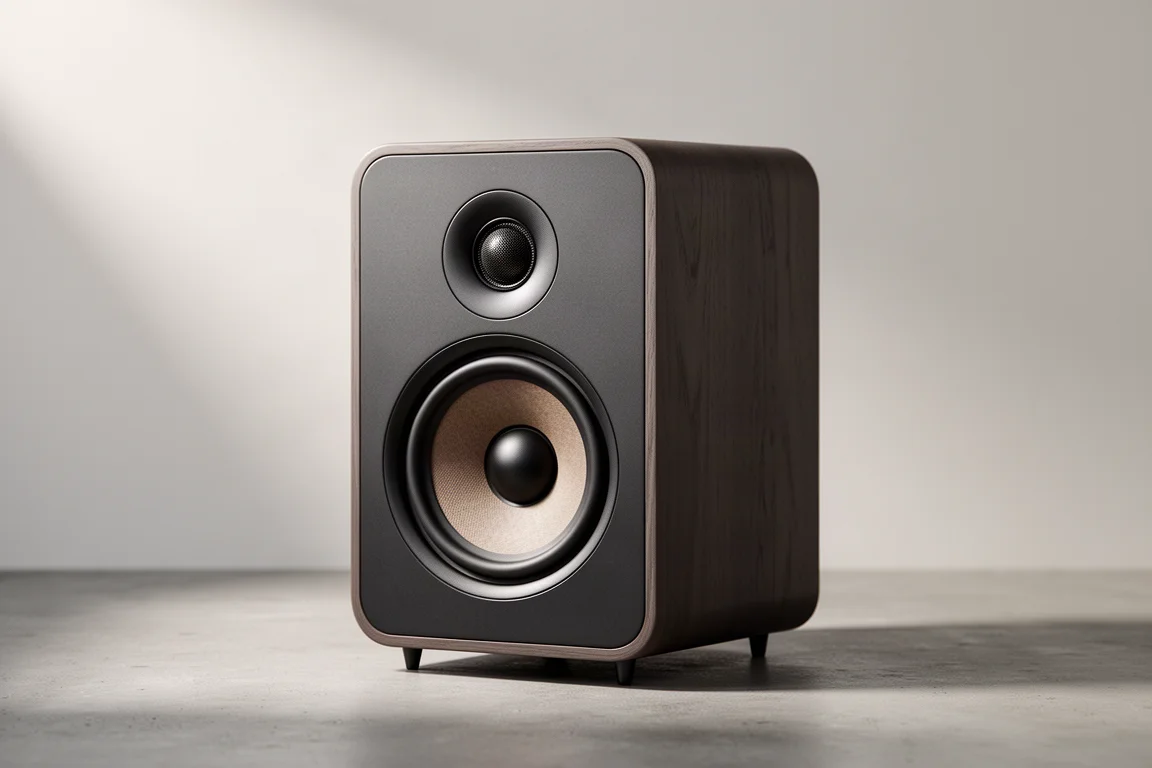
The Lumina II Amator is a different category of object. The front baffle is hardwood with a Baltic birch style grain, and the sides and top are wrapped in a leatherette material. The port fires downward, the binding posts are high quality, and the base uses a soft, slightly springy rubber foot that decouples the cabinet from the shelf.
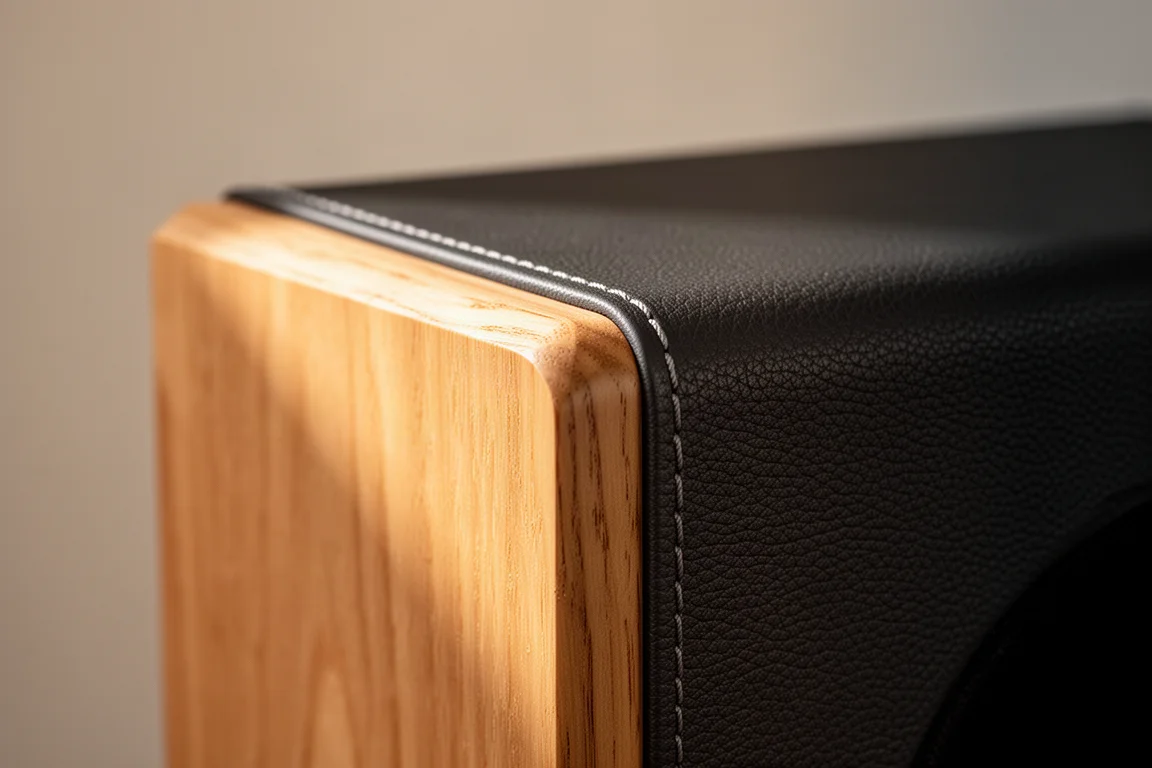
Build quality is where the price gap becomes obvious. Compared with the Sony, the Sonus Faber feels several times more substantial, and it holds up well against other speakers costing around $500.
Sonically, the Lumina II Amator is the more balanced speaker. Its mid-range avoids the dips that show up on the Sony, its bass stays composed when the music gets loud and busy, and its treble sounds realistic rather than truncated. Cymbal crashes hang in the air with separation from the rest of the mix instead of arriving as a burst of white noise.
Sound Comparison: Bass, Mid-range, and Treble
The most useful way to compare two speakers is to run them side by side in mono, one on the left channel and one on the right, and switch between them in real time. That approach reveals differences in tonality, sensitivity, and resonance quickly. It does not tell the whole story, because stereo speakers are designed to be used in pairs.
Listening was done at moderate levels, around 75 dB, with plenty of amplifier power on tap. Both speakers are happier below 85 dB, and the Sonus Faber handles higher volumes with noticeably more composure than the Sony.
On bass, both speakers have a stated rolloff in the mid-50 Hz range, and neither is a substitute for a subwoofer. The Sonus Faber hits a little harder and stays tidier when basslines demand excursion. The Sony is quick and airy on the bottom end, not far behind in quality even though it lacks the same weight. For either speaker used as a main left and right channel, a high-pass filter paired with a subwoofer is a sensible setup.
Mid-range is where the gap widens. Male vocals with a baritone character sounded noticeably hollow on the Sony in direct comparison, with a slight scoop through the middle. The Sonus Faber kept those voices full and even. Female vocals were stronger on the Sony, with extra sparkle at the top of the register, but the Sonus Faber still sounded more natural overall.
Treble goes clearly to the Sonus Faber. The Sony’s cymbals can sound flat or slightly sizzly, and notes stop abruptly. The Sonus Faber renders cymbals with a realistic decay and clear separation from the rest of the instrumentation.
Build Quality and Setup Notes
The Sony is the lighter of the two, and it shows in the hand. Even so, it is built better than several budget speakers in its class, with internal bracing and a crossover that punch above the price. The plastic trim and textured wrap are modest touches rather than premium ones.
The Sonus Faber is in another league. The hardwood baffle, the leatherette wrap, the metal detailing, and the soft rubber base all signal careful construction. It is handmade in Italy, and it feels like it.
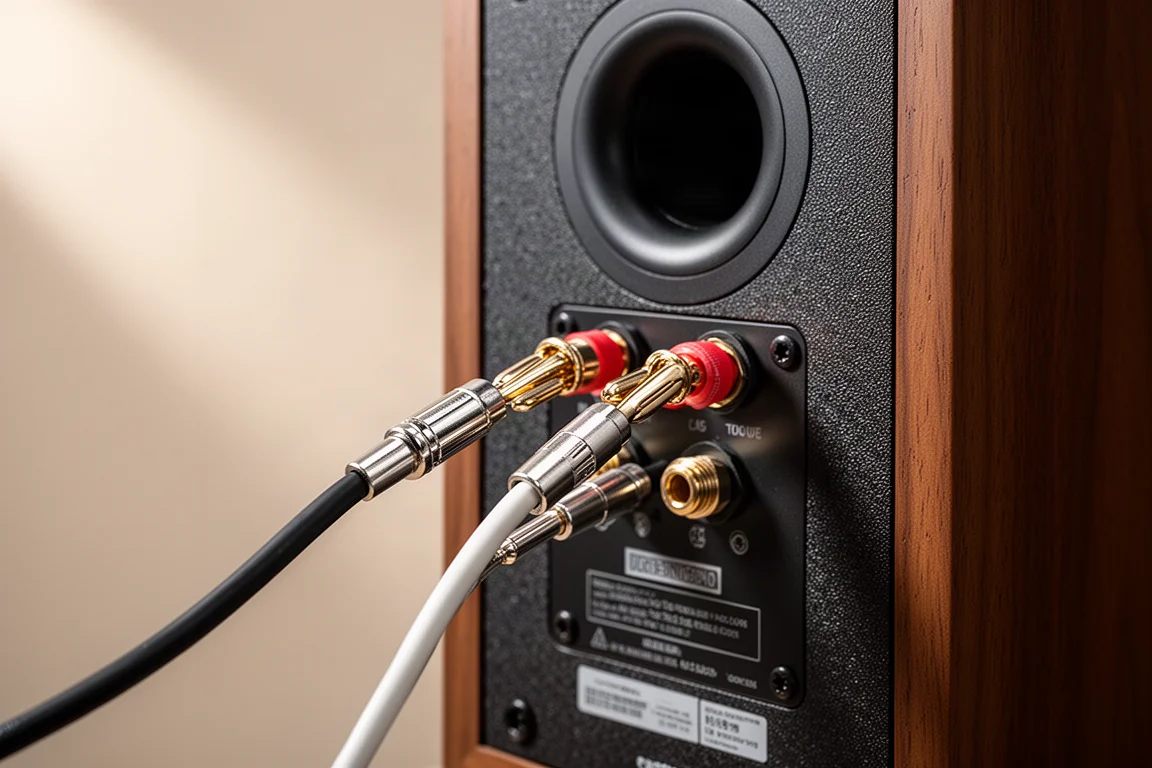
Both speakers benefit from careful amplifier matching. The Sonus Faber’s 4 ohm nominal impedance asks more of an amplifier than the Sony’s 6 ohm rating, so a capable amp with real power reserves is worth budgeting for. Neither speaker needs to be played loudly to sound good, and both reward a room that is not overly reflective.
Who Each Speaker Suits
The Sony SSCS5 is the right choice if your budget is fixed at around $150. It delivers an engaging, spacious sound that most listeners will enjoy for years, and it is an easy recommendation for a first passive speaker setup, a desktop system, or a small room.
The Sonus Faber Lumina II Amator suits listeners who care about mid-range realism, natural treble, and cabinet craft. It is the speaker to choose if you want a pair that stays composed when the music gets demanding and you are prepared to build a system around it.
Buying Advice
At $150, the Sony SSCS5 is hard to beat, and it is worth watching for sale periods, when it has dropped as low as $80. If that is your ceiling, there is no reason to feel short-changed. The Sony is a genuinely enjoyable speaker rather than a compromise.
The Sonus Faber Lumina II Amator is a $1,500 speaker, and it is worth buying if you can find it discounted below that figure. Its advantages over the Sony are real, but they are most obvious in a direct side-by-side comparison. Listened to on its own, the Sony gives you a large share of the experience.
One practical note: if you are running either speaker as your main left and right channel, add a subwoofer and a high-pass filter. Both designs roll off in the mid-50 Hz region, and a subwoofer lets them play cleaner and louder.
Conclusion
The Sonus Faber Lumina II Amator is the better speaker. In a direct comparison it comes across as roughly five to six times better in overall presentation, tonality, realism, and instrument separation. The Sony SSCS5 is still a spectacular value. In normal stereo listening, with time between sessions rather than instant switching, the difference shrinks because the ear fills in a lot of the gaps.
If you can stretch to the Sonus Faber, you get a speaker that will keep rewarding better electronics and a better room. If $150 is what you have, the Sony remains one of the most enjoyable ways to spend it.
Further reading
Related Reviews
Bookshelf Speakers
Acoustic Energy A100 Mark II Review: A Compact Standmount With an Expansive Soundstage
The Acoustic Energy A100 Mark II brings clarity, natural tonality and a wide soundstage to an entry-level standmount, with a few setup details worth knowing first.
Bookshelf Speakers
Acoustic Energy AE-100 Mark II Review: Compact Bookshelf Speakers With Standout Imaging
A compact British two-way bookshelf speaker with deep, layered imaging, fast bass, and a slight treble lift to weigh against a crowded $500 field.
Bookshelf Speakers
Acoustic Energy AE100 MK2 Review: Measured Performance and Four Alternatives
A close look at the Acoustic Energy AE100 MK2 bookshelf speaker, what its measured performance reveals, and four alternatives with different trade-offs.