Bookshelf Speakers
Sony SSCS5 Review: A Compact Bookshelf Speaker With Serious Upgrade Potential
A close look at the Sony SSCS5: what it gets right out of the box, where a redesigned crossover takes it, and how to buy it at the right price.
Introduction
The Sony SSCS5 has earned a reputation as one of the most approachable entry points into serious two-channel sound. It is a compact bookshelf speaker that commonly sells for around $150, has dropped to roughly $88 during sale periods, and has been listed as high as $228. Those swings make the timing of a purchase awkward, but the speaker itself is the more interesting story.
Out of the box it delivers clear bass, a detailed top end, and strong imaging for its size. What sets it apart is that it also has the bones of a much more expensive speaker: a braced cabinet, solid internal components, and a crossover that responds well to a carefully designed replacement. With that replacement in place, the performance moves well beyond the price tag.
That combination is why the SSCS5 deserves a closer look, both as a stock speaker and as a project.
Who This Speaker Is For
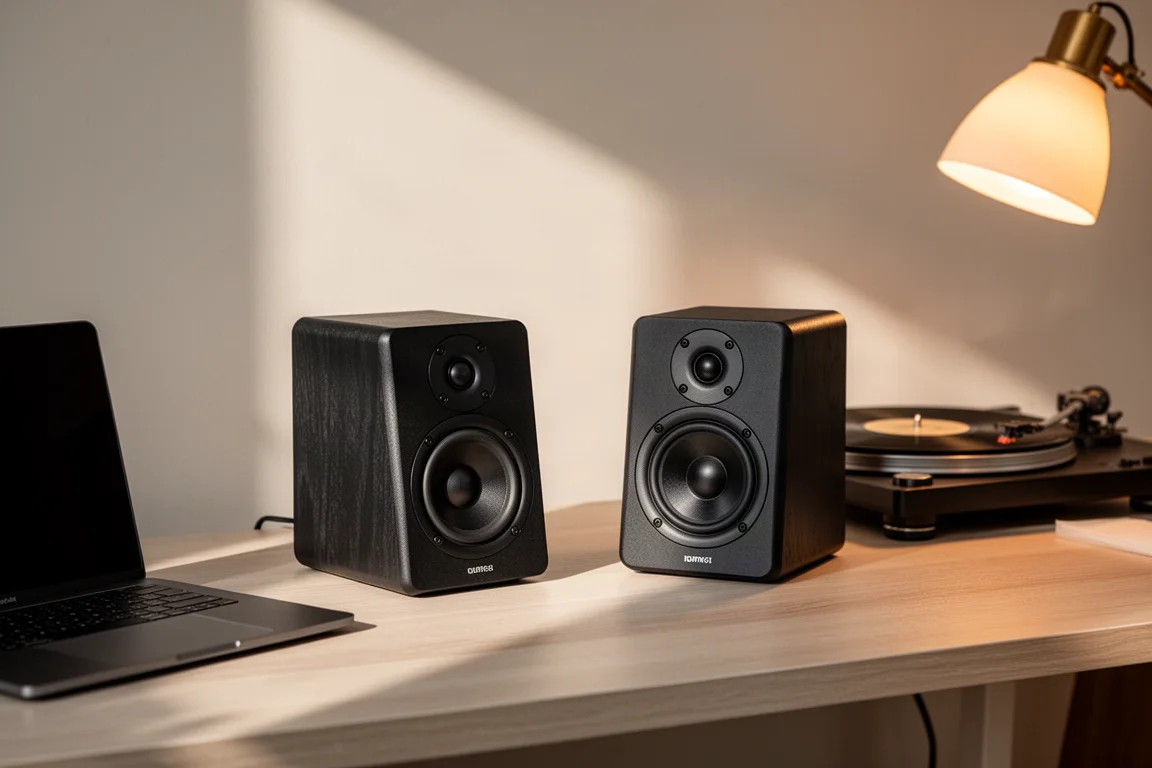
The SSCS5 suits listeners who want a small, affordable speaker that fits into real rooms. Its size lets it work as a desktop speaker beside a monitor, as a pair in a small living room, or as front left and right channels in a modest home theater setup.
It is also a natural fit for anyone curious about speaker modification. Because the cabinet and drivers are already good, an upgrade path exists that does not require building an enclosure or sourcing drivers, which makes it an unusually friendly first project.
Listeners who mostly want background music at low volume will be content with the speaker as it ships. Listeners who want to push a small speaker hard should read the volume notes below before deciding.
Stock Sound and Build Quality
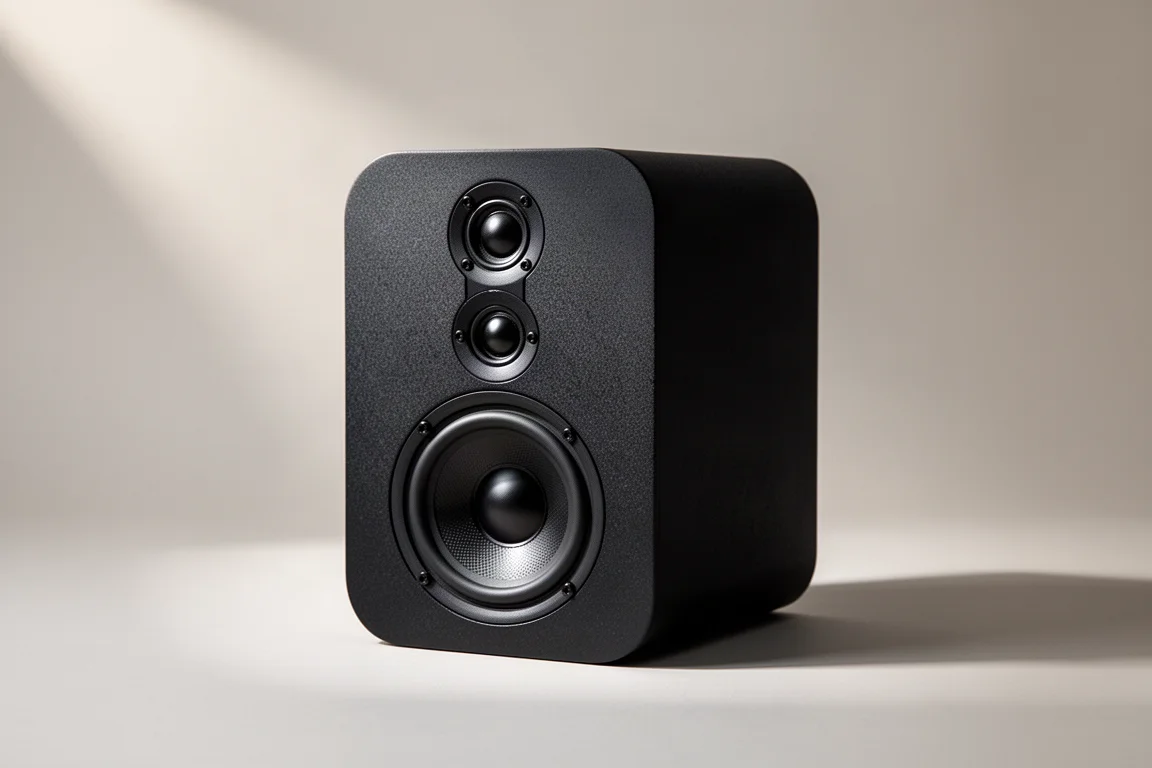
The SSCS5 uses three drivers: a paper-based woofer, a one-inch soft dome tweeter, and a three-quarter-inch super tweeter. The stock tuning produces clear bass, a slight scoop through part of the midrange, and a very detailed top end. Soundstaging and imaging are standout strengths at this price.
Two caveats come with the stock sound. The detailed treble can become fatiguing over long sessions, and at higher volumes, roughly 85 dB and above, the speaker starts to lose composure. That behaviour is not unique to this model and is common among small bookshelf designs.
Inside, the cabinet is more serious than the price suggests. A brace sits roughly three-quarters of the way up, between the woofer and the tweeters, and corner gussets are glued into the internal corners to stiffen the enclosure. The binding posts are good quality, and the stock crossover uses air core inductors and decent capacitors.
Inside the Cabinet: A Closer Look at the Crossover
A crossover is the network of capacitors, inductors, and resistors that routes high frequencies to the tweeter and low frequencies to the woofer. Drivers rarely behave perfectly at the edges of their range, and the resulting peaks and dips can add up when two drivers are combined carelessly. Higher-order crossovers create steeper roll-off slopes and isolate each driver more effectively.
The SSCS5 is a three-way design, which makes a crossover redesign more involved than the typical two-way bookshelf. One detail is worth noting: the super tweeter is wired in reverse polarity from the factory, with the positive lead from the crossover connected to the negative terminal on the driver.
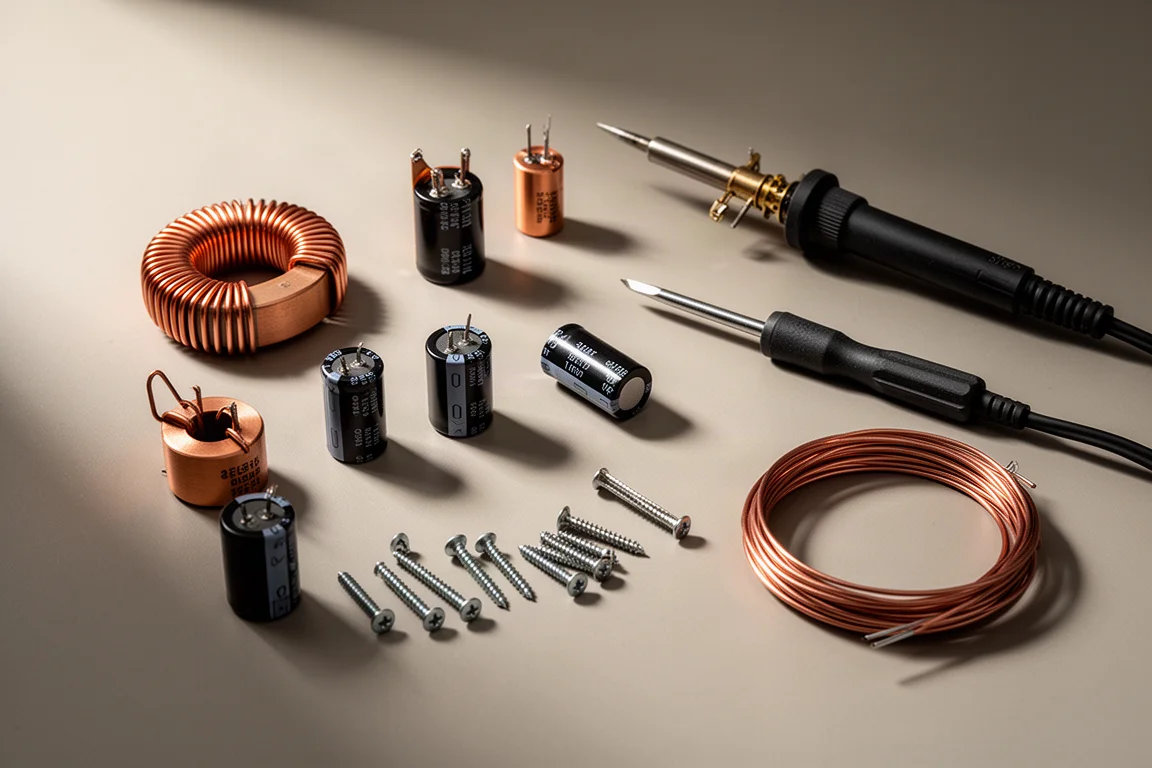
The aftermarket design reworks the crossover with second-order filters and uses the drivers differently from the original layout. The designer worked through roughly ten iterations to reach the final tuning. Just as importantly, the plans are sold on their own, so parts can be sourced from any supplier without a markup.
How the Crossover Upgrade Works
The upgrade is sold as a set of plans, priced around $20, rather than as a parts kit. That structure keeps costs down and leaves component choices in the owner’s hands. The documentation is thorough, with clear photographs and a large PDF that walks through every step, and the designer answers questions directly.
Several versions of the modification exist. Owners who want a smaller commitment can replace a single component and still hear a worthwhile improvement. Those who want the full result can rebuild the crossover completely, with parts costing roughly $180. Add the plans and the total lands near $200.
The plans also cover physical and enclosure modifications. The genuinely fiddly part is removing the stock crossover, because space inside the cabinet is tight. Four bolts hold the plastic surround and the driver in place, and the surround is glued to the enclosure. Once the bolts are out, the surround needs slow, patient prying around its edge rather than force.
What the Modification Changes
The largest gains appear in the bass. Extension and clarity both improve, and smearing between the bass and the midrange is reduced, so instruments separate more cleanly. The soundstage grows, the presentation feels larger, and the midrange takes on a richer, better-balanced tone.
The revised tuning sits closer to a flat frequency response. Treble is brought down slightly, which removes much of the fatigue associated with the stock speaker. Listeners who prefer more top-end energy can adjust resistor values to taste.
In a direct comparison between one modified speaker and one stock speaker, the difference is substantial without turning it into a different speaker. The character that makes the SSCS5 appealing remains intact.
Set against other speakers, the modified SSCS5 competes with the first-generation ELAC Uni-Fi across the board and offers stronger bass. Its low-frequency performance also stands up to the ELAC Debut Reference, a speaker in the $500 to $600 range, and to the Wharfedale Linton at around $1,500. Even without modification, at $228 the SSCS5 stays competitive with the JBL Stage A130 and edges out the Klipsch R51M.
Things to Consider Before Buying
The modification is not a drop-in job. It requires opening the cabinet, prying a glued surround carefully, and working with a crossover in a cramped space. Anyone uncomfortable with that should treat the SSCS5 as a stock purchase only.
Pricing is unpredictable. Street prices move between roughly $88 and $228, with $150 as a common middle. Paying full list is hard to justify when sale pricing returns regularly.
The physical limits of a small bookshelf also remain. At high output, roughly 85 dB and above, the speaker loses some composure, and no crossover change alters that.
Buying Advice
The straightforward recommendation is to buy the SSCS5 at $150 or, better, near $88, and then decide whether to modify it. At the lower end of its price range, the stock speaker is already strong value.
For owners who want more, the upgrade path is unusually well supported. Around $200 covers the plans and a full set of crossover parts, and partial upgrades cost less for anyone who prefers to start small.
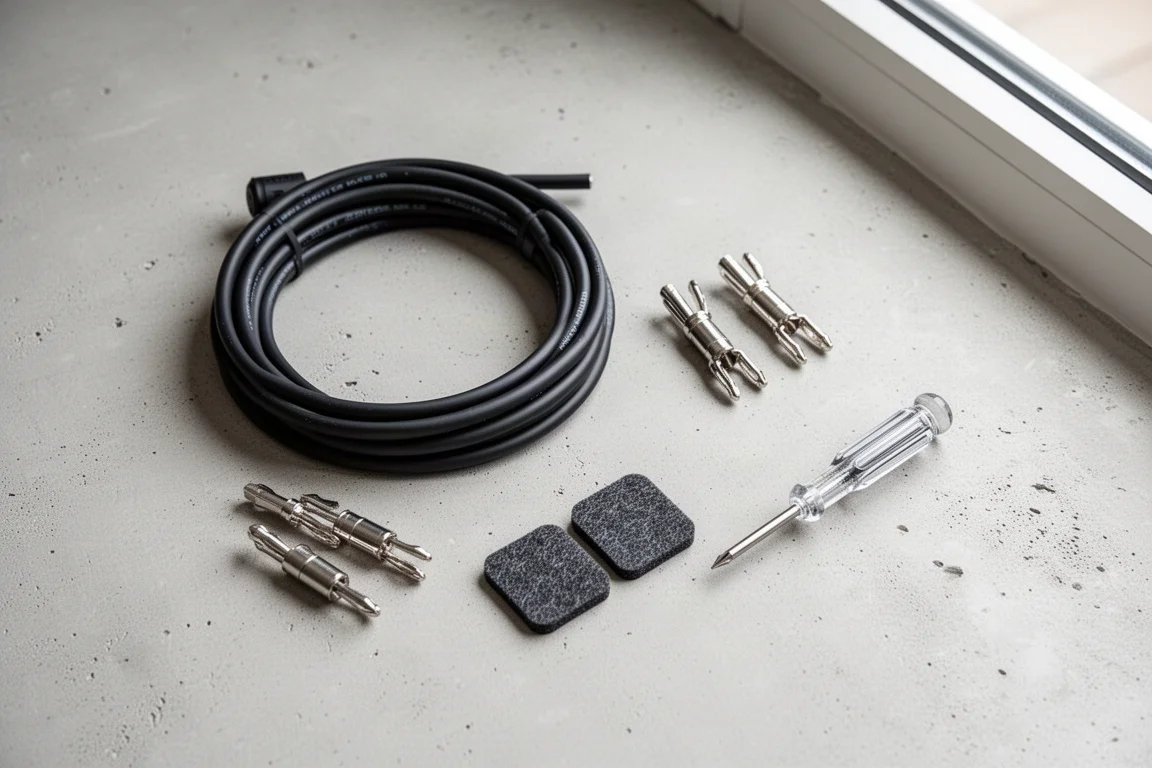
The math works because the money goes into the parts that matter. The cabinet and drivers are already capable, so the upgrade budget goes almost entirely into the crossover, which is where the performance gains come from. Anyone weighing a $500 speaker against a $150 speaker plus a $200 project should consider how much they enjoy the process as well as the result.
Conclusion
The Sony SSCS5 is a genuinely good small speaker on its own, with clear bass, detailed highs, and impressive imaging. Its real distinction is how much it improves with a well-designed crossover replacement. Bought near the bottom of its price range, it can serve either as a simple, affordable pair or as the foundation of a project that competes far above its class.
Product link
View more details for Sony SSCS5
This product is mentioned in the review. Check the specifications, options, and compatibility before buying.
View more details for Sony SSCS5Further reading
Related Reviews
Bookshelf Speakers
Acoustic Energy A100 Mark II Review: A Compact Standmount With an Expansive Soundstage
The Acoustic Energy A100 Mark II brings clarity, natural tonality and a wide soundstage to an entry-level standmount, with a few setup details worth knowing first.
Bookshelf Speakers
Acoustic Energy AE-100 Mark II Review: Compact Bookshelf Speakers With Standout Imaging
A compact British two-way bookshelf speaker with deep, layered imaging, fast bass, and a slight treble lift to weigh against a crowded $500 field.
Bookshelf Speakers
Acoustic Energy AE100 MK2 Review: Measured Performance and Four Alternatives
A close look at the Acoustic Energy AE100 MK2 bookshelf speaker, what its measured performance reveals, and four alternatives with different trade-offs.