Bookshelf Speakers
Sony SS-CS5 Version 2 Review: A Smoother, More Neutral Budget Bookshelf Speaker
The Sony SS-CS5 Version 2 adds cabinet bracing and a calmer tonal balance at around $250 per pair, with modest output limits to plan around.
Introduction
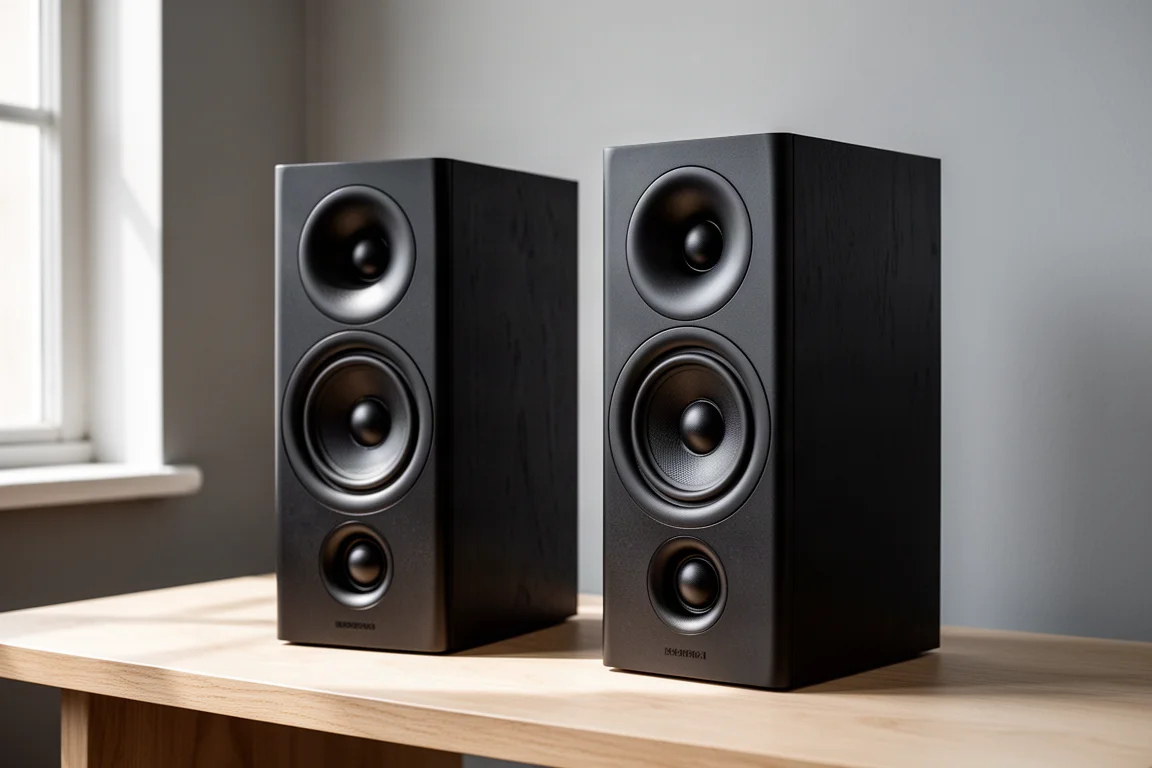
The Sony SS-CS5 has long been a default recommendation for listeners building a first serious stereo or a small home cinema on a tight budget. Version 2 keeps the familiar slim cabinet and waveguide front, but arrives with meaningful changes under the skin and a higher price: around $250 per pair, compared with the roughly $100 per pair that the original often sold for during promotions.
The most significant updates are inside the enclosure. Sony has added bracing in the corners, along the side panels and on the front baffle, and the company also describes the crossover as upgraded. The result is a speaker that behaves noticeably better than its predecessor in the area where the original struggled most, namely enclosure resonance.
Who This Speaker Is For
This version suits listeners who prefer a calm, neutral tonal balance over an aggressive one. If you want a speaker that pushes high-frequency detail forward, the original SS-CS5 remains the more energetic option. If you would rather have a smoother top end and a slightly fuller low end, Version 2 is the better fit.
It is also a sensible choice for small and medium rooms where the speakers will sit on a desk, a shelf or stands a few feet from the listening position, and for budget home cinema builds where a subwoofer handles the lowest octaves. The slim cabinet and light weight make it easy to place, and the revised front baffle looks more modern and less conspicuous in a living room than the gloss-trimmed original.
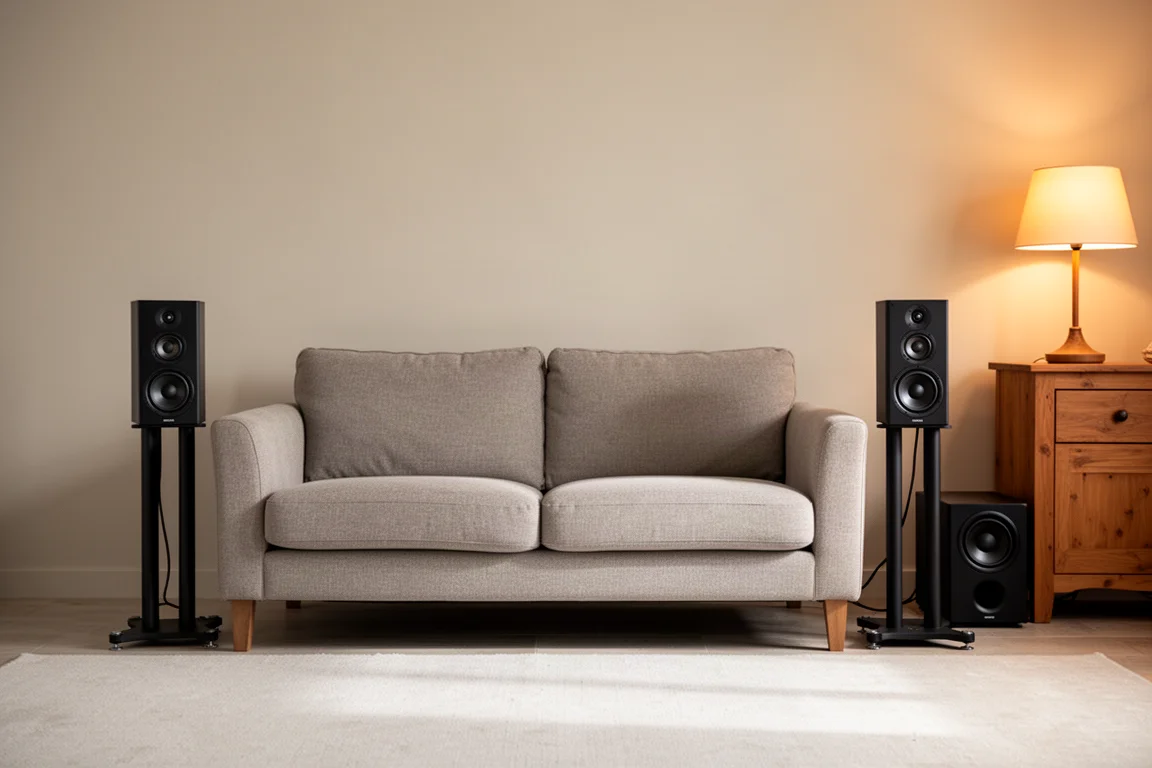
The trade-off is scale. This is not a speaker built for loud, full-range playback in a large room, and buyers who want high output should plan on adding a subwoofer from the start.
Main Strengths
Cabinet Bracing and Enclosure Behaviour
The clearest improvement is the cabinet itself. The original SS-CS5 was noticeably resonant, with vocal notes and upper-frequency notes lingering longer than they should. The added bracing in the corners, sides and front baffle of Version 2 tames much of that behaviour, so notes start and stop more cleanly than before.
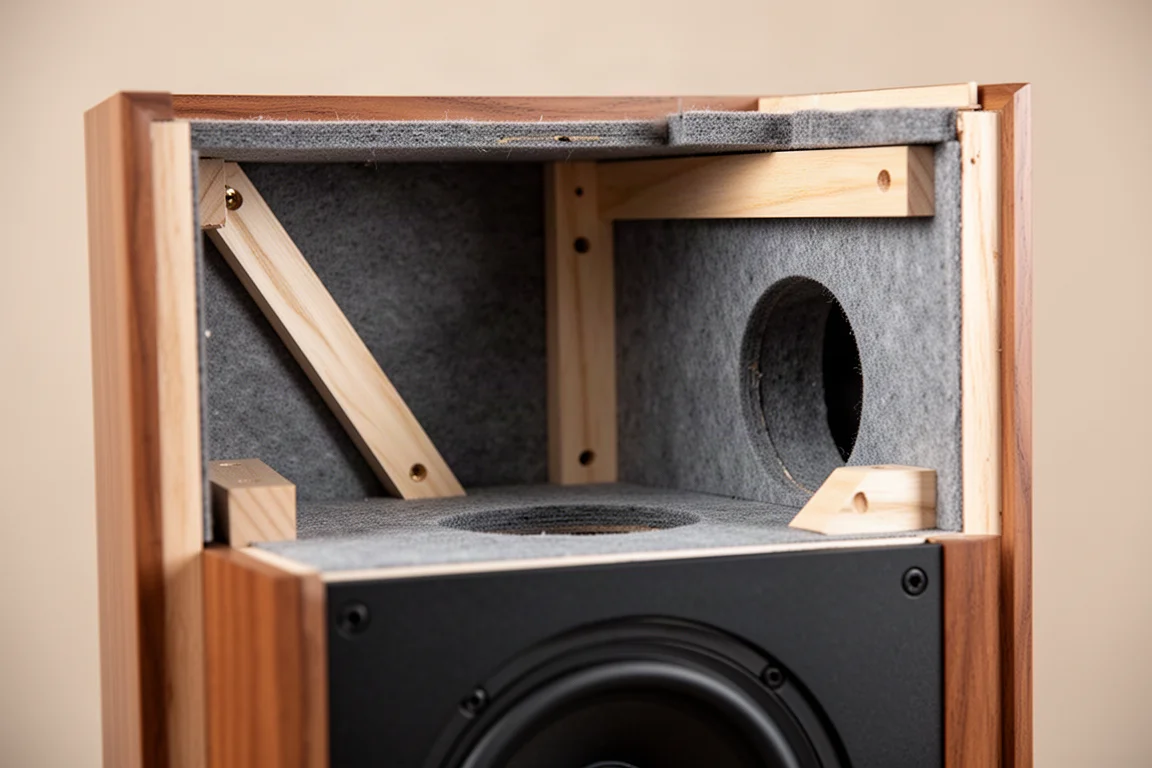
That change matters more than any single specification on the box, because enclosure resonance colours everything the drive units reproduce. A quieter cabinet lets the midrange and treble come through with less smearing, and it is the main reason Version 2 sounds like a more composed speaker overall.
Tonality and Treble Behaviour
Version 2 leans mellow. The upper midrange and treble sound smooth and noticeably calmer than the previous generation, which had a sharper and more forward character. A dip of roughly one to two decibels through the midrange is present, much as it was before, and it is mild enough to live with rather than a peak that draws attention to itself.
There are still a couple of small quirks worth knowing about. Some mild sibilance appears in the lower treble, roughly in the 3 to 5 kHz region, and S and T sounds can stand out a little more than they should. Vocals with sustained notes also show some forwardness in the midrange. Neither issue is severe, but they are the details to listen for if a perfectly even response is your priority.
Bass Response and Subwoofer Integration
Low-frequency output is a touch more substantial than before, with roughly two decibels more energy around 60 Hz and usable response reaching lower than the previous model’s roll-off near 70 Hz. It is a modest gain rather than a transformation, and a subwoofer remains part of the plan for anyone who wants genuine low-end weight.
Crossing over to a subwoofer also cleans up the midrange. Running the speaker full range at high volume invites compression and a grainy character, and rolling the bass off to a subwoofer relieves that, which makes midrange detail easier to hear. A crossover in the region of 80 Hz lowers distortion considerably, and pushing the crossover point up towards 120 Hz extracts a little more dynamic capability from the mains.
Things to Consider Before Buying
Output Limits and Compression
This is not an output monster. In a typical room, comfortable playback sits in the 75 to 85 dB range at three to four metres, with dynamic peaks reaching roughly the mid-90s at a few metres. Against a three percent distortion threshold, around 88 dB is a practical ceiling. Push harder and the speaker compresses, distortion rises and a gritty edge appears that is best relieved by turning the volume down.
Mid-bass punch below about 120 Hz also shelves as volume increases, so a kick drum can lose a couple of decibels when you turn the system up. Using a subwoofer crossover around 120 Hz helps preserve dynamics in the mains, while a conventional 80 Hz crossover already does a great deal to reduce distortion.
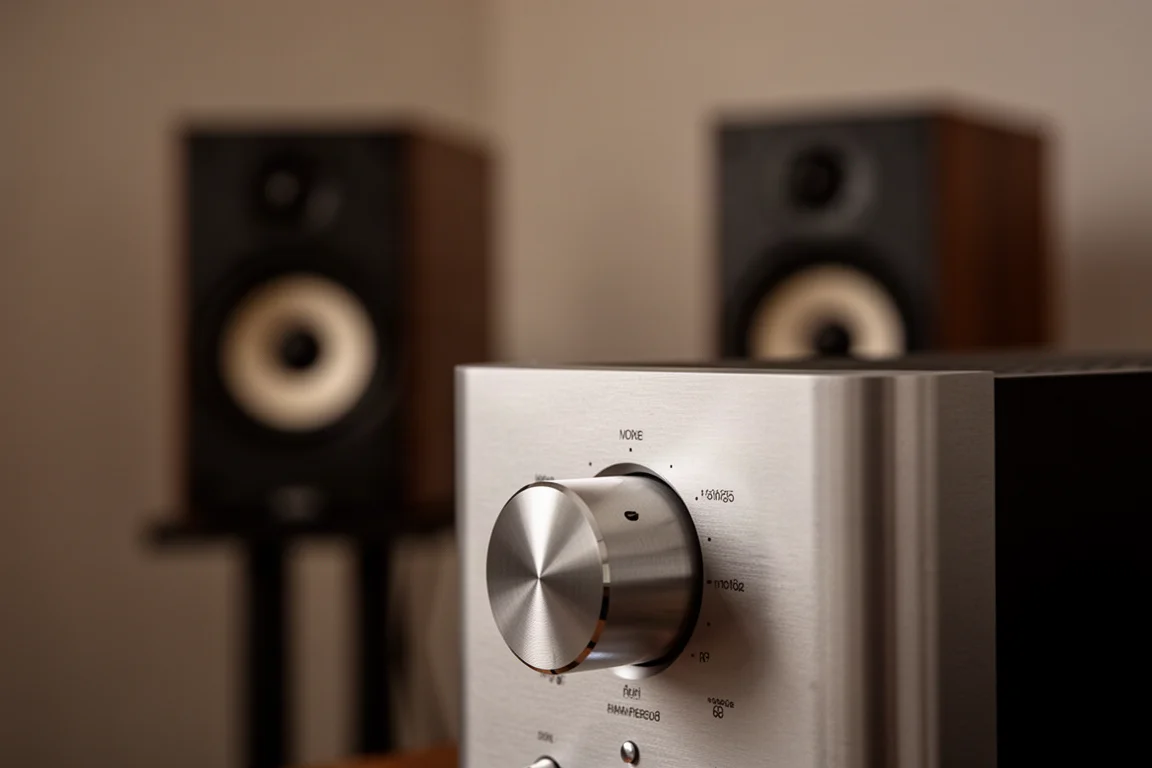
The good news is that these limits are predictable and easy to work around. A standard AVR in the $300 to $500 range is entirely sufficient, because the speaker’s impedance does not call for a high-powered separate amplifier and spending on one would be wasted.
The Super Tweeter Question
Sony describes the SS-CS5 Version 2 as a three-way design, counting the midwoofer, tweeter and super tweeter. That third driver only comes into play at very high frequencies and adds little in practice, beyond a slight sense of extra air at the top. Buyers should not treat the three-way label as a meaningful advantage over a well-executed two-way design, and the money might have done more good inside the crossover between the midwoofer and the tweeter.
Buying Advice
At around $250 per pair, Version 2 is a straightforward recommendation over the original at the same price. The cabinet work alone justifies the step up, and the calmer tonal balance is easier to live with across long listening sessions.
The decision gets more interesting when the original is discounted. If you already own equalisation and can find the previous version at roughly $100 per pair, correcting its resonances and treble emphasis with EQ is a legitimate way to save money. Buyers who would rather not manage EQ, or who want the cleaner cabinet from the start, should pay for Version 2.
It is also worth setting expectations against the wider market. A speaker such as the Polk Audio XT20 offers stronger directivity and higher output capability, while the Sony counters with a slimmer, lighter cabinet that is easier to place. Compared with a high-end reference such as the MoFi SourcePoint 10 Master Edition at around $3,500 per pair, the Sony’s soundstage and sense of envelopment are far more two-dimensional, which is exactly what the price gap suggests.
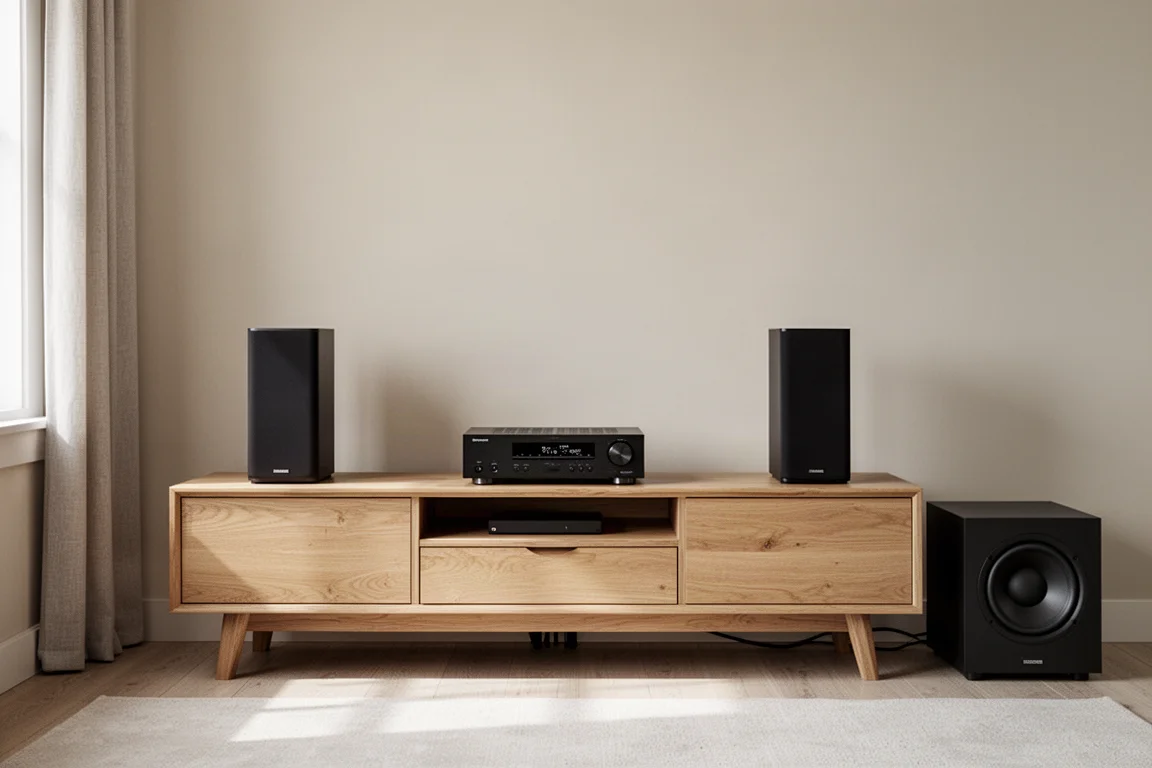
Budget accordingly. The speakers plus a modest AVR and a subwoofer make a more satisfying system than the speakers alone driven hard, and the subwoofer crossover is the single setting most worth getting right.
Conclusion
The Sony SS-CS5 Version 2 is a genuine improvement on a well-known budget speaker. Extra cabinet bracing, a crossover Sony describes as upgraded and a smoother, more neutral presentation make it easy to recommend at around $250 per pair, provided you accept its output limits and pair it with a subwoofer. Listeners who want maximum detail for the money and are willing to use equalisation may still prefer the discounted original, but for most buyers starting fresh, Version 2 is the version to choose.
Product link
View more details for Sony SS-CS5 Version 2
This product is mentioned in the review. Check the specifications, options, and compatibility before buying.
View more details for Sony SS-CS5 Version 2Further reading
Related Reviews
Bookshelf Speakers
Acoustic Energy A100 Mark II Review: A Compact Standmount With an Expansive Soundstage
The Acoustic Energy A100 Mark II brings clarity, natural tonality and a wide soundstage to an entry-level standmount, with a few setup details worth knowing first.
Bookshelf Speakers
Acoustic Energy AE-100 Mark II Review: Compact Bookshelf Speakers With Standout Imaging
A compact British two-way bookshelf speaker with deep, layered imaging, fast bass, and a slight treble lift to weigh against a crowded $500 field.
Bookshelf Speakers
Acoustic Energy AE100 MK2 Review: Measured Performance and Four Alternatives
A close look at the Acoustic Energy AE100 MK2 bookshelf speaker, what its measured performance reveals, and four alternatives with different trade-offs.