Home Theater
Sony Bravia Projector 7 Review: XR Processing Comes to a More Attainable Laser Projector
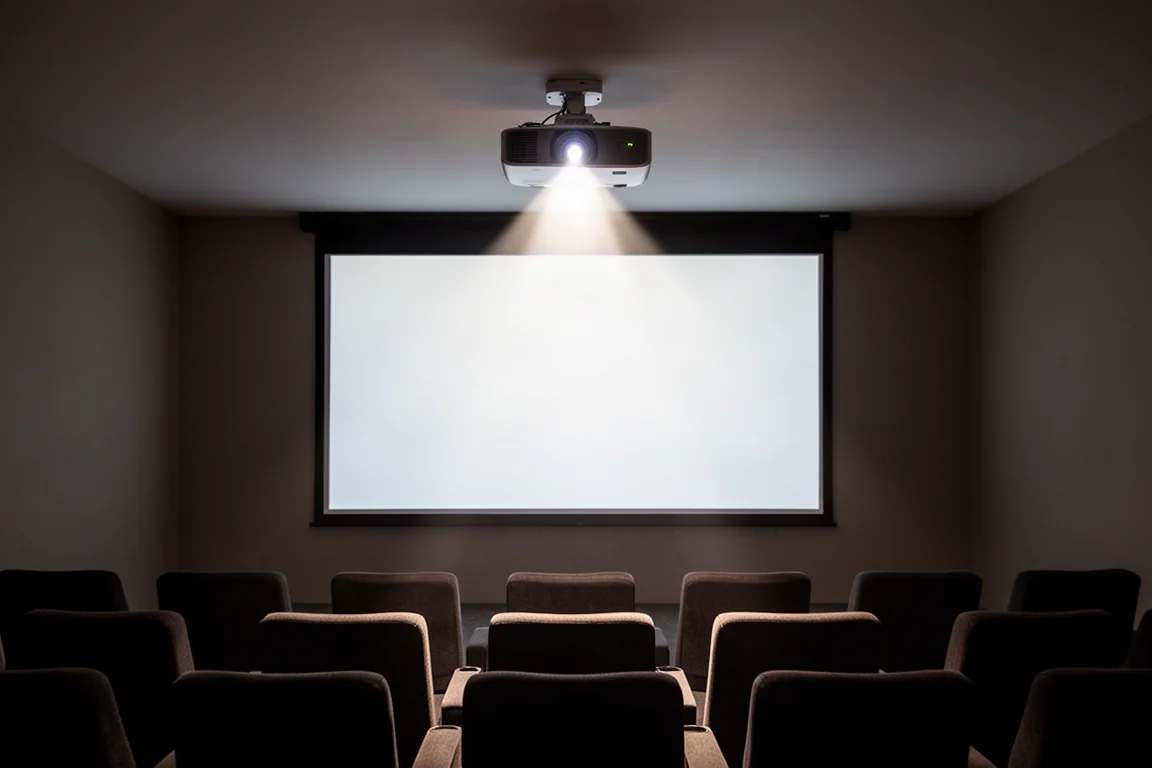
The Sony Bravia Projector 7 brings the XR cognitive processor, a 2,200-lumen laser light engine, HDMI 2.1 gaming support, and aspect ratio scaling to a more attainable price class.
Introduction
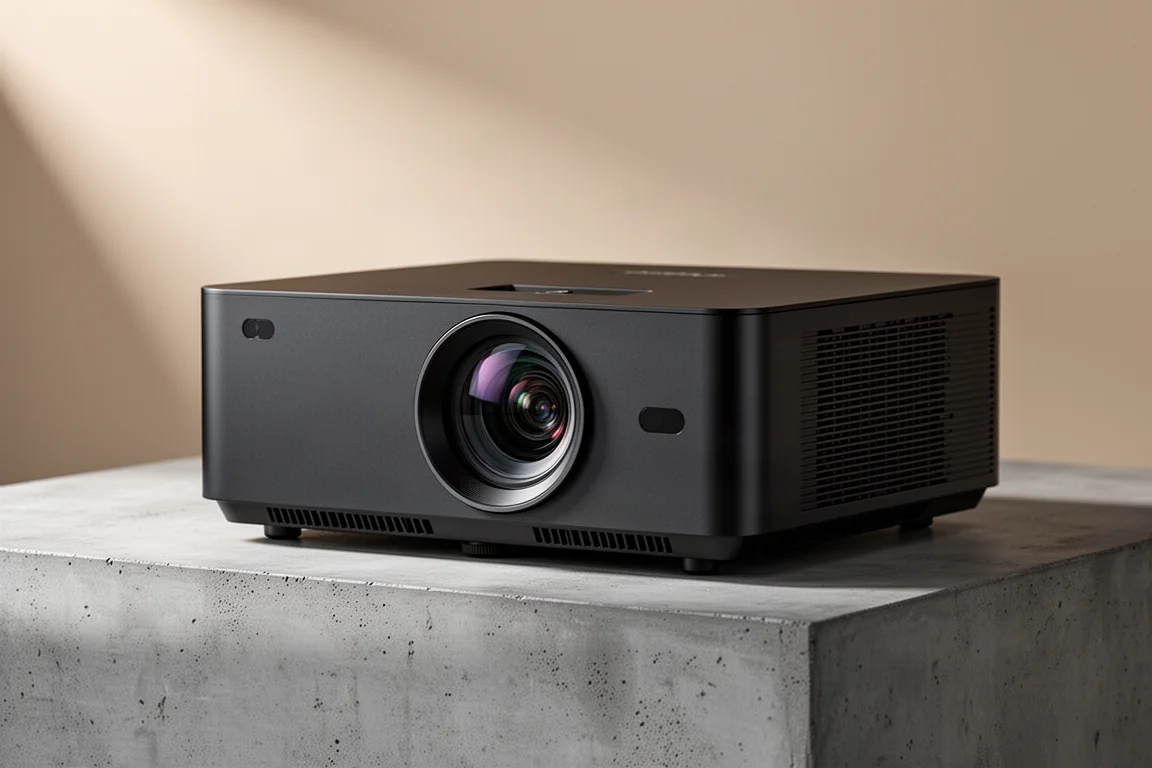
Sony’s Bravia Projector 7 is a 4K laser front projector built around the XR cognitive processor, the processing platform the company first introduced for its flat panel televisions in 2021 and later brought to its high-end projectors. The significance of this model lies in its position in the range: it is the most affordable Sony projector to include XR processing, and it pairs that processing with a 2,200-lumen laser light engine, HDMI 2.1 connectivity, and a new aspect ratio scaling feature for widescreen screens.
For a dedicated room with a medium to large 16:9 screen, that combination targets the two factors that shape everyday picture quality most: how skillfully HDR content is tone mapped, and how much brightness the projector retains across its throw range. This article covers what the Bravia Projector 7 does well, where it asks for compromises, and which buyers will get the most from it.
Who the Sony Bravia Projector 7 Is For
The Bravia Projector 7 sits between two clear alternatives. The previous XW5000 costs a few thousand less and remains a strong performer for the money, while the Bravia Projector 8 costs several thousand more and adds light output, a better lens, and motorized lens memory.
That makes the Bravia 7 the natural choice for viewers who want the best HDR processing available in this price class and who plan to use a 16:9 screen. The dynamic tone mapping behind the Pro Cinematic HDR system is the headline reason to choose it, and on a 16:9 screen it delivers a brighter, more detailed HDR image than the model below it.
Gamers and widescreen enthusiasts also have reasons to look here. The projector accepts 4K at 120 frames per second over HDMI 2.1, and its aspect ratio scaling lets a 2.35:1 screen handle both widescreen movies and 16:9 content without adding an external lens or video scaler.
Main Strengths
Three areas define what the Bravia Projector 7 brings to a home theater.
XR Cognitive Processing and Pro Cinematic HDR
The XR cognitive processor analyzes multiple elements in every frame, including color, contrast, clarity, motion, and the focal point of the image, and references a large library of video images to adjust the picture in real time. The practical result is a more lifelike image with fewer of the compromises that older projectors forced on HDR material.
HDR is where the difference is easiest to see. HDR content is mastered for displays capable of extremely high brightness, while most front projectors operate far below that range, which is why tone mapping matters so much. The Pro Cinematic HDR system built on the XR processor boosts highlights without clipping, keeping the image as bright as possible while preserving detail. Bright highlights hold their shape instead of washing out, and the contrast against darker areas of the frame stays convincing.
Sony’s XR Deep Black uses laser dimming and gain adjustments to deepen black levels, while Triluminos Pro continues to handle color accuracy with the processor refining the result. Clarity gets similar attention: cross analysis of individual objects reduces noise and motion blur, and dynamic frame analysis works across zones of the image to suppress compression noise while preserving the natural grain of film.
Upscaling matters just as much, since much of what people watch is still standard HD. The XR processor converts lower resolution signals to 4K with the clarity and detail the brand is known for, and it holds up well with moving subjects, keeping motion artifacts out of the picture.
Laser Light Engine and Lens Consistency
The laser light engine removes lamp maintenance from the ownership equation. The light source is rated at around 20,000 viewing hours, roughly equivalent to watching a two-hour movie every day for more than 27 years. Laser illumination also produces bright, vibrant images with colors that read naturally to the eye.
Lens quality is another Sony strength, and the Bravia Projector 7 holds its light output unusually well as the projector moves farther from the screen. The drop from the shortest to the longest throw distance is around 15%, compared with roughly 22 to 24% on other Sony models and as much as 40 to 48% on many projectors. For anyone placing the projector at the back of the room, that difference is significant.
Ownership details are equally friendly. The projector runs quietly, and the picture comes up in roughly 15 to 20 seconds, which is quick by projector standards.
Aspect Ratio Scaling for Widescreen Screens
The Bravia Projector 7 uses a manual zoom lens, which would normally rule out a 2.35:1 screen without an external lens or video scaler. Aspect ratio scaling solves that problem in software. Set the projector up on a 2.35 movie to fill a scope screen, then when you switch to 16:9 content, the projector digitally scales the image to fit the same screen instead of spilling over the top and bottom.
There is a trade-off. Measured against zooming the lens, as the Bravia Projector 8 and 9 can do with their motorized optics, aspect ratio scaling results in roughly 38% less light output. On a scope screen under 150 inches the projector still does an outstanding job with widescreen content, and viewers who mostly watch widescreen movies will rarely notice the difference.
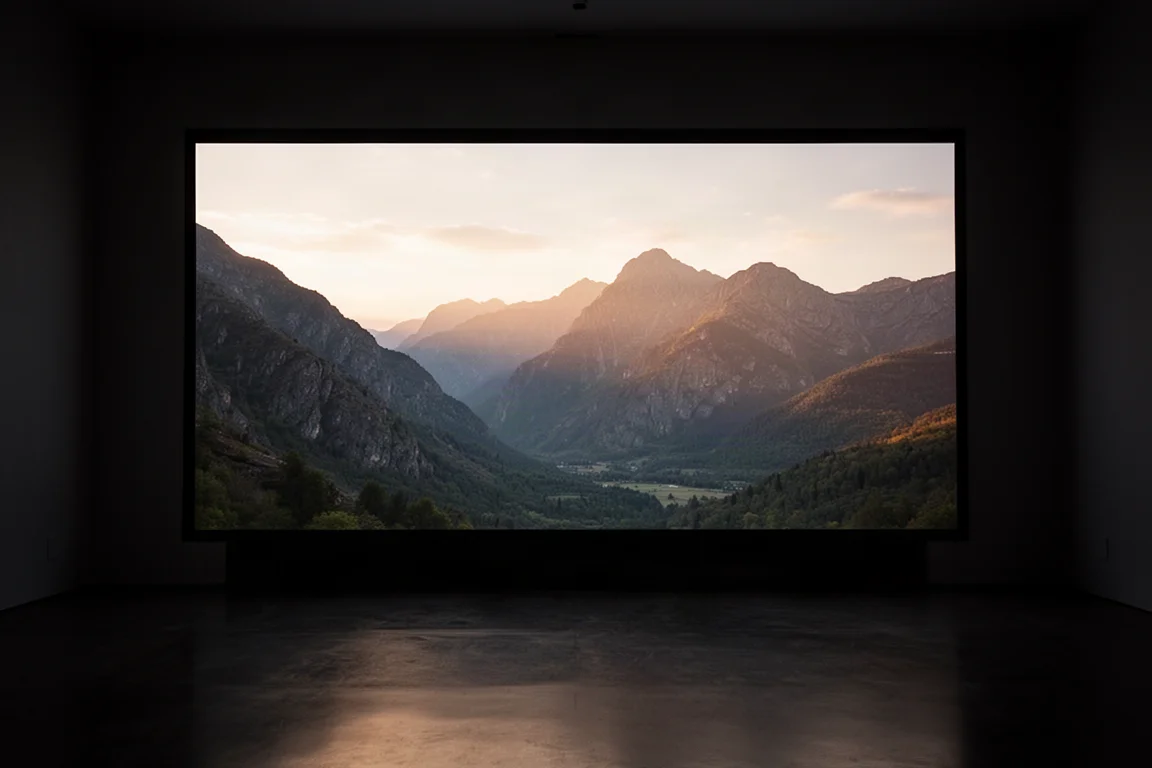
The feature works exactly as described, with no visible artifacts in the scaled image.
Gaming and Setup Flexibility
For gaming, the projector accepts up to 4K at 120 frames per second and also handles 4K at 48 frames per second, with HDMI 2.1 inputs. A new auto low latency mode reads the flag from a connected console and switches over automatically. Input lag is low for a projector: about 21 milliseconds at 4K 60, and about 12 milliseconds at both 4K 120 and 1080p 120.
Setup has become more forgiving as well. Advanced keystone correction with digital corner correction lets you adjust each corner of the image individually rather than moving the whole frame, and XR Clear Image works to keep as much clarity as possible. That helps in rooms where the projector has to sit flush against the ceiling with the screen mounted lower. Lens shift covers roughly plus or minus 71% vertically and plus or minus 25% horizontally, and improved blanking makes it easier to land the image precisely on the screen.
Things to Consider Before Buying
- Manual zoom lens: there is no motorized lens memory, so switching between aspect ratios relies on the digital scaling feature rather than lens presets.
- Aspect ratio scaling brightness: using it costs about 38% of light output compared with zooming a motorized lens.
- Brightness ceiling: the Bravia Projector 8 offers more light output, a better lens, and motorized lens memory for several thousand more.
- Setup geometry: ceiling mounting with the screen mounted below can require careful planning, and keeping the top of the lens level with the top of the screen remains the ideal arrangement.
- Calibration appetite: the projector arrives well calibrated, and it also offers deeper settings for color correction, color space, and gamma for those who want to fine-tune it themselves.
Buying Advice
For a 16:9 screen, the Bravia Projector 7 is well worth the step up from the XW5000. It adds the XR processor, HDMI 2.1, advanced keystone correction, and aspect ratio control, and it produces more light output than the previous model, all of which show up clearly with HDR content.
For a scope screen, the decision depends on screen size and viewing habits. Below 150 inches, the projector handles widescreen content beautifully, though 16:9 movies lose brightness when aspect ratio scaling is engaged. If your library is mostly widescreen, that compromise is easy to live with. If you want the brightest possible image for both 16:9 and widescreen content and the budget allows, the Bravia Projector 8 is the more capable choice.
Buyers building a higher performance system should also know that the projector responds well to an external video processor, which can push picture quality further than the projector manages on its own.
Conclusion
The Bravia Projector 7 brings Sony’s XR cognitive processing, a 2,200-lumen laser light engine, and flexible setup options to a more attainable position in the range. Its strongest arguments are the HDR tone mapping, light output that barely drops across the throw range, and aspect ratio scaling that makes a scope screen practical without extra hardware. For medium to large 16:9 screens, it deserves a place on a very short list.
Product link
View more details for Sony Bravia Projector 7
This product is mentioned in the review. Check the specifications, options, and compatibility before buying.
View more details for Sony Bravia Projector 7Further reading
Related Reviews
Home Theater
Anthem AVM 90 Review: A 15.4-Channel Flagship Preamp Processor
A close look at Anthem's flagship preamp processor, covering its dual ESS DAC architecture, 15.4-channel layout, ARC Genesis calibration and four independent subwoofer outputs.
Home Theater
Apple TV 4K With AirPods: A Best-Value Home Theater Setup
An Apple TV 4K paired with AirPods over Bluetooth makes a compact home theater setup for movies, spatial music and late-night viewing, and it can be assembled for as little as $300.
Home Theater
Arcam AVR15, AVR25, AVR35, and AVP45 Compared: Which AV Amplifier Fits Your System?
Four new Arcam home theater components share nine-channel amplification and Dirac Live, but differ in power, processing ceiling, and channel flexibility.