TV Reviews
Sony 90L Review: An 85-Inch Full Array LED TV That Rewards a Proper Calibration
The Sony 90L is an 85-inch full array LED TV around $2,000. Here is what a professional ISF calibration reveals about its brightness, dynamic range, and picture potential.
Introduction
The Sony 90L is an 85-inch full array LED television priced around $2,000, and it sits in a spot that makes it genuinely attainable for a lot of people: not a flagship, not a stripped-down budget set, but a very large screen that delivers a great deal for the money. When a display like this is set up well, the gap between it and far more expensive models narrows considerably.
Out of the box, the 90L is already a capable television. Sony builds professional monitors and many of the cameras used to shoot films, and that heritage shows in how predictable and cooperative the picture controls are. Even a careful, by-eye setup without test patterns produced a picture that was broadly in the right territory.
What makes the 90L interesting is what happens when you go further than the factory defaults. A professional ISF calibration, using a light meter and measurement software, extracted noticeably more dynamic range, more natural skin tones, and deeper black levels than the initial setup managed. That gap is the story of this television.
Who This Product Is For
This is a television for people who want a very large screen without paying flagship money. At 85 inches and roughly $2,000, the 90L is aimed at living rooms where the display is the centerpiece and where the room is not a dedicated, fully light-controlled theater.
That last point matters. The 90L can be driven to around 300 nits for SDR content, which is about three times the 100-nit studio reference, and it measured a little over 1,300 nits for HDR. In practice that means it holds up in a bright room with windows open and lights on, while still having enough range to look convincing after dark.
It also suits viewers who watch a mix of content: streaming drama in SDR, Dolby Vision and HDR films, and the occasional game. Because everything runs in a single custom picture mode, there is no juggling between presets depending on what is playing.
What a Professional Calibration Changed
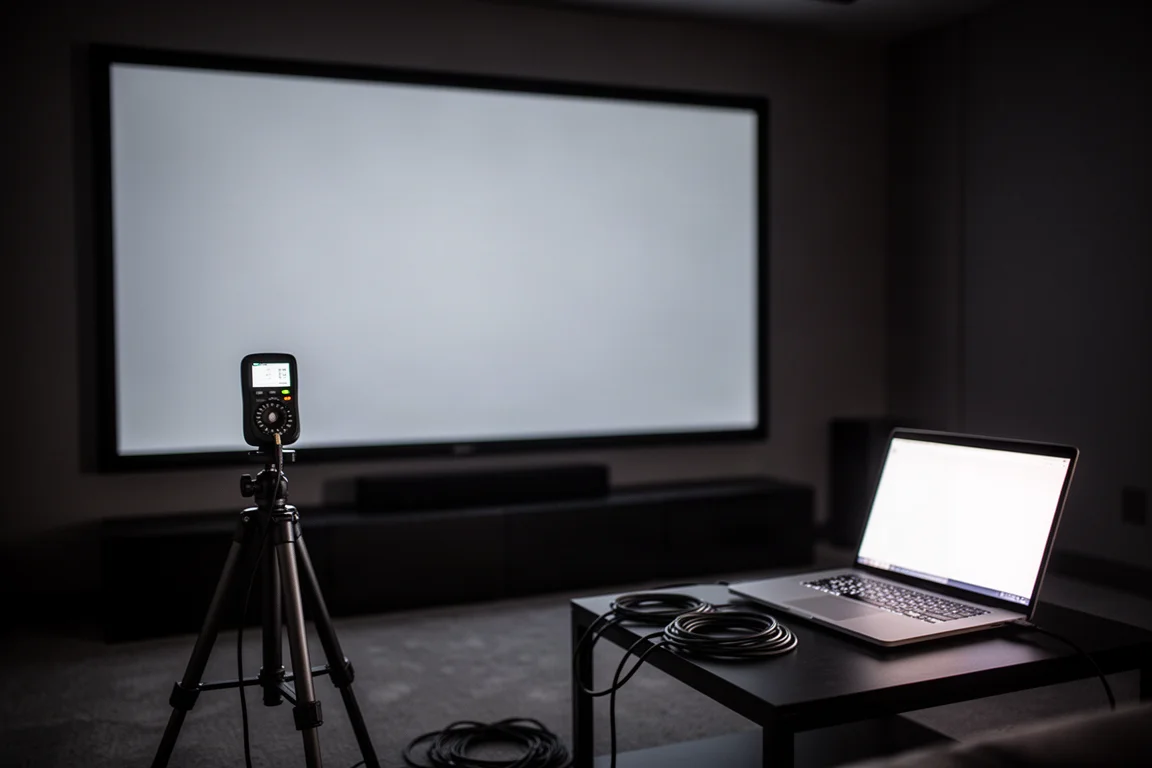
A professional ISF calibration is more than a preference check. It starts with test patterns to establish the main picture controls against the room and the seating position, then moves to measurement: a light meter reads the screen while the calibrator watches the results on a laptop and adjusts, repeating the cycle until the targets are met. White balance, gamma, and color management are all part of it, and that measurement loop is what separates a calibration from a guess.
On the 90L, the contrast control had been set around 86 by eye and ended up closer to 93 or 95. That single change added a meaningful amount of dynamic range without clipping the highlight detail in the test patterns. Brightness was left at a setting of 15 to land near 300 nits for SDR, and the control goes as high as 50 if a brighter room or a darker scene calls for more.
A calibration session on this set runs in the region of two hours: roughly 30 to 45 minutes of profiling and measurement to understand what the display is doing, then 15 to 20 minutes of correction, followed by a final round of verification. The 90L cooperates throughout, which is why the process lands closer to the shorter end than the longer one.
The only ongoing adjustment worth knowing about is brightness. If you raise it for a bright afternoon, note where it was and put it back afterward, otherwise a dark room will look washed out.
Main Strengths
The 90L’s advantages are not limited to raw brightness. They show up in how easy it is to work with and how much of the image survives once the settings are correct.
Dynamic Range and Brightness
The most tangible gain from calibration is dynamic range. Raising contrast from 86 to the low 90s widened the distance between the darkest and brightest parts of the image without losing highlight information. Combined with more than 1,300 nits for HDR, the 90L has enough headroom to make high dynamic range content look lively rather than flat.
For HDR, anything above 1,000 nits is where the format starts to feel genuinely rewarding, and the 90L clears that mark. Higher-end sets are beginning to reach two and three thousand nits, but not much content is mastered that high yet, so the practical advantage of those panels is smaller than the numbers suggest.
A Single Picture Mode for Everything
One of the more convenient aspects of the 90L is that Dolby Vision, HDR, and SDR content all run through the same custom picture mode. There is no switching presets when the content type changes, and no need to remember which mode the television was left in. Once the set is dialed in, it stays dialed in.
Skin Tones, Black Levels, and Detail
The clearest before-and-after difference is skin tone accuracy. A paused frame that had looked oversaturated and unnaturally rosy before calibration looked correct afterward, because people are extremely sensitive to skin tones and notice immediately when they are off. Getting them right is one of the strongest arguments for measuring rather than eyeballing.
Black levels benefit too. Detail that had been hidden in shadows became visible, and familiar shows in SDR revealed more information in the frame than expected, to the point where standard dynamic range content could be mistaken for HDR. Shadow detail in dark, moody material is where this shows up most.
Things to Consider Before Buying
A professional calibration is a paid service, and it is worth being realistic about that. The equipment, the measurement time, and the expertise all carry a cost, and for a television at this price the calibration is a meaningful addition to the total. The counterargument is straightforward: without it, you are not seeing what the display can actually do.
Copying someone else’s calibration settings is not a reliable shortcut. White balance in particular depends on the individual panel, the room, and the seating position. Broad settings such as sharpness tend to carry over, but the finer adjustments do not, and a calibration report is tied to the specific unit and environment it was measured in.
Gamers should also plan around latency. Game mode exists to minimize input lag, and the processing involved in picture adjustments can work against that. On a set where game mode can be adjusted, the calibrated settings can be carried over, but motion processing and energy-saving features should stay off. If game mode locks its controls, the two goals simply have to be balanced.
Finally, the 90L is a large television, and an 85-inch screen makes its own demands on a room: seating distance, wall space, and the amount of ambient light you are willing to live with.
Buying Advice
At around $2,000 for 85 inches, and occasionally less when it is on sale, the Sony 90L is a strong value in the large-screen category. The panel measures well, the controls behave predictably, and the picture improves substantially once the factory defaults are replaced with a properly measured setup.
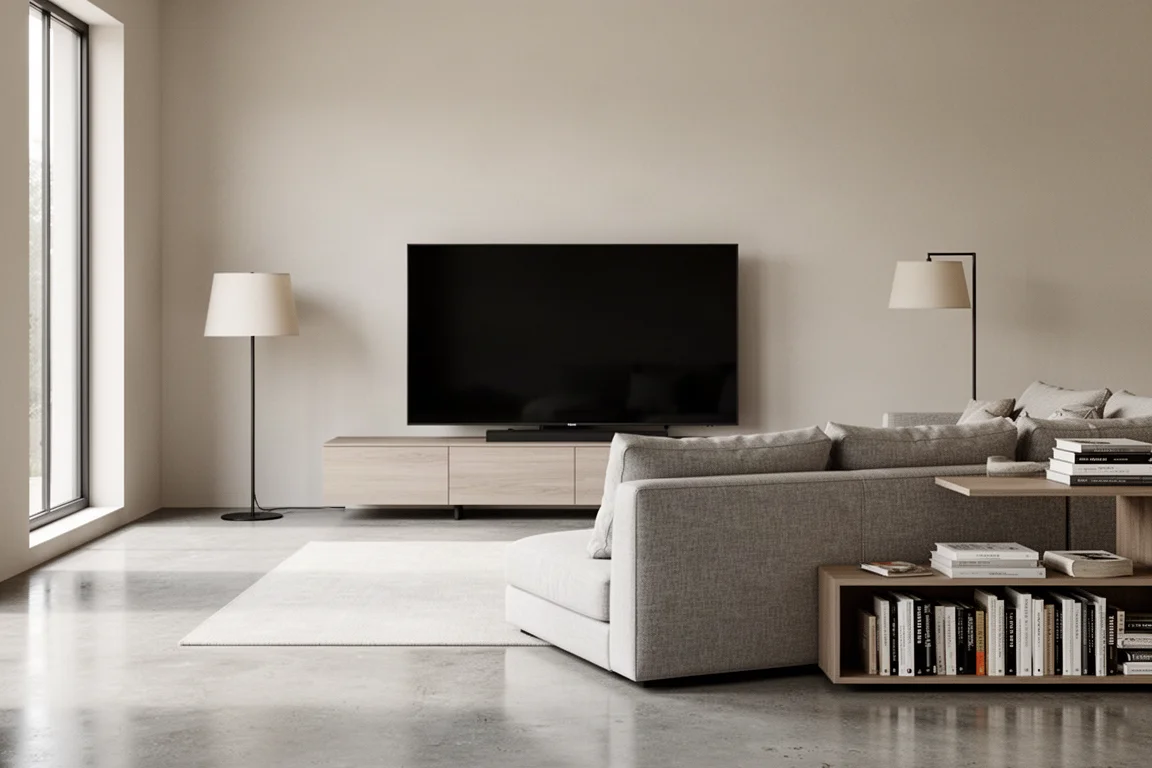
If you are buying this television, budget for the setup as well as the screen. Start with the basic out-of-the-box adjustments that clear away the default processing, then consider a professional calibration if you want the last significant percentage of performance. A good calibration report documents the before and after measurements along with every setting, which is invaluable if the television is ever reset. Ask for that documentation, keep it somewhere safe, and treat the calibrated profile as something worth preserving.
The best way to judge the result is to rewatch material you know well. Familiar shows and films are where changes in shadow detail, landscape color, and skin tone become obvious, and that is the real test of whether the investment paid off.
Conclusion
The Sony 90L is a mid-priced 85-inch full array LED television that performs above its price bracket once it is set up properly. It arrives in good shape, responds well to adjustment, and delivers more than 1,300 nits for HDR along with enough SDR brightness to handle a bright living room. The measurable improvements in dynamic range, skin tones, and black level detail make a convincing case for taking it beyond the factory settings. For anyone who wants a very large screen without flagship pricing, it is an easy television to recommend.
Product link
View more details for Sony 90L
This product is mentioned in the review. Check the specifications, options, and compatibility before buying.
View more details for Sony 90LFurther reading
Related Reviews
TV Reviews
AWOL 157-Inch MicroLED TV Review: Big Screen, Big Questions
A hands-on look at the AWOL 157-inch MicroLED TV, covering the technology, installation, and real-world performance of this massive display.
Room Correction
Anthem ARC Genesis Beta Review: Smarter Speaker and Subwoofer Integration
A practical look at Anthem's ARC Genesis beta, including phase-aware speaker calibration, all-pass subwoofer blending, and the settings worth adjusting.
AV Processors
Anthem AVM 90 8K Review: A Reference-Grade AV Processor for Music and Movies
A close look at the Anthem AVM 90 8K AV processor: measured performance, two-channel and immersive listening notes, bass control, and what to weigh before buying.