TV Reviews
AWOL 157-Inch MicroLED TV Review: Big Screen, Big Questions
A hands-on look at the AWOL 157-inch MicroLED TV, covering the technology, installation, and real-world performance of this massive display.
Introduction
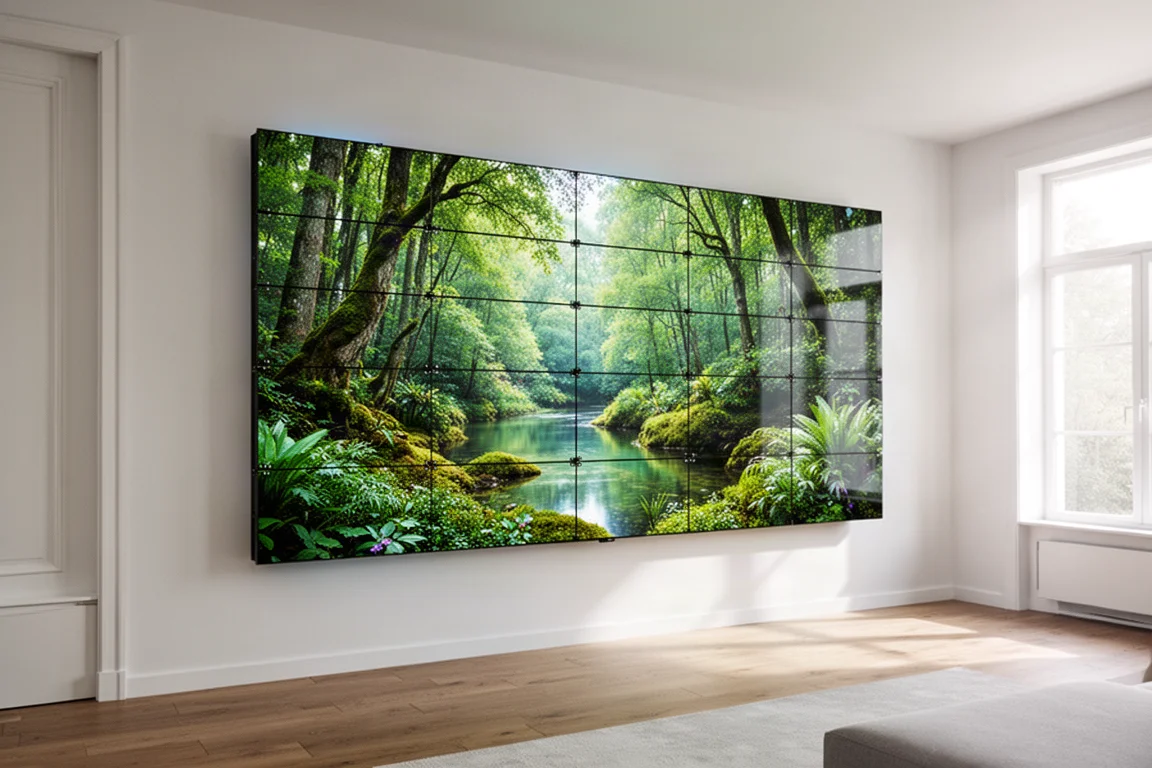
MicroLED has long been touted as the ultimate display technology for massive screens, but real-world testing has been surprisingly scarce. So, what happens when you actually buy one? This review covers the AWOL 157-inch MicroLED TV, a 0.9 pixel pitch screen that promises a big picture at a relatively smaller price. We break down the technology, the installation process, and the actual measured performance to see if it lives up to the hype.
Understanding MicroLED Technology
MicroLED is fundamentally different from other direct-view TV technologies. Unlike LCD TVs, which use a backlight shining through a color panel, or OLEDs, which use organic compounds that can suffer from burn-in, MicroLED uses inorganic LEDs that are self-emissive. This means each pixel creates its own light, eliminating the need for a backlight and the blooming effect that can plague LCDs. It also means no burn-in risk, a major advantage over OLED.
The AWOL screen is built from 27-inch diagonal cabinets, each housing a power supply and controller board. The screen itself is made up of magnetic LED panels, with eight panels per cabinet. Each pixel is made of separate red, green, and blue LEDs, totaling 86,400 LEDs per panel and just under 700,000 LEDs per cabinet. This modular design is a huge logistical advantage, as the screen can be transported and installed piece by piece rather than maneuvering a massive single-unit TV.
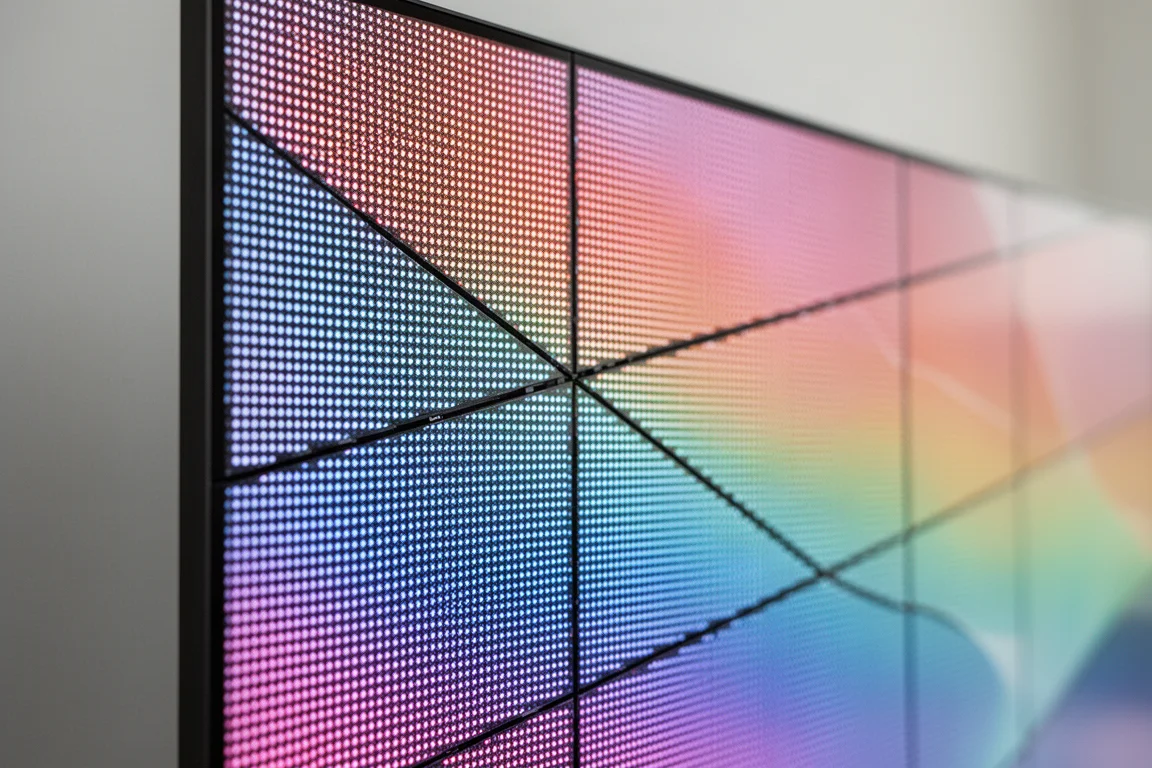
The modularity also means the screen is made up of many small squares that need to be perfectly aligned. While the seams are not visible from a normal seating position of about 10 feet, getting them perfectly flush is a task. The pixel pitch of 0.9mm means that individual pixels are indistinguishable from about 9 feet away, making resolution a non-issue in practice.
Installation and Setup
Installing the AWOL MicroLED is not like bringing home a TV from a store. It requires significant preparation. The 157-inch screen needs three dedicated power drops on a 15-amp circuit and 18 Cat 6 Ethernet drops run to a separate room for the controller. The wall must be prepared with custom-cut plywood to provide secure mounting points for each cabinet.
Once the cabinets are mounted and connected, the magnetic LED panels are installed and leveled. This is the most time-consuming part, and depending on your perfectionism, you could spend days making micro-adjustments. Software seam correction can help with minor imperfections. The final screen sits about 2 inches off the wall.
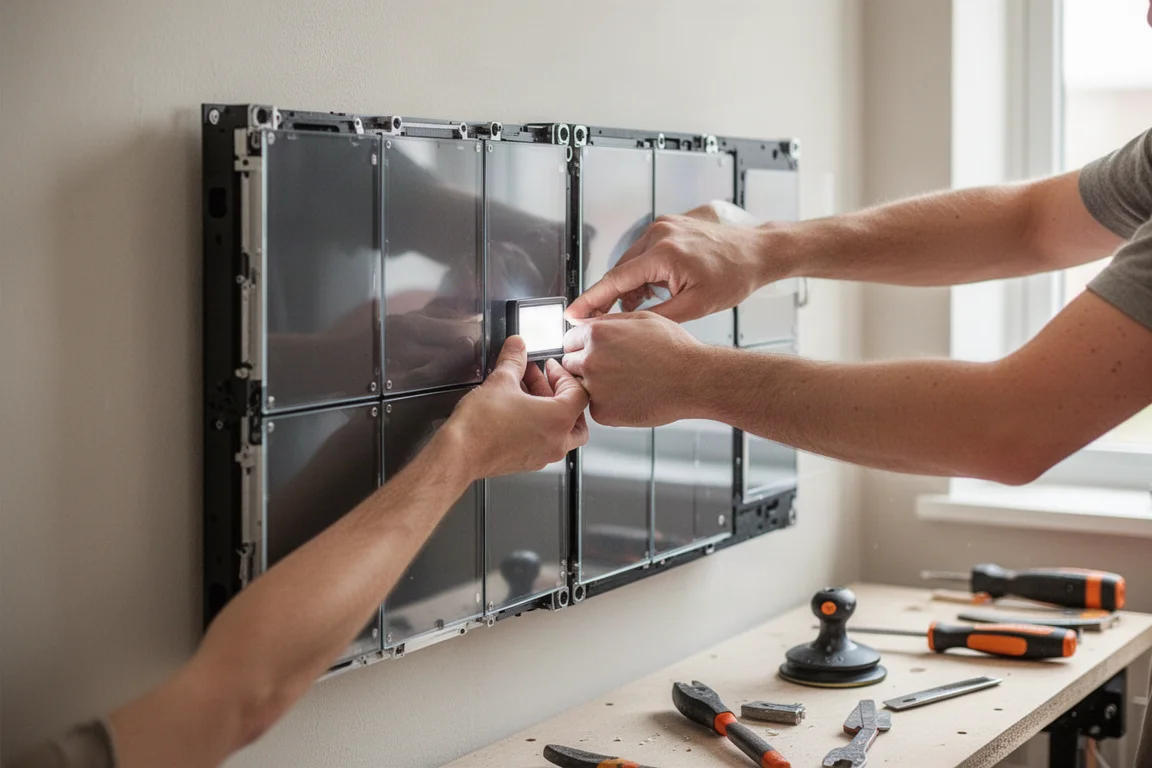
After the physical installation, the controller must be configured to map the location of each panel. This is where the experience diverges from a typical TV. The AWOL is more like a computer monitor than a TV. It has no remote, speakers, smart apps, or even a power button. All functionality comes from the LED processor, made by Novastar. To get normal TV features, you need to add an HD Fury Vroom for advanced video and audio formats, a universal remote, and smart relays for power, adding roughly $1,000 to the total cost.
Real-World Performance
The Novastar controller is powerful in terms of scaling and layering, allowing up to four different inputs on the screen at once in any arrangement. This enables custom setups like a multiview with four equal 16:9 screens or a single large 4K input with three 1080p inputs. These layouts can be saved as presets and recalled via a web API, which can be integrated with home automation systems.
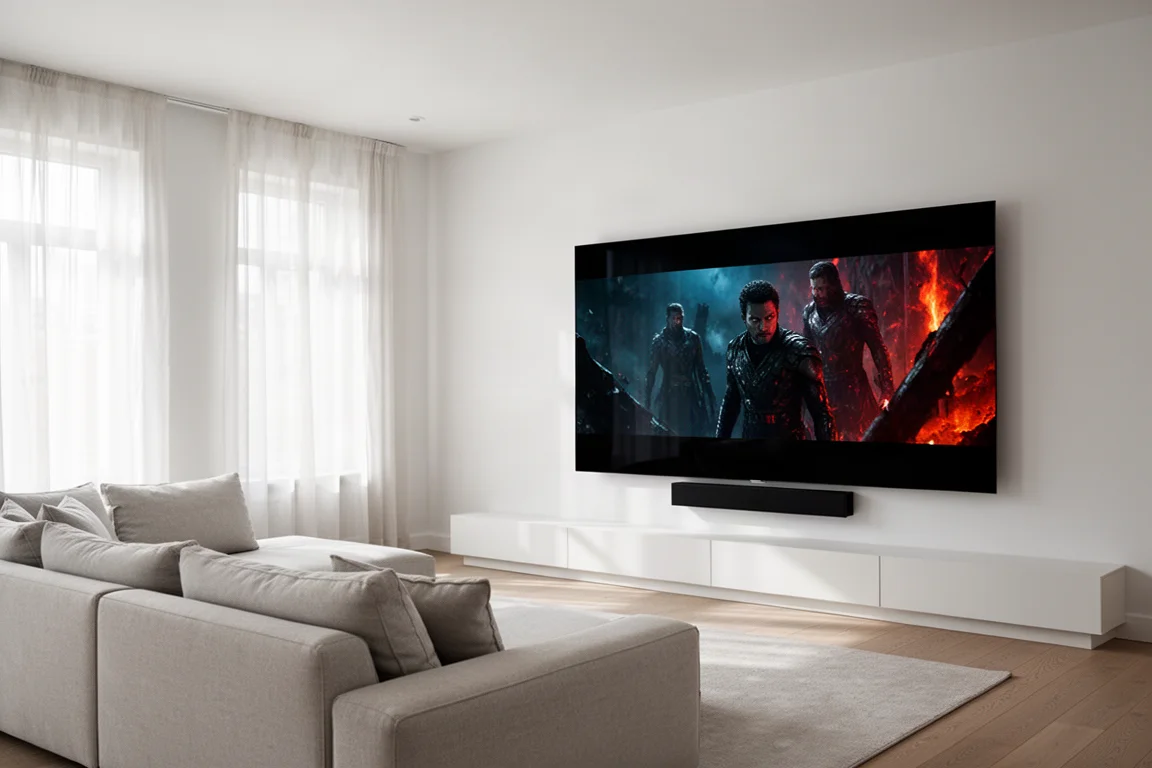
In terms of picture quality, the AWOL is impressive. Measured peak brightness comes in between 815 and 820 nits on a 25% window, and it gets brighter, up to 840 nits, on a full-screen pattern. This is consistent regardless of window size, thanks to the separate power supply for each cabinet. While AWOL lists peak brightness at 1,200 nits with an overdrive setting, the default 800 nits is already an insane amount of brightness that looks great even in a bright room. At night, most users will likely turn it down to around 30% brightness, which is about 250 nits.
Brightness, Contrast, and Color
The contrast ratio is essentially infinite, as the self-emissive technology allows for a minimum brightness of zero. This is similar to OLED, but MicroLED handles near-black values slightly better. The bright-room performance is where the AWOL truly shines. With a black floor of just 6.6 nits in a brightly lit room, it is basically unbeatable compared to projectors, which would need an impossibly bright projector and a special screen to match.
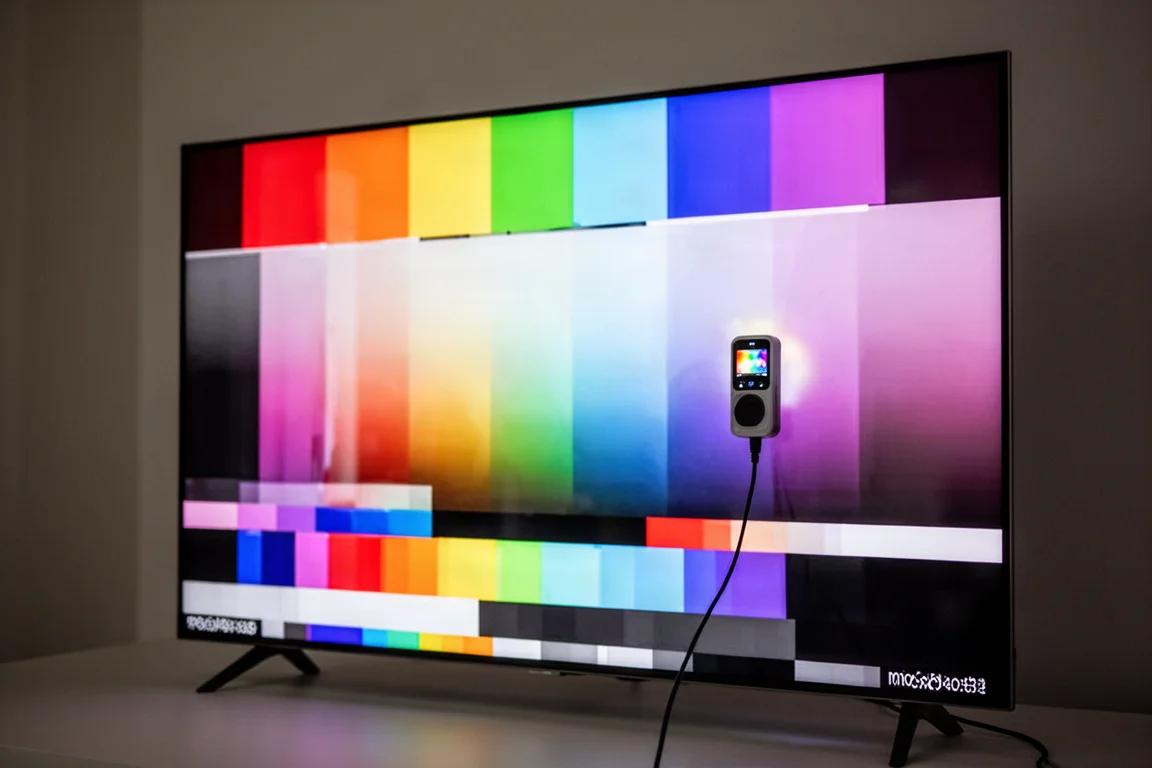
Color performance is also excellent. The AWOL covers just under 89% of the BT.2020 HDR color space and 99% of the P3 color space, which is what most HDR content is mastered in. Color accuracy was superb, with the color temperature tracking perfectly without any calibration. The spectral distribution of the LEDs is wider than a triple laser projector, which can help prevent metamerism.
Gaming and Power Draw
Gaming input lag is a mixed bag. The minimum system-wide input lag is around 34 milliseconds, but this requires a mode that outputs the resolution 1:1 with no scaling. For most setups, scaling is required, which brings the input lag to 52.2 milliseconds. The low input lag setting on the controller causes glitching, so the realistic input lag is around 78 milliseconds. This is acceptable for casual gaming but limits the types of games you can play.
Power draw is surprisingly high. At 100% brightness, the screen pulls between 900 and 1,200 watts, with the controller using around 72 watts. This means about 1 kilowatt-hour of consumption per hour of viewing. Reducing brightness to 30% has almost no effect, with the panels still drawing 970 watts. Even in standby with a black screen, the panels draw a steady 680 watts. This suggests the LEDs themselves only draw 300 to 500 watts, with the rest being power supply losses.
Buying Advice
The AWOL 157-inch MicroLED TV is a remarkable piece of technology with unbelievable performance. Its brightness, contrast, and color are something you have to see to believe. It is the only way to get a direct-view screen this large, and it outperforms projectors in bright rooms by a wide margin. However, it comes with significant caveats.
The price, between $50,000 and $55,000, is a major investment, though it is significantly lower than the $200,000 to $300,000 options from other brands. The installation is complex and requires professional-level preparation. The lack of TV features means you will need to add extra equipment and be comfortable with a more technical setup. The power draw is high, and the input lag is not ideal for serious gaming.
This TV is best for enthusiasts with a dedicated space, a large budget, and a willingness to embrace the modular, commercial-grade nature of the product. If you are looking for a simple plug-and-play TV, this is not it. But if you want the ultimate in bright-room performance and screen size, the AWOL is in a class of its own.
Conclusion
The AWOL 157-inch MicroLED TV delivers on its promise of a massive, stunning picture. The technology is impressive, and the real-world performance is outstanding, especially in bright rooms. However, it is a product for a specific type of buyer: one with deep pockets, technical aptitude, and a space that can accommodate its size and installation requirements. For those who can manage it, the experience is truly unlike anything else available today.
Product link
View more details for AWOL 157-inch MicroLED TV
This product is mentioned in the review. Check the specifications, options, and compatibility before buying.
View more details for AWOL 157-inch MicroLED TVFurther reading
Related Reviews
Projectors
BenQ GP520 4K Projector Review: Premium Home Theater Performance
A comprehensive look at BenQ's flagship GP520 4K projector, covering its exceptional picture quality, smart features, 3D capability, and premium pricing.

Projectors
Best 4K Projectors 2026: Six Standard Throw Models Compared
Six highly anticipated standard throw 4K projectors compared across brightness, contrast, color accuracy, gaming performance, and value.

Projectors
Best Budget Projectors 2026: Top Picks From $99 to $320
We tested 15 popular budget projectors between $100 and $500 to find the best value for home theater, gaming, and everyday viewing.