Wireless Headphones
Sony 1000X The Collection Review: Is the $650 Tenth Anniversary Model Worth It Over the XM6?
A close look at Sony's $650 1000X The Collection, what its tenth anniversary build and retuned drivers actually deliver, and when the XM6 remains the smarter buy.
Introduction
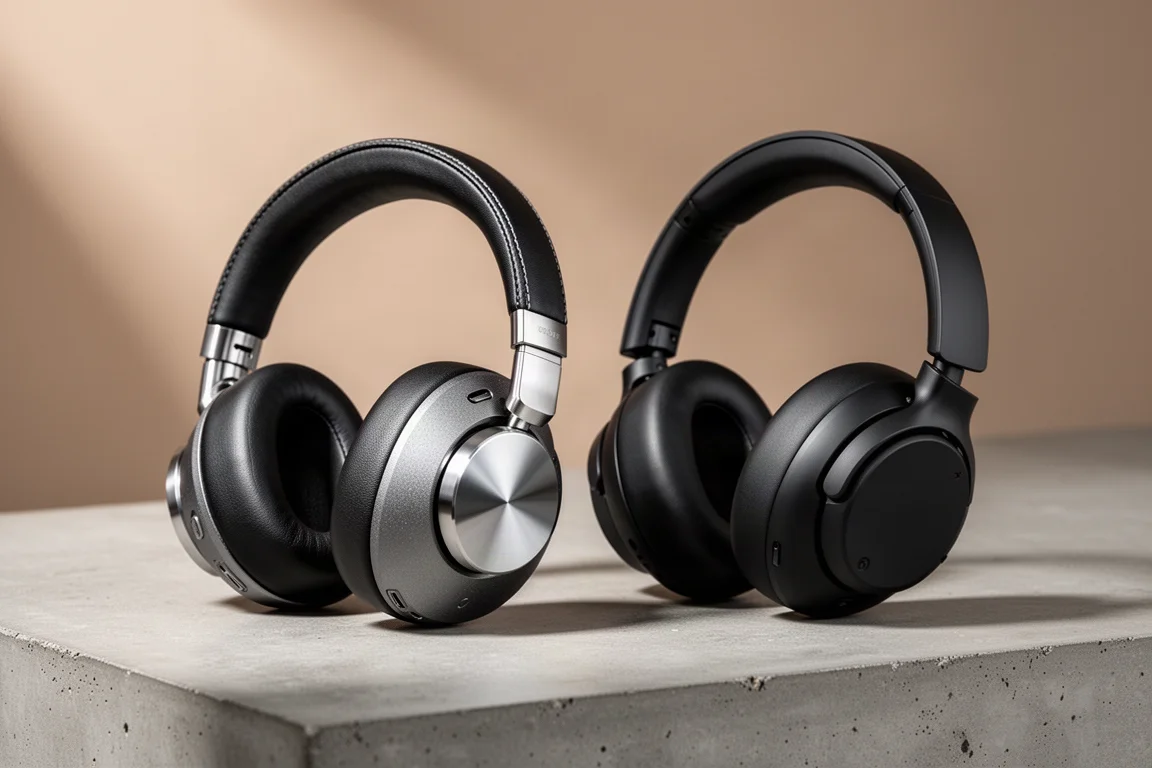
Sony’s 1000X The Collection has arrived at $650, roughly $200 more than the XM6, which is still one of the best wireless headphones you can buy right now. The obvious question is what that extra $200 actually buys.
The short answer is that this is not the XM7 and it is not a cosmetic reskin. The X in the name is the Roman numeral for ten, and this is a tenth anniversary product built without the design budget constraints Sony has acknowledged were in place for the XM6. That context explains almost every decision here, from the metal hardware to the hand-finished ear cups to the retuned drivers.
This review covers what is genuinely new, where the XM6 still holds a clear advantage, and the settings inside Sony’s app that make the biggest difference once you are wearing them.
Design, Materials, and Comfort
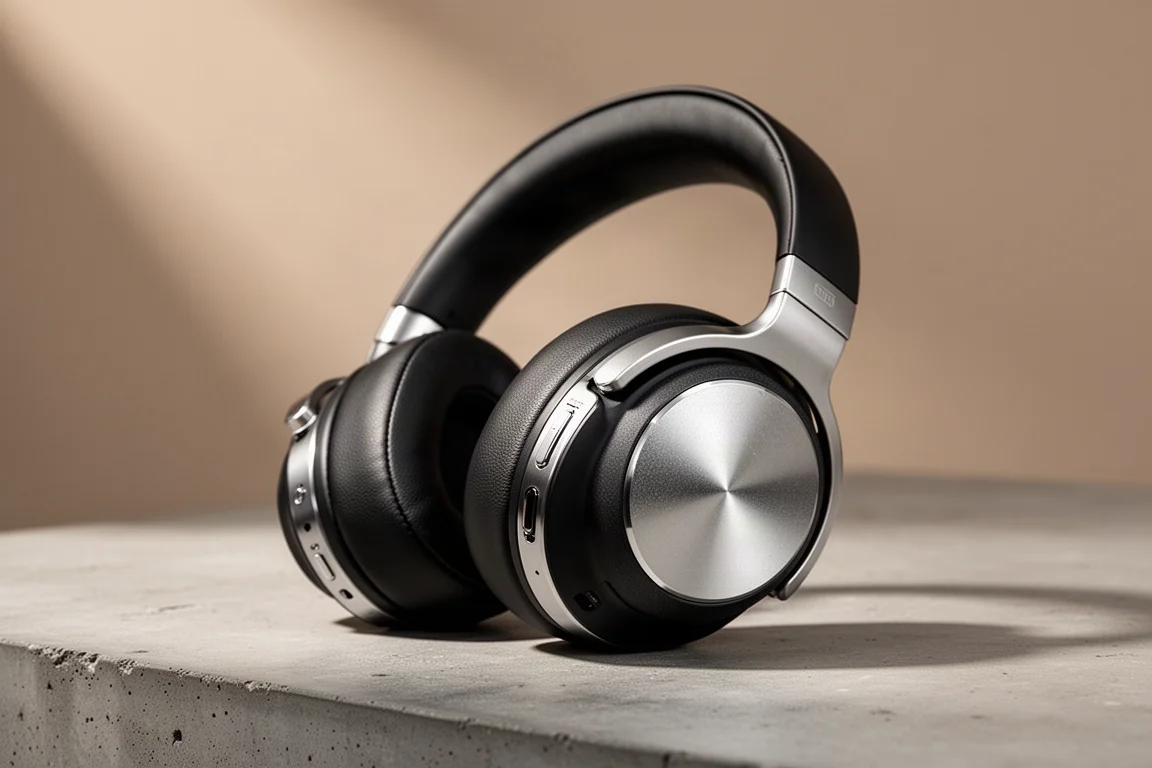
The XM6 is plastic. Very good plastic, but plastic. The 1000X The Collection is different the moment you pick it up: stainless steel sliders, stainless steel around every button and port, and an outer surface wrapped in oil-resistant vegan leather. The logo on each ear cup is mirror polished against a sandblasted matte background that resists fingerprints, and each one is finished individually by hand, a detail Sony says no machine can replicate.
The ear cups are about 5 mm slimmer than the XM6, with more space carved out inside so your ear sits within the cup rather than pressing against the driver. The angled internal design keeps pressure off the outer ear. The headband is wider, the padding is roughly 40 percent thicker, and clamping force is lighter than on the XM6. The result is the most comfortable Sony headphone we have worn.
The trade-offs are weight and folding. At 320 g the 1000X The Collection is noticeably heavier than the 253 g XM6. Sitting at a desk that difference mostly disappears, but at the gym or on a run it adds up, and that is where the XM6 has a real advantage. This model also does not fold, because Sony chose metal hinges over plastic ones for strength and longevity. The included case partly offsets that: it is compact, has a built-in handle, and uses the same magnetic clasp as the XM6 case.
Sound Quality and Tuning
Sony redesigned the driver and upgraded the circuit board for this model, then tuned the sound from the ground up with mastering engineers from Sterling Sound, Coast Mastering, and Battery Studios across multiple rounds of feedback. The stated goal was faithful reproduction: a wide soundstage, clear separation between instruments and vocals, and rich bass that does not crowd the rest of the mix.
The result is more spacious and more detailed than the XM6. You hear more of what is actually in the recording. The XM6 counters with a punchier, more forward presentation that is genuinely fun to listen to, while the 1000X The Collection is the more accurate and more revealing of the two.

Which one suits you comes down to what you want from a headphone. If you prefer a detailed, analytical presentation, the 1000X The Collection delivers it. If you want an energetic, bass-forward sound for casual listening or training sessions, the XM6 may be enough.
Noise Cancelling, Transparency, and Call Controls
The noise cancelling hardware is essentially identical to the XM6: the same processor and the same 12 microphone array. In a direct back-and-forth comparison, the 1000X The Collection sits very slightly behind the XM6 at suppressing low frequency noise. The lighter clamping force that makes it so comfortable also means a marginally less airtight fit, and passive isolation is the foundation the active system builds on. Both remain excellent at noise cancelling, and the 1000X The Collection sounds noticeably better with ANC switched off in quiet environments.
Transparency mode is on par with the XM6, perhaps a touch better. Covering the right ear cup with a hand pauses the music and activates transparency so you can talk to someone without taking the headphones off; move your hand away and everything returns to the previous state. A separate voice passthrough setting in the ambient sound control filters voices in while suppressing other background noise, which is more useful than full transparency in an open office or on public transport.
Call handling is simple. Double pressing the NC/AMB button mutes the microphone, and double pressing again unmutes, so you never have to reach for your phone. That button can be reassigned in the app. Head gesture control is off by default but worth enabling: nod to accept an incoming call, shake your head to reject it.
App Settings Worth Changing
Sony’s Sound Connect app hides several settings that materially change how these headphones sound, and the most important one is easy to misread. In the equalizer, the preset labelled Off is not a bypass. It is the professionally tuned signature from the mastering engineer collaboration, and it is the intended baseline to start from.
The app can also build a custom EQ profile in about two minutes by playing short sound samples and asking which you prefer. That gives you a starting point matched to your own ears rather than a generic preset.

The listening mode button on the left ear cup cycles through the 360 upmix modes, and by default it steps through all three plus standard. In the app you can uncheck the modes you never use so the button only cycles through what you actually want. One caveat: the upmix modes disable both the equalizer and DSEE Ultimate at the same time. If you have dialled in an EQ or want DSEE Ultimate processing, stay in standard mode. Running spatial sound optimization in the 360 Reality Audio menu takes about a minute, measures the angle of the headphones on your head, and makes a noticeable difference to how the upmix modes land.
Battery, Connectivity, and Codec Support
Battery life is 24 hours with ANC on and 32 hours with it off, which is shorter than the XM6. For most daily listening 24 hours is plenty, but if you go days between charges the XM6 has the edge. Battery care in the app caps charging at 80 percent to protect long term battery health, trading a little runtime per charge for a longer service life.
This is the first Sony headphone with DSEE Ultimate, which replaces the XM6’s DSEE Extreme. Ultimate uses AI to upscale both the frequency range and the bit depth of the signal rather than one or the other, and it works on CD quality lossless audio as well as compressed streams, so every source benefits rather than just older files. Because it runs on the V3 processor inside the headphones, it stays active over the wired 3.5 mm connection even when the source device is off, something the XM6 cannot do.
Connectivity has two limitations worth knowing before you buy. LDAC and multipoint cannot run at the same time, so if you are connected to a laptop and a phone the codec drops to AAC. For full LDAC quality, connect to a single device and set priority on sound quality in the app. USB-C is used for charging only, since there is no USB-C audio here, so the wired 3.5 mm cable is the alternative path and the headphones must be powered on to use it. Bluetooth 6.0 brings Auracast support for public audio broadcasts in airports and gyms, and Android users get hands-free Google Gemini built in.
Sony XM6: The Value Alternative
The XM6 remains the better value in the lineup. It costs about $200 less, weighs 253 g, folds for easier packing, and delivers slightly stronger noise cancelling along with longer battery life. Its sound is punchier and more forward, which plenty of listeners find more fun than strictly accurate.
The plastic construction and thinner padding are the visible compromises, and the tuning is less revealing than the 1000X The Collection. For anyone who wants the core Sony noise cancelling experience for less, or who wears headphones while training, it is still an easy recommendation.

Buying Advice
The 1000X The Collection is the right choice if comfort, materials, and the most revealing sound Sony has put in a wireless headphone matter more to you than battery life or folding. The stainless steel hardware, hand-finished ear cups, and lighter clamping force make it feel like a product built without compromise, and the retuned drivers make the difference audible rather than cosmetic.
Choose the XM6 if you want more battery, slightly stronger noise cancelling, a folding design, and a more energetic sound for around $200 less.

Either way, a few settings decisions are worth making on day one. Start from the Off preset in the equalizer, run the custom EQ test to build a profile around your own hearing, and stay in standard listening mode if you rely on EQ or DSEE Ultimate. Turning on battery care and adaptive sound control rounds out the setup, and enabling head gesture control makes hands-free call handling genuinely useful.
Conclusion
At $650 the 1000X The Collection sits alongside premium competitors, and it earns its place with build quality, comfort, and a more accurate, more spacious sound than the XM6. It is not the model to buy if battery life, folding, or maximum noise cancelling matter most, because the XM6 covers those priorities for less. But if you want the most refined wireless headphone Sony has made, the extra $200 is not hard to justify.
Further reading
Related Reviews
Wireless Headphones
Best Wireless Over-Ear Headphones 2026: Five Top Picks for Different Listeners
Five wireless over-ear headphones that stood out in extended listening, with clear guidance on which one suits noise cancellation, musicality, detail, luxury, or pure sound quality.
Wireless Headphones
Bowers & Wilkins Px7 S2 Review: Refined Wireless Noise Cancelling
A detailed look at the Bowers & Wilkins Px7 S2, covering its redesigned build, comfort, app features, battery life, sound quality, and noise cancelling performance.
Wireless Headphones
Bowers & Wilkins Px8 vs Px7 S2: Which Wireless Headphone Is Worth It?
Two closely related over-ear headphones share the same app, controls and comfort padding. Here is what the Px8 adds for the extra spend, and when the Px7 S2 is the smarter buy.