Bookshelf Speakers
Sonus Faber Sonetto 2 G2 Review: A Voiced Speaker That Rewards Careful Setup
A compact Sonus Faber speaker with elevated treble, a recessed upper mid-range, and placement demands worth understanding before you buy.
Introduction
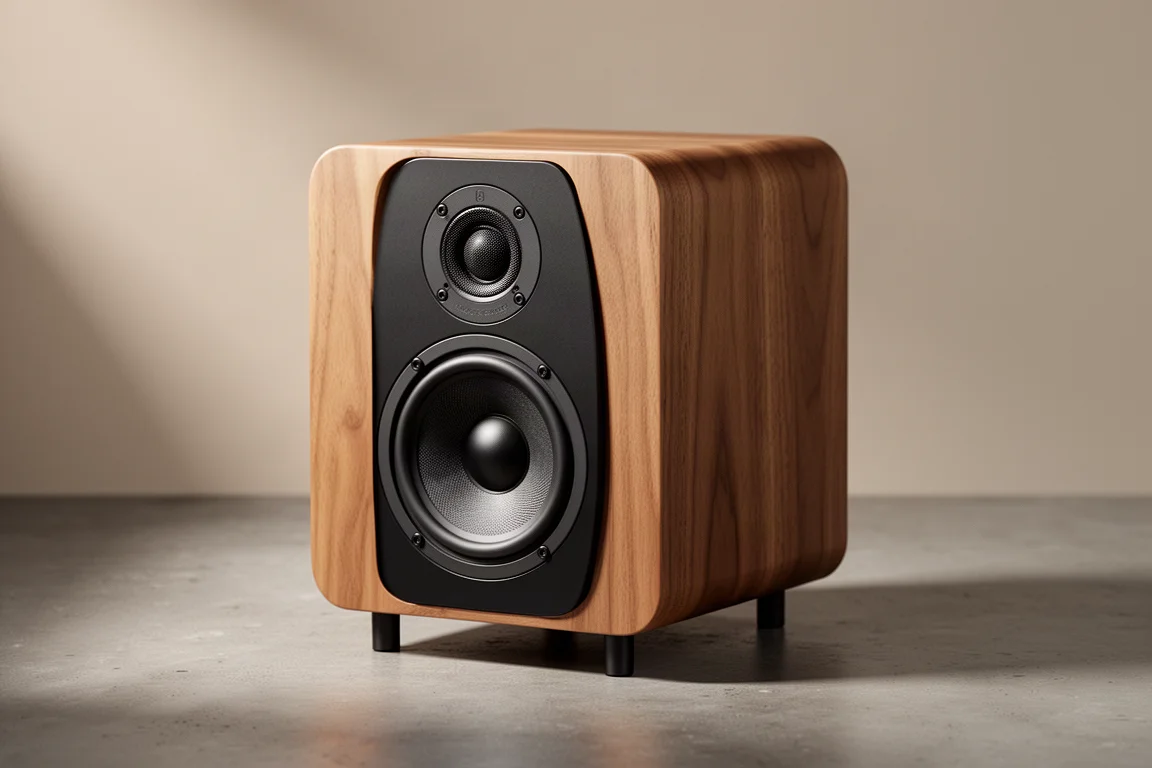
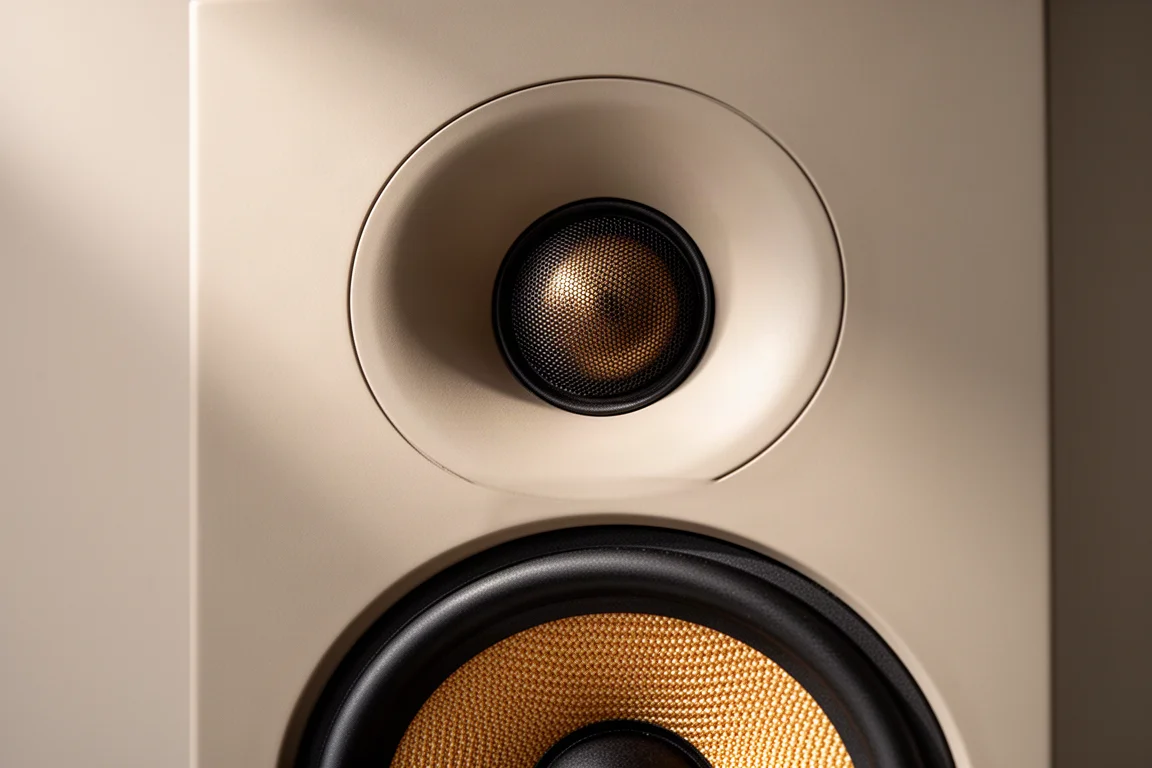
The Sonetto 2 G2 is a compact Sonus Faber speaker with a retail price of around $2,750, and it takes a clear position on voicing rather than chasing a flat, neutral balance. It pairs a 1 1/8-inch damped apex dome silk dome tweeter with a 6 1/2-inch cone woofer, and it sits on a base built from a mixture of concrete, aluminum, and steel that allows the cabinet to vent below rather than through the front or rear panel.
Materials and geometry like that shape how a speaker behaves near a wall and how much setup care it asks for in an ordinary living room. This guide covers the design, the measured behavior, the sound character, and the setup choices that make the biggest practical difference.
Who the Sonetto 2 G2 Is For
Voicing comes first, because it determines whether the rest of the speaker’s qualities matter to you. The Sonetto 2 G2 is not neutral. Its treble is boosted by roughly 1.5 to 2 dB in places, and its upper mid-range is slightly recessed. The result leans bright, and depending on the recording it can read as analytical, high resolution, or detailed, while the upper mid-range dip costs some attack and clarity.
If you enjoy a little extra sparkle at the top end and a slightly scooped upper mid-range, this speaker is built for that taste. If you prefer a linear, neutral response, the balance deserves careful thought before you commit. Listening research spanning decades, and still reflected in current testing, consistently shows that most listeners favor a flatter on-axis response with a gentle downward tilt off axis, which is not the profile this speaker delivers.
The Lumina 2 comparison helps frame it. The Lumina 2 runs roughly 2 to 5 dB hotter in the treble, so anyone who found that speaker too bright will find the Sonetto 2 G2 a meaningful step back toward the middle, though it stops short of neutral.
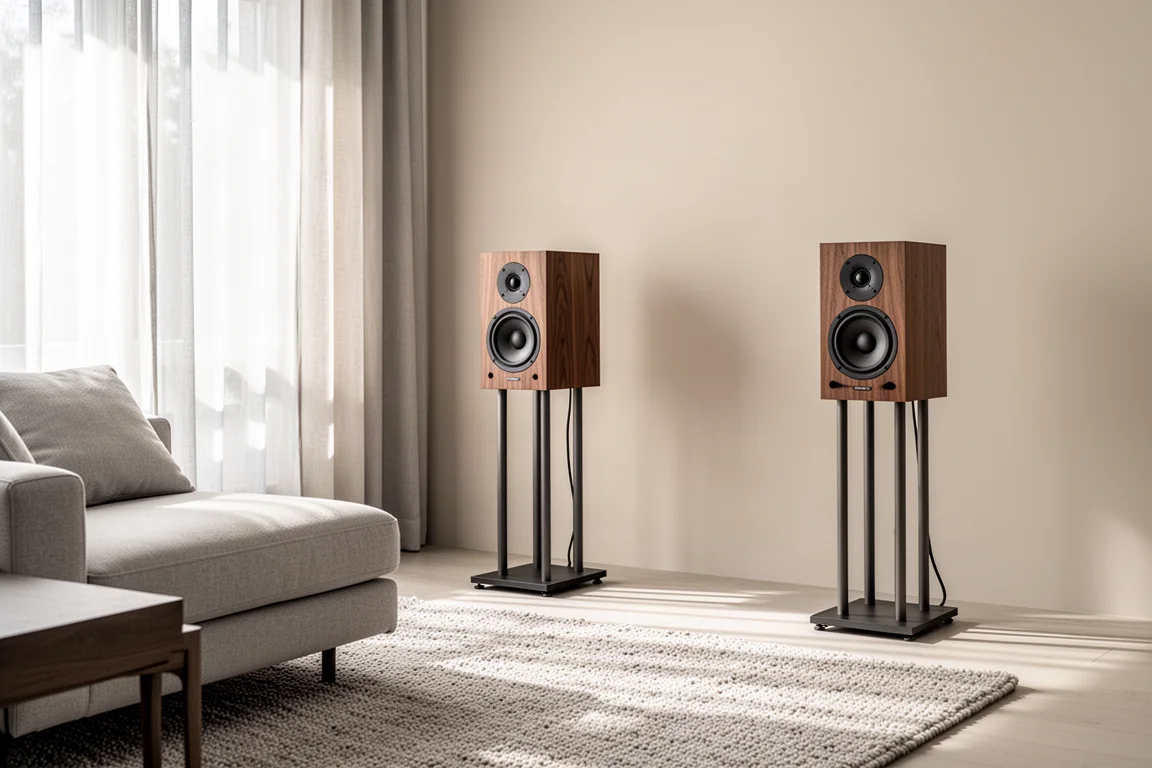
In practice, this is a speaker for listeners who want character rather than transparency, and who are willing to tune placement and toe-in to land on a balance they enjoy.
Build, Design, and Specifications
The driver complement is a 1 1/8-inch damped apex dome silk dome tweeter and a 6 1/2-inch cone woofer. The base mixes concrete, aluminum, and steel, and it vents below the cabinet, which keeps the front baffle clean and gives low-frequency output somewhere to go other than straight into a nearby wall.
Electrical specifications are friendly enough for a wide range of amplifiers. Nominal impedance is rated at 4 ohms, the measured minimum sits near 4.2 ohms, and power handling is rated from 30 to 200 watts. Measured sensitivity is about 86.8 dB. Each speaker weighs approximately 23 pounds.
Sonus Faber states that the speakers are made in Italy. They are offered in a light walnut finish, black, and a darker walnut.
Sound Characteristics and Tonality
The frequency response shows a resonance around 700 Hz that subjectively reads as hollow or nasal, and the treble carries the boost described earlier. In-room extension reaches roughly 50 Hz, so the speaker produces usable low-frequency output in a typical room, with the caveat that room modes will influence how that region sounds.
A burst decay view shows long decay between about 800 Hz and 1600 Hz, which may relate to port behavior, and the impedance plot reveals a cabinet resonance around 400 Hz. The crossover handoff between the tweeter and the mid-range, around 3 kHz, is well executed. Where many speakers in this size class show a large swing through that region, this one stays tidy, which points to higher-order crossovers than the category typically uses.
Distortion at 86 dB is fine. At 96 dB the mid-range approaches about 3 percent, a level most listeners will not notice immediately during normal listening, though it becomes more apparent in direct comparisons. Dynamic range is strong between 76 dB and 96 dB, and adding a subwoofer lowers mid-range distortion by removing low-frequency work from the woofer.
Overall, the tonal signature is best described as elevated at the top and slightly withdrawn through the upper mid-range, with a midrange resonance that colors vocals and instruments in a specific way. That combination is consistent across the measurements and the listening impression, so it is worth treating as the speaker’s identity rather than as something a buyer can simply dial out.
Placement, Toe-In, and Room Interaction
This speaker wants more room to breathe than its footprint suggests. Positioned close to the wall behind it, the 80 to 120 Hz region stands out more, and room modes can exaggerate that further. In a room without severe modes, roughly 1.5 to 2 feet from the back of the speaker to the wall behind it is a reasonable starting point. Listeners moving from the Lumina 2 should note that the Lumina 2 handles a closer wall position more gracefully.
Toe-in is the other main lever. Aimed directly at the listening position, the treble is bright enough to become tiring on bright recordings and sibilant passages. Toeing the speakers out about 30 degrees reduces sibilance by roughly a decibel and makes the presentation noticeably more comfortable without erasing the speaker’s character.
Vertical placement is less forgiving. The vertical directivity shows a mismatch, so your ears should sit level with the tweeter, or within about 10 to 15 degrees above or below it. Horizontally, directivity narrows as frequency rises, but it does so at a fairly steady rate and holds roughly 60 degrees plus or minus through the mid-range. Because that narrowing is gradual, the first reflections from sidewalls carry a timbre close to the direct sound, which means sidewall absorption is not required for this speaker. If the room itself is echoey or boomy, treatment is still worth considering, but for the room rather than for the speaker.
Amplification and Equalization Notes
With a nominal 4-ohm rating, a measured minimum near 4.2 ohms, and sensitivity around 86.8 dB, the Sonetto 2 G2 is not a difficult load, and the 30 to 200 watt power rating leaves plenty of amplifier options.
Equalization is a genuinely useful tool here. A modest correction profile that targets the in-room response smooths the boosted top end and the elevated 80 to 120 Hz region, and the result is a more linear presentation than the stock balance while keeping the speaker’s detail and spaciousness. If EQ is not available, positioning and toe-in still go a long way toward a comfortable result.
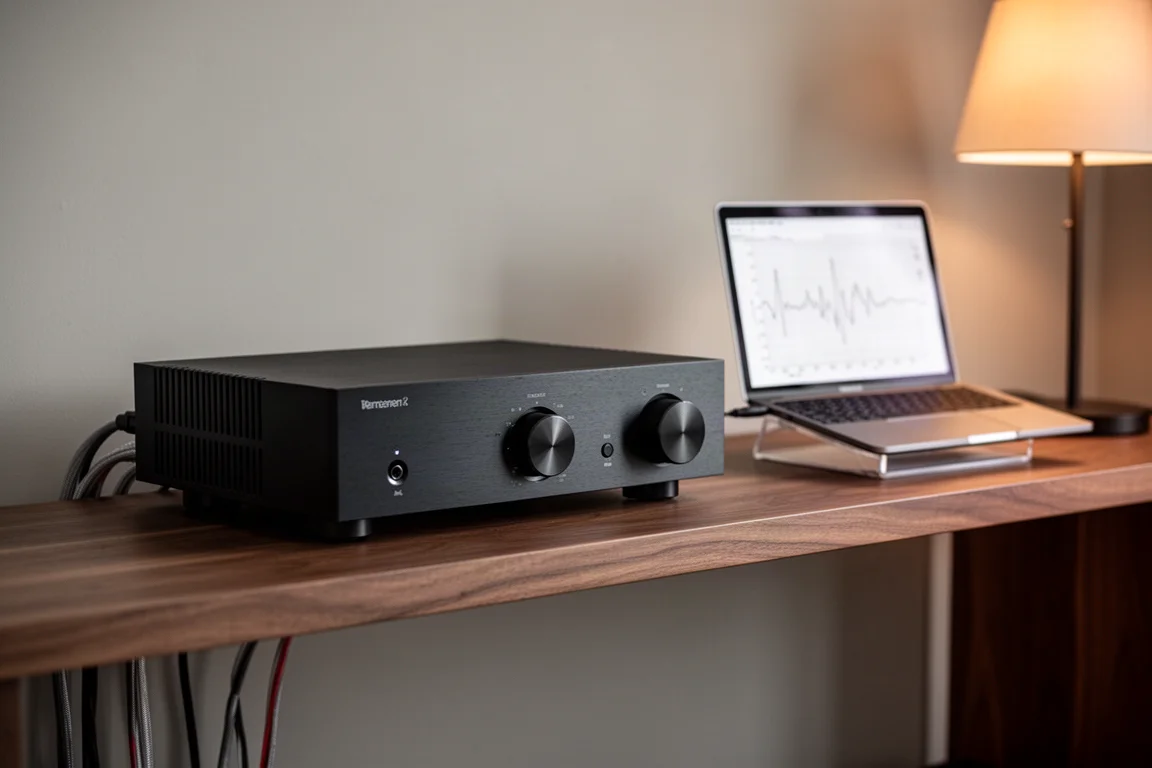
It is also worth noting that the recommended corrections are small. Buyers who expect the speaker to transform into a neutral monitor after EQ should adjust expectations: the voicing remains audible, just better controlled.
Things to Consider Before Buying
- The voicing is deliberate. Elevated treble and a recessed upper mid-range are the core character, not a setup error to fix.
- Space matters. Budget roughly 1.5 to 2 feet behind the speakers if the room allows it.
- Ear height matters. The listening position needs to sit close to tweeter level vertically.
- Distortion is modest but measurable. Mid-range distortion approaches about 3 percent at 96 dB.
- Finish options are limited to light walnut, black, and a darker walnut.
- Bass depth is real but not extreme. In-room extension reaches about 50 Hz, so a subwoofer helps for deeper material.
Buying Advice
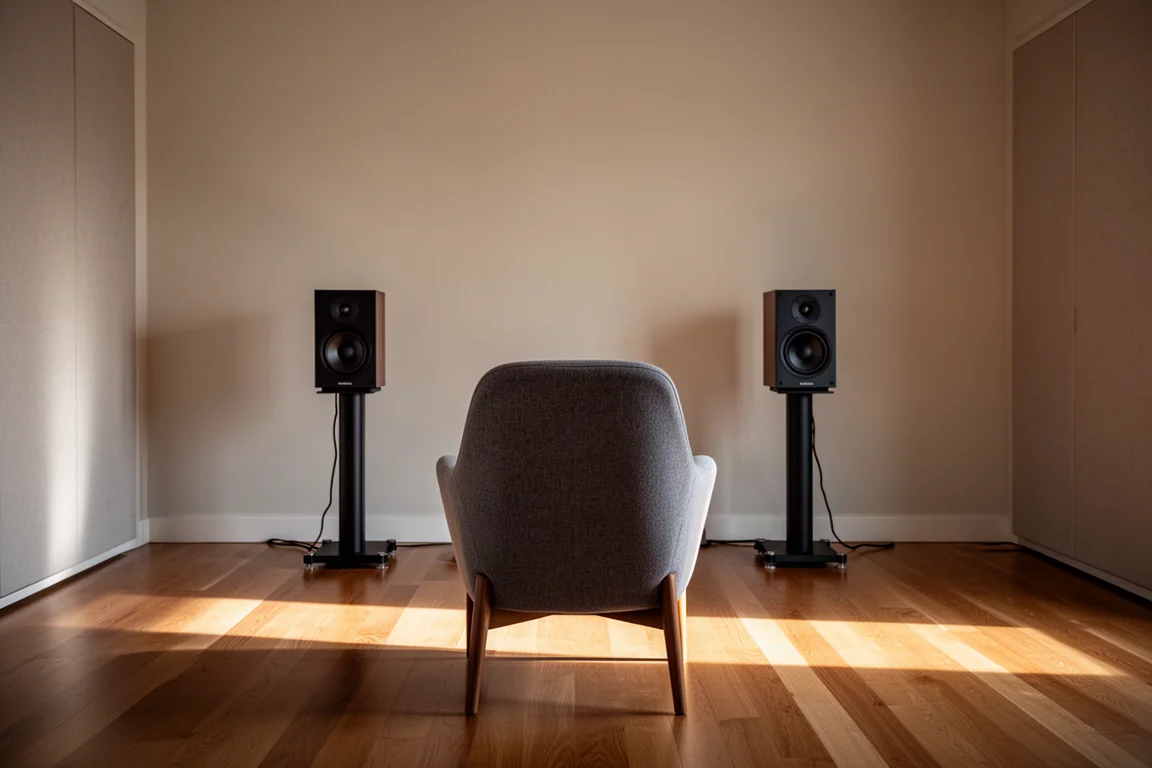
At around $2,750, the Sonetto 2 G2 competes in a crowded segment of compact speakers, and the decision comes down to whether its voicing suits your taste. Buyers who want a neutral reference for critical listening will likely be happier elsewhere. Buyers who want a lively, detailed top end, a spacious mid-range, and a cabinet that looks the part in a living space will find a lot to like, provided the room allows the placement it needs.
If your room forces a close-to-wall position, plan on either equalization or a speaker that is more tolerant of boundary reinforcement. If you can give the Sonetto 2 G2 the space it wants and you are willing to spend an evening on toe-in and ear height, it rewards the effort with a presentation that feels more expensive than its dimensions suggest.
Conclusion
The Sonetto 2 G2 is a characterful compact speaker rather than a neutral one. Its strengths are a well-sorted crossover region, strong dynamic range, good horizontal directivity, and a detailed top end, while its trade-offs are a bright tilt, a mid-range resonance, a narrow vertical window, and a real appetite for space behind the cabinet. Match it to a room and a taste that suit those traits, and it delivers a distinctive, engaging sound with very little left to chance.
Product link
View more details for Sonus Faber Sonetto 2 G2
This product is mentioned in the review. Check the specifications, options, and compatibility before buying.
View more details for Sonus Faber Sonetto 2 G2Further reading
Related Reviews
Bookshelf Speakers
Acoustic Energy A100 Mark II Review: A Compact Standmount With an Expansive Soundstage
The Acoustic Energy A100 Mark II brings clarity, natural tonality and a wide soundstage to an entry-level standmount, with a few setup details worth knowing first.
Bookshelf Speakers
Acoustic Energy AE-100 Mark II Review: Compact Bookshelf Speakers With Standout Imaging
A compact British two-way bookshelf speaker with deep, layered imaging, fast bass, and a slight treble lift to weigh against a crowded $500 field.
Bookshelf Speakers
Acoustic Energy AE100 MK2 Review: Measured Performance and Four Alternatives
A close look at the Acoustic Energy AE100 MK2 bookshelf speaker, what its measured performance reveals, and four alternatives with different trade-offs.