Wireless Speakers
Sonus faber Omnia Review: A Beautiful All-in-One That Sounds as Good as It Looks
A single-box wireless system with Italian design, a seven-driver array, a phono input, HDMI ARC, and some of the most tuneful bass you will hear from a smart speaker.
Introduction
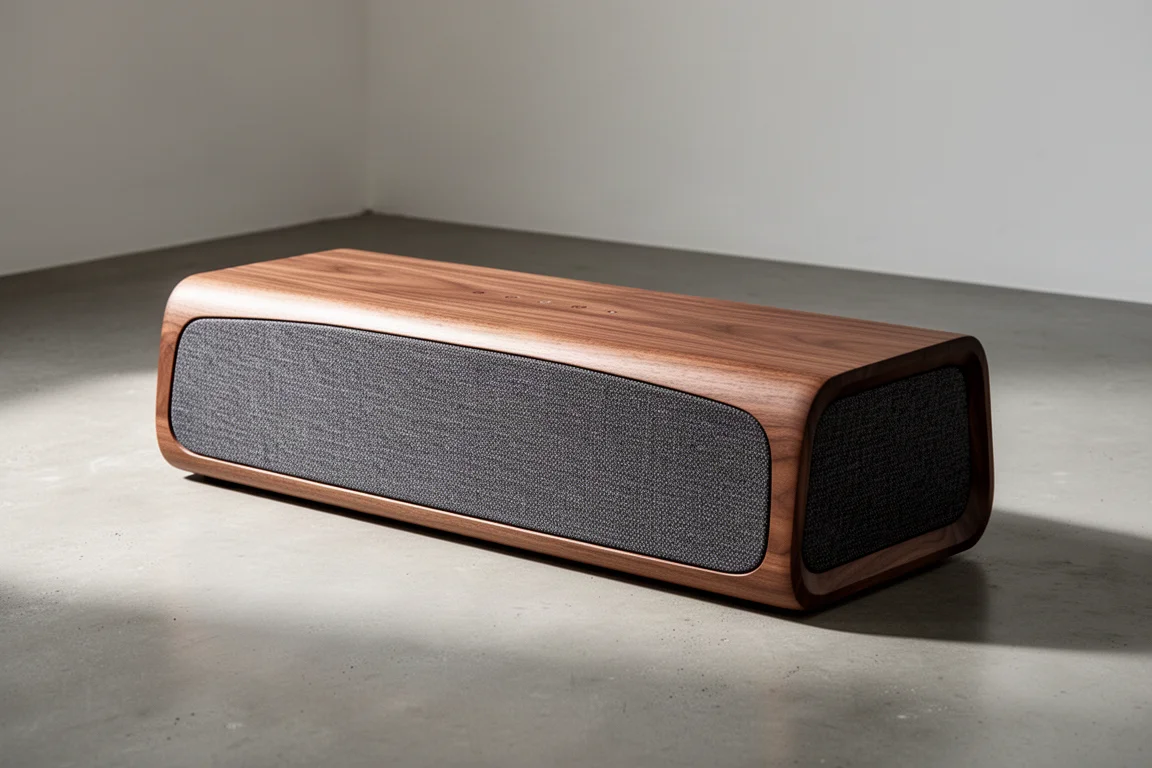
The Sonus faber Omnia is an all-in-one wireless music system from an Italian company best known for high-end loudspeakers, including models that sell for sums far beyond what most listeners will ever spend on a pair of speakers. The Omnia takes a different path. It condenses that design philosophy, and a healthy portion of that sonic character, into a single self-contained unit that sits on a sideboard or under a television.
It is a two-channel system with an emphasis on fit and finish, a distinctive curved cabinet, and a driver array that is more ambitious than most speakers in this class. It also carries one of the more complete connectivity packages available on an all-in-one speaker, including a phono input for a turntable and HDMI ARC for a TV.
Who the Sonus faber Omnia Is For
The Omnia suits listeners who want meaningfully better sound than a typical smart speaker without assembling a system of separate components. It fits someone who streams from a phone or computer, may also want to play vinyl, and would like the same unit to handle television audio.
It is not the right answer for anyone chasing a true three-dimensional stereo image across a wide listening area. That kind of presentation takes a pair of separate speakers and dedicated electronics. The Omnia’s strengths lie in tone, bass depth, and dynamics from a single box.
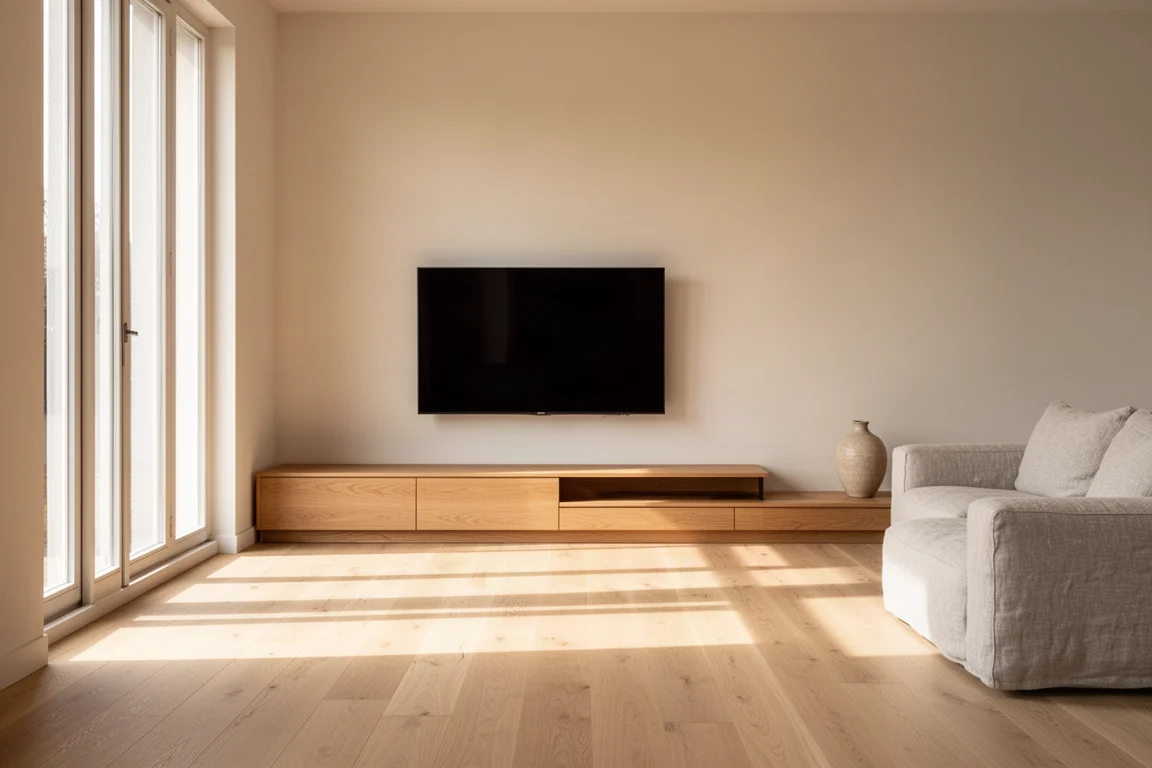
Its height of roughly five inches means it can sit beneath most televisions without blocking the screen, which makes it a credible stand-in for a soundbar in a room where music matters as much as dialogue.
Design and Build Quality
Fit and finish here are first class. The cabinet is curvy rather than boxy, and the side grilles that cover the Crescendo drivers have a look that echoes the intakes on a sports car. The walnut-topped version is the one most people will picture, and an alternative graphite finish is also offered. Even the supplied remote control picks up the curved lines of the main unit.
On top sits the Senso control surface, a tactile touch-sensitive panel with thin bars of light. Those bars do more than decorate, and they can be switched off if you prefer a quieter appearance. They indicate the selected source and the current volume level, and the same surface handles play and pause along with volume up and down. The layout uses three long cylindrical light bars, with the lower bar changing appearance as you adjust volume and returning to fully lit once you stop. A smaller bar between two lit dots handles play and pause, changes color according to the selected source, and the outer dots raise and lower volume.
Connectivity and Setup
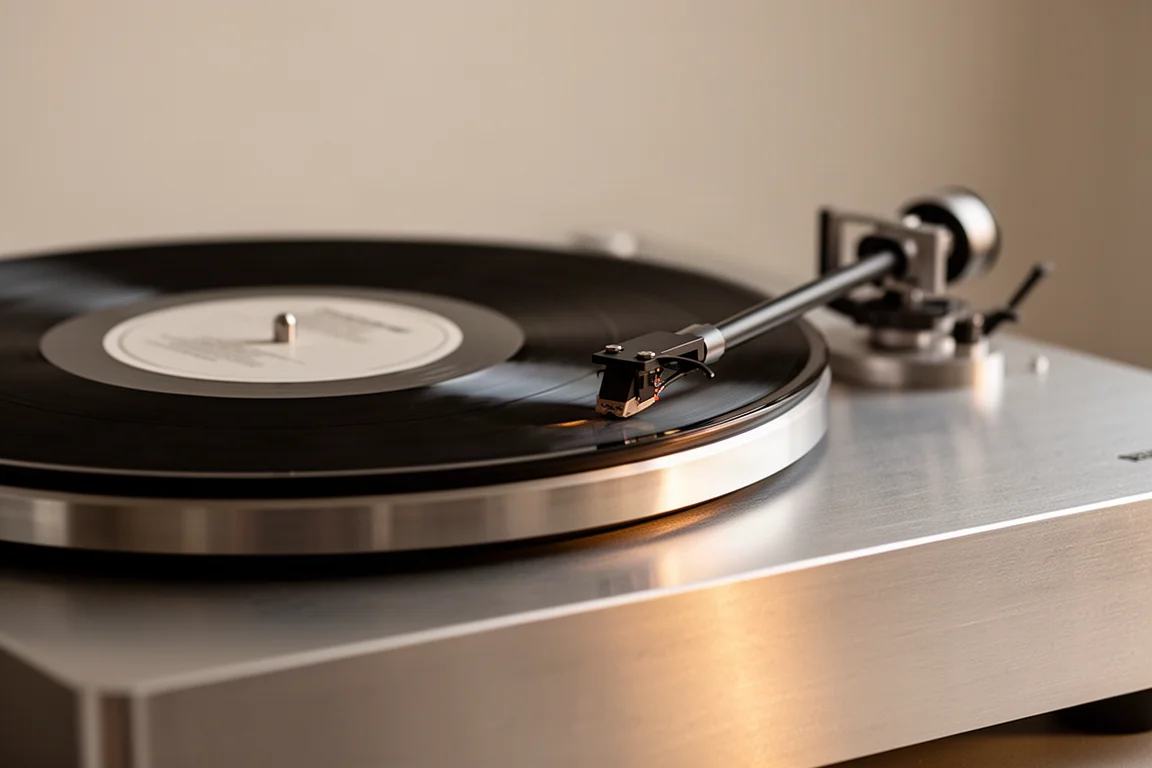
This is about as complete a connectivity package as you will find on an all-in-one speaker. A moving magnet phono input stands out immediately. A small dongle connects a turntable, and a switch beside the connector converts the input to line level for turntables that already have a built-in phono stage. That line-level setting also opens the door to a CD player or similar source.
HDMI ARC is present as well, which lets a television send audio down to the Omnia and hands volume control to the TV remote whenever the TV is the source. The unit wakes automatically and selects the correct input when the television powers on. Because the Omnia is a two-channel system, it is worth setting the television to output PCM rather than surround sound. Every input is auto-selected except the phono stage, and if the handheld remote goes missing, a two-finger swipe on the Senso volume control cycles through inputs.
Streaming support covers AirPlay 2, Chromecast, and Bluetooth with aptX HD, along with Tidal Connect, Spotify Connect, and Roon. Siri and Google Assistant are both supported for voice control. Setup is straightforward either way. Apple users can add the Omnia through the Home app without entering network credentials, which takes well under a minute. The Google Home route takes around two minutes but has one real advantage: it displays the unit’s IP address at the end, which is the quickest path to the advanced settings page.
That web interface is where the deeper options live, including the ability to toggle the Crescendo processing and to declare whether the speaker sits near a wall. It is worth visiting once during setup, and most owners will likely leave it alone afterwards.
Sound Quality
The driver array is serious for a single-box system. Seven discrete drivers are paired with individual amplifiers, housed in a sealed cabinet. A six and a half inch down-firing aluminium cone woofer launches its output into a curved section of the cabinet designed to help the bass fill the room. Along each side of the 26 inch cabinet sits a three quarter inch silk dome tweeter with a neodymium motor and a three inch paper pulp cone mid-range driver, plus two additional drivers behind the side grilles as part of the Crescendo system. Those are one and three quarter inch wide-range inverted dome cellulose pulp membrane drivers, also with neodymium motors.
The result is a presentation that is easy to listen to over long sessions while still delivering real dynamic punch in the low end. Nothing smears together the way it often does on smart speakers, and there is no harshness to push you toward turning it down. Bass is the standout. The published specification claims output that is only 6 dB down at 30 Hz, and the sense of pitch and texture supports that figure. You can follow the pluck and harmonics of a bass guitar string, and a kick drum keeps its shape rather than turning into a thud. Rhythm and pacing are strong enough to keep a foot tapping.
Volume capability is generous. The published maximum is 108 dB, which is far louder than anyone should listen for long, and the system holds together without any sense of breakup at uncomfortable levels. Detail retrieval is a genuine surprise for this category. Small changes in a vocalist’s phrasing and the way an instrument is played come through in a way that usually requires a proper stereo system with quality electronics.
What no single-box speaker can do is place a three-dimensional sound stage in front of you. That remains the preserve of a pair of speakers. Judged on tone and dynamics alone, the Omnia is very, very good.
Room Placement and the Crescendo System
Room placement settings are handled exceptionally well here. Three very different setups were tested: a large open room with the unit about three feet from any wall, where bass was noticeably better with the away-from-wall setting; a small room with the speaker about two feet from the back wall and a foot from the side wall, where the near-wall setting won; and a medium room about twelve inches off the back wall, where the near-wall setting produced markedly tighter, better-controlled bass. The equalisation behind those two options is well judged, and most owners will settle on one after a short listening session.
Crescendo, the side-driver processing, divides opinion. Switching it on clearly enlarges the sound and fills more of the room, but it also shifts the tonal character of the mid-range and can sound slightly phasey. Voices and instruments come across as more natural with it defeated. That is likely because the smaller side drivers have a different sonic signature from the main mid-range units. Listeners who sit far off axis or move around the room constantly may prefer it engaged, since the mid-range stays clearer at around 160 to 100 degrees off axis, but at most seated positions it is better left off. It was not tested in a television setup, where it could well be the better choice.

The loudness optimiser is implemented thoughtfully. It adds 3 dB of bass boost at low volumes, then tapers that boost as volume rises until it switches off entirely at 50 percent. That gives rich low-end weight when the system is playing quietly without the boomy, overpowering bass that older loudness buttons produced when the volume came up.
Things to Consider Before Buying
Turning Crescendo on or off requires a trip to the web interface. A dedicated button on the remote or the unit would have been a welcome addition, and assigning the function to an input would have been a reasonable compromise.
The Omnia is a two-channel design, so it will not deliver the wide, three-dimensional imaging of a proper stereo pair. Buyers who want that experience should be looking at separate components instead.
Television use has one setup detail worth remembering: the TV should output PCM rather than surround sound. Owners who sit far off axis or move around the room a lot may also find the Crescendo processing more useful than those who listen from a fixed seat.
Buying Advice
The all-in-one speaker category spans a wide range of prices, and the right budget depends entirely on what a buyer needs. The Omnia sits at the more considered end of that spectrum, and it earns its place with a combination that is difficult to match: genuine bass quality, convincing dynamics, a broad connectivity set including a phono input, and a cabinet that looks like a piece of Italian sculpture rather than a piece of consumer electronics.
Anyone shopping in this category who wants more involving sound without moving to separate components should put the Omnia near the top of the shortlist. It is the best sounding speaker of this type available, and the fact that it doubles as an object worth looking at is a genuine bonus rather than a marketing line.
For buyers who mainly want better television audio, the HDMI ARC connection and the low profile under a screen make it a practical choice, and the phono input means a turntable can join the system without any additional hardware.
Conclusion
The Sonus faber Omnia brings a great deal of what makes the brand’s larger speakers special into a single, beautifully made box. Its bass is tuneful and deep, its dynamics are convincing, and its connectivity covers streaming, vinyl, and television without clutter. The Crescendo processing is better left off for most listening, and no single-box speaker will replace a true stereo pair for imaging. Judged on design, sound, and flexibility together, it is an easy system to recommend to anyone who can stretch to it.
Product link
View more details for Sonus faber Omnia
This product is mentioned in the review. Check the specifications, options, and compatibility before buying.
View more details for Sonus faber OmniaFurther reading
Related Reviews
Wireless Speakers
Bang & Olufsen Beolab 8 Review: A Compact Three-Way Speaker Built for Flexibility
A close look at the Beolab 8, a compact three-way powered speaker with customizable finishes, two listening modes, and a bass limiter worth understanding before you buy.
Wireless Speakers
Denon Home 200, 400, and 600: Which New Denon Home Speaker Fits Your Room?
A practical look at the new Denon Home lineup, covering shared features, driver differences, Dolby Atmos delivery, and which of the three models suits which room.
Wireless Speakers
Devialet Phantom II Review: Big Bass From a Very Small Wireless Speaker
A compact wireless speaker with genuinely remarkable bass output, sharp imaging, and a few trade-offs worth understanding before you buy.