Wireless Speakers
Denon Home 200, 400, and 600: Which New Denon Home Speaker Fits Your Room?
A practical look at the new Denon Home lineup, covering shared features, driver differences, Dolby Atmos delivery, and which of the three models suits which room.
Introduction
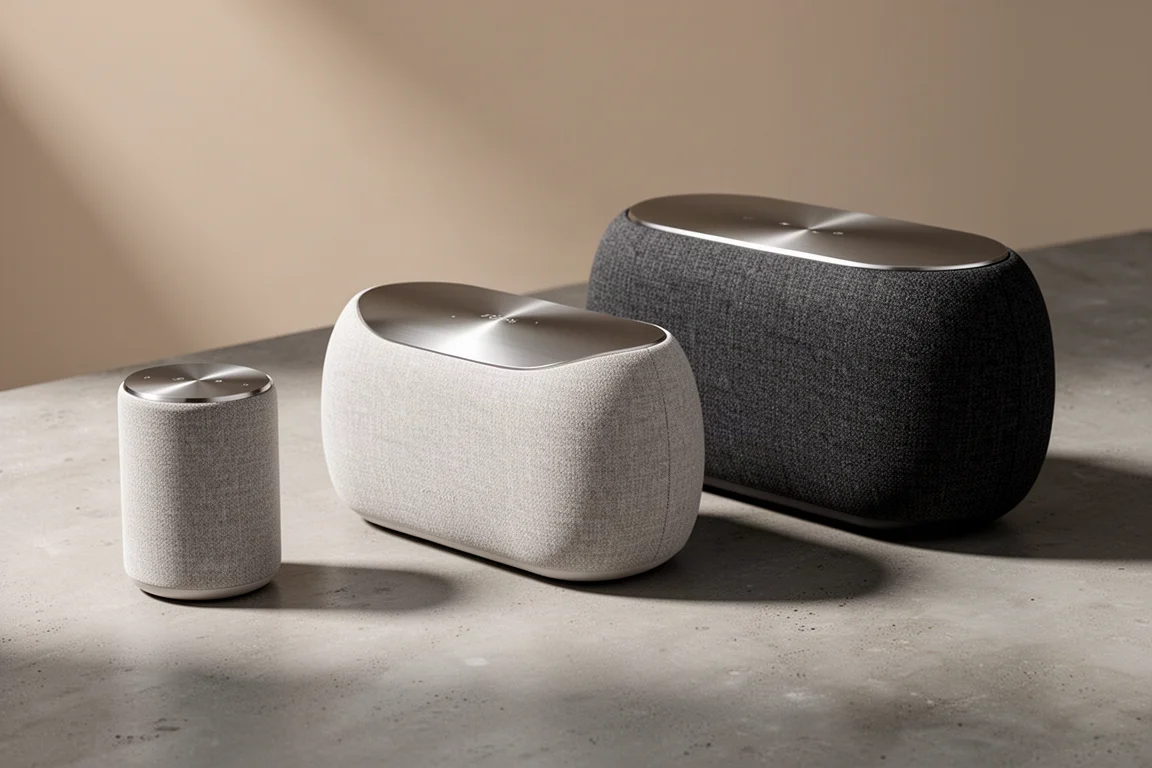
The new Denon Home lineup arrives in three sizes: the Home 200, the Home 400, and the Home 600. Each is a self-contained wireless smart speaker with built-in amplification, Wi-Fi streaming, and app-based control. There is no receiver to add and no external hardware to wire up. Plug one in, join it to your network, and start streaming from the sources you already use.
What separates these speakers from much of the whole-home audio market is the priority they place on sound. The smart features are there, but they sit on top of proper driver arrays, dedicated amplification, and tuning overseen by Denon’s sound master, the same engineer behind the company’s flagship AV receivers and hi-fi separates.
This guide covers what all three models share, what changes as you move up the range, and which one makes the most sense for a given room and listening habit.
What Every New Denon Home Speaker Shares
All three models support Dolby Atmos music, though they deliver it in different ways. The Dolby processing is not limited to Atmos tracks either. Each speaker can apply it to any content, including ordinary stereo streams, so the effect is available across your library rather than only on a small selection of Atmos releases.
Wireless connectivity has been updated to run on 2.4, 5, and 6 GHz bands. Features carried over from the previous generation remain across the range: HEOS multi-room, AirPlay 2, Bluetooth, high-res streaming from Tidal, Qobuz, and Amazon Music, plus a 3.5 mm aux input and a USB-C port.
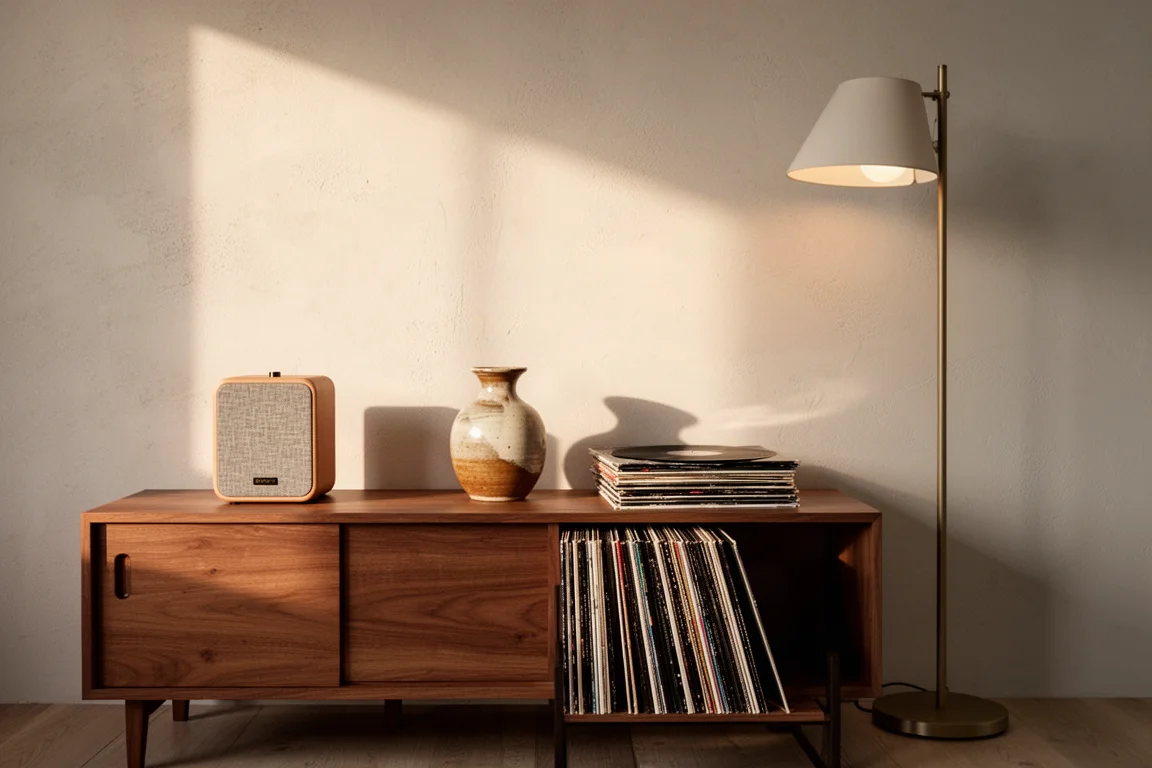
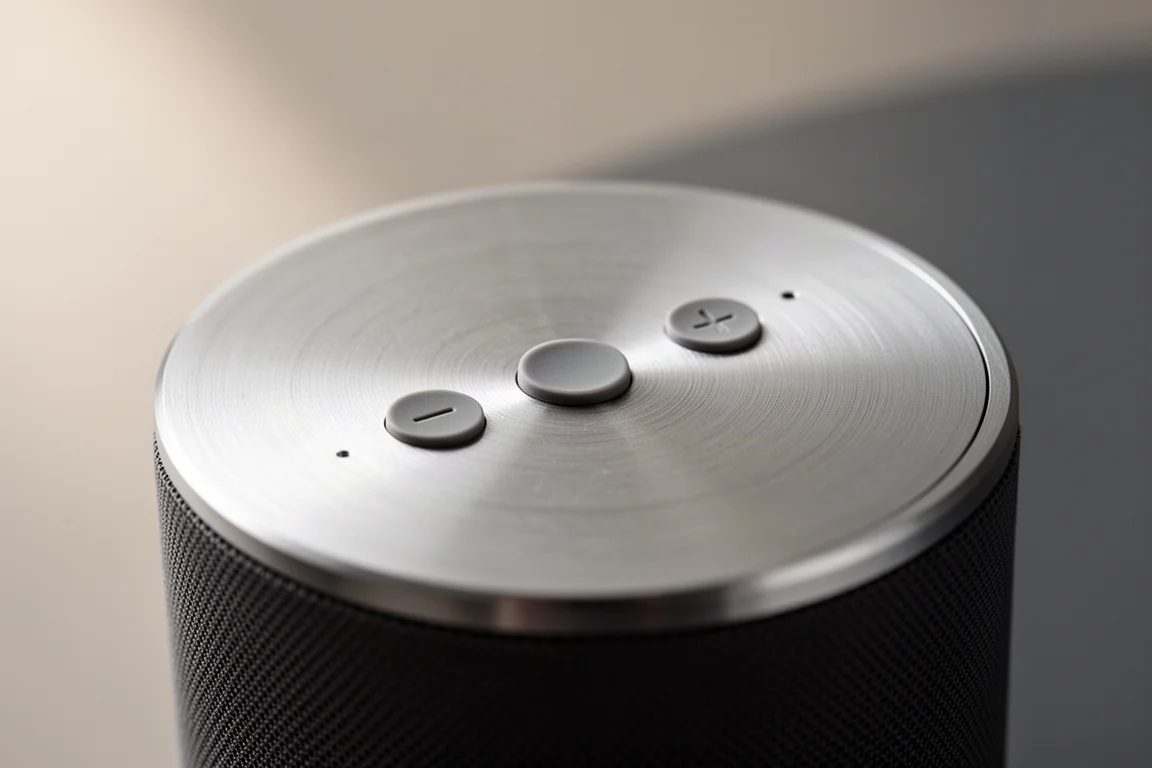
The physical design is a clear step forward. Each cabinet uses a 360 degree seamless premium fabric, real anodized aluminum on the top grille and bottom cap, soft-touch silicone controls, and the same premium badge found on Denon’s high-end hi-fi gear. Placed next to the model it replaces, the difference in build quality is obvious.
The lineup is also built to scale. Run a single speaker in one room, group several rooms together through the HEOS app, or tie the speakers into a home theater system alongside Denon AV receivers or certain Denon soundbars.
Denon Home 200: The Compact Starting Point
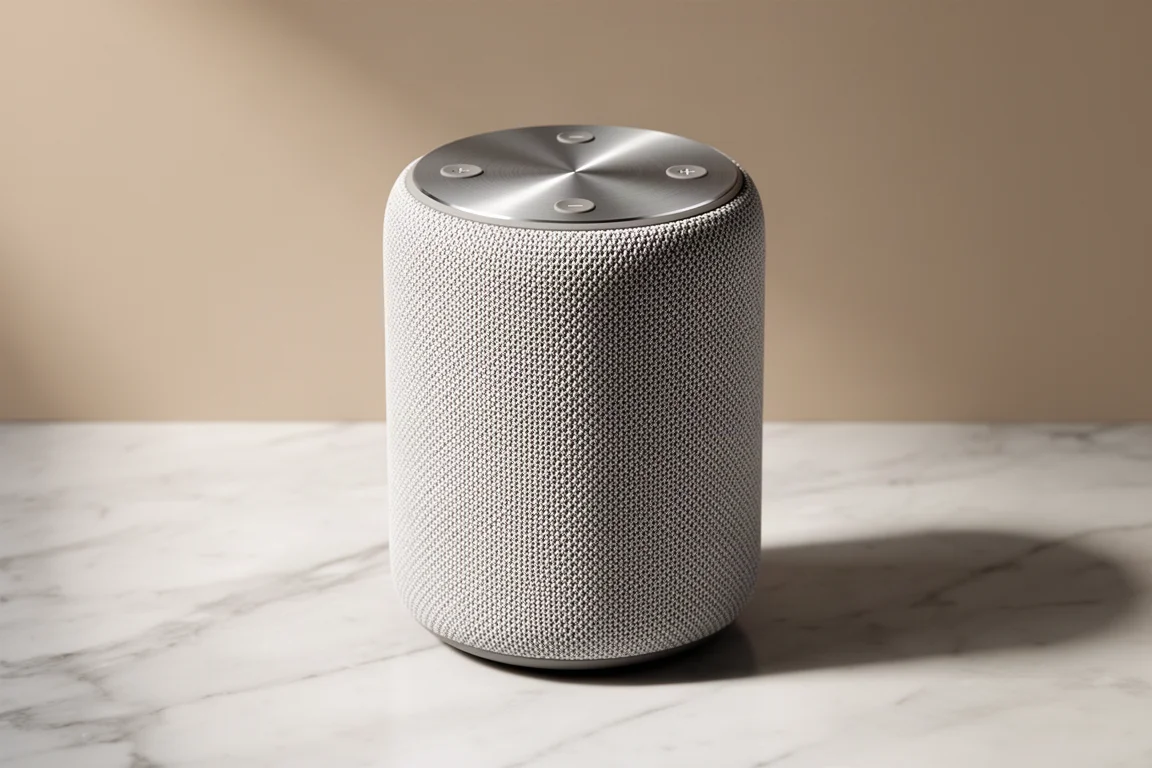
The Home 200 is the smallest of the three, with a cylindrical cabinet measuring 5.5 inches wide and roughly 8.5 inches tall, offered in stone or charcoal. It is not a direct replacement for the Home 150, which stays in the lineup as the more affordable option.
Inside, it runs three drivers: a 4 inch woofer and two 1 inch tweeters, each on its own dedicated Class D amplifier. Dolby Atmos here is processed virtually rather than through dedicated upward-firing drivers. DSP widens and heightens the soundstage, which is a real improvement over standard stereo playback, though it is not the same experience the 400 and 600 provide with their up-firing speakers.
For someone new to the ecosystem, or for a smaller room that needs a capable compact speaker, the 200 is the natural entry point. It can run on its own, be stereo paired with a second unit for a wider stage, or serve as a wireless surround channel with the Denon Home Soundbar 550.
Denon Home 400: The Mid-Size All-Rounder
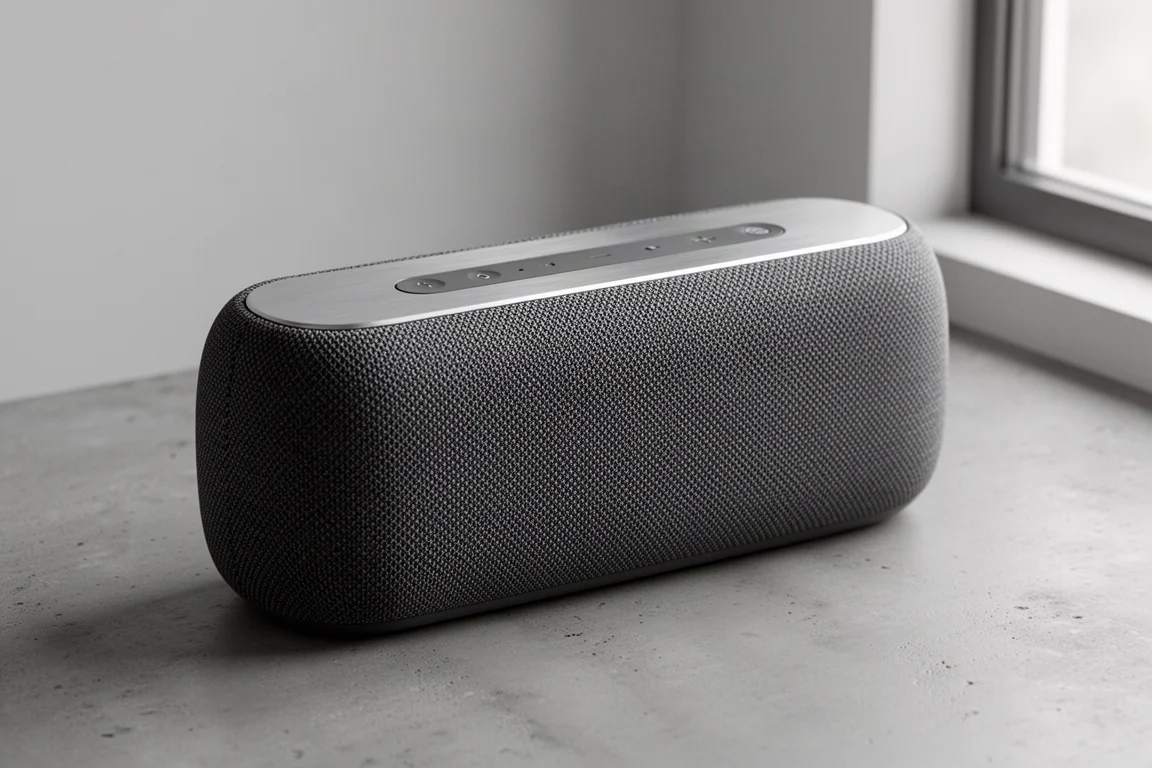
The Home 400 directly replaces the Home 250 and moves to a horizontal cabinet about 12 inches wide and 8.6 inches tall, shaped to sit on a media console or a bookshelf.
It carries six drivers in total: dual 4.5 inch woofers, dual 0.75 inch tweeters, and two 1 inch upward-firing height speakers. Those height drivers are the important part. Instead of simulating height, the 400 reflects sound off the ceiling and back down to the listener, which builds a more convincing three-dimensional field in a room with a standard flat ceiling. Each of the six drivers has its own Class D amplifier.
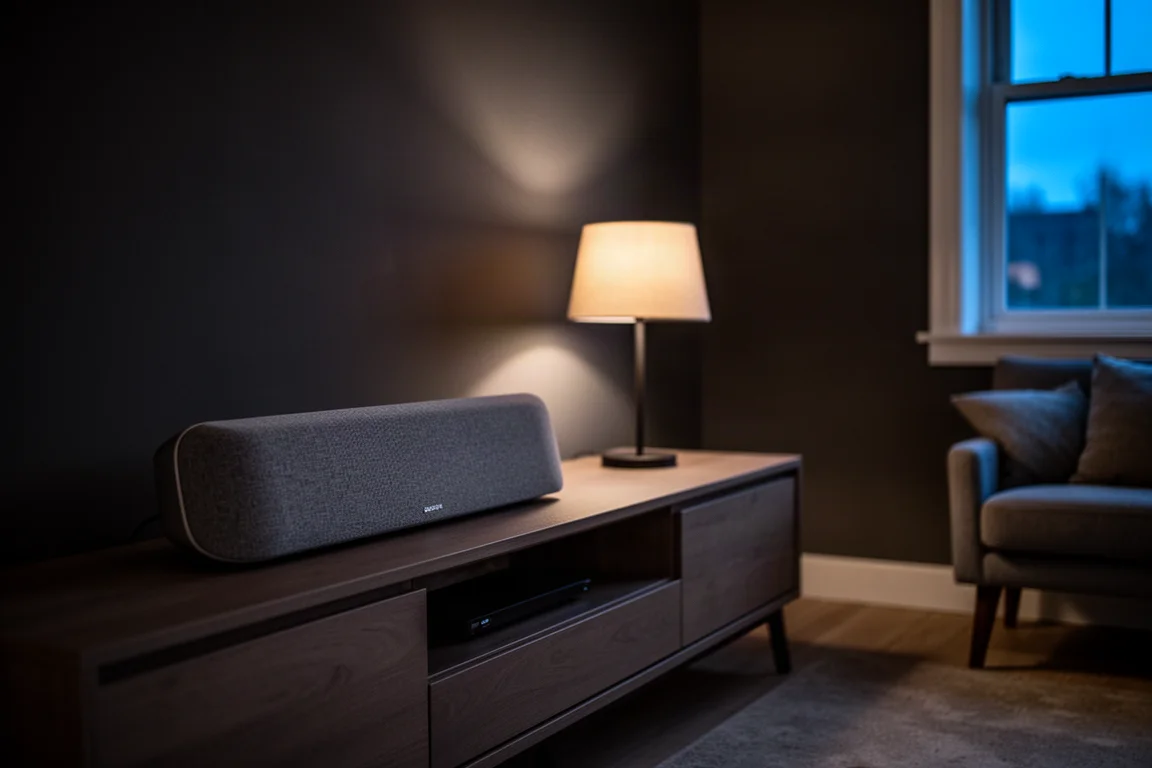
Compared with the Home 250, the increase in driver count and the addition of genuine height channels make a substantial difference. Two units paired as a left and right stereo image work particularly well for music and for film sound.
Denon Home 600: The Flagship for Larger Rooms
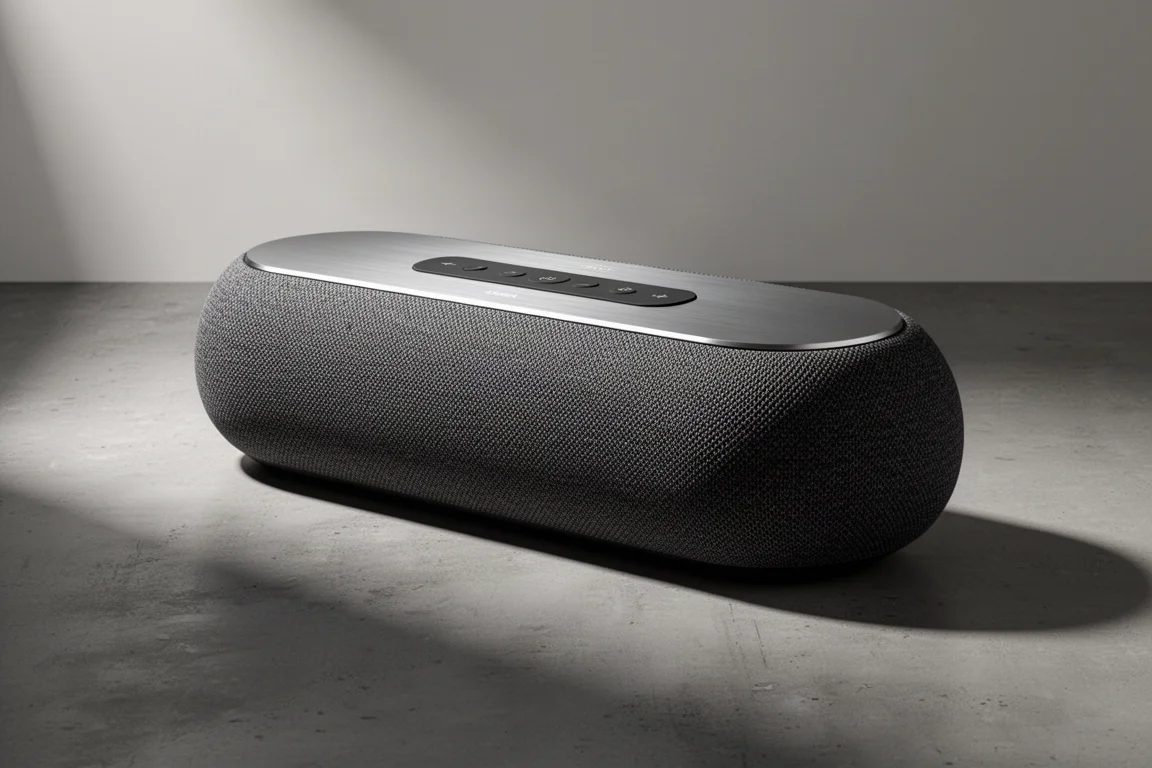
The Home 600 sits at the top of the range. At nearly 18 inches wide and 17.6 pounds, it is built for larger spaces, and it moves away from the boxier look of the Home 350 it replaces in favor of a wide, low-slung elongated oval cabinet.
Its array totals eight drivers: dual 0.75 inch tweeters, dual 2.6 inch midrange woofers, dual 2.6 inch up-firing height speakers, and dual 6.5 inch subwoofers built into the cabinet. That subwoofer configuration is what sets the 600 apart from the rest of the lineup. Low-end extension does not depend on a small woofer, so bass carries real weight and depth and the overall presentation is fuller than either of the smaller models. As on the 400, Dolby Atmos arrives through the up-firing drivers.
This is the model for someone who wants to fill a larger room from a single speaker without adding a subwoofer or other components.
Sound Tuning, Listening Modes, and the HEOS App
All three speakers are managed through the HEOS app, which handles multi-room grouping, zone management, and streaming service integration. Any of these can be paired with other HEOS-enabled devices and controlled independently from the same app. The app has matured considerably over the years and is clean, quick, and easy to navigate.
Tuning options are generous for speakers in this class. Bass, treble, and width controls are available on all three models, along with placement settings that adjust the sound based on where the speaker actually sits, whether that is a corner, against a wall, or out in open space. The 400 and 600 add height control for the upward-firing channel, which lets you decide how much Atmos effect you hear above you.
Two listening modes cover different preferences. Automatic applies the Dolby processing to everything and lets you set how much effect you want, while pure mode shuts off all processing for the most direct playback possible, similar in spirit to Pure Direct on a Denon AV receiver.
Siri is built in, so you can address the speaker directly and get the same kind of response a HomePod would give. One caveat: a HomePod or HomePod Mini must be on the same network for that to work. Alexa and Google Assistant are not included, which is worth weighing if you already rely on either one.
One easily overlooked detail is that the USB-C port accepts a wired Ethernet adapter. In a commercial space, or in a home where Wi-Fi reliability is a concern, you are not locked into a wireless connection.
Should You Upgrade From an Older Denon Home Speaker?
If you already own a Home 150, 250, or 350 and you are happy with how it sounds, there is no urgent reason to replace it. Those remain capable speakers.
The picture changes if you listen to a lot of Dolby Atmos music. Moving to the real upward-firing drivers on the 400 or the 600 is a hardware difference rather than a processing tweak, and it is the clearest argument for the new generation.
If you are starting fresh or expanding an existing system, the new models are the straightforward choice. If budget is the primary constraint and Atmos is not a priority, the Home 150 is still an affordable way into the HEOS ecosystem, though the Home 200 is worth the step up where the budget allows.
Which Denon Home Speaker Should You Buy?
Match the speaker to the room first, then to the content you actually listen to.
The Home 200 suits smaller rooms, desks, kitchens, and bedrooms, and it is the least expensive route to current-generation hardware and virtual Atmos processing. Its size makes it easy to place, and a pair makes a tidy stereo setup.
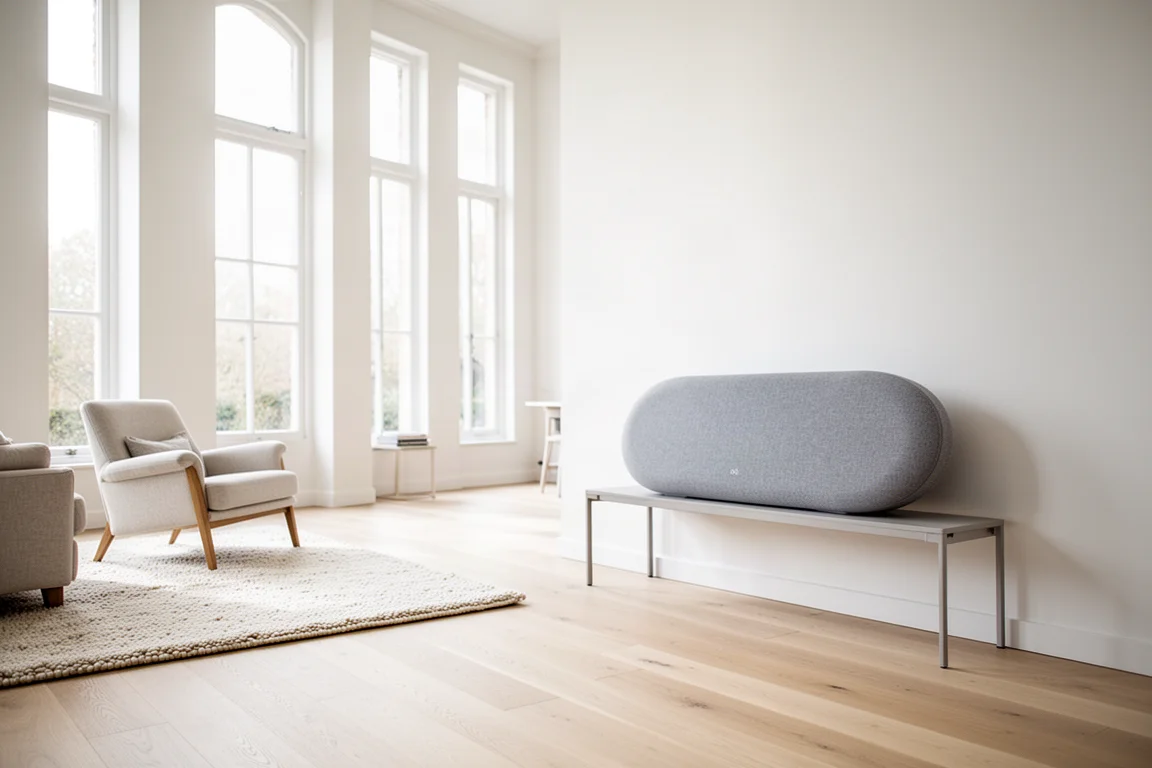
The Home 400 is the balanced pick for a living room or media setup where you want believable height effects without a large cabinet. The Home 600 is the choice for a large open room, where its built-in subwoofers do the work that would otherwise require an extra box and an extra cable run. All three models are available now.
Conclusion
The new Denon Home generation keeps the streaming, multi-room, and connectivity features that made the line easy to live with, then adds Dolby Atmos music support and a noticeably better build. The 200 covers compact spaces, the 400 brings genuine height channels to a mid-size room, and the 600 delivers full-range sound from a single cabinet. Pick the one that matches your room and your listening habits, and the rest of the system can grow from there.
Further reading
Related Reviews
Wireless Speakers
Bang & Olufsen Beolab 8 Review: A Compact Three-Way Speaker Built for Flexibility
A close look at the Beolab 8, a compact three-way powered speaker with customizable finishes, two listening modes, and a bass limiter worth understanding before you buy.
Wireless Speakers
Devialet Phantom II Review: Big Bass From a Very Small Wireless Speaker
A compact wireless speaker with genuinely remarkable bass output, sharp imaging, and a few trade-offs worth understanding before you buy.
Wireless Speakers
Devialet Phantom Ultimate Review: 108 dB and 98 dB Compared
A practical look at the Devialet Phantom Ultimate 108 dB and 98 dB, covering shared ADH, SAM, and HBI technology, app features, and which older Phantom owners should consider upgrading.