Hi-Fi Speakers
Sonus Faber Lumina II vs KEF LS50 Meta: Two Standmount Speakers Compared
A close comparison of two standmount loudspeakers at similar money: the leather-wrapped Sonus Faber Lumina II and the neutral, even KEF LS50 Meta.
Introduction
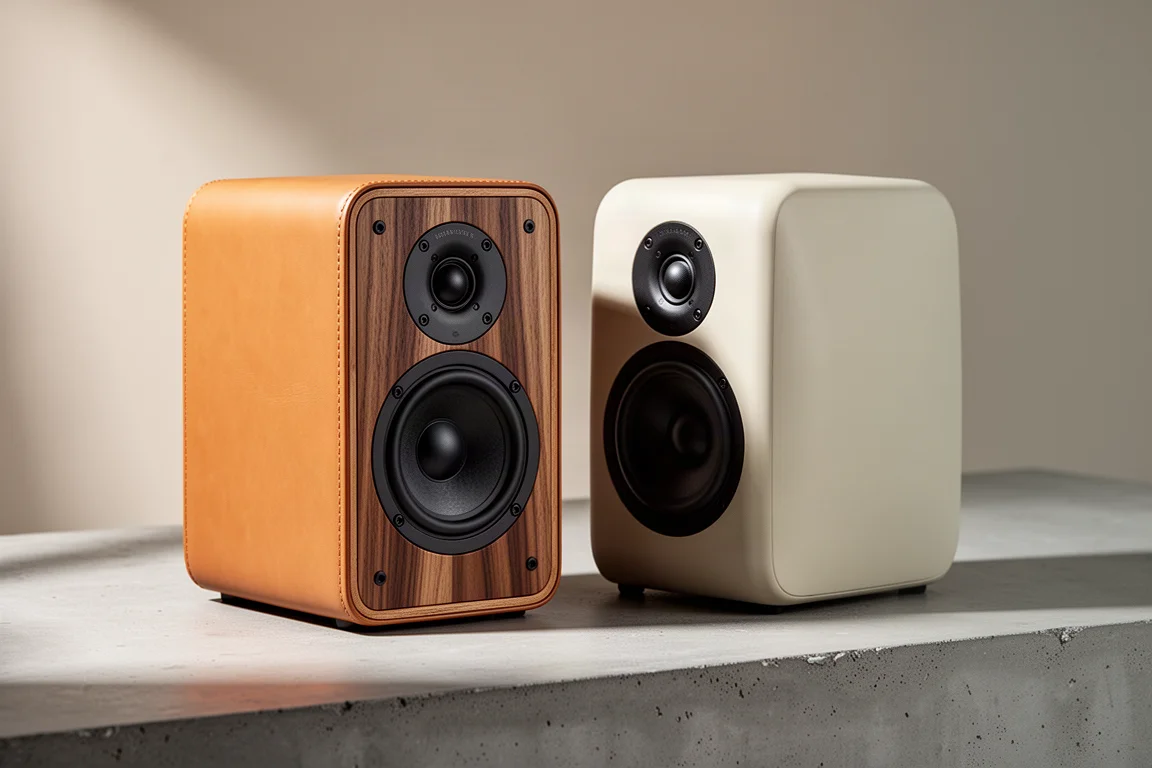
Two standmount loudspeakers, similar money, very different personalities. The Sonus Faber Lumina II arrives wrapped in leather with a multi-layered wood front baffle and a distinctly Italian sense of craft. The KEF LS50 Meta counters with a modern, seamless look and a notably even tonal balance. Both are compact two-way designs intended for smaller rooms, and both are the kind of speaker that makes you rethink how much performance a small cabinet can deliver.
The Lumina II pair here was bought outright rather than taken on a short-term loan, so the impressions come from extended everyday use rather than a brief acquaintance. At around 1,100 euros per pair, it sits in the same bracket as the LS50 Meta, which makes the comparison unavoidable. What follows is a close look at what each speaker does well, where they diverge, and which one is likely to suit your room and your listening habits.
How These Two Standmounts Compare
Both speakers are two-way standmounts at a similar price, so the useful points of comparison are the cabinet and finish, the driver complement and crossover, the bass extension on paper, the tonal character, how well each one images, how easy it is to place in a room, and how demanding it is of the amplifier behind it. Those are the areas where the Lumina II and the LS50 Meta differ most, and they are also the areas that decide whether a speaker feels at home in a given space.
Price is part of the picture but not the whole story. At this level the two designs are close enough in cost that the deciding factors are usually tonal preference, room size, and how the speaker is used day to day.
Sonus Faber Lumina II: Italian Craft and Dynamic Excitement
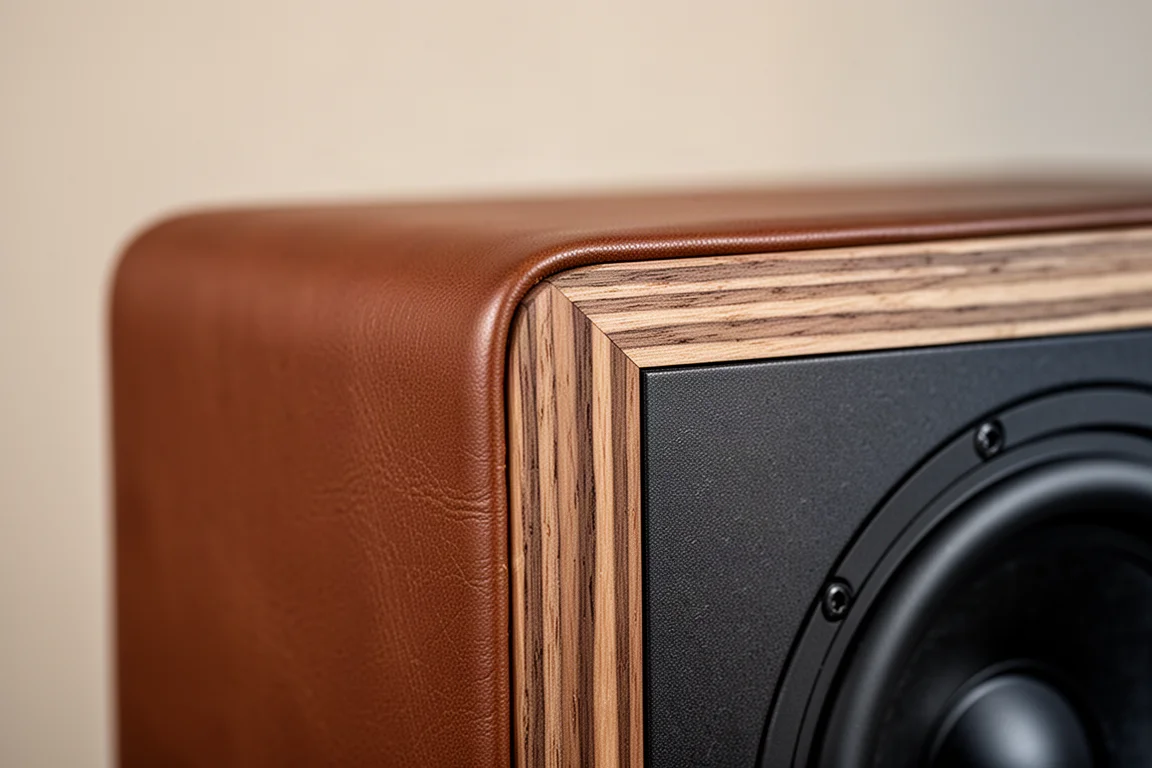
The Lumina II comes from Italy, and its cabinet is wrapped in leather, with the front baffle finished in multi-layered wood. It is a two-way design built around a 2.9 cm tweeter that uses a Damped Apex Dome assembly, an approach intended to extend the treble response. Below it sits a 15 cm mid-bass driver made from pulp, in practice paper.
On paper, bass output is rated at -3 dB at 55 Hz, and that figure is honest. This is not a bass-heavy speaker, and there is no hidden low-frequency extension waiting in the cabinet. Listeners who want to go deeper than 55 Hz will want a subwoofer; those who do not can happily live without one. What the speaker does deliver is a punchy, six-inch quality to the bass it produces, which is a different and often more useful thing.
The reflex loading is unusual. There is no obvious port on the front face; instead the cabinet vents through a slot running along the bottom edge, which is what gives the Lumina II its low-frequency reinforcement. On the back there are two sets of binding posts for listeners who like to bi-wire or bi-amp.
Efficiency is rated at 86 dB with a 4 ohm nominal impedance, which is average on paper but does ask for some care when choosing a partnering amplifier. The crossover sits at 1.8 kHz, lower than is typical for a standmount, which means the tweeter handles more of the midrange than usual. That lower crossover point is likely part of the reason voices come through so clearly, and it is a genuine advantage when the speakers are used for television and film as well as music.
The tonal character is where the Lumina II makes its case. There is a slight lift in the upper midrange and lower treble, which gives voices and instruments a stronger presence in the room. It never tips into harshness or brightness; it simply pushes the music a little further forward. Combined with strong microdynamics and a good sense of rhythmic propulsion, that makes the Lumina II an edge-of-the-seat speaker for rock, punk and electronic music rather than a polite background performer. Expectations of a warm, mellow Italian standmount do not survive the first listen.
Being front-vented, it can be placed relatively close to the wall behind it, which is useful in smaller rooms. Closer placement adds some bass reinforcement, and that is worth trying before adding a subwoofer.
KEF LS50 Meta: Neutrality and Technical Precision
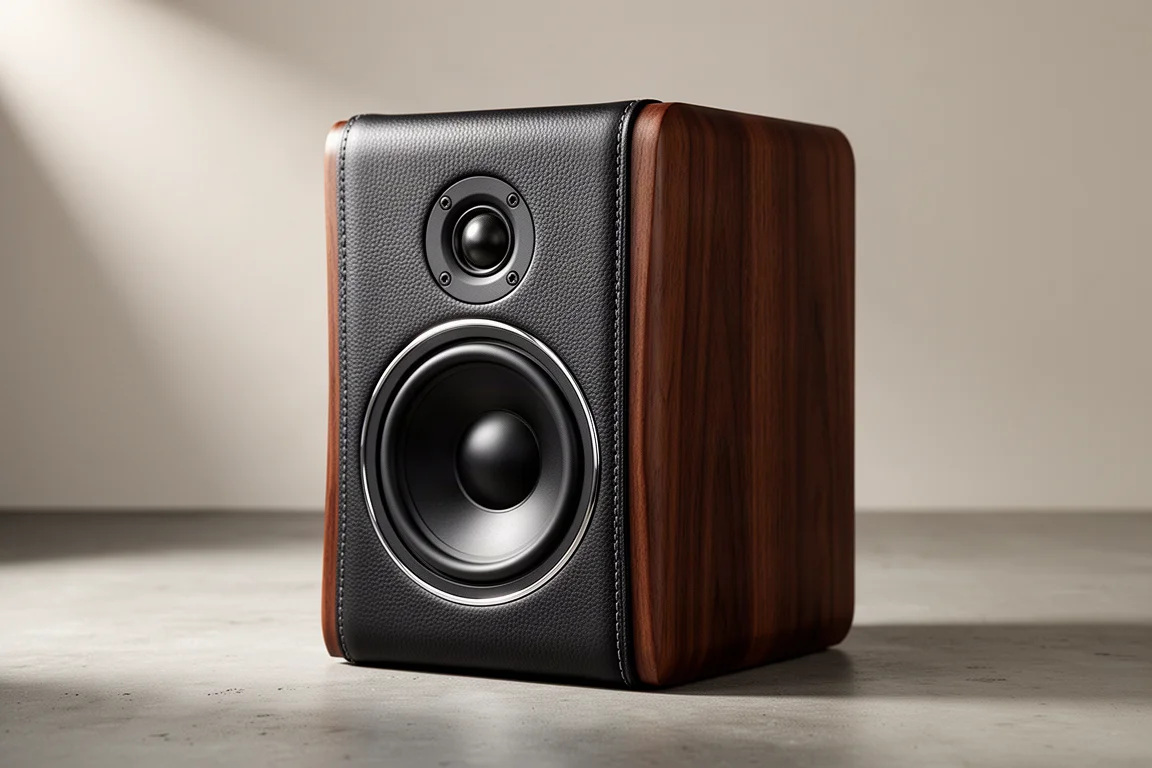
The LS50 Meta takes a different approach from the outset. Its appearance is unmistakably modern, and it is the speaker more likely to feel at home in a contemporary living space than in a traditional lounge. Where the Lumina II leans on leather and wood, the LS50 Meta relies on a cleaner, more architectural look.
Sonically, the LS50 Meta reaches a little lower than the Lumina II. It has more weight and push behind the low frequencies, and the difference is noticeable without being dramatic. On bass-led material it simply sounds a touch more substantial, even though the two speakers are close enough that the gap is not night and day.
The bigger distinction is tonal. The LS50 Meta communicates a greater sense of neutrality, and its sound is more even from top to bottom. That does not make it more accurate in any absolute sense, but it does make its balance easier to describe as neutral, while the Lumina II is audibly colored by comparison. For listeners who insist on the most even presentation available, that will be the deciding factor.
Imaging is the other strength. The LS50 Meta images slightly better in the midrange with voices, which is notable given how good the Lumina II is in that area. Taken as a whole, the LS50 Meta is the more technically accomplished speaker of the two.
Five Key Differences Between the Lumina II and the LS50 Meta
- Design language. The LS50 Meta looks modern and suits contemporary homes. The Lumina II is more traditional, with leather wrapping and a wood baffle that sits more comfortably in a classic lounge.
- Placement flexibility. The Lumina II vents through the front, which lets it sit closer to the wall behind it and makes it easier to accommodate in smaller spaces.
- Low-frequency weight. The LS50 Meta goes a little lower and puts more weight behind the bass. It is not a night-and-day gap, but it is audible on bass-led tracks.
- Tonal balance. The LS50 Meta is the more neutral and even of the two. The Lumina II has a slight lift in the upper midrange and lower treble, which makes it the more colored speaker and the more dramatic one.
- Imaging. The LS50 Meta images slightly better in the midrange with voices, even though the Lumina II is excellent at voice intelligibility.
The trade-off is not really about quality. One speaker is more technically accomplished, the other is more enjoyable in a way that is difficult to measure on a specification sheet.
Listening Notes: Music That Plays to Each Speaker’s Strengths
The Lumina II is at its best with music that depends on momentum and drama. Minimal ambient techno, percussion-heavy jazz, and the tense, dread-filled material on David Bowie’s Diamond Dogs all benefit from that extra presence in the upper midrange. On Diamond Dogs in particular, the added clarity in that region makes it easier to follow the piano and the higher notes of the bass, and the saxophone lands with real force. The album is shot through with tension, and the Lumina II communicates that tension better than most standmounts at this price.
Punk and art rock fare just as well. With the Pixies, the Lumina II is not merely a lean-forward speaker; it is an edge-of-the-seat one. That same slight upper-midrange lift also makes dialogue easier to follow when the speakers are used for television and film.
The LS50 Meta tells a slightly different story. Its greater low-frequency weight gives bass-led material more body, and its even tonal balance keeps long listening sessions comfortable. Where the Lumina II adds excitement, the LS50 Meta adds composure, and the choice between them often comes down to which of those two qualities you value more.
Placement, Room Fit and Amplifier Matching
With a rating of 86 dB and a 4 ohm nominal impedance, the Lumina II is not difficult to drive, but it is not indifferent to what sits upstream either. Amplifier choice deserves a little thought rather than a casual pick.
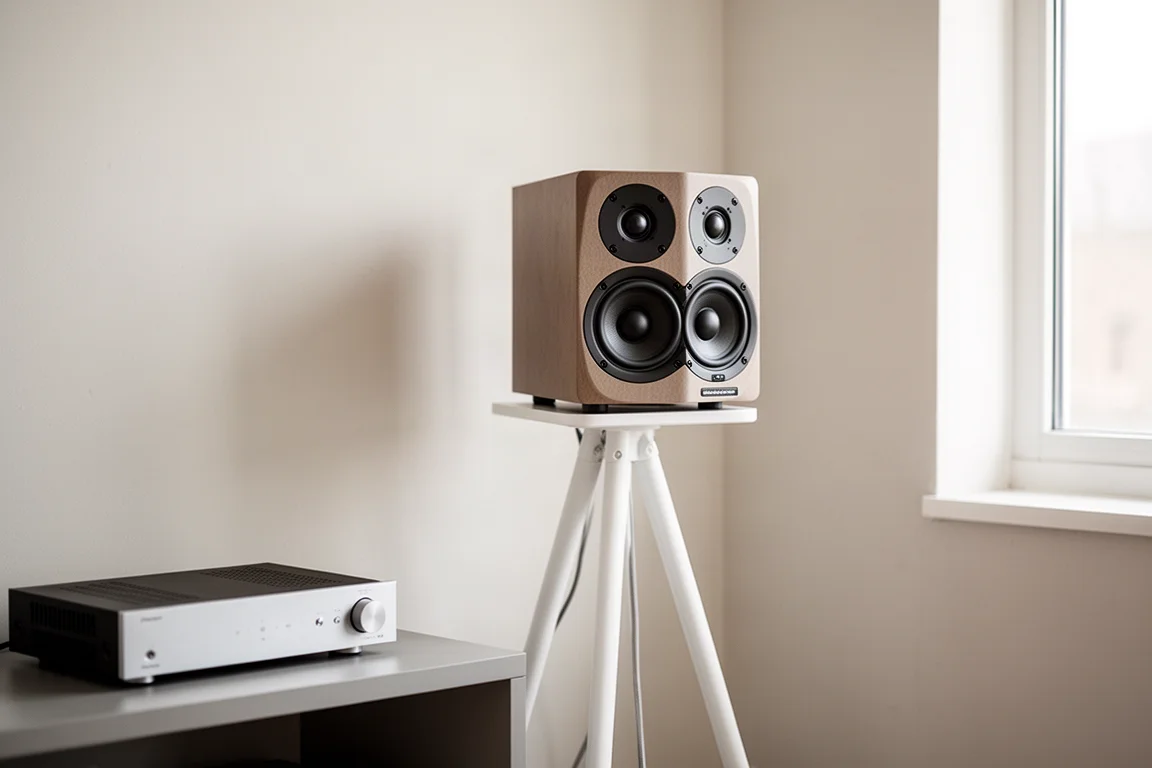
Placement is more forgiving than usual. Because the cabinet vents at the front, the Lumina II can be positioned closer to the wall behind it, and the resulting bass reinforcement is worth exploring before spending on a subwoofer. In smaller rooms, that combination is a genuine practical advantage. Standmounts of this size also depend on their stands, and the Lumina II looks especially at home on a white tripod-style pair. If extension below 55 Hz matters to you, a subwoofer remains the answer.
The LS50 Meta, with its slightly deeper bass, gives a little more low-frequency room to work with, though both speakers reward a room that is not overly large.
Buying Advice: Which Standmount Should You Choose
Choose the KEF LS50 Meta if tonal neutrality, an even balance across the range, and the best voice imaging of the two matter most to you. It is the more technically accomplished speaker of the pair, and its extra low-frequency weight makes it the more versatile choice for bass-led music.
Choose the Sonus Faber Lumina II if you want a speaker that prioritizes excitement. Its punchy bass, strong microdynamics and slight presence lift make it thrilling with rock, punk and electronic music, and its voice intelligibility makes it a genuinely good partner for television and film. It is also the easier of the two to place close to a wall, which counts for a lot in a smaller room.
At around 1,100 euros per pair, the Lumina II sits in the same bracket as the LS50 Meta, so price is unlikely to be the deciding factor. Listeners moving up from a Klipsch RP-600M and wanting more of what that speaker does well may find the Lumina II a natural next step. One more point for anyone weighing a purchase: a colored speaker can be just as enjoyable as a neutral one, and the Lumina II is a persuasive argument for that idea.
Conclusion
Both of these standmounts earn their place, and the right choice comes down to temperament rather than specifications. The KEF LS50 Meta is the more neutral, more even and more technically accomplished speaker, with a little more low-frequency weight and better voice imaging. The Sonus Faber Lumina II is the more colored and more dramatic one, and it is the speaker that turns an ordinary listening session into an event. Buy for the presentation you actually enjoy, and match either one to a room and an amplifier that let it breathe.
Further reading
Related Reviews
Hi-Fi Speakers
1723 THX Tower vs 1528 Bookshelf: Which Speaker Fits Your Room?
Two speakers at roughly the same price, built very differently. How the 1723 THX tower and the 1528 bookshelf compare on construction, bass, power needs, and sound.
Hi-Fi Speakers
Acoustic Energy AE 300 Review: Deep Bass From a Compact Standmount
A two-way standmount with real wood veneer, surprising low-end weight, and a warm, easygoing character. Here is what to know before buying.
Hi-Fi Speakers
Acoustic Energy AE1 40th Anniversary Review: A Modern Take on a British Classic
A compact standmount that revives a 1980s favorite with all-new parts, a warm mid-centric balance, and a price of £1,499 per pair.