Bookshelf Speakers
Sonus Faber Lumina II Amator Review: Italian Detail Over Bass Weight
A compact Italian two-way that trades bass slam for mid-range clarity, a deep soundstage and a beautifully finished cabinet.
Introduction
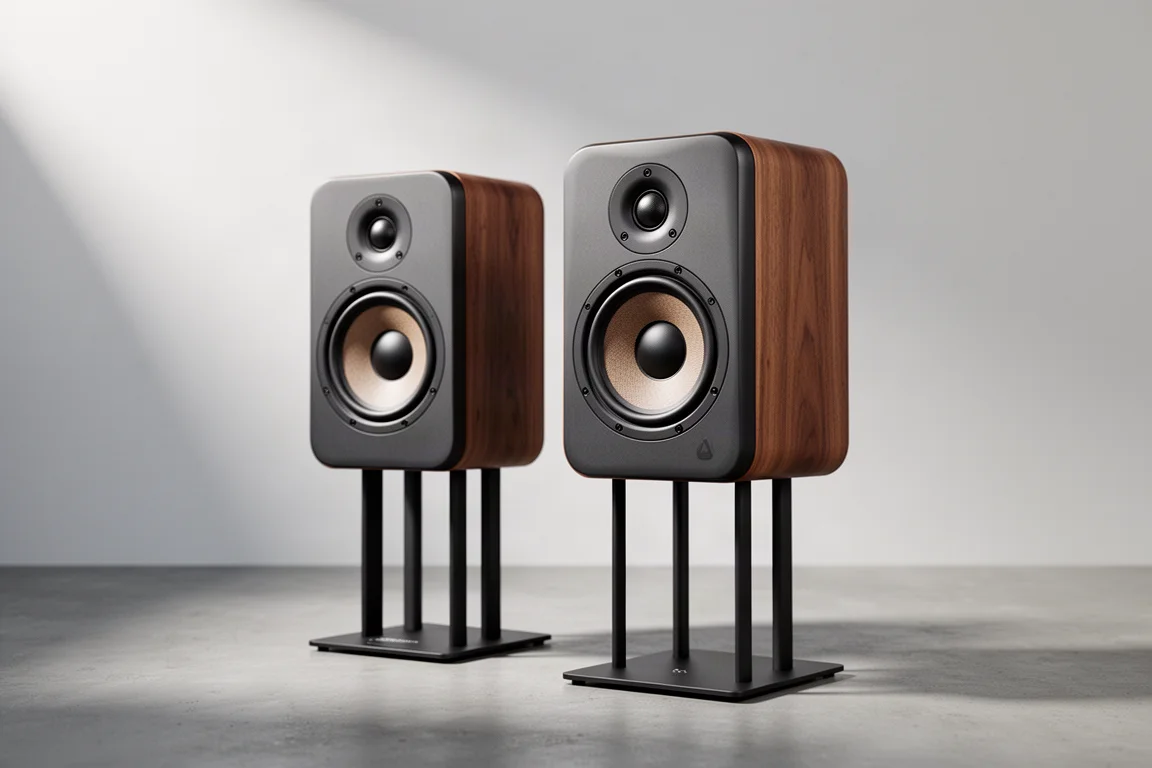
There is a stubborn idea in hi-fi that a room needs a floorstanding tower before it can sound full. That idea does not survive much time with well-designed compact speakers. A two-way bookshelf design on decent stands, driven by a capable amplifier, can fill a normal living room without drama. The Sonus Faber Lumina II Amator is a good example of the breed: an Italian-made two-way that lands at around $1,500 per pair with a glossy front baffle, a leather-wrapped cabinet and a clear set of priorities.
Those priorities are worth stating plainly. This speaker does not chase maximum low-end output. It goes after mid-range clarity, top-end detail and a soundstage that feels three-dimensional, and it is willing to give up some bass punch to get there. For listeners who care about the texture of an acoustic guitar or the air around a vocalist, that is a fair trade. For listeners who want the deepest, hardest-hitting bass in the category, it is a genuine compromise.
The result is one of the better-looking and better-built speakers at its price, and one that rewards careful listening. What follows is a closer look at where it excels, where it asks for patience, and who should put it on a shortlist.
Who this product is for
The Lumina II Amator is aimed at listeners who value detail and imaging above raw output. Acoustic material, jazz, live recordings and well-recorded vocals all play to its strengths, and it has enough transparency to make good recordings feel worth revisiting.
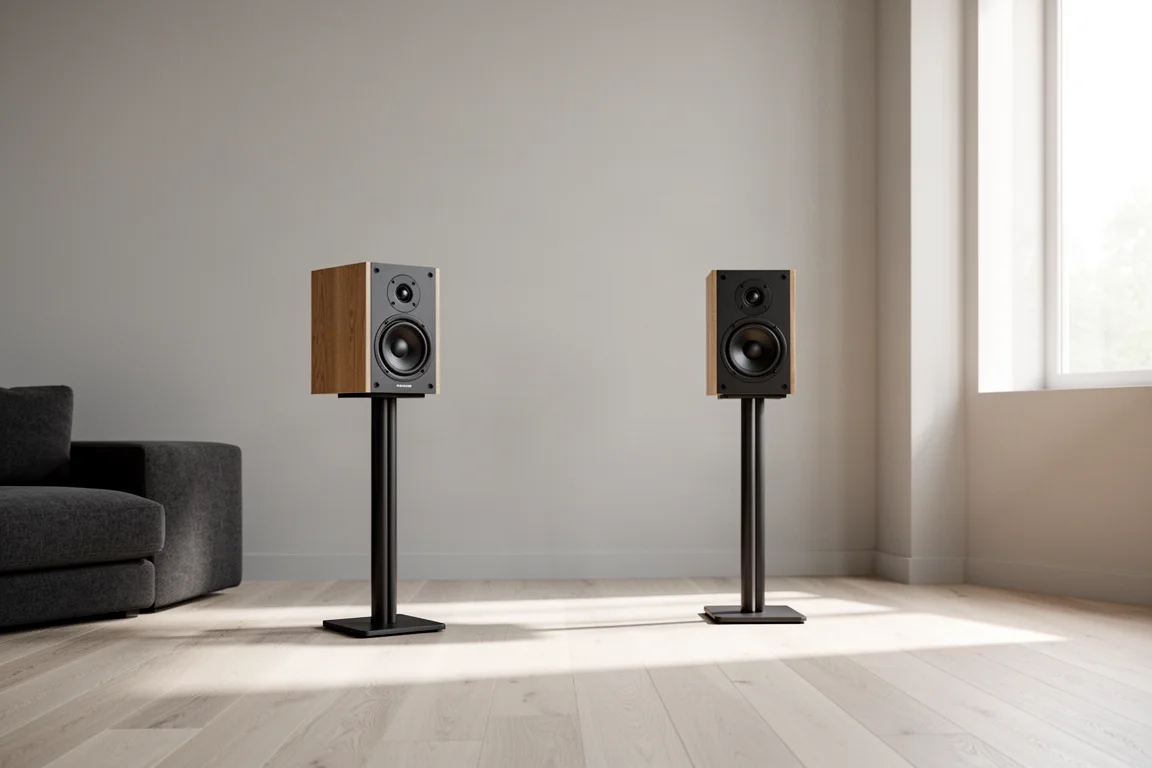
It also suits smaller spaces. The cabinet works on a desk or a stand in a study or an office, and because the port fires forward, it is more forgiving of placement close to a wall than a rear-ported design would be. It can then move into a larger room later, where it tends to open up rather than struggle.
It is a less natural fit for anyone who wants maximum bass weight without adding a subwoofer, or for anyone who prefers a restrained, understated look. The design is confident, and it makes a statement.
Main strengths
Soundstage and Imaging
This is the strongest argument for the speaker. Compared with several rivals at a similar price, it places instruments in space with noticeably more depth from front to back, a higher and more stable centre image, and clearer separation between the vocalist and the rest of the band. On a live recording, the effect is convincing enough to stop feeling like a reproduction and start feeling like a performance.
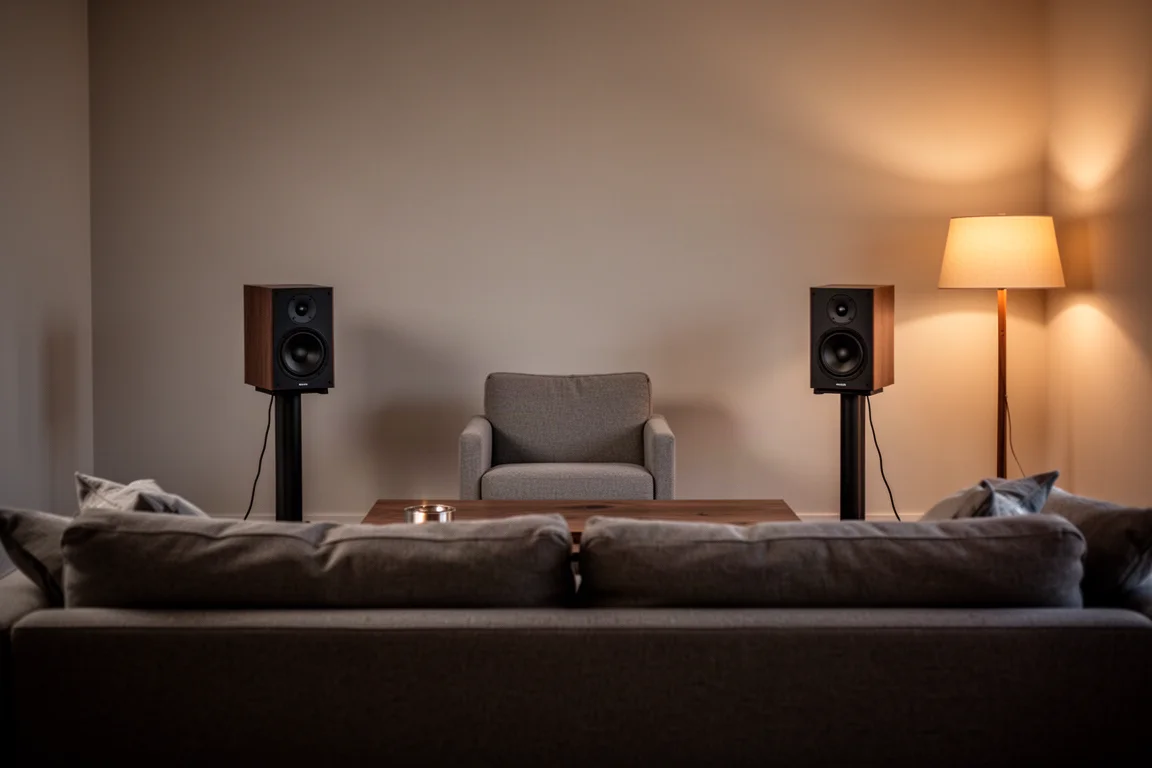
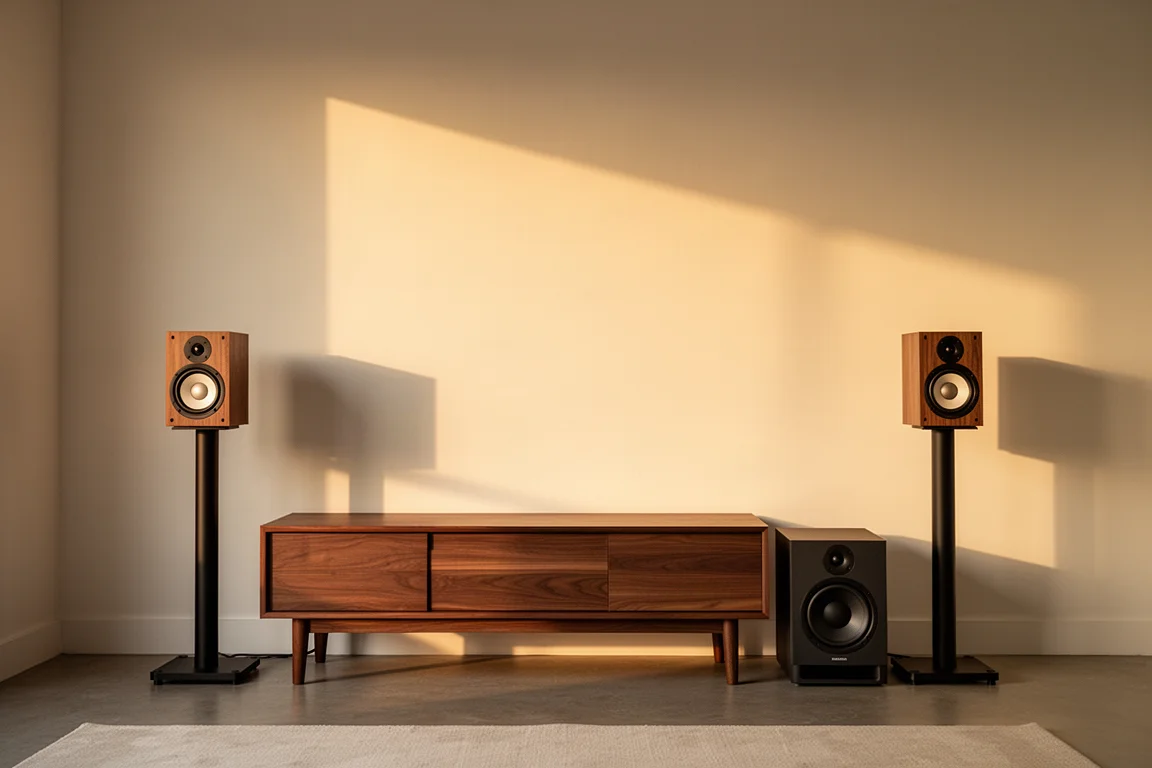
Placement plays a part in that, but the speaker is not fussy about it. Set roughly nine feet apart with the listening position around eleven and a half feet back, in a room where pulling speakers far out from the wall was not practical, the image still held together. Sitting about ten inches from the wall was not a problem either, thanks to the front-firing port.
Mid-range, Bass and Detail
A 150 mm paper cone midwoofer and a 29 mm tweeter cross over at 2,600 Hz, and the frequency response is quoted from 55 Hz to 24,000 Hz. The mid-range is where the speaker makes its case: acoustic instruments and voices come through with unusual clarity and a real sense of natural texture.
Bass is a different story. The low end is cooler in tone than several competitors, and it does not hit as hard as the SVS Ultra Bookshelf, the ELAC Uni-Fi Reference or the Buchardt P300. What that cooler balance buys is definition. Bass lines carry more detail and more shape, which is a trade many listeners will happily make.
One detail worth knowing: a rhythmic click in an electronic track sat further forward here than on the SVS Ultra, in the upper mid-range around 1,700 Hz. That is a region that can become tiring quickly, yet this speaker never turned fatiguing in practice. Depending on the recording and the amplifier, a touch of sibilance can appear, but it was not a consistent trait.
Build Quality and Finish
At the price, the finish is a standout. The front baffle has a high-gloss surface over a pale wood, and the rear of the cabinet is wrapped in a leather-like material. The five-way binding posts are beveled, which sounds like a trivial detail until you are reaching behind a speaker to seat a banana plug, at which point it becomes a genuinely thoughtful one. The front port sits above a distinctive base.
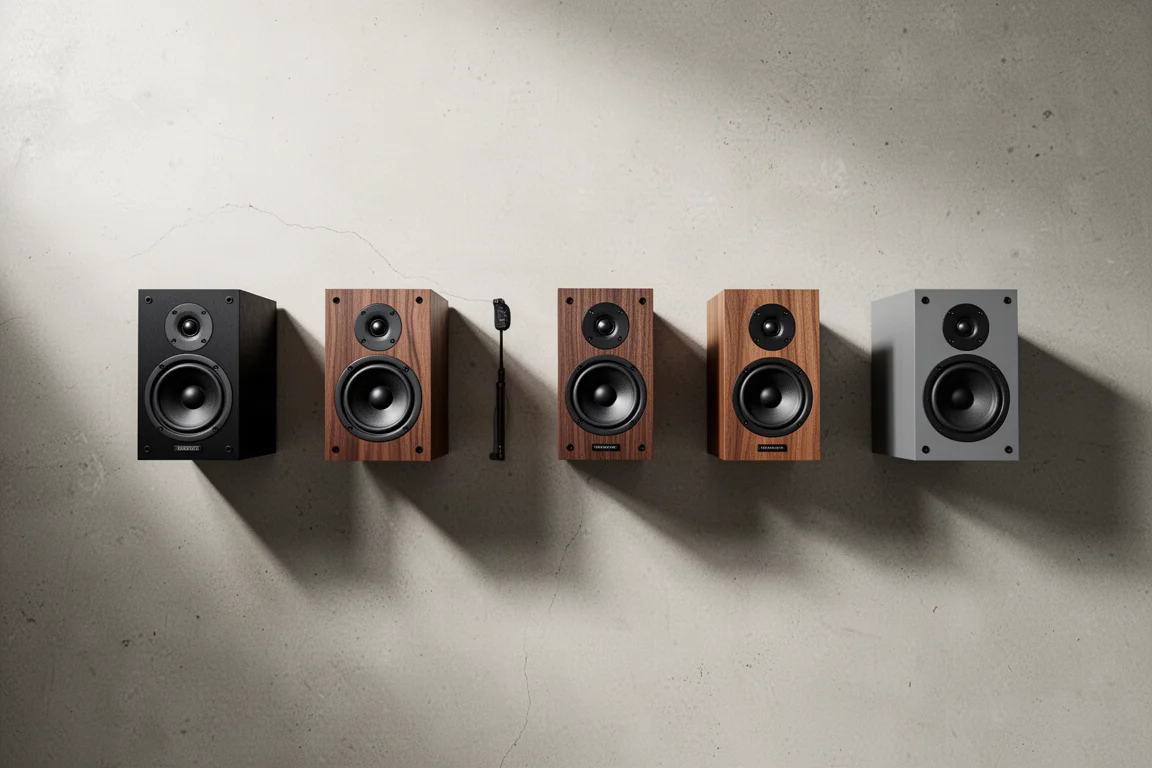
Aesthetics are personal, and this is a speaker with a strong point of view. Buyers who want something that disappears into a room should look elsewhere. Buyers who want a piece that looks as considered as it sounds will find plenty to like.
Efficiency and Room Placement
Sensitivity is rated at 86 dB with a nominal 4 ohm impedance and a recommended amplifier power of 30 to 150 watts. In practice it is easy enough to drive from a modest home theatre receiver, with most listening happening between 70 and 80 dB. Pushed louder, into the 90s, it holds together and keeps the same tonal character it has at lower volumes, which is not something every compact speaker manages.
It sounds good in a small room, but it sounds better with space around it. Given room to breathe, the soundstage widens and the imaging sharpens, which is worth planning for if the speaker is going into a larger space.
Things to consider before buying
- Bass weight is not the priority here. If punch and low-end presence matter most, several similarly priced designs deliver more.
- In medium or large rooms, a subwoofer is worth budgeting for. The speaker reaches down to a quoted 55 Hz, and a subwoofer fills in the lowest octaves rather than overpowering the presentation.
- Some recordings and amplifiers can produce a little sibilance. It is not a constant trait, but it is worth auditioning with familiar material if you are sensitive to that region.
- The design is bold. The glossy baffle and the leather-like wrap are a deliberate choice, and they will not suit every room.
- At around $1,500 per pair, this is a considered purchase. Set against other Italian-made, traditionally distributed speakers, the pricing is defensible rather than cheap.
Buying advice
If your priorities are detail, imaging and mid-range clarity, this speaker is easy to recommend. It does the difficult things well, it is built to a standard that few rivals in the bracket match, and it stays composed when pushed. Pair it with an amplifier in the 30 to 150 watt range and give it as much space as your room allows.
If bass weight sits at the top of your list, look at designs that hit harder and accept the trade in detail, or plan on adding a subwoofer. Either route works, and the second one keeps everything this speaker does well while filling in the bottom end. What matters is knowing which side of that trade-off you actually care about before you buy.
Conclusion
The Sonus Faber Lumina II Amator is a compact speaker with a clear personality: detailed, dimensional and beautifully finished, with a cooler bass balance that trades some punch for clarity. It fills a room without any need for a floorstanding tower, and it rewards listeners who pay attention to the space between the notes. If that description matches what you are looking for, it is a compelling choice at its price.
Product link
View more details for Sonus Faber Lumina II Amator
This product is mentioned in the review. Check the specifications, options, and compatibility before buying.
View more details for Sonus Faber Lumina II AmatorFurther reading
Related Reviews
Bookshelf Speakers
Acoustic Energy A100 Mark II Review: A Compact Standmount With an Expansive Soundstage
The Acoustic Energy A100 Mark II brings clarity, natural tonality and a wide soundstage to an entry-level standmount, with a few setup details worth knowing first.
Bookshelf Speakers
Acoustic Energy AE-100 Mark II Review: Compact Bookshelf Speakers With Standout Imaging
A compact British two-way bookshelf speaker with deep, layered imaging, fast bass, and a slight treble lift to weigh against a crowded $500 field.
Bookshelf Speakers
Acoustic Energy AE100 MK2 Review: Measured Performance and Four Alternatives
A close look at the Acoustic Energy AE100 MK2 bookshelf speaker, what its measured performance reveals, and four alternatives with different trade-offs.