Bookshelf Speakers
Sonus faber Electa Amator III Review: A Compact Speaker Built Like an Instrument
A close look at the Sonus faber Electa Amator III, a $10,000 stand-mount speaker with a deliberately characterful sound, natural materials, and a short list of trade-offs to know before buying.
Introduction
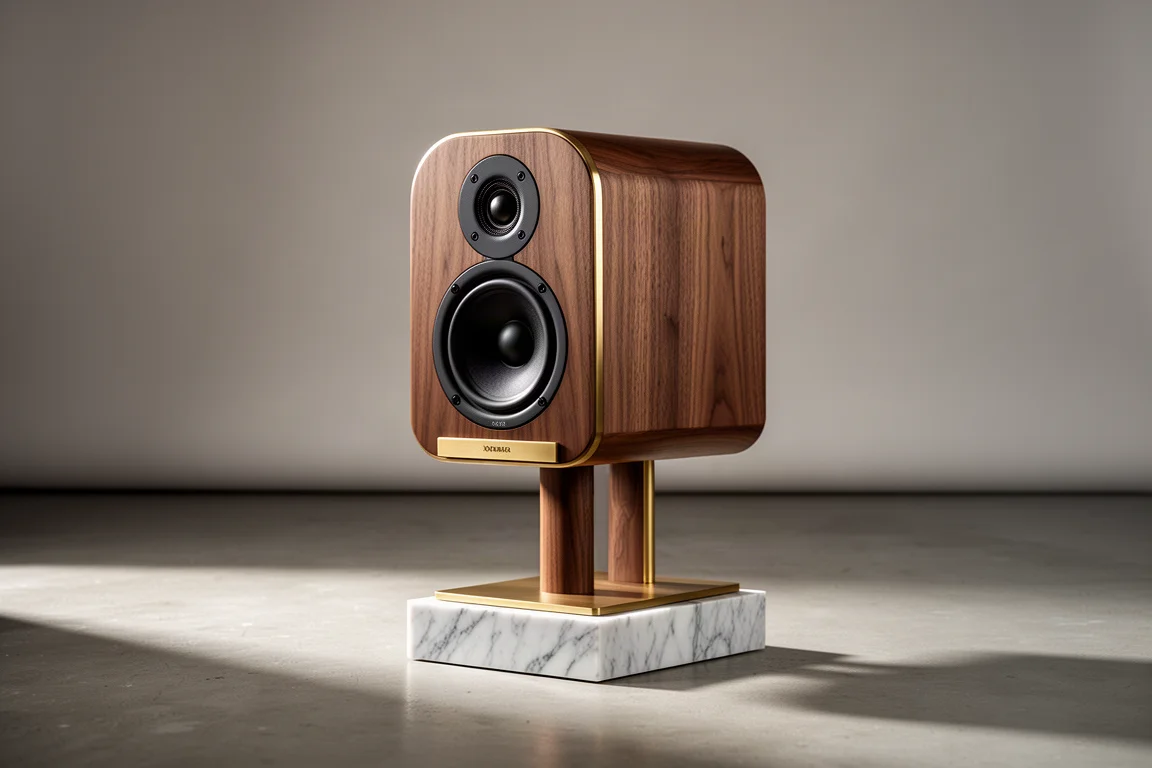
The Sonus faber Electa Amator III is a compact two-way stand-mounted loudspeaker priced at around $10,000. It belongs to the company’s heritage line, following the original Electa Amator introduced in the 1980s and the Electa Amator II that arrived in the 1990s. The third generation is a different speaker in almost every respect: more refined than its predecessors, and built around a cabinet made from solid walnut, brass, and marble.
That price places it well above what most listeners would spend on a stand-mount speaker, so the useful question is not whether it is expensive. It clearly is. The useful question is whether the money goes somewhere you can hear and see. Here, it largely does. The drivers, the crossover parts, the cabinet materials, and the finish all read as carefully chosen rather than merely premium.
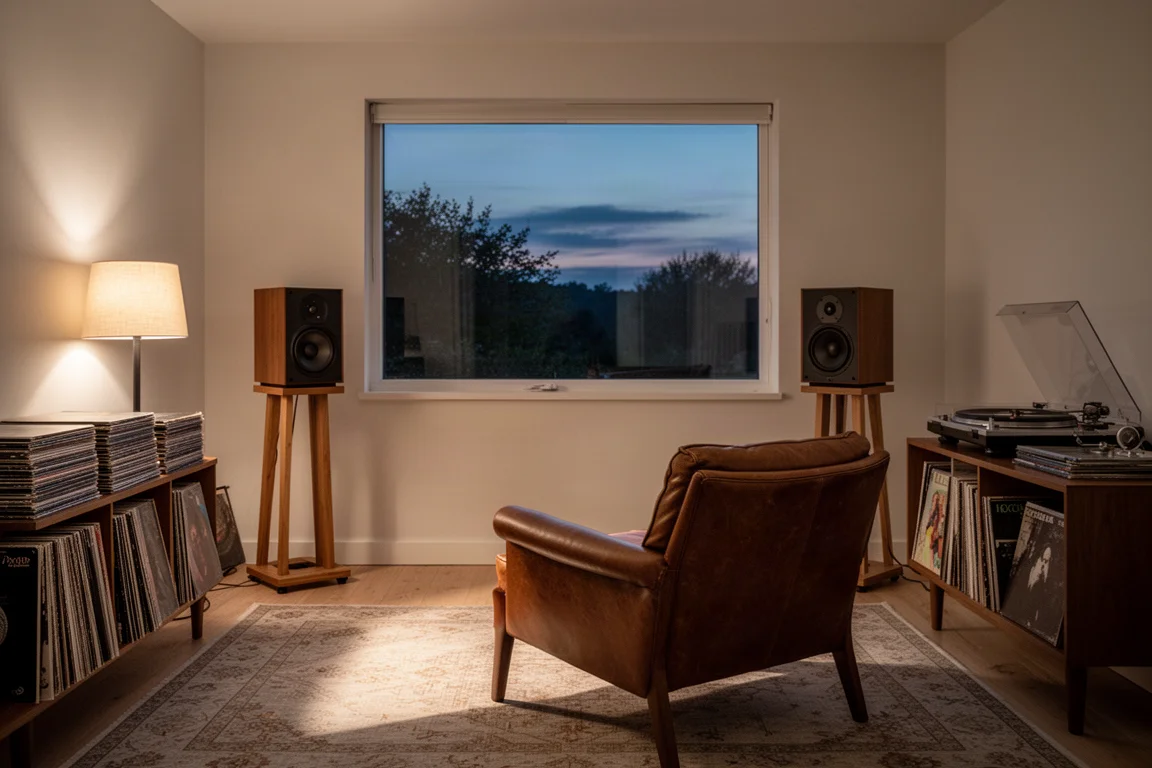
What follows is a practical breakdown of where this speaker stands out, where it asks for compromises, and which listeners are most likely to feel the outlay was justified.
Who This Speaker Is For
This is a speaker for listeners who want a compact cabinet that sounds full-bodied and characterful rather than clinically flat. The tuning is deliberately coloured, so anyone shopping for a strict neutral reference monitor should look elsewhere, because neutrality was not the design goal.
It also suits owners of modestly powered amplifiers. Sensitivity is rated at 88 dB into a 4-ohm load, which is sensitive enough to work with an 8-watt single-ended tube amplifier and flexible enough to pair with high-power solid-state designs.
Finally, it appeals to buyers who care about how a speaker is made: natural materials, visible craftsmanship, and detailing that holds up to close inspection. If the appearance and feel of a component matter as much as the measurements, this is squarely aimed at you.
Main Strengths
The case for the Electa Amator III rests on four things: the sound, the tone, the driver and crossover package, and the way the cabinet is built. Each of those carries real weight at this price.
Taken together, they explain why the speaker is often described as an end point for listeners who prefer a compact system to a pair of large floorstanders.
Sound and Tone
The tuning is the first thing most listeners will notice. This is not a neutral speaker, and it was never intended to be one. Compared with the older, darker Sonus faber house sound, the Electa Amator III is far tighter in the bass, with noticeably better high-frequency extension, and an overall balance that sits close to neutral while adding character of its own: a touch of warmth in the mid-bass and a little extra energy at the top.
The result is a very low noise floor, a soundstage that is unusually large for a cabinet this size, and pinpoint imaging. High frequencies are detailed and refined without tipping into brightness. Bass is authoritative and extends low, with a punchy, dynamic quality rather than a soft or rounded one. The midrange is smooth, and voices project cleanly.
Tone is where the speaker makes its strongest argument. Instruments and voices carry a full-bodied weight, with more mid-bass presence than a leaner, more clinical design would offer. The paper cone is a large part of that texture, and the 6.5-inch mid-woofer was developed specifically for this model. Just as importantly, the speaker stays composed with poor recordings, which is not something every high-end design manages.
Drivers and Crossover
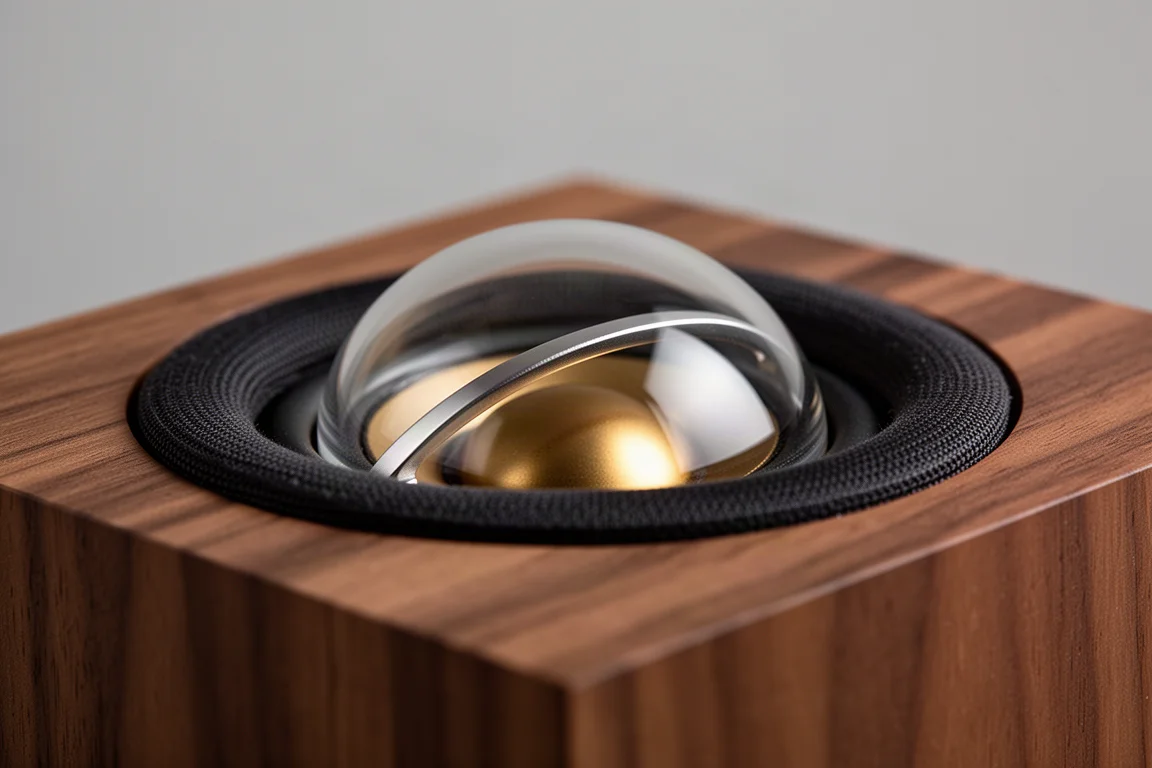
The tweeter is a damped soft-dome design of the type also used on the company’s flagship Aida loudspeaker. The damping element is the small structure mounted just in front of the dome, touching it lightly. Its purpose is to extend high-frequency response from a soft dome while preserving the smooth, unforced quality that soft domes are valued for. That combination of extension and smoothness is central to the character of this speaker.
The 6.5-inch mid-woofer is a cellulose pulp cone, in other words a paper driver, built for this model rather than borrowed from elsewhere in the range. The crossover is populated with Clarity Audio capacitors and Jensen inductors. That is a meaningful detail, because plenty of expensive speakers hide ordinary parts inside. This one does not.
Cabinet, Materials, and Craftsmanship
The cabinet uses solid walnut, brass, and marble rather than the MDF or particle board found in most speakers. Solid wood is normally avoided in cabinet construction because it is harder to control for resonance, so the walnut is seasoned in an oven process that removes moisture and changes the resonance behaviour of the wood itself. Combined with panel thickness that never drops below 2.5 centimetres and a glue formulation chosen for the right compliance once cured, the cabinet ends up with a workable balance of stiffness and damping.
The result is a speaker assembled more like an instrument than a box, and it is made in Italy. The details support that: leather on both the front and the rear, brass accents, marble plinths, and drivers mounted from the inside so that no screw heads interrupt the front baffle.

It is the kind of finish that rewards a closer look, and it is a large part of why the value question comes out favourably despite the price.
Amplifier Matching and Placement
The 88 dB sensitivity and 4-ohm load make the speaker unusually flexible for its class. Class D amplifiers such as the NAD C 298 and the Stark Audio AD4, the Hegel H120, and a 300B tube amplifier have all been used with it successfully. The Stark Audio AD4 and the Hegel H120 stood out as particularly good matches: the first for its power and headroom relative to its price, the second for a character that complements the speaker well. The Hegel would likely pull further ahead with a little more headroom, but at its price point the Stark Audio remains a generous pairing.
The cabinet is rear-ported, which usually makes placement fussy. Here it is more forgiving than expected, with strong off-axis response, although it still benefits from careful positioning. At this price, taking the time to optimise placement is worth the effort.
Things to Consider Before Buying
The most obvious consideration is the price. At roughly $10,000, the Electa Amator III is a small fortune for most listeners, and no amount of craftsmanship changes that. The value case is genuinely strong once you weigh the drivers, the crossover parts, and the materials, but the price itself is still the price.
The finish is the second point. The standard presentation pairs white marble on the speaker and its stands with walnut and brass. The company’s floorstanding Maxima offers black marble, and black marble alongside brass and wood grain is a striking combination, but black marble is not offered on the Electa Amator III as far as is known. Buyers who want that specific look will not find it here.
Solid walnut in a speaker cabinet is unusual, and the seasoning process is the reason it works in this design. It is still a material choice worth understanding rather than assuming, especially for anyone comparing it with a conventional MDF cabinet.
Finally, budget for the amplifier. The speaker is easy to drive, but it is revealing enough that the partner matters, and a matching amplifier belongs in the total cost of ownership.
Buying Advice
The Electa Amator III makes the most sense for a listener who wants a compact speaker that sounds full-bodied and characterful rather than clinical, and who values materials and finish as much as specifications. It is easy enough to drive that a modest tube amplifier is a realistic option, which keeps the total cost of a system more reasonable than the speaker’s price alone suggests.
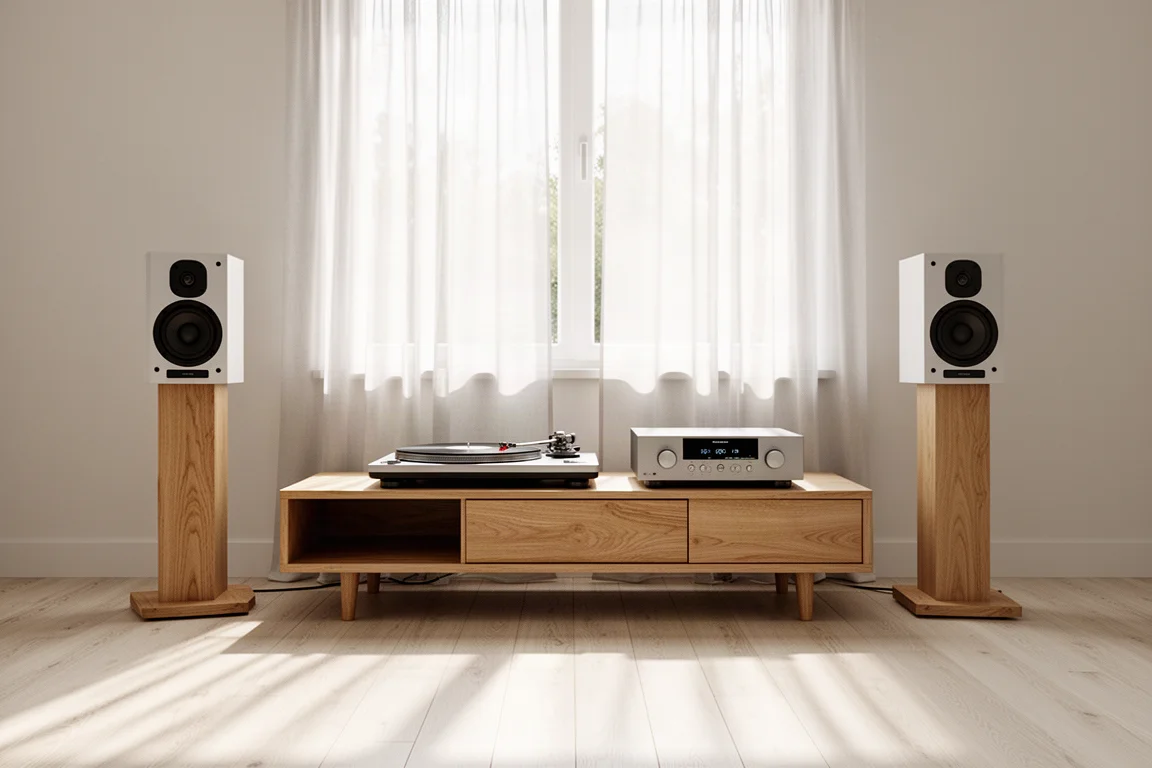
Anyone who prefers a floorstanding speaker should also consider the Maxima, the floorstanding model built on the same heritage idea and finished in black marble. Buyers who want strict neutrality above all should look at a different kind of speaker, because the tuning here is deliberately aimed elsewhere. For everyone else who can stretch to the price and responds to a warmer, more textured presentation, the Electa Amator III is a persuasive long-term purchase.
Conclusion
The Sonus faber Electa Amator III is expensive, and it is not neutral by design. Both of those things are true, and neither is a flaw. What the speaker offers in return is a full-bodied, textured sound that flatters voices and instruments, a driver and crossover package drawn from serious high-end engineering, and a cabinet made from solid walnut, brass, and marble with a level of detailing that is rare at any price. If the tuning matches your taste, the price is easier to justify than the number on its own suggests.
Product link
View more details for Sonus faber Electa Amator III
This product is mentioned in the review. Check the specifications, options, and compatibility before buying.
View more details for Sonus faber Electa Amator IIIFurther reading
Related Reviews
Bookshelf Speakers
Acoustic Energy A100 Mark II Review: A Compact Standmount With an Expansive Soundstage
The Acoustic Energy A100 Mark II brings clarity, natural tonality and a wide soundstage to an entry-level standmount, with a few setup details worth knowing first.
Bookshelf Speakers
Acoustic Energy AE-100 Mark II Review: Compact Bookshelf Speakers With Standout Imaging
A compact British two-way bookshelf speaker with deep, layered imaging, fast bass, and a slight treble lift to weigh against a crowded $500 field.
Bookshelf Speakers
Acoustic Energy AE100 MK2 Review: Measured Performance and Four Alternatives
A close look at the Acoustic Energy AE100 MK2 bookshelf speaker, what its measured performance reveals, and four alternatives with different trade-offs.