Powered Speakers
Sonus faber Duetto Review: An All-in-One Stereo Pair With Italian Craft
A practical look at the Sonus faber Duetto powered speaker pair, covering sound character, connectivity, app tuning, and what to weigh before buying.
Introduction
Sonus faber has built its reputation on natural, expressive sound and cabinets that look as considered as they sound. The Duetto brings that thinking to an all-in-one powered stereo pair: two compact, self-powered speakers that need only a power outlet and a network connection to start playing.
That is a meaningful simplification. Listeners who want proper stereo usually assemble a streamer, an amplifier, and a pair of passive speakers, then find room for all of it. The Duetto folds that stack into two elegant cabinets with streaming built in, HDMI ARC for television sound, and a moving magnet phono stage for a turntable.
Who This Product Is For
The Duetto suits listeners who want one system to handle streaming music, television sound, and vinyl in a single room. It is equally appealing to anyone who has admired Sonus faber loudspeakers but did not want to build a component system around them.
It also makes sense in smaller spaces, where two compact cabinets can replace a rack of electronics. Amplification is matched to each driver internally, so there is no separate amplifier to choose or house, and no passive crossover sitting in the signal path.
Because the cabinet is designed to reach deep into the bass region for its size, the pair can carry a room on its own, and listeners who want more low-frequency weight later can add a subwoofer and blend it through the companion app.
Main Strengths
The Duetto is strongest where Sonus faber has always been strongest: tonal naturalness, a spacious presentation, and a cabinet that looks at home in a living room rather than a listening den.
Design and Craftsmanship
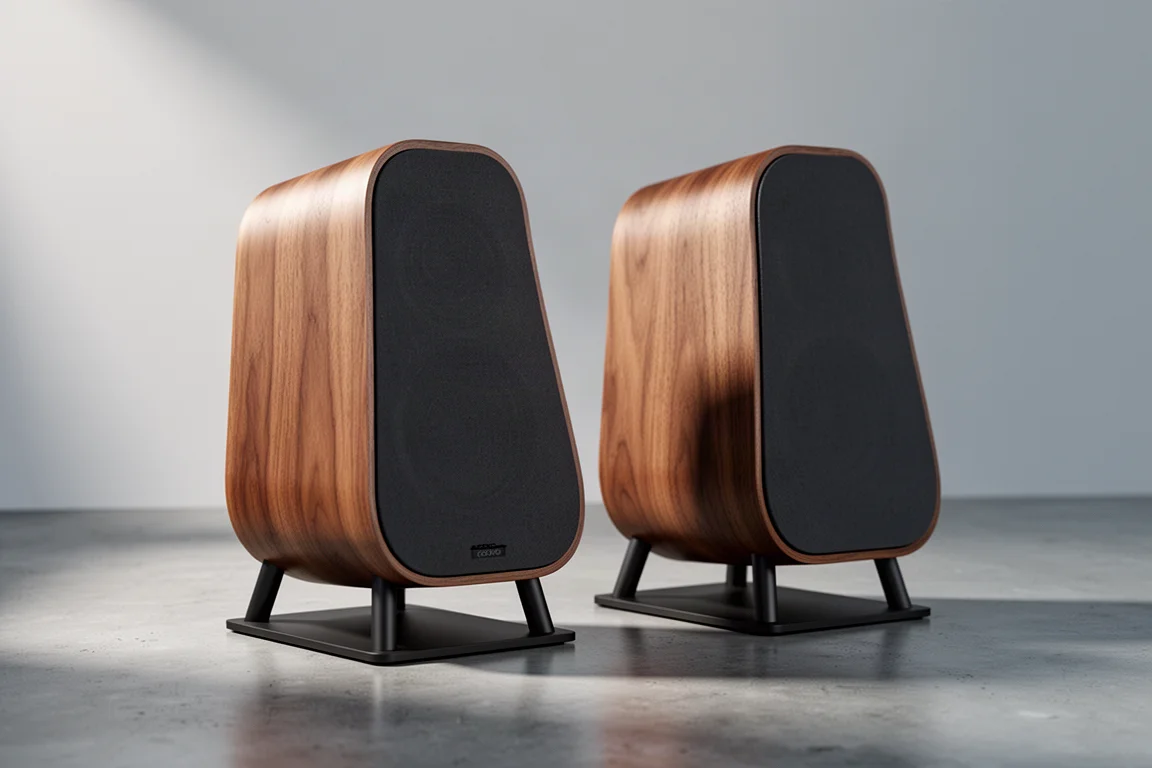
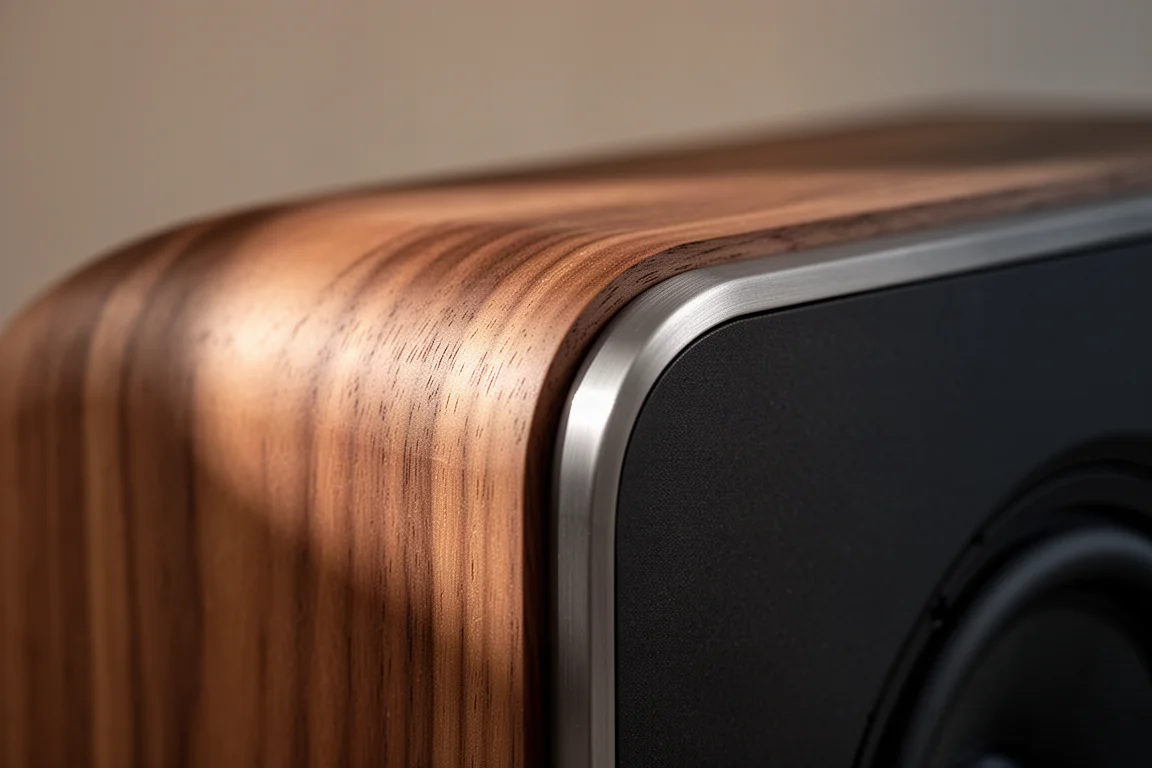
Viewed from above, the cabinet traces the shape of a lute, with matched veneer that reads as near seamless from the front and back. Two finishes are offered: a walnut veneer, and the same walnut finished in a matte graphite paint.
The top is finished in black Italian leather, and on the main speaker the touch controls are embedded directly into that leather. The grilles echo the same lute curve, and the pair looks particularly elegant with them left on.
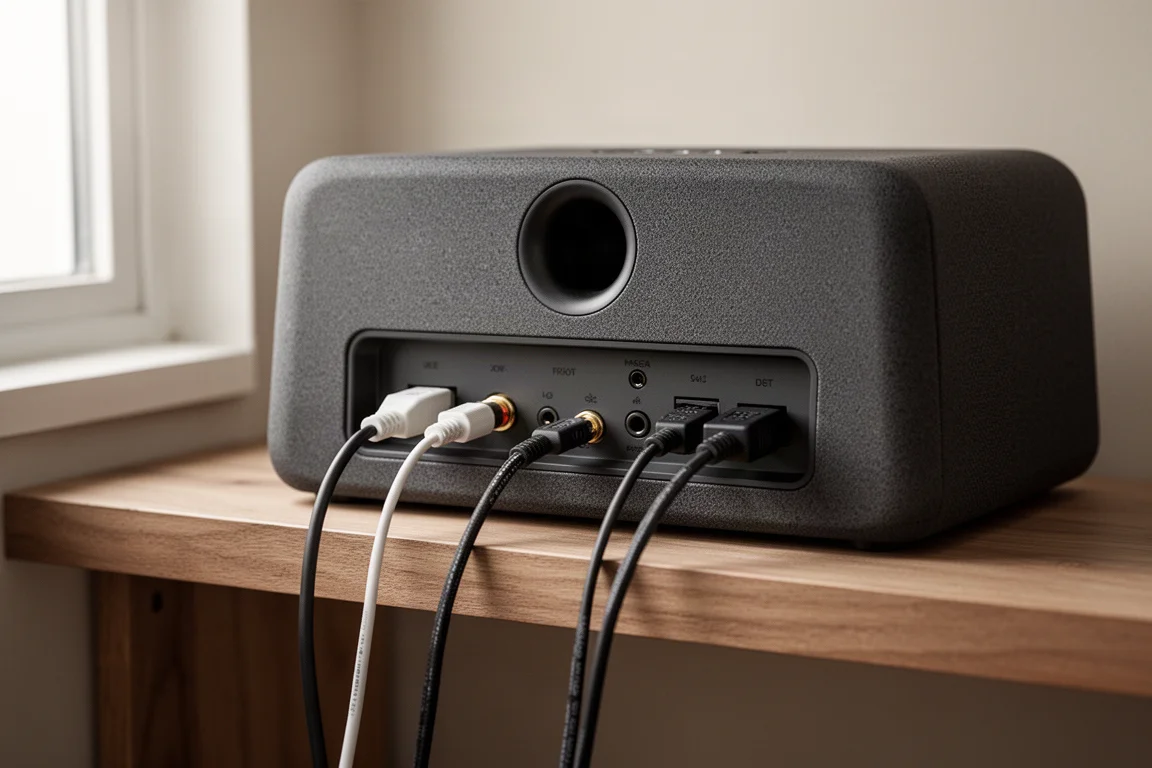
Physically, the Duetto is not a tiny speaker. Each cabinet stands roughly 14 inches tall, 11 inches wide, and 8 inches deep. The rear panel stays clean, showing only the port, with all inputs and power connections tucked into a recessed section.
Connectivity and Streaming
Connectivity is one of the Duetto’s clearest advantages, combining streaming services with genuine wired options. HDMI ARC is included, which means television sound improves dramatically, though the television output should be set to PCM because this is a two-channel system. A Toslink optical input covers televisions without HDMI ARC.
Vinyl listeners get a built-in moving magnet phono preamp, and the same analog inputs can be switched with a button to work as a standard AUX input for a CD player or similar source. On the streaming side, the Duetto supports Chromecast, Apple AirPlay 2, Bluetooth with aptX HD, Spotify Connect, and Roon. Siri and Google Assistant voice control are supported once the speakers are on the network.
Setup and Fine-Tuning Controls
Getting the Duetto online is straightforward. Apple users can add it through the Home app as an accessory, Android users can use the Google Home app, and the two speakers then need to be paired. Scanning the QR code on the back of the manual opens the setup interface, which is where the system becomes genuinely adjustable.
The tuning options are unusually deep. There is a fine high-frequency slider, useful for a live-sounding room, along with a loudness maximizer that lifts bass at low volumes and reduces that lift as volume rises. An off-center balance slider helps when the listening seat is not perfectly placed, and channels can be flipped with a button in the web interface or a button on the underside of a speaker. A room placement setting for near a wall or away from a wall keeps the low end from turning boomy when the cabinets sit close to a boundary.
Subwoofer integration is handled with the same care. The crossover point where bass leaves the Duetto and moves to the sub is adjustable from 50 Hz to 150 Hz, blend can be trimmed by plus or minus 5 dB from the listening position, and a subwoofer delay of up to 20 milliseconds allows proper timing alignment. The top panel carries the Senso interface, a set of illuminated lines with three buttons that cover volume, play and pause, track skipping, and source selection. Those lines can be dimmed or switched off entirely with the included remote.
Sound Quality
The Duetto is a two-way design with custom drivers. The one-inch dome tweeter uses a copper cap and a silk dome behind a large waveguide that controls directivity, while the four and a half inch long-throw woofer uses neodymium magnets and a coated version of the company’s cellulose diaphragm material. Power comes from a 100 watt per channel class AB amplifier for the tweeter and a 250 watt class D amplifier for the woofer. An aluminum porting system with a curved internal shape doubles as part of the amplifier heat sink, and the signal path uses a premium ESS Saber DAC for the main speakers with a separate AKM DAC dedicated to subwoofer handling.
The result is an effortless top end and upper midrange that holds its composure well beyond this price class, and a soundstage that extends outside the cabinets with real front-to-back depth when the speakers are set at equal distance from the listener. The pair effectively disappears, leaving a large, three-dimensional image.
Bass is where expectations should be calibrated. With a four and a half inch driver, low-frequency output is limited, but what is there carries the sense of weight listeners expect from a full-range speaker, even if it is not as sharply defined as a larger cabinet. Adding a subwoofer changes the picture considerably: bass becomes tighter, faster, and deeper, and removing that work from the small woofer makes the midrange noticeably more effortless and easier to follow.
Things to Consider Before Buying
- Bass depth versus definition. The Duetto gives a pleasing sense of weight, but a larger speaker will resolve low-frequency detail more precisely. Buyers who care about deep, articulate bass should plan on a subwoofer from the start.
- Remote battery access. Replacing the battery in the remote requires a long, straight paper clip inserted into a small hole to release the cover. It is an awkward procedure that most owners will only need rarely, but it is worth knowing about.
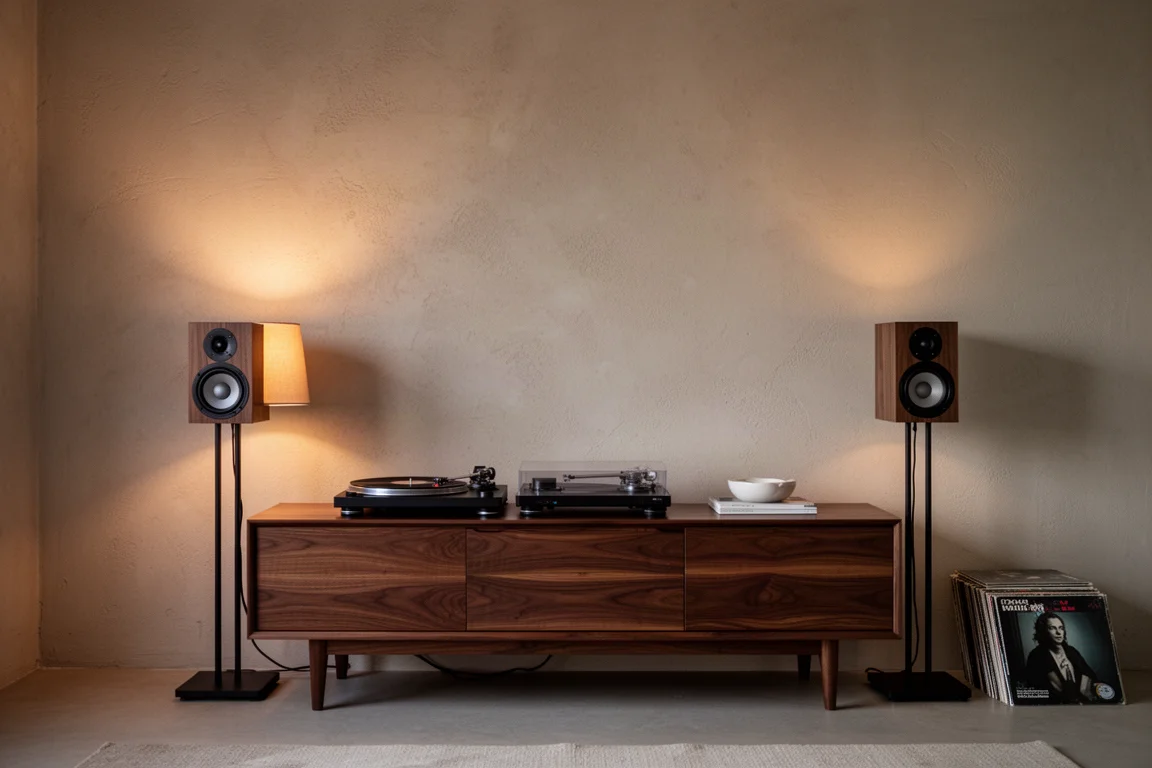
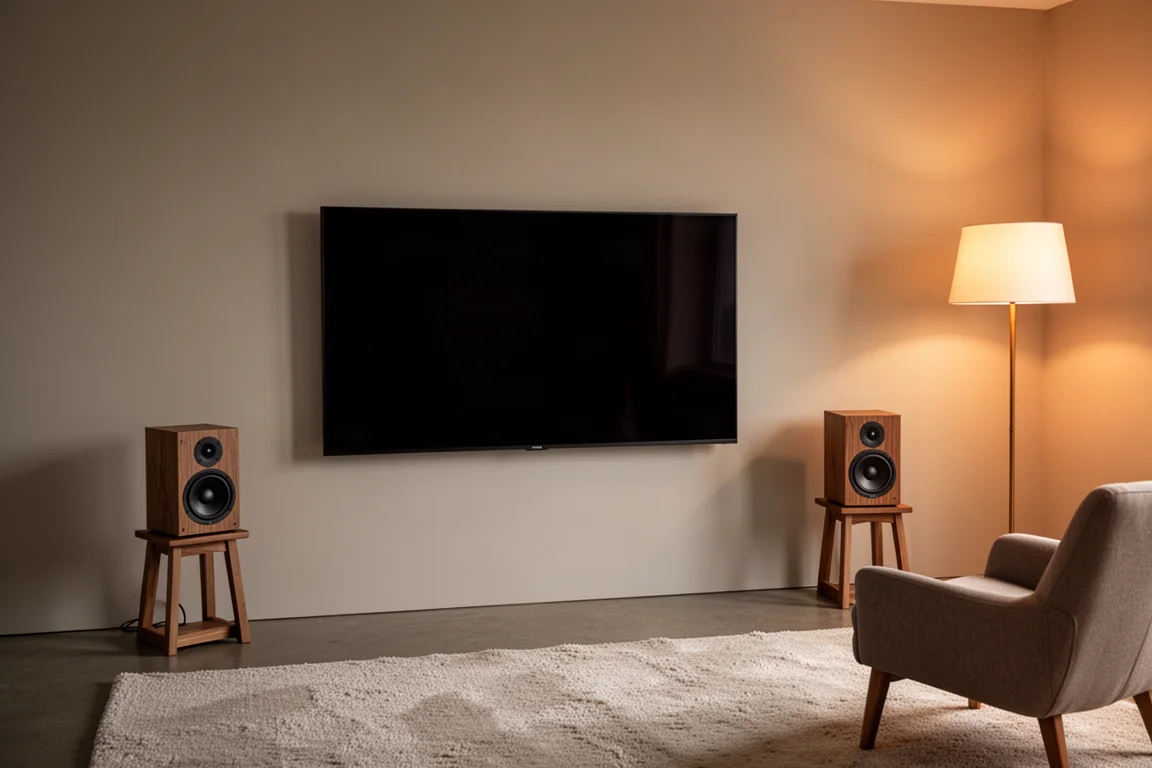
- Placement matters. The speakers work best on dedicated stands, and they are also fine on top of a credenza or inside a deep bookcase when the room placement control is used. Give them some distance from the wall if you want the cleanest low end.
- Investment level. This is a premium all-in-one system. There are far less expensive ways to build a powered speaker setup, and the Duetto’s case rests on sound quality, finish, and the depth of its tuning rather than on value alone.
Buying Advice
Start with placement. A pair set roughly in an equilateral triangle with the main listening position, at equal distance from each speaker, is what unlocks the wide soundstage and the sense of depth. Dedicated stands are the intended home for the Duetto, and a sturdy credenza or deep shelf is a workable alternative as long as the room placement setting is matched to how close the cabinets sit to a wall.
Then decide how you plan to listen. If music streaming and vinyl are the priority, the built-in phono stage and streaming support mean nothing else is needed. If television sound matters, HDMI ARC makes the Duetto a genuine upgrade over a soundbar, with the source set to PCM. And if you want full-range weight, budget for a subwoofer alongside the speakers, because the crossover, gain, and delay controls make integration unusually straightforward and the payoff in midrange clarity is significant.
Conclusion
The Duetto succeeds at what it set out to do: it brings the natural, unforced character Sonus faber is known for into a self-powered pair that needs no supporting components. Its connectivity is broad, its app tuning goes well beyond the usual bass and treble sliders, and its cabinet work looks like Italian furniture rather than electronics. Buyers who want deep bass should add a subwoofer, and buyers who want the lowest possible entry point should look elsewhere, but for anyone who wants a complete, elegant stereo system in two boxes, the Duetto is a confident choice.
Product link
View more details for Sonus faber Duetto
This product is mentioned in the review. Check the specifications, options, and compatibility before buying.
View more details for Sonus faber DuettoFurther reading
Related Reviews
Powered Speakers
AbramTek X50 Review: Powered Speakers With Real Bass and a Full Feature Set
The AbramTek X50 pairs a phono preamp, HDMI ARC, optical, and Bluetooth with genuinely capable sound. Here is what it does well and what to check before buying.
Powered Speakers
Amazon Basics Powered Speaker Review: Useful Features, Compromised Sound
A practical look at the Amazon Basics Powered Speaker: a handy remote and an optical input, held back by shouty upper mids, minimal bass, and erratic pricing.
Powered Speakers
Aperion Audio Alaire Review: Compact Powered Speakers With Serious Bass
A compact two-way powered speaker with genuine low-end punch, excellent imaging, and a control scheme that depends entirely on its remote.