Powered Speakers
Aperion Audio Alaire Review: Compact Powered Speakers With Serious Bass
A compact two-way powered speaker with genuine low-end punch, excellent imaging, and a control scheme that depends entirely on its remote.
Introduction
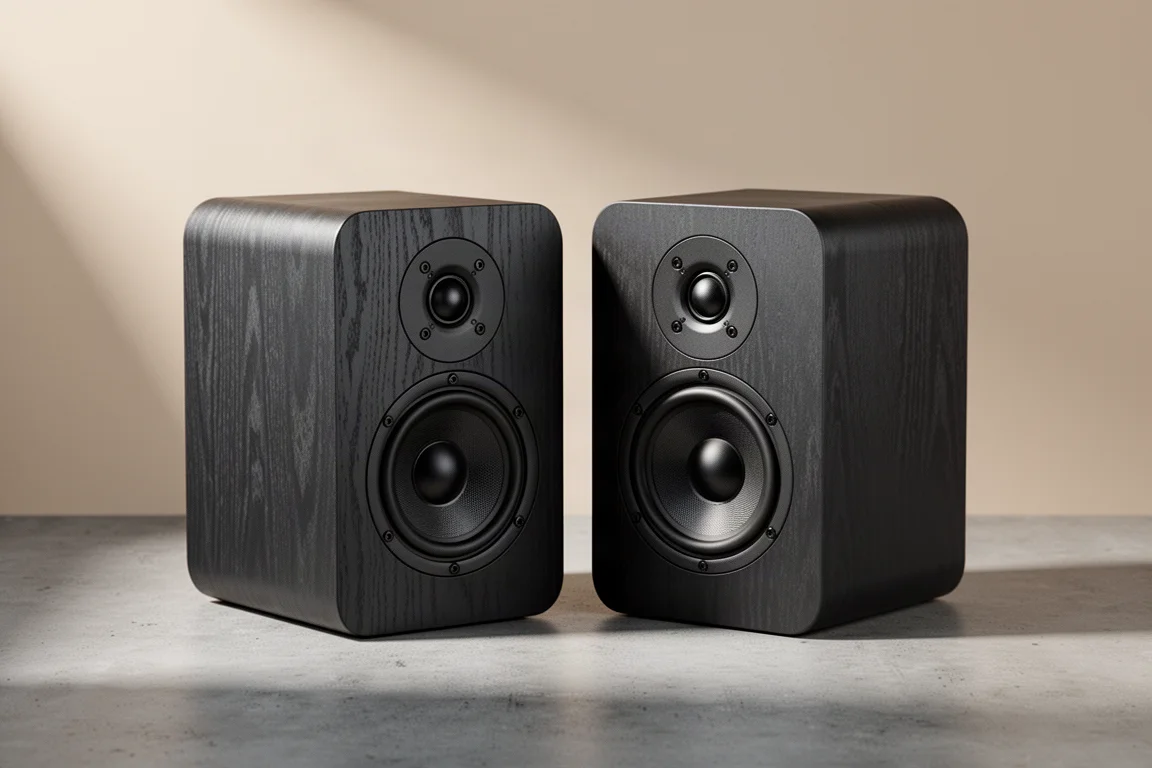
Aperion Audio has been selling speakers directly to customers for more than 20 years, and the Alaire is its compact powered speaker for desks, shelves, and small rooms. It is a two-way design with a claimed 50 watts per channel of amplification built in, which means there is no separate amplifier or receiver to add to the chain.
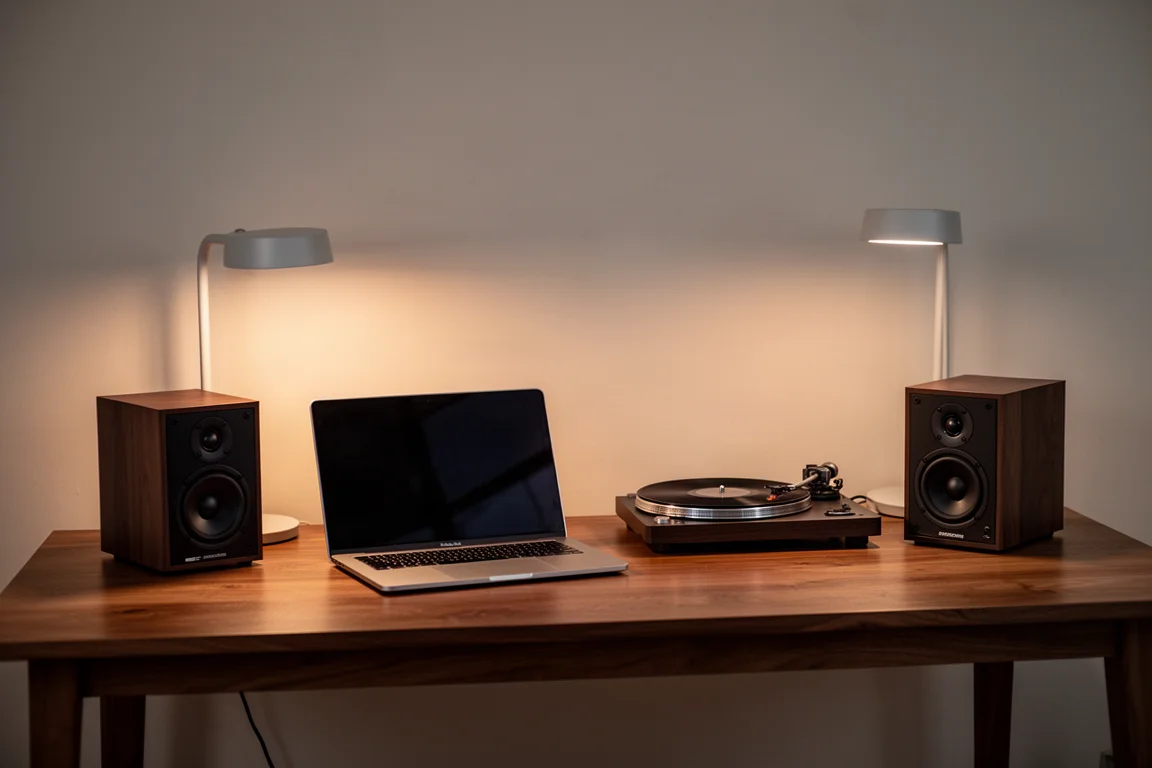
The hardware is simple to describe. A 4-inch woven fiber woofer covers the lower registers, a 1-inch silk dome tweeter handles the top end, and the system is rated from 60 Hz to 25,000 Hz. A slot port on the back of the cabinet supports the low-frequency output, and Bluetooth, an internal DAC, and a digital optical input are all built in.
Who the Aperion Audio Alaire Is For
This is a speaker for listeners who want a small system that sounds considerably larger than its footprint. Aperion positions the Alaire as a gaming speaker, but the inputs and the tuning make it just as usable for music, for vinyl playback through a phono preamp, or for everyday desktop listening.
It suits anyone stepping into a first proper hi-fi setup, particularly if bass presence matters more than an analytical, reference-style presentation. The low-end output is strong enough that a subwoofer is not a requirement.
It is a harder sell for listeners who want a strictly neutral, flat response, or who expect a full set of physical controls on the cabinet itself.
Main Strengths
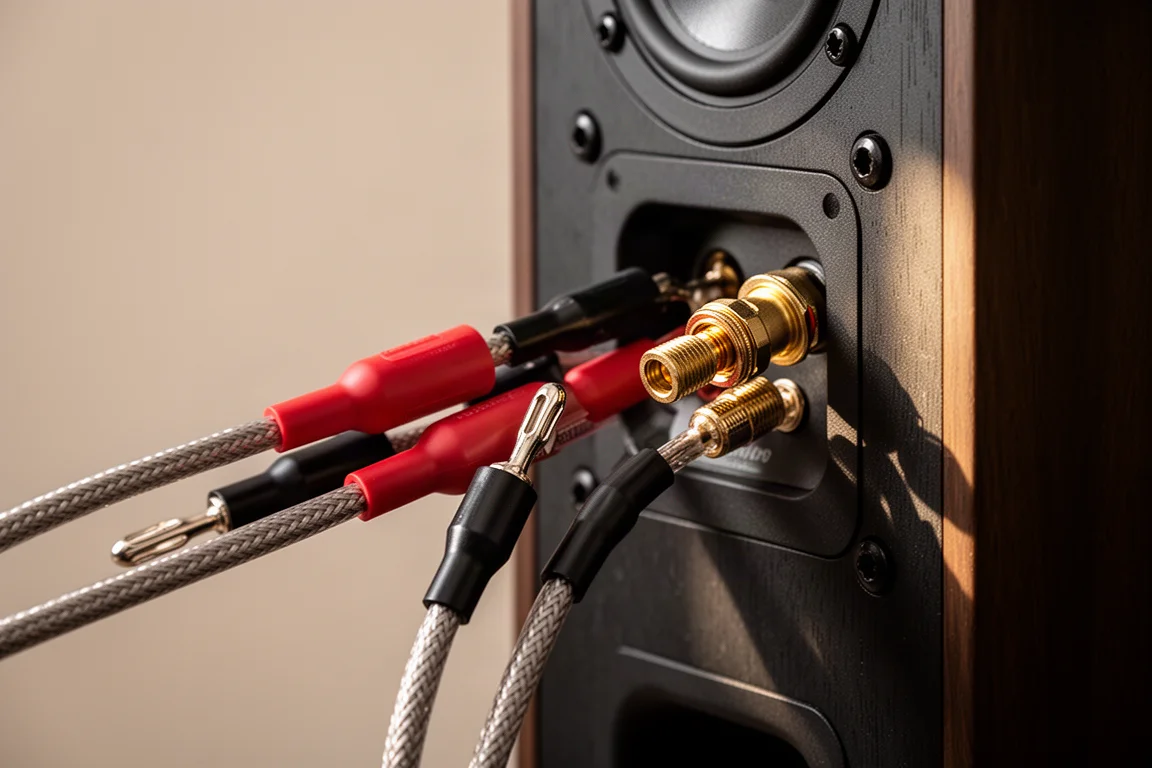
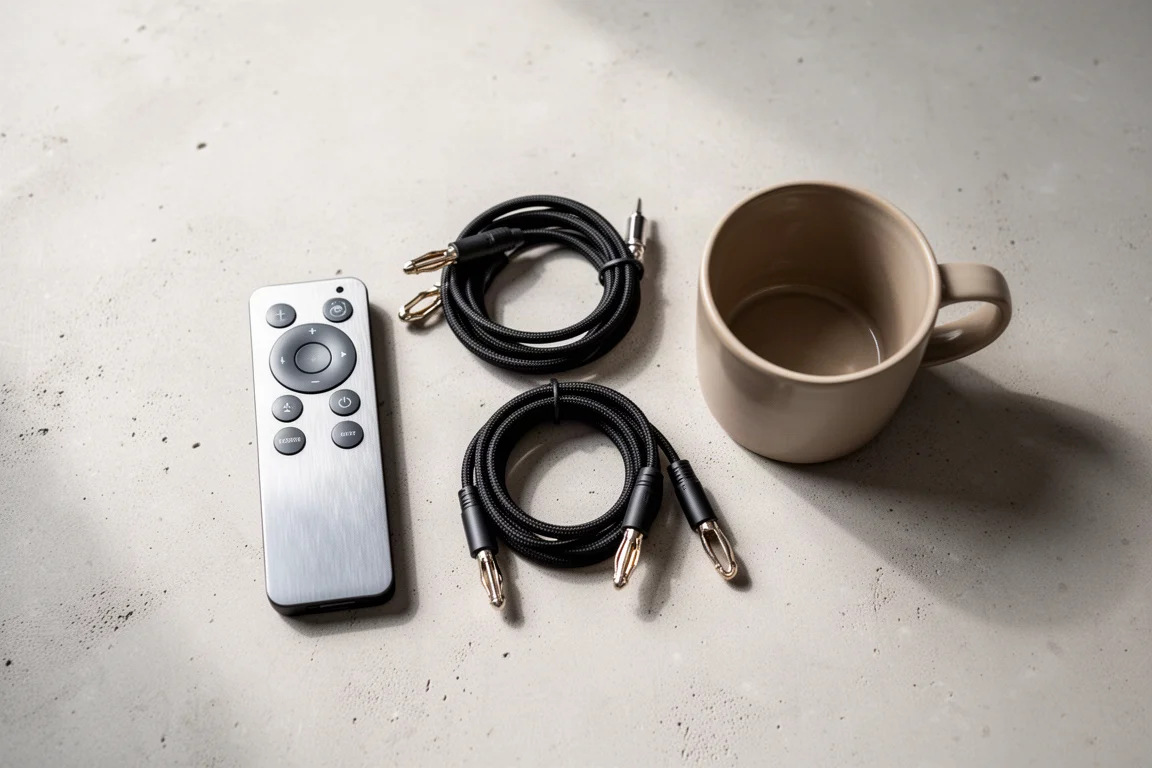
Build quality stands out first. The cabinet feels solid, the metal remote has a magnetic base that lets it stick to metal surfaces, and the included accessories are better than this price class usually suggests: a 3.5 mm to RCA cable and a heavy-gauge speaker cable terminated with banana plugs and heat-shrink sleeving.
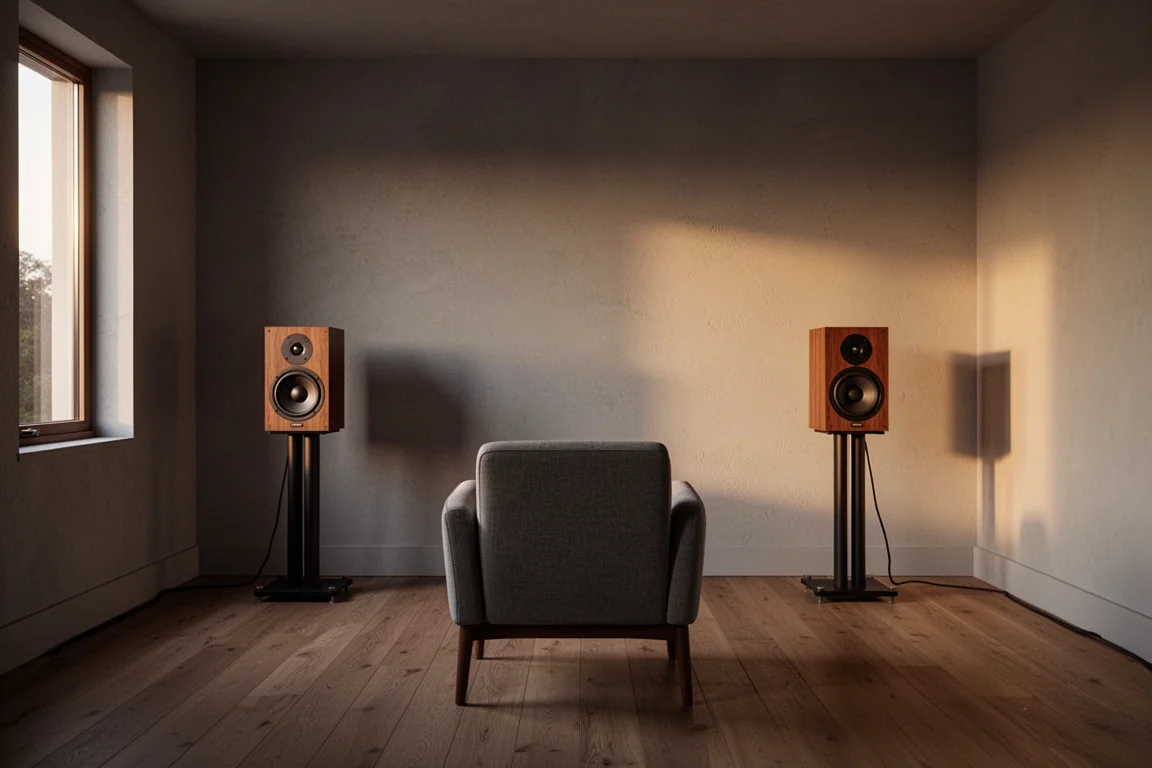
Soundstage and imaging are the most impressive part of the performance. The presentation extends well behind the speakers, with a locked-in center image and convincing depth in both the horizontal and vertical planes. The Alaire also sounds far bigger than a speaker with a 4-inch woofer has any right to, even if it never approaches the scale of a tower or a large bookshelf model.
Connectivity and Setup
The back panel covers the essentials. There is a single 3.5 mm analog input, a subwoofer output, and one digital optical input. The analog input accepts a CD player or a phono preamp through the included RCA adapter cable.
Amplification for both channels lives in the cabinet that connects to wall power. That unit sends signal to the second speaker through the binding posts, so setup is mostly a matter of running the supplied cable between the two cabinets. The terminals unscrew, which means bare wire works if you would rather use your own cable or need a longer run.
Two threaded inserts on the top of the cabinet allow wall mounting. Underneath, a 5V USB port provides power only, which is enough to run a compact streamer directly from the speaker.
Sound Quality and Bass Character
The tuning is best described as U-shaped, with emphasis at the bottom and the top. Bass is the headline: it is punchy and present in a way that most powered speakers of this size cannot match, and the slot port helps it fill a small room without obvious strain.
That low end is not the tightest or quickest around. Even with the speakers pulled well away from the wall, some tracks showed a slightly loose, boomy quality. Isolation pads or angled foam wedges can help clean that up, and moving the cabinets in and out of the room boundaries changes the balance noticeably.
The midrange stays clear but sits a little behind the bass and treble. Female vocals come through cleanly, while the lowest male vocal registers can sound slightly veiled. Treble is clean, with good decay and an accurate character, but it can become intense when the tweeter sits exactly at ear height. Because the cabinet is small, angling it up or down is an effective way to dial the top end in.
Bluetooth performance is genuinely strong. The speaker supports aptX, which carries more data than the base codec, and Apple devices use AAC. In practice the wireless connection held up well against the optical input, with no dramatic drop in quality. Tracks with wide stereo movement reveal how well the imaging holds together across the stage.
Things to Consider Before Buying
There are no physical buttons anywhere on the cabinet. Power, volume, and input selection all run through the remote, and there is no automatic input switching. Lose the remote and the speaker becomes effectively unusable until a replacement arrives. Aperion does sell replacement remotes, but a speaker at this price would normally offer at least a power button and a volume dial on the cabinet.
There are also no tone controls. Treble and bass cannot be adjusted at the speaker, so any correction has to come from the source device, and the equaliser presets on most streamers are coarse rather than precise.
There is no USB input either. The optical connection is the only digital wired option, and not every computer has an optical output. The 3.5 mm analog input covers the rest.
Finally, the feature set is lean for the price. Competing powered speakers at a similar price point typically offer more input options and more on-cabinet control.
Buying Advice
At $400 the Alaire is a sound-first purchase. What you get is a compact speaker with real bass punch, excellent imaging, and a build quality that should hold up over years of use. What you give up is convenience: physical controls, tone adjustment, USB input, and automatic source switching are all absent.
The value calculation shifts with discounts. A 10 percent off coupon brings the price closer to $360, and at that level the sound quality makes far more sense against the missing features. If you listen mostly to rock, metal, or electronic music and want a small system with genuine low-end presence, the Alaire is worth serious consideration. If your library leans toward jazz or heavily acoustic recordings and you want a strictly neutral, analytical presentation, look elsewhere.
Conclusion
The Aperion Audio Alaire delivers a big, layered soundstage and bass that belies its 4-inch woofer. Its weaknesses are practical rather than sonic: a remote-dependent control scheme, no tone controls, and a limited input set for the money. Buy it for the sound, keep the remote somewhere safe, and it will reward a small room handsomely.
Product link
View more details for Aperion Audio Alaire
This product is mentioned in the review. Check the specifications, options, and compatibility before buying.
View more details for Aperion Audio AlaireFurther reading
Related Reviews
Powered Speakers
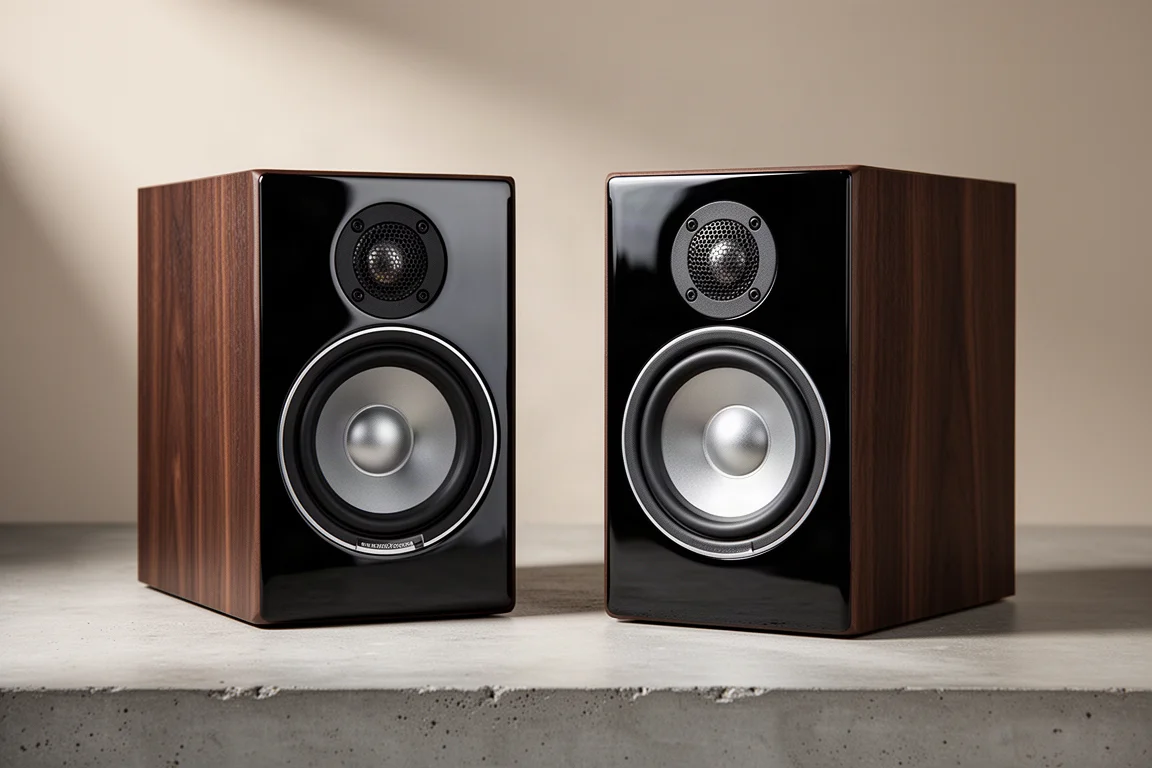
AbramTek X50 Review: Powered Speakers With Real Bass and a Full Feature Set
The AbramTek X50 pairs a phono preamp, HDMI ARC, optical, and Bluetooth with genuinely capable sound. Here is what it does well and what to check before buying.
Powered Speakers
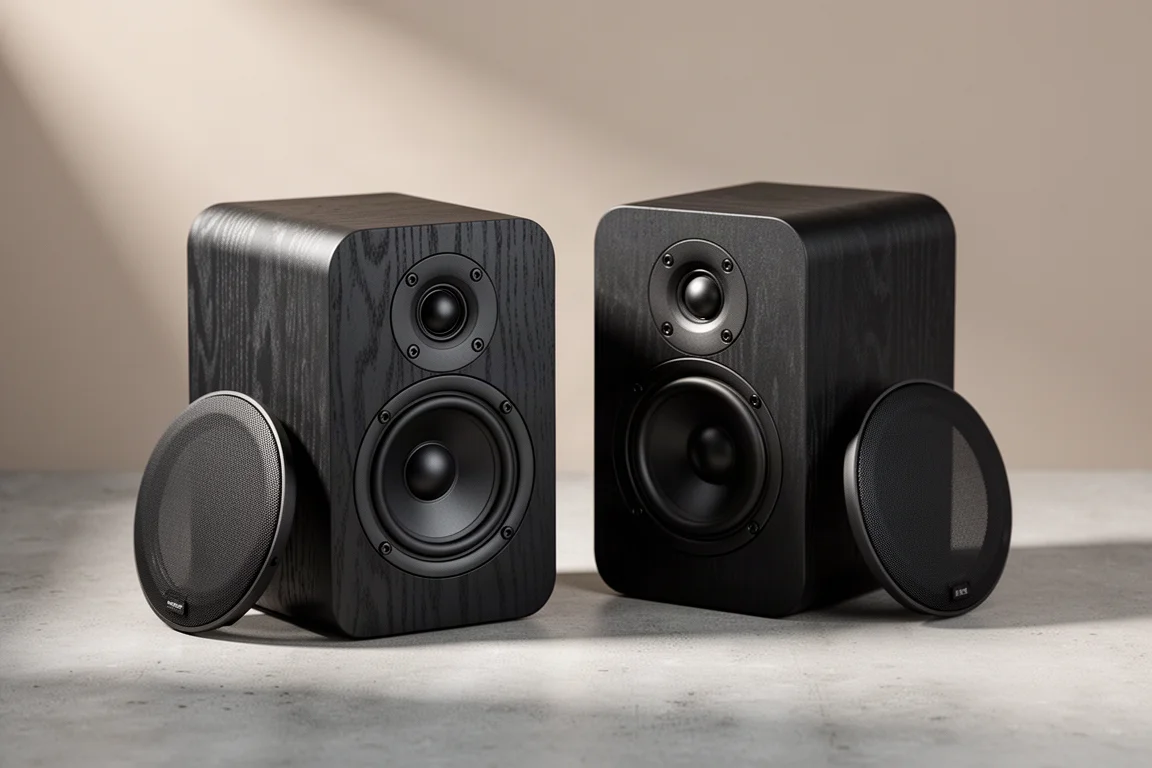
Amazon Basics Powered Speaker Review: Useful Features, Compromised Sound
A practical look at the Amazon Basics Powered Speaker: a handy remote and an optical input, held back by shouty upper mids, minimal bass, and erratic pricing.
Powered Speakers
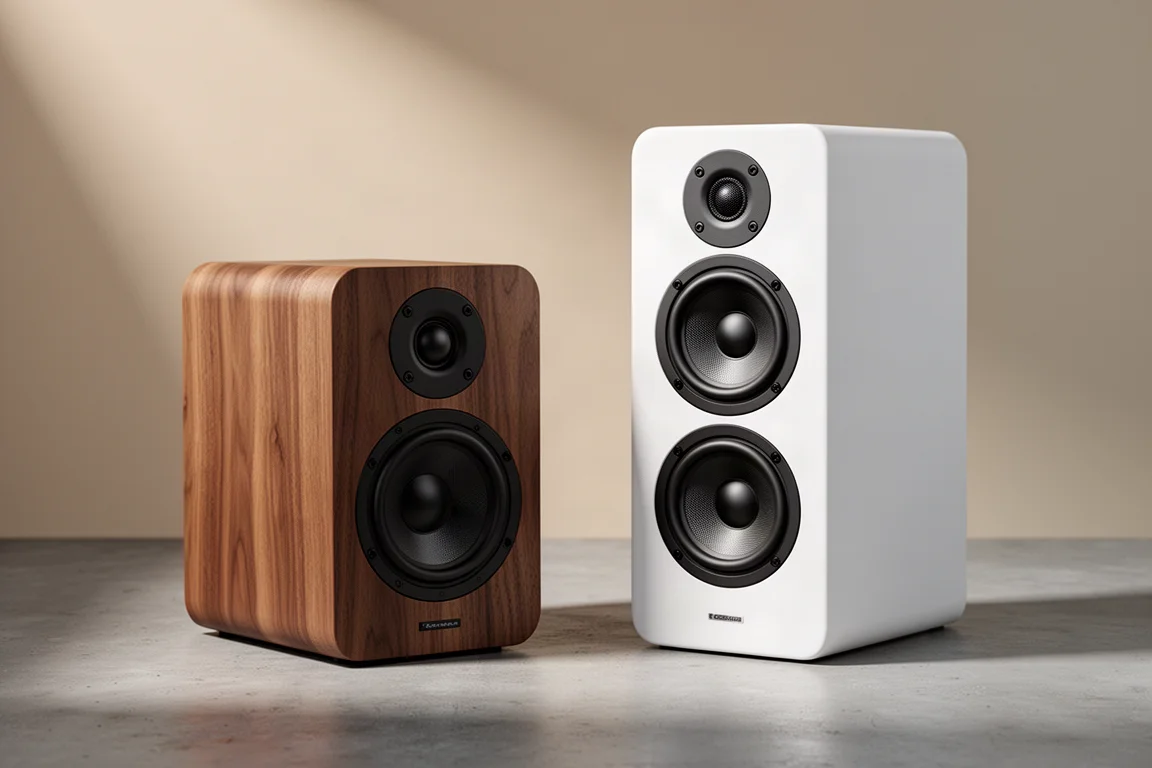
Best Powered Speakers 2026: Five Active Pairs Compared
A practical comparison of five powered speakers across connectivity, flexibility, sound quality, volume capability, and value.