Powered Speakers
AbramTek X50 Review: Powered Speakers With Real Bass and a Full Feature Set
The AbramTek X50 pairs a phono preamp, HDMI ARC, optical, and Bluetooth with genuinely capable sound. Here is what it does well and what to check before buying.
Introduction
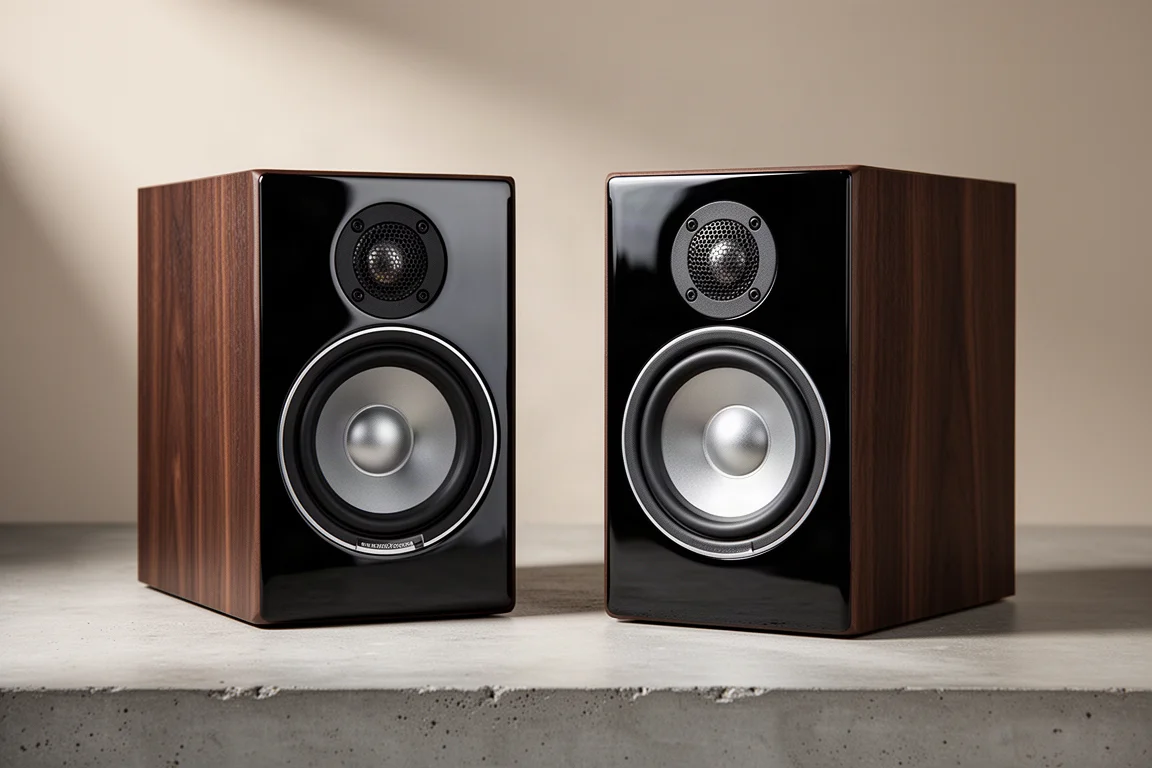
Powered speakers usually ask buyers to trade sound quality for convenience. The AbramTek X50 makes a different case. It is a two-cabinet powered system with a gloss black front baffle, a titanium dome tweeter set behind a honeycomb grille, and an aluminum woofer finished with a metal surround inlay. Behind that styling sits a connection panel that reads more like a compact integrated amplifier than a desktop speaker.
The feature list is the first reason to pay attention: a built-in phono preamp, HDMI ARC, an optical input, Bluetooth, an auxiliary 3.5 mm input, and a pre-out for a subwoofer or a headphone amplifier. The second reason is that the sound holds up. Bass has genuine weight, the mid-range carries dialogue cleanly, and the top end stays composed when the volume goes up.
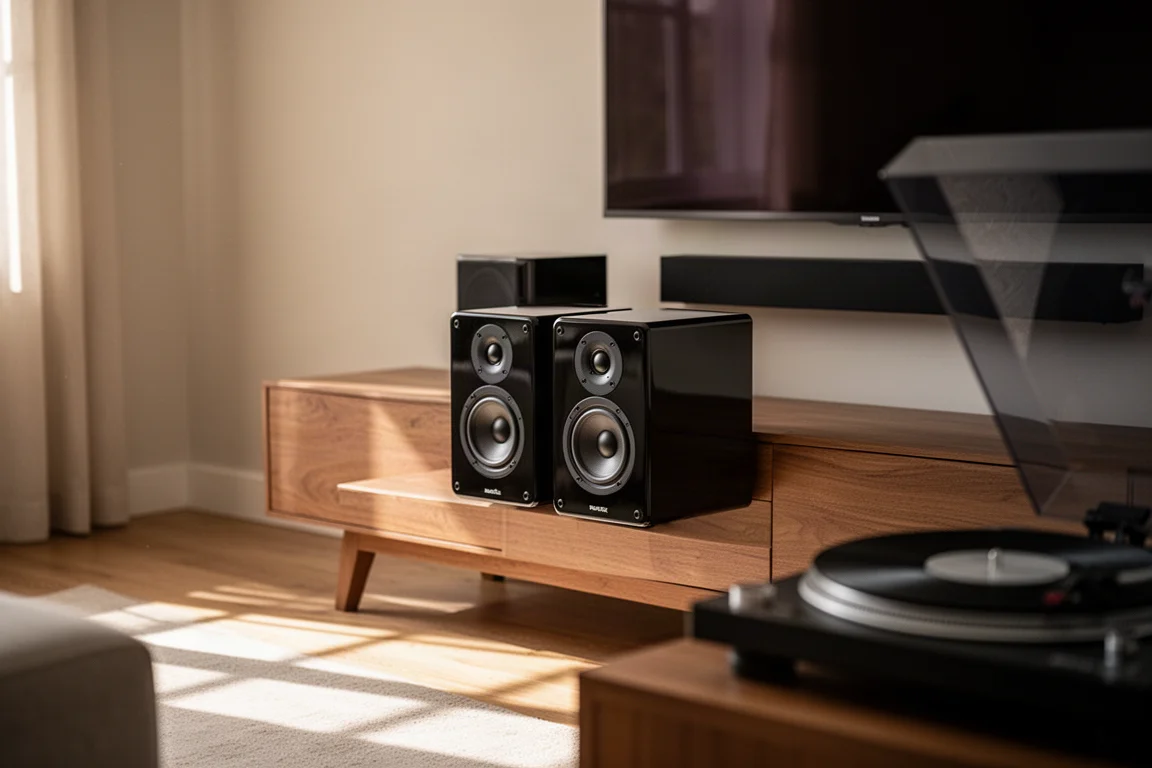
A remote covers volume, bass, and input selection, and the cable that links the two cabinets runs about nine feet, which gives some flexibility in how the speakers are positioned.
Who This Product Is For
This is a system for listeners who want one purchase to cover several jobs. It suits anyone replacing a soundbar in a small or medium room: HDMI ARC handles the television connection, and the mid-range clarity makes spoken content easy to follow without adding a separate center channel.
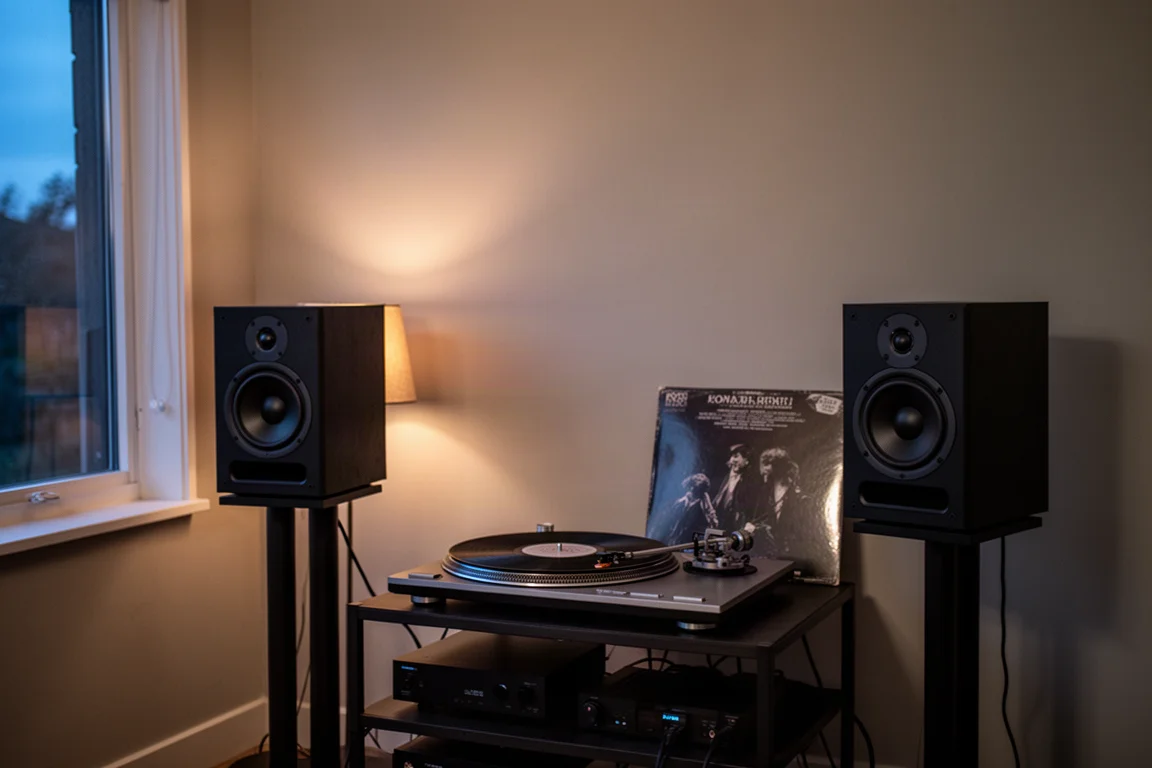
It also suits vinyl listeners who would rather not buy a separate phono stage. The built-in phono preamp accepts a turntable directly, and the presentation does not lose anything obvious in the process.
Finally, it works as a secondary system, a desk setup, or a first step into better audio. Buyers who want an all-in-one solution with Bluetooth and a physical remote will find the X50 covers more ground than most powered speakers at this price.
Main Strengths: Sound Quality
Bass is the first surprise. There is enough low-end weight here to fill a small or medium room, and it stays present even at moderate volumes. It is not the tightest or most finely textured bass available at any price, but it does not smear the mid-range, which is what usually goes wrong when a compact powered speaker tries to sound big. The bass control on the back and on the remote lets listeners tune that balance.
Mid-range and dialogue are the strongest part of the presentation. Voices come through clean and intelligible, which is exactly what a television replacement needs, and female vocals sound crisp without turning hard.
The tweeter is a titanium dome, a material that can sometimes turn bright or tiring. Here the treble carries a mild emphasis that reaches down into the upper mid-range, but it never becomes harsh, and long listening sessions do not produce fatigue.

Near-field listening is where fatigue usually shows up first, and the X50 stayed comfortable at close range. Soundstage and imaging are also better than expected: instruments hold their positions rather than collapsing into a single point between the cabinets.
Connectivity, Inputs, and Control
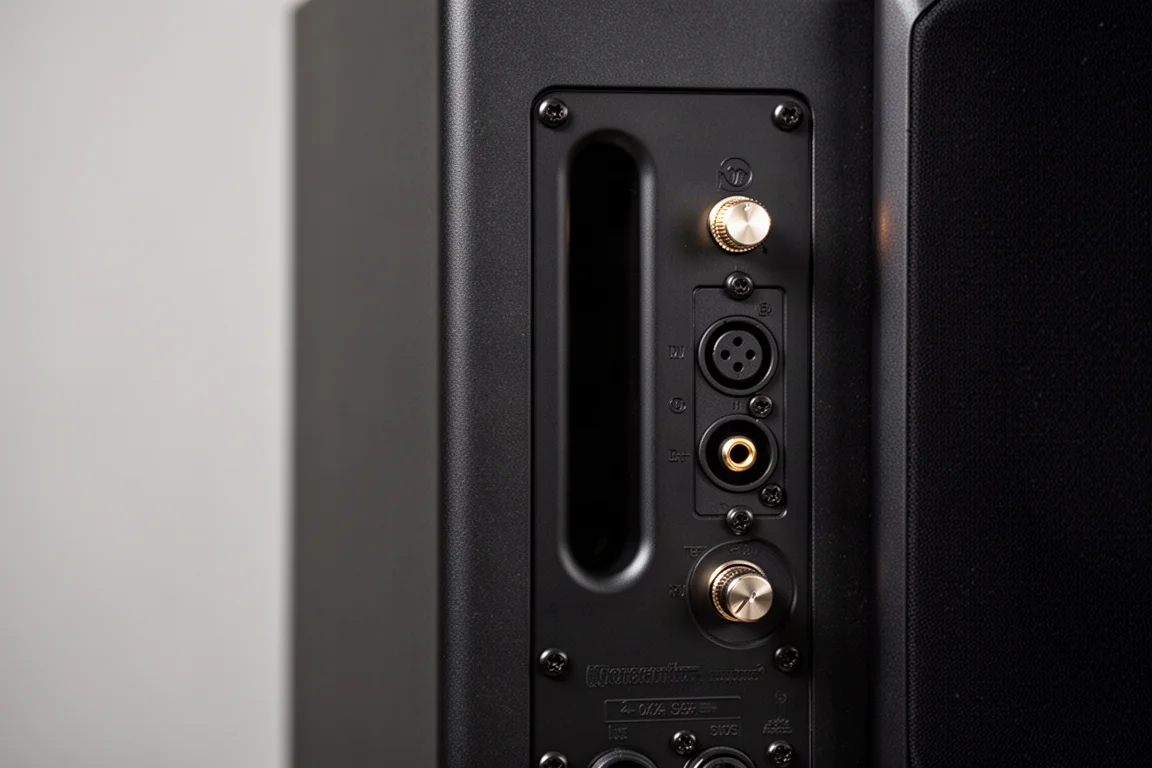
The back panel carries a slot port, HDMI ARC, an optical input, a USB port intended for flash drive playback, a 3.5 mm auxiliary input, and a phono preamp. There is also a pre-out, so a subwoofer or a headphone amplifier can be added later.
Television audio over HDMI ARC, the optical connection, and the phono stage all work as expected. Vinyl playback through the built-in phono preamp delivers the right amount of bass without obvious losses, which is more than many all-in-one systems manage. Bluetooth is the simplest path for casual listening from a phone, tablet, or computer.
Volume and bass controls sit on the back of the cabinet, and the bass dial rotates continuously without an end stop. The remote duplicates both functions and also switches inputs when the volume button is pressed, which matters because the system has no display to confirm what is selected.
Things to Consider Before Buying
There is no treble tone control, so the mild treble emphasis can only be adjusted through placement. Raising or lowering the cabinets relative to ear height changes how much of the top end arrives at the listening position.
The bass is generous rather than reference-grade. Listeners who prioritize texture and speed in the low end may want to add a subwoofer through the pre-out and let the cabinets handle everything above it.
The USB port is intended for flash drive playback, a feature worth confirming for your own use before relying on it. The cable linking the two speakers is also specific to the system, so if it is damaged, sourcing a replacement may take some effort.
Finally, the remote is the most convenient way to switch sources, so it is worth keeping in a known place. Pricing also moves: the speakers have been listed at $500 and have appeared at $400 with a $100 discount.
Setup and Placement Notes
Plan for the roughly nine-foot cable between cabinets, since it sets the maximum distance between the two speakers. A little experimentation with height pays off given the treble behavior: position the tweeters slightly above ear level to soften the top end, or level with the ear for the most detail.
If more low-end output is wanted, the pre-out accepts a powered subwoofer. Otherwise, the bass control on the back or on the remote is enough to match the speakers to a desk, a shelf, or a television stand.
Buying Advice
At $400, the X50 is straightforward to recommend. The combination of real bass, a clean mid-range, a phono preamp, HDMI ARC, optical, Bluetooth, and a subwoofer pre-out is difficult to match at that figure. At the $500 list price it is still a strong package, though the value case is less emphatic.
Comparably featured powered speakers from other brands generally cost more. The Klipsch Fives, for example, offer a similar feature set but typically sell for significantly higher prices.
Buyers who want streaming built in can add an inexpensive network streamer to one of the digital inputs and keep the speakers as the core of the system. Those who mainly want better television sound can connect over HDMI ARC and stop there.
Conclusion
The AbramTek X50 stands out because it does not force a choice between features and sound. It handles vinyl, television, and casual Bluetooth listening, and it does so with bass weight and mid-range clarity that most powered speakers at this price cannot match. For anyone assembling a compact system in a small or medium room, it deserves a serious look.
Product link
View more details for AbramTek X50
This product is mentioned in the review. Check the specifications, options, and compatibility before buying.
View more details for AbramTek X50Further reading
Related Reviews
Powered Speakers
Amazon Basics Powered Speaker Review: Useful Features, Compromised Sound
A practical look at the Amazon Basics Powered Speaker: a handy remote and an optical input, held back by shouty upper mids, minimal bass, and erratic pricing.
Powered Speakers
Aperion Audio Alaire Review: Compact Powered Speakers With Serious Bass
A compact two-way powered speaker with genuine low-end punch, excellent imaging, and a control scheme that depends entirely on its remote.
Powered Speakers
Best Powered Speakers 2026: Five Active Pairs Compared
A practical comparison of five powered speakers across connectivity, flexibility, sound quality, volume capability, and value.