Powered Speakers
Amazon Basics Powered Speaker Review: Useful Features, Compromised Sound
A practical look at the Amazon Basics Powered Speaker: a handy remote and an optical input, held back by shouty upper mids, minimal bass, and erratic pricing.
Introduction
The Amazon Basics Powered Speaker is one of the more puzzling products in the budget hi-fi space. It appears and disappears from store listings, its price has swung between roughly $50 and $350, and the frequency response figure quoted for it promises a level of performance that small powered bookshelf cabinets rarely deliver.
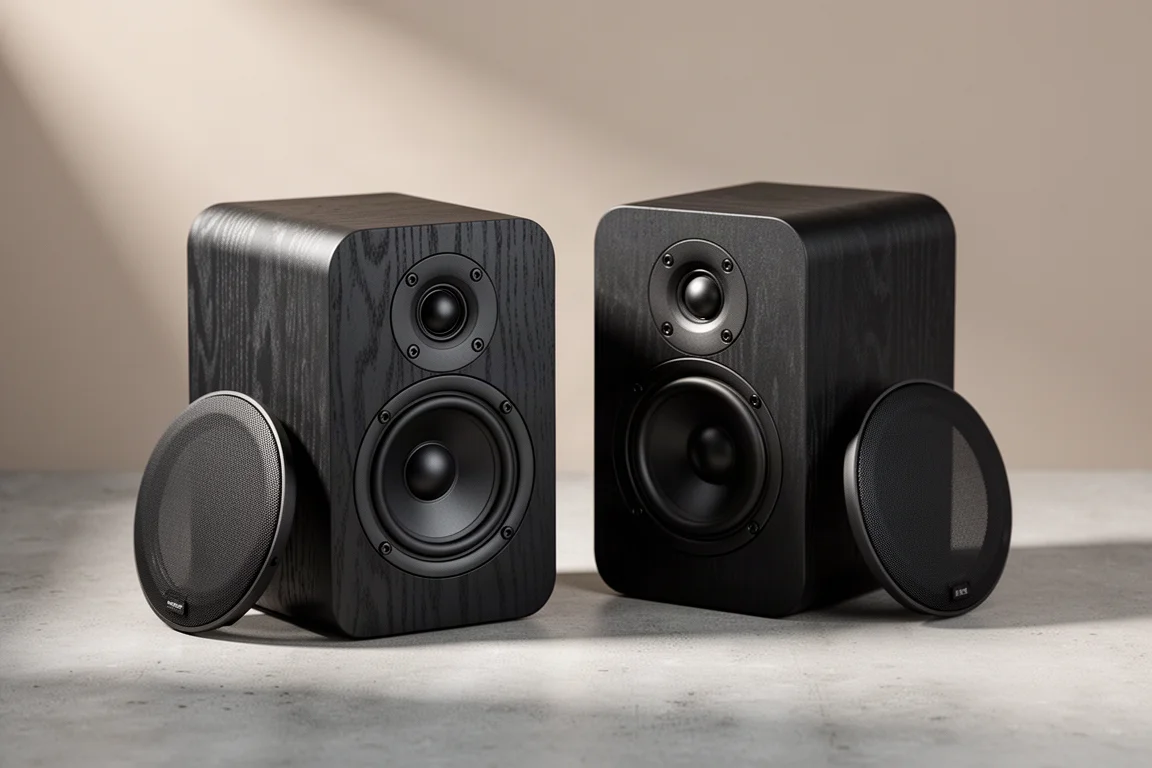
At first glance the formula looks familiar. Two cabinets, a built-in amplifier, a soft-dome tweeter up top, and a cabinet that resembles several well-known budget powered speakers, though noticeably larger than most of them. The pitch is easy to like: a remote control, an optical input, and Bluetooth for a fraction of what a separate amplifier and speakers would cost.
The reality is more complicated, and the sections below set out where this speaker works, where it does not, and who should think twice before buying.
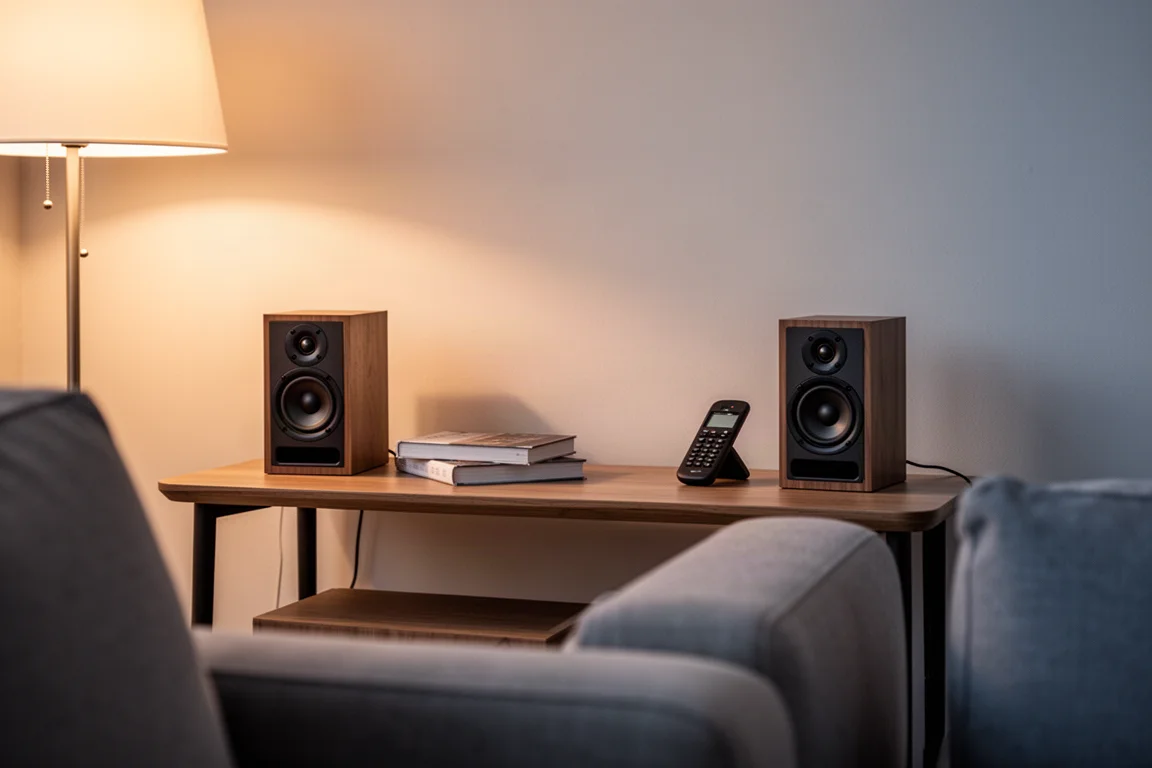
For anyone comparing powered speakers at this price point, the gap between the feature list and the listening experience is the whole story here.
Who This Speaker Is For
This is a powered bookshelf pair for listeners who want a simple, self-contained system: two cabinets, an internal amplifier, and no separate receiver or external DAC. Setup is straightforward, and the handset makes it easy to change volume and tone from across a room without walking over to the speaker.
It fits quiet background listening in a small room, where the level stays low and the speaker is not asked to fill a space or carry bass-heavy material. Buyers who mainly want a compact optical connection for a television or a desktop source, plus Bluetooth for casual use, are the closest match.
It is a much harder recommendation for anyone building a main music system, listening at moderate to high volume, or expecting a full-range sound.
What Works Well
The remote control is the strongest part of the package. Volume plus treble and bass adjustment are all available from the handset, which is genuinely convenient at this price and rare on cheaper powered models.
An optical input sits on the back, and there is an internal DAC, so a digital source can connect directly without extra hardware. A decent-looking tweeter sits on top, and the speaker produces a reasonable sense of stage and imaging for its size. Build quality is acceptable rather than impressive, and the volume knob that spins freely is a minor quirk rather than a fault.
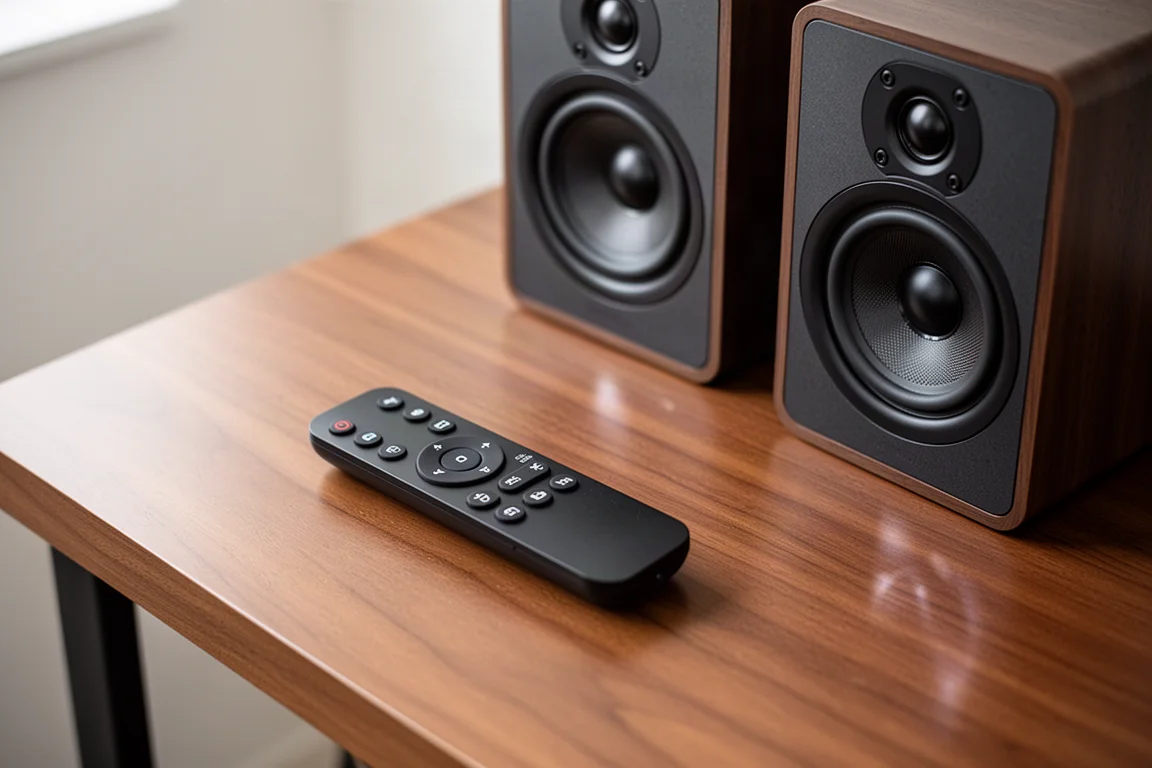
For listeners who only need those basics, the feature set covers the essentials without demanding an external amplifier or a stack of separate components.
Where It Falls Short
The biggest issue is the tuning. There is a pronounced lift somewhere around 1,500 to 2,000 Hz, which makes vocals and instruments sound shouty. At low volume this is tolerable, but as the level rises it turns harsh and tiring within a few minutes of listening.
Bass is the other weak point. Despite the 20 Hz to 20,000 Hz response figure that gets quoted for this model, the speaker does not reproduce anything close to that in practice. Real output sits far higher up the range, and boosting bass through the tone control does not solve it. Turning bass to maximum introduces distortion even at low levels, and the sound never settles into a balanced signature even with treble reduced to compensate.
Bluetooth performance is also poor, which limits its usefulness as a casual wireless speaker.
Inputs, Controls, and Connectivity
Around the back you get a figure-eight power inlet, an optical input, speaker outputs, and a single 3.5 mm analog input. The internal amplifier is a two-channel design, with a cable running from the powered cabinet across to the passive one.
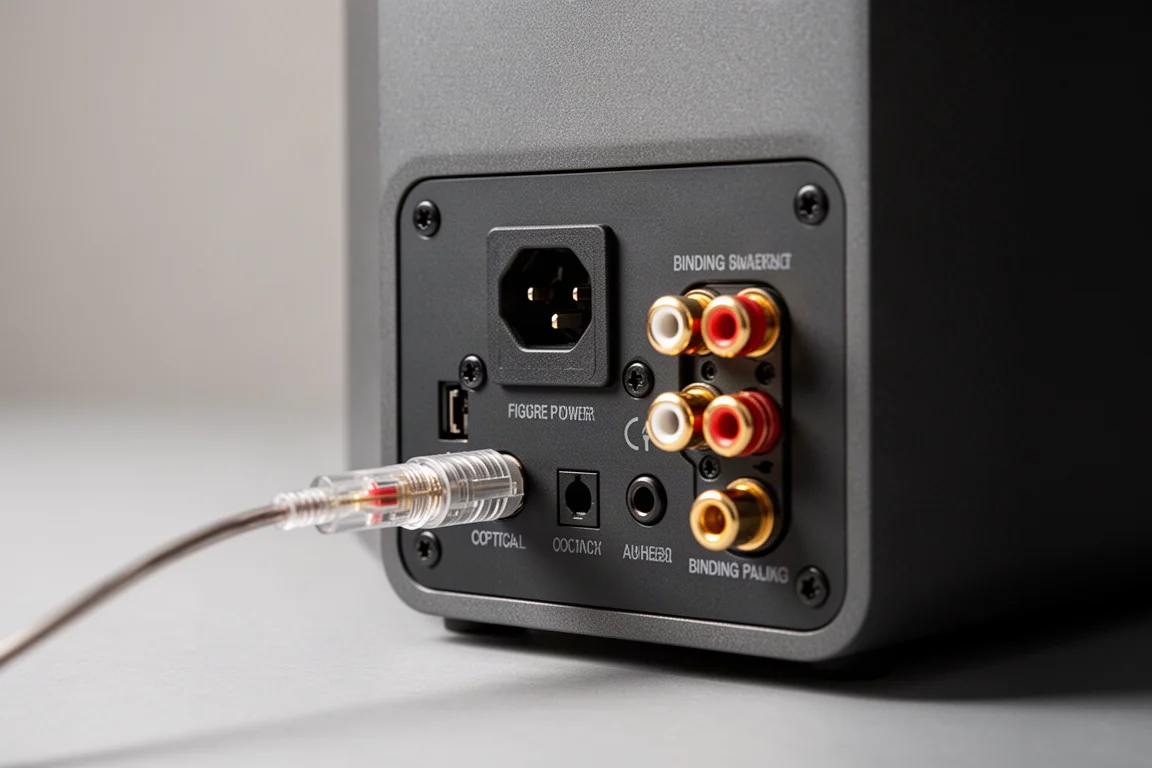
That layout keeps things simple, but it also narrows flexibility. With no RCA inputs on the panel, a turntable or a streamer with RCA outputs needs an adapter before it can connect at all.
Build Quality and Design Notes
The cabinet looks similar to several established budget powered speakers, though larger in every dimension. The grille is difficult to remove, which makes the drivers harder to inspect or clean.
Construction is adequate rather than impressive. The cabinet appears to gain some of its rigidity from the internal amplifier module, which is a common approach in this class, and the two-cabinet arrangement with a link cable to the passive speaker is typical for affordable powered pairs.
Buying Advice
The pricing history is the clearest warning sign. This speaker has sold for as little as about $50 and as much as roughly $350, and it frequently drops out of stock altogether. At the upper end of that range it sits alongside well-regarded powered speakers that offer more bass and a more even tonal balance for less money.
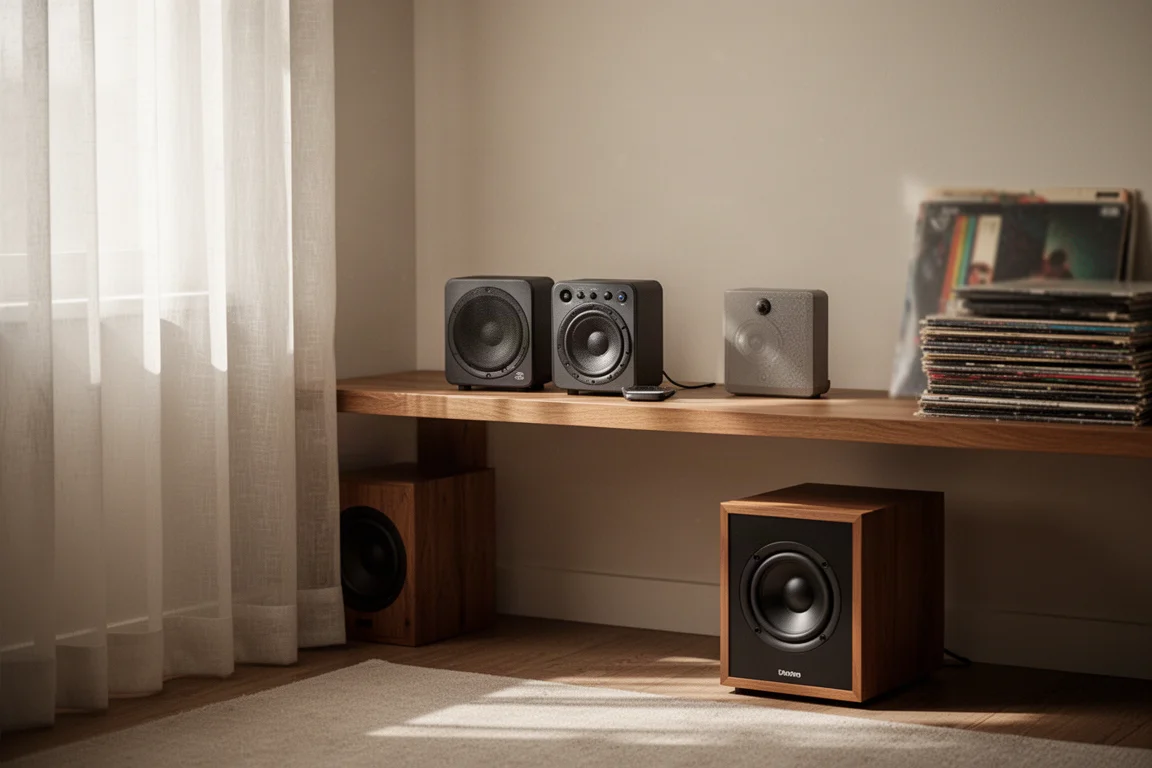
If you are shopping for affordable powered speakers, prioritize a model with a subwoofer output so low-end extension can be added later, and look for balanced tuning rather than a long list of inputs. A remote control and an optical input are genuinely useful, but they cannot compensate for a sound signature that becomes tiring at ordinary listening levels.
Anyone who does buy this speaker should aim for the low end of its price range, and should expect quiet, nearfield listening rather than full-range music playback.
Conclusion
The Amazon Basics Powered Speaker gets the convenience features right: a remote with tone controls, an optical input with an internal DAC, and a simple two-piece setup that is easy to live with. What it does not deliver is the performance those features imply. A shouty upper midrange, almost no bass, and poor Bluetooth sound quality keep it from being a satisfying music speaker, and the erratic pricing makes it difficult to justify at anything above the bottom of its range.
For most buyers, the better route is a powered speaker with a subwoofer output and a more even tonal balance. This one is best left on the shelf unless the price is genuinely low and the expectations are modest.
Product link
View more details for Amazon Basics Powered Speaker
This product is mentioned in the review. Check the specifications, options, and compatibility before buying.
View more details for Amazon Basics Powered SpeakerFurther reading
Related Reviews
Powered Speakers
AbramTek X50 Review: Powered Speakers With Real Bass and a Full Feature Set
The AbramTek X50 pairs a phono preamp, HDMI ARC, optical, and Bluetooth with genuinely capable sound. Here is what it does well and what to check before buying.
Powered Speakers
Aperion Audio Alaire Review: Compact Powered Speakers With Serious Bass
A compact two-way powered speaker with genuine low-end punch, excellent imaging, and a control scheme that depends entirely on its remote.
Powered Speakers
Best Powered Speakers 2026: Five Active Pairs Compared
A practical comparison of five powered speakers across connectivity, flexibility, sound quality, volume capability, and value.