Home Audio
Sonos Arc vs Beam Gen 2 vs Ray: Which Sonos Soundbar Fits Your Room?
A practical comparison of the Sonos Ray, Beam Gen 2, and Arc, covering Dolby Atmos, dialogue clarity, placement, connections, and room size.
Introduction
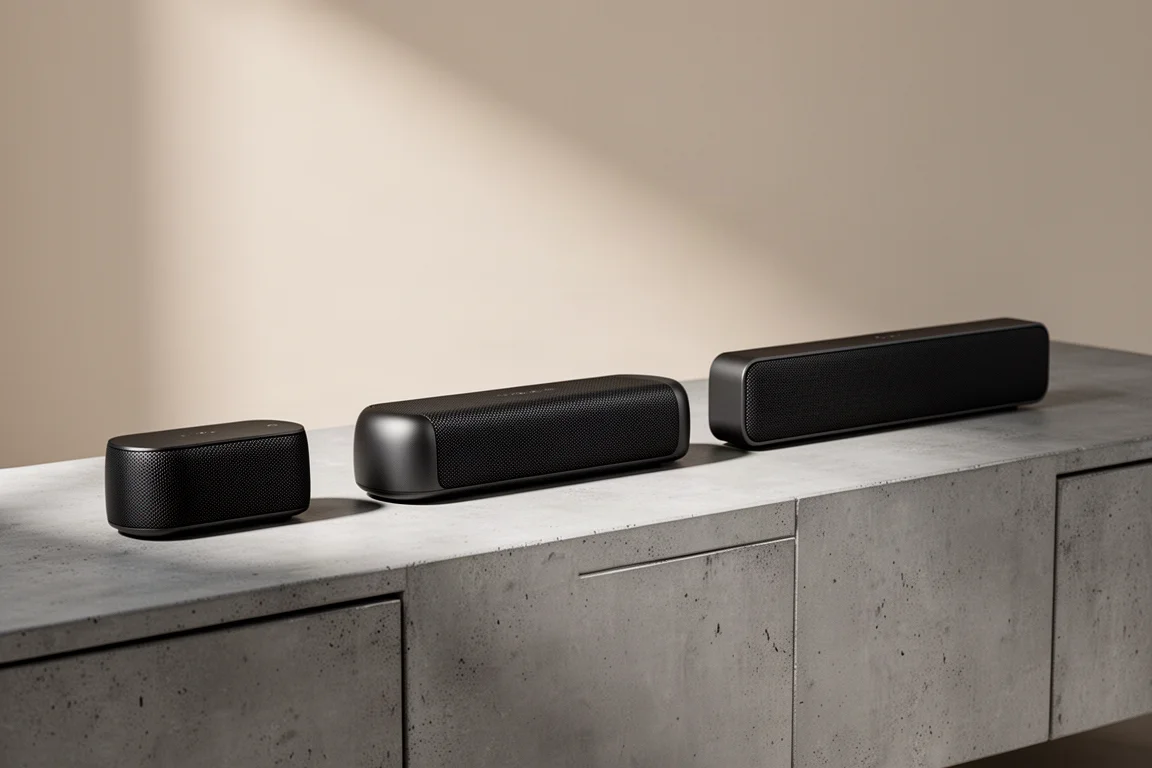
Sonos has built a soundbar lineup that spans three very different sizes, and each one is aimed at a different room and a different listener. The Sonos Ray is the newest and most compact of the three, the Beam Gen 2 sits in the middle, and the Arc remains the flagship. They share a design language, an app, and an upgrade path, but they do not deliver the same experience.
This comparison covers what the three bars have in common, where they diverge in performance, and which one makes sense for the space you actually have.
What All Three Sonos Soundbars Share
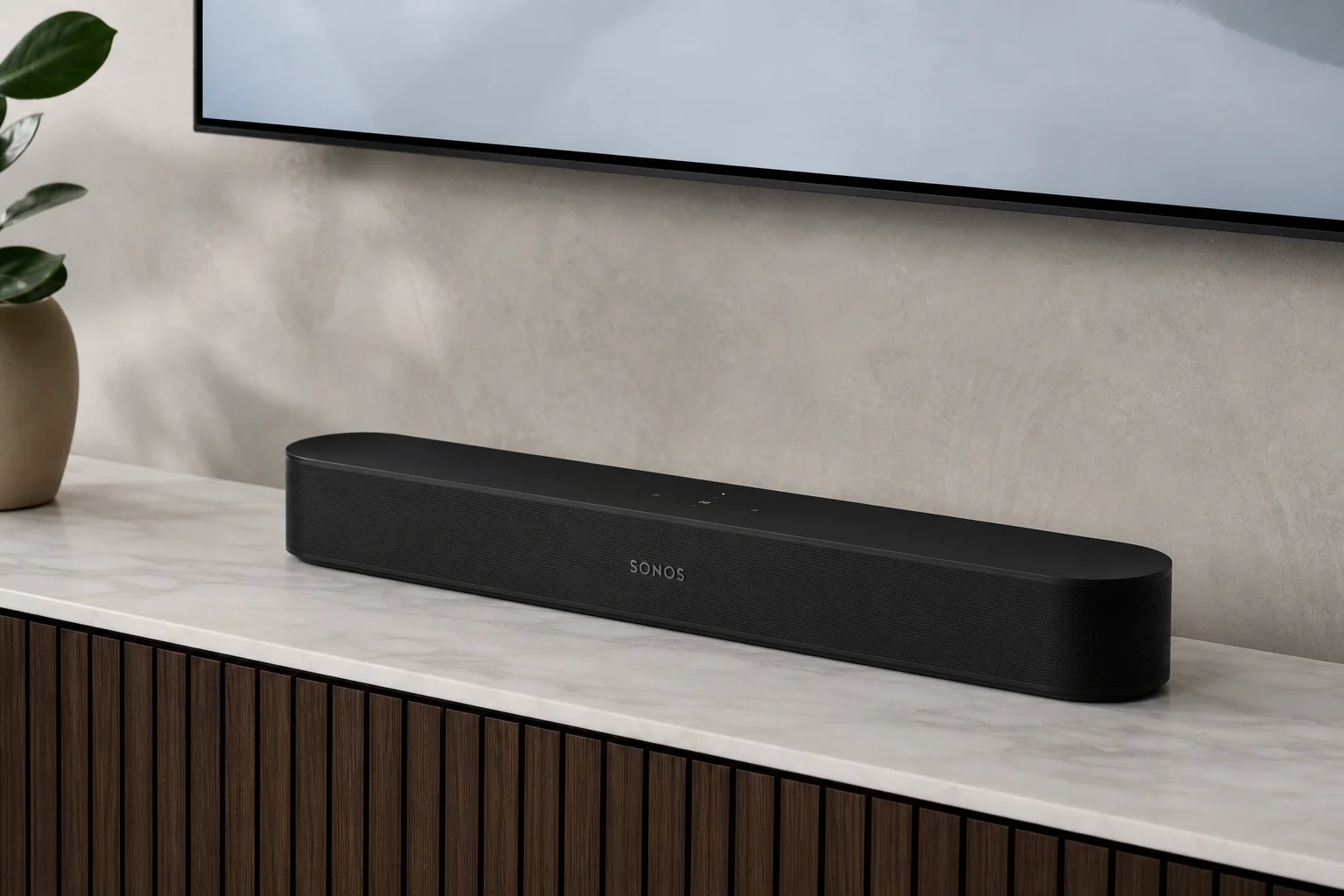
All three bars follow the same design philosophy: low profile cabinets, minimal ornamentation, and finishes that let the screen stay the center of attention rather than the speaker. Each is available in matte black or matte white, and each can sit on a cabinet or mantel beneath a TV, or be mounted to a wall with brackets that Sonos sells separately. The perforated grille pattern Sonos developed for the Arc has since carried down to the Beam Gen 2 and the Ray, so the family resemblance holds across price points.
Sonos also tests every single unit on its production line rather than relying on spot checks of batches, and all three bars are built to the same standard of fit and finish. The result is a lineup that looks consistent whether you spend the least or the most.
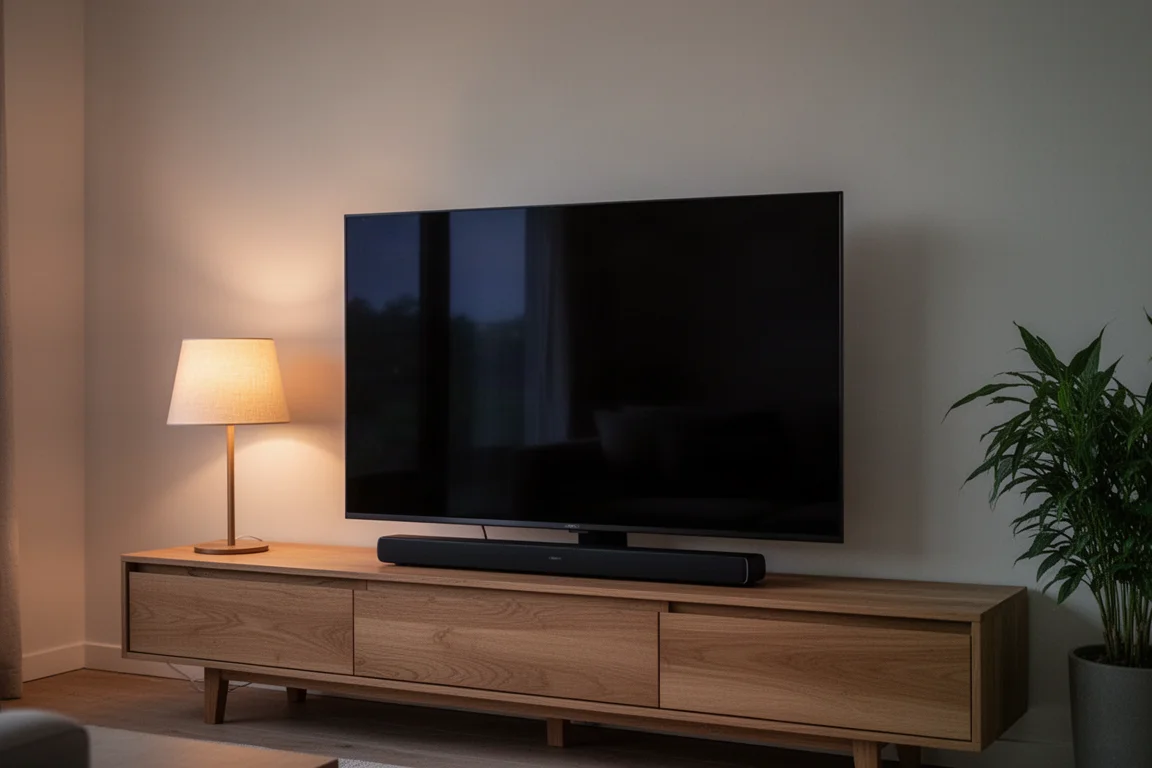
Setup and tuning are shared as well. Trueplay, the room correction system built into the Sonos app, walks you around the room while test tones play and applies acoustic corrections for your space. It requires an iOS device and is a one-time process, and in most cases it noticeably improves the sound. All three bars also include speech enhancement for clearer dialogue and night mode, which keeps late-night listening from carrying through shared walls.
Expansion works the same way across the lineup. You can add Sonos speakers as surrounds or a wireless Sonos Sub later, and you can group the bar with other Sonos speakers for whole-home music coverage. Those options stay open no matter which bar you start with.
Sonos Ray: The Compact Entry Point
The Ray is the smallest bar in the lineup at just under 3 inches tall, 22 inches wide, and less than 4 inches deep, and it arrived in 2022 as the newest addition. It is a stereo bar with all of its drivers facing forward, which means sound is directed at the listener rather than reflected around the room. It does not offer Dolby Atmos.
Because it does not depend on reflected height channels, the Ray is less affected by nearby surfaces. It is the only bar of the three that can be placed inside a cabinet and still perform as intended, though it will sound a little better sitting on top of the cabinet. Its optical connection delivers strong sound for TV and music, just without Atmos or spatial audio.
In practice, the Ray suits a bedroom, an apartment, or a gaming setup where space is tight. It holds up well in small to medium rooms, but it runs out of headroom when asked to fill a large room, even though it still outperforms built-in TV speakers by a wide margin. It is also the most affordable way into the Sonos ecosystem, and while you can add surrounds or a Sub later, at this price point many buyers will not find that add-on easy to justify.
Sonos Beam Gen 2: The Dialogue Specialist
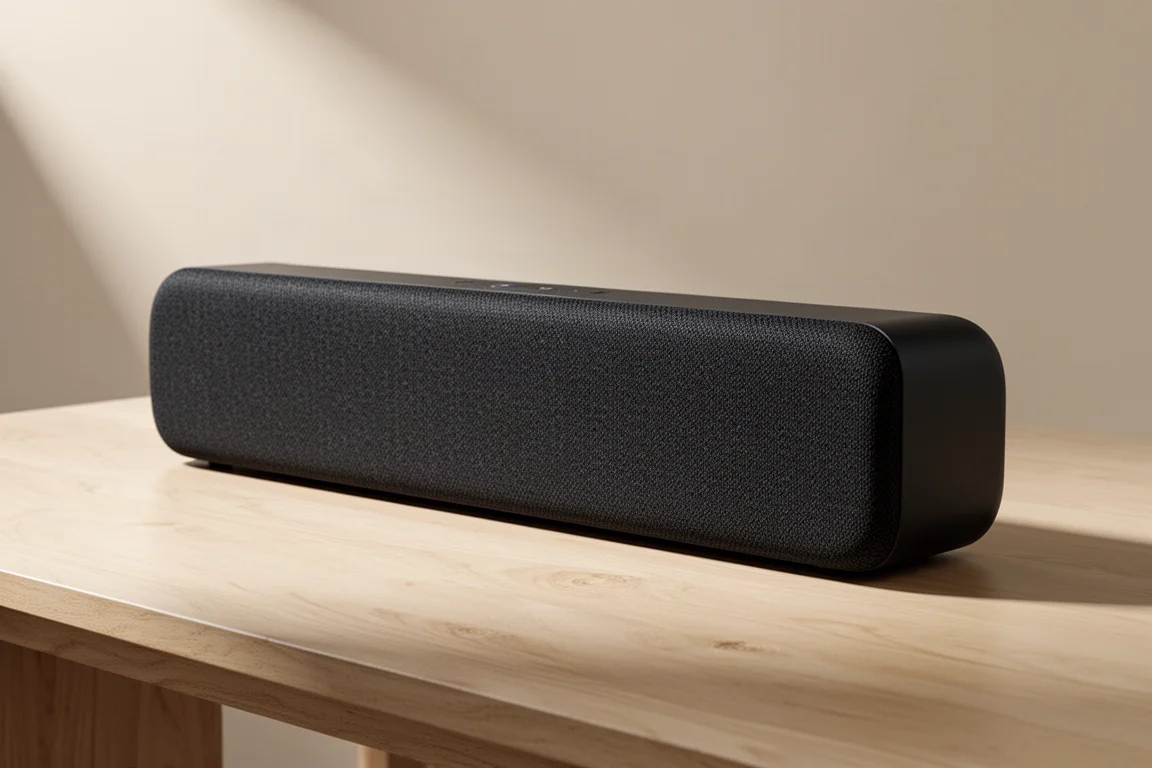
The Beam Gen 2 is the second generation of the compact Beam, refreshed in 2021 with added Dolby Atmos support. It matches the Ray’s height but stretches to 25 inches wide, about 3.5 inches wider than the Ray, with almost 4 inches of depth. That extra cabinet volume buys slightly better bass and a more immersive presentation.
Inside, the Beam Gen 2 uses a five-channel phased array of active speakers plus side-firing drivers, an active center tweeter, and four active elliptical midrange woofers. Voices and dialogue come through with more richness and detail than the Ray manages, and that is the most noticeable step up in the lineup.
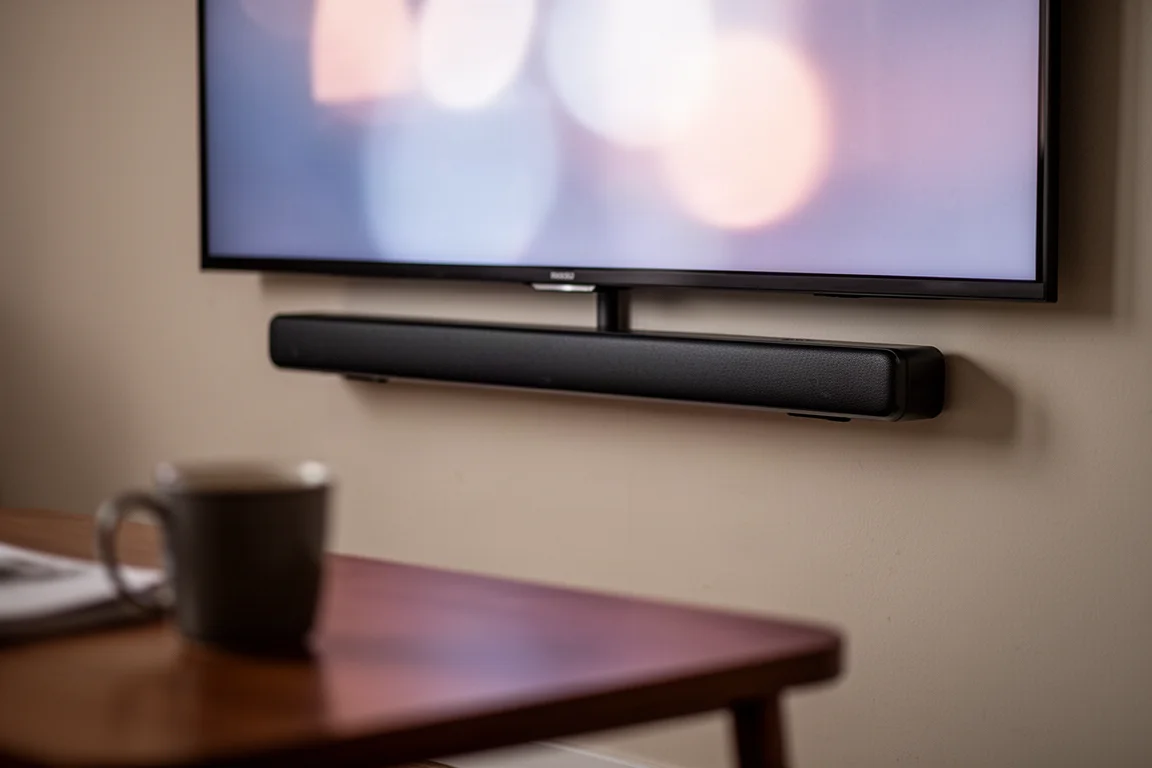
One caveat is worth knowing before you buy. The Beam Gen 2 creates the sense of overhead sound through psychoacoustic processing rather than physical up-firing drivers, so its Atmos effect is approximated rather than true height-channel audio. It is also important not to block the side-firing speakers, which is why sitting it on top of a TV cabinet in front of the TV is preferable to tucking it into a shelf.
The Beam Gen 2 presents dialogue as well as, or slightly better than, the Arc, which is remarkable given its size. That makes it the bar to consider first for anyone who struggles to follow dialogue at normal volume. Connections are upgraded to HDMI eARC, and Sonos includes an optical-to-HDMI adapter for older TVs. It became the best-selling soundbar in the $350 to $500 range for good reason: it is easy to live with and it solves the most common complaint about TV sound.
Placement, Connections, and Room Fit
HDMI eARC carries both Dolby Atmos audio and control signals, so a compatible TV can send audio to the bar and let you keep using your TV remote without extra setup. Both the Arc and the Beam Gen 2 support HDMI eARC. If your TV predates HDMI ARC, the Sonos app walks through a short process that teaches any of the bars to respond to your existing remote. The Ray is optical only, so it needs an extra step to sync with a TV remote.
Room size matters just as much as the feature list. A pair of surrounds improves the sense of sound arriving from all around you, while a wireless Sonos Sub restores the low-end impact that draws you into a movie. Both upgrades can be added to any of the three bars, and both change how convincingly a bar fills a larger space.
Sonos Arc: The Flagship Dolby Atmos Bar
The Arc was the first Dolby Atmos soundbar from Sonos, released in 2020, and it remains the flagship of the lineup. It is also the largest: under 3.5 inches tall but about 45 inches wide and 4.5 inches deep, sized to sit beneath or in front of flat panels 55 inches and larger. Its rounded, slender enclosure and perforated grille keep it visually unobtrusive despite the width.
The Arc packs 11 individually powered drivers into that enclosure. A five-channel phased array combines eight custom elliptical woofers and three silk dome tweeters to handle the left, center, and right channels, while dedicated height drivers on top fire sound upward to bounce off the ceiling and back down to you. That is what produces true overhead effects, and it is the clearest functional difference between the Arc and the Beam Gen 2.
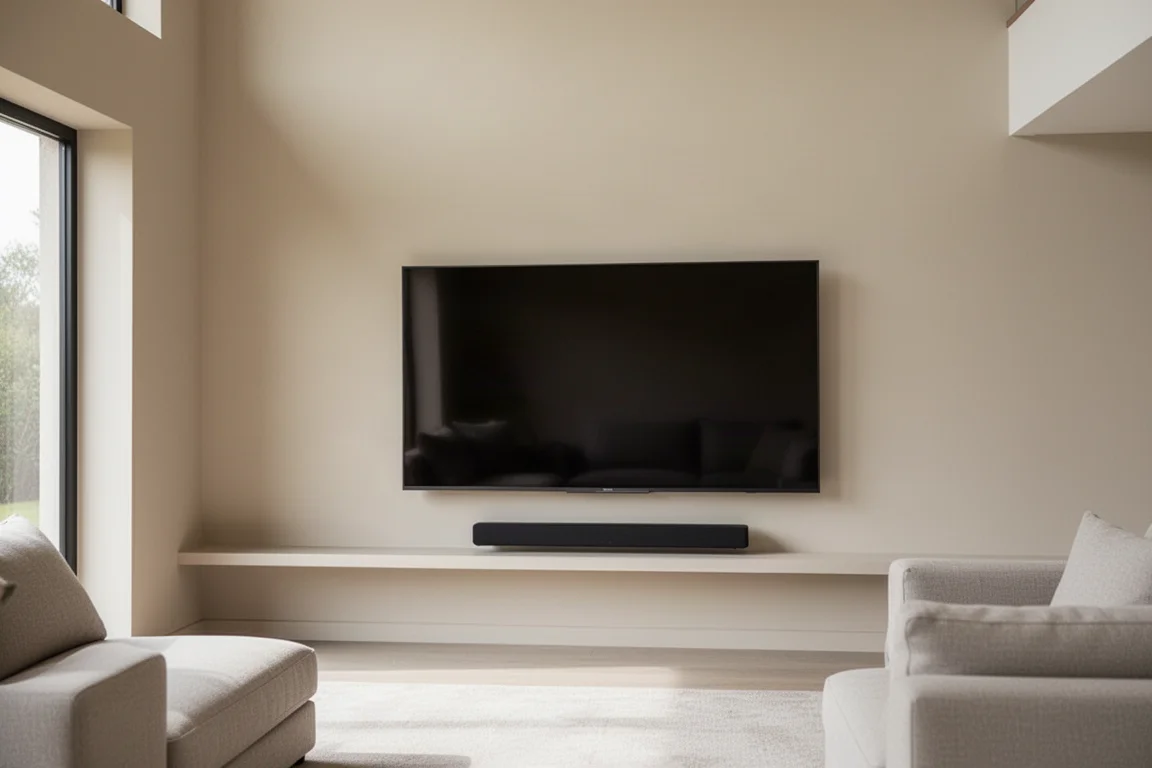
Placement matters more here. Sitting the Arc on top of a TV cabinet in front of the TV is the straightforward option, and if you mount it to a wall you should leave about 4 inches or more of clearance below the TV so the height drivers have room to work. The wall bracket is sold separately, and when the Arc is mounted, magnets sense its position and the bar adjusts its acoustics accordingly. Connections are recessed underneath, where you will find the HDMI eARC port. An older ARC connection still passes Dolby Atmos, just in compressed form, and an optical-to-HDMI adapter is included for TVs with optical output only.
Bass reaches deeper than the Beam Gen 2 thanks to the additional drivers, but the Arc still benefits from a subwoofer. You can add a single Sub or dual Subs along with a pair of Sonos One SL speakers as rears, and the Arc adjusts itself automatically. Adding rears also lets the surround channel drivers take over additional bass duties for the main left and right channels. On its own, the Arc builds such a convincing three-dimensional Atmos stage that adding rear speakers makes only a marginal difference.
Dialogue, Bass, and Stereo Music Compared
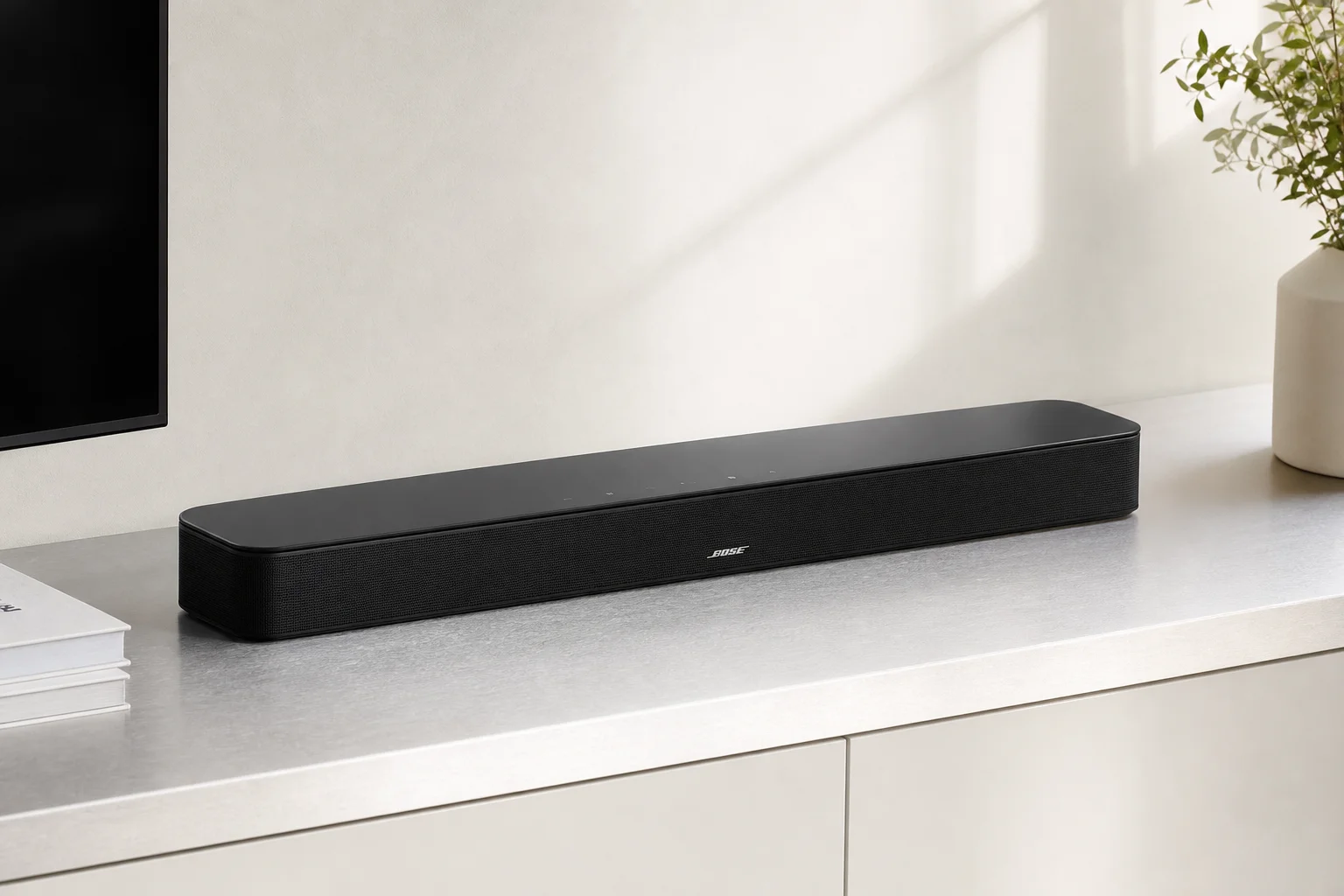
Where the Beam Gen 2 wins is midrange detail. It presents voices better than either of the other two bars, which is why it remains the strongest choice when dialogue clarity is the priority. The Ray and the Arc both produce a better stereo image for two-channel music than the Beam Gen 2, and the Arc delivers the deepest bass and the most convincing Atmos effects by a wide margin. Between the Arc and the Beam Gen 2, there is no real comparison in Atmos performance.
The Ray sits outside that Atmos conversation entirely. It is a stereo bar, and its strength is a clean forward presentation in a small space rather than immersion. Buyers who mostly watch television in a bedroom or apartment will not miss what they never had, but anyone chasing cinema-style effects should look further up the range.
Which Sonos Soundbar Should You Choose?
Your budget, your room, and how much you care about Dolby Atmos will settle the decision.
The Ray makes sense when space is the limiting factor and the goal is a clear upgrade over built-in TV speakers. It is best suited to a small or medium room, and its cabinet-friendly design gives it placement flexibility the other two do not have. The trade-off is the absence of Dolby Atmos.
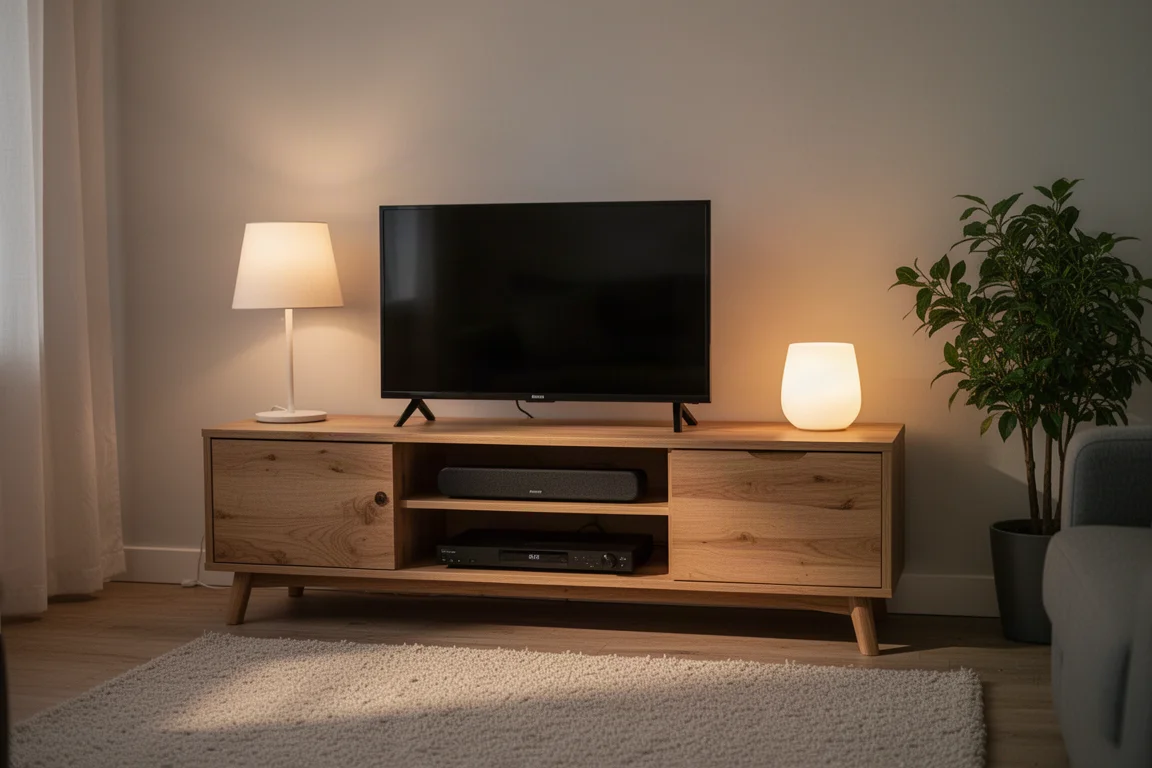
The Beam Gen 2 suits any room size, adds deeper bass and richer dialogue than the Ray, and offers a taste of Atmos through virtual processing. If you are deciding between the Ray and the Beam Gen 2, the deciding factor is usually whether you want that Atmos effect and better dialogue, or the Ray’s lower price and easier placement.
The Arc is the choice if you want true height-channel effects and the most immersive sound from a single bar. Its up-firing drivers produce Atmos effects that neither of the smaller bars can approach, and it scales further when you add a Sub and surrounds.
Conclusion
All three bars share the same minimalist design, the same app, and the same upgrade path, so the decision comes down to room size and how much immersion you want. The Ray is the compact, affordable entry point for smaller spaces. The Beam Gen 2 is the balanced middle option with the best dialogue clarity in the lineup. The Arc is the flagship, and the only one of the three that delivers true Dolby Atmos height effects. Match the bar to the room you actually have, and the choice becomes straightforward.
Further reading
Related Reviews
Home Audio
Aperion Novus Tower and Center Review: Punchy Home Theater Sound With Real Refinement
A close look at the Aperion Novus tower and center speakers, from their layered paint finish and punchy bass to the 4-ohm load and what the price actually buys.
Home Audio
Arendal 1610 Tower Review: Flagship Dynamics in a Room-Friendly Tower
A compact floorstanding tower with three 8-inch aluminium woofers, a 5-inch carbon midrange, and the kind of bass heft usually reserved for much larger speakers.
Home Audio
Arendal 1723 S THX Review: A Reference Speaker Built Like a Tank
A practical look at the Arendal 1723 S THX, a sealed, THX-certified speaker with exceptional build quality, a very flat top end, and a midrange that responds beautifully to EQ.