Hi-Fi Amplifiers
Sonos Amp Review: A Compact Streaming Amplifier With HDMI ARC
A practical look at the Sonos Amp, a compact streaming amplifier with HDMI ARC, 125 watts per channel, and a subwoofer output, plus where it makes compromises.
Introduction
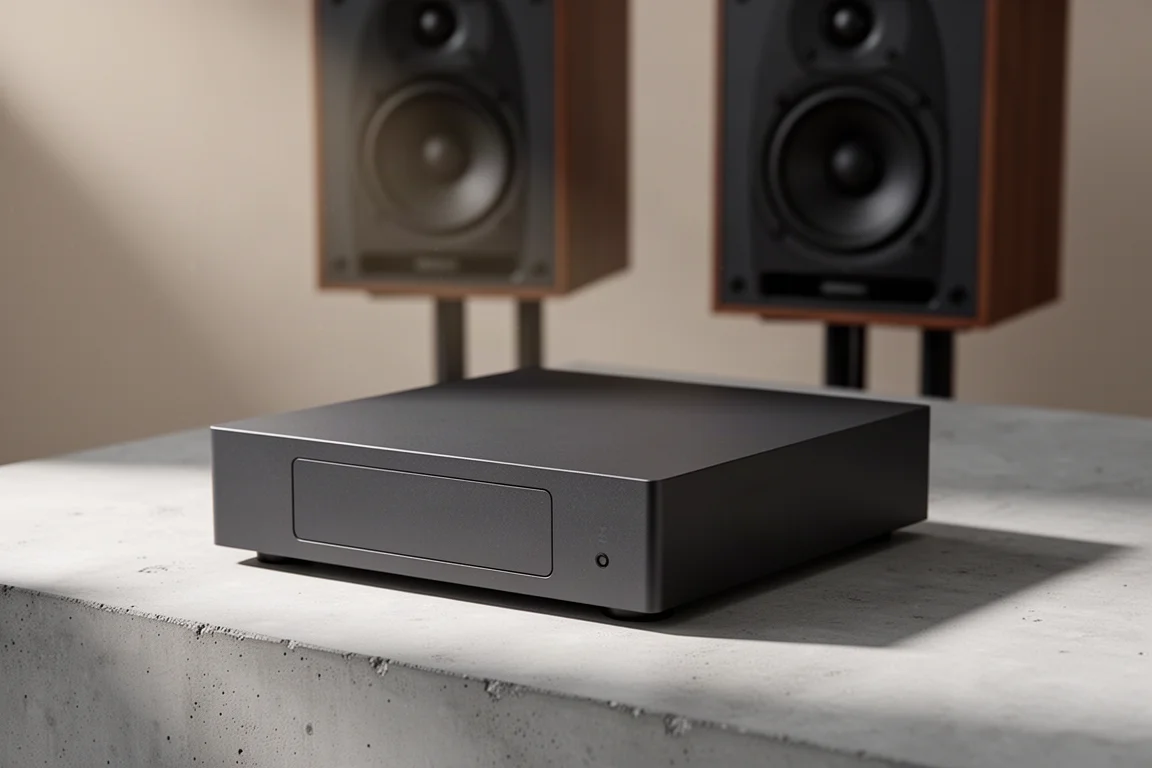
The Sonos Amp is a compact streaming amplifier that asks you to bring your own loudspeakers. It combines a stereo power stage, the Sonos streaming platform, and an HDMI ARC input for the television in a single small chassis. Add a pair of passive speakers and you have one system for music and television audio.
In Europe the Amp sells for around 799 euros, which places it between two closely watched alternatives: the Bluesound Power Node above it and the Bluesound Power Node Edge below it. That positioning makes comparison shopping almost inevitable in this price band.
This article looks at the Amp on its own terms: what it does well, where it makes compromises, and which listeners it suits best.
Who This Product Is For
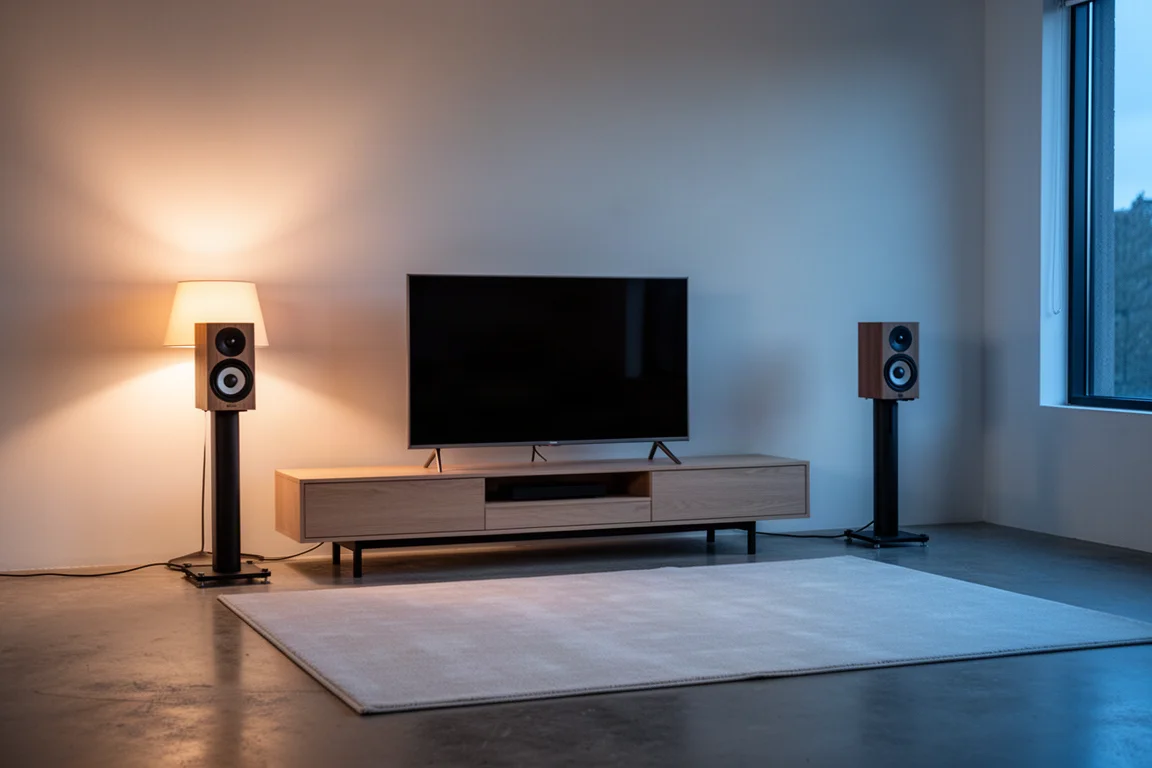
The Amp is designed for listeners who want one box to handle both streaming music and television sound. If you already own a pair of passive loudspeakers, or you are willing to buy a pair, the Amp turns them into a complete streaming system with a single HDMI cable running from the display.
It is also a good fit for households that value straightforward setup. The Amp connects to the Wi-Fi network during onboarding, and the phone app discovers the device automatically. Bluesound is not far behind in this respect, but its process is not quite as polished.
Where the Amp is less convincing is with vinyl. If most of your listening happens at the turntable, the alternatives discussed below deserve a closer look before you commit.
Sound Quality and Power
Sonos quotes 125 watts per channel from the Amp. That is a substantial figure next to the 40 watts per channel offered by the Bluesound Power Node Edge, and it matters with speakers that are harder to drive. With stand-mounted speakers rated around 84 dB, the Amp’s extra output delivers a more mature sense of low-frequency control than the Edge manages.
With high-efficiency designs the picture changes. Speakers with an easy load, such as models from Klipsch, JBL, or Zu, do not need the extra power, and the Power Node Edge becomes the more appealing option on sound quality grounds.
There is also a subwoofer output on the back. When a subwoofer is engaged, the software inside the Amp low-passes the subwoofer output and high-passes the loudspeaker output, so the main speakers no longer have to reproduce the deepest bass.
Against the more expensive Bluesound Power Node, the Amp sounds big, bold, and dynamic, with plenty of drive. It does not go quite as deep, and it is not as taut or textured in the bass. In the treble it is not the most refined listen, and it gives up some clarity and transparency across the range. These differences are not night and day, and heard in isolation the Amp is unlikely to trouble anyone. In a direct comparison, the Power Node’s extra composure is audible.
If your speakers already lean bright, or they already deliver plenty of microdynamic sparkle, the Amp’s cooler balance can work well as a match. Against the Power Node Edge, the differences are just as small but they fall differently: the Amp sounds fuller in the low end, while the Edge wins on ambience, air, and separation between layers.
Streaming, HDMI ARC, and App Convenience
The Sonos app aggregates a large number of streaming services, and the platform integrates Apple Music into its own app. For Apple Music subscribers this matters for two reasons. Playback does not have to travel through a phone as it does with AirPlay, and playback through the Sonos app is fully gapless, which is not the case when the same service is used over Chromecast.
Two absences are worth noting for enthusiasts. The Amp does not offer Tidal Connect, and it is not Roon Ready. Roon can still stream to Sonos devices, but not over Roon’s own streaming protocol.
The HDMI ARC input is one of the Amp’s clearest advantages at this price. It lets the television feed the same speakers used for music. The implementation is ARC rather than eARC, and that distinction matters mainly to home cinema listeners, because eARC carries uncompressed 5.1 and 7.1 audio as well as Dolby Atmos. For listeners who simply want television audio through their stereo speakers, ARC is enough.
Automatic input switching is genuinely useful. Start a stream after using the HDMI ARC input and the Amp switches to the streaming source and begins playing. Pick up the television remote and move it, and the Amp cuts back to HDMI ARC on its own. Bluesound amplifiers require you to open the app and select the input manually. The app also includes advanced audio sync controls for HDMI ARC, with a slider for adjusting lip sync when a display introduces a delay.
Things to Consider Before Buying
The compromises around the Amp are mostly about features and system flexibility rather than raw ability. The sound is competitive, but the feature set is narrower than what the Bluesound models offer, and that difference is likely to decide the purchase for many listeners.
Two areas deserve particular attention: how the Amp handles analog sources such as a turntable, and how it handles headphones.

One practical limitation also applies to room correction. TruePlay is not available on the Sonos Amp when it is connected to a pair of passive loudspeakers, so the automatic room tuning offered elsewhere in the Sonos range does not apply here.
Analog Inputs and Vinyl Playback
The Amp provides a pair of RCA line-level inputs, so almost any analog source can be connected. Bluesound uses a 3.5 mm socket instead, but that socket doubles as a mini-Toslink digital input, which the Sonos Amp does not have. Beyond HDMI ARC, the Amp has no digital inputs at all.
With a turntable, the difference between the two approaches is significant. The Bluesound Power Node and Power Node Edge sound clearer with an analog source, and the Amp’s analog playback sounds tonally washed out by comparison. The internal processing in the Amp also introduces roughly a one-second delay on analog input. Lower the stylus onto the record and you see it land in the groove before you hear it. For listeners sensitive to that kind of timing mismatch, it is close to a deal breaker.
Headphone Support and Late-Night Listening
The Amp has no headphone output. The Bluesound Power Node includes an analog headphone output, and both Bluesound models offer two-way Bluetooth, which allows audio to be sent out to wireless headphones. That makes late-night television viewing possible without disturbing anyone else, with only a very small lip sync delay.
The Amp counters with a loudness-style feature for low-volume listening. As volume drops, our hearing becomes less sensitive to bass and treble, so a mix that sounds even at higher levels can sound thin when quiet. The Sonos software lifts the bass and treble at lower volumes to compensate. It is a welcome inclusion, and it is not available on the Bluesound models.
Buying Advice
The right choice comes down to how you split your listening time.
If music and television are roughly equal priorities, the Sonos Amp is an excellent fit. The HDMI ARC input, the automatic input switching, the simple setup, and the subwoofer output with high-pass filtering combine into a system that is easy to live with. Ordering directly from Sonos adds a 100-day trial with a full refund, which makes it straightforward to try at home.
If vinyl is a priority, look elsewhere. The analog delay and the tonal character of the analog input make the Bluesound amplifiers a better match for a turntable, and the Power Node adds headphone support and a digital input on the same socket.
If you only listen to music and never watch television, an integrated amplifier such as the Rotel A11 Tribute paired with an affordable external streamer is worth considering. That combination sells for around 850 euros with a 250 euro streamer, includes a built-in phono stage, and sounds a little more relaxed, richer, and smoother. What it gives up is the HDMI ARC input.
Anyone weighing a soundbar instead should consider the trade-off carefully. The stereo width from the Amp and a pair of passive speakers is far wider and more enveloping than a soundbar can produce. A soundbar may reach lower in the bass and may support Dolby Atmos, but the immersive effect is limited, and Atmos playback can truncate the beginning of a stream.

If you are unsure between the Sonos Amp and the Bluesound Power Node, the differences in sound quality are small enough that a demonstration is the only reliable way to choose. The functional differences are easier to judge on paper, and for many buyers they will matter more.
Conclusion
The Sonos Amp exceeded expectations. It is a capable, well-rounded streaming amplifier with real power on tap, thoughtful software, and a genuinely useful HDMI ARC input. It does not offer the last word in refinement, and its analog handling is a real compromise for turntable owners. For listeners who want one compact system for music and television with their own speakers, it is a convincing choice.
Product link
View more details for Sonos Amp
This product is mentioned in the review. Check the specifications, options, and compatibility before buying.
View more details for Sonos AmpFurther reading
Related Reviews
Hi-Fi Amplifiers
Accuphase E-280 Review: Entry-Level Accuphase With Flagship Attention to Detail
A close look at the Accuphase E-280 integrated amplifier, covering its champagne build, AAVA volume control, sound quality, and the speakers and sources that suit it best.
Hi-Fi Amplifiers
Advance Paris A10 Classic vs Yamaha A-S301: Two Integrated Amplifiers Compared
A practical comparison of a $350 integrated amplifier and a $2,500 reference model, covering the differences that matter and the ones that do not.
Hi-Fi Amplifiers
Affordable Chinese Amplifiers Worth Buying: Five Budget Hi-Fi Amps Compared
A practical look at five affordable amplifiers, what each one does well, and the trade-offs to weigh before you buy.