Whole Home Audio
Sonos Amp Multi Review: Eight Channels of Whole-Home Audio in One Rack Unit
A practical look at the Sonos Amp Multi, the rack-mountable amplifier that brings eight channels and four independent zones to whole-home audio systems.
Introduction
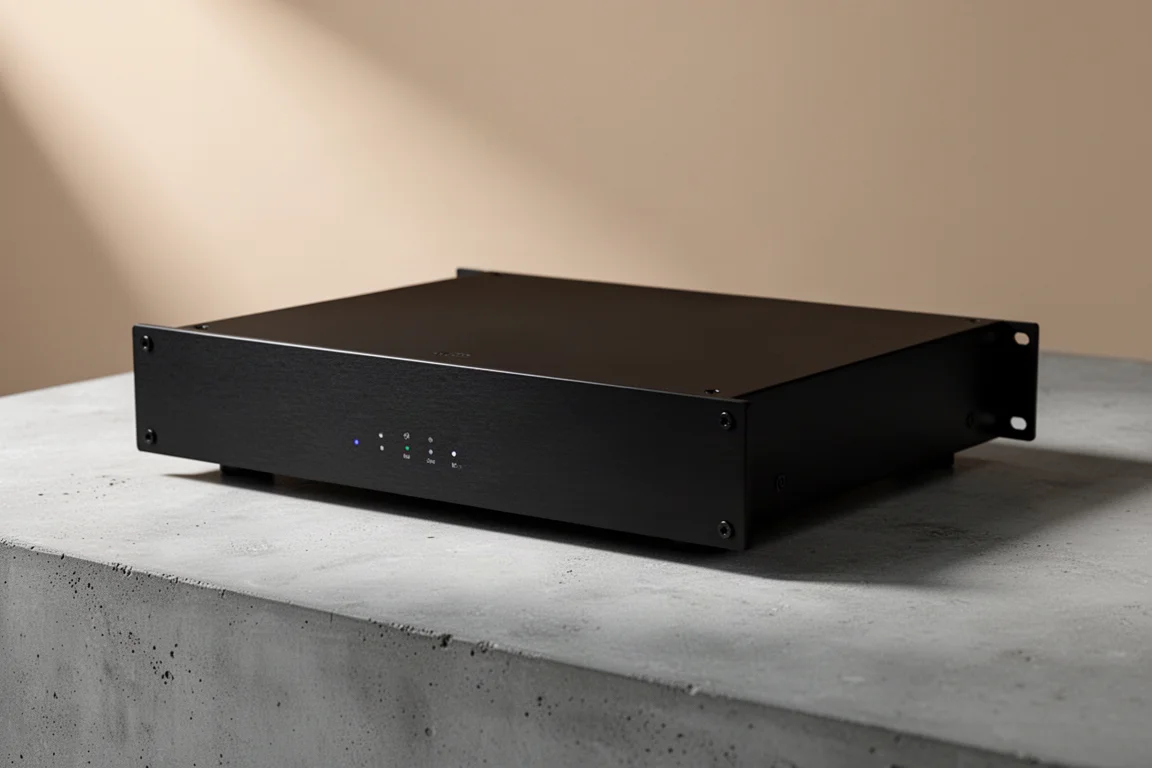
The Sonos Amp Multi is a rack-mountable amplifier built for whole-home audio. The original Sonos Amp remains a popular way to power passive speakers beside a TV over HDMI eARC, and plenty of installers and DIY owners have stacked several of them in a gear rack to drive in-ceiling and in-wall speakers room by room. That setup worked, but it was never quite what the Amp was designed for. Every unit needs its own power run, its own Ethernet connection, its own labeling, and a surprising amount of rack space. Only about two Amps fit side by side in a 2U space, which covers four speakers in total, so a home with six, eight, or ten zones ends up with a very crowded rack. The Amp Multi is Sonos addressing that problem directly, and it is the kind of solution many whole-home audio owners have been waiting for.
Who the Sonos Amp Multi Is For
The Amp Multi makes the most sense in homes that are already past two zones. It packs eight amplified outputs into a single chassis and splits them across four independent zones, so three, four, or more rooms can be served from one rack unit instead of a stack of separate amplifiers.
It also suits households that already run other Sonos products, such as a soundbar or portable speakers, because everything stays inside the same app and groups together the same way.

If you are only covering one or two rooms, the standard Sonos Amp remains a simpler and more direct path. The Amp Multi earns its place once a system moves beyond that point.
Main Strengths: Eight Channels, Four Zones, and Flexible Routing
The headline capability is eight amplified outputs, each rated at 125 W into 8 ohms, divided across four independent zones. Flexible output routing lets you assign any number of those eight outputs to any zone, so a room with four speakers can be treated as a single zone, or extra channels can be assigned to the same zone when a space needs more coverage.
It can also handle four simultaneous streams at once, whether that comes from the Sonos app, AirPlay 2, or Spotify Connect. That is what makes it possible for each of the four zones to play something completely different at the very same time.
All of that fits in the same 2U space that only two standard Sonos Amps used to occupy. And just like the regular Amp, you can wire three Sonos architectural speakers into a single output, which means one Amp Multi can drive up to 24 speakers if you go the full Sonos route.
GaN Amplification and Everyday Efficiency
Inside, the Amp Multi moves to gallium nitride amplification, or GaN, paired with post-filter feedback. GaN is a transistor material that switches faster and packs more density into less space than traditional silicon. Post-filter feedback supports it by constantly comparing the output signal to the input in real time and making tiny corrections, which keeps performance precise and consistent even as the load changes across different speakers. That is a meaningful step up from the standard Class D design many amplifiers still use.
In practical terms, it runs efficiently enough to stay cool with no fan inside at all, which also means far less dust working its way into the chassis over the years. The noise floor stays very low, low enough that you will not hear hiss behind quiet passages even with all eight channels working. Idle power draw sits at just under 5.5 watts, lower than a single standard Sonos Amp, even though this unit is doing the job of almost four of them.
One honest note: GaN appears on some very high-end amplifiers, but in the Amp Multi it is aimed more at efficiency than at a higher-end GaN design that would outperform the standard Sonos Amp.
Tuning and Connections: Pro Tune, Inputs, and Rack Hardware
When you are using Sonos architectural speakers, an optimized Sonos speakers mode applies custom tuning and DSP for up to three speakers per output, delivering a signature Sonos sound. Pro Tune then adds a manual tuning suite with a 10-band parametric EQ on every single output, along with adjustable gain, delay up to 50 milliseconds, and a high-pass filter for each channel. Those settings save and recall, so tuning multiple units across a project, or recovering a unit that has been reset, does not mean starting from scratch.
The high-pass filter solves a genuinely useful problem. Small in-ceiling and in-wall speakers can distort or even be damaged when pushed to reproduce deep bass they were never built for. Rolling that bass off at the amplifier and letting a dedicated subwoofer handle it keeps the architectural speakers cleaner while the low end is still covered properly.
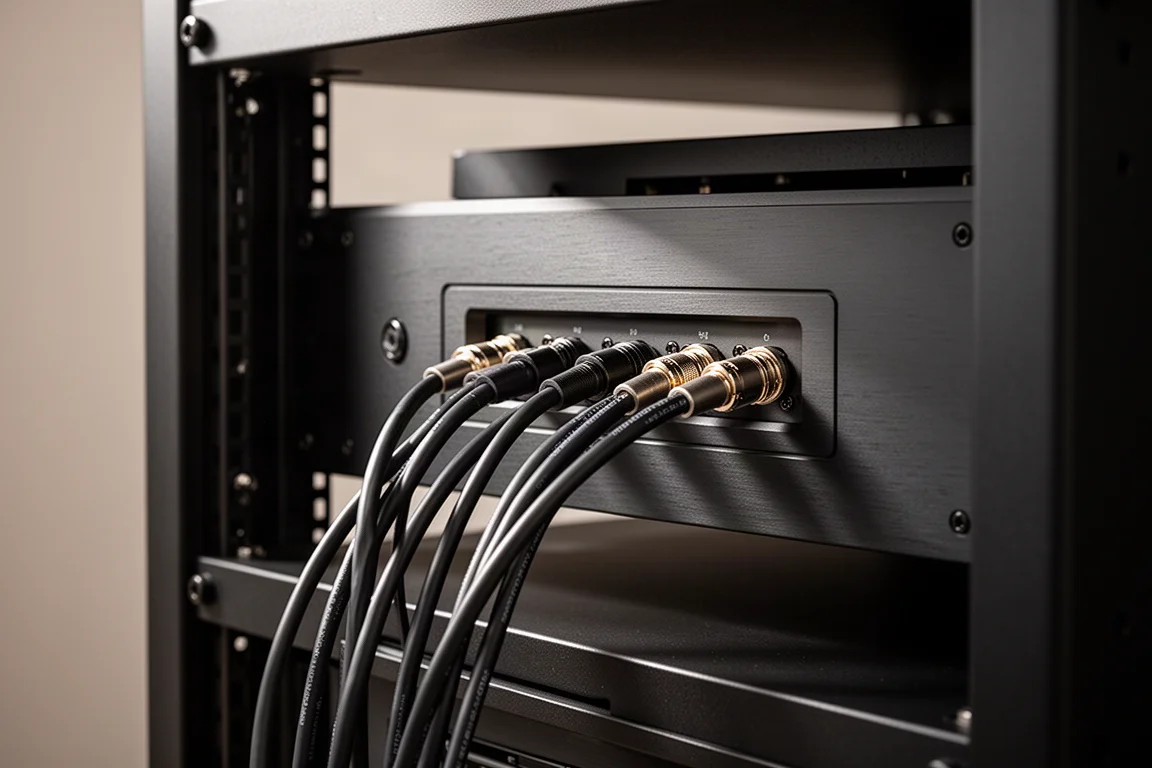
Around the back you will find recessed speaker terminals, and custom banana plugs are included so you are not hunting for plugs that actually fit. There is also a USB-C audio input, an analog line input, and one subwoofer output. For networking, the Amp Multi connects over wired Ethernet or Wi-Fi 6, whichever fits the installation.
Installation, Status LEDs, and Control Integration
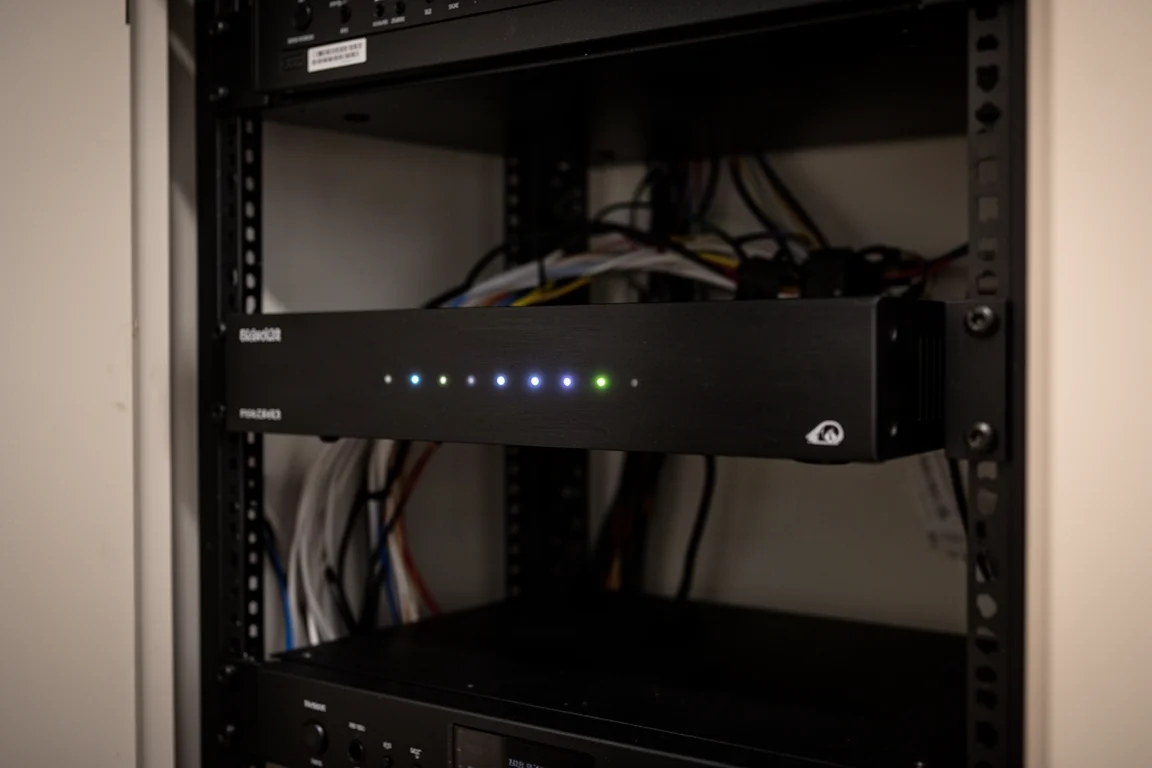
Setup and mounting are straightforward. The optional 2U rack mount slides on and secures with just four screws, and four more attach it to any standard 19-inch rack. The Amp Multi sits in the middle of that 2U space, so no vent grills are needed between stacked units, which saves space and speeds up the install considerably. The flat back design and recessed connectors keep everything tidy even in a dense rack, and the same clean layout works well on a shelf or a credenza when no rack is involved at all.
During configuration, each unit gives off an audible chirp when you select it in the Sonos app, so you know exactly which one you are working with in a rack full of look-alikes. Standard PIN entry is available as a fallback if you would rather skip that. Every output has its own status LED showing speaker presence, signal, and zone assignment at a glance, and an ambient light sensor dims them automatically so they do not glare in a dark closet. The Amp Multi also plays nicely with third-party control platforms such as Control4 and Crestron, so it drops into whatever system is already running.
Things to Consider Before Buying
The Amp Multi is a strong answer to a specific problem, and a few points are worth checking against your own setup before you commit.
- If you only need one or two rooms, the standard Sonos Amp is still the simpler and more direct choice.
- This is designed for installations where zone assignments, EQ curves, wire management, and rack work are handled by a professional, so plan on working with a local Sonos dealer or integrator.
- The 2U rack mount is an optional accessory, so confirm mounting hardware as part of your installation plan.
- Tuning depth is a real strength, but it is most valuable on projects that actually need per-room correction rather than a single simple zone.
Buying Advice
The Amp Multi earns its place once a system moves past two zones. From three, four, or more zones onward, a single tuned rack unit is cleaner to install and easier to expand than a closet full of separate amplifiers stacked on top of one another. If your home is already in that territory, this is the more sensible starting point.
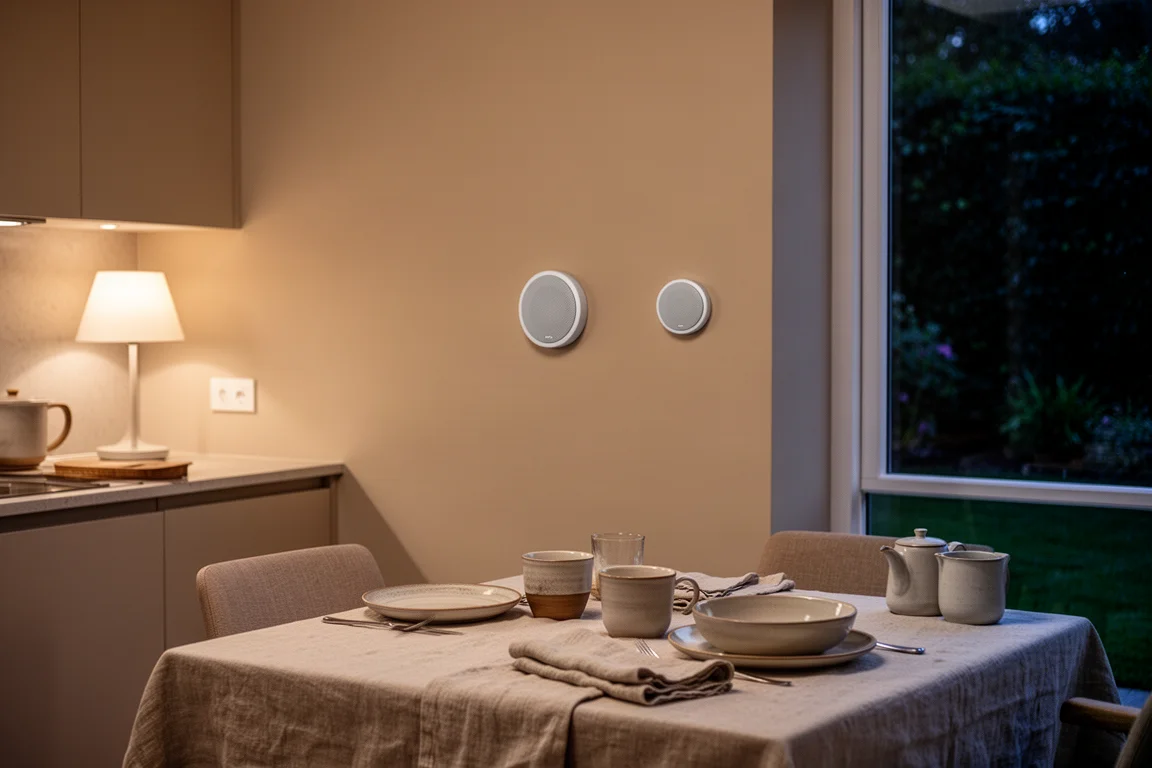
Because zone assignments, EQ curves, wire management, and rack layout all sit behind the scenes, the practical next step is to talk with a Sonos dealer or integrator who can size the system and handle the technical details. What reaches the homeowner is deliberately simple: open the Sonos app, see your rooms, and choose what plays where.
Conclusion
The Sonos Amp Multi takes the well-established idea of powering passive speakers with Sonos and rebuilds it for homes with many rooms. Eight outputs, four independent zones, four simultaneous streams, GaN amplification with post-filter feedback, and a fanless design that draws under 5.5 watts at idle all arrive in a chassis that occupies the same 2U space two standard Amps once needed. For one or two rooms, the standard Amp still makes more sense. For three zones and beyond, the Amp Multi is the cleaner, more expandable way to build whole-home audio, and it is an easy recommendation for anyone planning a system at that scale.
Product link
View more details for Sonos Amp Multi
This product is mentioned in the review. Check the specifications, options, and compatibility before buying.
View more details for Sonos Amp MultiFurther reading
Related Reviews
Whole Home Audio
Soundavo WS66i Review: A Six-Zone Whole-Home Audio Controller Built for Flexible Distribution
A close look at the Soundavo WS66i, a 2U six-zone controller and class D amplifier with app control, two AirPlay endpoints, and an expansion path to 18 stereo zones.
Hi-Fi Amplifiers
Affordable Chinese Amplifiers Worth Buying: Five Budget Hi-Fi Amps Compared
A practical look at five affordable amplifiers, what each one does well, and the trade-offs to weigh before you buy.
Hi-Fi Audio
Affordable Hi-Fi Gear Worth Buying: Standout Components That Punch Above Their Price
A roundup of affordable speakers, amplifiers, DACs, and sources that deliver performance well beyond their price point.