Backpacking Gear
Solo Backpacking Gear: Seven Essentials Tested for Reliability
A practical look at satellite communication, water filtration, shelter, sleep insulation, and stove reliability for solo backpacking trips.
Introduction
Solo backpacking asks a different set of questions than a group trip does. There is no one else to split the load, no one else to make a decision when the weather turns, and no one else to walk out for help. That makes reliability the single most important quality in the gear you carry.
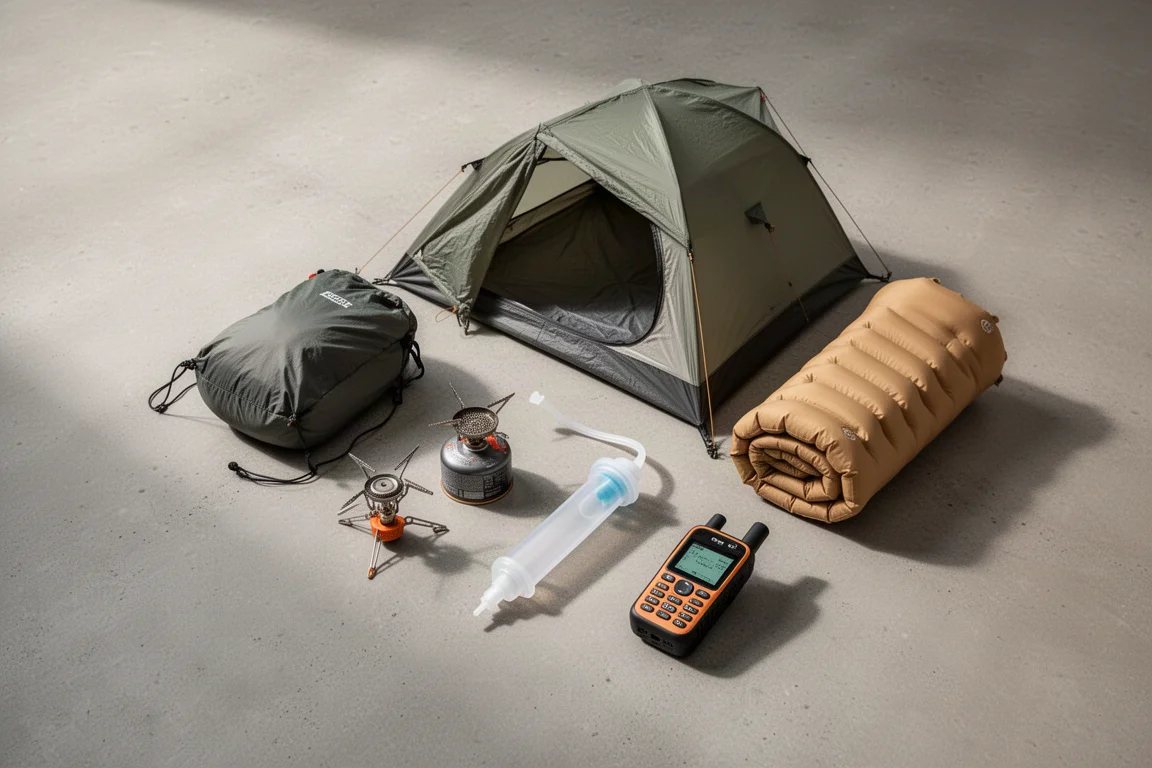
This guide covers seven items that matter on remote solo routes: two ways to call for help, two water filters, a shelter, a sleeping pad, and an ultralight stove. Each was assessed on safety, ease of use, and reliability in desert conditions with daytime temperatures around 20 degrees Celsius, overnight lows near 3 degrees Celsius, strong winds, and the kind of unpredictability that can deliver snow on a forecast that never mentioned freezing.
How These Items Were Evaluated
Every item was judged against three criteria: safety, ease of use, and reliability. Practical testing took priority over specification sheets. Satellite messengers were compared from identical positions in a canyon with a restricted view of the sky, under light tree and shrub cover, and under clear skies. Water filters were used on whatever water was available. The stove was pushed toward failure on purpose.
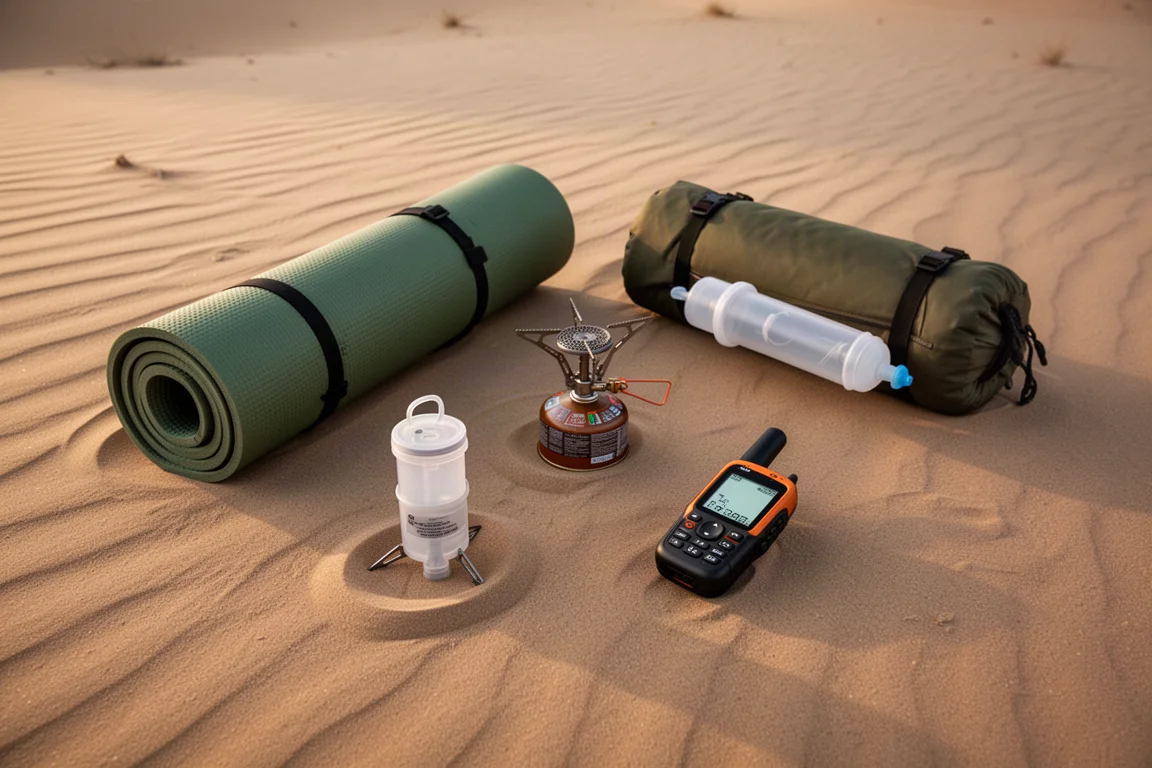
The working assumption throughout was that comfort can be negotiated but reliability cannot. A pad that is merely uncomfortable is an annoyance; a stove that drops a pot of boiling water, or a messenger that cannot reach a satellite, is a genuine problem. Where a product has a known failure mode, that failure mode is described here rather than glossed over, along with the steps that reduce the risk.
Apple iPhone: Satellite SOS in a Familiar Device
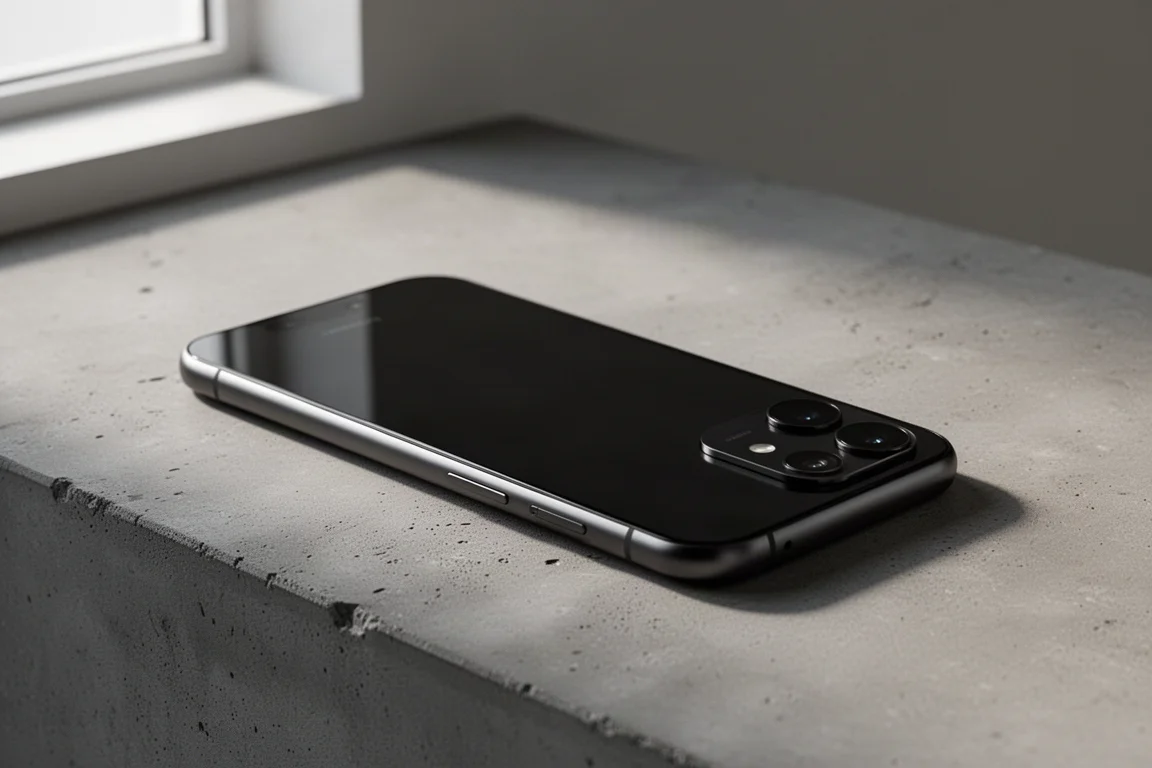
Newer iPhone models include satellite SOS and satellite messaging, and the obvious appeal is that the capability rides along in a device you already carry. The question is how well it works when the sky is not wide open.
In a canyon area with a fairly generous view of the sky, the iPhone refused to connect. It prompted for a clearer view of the horizon, reported that the current satellite was low in the sky, said another would be available in seven minutes, and warned that the signal might be blocked. A dedicated satellite messenger, tested from the exact same spot, sent a message after roughly five minutes. The iPhone never connected.
Under light tree and shrub cover, the iPhone did connect, though it needed to be pointed away from the densest cover. From inside a closed tent with the fly fully zipped, it still reached a satellite for messaging. Under clear skies, once connected, both devices sent and received messages within seconds of each other, sometimes one or two seconds apart.
That makes the iPhone a strong option for day hikes in popular areas, where help is generally nearby and the trip is not committing. It is a weaker proposition as a primary emergency device in canyons, dense forest, or any terrain where the horizon is restricted.
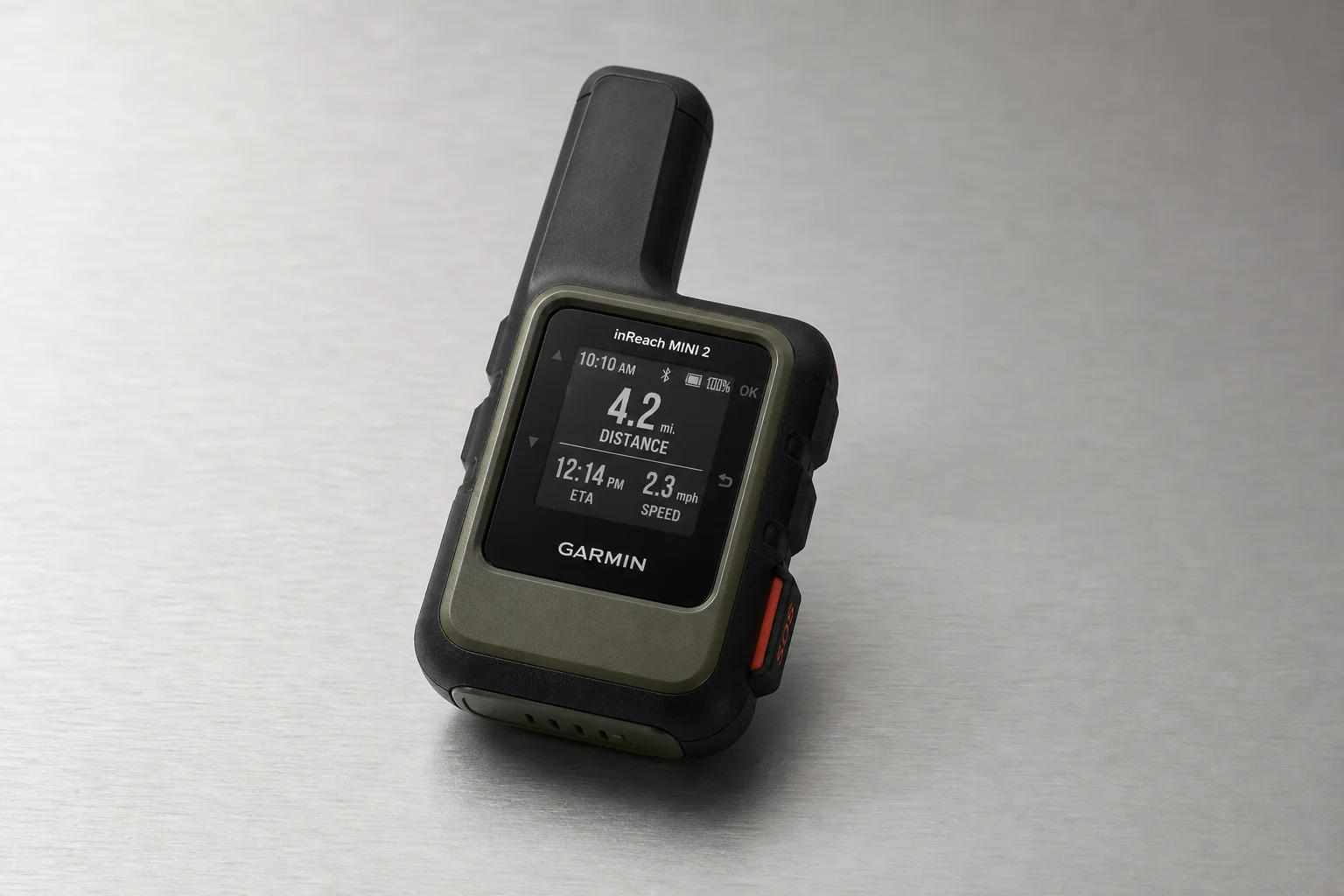
Garmin inReach: The Dedicated Emergency Communicator
The dedicated satellite communicator was the more dependable of the two from restricted positions. From the same canyon spot where the iPhone could not connect at all, it sent a message, though the first send after a long idle period took about five minutes. Once connected, message traffic was fast.
Two other characteristics matter for solo trips. First, in an SOS situation the device boosts its signal, trading some battery life for a connection that is easier to establish. Second, it can receive messages without being taken out and pointed at the sky, which makes it practical for ongoing communication rather than one-off check-ins. That combination is most valuable on multi-day trips in committing terrain, and for activities where a fall or a mechanical problem is a realistic risk. It is also the better choice when someone at home needs to be able to reach you, because incoming messages arrive without any user action.
The trade-off is straightforward: it is an extra device to buy, carry, and charge, and for casual day hikes the phone you already own may be sufficient.
Platypus Quick Draw: Fast Filtration That Keeps Up
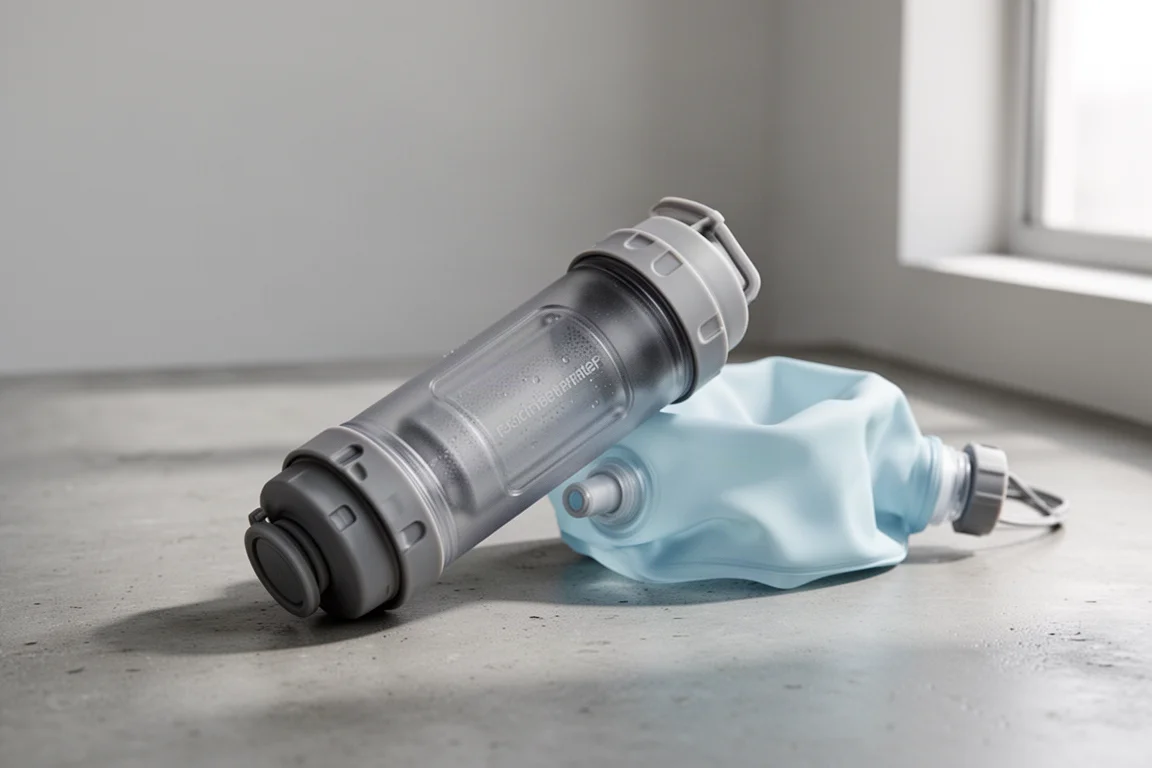
The Quick Draw is advertised as meeting EPA guidelines for the removal of bacteria and protozoa, and it performed without drama on the marginal water sources available. The case for it over higher-specification filters comes down to speed and consistency rather than lab numbers.
Flow rate holds up better over time, which matters on trips where you are filtering several litres a day. Long-term reliability has been solid: two previous units processed thousands of litres without issues and without any illness. The supplied soft-sided bags and the two caps make it easy to seal the filter and stow it in a sleeping bag when overnight temperatures drop below freezing.
Sawyer Squeeze: Higher Removal Rates, Slower Flow
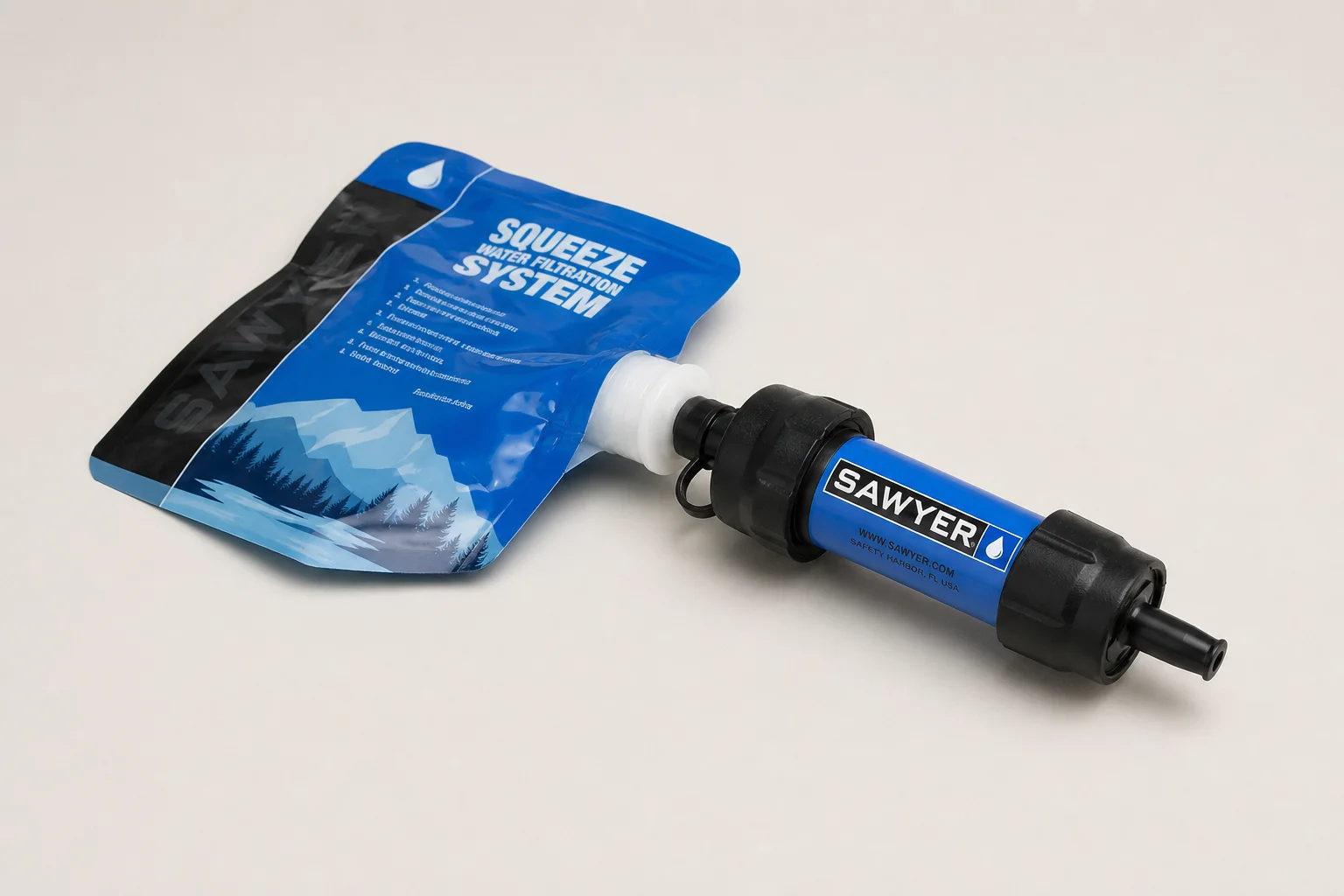
The Sawyer Squeeze is frequently credited with removal rates multiple logs better than the Quick Draw, and that reputation has a basis. The two brands appear to have approached testing differently. One asked whether its filters meet EPA guidelines for bacteria and protozoa removal; the other asked laboratories what the maximum removal rates its filters could achieve. Both results can be accurate while describing different things.
In practice, the gap may matter less than the numbers suggest. For most people in most circumstances, the Quick Draw’s filtration is good enough, including on poor-quality sources. Where the Sawyer gives ground is in day-to-day use: it tends to be slower, and it loses flow rate more noticeably over time.
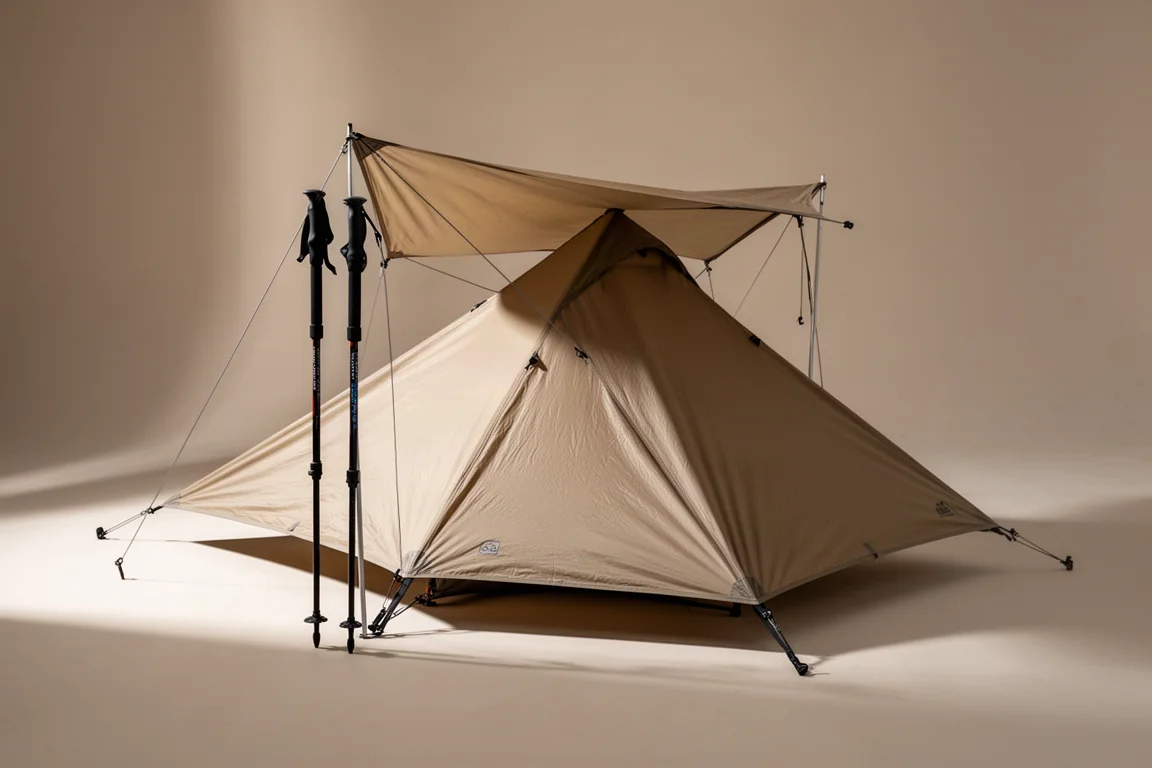
Durston X-Mid 1P: A Versatile Shelter With a Recall Story
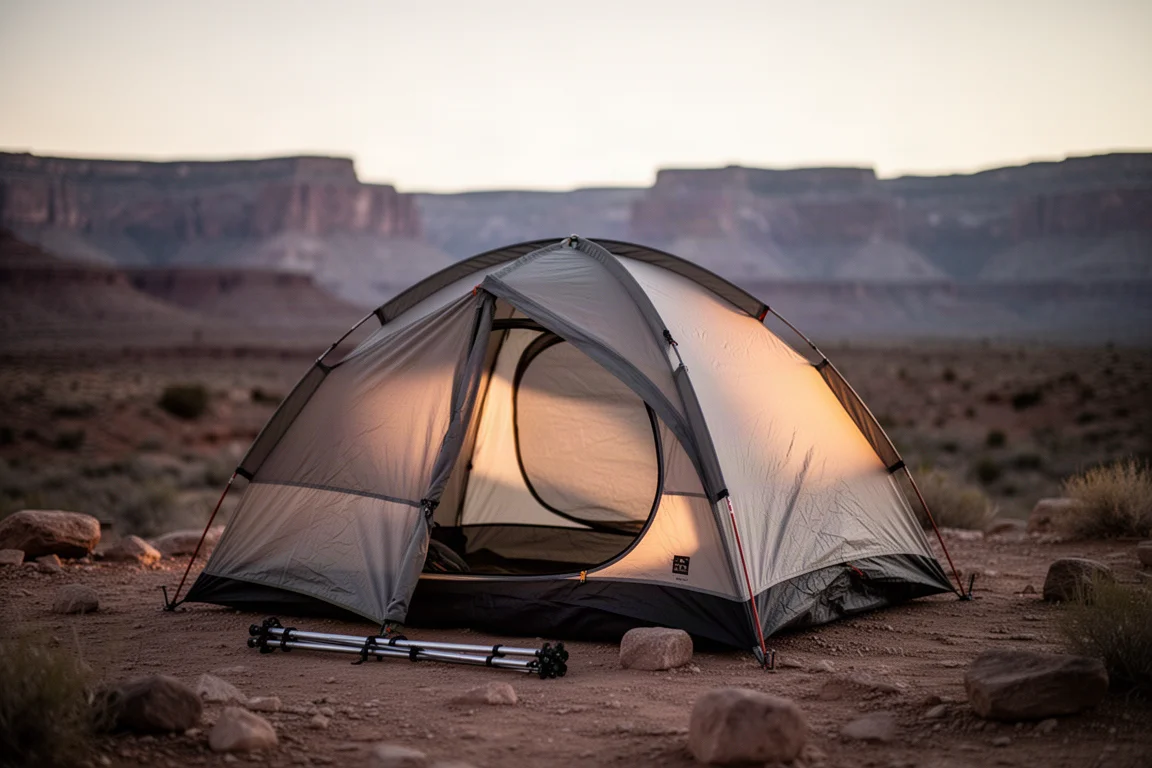
This shelter is advertised as lightweight, roomy inside, stormworthy, and user friendly, and it has delivered on all four across winter conditions, desert trips, and three-season use. It sets up quickly, has generous interior space, and has become a favourite for its versatility.
There is also a reliability story worth knowing before buying. The tent uses carbon fibre poles with small aluminium tubes joining each carbon segment, and in the first production batch some of those aluminium ferrules were not glued securely enough and worked loose in the field. One came loose on a four-day trip and was fixed on the spot with superglue, after which it held. The pole manufacturer has issued a full recall of the affected poles and is replacing them for buyers from the first batch, and the manufacturing process is being reworked for the next round of tents.
For buyers, the practical lesson is to check the pole ferrules before a trip and to carry a small tube of glue as cheap insurance. It is also a reminder that for tents, sleeping bags, and sleeping pads, proven field time matters more than a specification sheet.
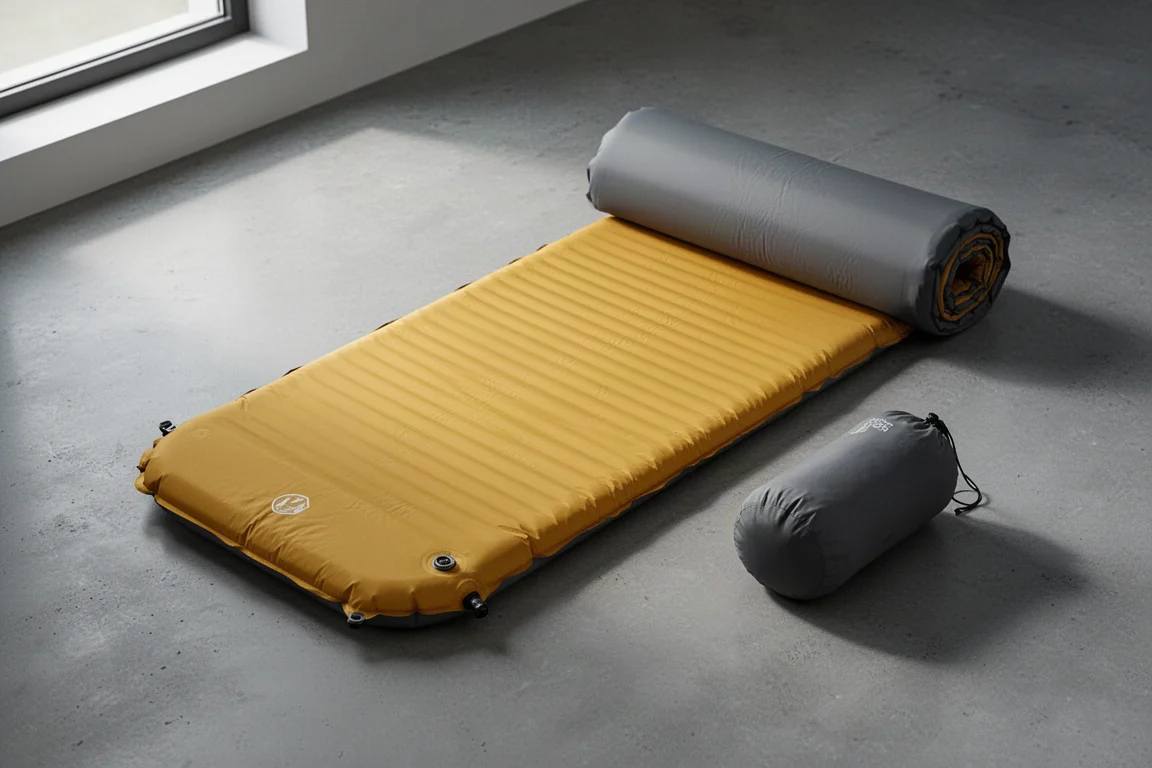
Therm-a-Rest XLite NXT: Warmth-to-Weight With a Comfort Trade-Off
The XLite NXT is claimed to be a reliable pad that goes through rigorous testing, and each pad is inflated at the factory to check for manufacturing defects and leaks. Across a large body of buyer reviews, the most common failures were the older valves, which would stop working and cause leaks. The current WingLock valve is easy to replace, which turns a potential failure into a quick swap. Baffle blowouts, where internal baffles separate, are the other failure point, and they appear less frequently here than on some comparable pads.
The NXT version increases thickness from 3 inches to 3.5 inches, and warmth-to-weight remains one of the best on the market. Comfort is the compromise. The horizontal baffles provide limited pressure relief, and side sleepers can find an arm going numb. On a night that turned out far colder than forecast, the pad at 80 to 90 percent inflation produced numbness within about 30 minutes when lying on the side. Deflating it to roughly 50 to 60 percent extended that to about three hours, a meaningful gain, at the cost of noticeable heat loss through the shoulders and hips where the pad compressed.
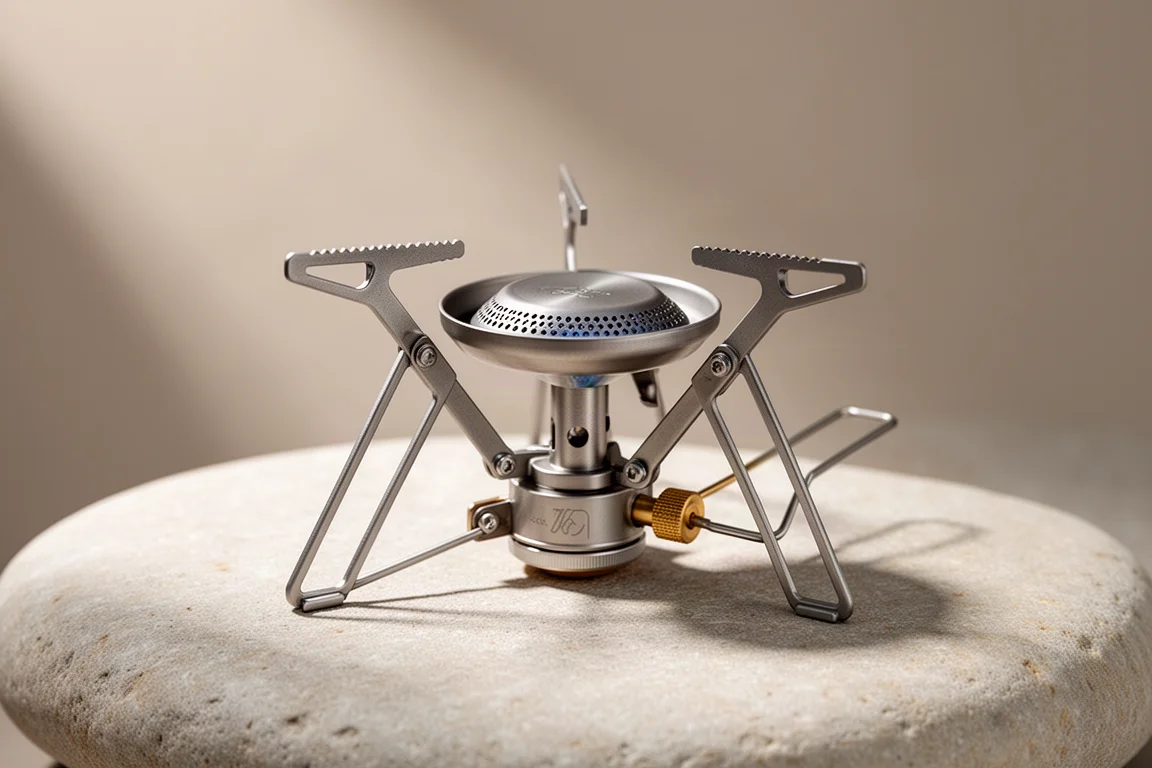
BRS 3000: Ultralight Stove With a Known Failure Mode
The BRS 3000 weighs under an ounce, packs down small, and works. Hundreds of boils have gone off without incident, and it remains one of the most popular ultralight stoves for good reason. It also has a failure mode worth understanding before you rely on it.
An analysis of more than 4,000 customer reviews, filtered down to the one-star and two-star reports describing stove failures, points to a clear pattern: most failures happen within the first or second boil, and the usual cause is a pot support arm bending and dropping the pot. The likely explanation is variation in the titanium alloy mix, where more aluminium in a batch makes an arm more likely to soften and bend. The observed failure rate is roughly 5 percent, or about one stove in twenty. One personal failure followed exactly that pattern: a one-litre pot of water, strong wind blowing onto a single arm, that arm glowing red hot, and then giving way.
A stress test is worthwhile before trusting the stove. Load a one-litre pot of water, run the stove at full blast for about 15 minutes, and if possible blow air across it with a fan to reproduce wind loading. A full-blast test with roughly a pound and a half of rock on top, run for 10 to 15 minutes without wind, produced no failure at all, and only the very top of the arms glowed. Wind is the variable that matters, because it concentrates heat on a single arm.
Overall Buying Advice
The pattern across all seven items is the same: the specification that looks best on paper is not always the one that holds up in the field, and the difference usually shows up in restricted conditions rather than ideal ones.
For emergency communication, choose based on the trips you actually take. If you hike popular trails on day trips, the satellite capability already in a modern phone covers most situations. If you travel multi-day routes in committing terrain, or you need to receive messages reliably, a dedicated satellite communicator is the more dependable tool, and carrying both is a reasonable belt-and-braces approach for serious routes.
For water treatment, both filters here are credible. The Quick Draw prioritises speed and consistent flow, while the Sawyer Squeeze prioritises the highest removal rates. For shelter, sleep, and cooking, favour designs with long field histories and check known weak points before you leave: pole ferrules, valve replacements, and stove pot supports. A small repair kit, a couple of spare parts, and a stress test at home cost very little and remove most of the risk these failure modes create.
Conclusion
Reliability should come first on solo trips, even when it means accepting a little less comfort or a slightly heavier pack. The gear that earns its place is the gear that works when conditions are at their worst, and the way to find out is to test it deliberately: stress the stove, check the poles, deflate the pad and see how it feels, and compare your communication options from a position with a restricted view of the sky. A small repair kit and a spare part or two are worth the weight for the items you cannot do without.
Further reading
Related Reviews

Backpacking Gear
Building a 10 lb Base Weight: An Ultralight Backpacking Gear List
A practical walkthrough of the ultralight pieces behind a 10 lb base weight, from a 765 g pack and a roomy one-person tent to a full camp chair and a dependable water filter.
Backpacking Gear
A 15-Pound Lightweight Backpacking Gear List for Solo Trips
A beginner-friendly 15-pound backpacking setup built from easy-to-find gear, with notes on what each piece does, how it packs, and where to spend your attention.
Backpacking Gear
8 Ultralight Backpacking Gear Upgrades Worth Carrying
Eight small, affordable backpacking upgrades that solve real trail annoyances, from a pillow that stays put to a fuel valve that rescues leftover canister gas.