Astronomy
Single vs Double Stack Solar Telescopes: Which Should You Buy?
How etalons work, why double stacking delivers sharper contrast, and whether an upgradable system like the Lunt MT series is the smarter first purchase.
Introduction
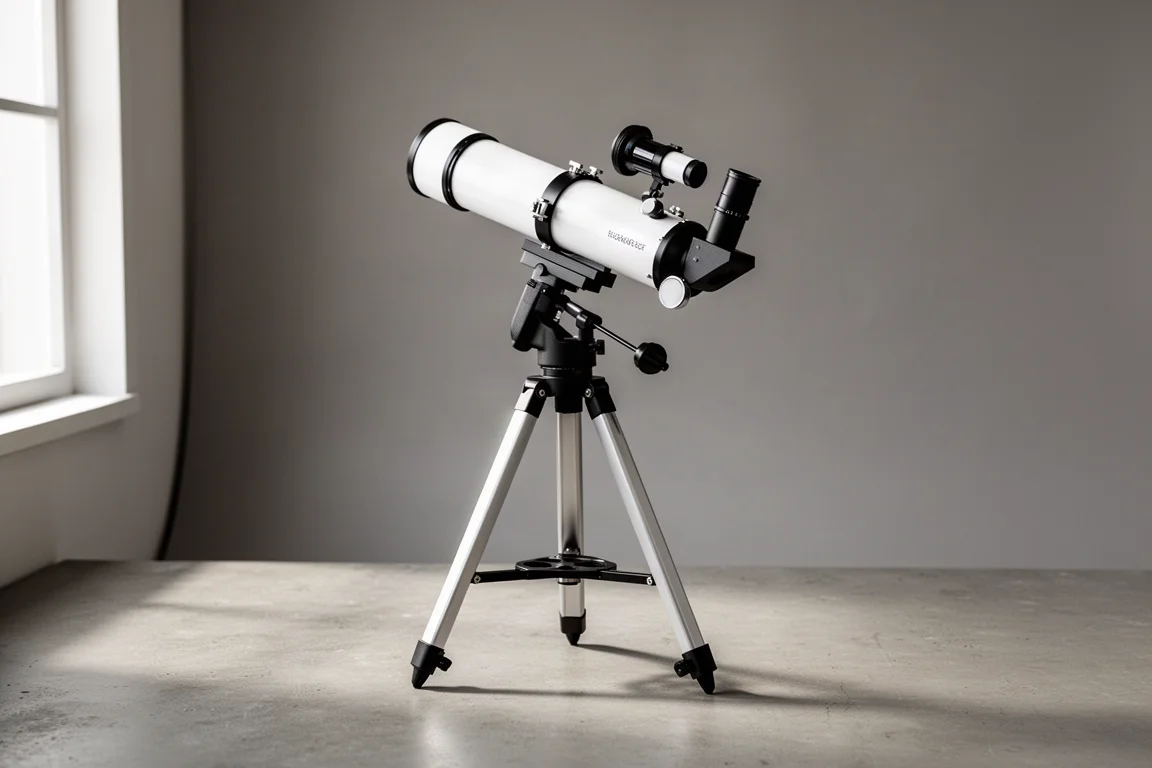
Should your solar telescope be single stacked or double stacked? Is it worth paying more for a double stack unit? These are two of the most common questions among anyone getting serious about hydrogen-alpha solar observing, and the answers depend on how etalons work, what you want to see, and how your budget is likely to grow.
This guide walks through the three types of commercially available etalons, the real benefits and drawbacks of double stacking, and why an upgradable design such as the Lunt MT series can be a smart way to buy.
Why Solar Telescopes Need an Etalon
To see the sun’s chromosphere, with its amazing surface details and prominences on the limb, a telescope must isolate one specific wavelength of light and block out all the others. That is the job of the etalon.
An etalon works based on the interference of light. It consists of two partially reflective plates or mirrors, made very flat and set parallel to each other, forming an optical cavity. The spacing between the plates is on the order of microns. Light entering the cavity reflects multiple times between the surfaces, and only certain wavelengths interfere constructively and pass through.
For solar applications, you want the etalon to pass less than one nanometer around the hydrogen-alpha line at 656.28 nanometers. Depending on the etalon type, the transmitted wavelength can be fine-tuned by tilting the etalon, changing the cavity spacing, thermal tuning, or air pressure adjustment.

Tilt-Tuned Etalons
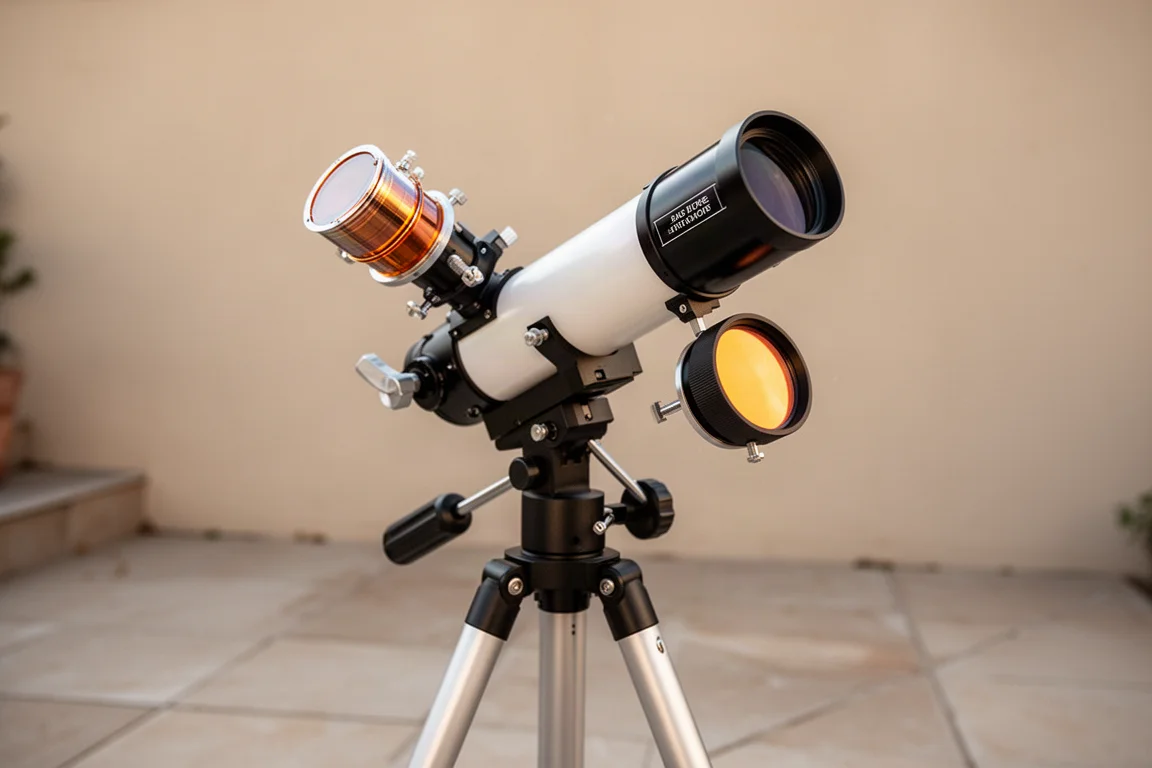
Tilt etalons are typically found on the objective of a small telescope. A thumb wheel tilts the etalon, adjusting the wavelength. For cost reasons, these are usually limited to objectives of 60 mm or less.
This is the simplest and easiest etalon type to use. You can buy a complete solar telescope with a tilt etalon for much less than $1,000, which makes it the natural entry point for most beginners.
Pressure-Tuned Etalons
Pressure-tuned etalons are typically placed at the user end of the telescope, just before the blocking filter and eyepiece or camera. Because of their position in the optical train, they can be made smaller, and are therefore more cost effective at larger apertures.
Changing the pressure changes the index of refraction of the light inside the cavity, which in turn adjusts the wavelength. This design offers much more control and a larger sweet spot than tilt systems. The trade-off is that it does require occasional readjustment during a session.
Solid Etalons
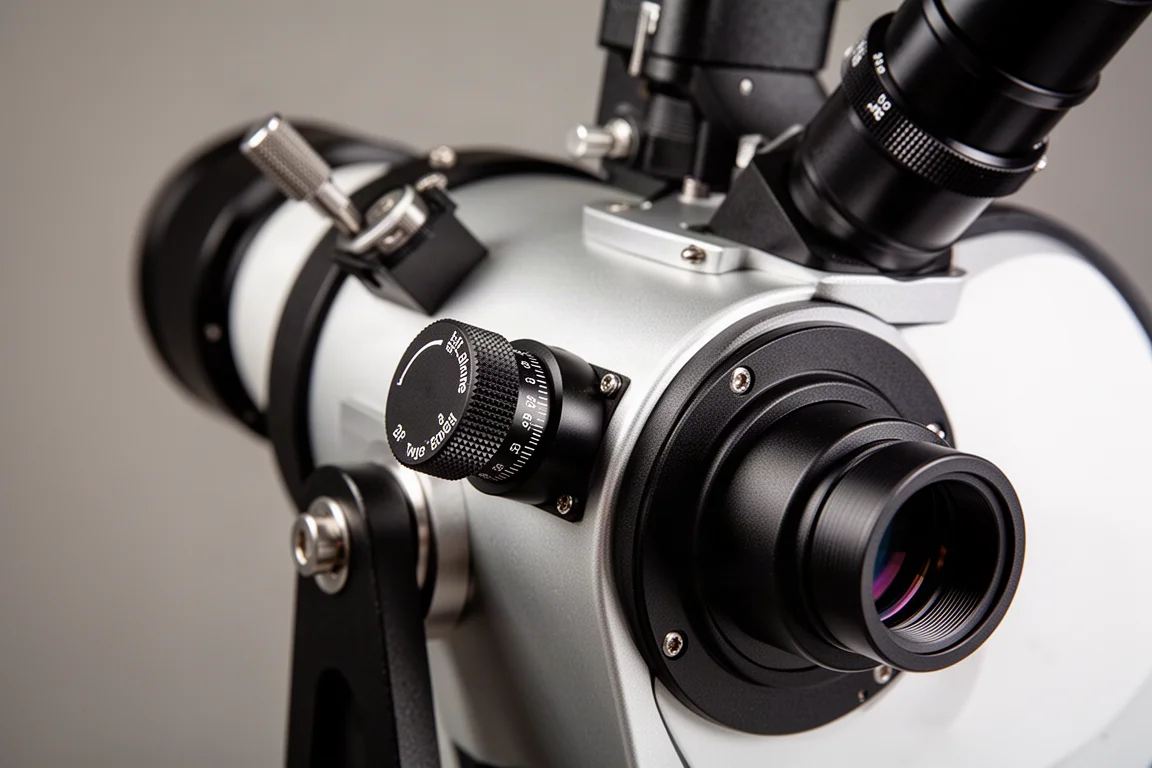
Solid etalons are usually mica based, and they sit in the same position in the optical train as pressure-tuned units. They are smaller and more compact than other designs, but they require heating and power, with a corresponding warm-up time before they can be used.
The best ones operate around f/30 or f/40, which means you either have to add a Barlow to your telescope or buy a solid etalon with a Barlow built in, such as a Quark. In practice, this rules out full disc views, because the field of view is so small.
Beyond power and warm-up time, the biggest concern with solid etalons is quality. Mica is difficult to consistently cleave in exactly the same way twice in a row, so there is normally a high pre-production rejection rate, with only a few units performing well enough to meet specifications. Searching online for Quark quality turns up pages of discussion about the so-called etalon lottery. Good units certainly exist, but buying one does entail some risk.
Solid etalons are usually unbundled from the optical tube assembly, whereas tilt and pressure-tuned etalons are generally part of an integrated solar telescope design.
What Double Stacking Gives You
Combining two etalons in series narrows the bandpass, resulting in sharper contrast and more detail. In practice, double stacking delivers:
- Much better limb resolution
- More contrast on filaments and surface structures
- More of a 3D effect
- A finer degree of bandpass adjustment and tuning
The disadvantages are mostly cost, plus a slightly dimmer image than a single stack. For imagers, that dimmer image means longer exposures or more gain.
Many experienced solar imagers will tell you they prefer a smaller double stack solar telescope over a larger single stacked model. That is a strong signal about how much the contrast improvement matters in real-world observing.
Buying Advice: Consider an Upgradable System
Solar telescopes are a lifetime investment, so it pays to choose wisely. If you are unsure whether double stacking is worth it for you, an upgradable design removes the guesswork.
Some designs, notably the Lunt MT series, are built to be upgradable. You can buy a larger single stack system today, then upgrade to double stack later when your budget allows. That way, you start observing immediately without committing to the full double stack cost up front, and you never outgrow the purchase.

Conclusion
Double stacking narrows the bandpass for sharper contrast, better limb resolution, and a more three-dimensional view of surface detail, at the cost of a dimmer image and higher price. For most buyers, the smartest path is a well-chosen single stack scope in an upgradable design, with the option to add a second etalon when the time is right.
Product link
View more details for Lunt MT Series
This product is mentioned in the review. Check the specifications, options, and compatibility before buying.
View more details for Lunt MT SeriesFurther reading
Related Reviews
Astronomy
Astronomy Gifts for Dads: Binoculars, Telescopes and Accessories Worth Giving
A practical gift guide covering stargazing binoculars from around $50, beginner telescopes under $500, and accessories under $100.
Astronomy
Best Filters for EAA in Light Pollution: What Short-Exposure Testing Actually Showed
Five astronomy filters and two noise reduction tools tested under light polluted skies for electronically assisted astronomy, with practical results for broadband and narrowband targets.
Astronomy
Six Premium Eyepieces That Transform a Beginner Telescope
A hands-on comparison of Tele Vue Panoptic, Tele Vue Nagler, and Baader Hyperion eyepieces, and why upgrading the stock eyepieces is the best first move in stargazing.