Astrophotography
Solar Imaging Camera Comparison: QHY5III 174 vs Player One Apollo M Mini
Two dedicated astronomy cameras tested back to back on a Lunt 100MT, covering frame rate, pixel size, full well capacity, and everyday solar imaging practicality.
Introduction
Choosing a camera for solar imaging comes down to more than raw specifications. Pixel size, frame rate, full well capacity, and shutter type all matter, but so do practical details like how easily you can capture a full solar disk and how quickly you can deal with Newton rings. This comparison looks at two dedicated astronomy cameras used for solar work: the QHY5III 174, built around the IMX174 sensor, and the Player One Apollo M Mini, which uses the IMX429 sensor. Both are also strong options for planetary imaging, lunar work, and capturing ISS transits, so the findings extend beyond the Sun.
How the Two Cameras Were Compared
The testing was done on a Lunt 100MT, a 100mm f/7 solar telescope. The comparison had two goals: to see which camera performs better, and to see which one matches this particular telescope and delivers the best results. The cameras were tested at the native f/7 focal length and also with a Tele Vue Powermate 2.5x, which pushes the focal ratio to 17.5.
The testing protocol was deliberately thorough. Images were captured on seven different dates to average out differences in seeing conditions. Exposure and gain were matched as closely as possible between the two cameras, along with the region of interest and field of view. Both full field views and smaller regions of interest, which allow higher capture rates, were tried. Stacking was done the same way for both, and processing was adjusted to produce similar results. One extra processing note: using a 1.5x drizzle in AutoStakkert reduced fine pixelation in the final images, though it triples processing time.
Key Specifications Side by Side
Several specification differences stand out. The IMX174 sensor in the QHY is physically larger, which is why it can capture the full Sun or full Moon in a single frame, while the Apollo M Mini’s smaller sensor cannot. In solar imaging, larger pixel sizes are generally better suited to longer focal lengths, which is why Player One recommends their Apollo M Max with 9 micron pixels for Quark applications, where the built-in 4.2x Barlow creates very long focal lengths. In theory, the Apollo Mini’s 4.5 micron pixels should be a better match for an f/7 100mm telescope than the 5.86 micron pixels of the 174.
Aside from sensor size, the two cameras are closely matched on paper. The 174 captures more frames per second and has a deeper full well capacity, which translates into higher dynamic range. In real use, however, the faster frame rate of the 174 was not significantly faster in practice. A deeper full well does remain a genuine advantage for the QHY.
Standout Features of the Apollo M Mini
The Apollo M Mini makes a strong first impression. The packaging is nice, there is an optional cooled version, and the built-in tilt adjustment immediately stands out as a thoughtful touch.
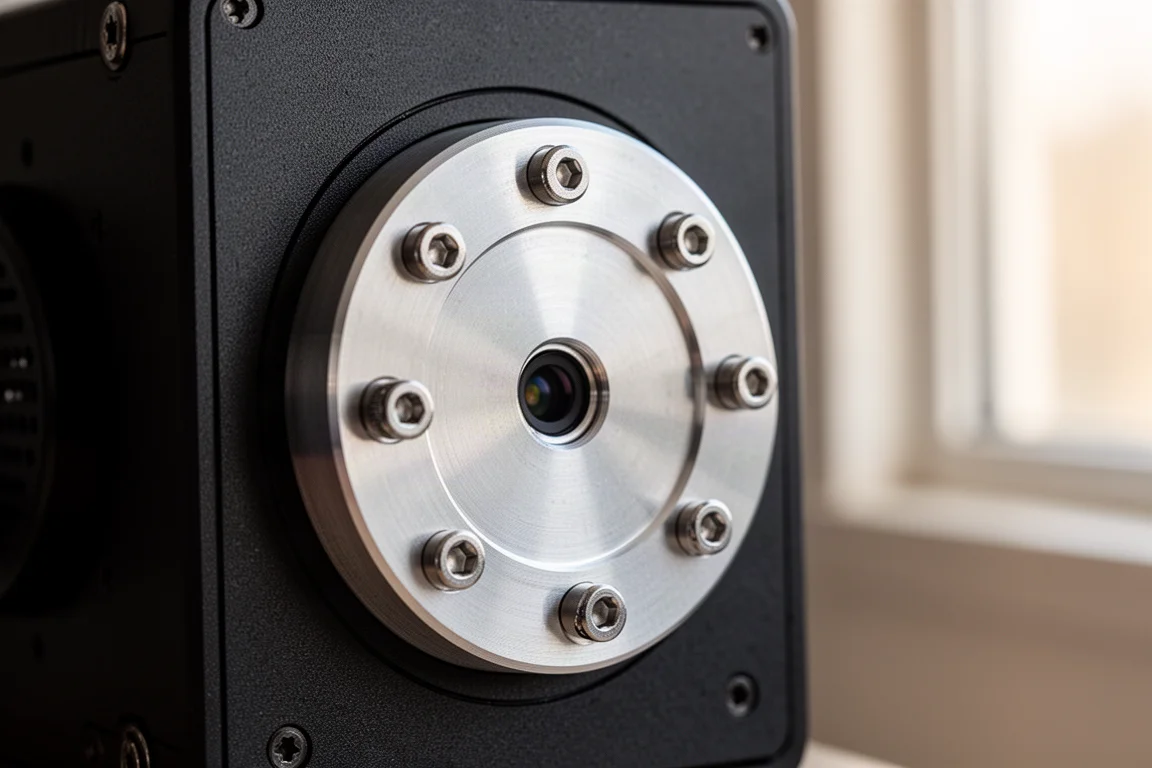
That built-in sensor tilt is the biggest practical advantage. The tilt plate has hex screws on each side; loosen the screws you need and tilt the plate to eliminate Newton ring issues. With the QHY5III 174, a separate tilter is required, and it is fiddly enough to set up that it often ends up unused. On the Apollo Mini, removing Newton rings is much easier and faster, which is a real point in its favour during an imaging session.
What the QHY5III 174 Does Better
The QHY5III 174 earns its place with a much faster frame rate capture for the same exposure and region of interest, which matters for high-speed targets. It is also less bulky, though that is a fairly trivial advantage. Most importantly, its larger sensor captures a full disk in one frame with the 100mm f/7 Lunt, avoiding a mosaic that more than doubles capture and processing time.
One specification note worth mentioning: the QHY version of the IMX174 enables sensor features that some competing implementations of the same sensor do not, such as offset control. Offset control lets you improve contrast between the umbra and penumbra of a sunspot and control the overall blackness of the spot, which made the QHY the preferred choice over other brands using the same sensor. The Apollo Mini also supports offset control, so this advantage does not apply in this particular comparison.
Image Quality and Field Results
Performance in average seeing is similar with both cameras, and depending on the seeing on a given night, either camera might slightly outperform the other. The Apollo Mini’s photosphere performance appeared generally better than the 174’s, and it offers strong value for the money. In excellent seeing, the 174’s performance appears superior, and its deeper full well gives it a dynamic range edge.
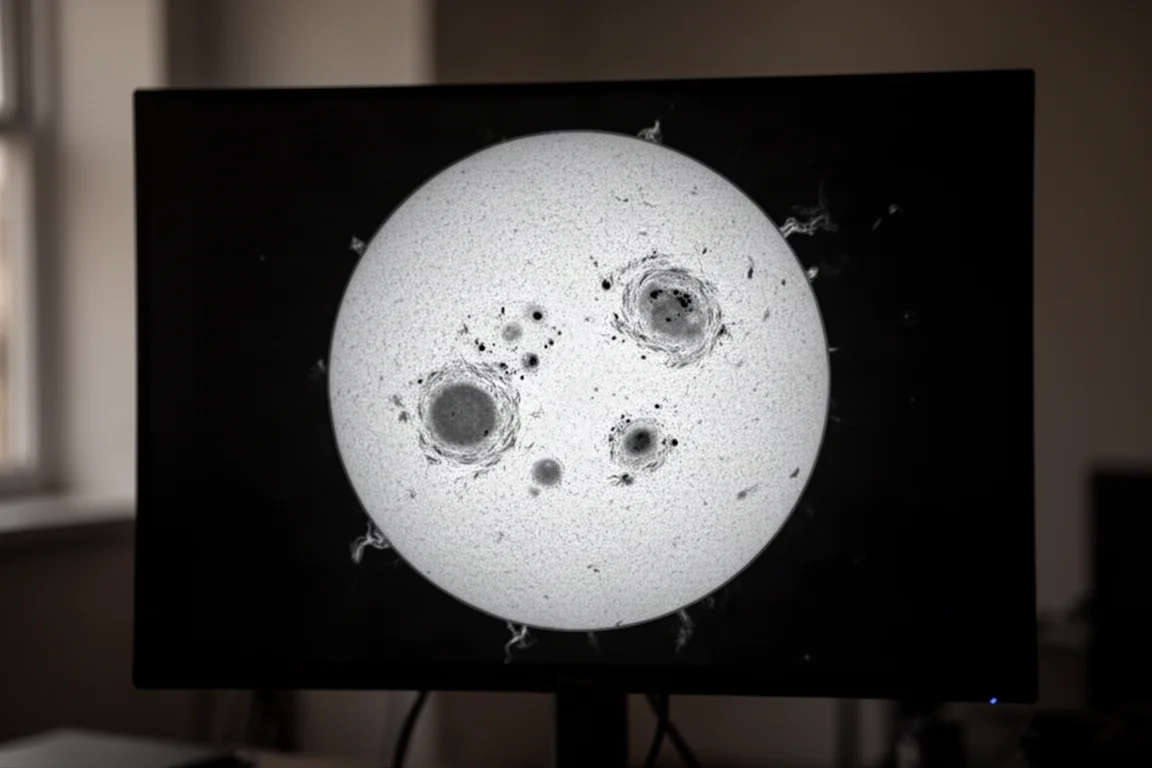
The comparison images across the seven test dates showed results that were genuinely close, with the deciding factors often being seeing conditions and the specific target rather than a clear winner across the board.
Which Camera for Which Job
The practical answer is that each camera has a clear role. The Apollo M Mini is the pick for photosphere sunspot close-ups and for chromosphere work looking at individual features on the solar disk when seeing is average. The 174 takes over for full disk imaging of either the photosphere or the chromosphere, for close-ups of surface detail when seeing is excellent, and for ISS capture, where its high frame rate is especially important.
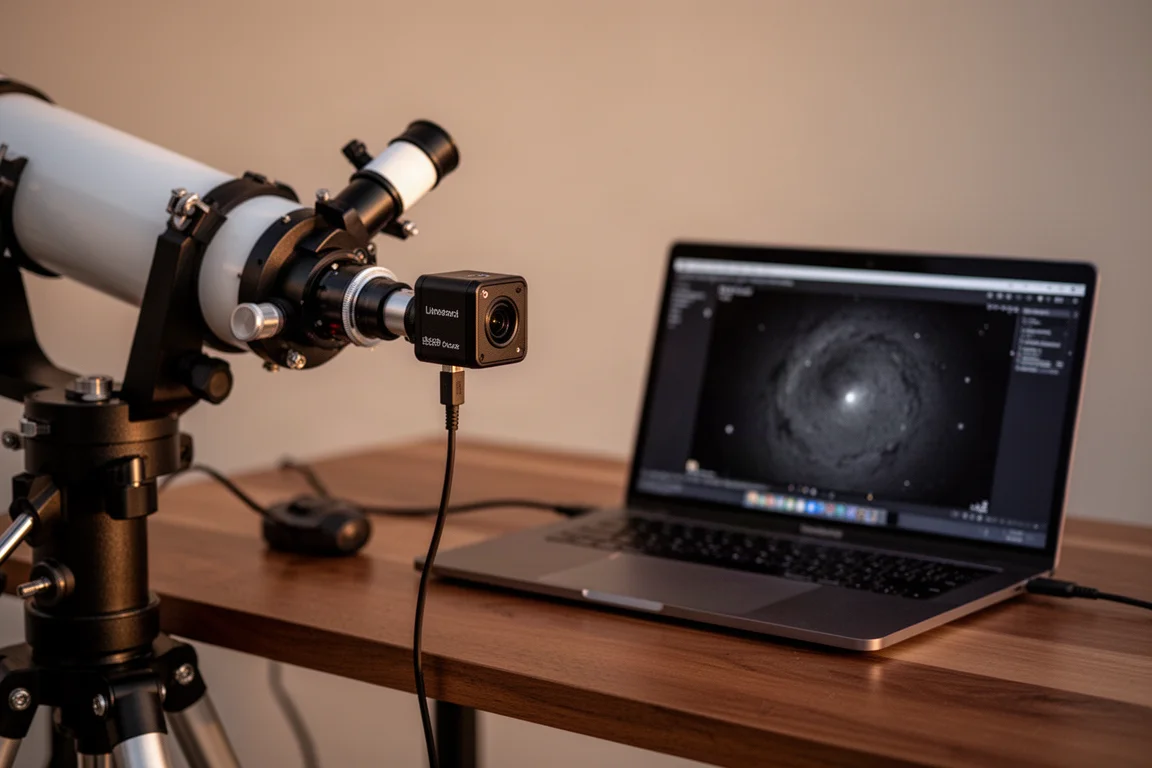
It is worth noting that these conclusions may not transfer directly to every setup. With an 80mm or smaller aperture at f/7, the Apollo Mini should be able to fit a full disk in frame, removing the mosaic disadvantage entirely. And for anyone using a Quark, the 9 micron Apollo M Max may be the better fit thanks to its larger pixels.
Conclusion
Neither camera is a universal winner, and that is the most useful takeaway. The QHY5III 174 remains the stronger choice for full disk work, excellent seeing conditions, and high frame rate targets like the ISS. The Player One Apollo M Mini counters with built-in tilt adjustment that actually gets used, generally better photosphere performance, better heat tolerance by design, and excellent value. Matching the camera to your telescope, your targets, and your typical seeing conditions matters more than any single specification sheet number.
Product link
View more details for QHY5III 174
This product is mentioned in the review. Check the specifications, options, and compatibility before buying.
View more details for QHY5III 174Further reading
Related Reviews
Astrophotography
ASKAR FRA400C Review: A Versatile 400mm Refractor for Astrophotography and More
The ASKAR FRA400C is a compact 72mm refractor that balances reach, versatility, and portability for astrophotographers and visual observers.
Astrophotography
Askar SQA106 Review: A Premium 106mm Astrograph With Exceptional Optics
The Askar SQA106 is a premium 106mm quintuplet astrograph with impressive sharpness across full-frame sensors, though its price and weight demand careful consideration.
Astrophotography
Astro Imaging Gear 2026: Eight New Products Worth Watching
A look at the most interesting new astrophotography and astronomy products announced this year, from fast telescopes to smart cameras and wireless accessories.