Camping Tents
Snow Peak Alpha Breeze Tent Review: Standing Room, Space, and the Real Trade-Offs
A close look at the Snow Peak Alpha Breeze four-person tent, covering interior height, floor area, door and window count, rain performance, packed weight and setup time.
Introduction
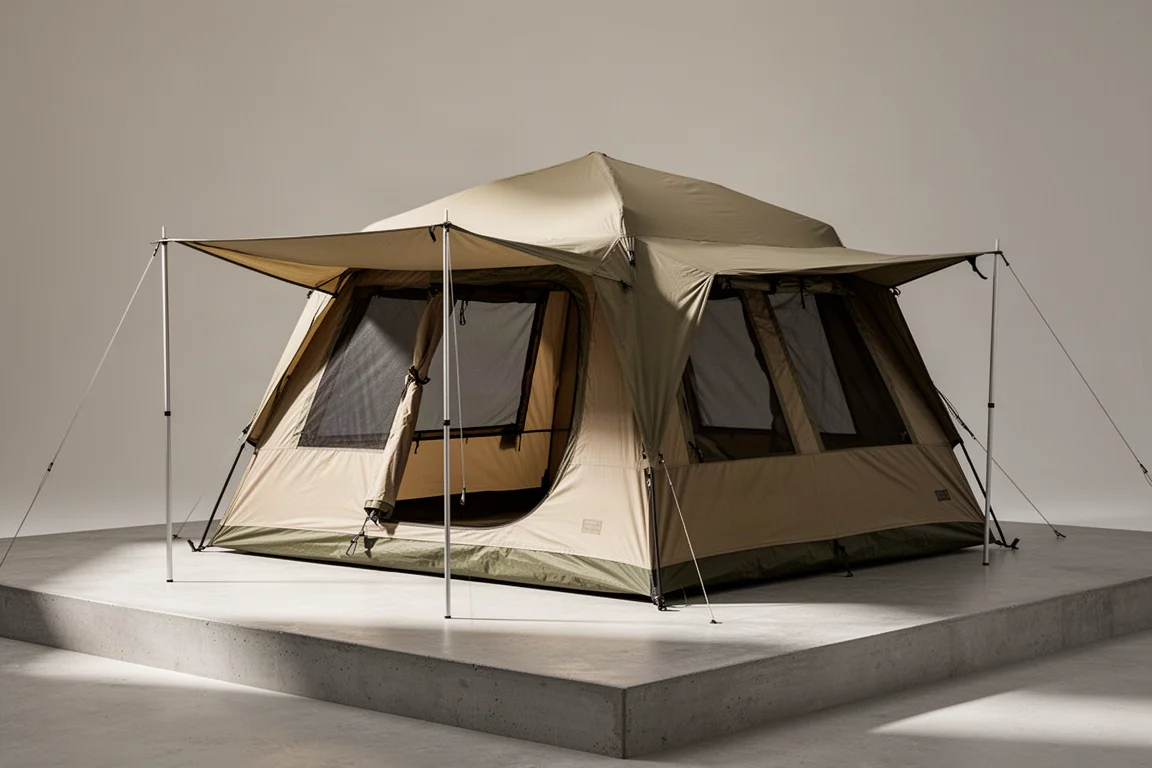
The Snow Peak Alpha Breeze is a four-person tent built around one idea: standing room. Measured at the centre, the peak height comes in at about 71.75 inches, and the floor works out to roughly 74.7 square feet, which is a lot of interior for a tent in this category. Add four doors, four windows and a front awning that ships with the tent rather than as a separate purchase, and it starts to feel less like a weekend shelter and more like a small cabin that happens to pack into a bag.
That capability comes with clear trade-offs. The packed tent weighs about 23.6 pounds, pitching it takes noticeably longer than a typical four-person tent, and the price sits well above the mainstream. This review covers where the Alpha Breeze earns its keep, where it asks for patience, and who should genuinely consider it.
The short version: if you drive to your campsite and want space you can walk around in, this tent delivers more of it than almost anything else at the four-person size. If you carry your tent any distance, the weight and packed size will end the conversation early.
Who This Tent Is For
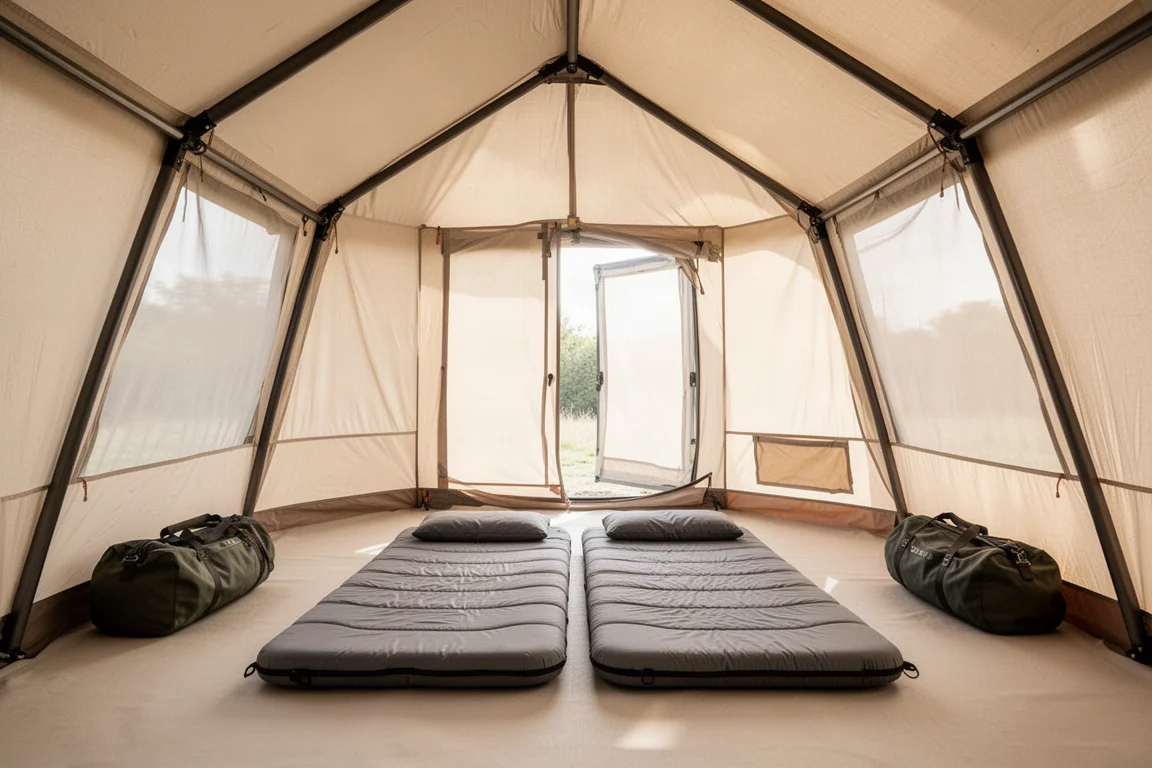
The Alpha Breeze suits car campers who treat a tent as a base rather than a bivouac. With the interior measuring about 101 inches across and 106.5 inches front to back, it comfortably swallows four sleeping pads and can be pushed to fit five if everyone sleeps shoulder to shoulder. For two or three people it feels genuinely roomy, and the near-vertical side walls mean you can sit up or lie down without the walls pressing in above you.
It also suits campers who keep going into cooler months. Every mesh panel can be zipped shut to hold warmth in, something most tents in its comparison group cannot do, and two vents with kickstands can be left open for airflow during heavy rain.
It is a poor fit for backpacking. At roughly 23.6 pounds packed into a 28 by 13 by 11 inch bag, this is a tent you move by vehicle.
Setup and Pack-Away
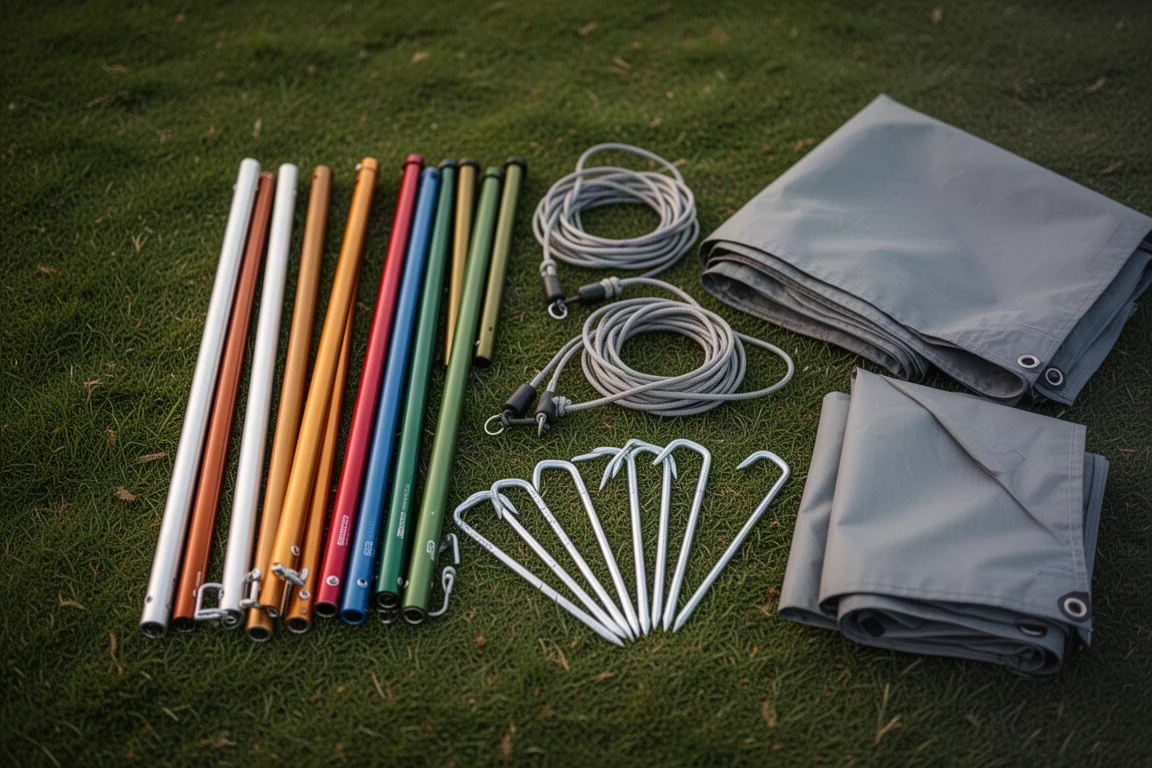
The frame is colour-coded, which makes the sequence easy to follow. A blue ridge pole sleeves through the middle of the tent and slots into two A-poles, whose ends drop into the four corners. A red pole goes at the front and anchors to the middle grommets. The rainfly then clips to six buckles around the base, and the front and back vestibules are staked out with seven guy lines.
Pitching the tent alone took about 19 minutes, before the awning is added. The awning needs four stakes, two upright poles and the two forked guy lines that come in the box, and it adds roughly four minutes. Packing away took about 13 and a half minutes for the tent, plus about a minute and a quarter for the awning.
Two people make the job much easier. The rainfly is large, and pulling it over solo means inching it across the frame bit by bit, where it can slip off more than once before it settles. Against an average four-person tent, setup runs about twice as long and pack-away about 50 percent longer, largely because the Alpha Breeze carries double the poles, double the guy lines and a considerably larger rainfly.
Interior Space and Livability
Peak height at the centre measured about 71.75 inches, with 66.5 inches on one side and 65.75 inches on the other, so an average-height adult can stand almost anywhere through the middle. The front of the tent measures about 65.5 inches at the centre and 58.5 inches at the sides. The back slopes downward in the A-frame profile, so headroom tapers there.
Four pads fit with room to spare. Pushing both double pads to one side leaves about 10.5 inches of width and 29 inches of length at the front, which is enough for a fifth pad. With two or three people, a queen mattress fits in only one orientation, since the length will not take two; sliding the queen to one side leaves about 23 inches of width and 39.5 inches of length for a single mattress or for gear. Sleeping at the very back is best avoided, because the sloped walls there feel cramped.
The tent has four doors and four windows. The front door measures 60 inches long, 53 inches wide and stands about five feet tall, so you still duck slightly on the way in. The back door is 50 inches wide, 50.5 inches long and about 49 inches tall, and the two side doors are the smallest at 47 inches across the bottom and 48 inches tall. Every door runs on YKK zippers with two sliders, and each window has its own pair as well. The front and back windows can be partially closed with extra toggles when you want airflow without full exposure.
Storage is limited for a tent at this level: six pockets, each about seven by five and a half inches, plus three felt loops. With the rainfly removed and the windows and vents open, roughly 35 percent of the inner tent is mesh, and ventilation through those panels is strong. There is no mesh roof, so stargazing from inside is not an option.
Weather Protection, Ventilation, and Materials
The floor is a bathtub design that rises about 7.5 inches off the ground, and every seam on it is taped, including the corner seams and the mid-tent grommet stitching. The rainfly has full seam taping as well. Two triangular vents, roughly 25 by 15 inches, sit under the rainfly with kickstands to hold them open, and each uses two layers of mesh.
In testing, the tent sat through about an hour of heavy rain followed by many hours of moderate rain. The corner seams, tub floor, grommet stitching and rainfly all stayed dry, the vent mesh stayed dry, and the tub height kept splash from reaching the fabric above it. Other four-person tents in the same comparison group stayed dry for much shorter windows, with cheaper models showing dampness inside the first hour and mid-range models developing slightly damp rainflies at around the two-hour mark.
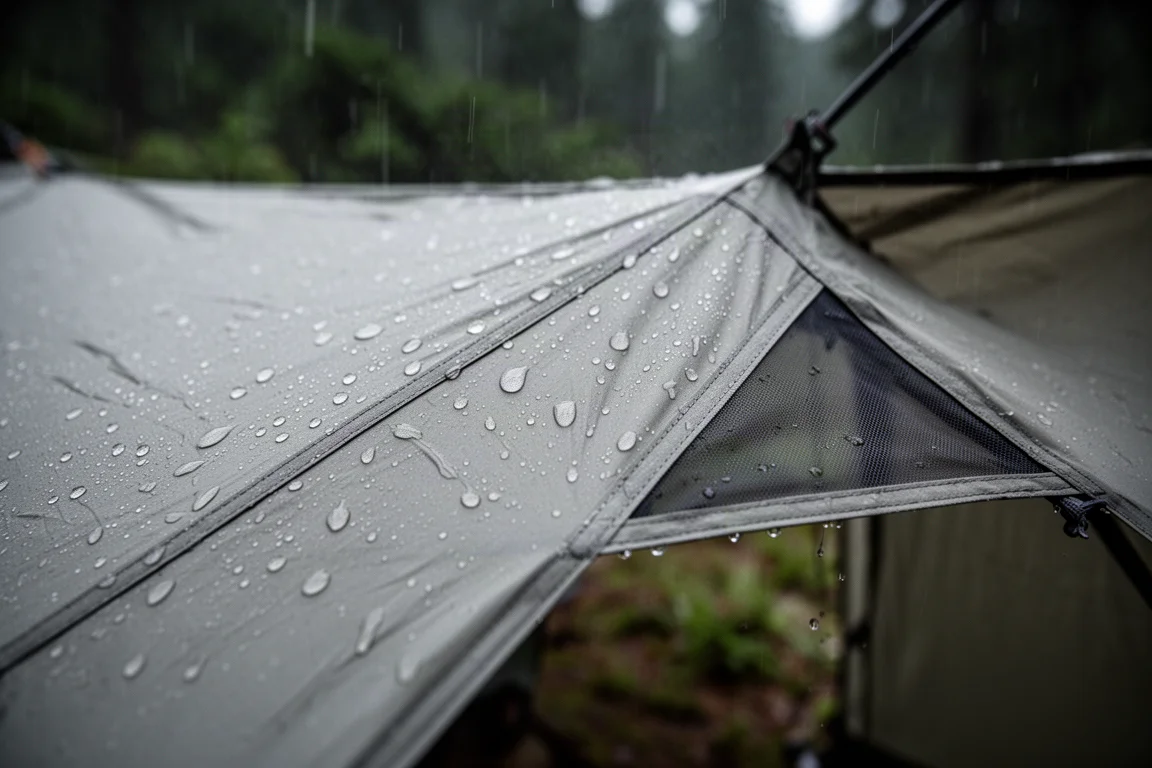
Materials are a step above the mainstream. The floor uses thick 300-denier Oxford polyester, the rainfly is 75-denier polyester taffeta with a durable water-repellent finish and UV resistance, the canopy is 68-denier polyester taffeta, and the poles are aircraft-grade 6061 Duralumin with a high strength-to-weight ratio. Zippers are YKK throughout and stayed snag-free, though the rain flap can catch if you rush the last few inches, so a two-handed close is worth the habit.
Snow Peak has since revised the tent. The updated rainfly and canopy move to stronger polyester ripstop, the canopy thickens from 68 to 75 denier, and the floor switches to a 40-denier nylon ripstop. That floor material is stronger but thinner, so a cheap groundsheet underneath is a sensible addition. The revision also sheds about 1.5 pounds and adds roughly four inches of peak height.
The awning deserves its own caveat. A grommet at the middle front takes a guy line to form a drainage funnel, and a webbing triangle with a buckle near the front door pulls the rainfly taut so light rain drips off instead of pooling. In heavy rain the funnel cannot keep pace, water pools, the awning sags and drips onto whatever sits below, and it can eventually collapse. Treat the awning as fair-weather shade and a light-rain cover.
Storage and Portability
Packed, the tent measures about 28 inches long, 13 inches wide and 11 inches tall, with a total weight around 23.6 pounds. The carry bag has short shoulder straps that would be more comfortable if they were longer.
The front vestibule, which sits under the awning, measures about 26.25 square feet, with the long side matching the tent width at 101 inches, the front edge at 79 inches and a depth of 42 inches. It fits two camp chairs and a small table under shade, and the awning stands about 66.5 inches tall near the tent and 64.5 inches at its outer edge. Roll the awning fabric up and toggle it out of the way and the same space becomes an open porch, though without the awning the sloped fabric makes seated use tight, and the side panels have no toggles to tie them back.
The rear vestibule is much smaller: a triangle of about 7.4 square feet, roughly three and a half times smaller than the front, and best used for wet gear storage. It runs on a single snag-free YKK zipper.
Things to Consider Before Buying
Weight is the first thing to weigh up. At about 23.6 pounds packed, this tent is roughly double the weight of an average four-person tent, and that is before you add a groundsheet.
Price is the second. The Alpha Breeze costs around two and a half times as much as a mainstream four-person tent, so the value question is worth asking directly.
Then there are smaller compromises. The mesh appears suited to keeping out larger insects such as mosquitoes rather than the smallest biting flies. Pockets are small enough that each holds little more than a book. The awning, useful as it is in sun and light rain, is not a shelter you can trust in a sustained downpour. And setup leans on two people: the rainfly is awkward to position alone, particularly for shorter campers.
Buying Advice
For the money, the Alpha Breeze asks you to accept weight, cost and a longer pitch in exchange for space and weather protection that most four-person tents simply do not offer. In a side-by-side comparison against several other four-person tents, it came out ahead in 17 of the measured tests, while the average tent won only about four. The advantages cluster around interior volume, ventilation, door count and rain performance.
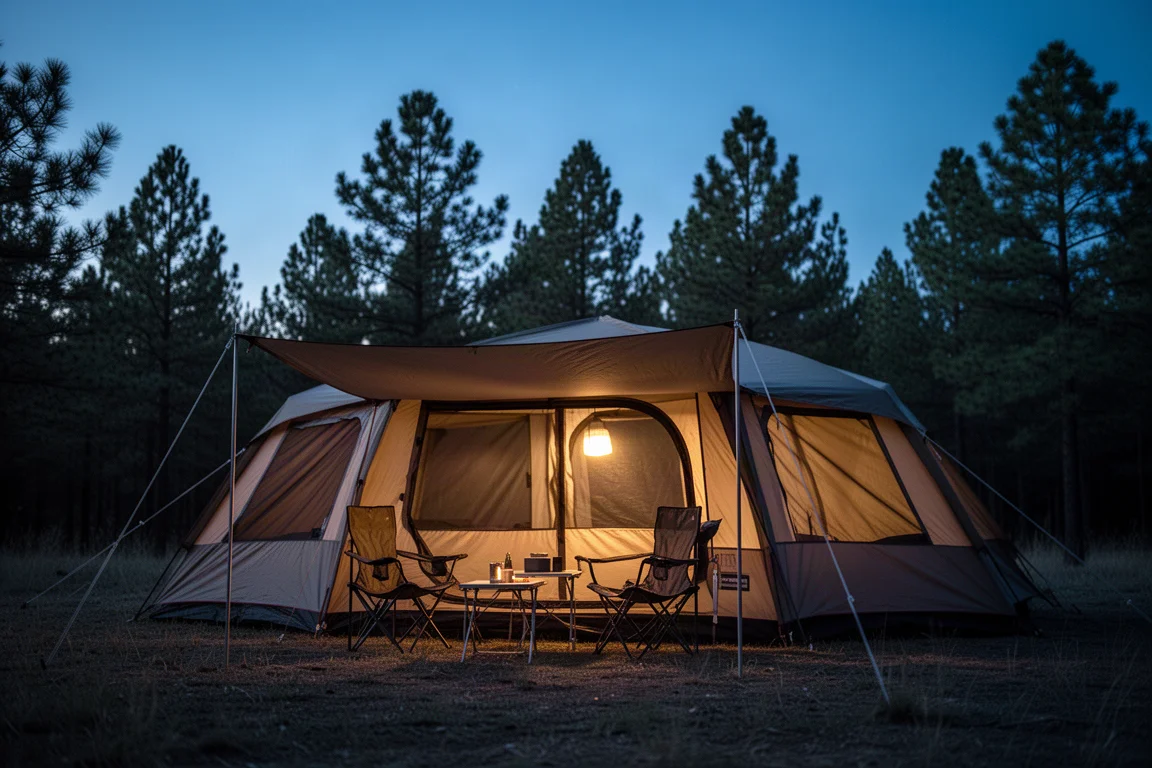
Buy it if you camp from a vehicle, want to stand up and move around inside, and value four separate doors and windows. Consider the revised version and budget for a groundsheet, since the newer floor is thinner. Skip it if you hike to your site, if pack weight matters, or if you mostly camp in exposed areas where a large awning is more liability than luxury.
Conclusion
The Snow Peak Alpha Breeze is a four-person tent that behaves like something bigger. Its peak height, base area and four-door layout make it unusually liveable, and its taped seams, deep tub floor and full rainfly held up through hours of rain. The costs are equally clear: a heavy pack weight, a longer setup, and a price well above the category average. For car campers who want a genuinely comfortable base, those trade-offs are easier to justify than the numbers alone suggest.
Product link
View more details for Snow Peak Alpha Breeze Tent
This product is mentioned in the review. Check the specifications, options, and compatibility before buying.
View more details for Snow Peak Alpha Breeze TentFurther reading
Related Reviews
Camping Tents
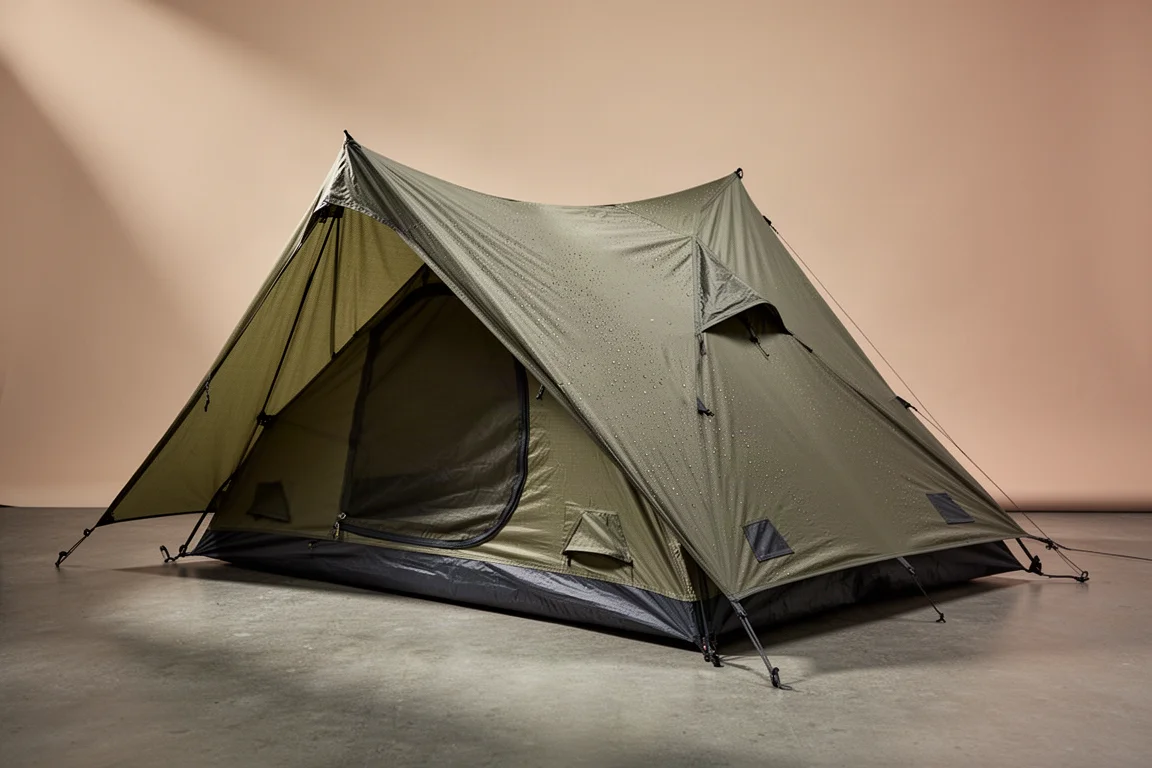
3F UL Gear Taiji Two-Person Tent Review: Field Waterproofing Results and Buying Advice
The Taiji pairs an attached fly with a removable inner, but sustained rain exposed untaped vent seams that need sealing before this shelter can be trusted.
Camping Tents
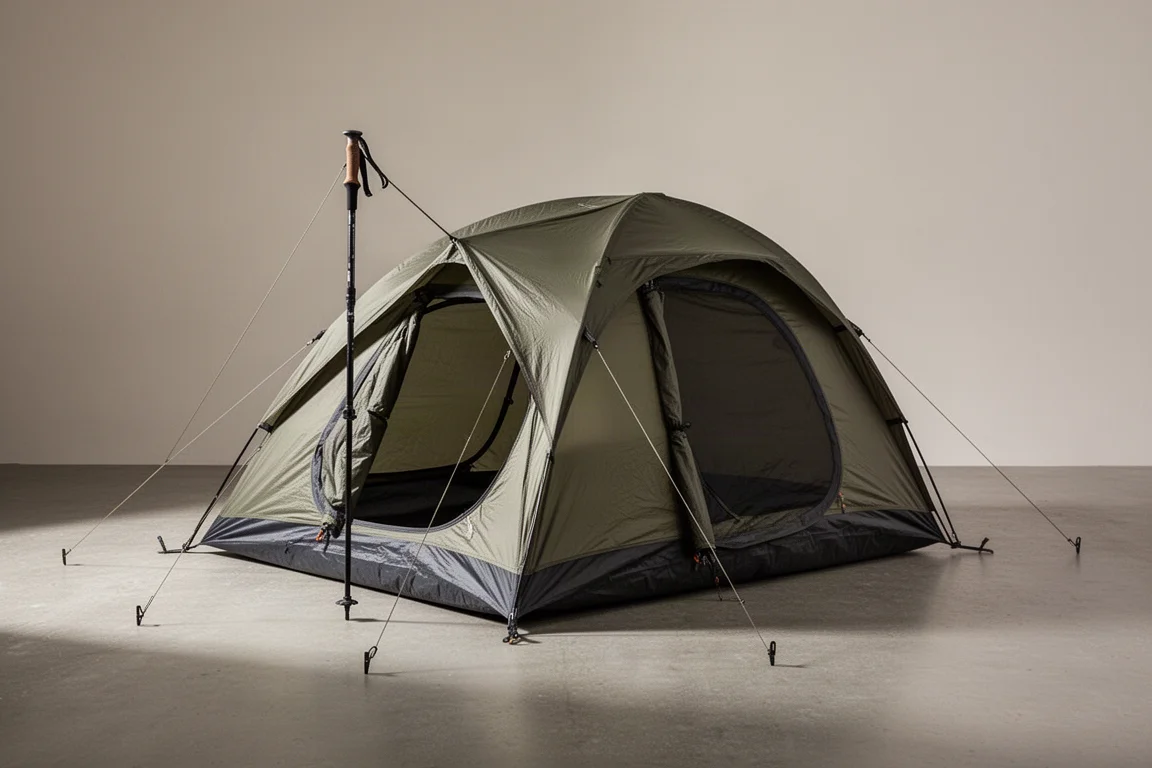
3FUL Gear Lanshan 2 Pro 4-Season Review: A Sub-$200 Single-Wall Trekking Pole Tent
An early look at the 3FUL Gear Lanshan 2 Pro 4-Season, covering its straightforward pitch, generous interior space, and the condensation and seam-sealing questions that come with any single-wall shelter.
Camping Tents
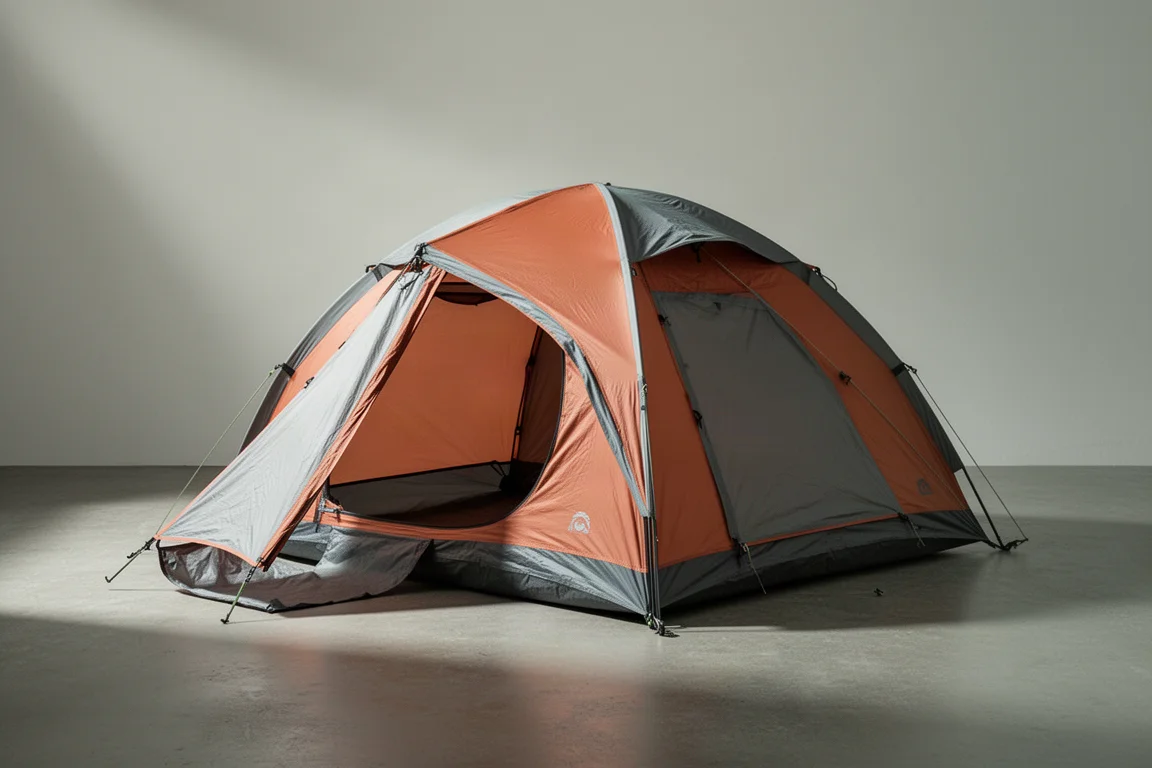
Alps Mountaineering Lynx 1-Person Tent Review: Big Value in a Small Budget Tent
A close look at the Alps Mountaineering Lynx 1-Person Tent, covering real interior dimensions, materials, setup time, ventilation limits, and who should buy it.