Hi-Fi Audio
SMSL VMV D1se DAC and A1 Amplifier: A Compact Class A Hi-Fi Pair
Two half-width SMSL VMV components reviewed side by side: a highly detailed ES9038 Pro DAC and a 10 watt class A amplifier, plus pairing advice for both.
Introduction
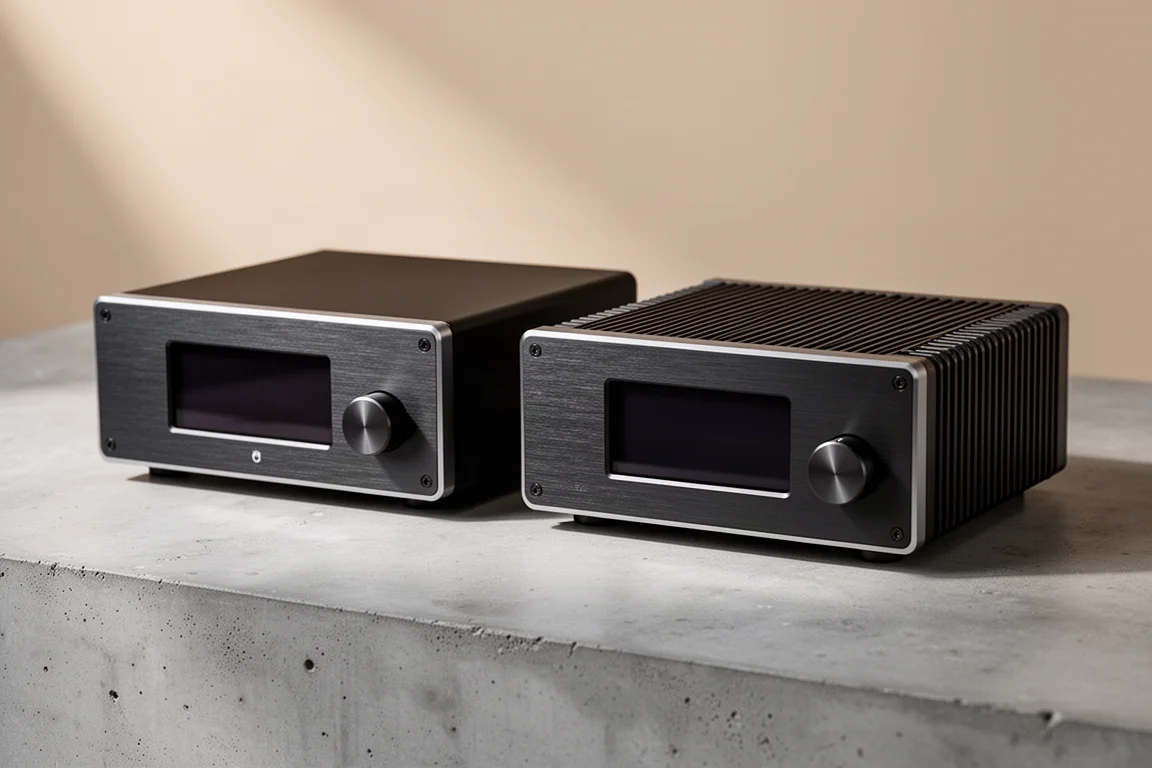
SMSL’s VMV line sits at the top of the company’s range, and two of its components are designed to sit side by side on a desk: the VMV D1se DAC and the VMV A1 amplifier. Both retail for around £650 in the UK, though prices can vary with exchange rates and suppliers.
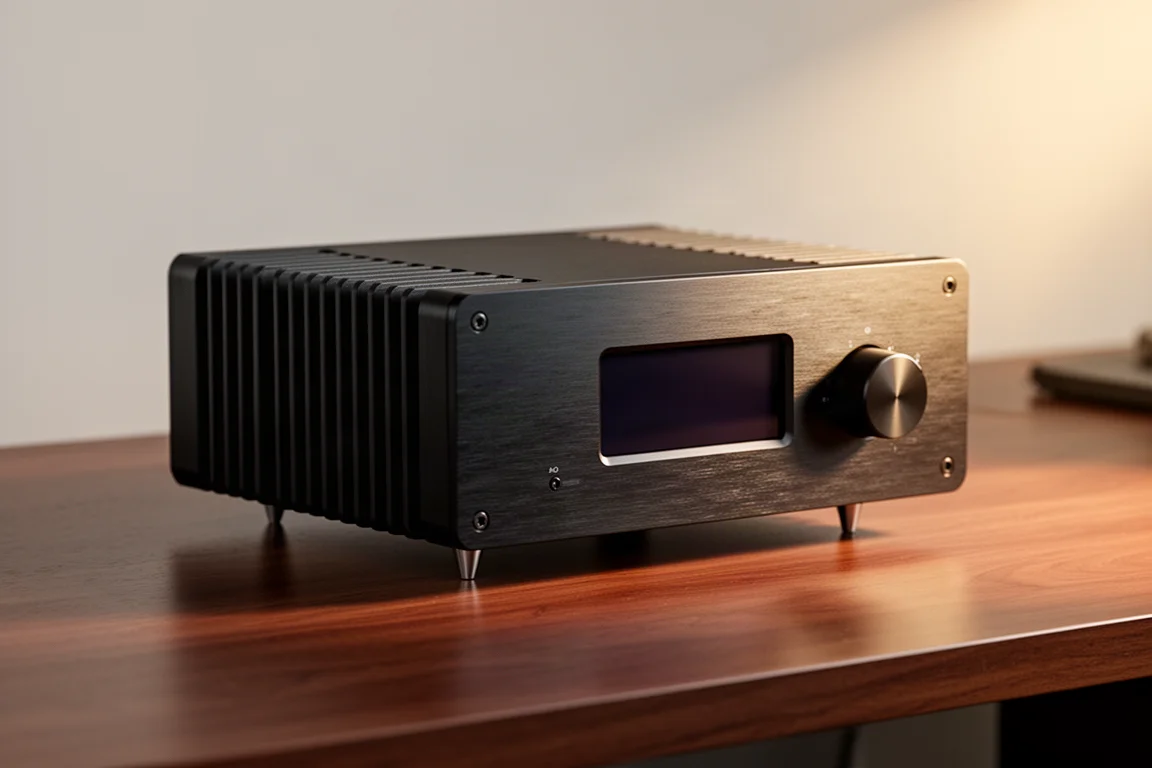
The appeal is easy to see. The D1se packs the ESS ES9038 Pro converter, the top tier of DAC chip, into a half-width chassis with a full set of digital inputs and a remote control. The A1 is more unusual still: a 10 watt per channel class A amplifier roughly the span of a hand. Class A designs normally demand large heatsinking areas, so a unit this size raises an obvious question about how it manages heat and what that means for the sound.
Shared Chassis, Feet, and Controls
The two units share an identical chassis. Both are half-width components measuring 210 mm (8.3 inches) across and 39 mm (1.5 inches) high, which makes them straightforward to stack or place side by side on a desk.
The rotary knob on the front panel handles volume and also opens the menus: press and hold to bring the unit out of standby, then press again to move through the settings. Quick access buttons at the side toggle between speaker and headphone modes or mute the output. The D1se uses the same fascia and adds a good quality Texas Instruments PGA2311 digital volume control.
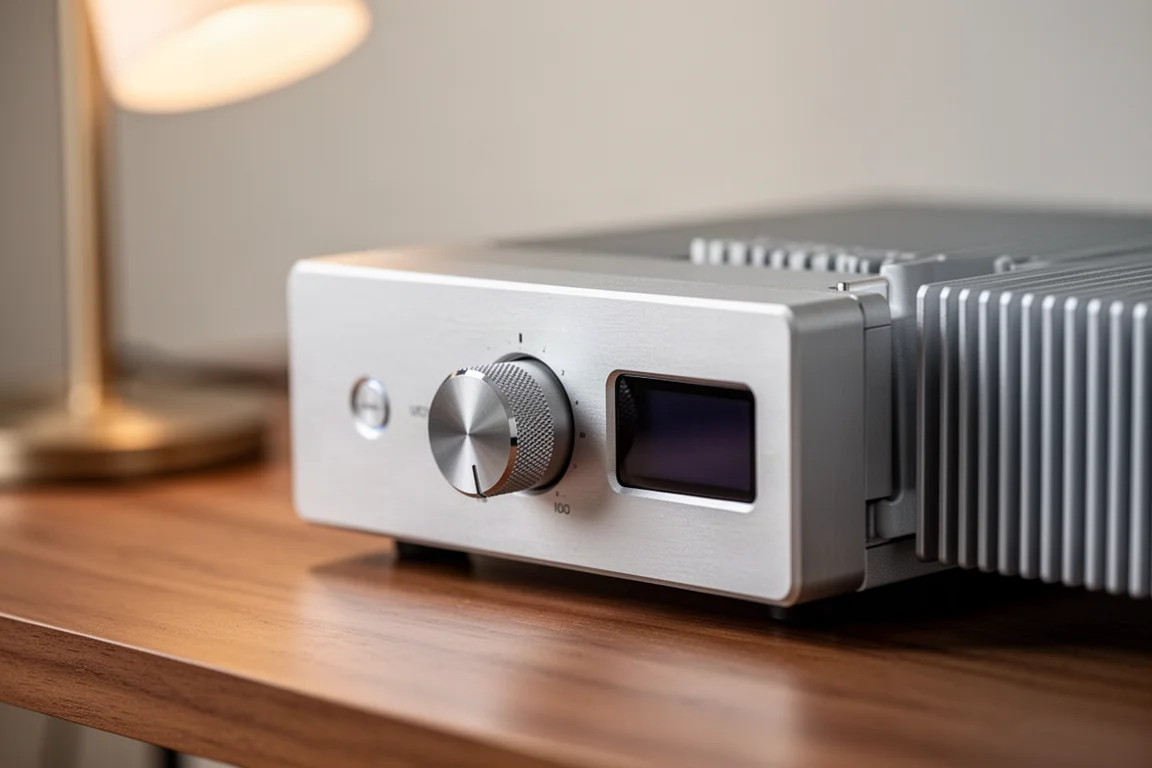
The supplied spiked feet are the one design decision worth flagging. A small nudge can damage furniture, and the risk is greater if the units are stacked. Replacing the feet, or placing something underneath the units, is a sensible precaution.
SMSL VMV D1se DAC: Features and Connectivity
On the digital side the D1se is generously equipped. Bluetooth, optical, coaxial and USB inputs cover the usual sources, and there is also an I2S input, which is uncommon on a unit at this price. Analogue output is available in both balanced XLR and single-ended RCA form.
The menu system is extensive. It lets you choose the active output, select filters for PCM and DSD playback, configure the layout of the I2S input and dim the display. A remote control is included, and the digital volume control is good enough that the DAC can serve as a preamplifier in an all-digital system, feeding active or powered speakers or a power amplifier directly. That flexibility is where a lot of the product’s value sits.
SMSL VMV D1se DAC: Sound Quality and Measurements
Measured performance is where the D1se makes its case most loudly. The reported signal to noise ratio is 130 dB, far below the threshold of human hearing, and the total harmonic distortion plus noise figure is 0.00009. For listeners who judge equipment primarily on measurements, those numbers are remarkable.
Listening backs up the sense of resolution. Resolution is its strongest suit, and on this evidence the D1se is the most detailed DAC available below £1,000. It does not achieve that with a cold or clinical character either. It is a neutral converter with real warmth, a natural tonality and very little imprint of its own on the music, which is exactly why it partners easily with a wide range of amplifiers and speakers.

Two areas keep it short of the very top of its category. The first is harmonic richness: against a reference R2R design such as the Denafrips Ares 2, the Ares 2 offers more body and acoustic density, though the D1se gives away little in resolution and may even edge slightly ahead. The second is scale. Compared with a Chord Mojo, the D1se has less soundstage width and only limited front-to-back depth, presenting more of a wall of sound than a layered space. Judged as a whole it still comes highly recommended, and if you want a remote control and a digital volume control, neither of which the Ares 2 provides, the D1se is a compelling answer.
SMSL VMV A1 Amplifier: Class A in a Small Chassis
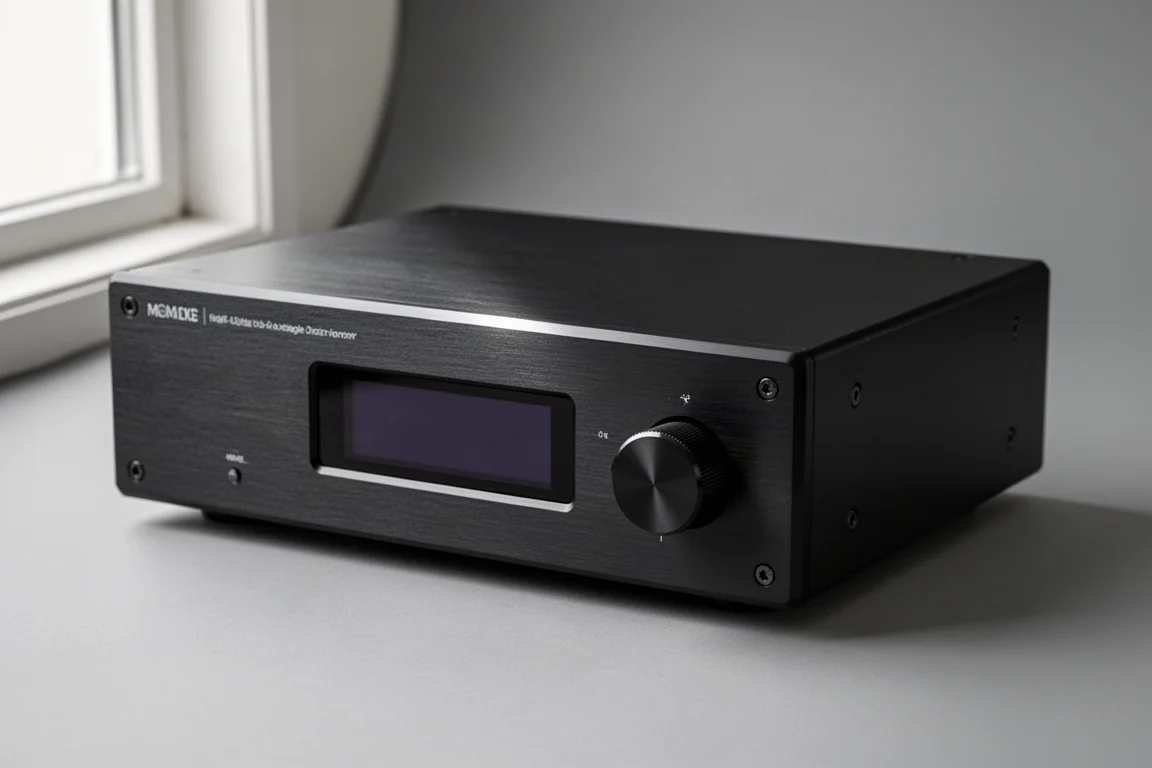
Class A amplifiers keep their transistors fully biased and switched on at all times, so they produce heat even when no sound is playing, and they normally need a large heatsinking area. The A1 uses its outer shell as the heatsink and runs warm, sitting at around 50 degrees Celsius in use. Ventilation matters, and the unit benefits from being given room to breathe.
Inside, the amplifier uses a linear power supply built around a small transformer from the Norwegian company Noratel. That is unusual for an amplifier of this size, where a switch-mode supply would be the expected choice. SMSL has not confirmed whether the design is pure class A or a high-bias class A/B circuit, and the maximum current capability has not been published either. In practice, given the amount of heat generated, the amplifier is likely to be running in class A for most of the time, and the more useful question is whether it sounds like one.
Connectivity is minimal, as the chassis size suggests. There is an on/off switch and an IEC power inlet, speaker binding posts that suit banana plugs better than other terminations given the limited space, a 6.25 mm (quarter-inch) headphone socket and a single set of RCA inputs. Through the menus you can switch the output between headphones and speakers, change the gain setting and adjust display brightness, while the side buttons handle speaker and headphone switching or muting.
SMSL VMV A1 Amplifier: Sound Character and Heat
The A1 does deliver the characteristics associated with class A designs. The bass is full and carries weight, though it lacks a little definition. The mid-range is warm with no hint of glare or harshness, leading edges of notes are slightly softened, and notes decay in a full-bodied way. The high frequencies are a touch rolled off.
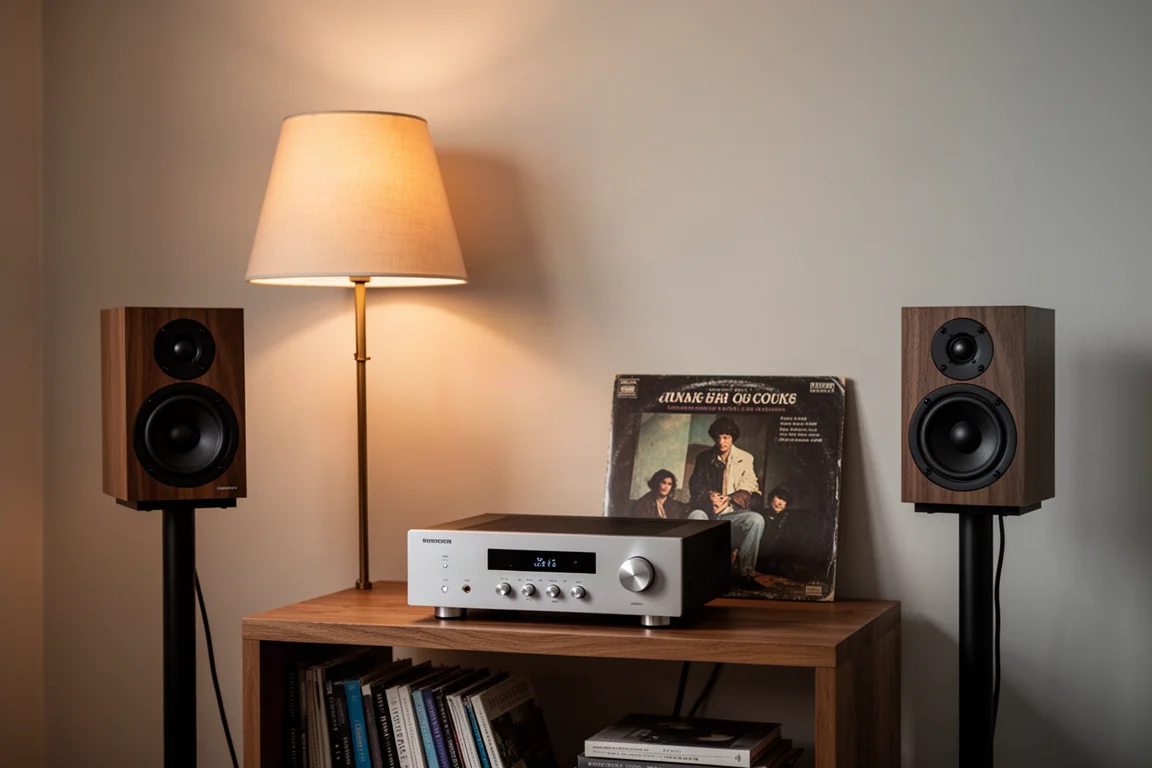
What it will not do is compete on scale and dynamics. The soundstage is not the largest available at this price, and amplifiers such as the Iota VX SA3 will see it off on those terms, even if the A1 is the more refined sounding of the two. Ten watts per channel also limits how far you can sit from the speakers. In a desktop setup or a semi-near-field arrangement, roughly two to two and a half metres away, it makes far more sense than it would in a large room with large classical works or energetic rock played at high volume.
For listeners who want a relaxed, intimate presentation, the trade-offs point in the right direction.
Pairing the A1 Amplifier With Speakers
The A1’s warm, smooth tonal character means speaker choice matters more than usual. With the ProAc Response 1SC, the amplifier struggled. The issue is not sensitivity as such but the impedance curve: when impedance swings widely, the power supply has to work harder, and the A1’s supply is small.
Easier loads are a much better match. The Sound Artist SC8B, with a sensitivity of around 90 dB, is straightforward to drive and combines well, its liveliness balancing the amplifier’s warmth in a small room at a listening distance of a couple of metres. The Sound Artist LS3/5a replica, with its 15 ohm impedance, also works, producing a romantic and seductive mid-range rather than a neutral one. If you want to temper the warmth a little, the Amphion Argon 1 has a slightly cooler tonal balance and is a punchy, dynamic and undemanding partner.
As a rule, speakers with a flatter impedance curve get more from this amplifier than speakers that present a demanding load. Small rooms and short listening distances suit it far better than large spaces.
Buying Advice and System Fit
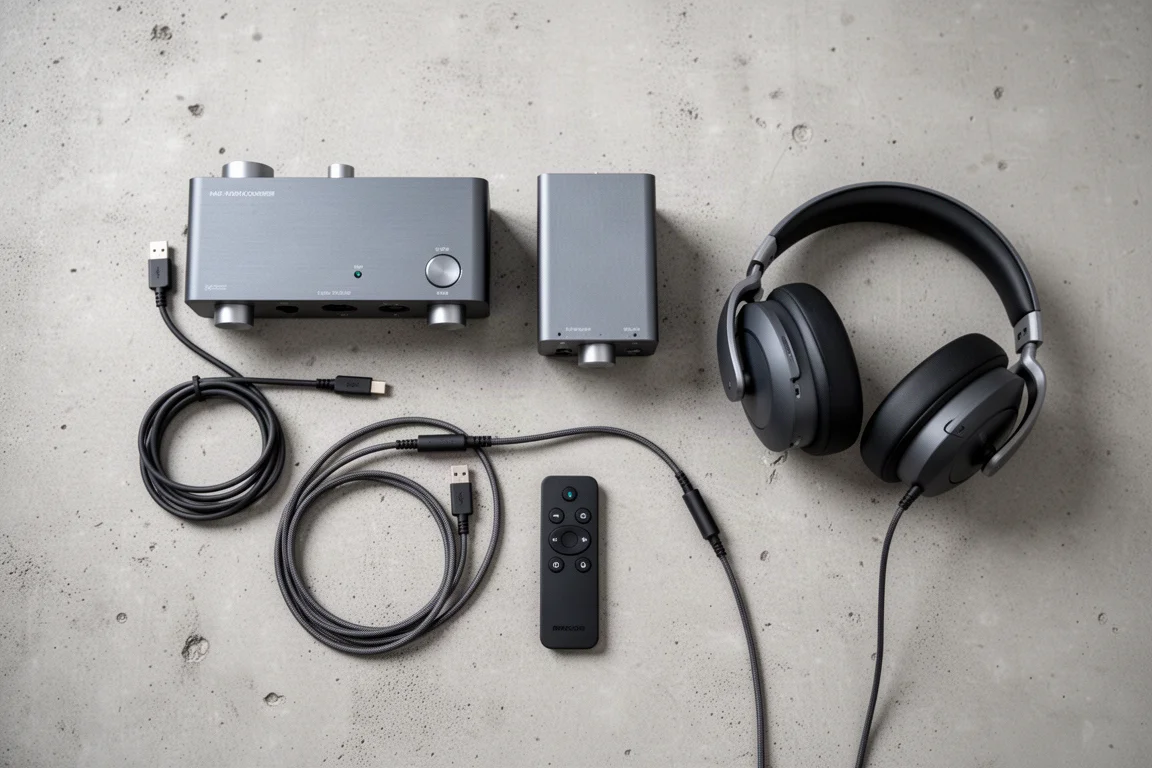
Bought together, the D1se and A1 make a coherent desktop system. The DAC supplies the detail, the input flexibility and the digital volume control, while the amplifier contributes a specific tonal character. The combination works as long as you accept the amplifier’s limits: modest power, few inputs and a warm presentation.
Individually, the D1se is the easier recommendation. Its resolution, neutral tonality and feature set are strong, and the remote control and digital volume control are genuinely useful in a modern system. The A1 is a more specialised purchase. It appeals to listeners who want to explore the classic class A sound in a small footprint, at the end of a desk or in a small room, and who are willing to match it with friendly speakers. Anyone chasing the last word in scale, dynamics, clarity or connectivity at this price should look elsewhere.
Conclusion
The VMV D1se is an extremely resolving DAC with natural tonality and excellent functionality, and it misses the top spot in its price bracket only narrowly, on scale, soundstaging and harmonic richness. The VMV A1 is harder to place: it will not win on outright performance, but for a compact, warm and refined class A experience it is well worth considering. Understand the amplifier’s limitations, choose speakers with care, and the pair rewards the effort.
Further reading
Related Reviews
Hi-Fi Audio
Accuphase C-57 vs Allnic H-7000V: Two High-End Phono Stages Compared
A fully balanced solid-state phono stage with a pitch-black noise floor meets a tube design built for well-loved records. Here is how to choose between them.
Hi-Fi Audio
Active vs Passive Hi-Fi: Five Components for a Modern System
Five components that define modern active and passive hi-fi systems, with the strengths, trade-offs and setup details worth weighing before you buy.
Hi-Fi Audio
Advance Paris A10 Apex Review: A Hybrid Integrated Amplifier That Covers a Lot of Ground
A French hybrid integrated amplifier with a class A tube preamp stage, analogue power meters, and an internal DAC and phono stage good enough to make extra boxes unnecessary.