Hi-Fi Amplifiers
SMSL VMV A2 Review: A Compact Digital Amplifier Tuned for Desktop Listening
A 100 W per channel digital integrated amplifier with a machined aluminium chassis, wide digital connectivity, and an even, transparent tonal balance that shines in near-field setups.
Introduction
SMSL has built its reputation on value for money, particularly with DACs and headphone amplifiers that deliver measured performance few rivals can match at the price. The VMV line marks a move upmarket: a premium range of components that make no apology for the features they include or the price they carry.
The VMV A2 sits at the top of that range. It is a compact integrated amplifier rated at 100 watts per channel into 8 ohms and 200 watts into 4 ohms, selling for around £750 in the UK. At that figure, competition is fierce. Well-established integrated amplifiers occupy the same bracket, and a well-regarded £399 model sets a demanding benchmark for what an affordable amplifier can already achieve. The interesting question is whether the VMV A2 offers a genuine step up.
Who the SMSL VMV A2 Is For
This amplifier makes most sense on a desk. Its strengths are clarity, an even tonal balance, and a transparency that lets the character of the connected speakers come through rather than imposing one of its own. Paired with compact monitors at a metre or so from the listener, it is a genuinely compelling proposition, and the small chassis and quiet digital operation suit a workspace far better than a full-width integrated.
Anyone shopping for a main system amplifier to drive floorstanding speakers in a large room should weigh that carefully. The A2 is not short of power, but its sense of scale and dynamic swing is where the design gives ground, and that becomes more obvious the further the listener sits from the speakers.
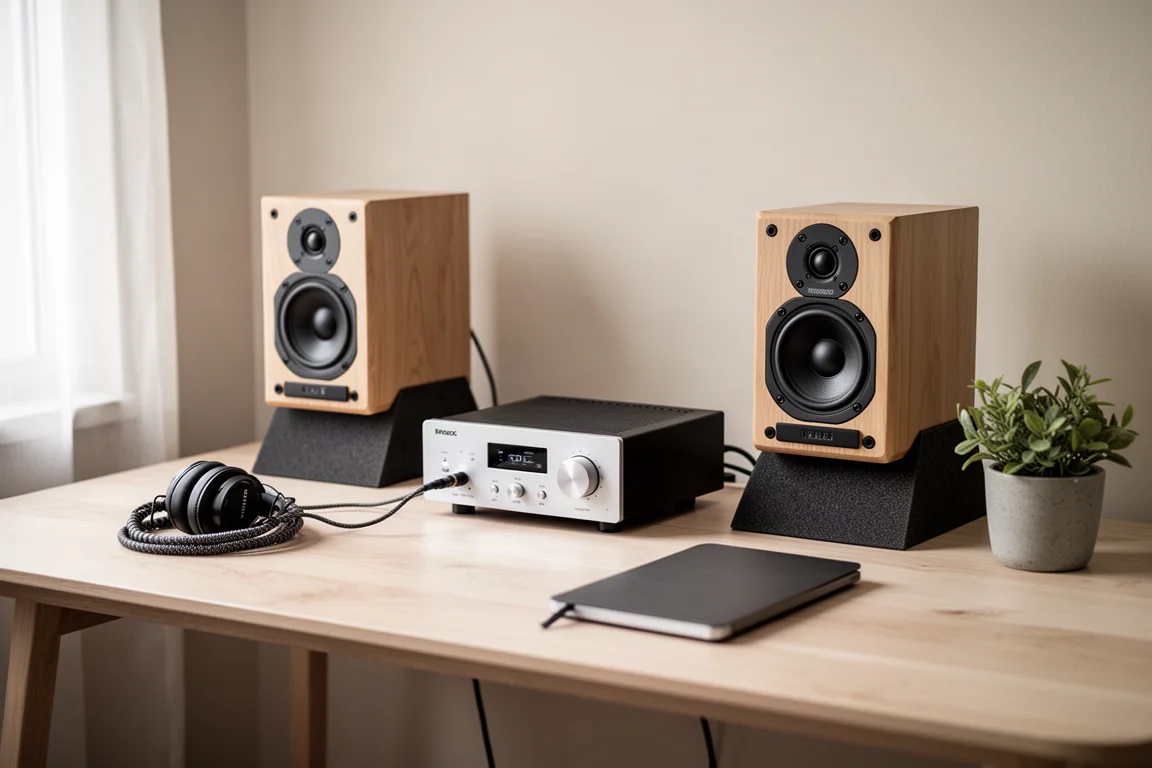
The feature set reinforces the desktop case. There are EQ presets, adjustable bass and treble, and selectable gain, all of which are useful when tuning a small system to a room or to a pair of compact monitors.
Build, Design, and Connectivity
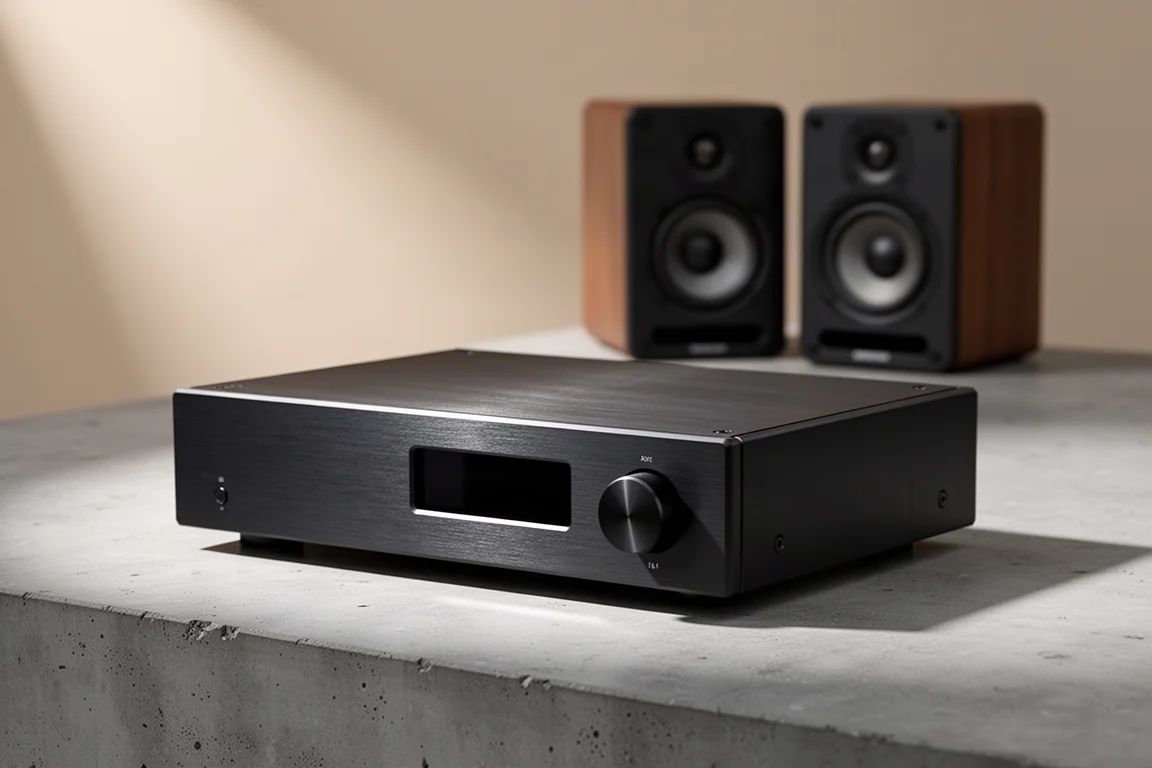
The A2 is barely larger than a hardback novel. Its CNC machined aluminium case measures 280 by 43 by 255 millimetres, or roughly 11 by 1.7 by 10 inches, and weighs 2.6 kilograms (5.7 pounds). Build quality is a clear strength, and the metalwork feels substantial for the size.
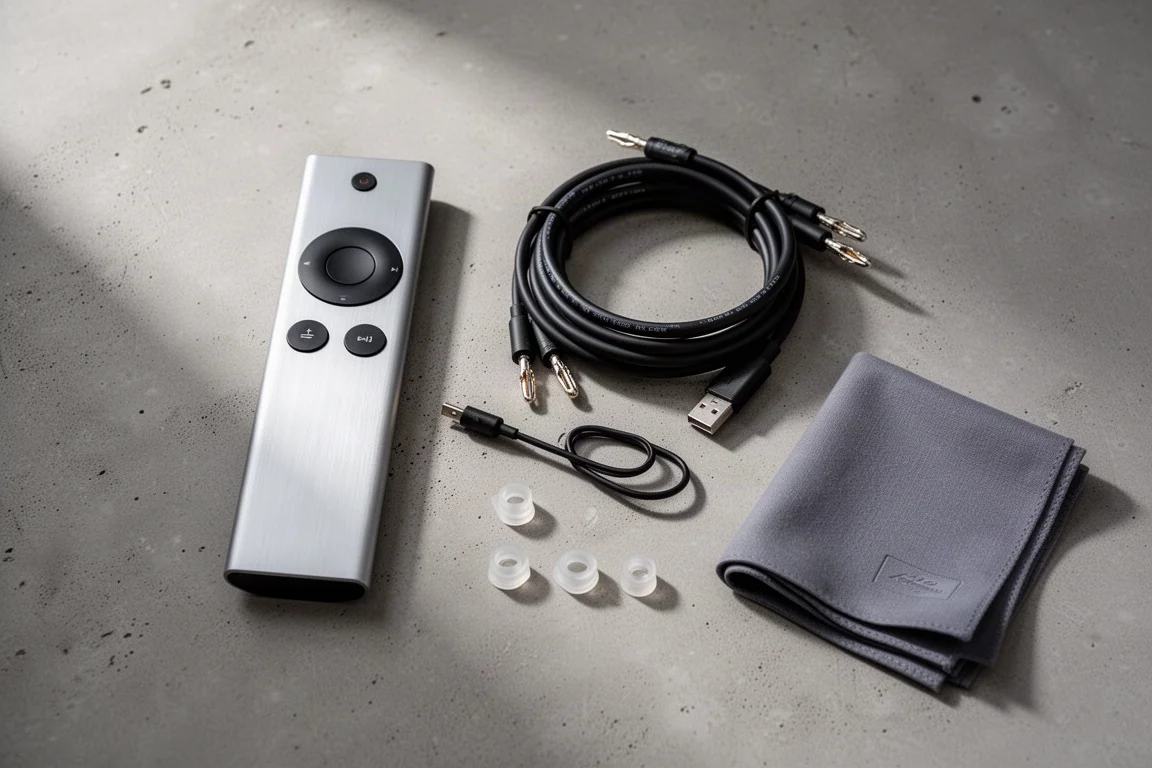
The supplied spike feet are best left in the box; a set of silicone feet is a far more practical choice on a desk. The front fascia carries a display, a button for cycling inputs, a dedicated Bluetooth button, and a rotary knob that handles volume and a range of other functions, with the menu accessed by pressing the knob in the centre. Owners can choose preset EQ modes, adjust bass and treble by up to plus or minus 10 dB, change the gain setting, alter the information shown on the display, set a screen timeout, and control brightness.
A compact all-aluminium remote control is included, matching the one supplied with other VMV components. Around the back there is a single line-level RCA input, an AES/EBU coaxial connection that doubles as a subwoofer output, an optical Toslink input, and USB supporting PCM up to 32-bit/768 kHz and DSD512. The Bluetooth antenna sits alongside, and the speaker binding posts are offset to leave room for heavier-duty connectors.
Inside the Digital Signal Path
The A2 is described as a digital amplifier, and there is no conventional DAC chip in the signal path. Incoming PCM, which covers most digital music, is converted to PWM (pulse width modulation) and fed directly to a class D output stage. Power for each channel comes from two ST Microelectronics chips, capable of 100 watts into 8 ohms and 200 watts into 4 ohms.
DSD material is unlikely to be handled natively; the design and the available documentation suggest it is converted to PCM first. The analogue RCA input follows a similar route in reverse: it is digitised by a Texas Instruments PCM1804 ADC and then passed through a filter built around three OPA-1678 op-amps.
Sound Quality: Tonality and Clarity
Tonality is one of the A2’s strongest cards. It largely gets out of the way and lets the speakers speak for themselves. Bass is tight and fast rather than weighty, and the bass control needs to be used sparingly: beyond about 2 dB of boost the sound starts to turn boomy.
There is a touch of warmth in the lower midrange, balanced by a little sharpness in the upper midrange that never tips into brightness or harshness. Vocals come across naturally. There is genuine refinement and extension at the top end, and a sense of airiness that is uncommon at this price.
Clarity is very good without becoming analytical. Instrument separation is superb for the money, and it is easy to follow where individual instruments sit within the soundstage. Leading edges of notes are reasonably well defined and carry a decent amount of body, neither full and rich nor lean. Decay is not the amplifier’s greatest strength, though there is little to criticise at this price.
Dynamics and Scale: The Main Trade-Off
The one consistent limitation is scale and dynamics. The A2 will play loud enough, but it tends to smooth over the natural swells and ebbs in a performance, and it would not be the first choice for listeners who prioritise rhythmic drive and foot-tapping energy.
That single characteristic is the weak point in an otherwise very capable presentation. Whether it matters depends entirely on how the amplifier is used and what it is paired with.
Desktop and Near-Field Use
With a range of stand-mount and floorstanding speakers, including the Amphion Argon 1 and the JBL 4309, the limited sense of scale was noticeable from about two metres and beyond. Move closer and the effect largely disappears, which points clearly at the intended use case.
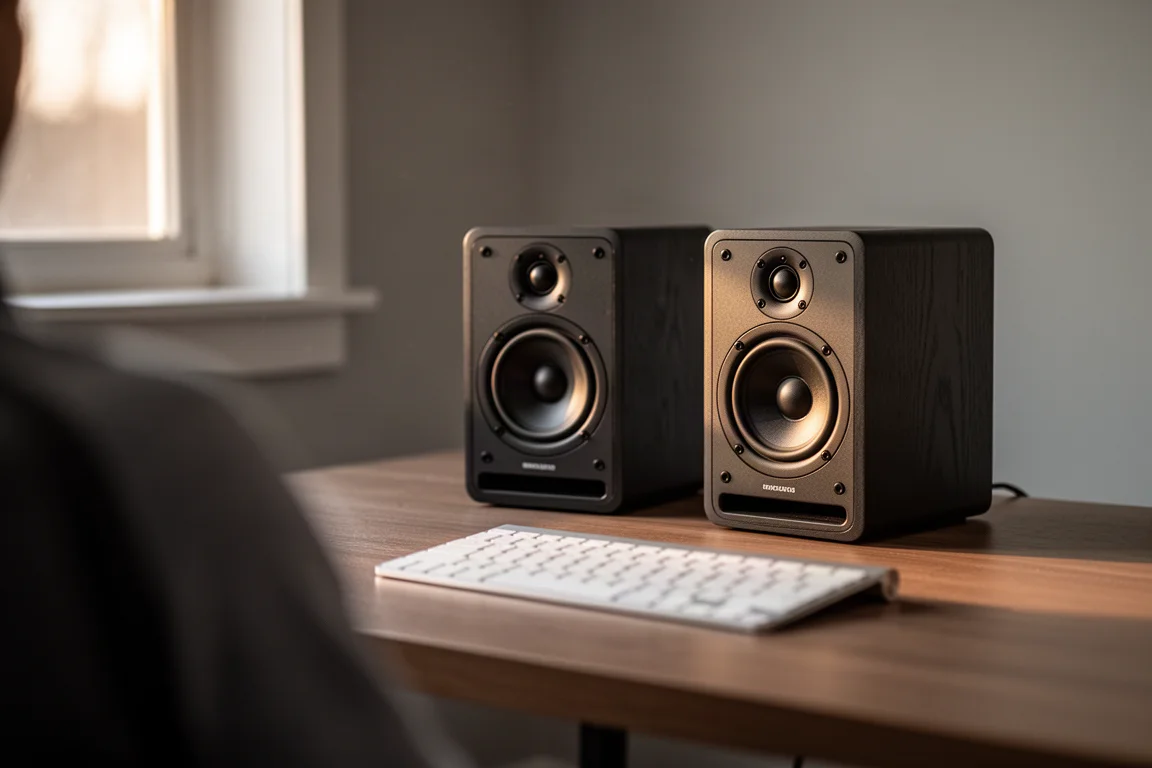
With compact near-field monitors such as the Dali Menuet SE and the Sound Artist LS35A at a metre or a metre and a half, the A2 sounded excellent, and the dynamics limitation stopped being an issue. That is exactly the scenario where this amplifier makes the most sense.
How It Compares to Rival Amplifiers
Against the Audiolab 6000A, the A2 holds its own on clarity and even tonality all day long, but it cannot match that amplifier’s authority. The Arcam SA-10 follows a similar pattern. The iota VX SA3, the reference point for an accessibly priced amplifier, has greater punch but cannot match the A2 for clarity, refinement, or tonal evenness.
Buying Advice
At around £750, the A2 needs to justify itself against some very strong established rivals, and buyers who want a main system amplifier for a larger room should look carefully at what else that budget buys. The case is different for desktop listeners.
For a near-field setup, the combination of transparent sound, solid build, compact dimensions, wide digital connectivity, and a genuinely useful set of tuning options is hard to argue with. If the speakers sit close and the source is digital, this is a well-rounded package rather than a compromise.
It is also worth remembering that the tone controls and EQ can be used freely here: engaging them did not bring an appreciable drop in sound quality, which makes them a practical tool rather than a last resort. The most balanced results still came with the processing switched off and the tone controls set flat.
Conclusion
The SMSL VMV A2 is a compact, well-built digital integrated amplifier with excellent clarity, an even tonal balance, and connectivity that covers most digital sources. Its limited sense of scale and dynamics narrows its appeal to desktop and near-field systems, and at around £750 it needs to offer more flexibility than it does.
Within that desktop role, however, it is an easy recommendation. Buyers who understand the use case will find a lot to like.
Product link
View more details for SMSL VMV A2
This product is mentioned in the review. Check the specifications, options, and compatibility before buying.
View more details for SMSL VMV A2Further reading
Related Reviews
Hi-Fi Amplifiers
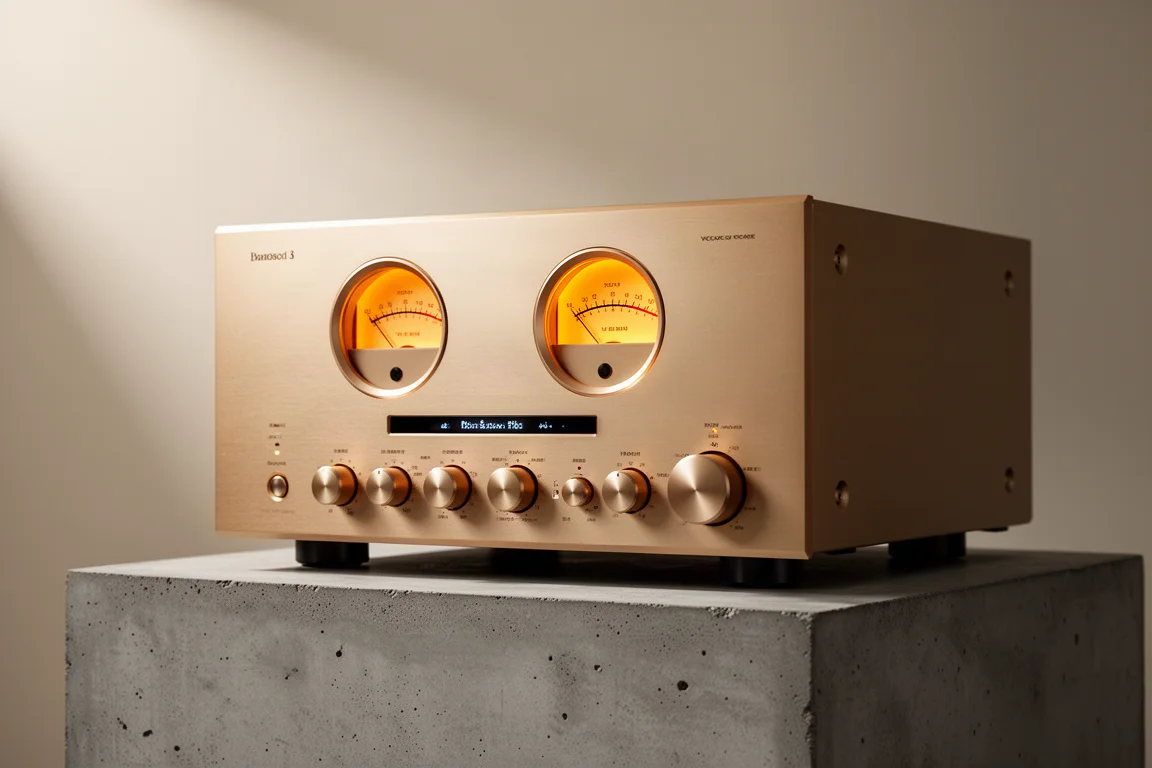
Accuphase E-280 Review: Entry-Level Accuphase With Flagship Attention to Detail
A close look at the Accuphase E-280 integrated amplifier, covering its champagne build, AAVA volume control, sound quality, and the speakers and sources that suit it best.
Hi-Fi Amplifiers
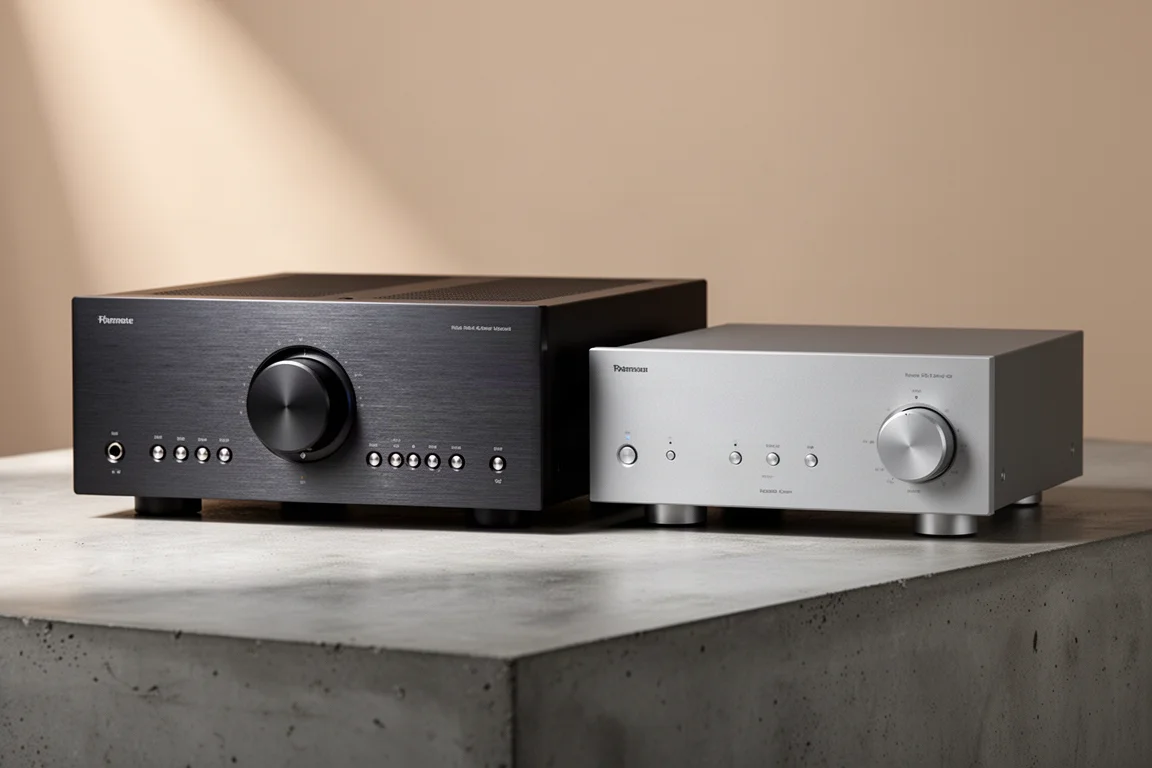
Advance Paris A10 Classic vs Yamaha A-S301: Two Integrated Amplifiers Compared
A practical comparison of a $350 integrated amplifier and a $2,500 reference model, covering the differences that matter and the ones that do not.
Hi-Fi Amplifiers
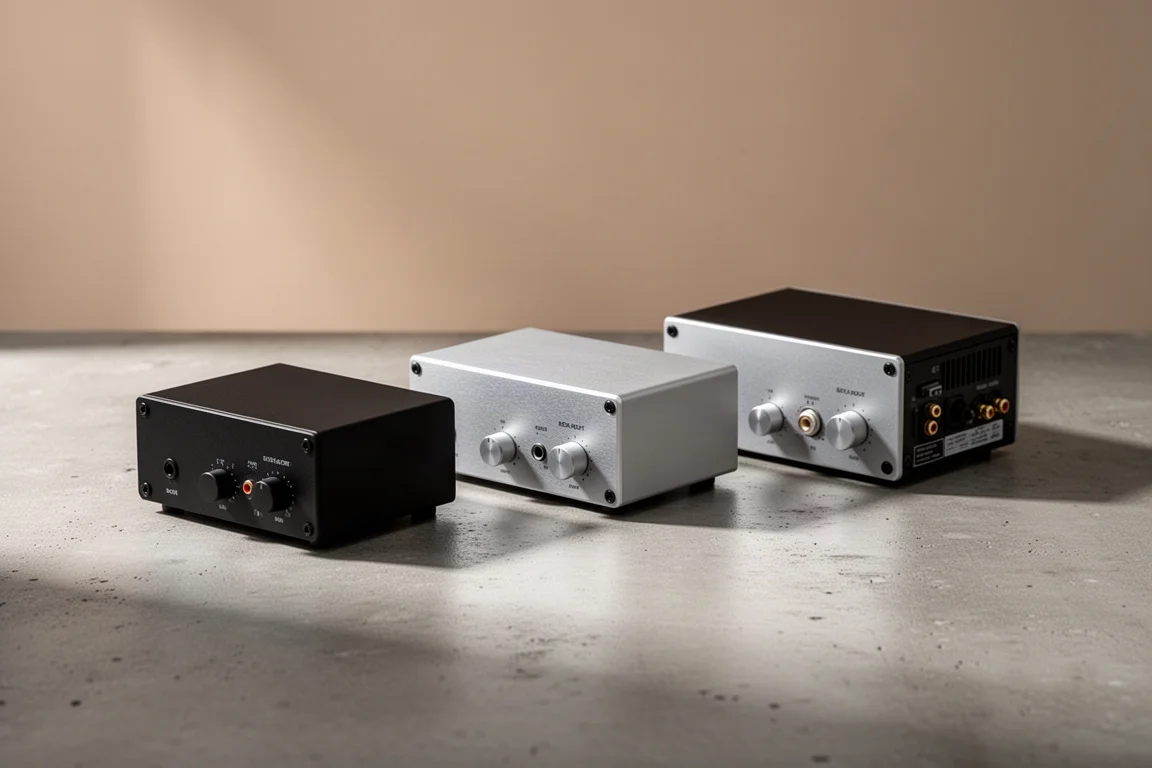
Affordable Chinese Amplifiers Worth Buying: Five Budget Hi-Fi Amps Compared
A practical look at five affordable amplifiers, what each one does well, and the trade-offs to weigh before you buy.