Audio DACs
SMSL SU1 Review: A Tiny $80 DAC That Sounds Better Than It Should
A pocket-sized digital-to-analog converter with MQA support, flexible inputs, and an engaging sound that holds its own against far pricier desktop DACs.
Introduction
The SMSL SU1 is a digital-to-analog converter small enough to ride in a jacket pocket and priced at around $79.99, which places it among the most affordable ways to move digital conversion out of a laptop, phone, or ageing player and into a dedicated piece of hardware. For anyone whose only upgrade path so far has been the headphone jack on a computer, that is a meaningful step.
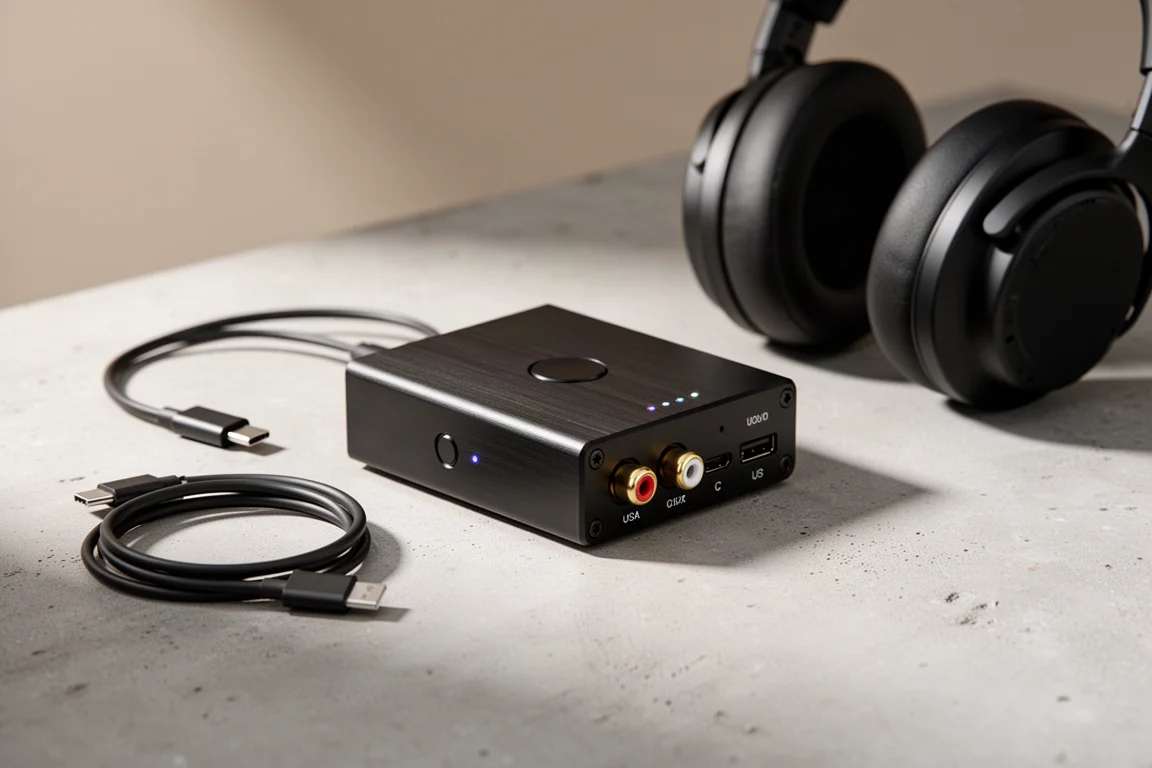
The front panel stays minimal: a single button and small indicator lights for MQA, USB, optical, and coaxial sources. The rear panel is just as focused, with one pair of RCA outputs and three digital inputs covering coaxial, optical, and USB. If you are listening through a streaming service, a CD transport, or anything else with a digital output, this is the entire interface you need.
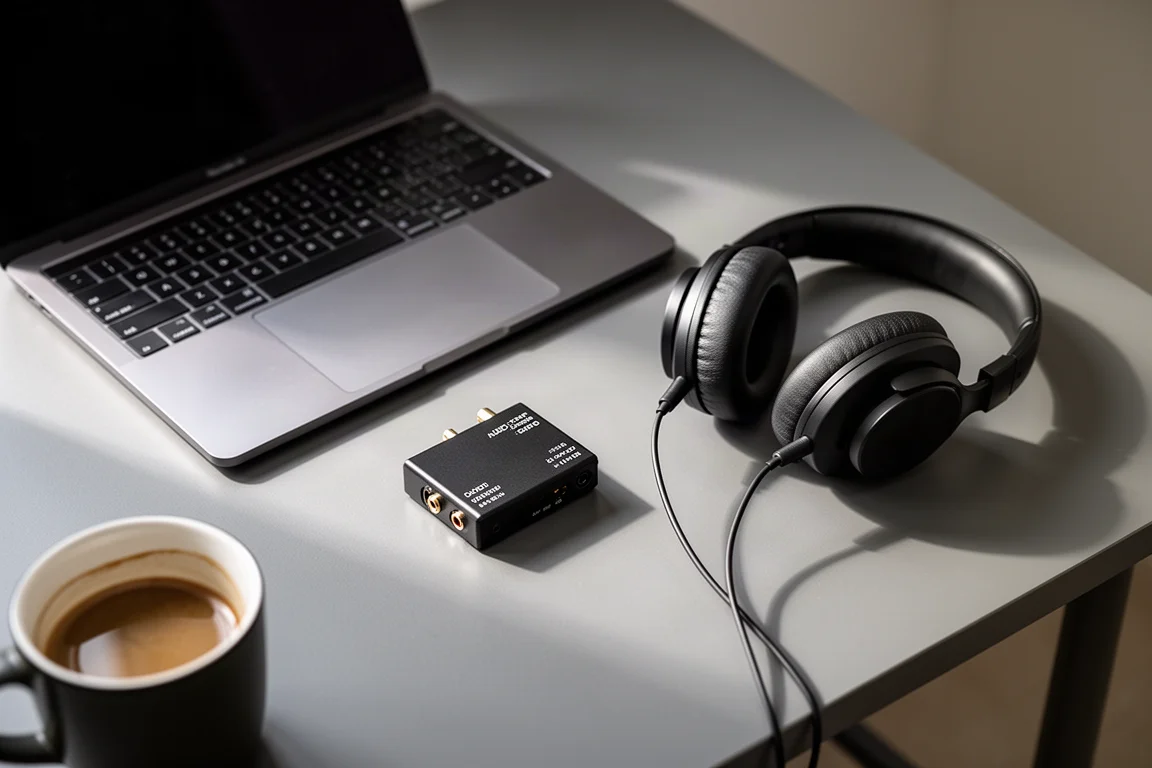
USB doubles as the power input, so a computer can feed the SU1 while it feeds an amplifier. Run it from optical or coaxial instead and any clean 5-volt supply will do, whether that is a low-noise switching adapter, a linear supply, or a USB battery bank connected with a USB-C cable. That flexibility makes it easy to drop into a desktop system or a travel bag without hunting for a proprietary power brick.
Who This Product Is For
The SU1 makes the most sense for listeners who want a clear, affordable improvement over onboard audio. It suits anyone feeding a streaming service, a CD player, a laptop, or a phone into a separate amplifier or powered speakers, and it is compact enough that a travel setup becomes realistic rather than aspirational.
It is also a strong match for owners of warmer-sounding headphones, including the Sennheiser HD 58X and HD 6XX, where the SU1’s livelier top end adds energy instead of fatigue. Listeners who chase the most neutral, organic reproduction available should read the next section carefully before deciding.
Main Strengths
The SU1 earns its place through a combination of sound quality, connectivity, and size that is unusual at this price.
Clean, Dynamic Sound With an Engaging Top End
The presentation here is dynamic and clean on top, without the chalky, grainy, or overtly digital character that can make budget conversion tiring. There is a little more air and a little more happening in the upper frequencies than the most neutral options provide, and for many listeners that extra bite is exactly what makes the SU1 enjoyable.
Compared with a $250-class desktop DAC built around the same AKM 4493S chipset, the more expensive unit is the more organic of the two. The SU1 still gets close enough that plenty of listeners may prefer its more energetic signature, and it costs roughly a quarter as much. On speakers, the soundstage is not quite as wide as that pricier reference and the bass is not as fully developed, but it is far from thin. This is a very clean, very dynamic little converter.
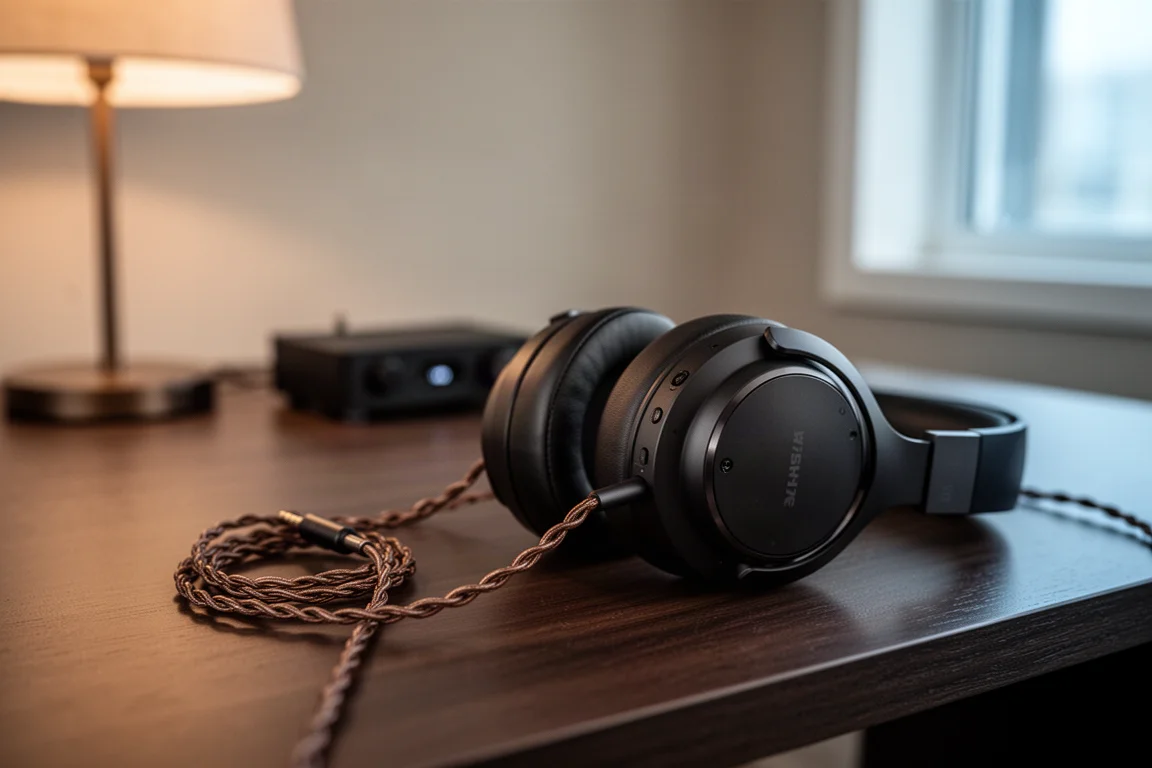
Headphone matching matters more than the chipset does. With brighter headphones, a slight emphasis in the 4 to 6 kHz region can make vocals sound sharp, and that emphasis will be either exaggerated or smoothed over depending on the amplifier and headphones in the chain. Warmer headphones tame it nicely, and the effect became less distracting the longer the SU1 stayed in the system.
Flexible Connectivity and Simple Power Options
Three digital inputs cover coaxial, optical, and USB, which is the same practical spread found on far larger desktop converters. An XMOS XU316 processor handles the MQA decoding, and the unit supports DSD files along with PCM up to 32-bit and 768 kHz, so high-resolution libraries are covered without compromise.
SMSL claims 121 dB of dynamic range and a 121 dB signal-to-noise ratio, unusually high figures for this price. The AKM 4493S chipset is the post-fire version of a well-known design, and it is the same part used in considerably more expensive converters. Whether the chip itself is the reason the SU1 sounds as good as it does is debatable, since the analog output stage is usually what colours the sound most, but the result here speaks for itself.
MQA support is included as well, which covers the small number of MQA CDs in circulation and MQA streams from Tidal. The format’s commercial future is uncertain after its largest investor withdrew, so treat MQA as a bonus rather than a reason to buy.
A Pocket-Sized Aluminium Chassis
The housing is CNC aluminium alloy, and the whole unit is genuinely tiny, among the smallest desktop converters available and noticeably smaller than the compact models that defined this category a few years ago. It will disappear behind a monitor, sit unnoticed on a shelf, or slip into a pocket for travel.
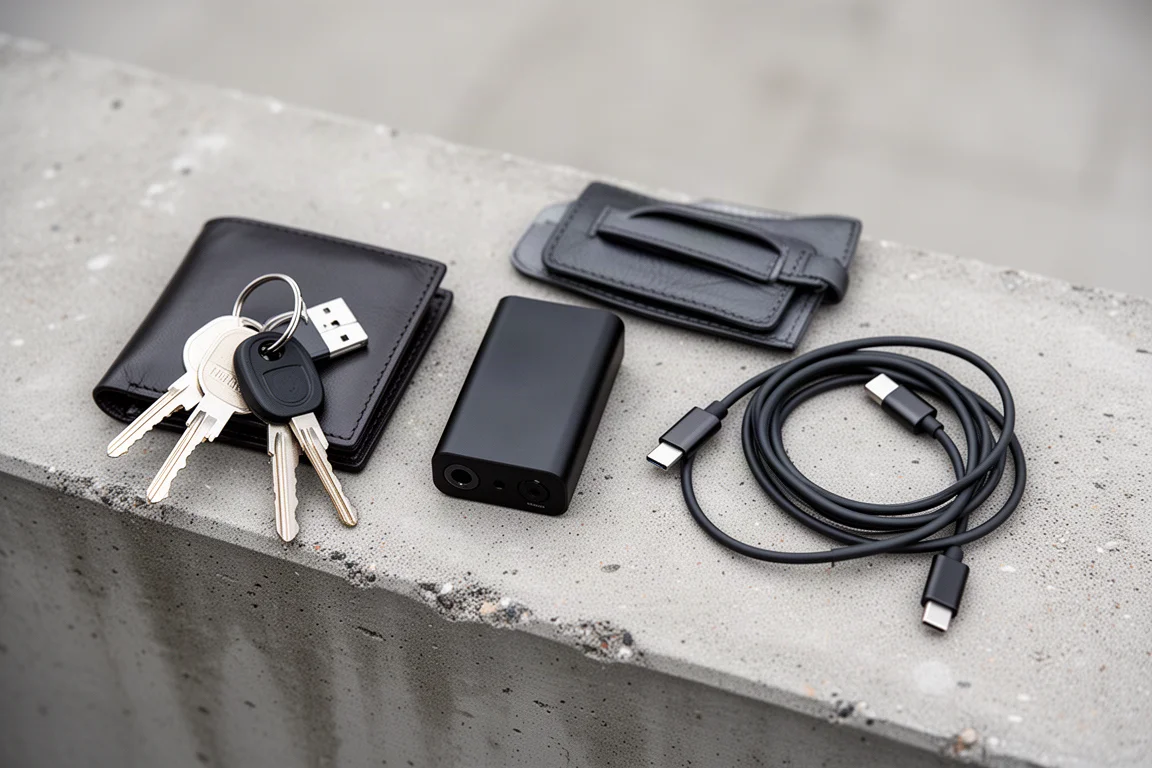
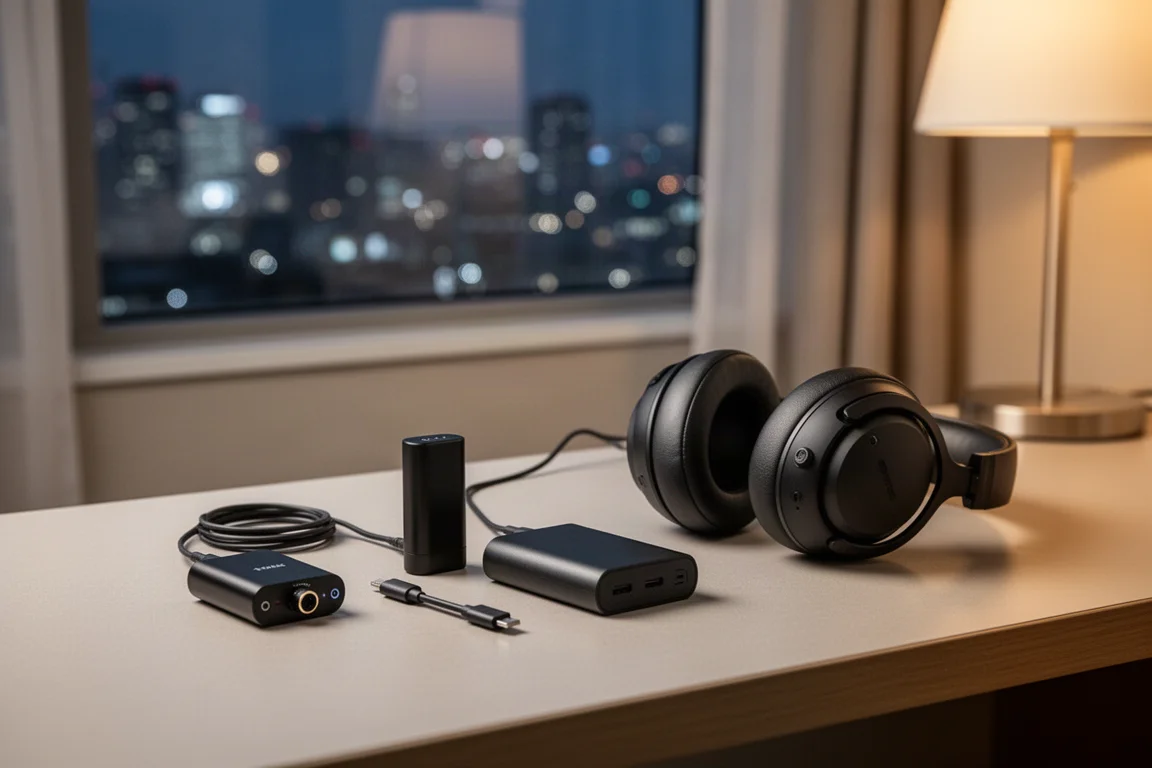
That portability is a real feature rather than a novelty. A small converter, a modest pair of headphones, and a portable amplifier make a convincing hotel-room setup, or you can run straight out of a laptop and skip the amplifier entirely. One practical caution: a device this small is easy to sit on, so avoid leaving it loose in a back pocket or on a bench where weight might land on it.
Things to Consider Before Buying
The SU1 is not the right answer for every system, and a few trade-offs are worth weighing first.
- Treble emphasis is the main one. Headphones prone to sibilance will make that 4 to 6 kHz lift obvious, and a warm-leaning headphone is the better pairing.
- If the most natural, organic reproduction possible is the goal and the budget stretches, a more expensive converter using the same chipset remains the more refined choice. The SU1 trades a little of that smoothness for energy.
- The product information lists a remote control in the box, so it is worth confirming exactly what accessories ship with the unit at the point of purchase.
- MQA decoding is present, but the format’s long-term outlook is unclear, so it should not drive the decision.
- The amplifier in the chain sets the ceiling. A modest headphone amp will sound clean and clear but will not spread the music out the way a better one does, and it can mask much of what the SU1 is capable of.
Buying Advice
At $79.99, the SU1 is an easy recommendation for anyone building a first proper desktop or travel setup. The natural comparison is the popular entry-level desktop DAC that sits at $130, and that $50 gap is enough to cover a pair of entry headphones. The SU1 does not give up much ground to justify the extra spend, and in some systems its more engaging top end will be the preferred flavour.
The rest of the chain deserves the same attention as the converter. A better headphone amplifier reveals considerably more of what the SU1 can do, and a pair of headphones in the $80 to $100 range is a sensible match at this price. A typical build looks like the SU1, a compact amplifier, and an affordable open-back headphone, which together deliver a genuinely good desktop system for very little money. Travelers can simplify further: the SU1, a battery bank, and a pair of closed-back headphones in a bag.
For a first upgrade away from a laptop’s headphone jack, there is very little reason to look further up the price ladder before trying this.
Conclusion
The SMSL SU1 is the best-sounding affordable converter under $100 encountered so far, and it manages that without asking for obvious concessions. The metal housing is small enough to travel, the inputs cover coaxial, optical, and USB, the power arrangement accepts almost anything, and the sound is dynamic and clean with an engaging top end.
Buyers who want maximum neutrality should look at more expensive converters using the same chipset, and anyone with bright headphones should consider a warmer pairing. Everyone else gets a compact, well-built DAC that makes digital audio sound better than its price suggests. At around $79.99, it is a straightforward, low-risk entry into proper desktop audio.
Product link
View more details for SMSL SU1
This product is mentioned in the review. Check the specifications, options, and compatibility before buying.
View more details for SMSL SU1Further reading
Related Reviews
Audio DACs
Geshelli Labs J2 vs EverSolo DAC-Z8: Two Desktop DACs Compared
A close comparison of two desktop DACs: the Geshelli Labs J2 with swappable op amps and the EverSolo DAC-Z8 with remote, volume control and headphone output.
Hi-Fi Audio
Affordable Hi-Fi Upgrades Worth Doing: Four Practical Improvements
Four affordable hi-fi upgrades, from a dedicated DAC to speaker isolation and a proper phono stage, with notes on what each one actually changes.
Hi-Fi Accessories
Five Affordable Hi-Fi Upgrades to Modernize a Vintage or Budget System
Five inexpensive add-ons that bring HDMI, extra inputs, phono support, and CD playback to a modest hi-fi setup.