Hi-Fi Audio
SMSL PL100 Review: A Compact, Affordable CD Player With Real Flexibility
A small, low-cost CD player with headphone output, volume control, and digital outputs that let it double as a transport. Here is what to know before buying.
Introduction
Physical media remains one of the most affordable ways to build a personal music library, and CDs are still inexpensive to buy and easy to rip for local storage. The awkward part has always been playback. A respectable standalone CD player has traditionally cost a few hundred dollars, and the budget alternative, an old DVD player paired with an external DAC, is a workaround rather than a solution.
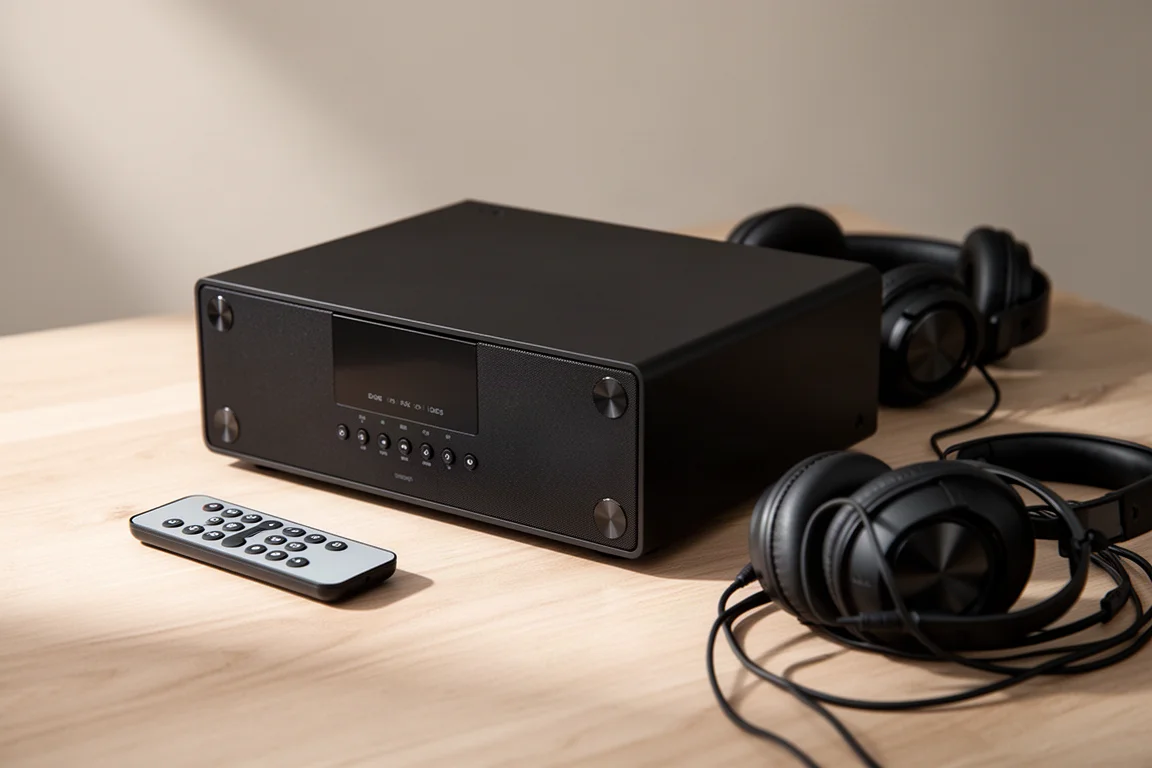
The SMSL PL100 is a small, inexpensive CD player built for exactly this situation. It reads discs, offers a headphone output with volume control, and includes optical and coaxial outputs that let it double as a CD transport. It is compact, simple to operate, and it undercuts the established options by a wide margin. It also has one requirement that buyers should plan for before ordering.
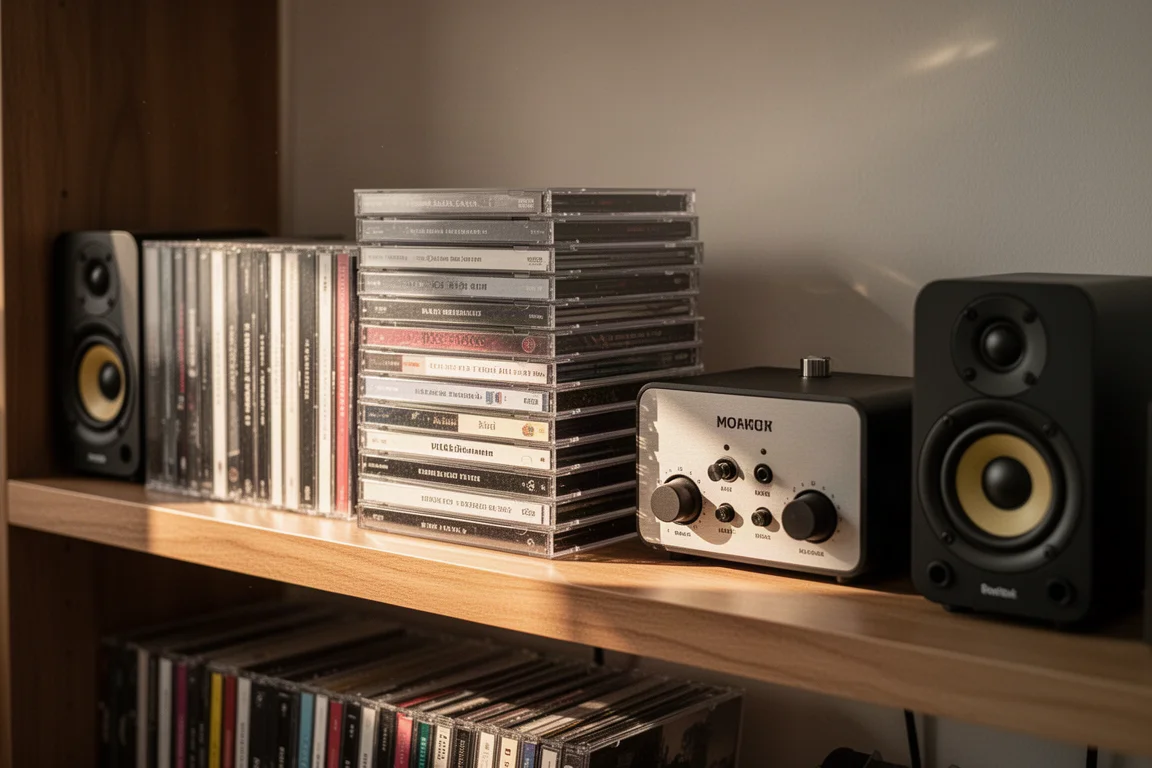
For anyone with a stack of CDs and a modest system, the PL100 is a rare thing: a purpose-built player at a price that makes sense for a desk setup, a secondary system, or a first step into physical media.
Who This Product Is For
The PL100 suits listeners who already own CDs, or who want to start collecting them without spending a lot on hardware. It fits neatly into a desktop setup, a bedroom system, or a second listening station where space is limited and a full-width component would be overkill.
It also makes sense for anyone who wants headphone listening without extra gear. The 3.5mm output and the on-board volume control mean a pair of headphones can be plugged straight in, with no separate amplifier required.
Finally, it is a good fit for tinkerers. Because the player includes optical and coaxial outputs and runs on a standard 5V supply, it can be used as a transport with an external DAC, or fed by an upgraded linear power supply later on.
Main Strengths
Compact Design and Straightforward Controls
The unit is small, closer in size to a portable CD player than to a traditional full-width deck, which makes it easy to place on a desk or a crowded shelf. The front panel carries a subtle design detail: two disc shapes set into the corners.
Controls are kept simple. Front-panel buttons handle stop, eject, play/pause, power, and track skipping, with a volume control available for headphone listening. A small remote control is included, and it also provides volume adjustment, so the player can be operated from across the room.
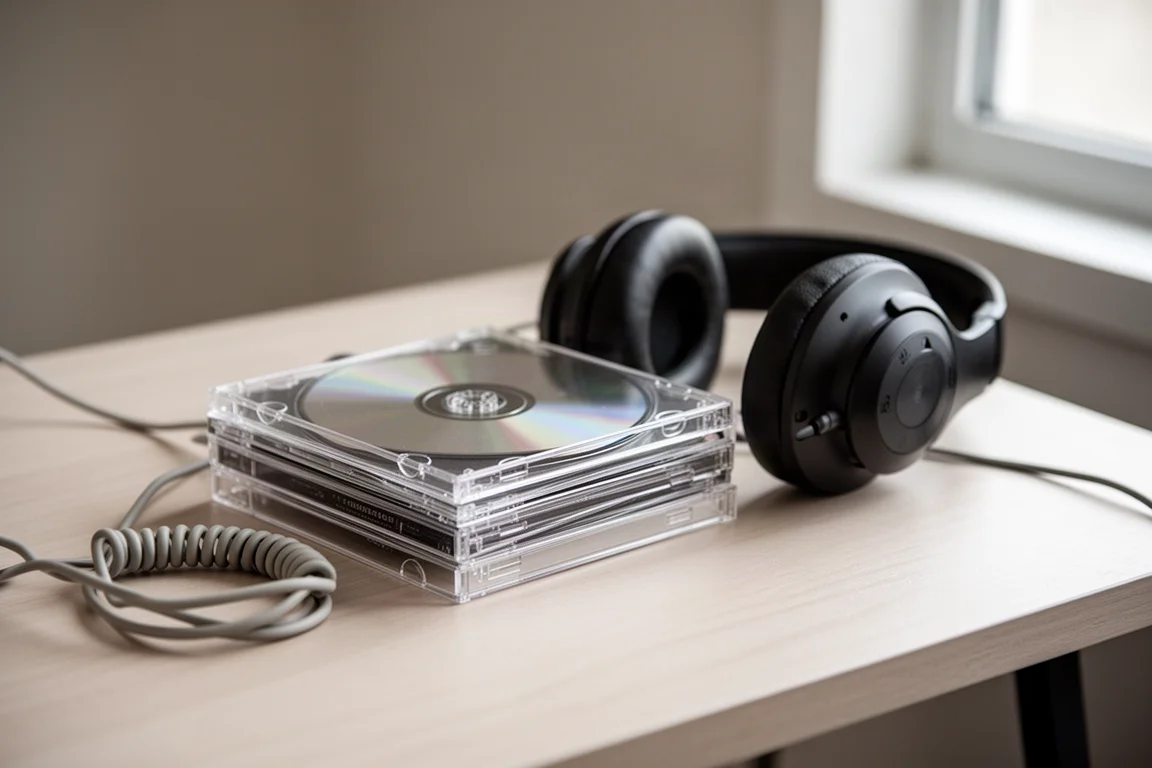
That combination of a small footprint and simple operation is what makes the PL100 easy to live with. There is no menu system to learn and no setup ritual beyond connecting the cables.
Flexible Outputs and Transport Mode
The rear panel is where the PL100 becomes more versatile than its price suggests. Alongside single-ended RCA outputs and a 3.5mm output, it provides both optical and coaxial digital outputs.
Those digital outputs matter because they allow the player to be used as a CD transport, sending the disc data to an external DAC rather than relying on the internal conversion stage. Listeners who already own a capable DAC in an integrated amplifier or receiver can compare the two approaches and keep the one they prefer.
Internal DAC and Headphone Listening
For buyers who want a single-box solution, the PL100 includes a Cirrus Logic CS43131 chip. This is a combined DAC and headphone amplifier design, which is part of how the player keeps its cost down, and it appears in a number of affordable audio products for the same reason.
Sonically, the internal conversion comes across as detailed and revealing. There are no filter rolloff modes or sound color options, so the character is fixed. It is not the most dynamic presentation in the lower mids and bass compared with more expensive DACs, and listeners who run it through a higher-end external converter can expect a fuller bottom end and a slightly deeper soundstage. At this price, though, the internal stage is a genuinely usable starting point.
Things to Consider Before Buying
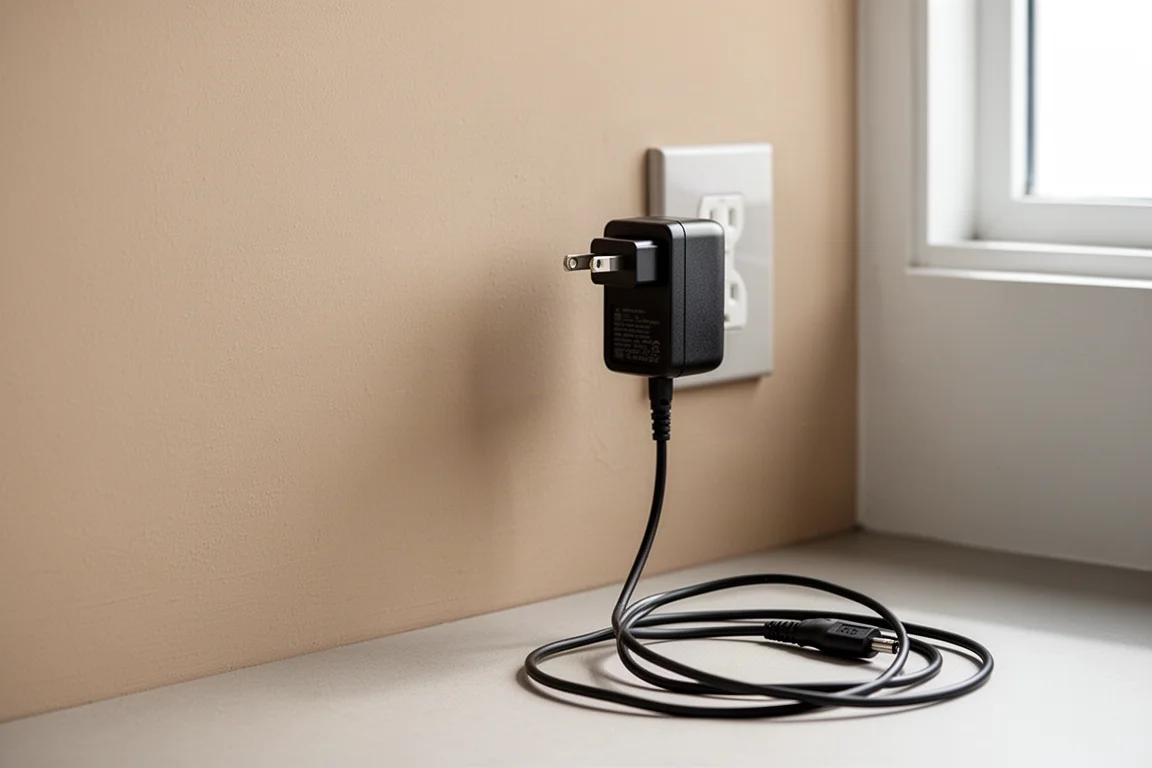
The most important caveat is the power supply. The PL100 does not include one. It runs on 5V, but it needs a 5V supply rated at 2.4A, and many common adapters, including typical phone chargers, deliver only around 1 to 1.2A. A supply that cannot deliver enough current will leave the player unusable, so it is worth confirming the rating before the unit arrives.
There is no digital input on the player, which is unlikely to matter for most buyers given that it already plays discs, but it does mean the PL100 cannot be used as a standalone DAC for another source.
Finally, the internal DAC is the most obvious area where money was saved. Buyers who are used to a high-end converter should treat the analogue outputs as a convenience rather than the main event, and plan on using the coaxial or optical output if they have a better DAC available.
Buying Advice
Judged purely on price, the PL100 sits in a category of its own. Comparable standalone players and transports are considerably more expensive: the Cambridge Audio AXC35 and the NAD C538 are both around $350, the TEAC PD-301-X is around $330, the Pro-Ject CD Box S3 is around $549, and the Leak CD transport is around $595. The PL100 comes in at a small fraction of those figures.
That gap does not mean the PL100 matches those players in every respect, and buyers who want a premium disc transport should still weigh the alternatives. What it does mean is that the entry price for decent CD playback has dropped sharply. Adding a suitable 5V 2.4A power supply is essential, and a 5V linear power supply is a sensible upgrade later, particularly for listeners who already run a dual 5V and 12V linear supply for other components.
For most people, the sensible approach is to start with the player and a correctly rated adapter, listen through the internal DAC and the headphone output, and then decide whether an external DAC or a linear supply is worth adding. The player is designed to grow in that direction.
Conclusion
The SMSL PL100 fills a gap that has existed for a long time. It is a small, inexpensive, genuinely usable CD player with headphone output, volume control, a remote, and the digital outputs needed to scale up later. The missing power supply and the modest internal DAC are the trade-offs, but both are manageable and neither undermines the value on offer. For anyone with CDs on the shelf and a system to plug into, it is an easy option to consider.
Product link
View more details for SMSL PL100
This product is mentioned in the review. Check the specifications, options, and compatibility before buying.
View more details for SMSL PL100Further reading
Related Reviews
Hi-Fi Audio
Accuphase C-57 vs Allnic H-7000V: Two High-End Phono Stages Compared
A fully balanced solid-state phono stage with a pitch-black noise floor meets a tube design built for well-loved records. Here is how to choose between them.
Hi-Fi Audio
Active vs Passive Hi-Fi: Five Components for a Modern System
Five components that define modern active and passive hi-fi systems, with the strengths, trade-offs and setup details worth weighing before you buy.
Hi-Fi Audio
Advance Paris A10 Apex Review: A Hybrid Integrated Amplifier That Covers a Lot of Ground
A French hybrid integrated amplifier with a class A tube preamp stage, analogue power meters, and an internal DAC and phono stage good enough to make extra boxes unnecessary.