Desktop Audio
SMSL M300 SE Review: A Compact DAC and Headphone Amp With Real Value
A small desktop DAC and headphone amplifier with balanced outputs, precise imaging, and a price that makes it easy to recommend.
Introduction
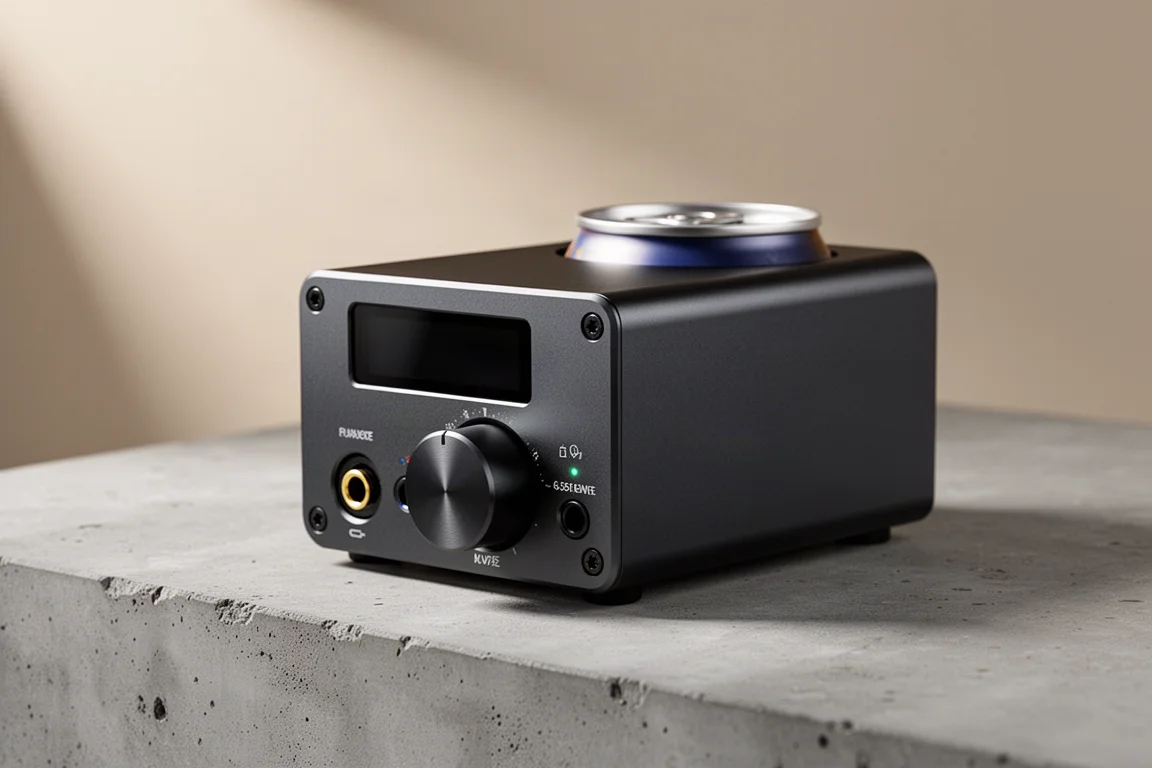
Compact desktop converters have become a crowded category, and a new model can easily look like another variation on a familiar theme. The SMSL M300 SE stands out for a different reason: it is a chassis barely taller than a soft drink can that still manages to combine a digital-to-analog converter, a headphone amplifier, balanced and single-ended headphone outputs, and a remote control.
The approach inside is notable as well. Rather than a separate converter chip and a separate amplifier stage, the M300 SE uses a Cirrus Logic chipset that handles conversion and headphone amplification in a single package. Around it sit an XMOS XU316 USB interface, support for high-resolution PCM up to 768kHz and DSD, MQA decoding, and Bluetooth.
It is also inexpensive. The unit is currently offered at $106 on sale, which puts it within reach of listeners who want a serious desktop setup without a serious desktop budget.
Who the SMSL M300 SE Is For
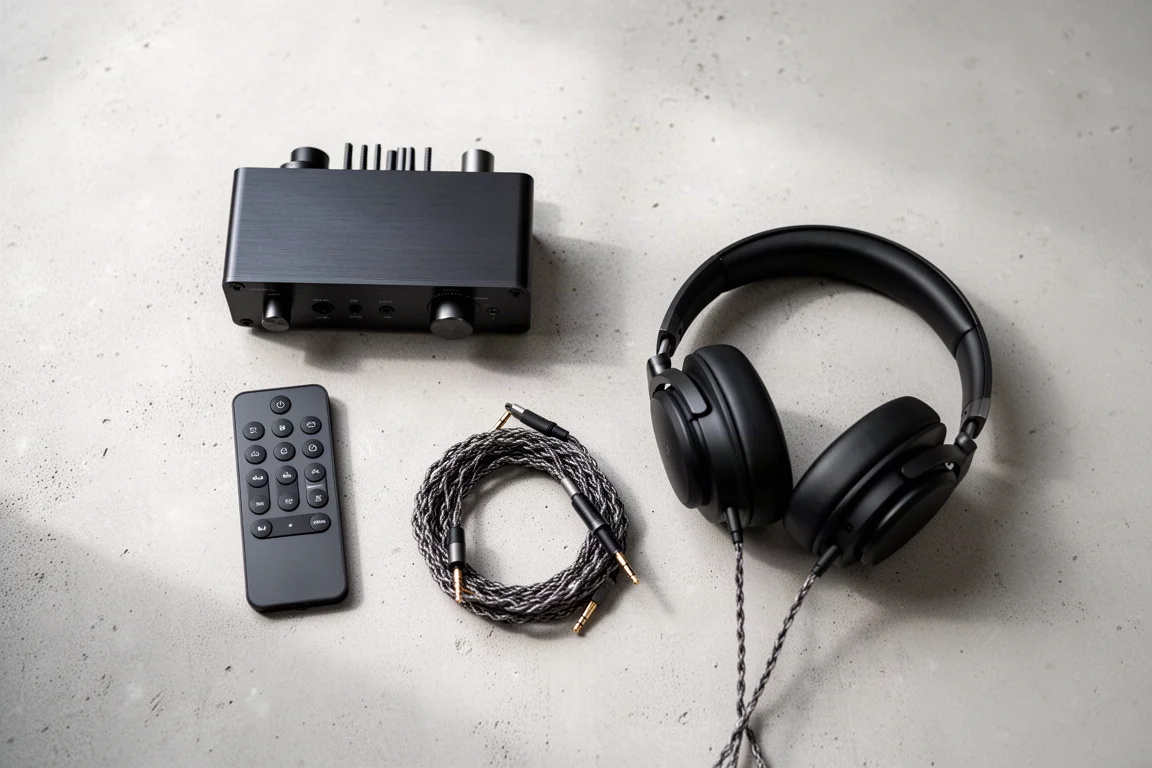
The M300 SE is aimed at listeners who want one small box to handle both conversion and headphone listening at a desk. The front panel carries a 6.35mm single-ended output and a 4.4mm Pentaconn balanced output, so most headphones can be connected without an adapter. The rear panel adds a pair of balanced outputs, a 3.5mm output, and coaxial, optical, and Bluetooth inputs, alongside a 5V power input and a second auxiliary power input.
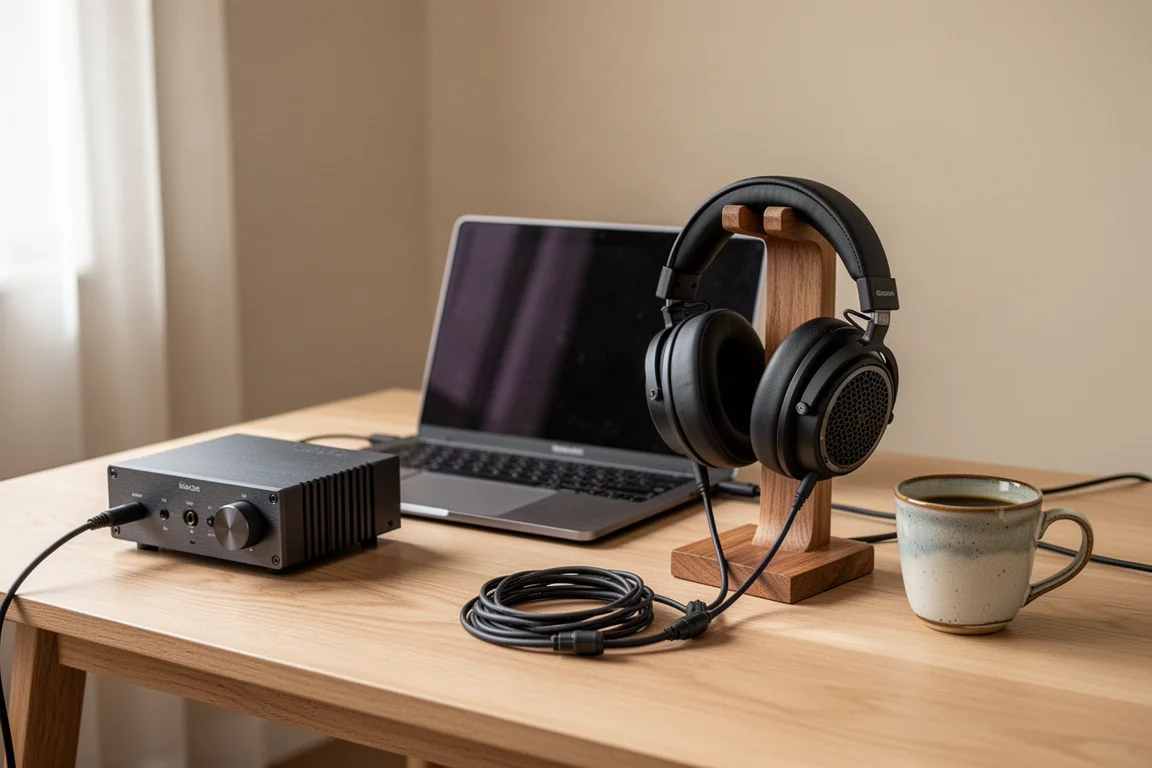
That combination makes it a practical centerpiece for a laptop, tablet, or streamer based system. The included remote also matters more than it might seem: it lets the unit be operated from across a room, which is exactly how a small component often ends up being used.
Main Strengths
The appeal of the M300 SE is not a long feature list. It is the way the unit sounds once it is connected, and the way it behaves with headphones that are not always easy to drive.
Balanced Output and Imaging
The balanced output is the strongest argument for this unit. With balanced headphones connected, imaging was exceptional. On “There Will Be Time” by Mumford & Sons, low-level studio ambience at the start of the track, sounds that usually disappear beneath the music, came through clearly and stayed locked in the center of the headstage.
That level of spatial precision is unusual at this price, and it is the detail most likely to convince a listener that the M300 SE is doing more than basic conversion. The lower noise floor of balanced operation also showed up when the unit was used as a pure converter into a separate speaker amplifier, where it stayed quiet and open.
Tonality, Bass, and Detail
Tonally, the M300 SE is neutral. Bass is solid and dynamics are strong, with no obvious lift and no thinness. The top end carries plenty of information without sounding clinical or artificially compressed, which is a common weakness in inexpensive conversion.
Mids stay clear and uncolored, and there are no filter or EQ options to manage. What reaches the headphones is the recording as decoded, which is the right approach for a product like this.
Power for Demanding Headphones
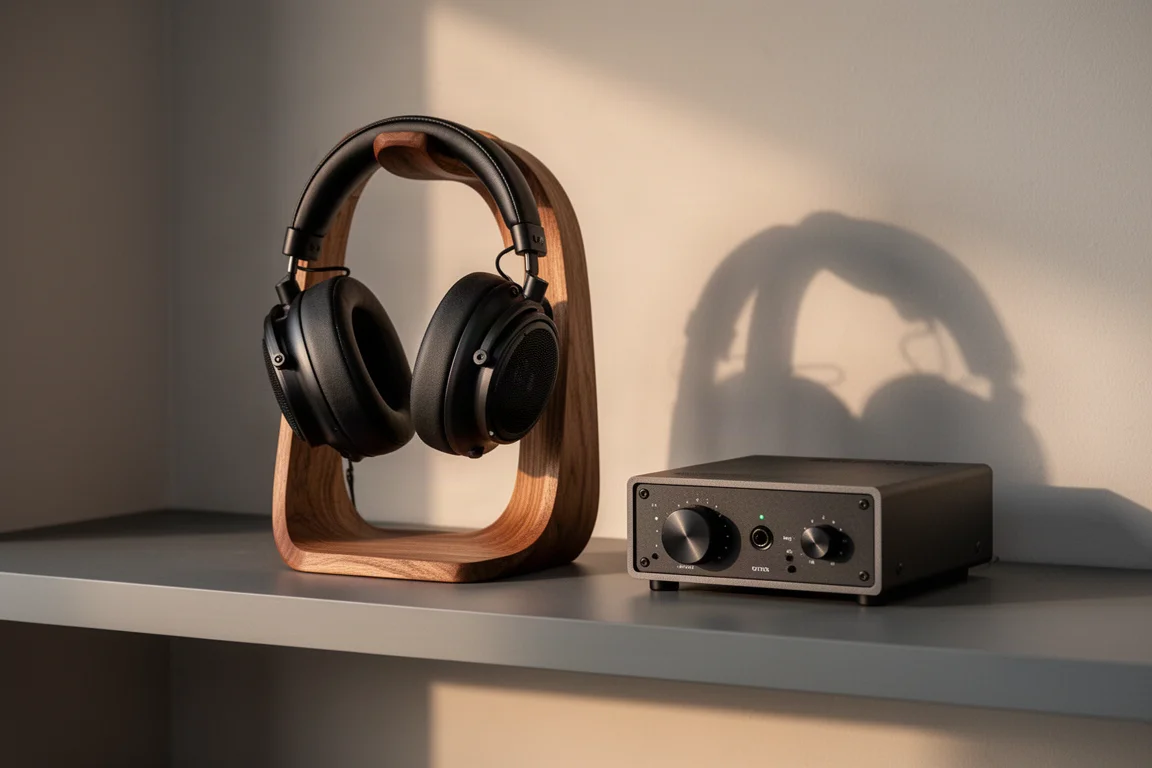
Published power figures are vague, and the manufacturer describes the output stage as adjusting automatically to the impedance of the connected headphones. In practice the arrangement held up well. Planar headphones with very different power requirements, including the HiFiMan Edition XS and the Meze 109 Pro, both played without strain.
Low-impedance closed-back planar headphones were also driven acceptably, though they did not sound as dynamic as they do on larger dedicated amplifiers. That is a fair trade-off for a component this size, and it is worth noting that a 5V headphone amplifier driving that kind of load at all is unusual.
At very high volume with harder-to-drive planars, the top end moves slightly forward. At normal listening levels it never became harsh or sibilant, so most listeners are unlikely to run into it.
Things to Consider Before Buying
A few compromises come with the size and the price. There is no RCA output on the back. Single-ended output is a 3.5mm jack, so connecting to an amplifier with RCA inputs requires a 3.5mm-to-dual-RCA cable. It works, but it is less convenient than proper RCA sockets.
The display is very small. It does show the incoming sample rate, which is genuinely useful, but the characters are hard to read from across a room. If the unit will live on a shelf or in a rack rather than on a desk, plan on using the remote.
Power specifications are not published in clear detail, so buyers with unusually demanding headphones should treat the automatic impedance matching as a convenience rather than a guarantee.
Availability is limited as well. The product is difficult to find outside a small number of specialist retailers, and listings for it have shown as currently unavailable, so it is worth confirming stock before ordering.
Buying Advice
At $106 on sale, the M300 SE is easy to justify. It packages a converter, a headphone amplifier, balanced and single-ended headphone outputs, several digital inputs, and a remote control into a chassis small enough to sit almost anywhere.
Listeners who only need a fixed-output converter can spend less. A DAC-only alternative around $70 covers that job, but it does not add a headphone amplifier, balanced output, or a remote. The M300 SE costs roughly $25 to $26 more and provides all three.
The recommendation is straightforward. If the headphones in use have a balanced cable, or if the goal is a compact desktop system running from a single small box, the M300 SE covers that ground with very little to criticize at the price. Buyers with extremely power-hungry headphones, or a system that depends on RCA connections, should weigh those needs first.
Conclusion
The SMSL M300 SE is a small, neutral, and unusually capable desktop DAC and headphone amplifier. Its balanced output and imaging are the highlights, and its tonal balance avoids the thin, clinical character that often comes with inexpensive conversion. The compromises, a 3.5mm single-ended output, a tiny display, vague power ratings, and limited availability, are real but manageable.
For the money, it is one of the more convincing combinations of conversion and headphone amplification available, and it earns a confident recommendation for desktop listeners who want a compact all-in-one.
Product link
View more details for SMSL M300 SE
This product is mentioned in the review. Check the specifications, options, and compatibility before buying.
View more details for SMSL M300 SEFurther reading
Related Reviews
Desktop Audio
ADAM Audio D3V vs Kali Audio LP-UNF: Two $299 Desktop Monitors Compared
Two compact powered desktop monitors at the same price, compared on bass extension, linearity, placement settings, directivity, and realistic output limits.
Desktop Audio
Aiyima T9 Review: A Compact Tube Desktop Amplifier With a Built-In DAC
A budget desktop amplifier that pairs class D power with two tubes, a full DAC section, Bluetooth, tone controls, and a working VU meter.
Desktop Audio
Aune S9c Pro Review: A Weighty Desktop DAC and Headphone Amplifier With Real Power
A desktop DAC and headphone amplifier with a linear power supply, dual Sabre converters and five watts of balanced headphone output. Here is what to weigh before buying.