Hi-Fi Audio
SMSL DA1 and D6S Review: A Compact Desktop Hi-Fi Pair Worth Building Around
A $49 palm-sized power amplifier and a $199 MQA-ready DAC, assessed together as a small desktop system for tight spaces and modest budgets.
Introduction
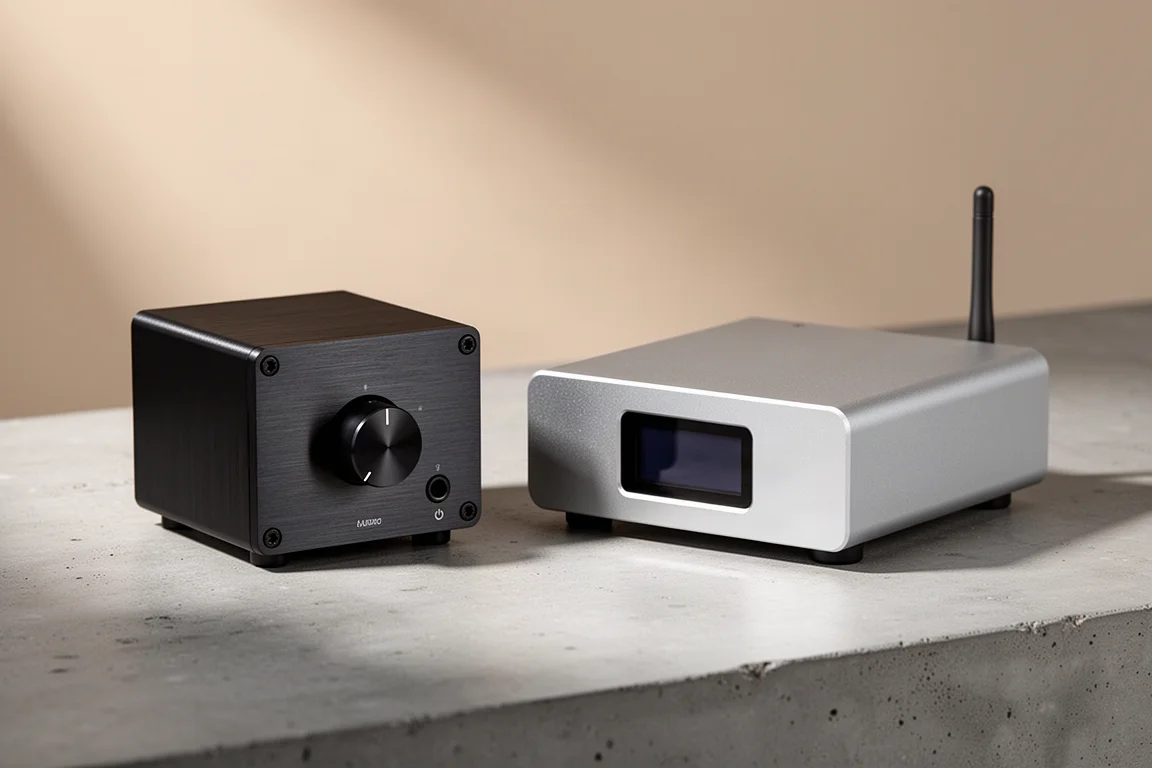
SMSL has built a following on compact, affordable hi-fi components, and two recent pieces make a particularly interesting pairing: the DA1 power amplifier at $49 and the D6S MQA-ready DAC at $199. Together they form a complete small system for a desk, a bedroom, or a secondary listening space.
Neither unit is designed to anchor a large living room setup. The appeal sits elsewhere: a tiny footprint, a low entry price, and a surprisingly complete feature set for the money. This guide covers what each component does, how they behave as a pair, and who is most likely to be happy with them.
What to Look For in a Compact Desktop System
Three things matter most in this category: how much desk space the components occupy, how much power the amplifier can realistically deliver, and how many digital sources the DAC can accept.
Power supplies are the usual compromise. Keeping an amplifier chassis small means moving the transformer into an external brick, which is exactly what the DA1 does with its 19V supply. The amplifier itself stays palm-sized, but there is one more item to hide behind the desk.
Connectivity is where a small DAC can genuinely compete with larger gear. A modern desktop system may need to accept a computer over USB, a CD transport over optical or coaxial, and a phone or tablet over Bluetooth. The D6S covers all three.
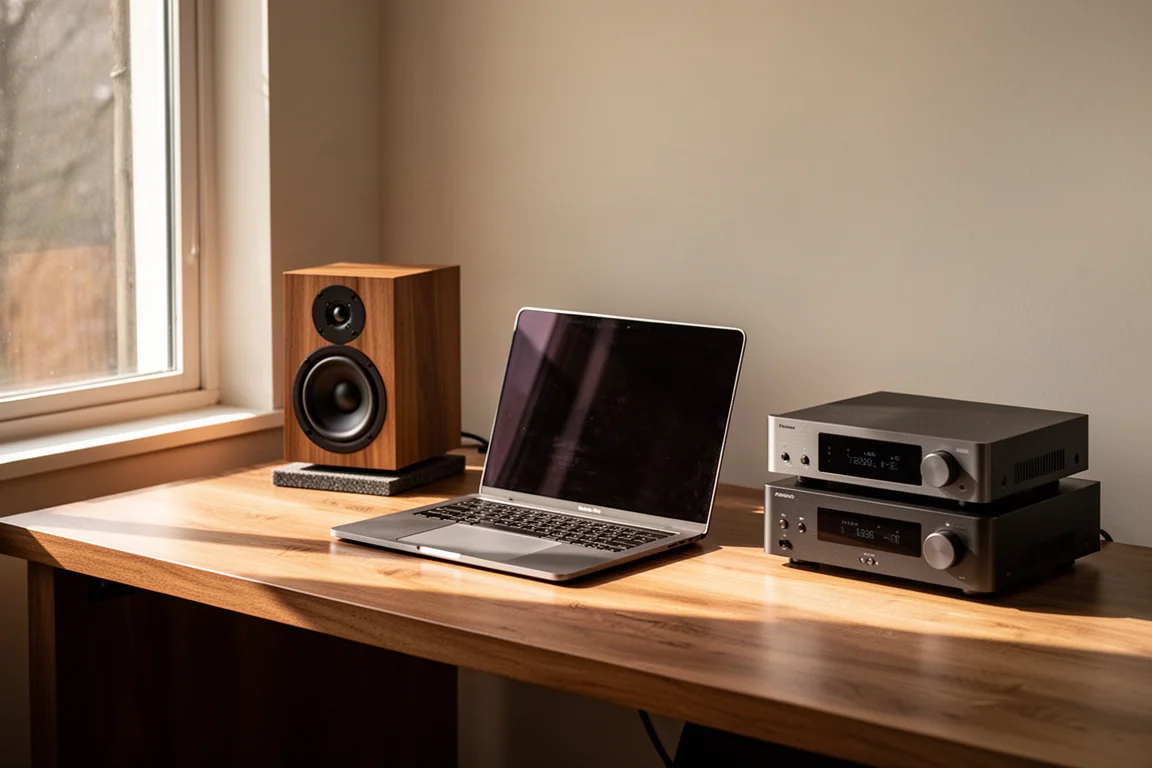
Price is the final consideration. At this end of the market, a modest outlay can buy a surprisingly capable system without committing to full-size separates or accepting a laptop headphone output as the only option.
SMSL DA1 Power Amplifier
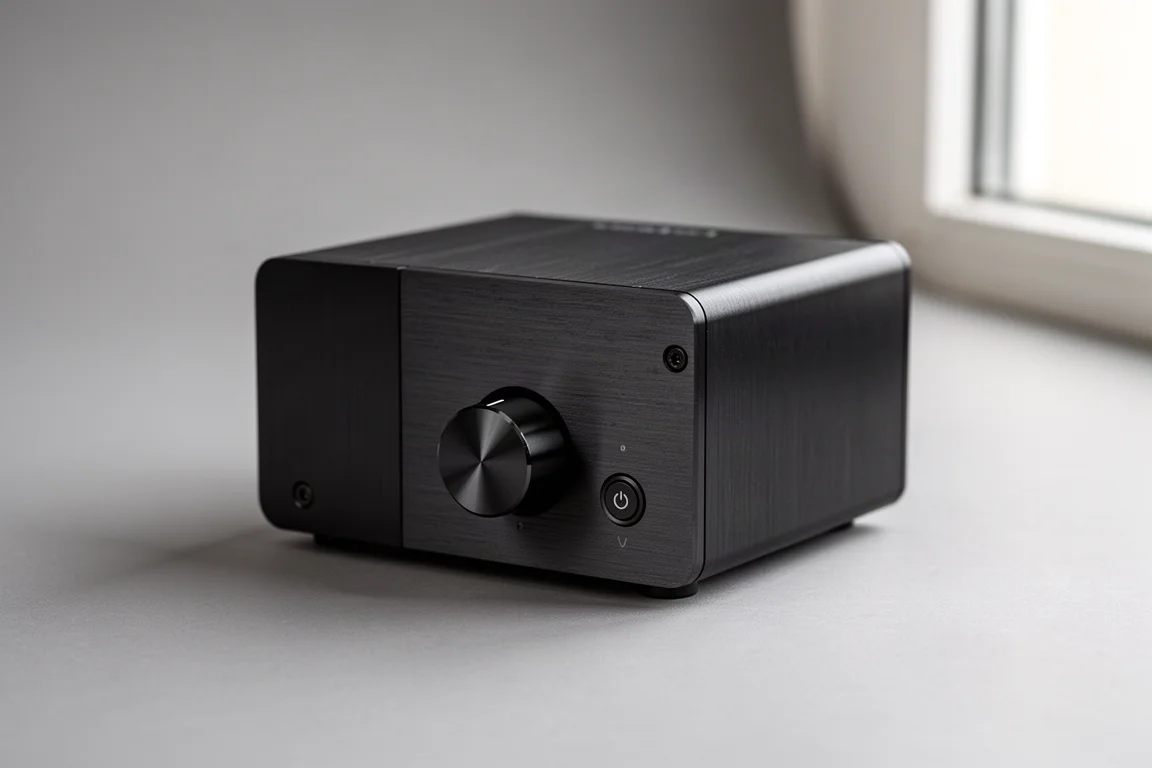
The DA1 is the smallest piece here and the one that raises the most questions. It measures roughly 4 inches square and about an inch tall, weighs around half a pound, and is genuinely palm-sized, a claim many small amplifiers make but few earn.
Inside, it uses a TI 3118 amplifier chip rated at 65 watts per channel into 4 ohms. Into 8 ohms the realistic figure is lower, somewhere in the region of 25 to 30 watts per channel. For a desktop setup driving reasonably efficient bookshelf speakers, that is enough to reach comfortable listening levels.
The signal path is about as short as it gets, which is one of the theoretical advantages of an amplifier this small: less circuitry between input and output means less to go wrong. SMSL also includes pop-reduction circuitry to keep the speakers quiet when the unit is switched on or off, and in use it does its job.
In practice the DA1 drove a range of bookshelf speakers, including efficient Klipsch models, the KEF LS50 Meta, and the Sony SSCS5, with the most satisfying results coming from the most efficient pair. At very high volumes the sound begins to thin out and turn harder to listen to, so this is a component best used at sensible levels rather than for parties.
Context matters here. Two decades ago, $49 bought a plastic class T amplifier from the budget end of the market. The same money now buys a metal chassis, a proper external power supply, and a much shorter signal path.
SMSL D6S MQA DAC
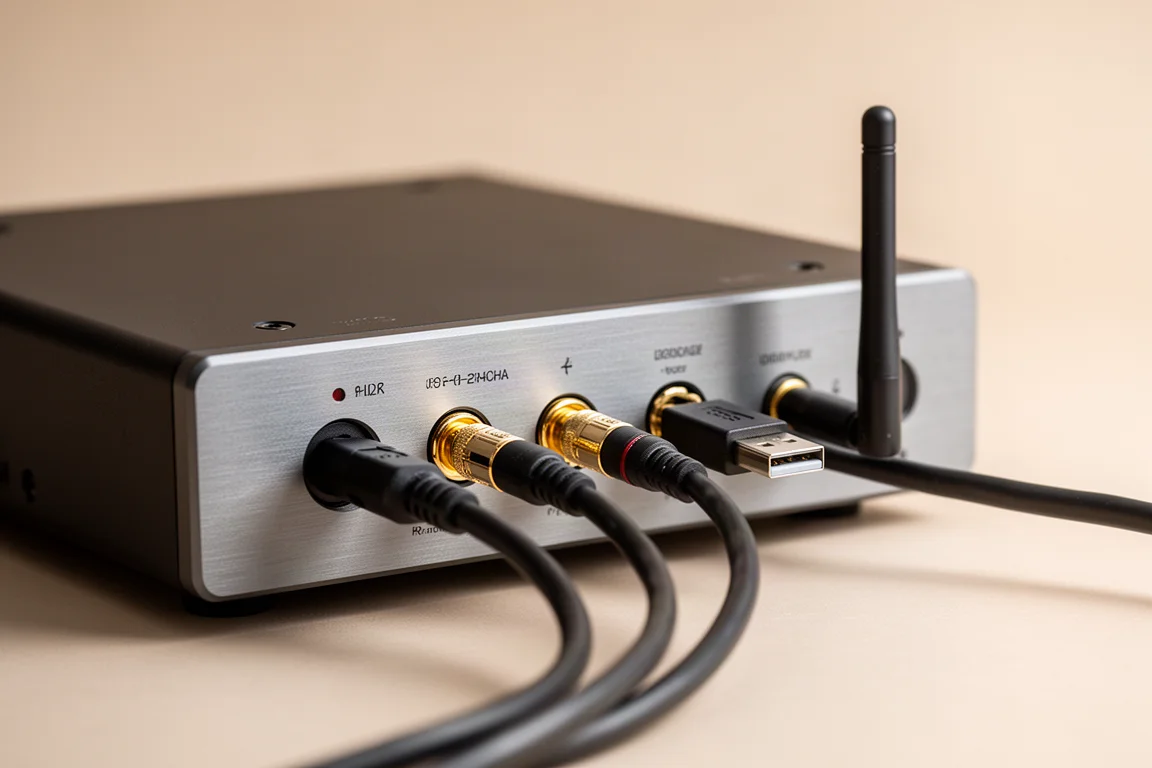
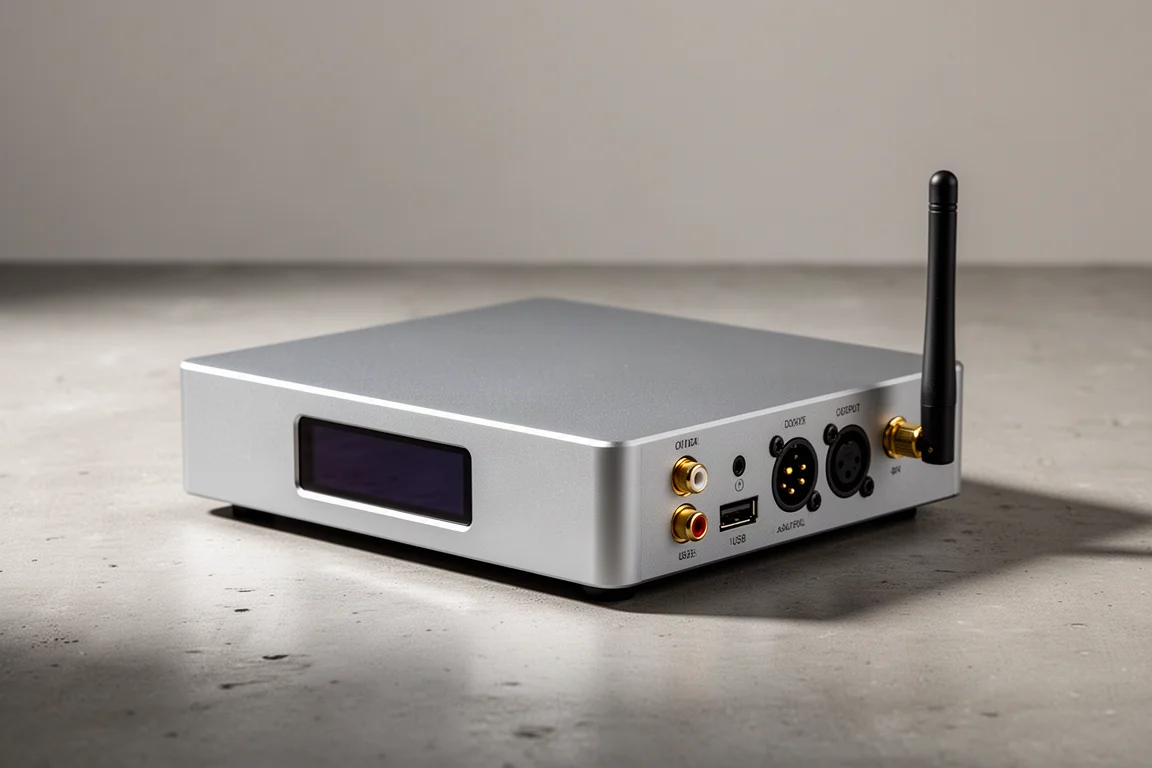
The D6S is the more conventional of the two and the more feature-dense. It sells for $199 and is built around the ES 9039 Q2M converter chip, supported by four op-amps and a Bluetooth 5.1 receiver with a single antenna.
MQA decoding is included, and the unit signals an MQA stream with a purple light. It also handles DSD and DoP over USB, and offers a full spread of digital inputs: optical, coaxial, and USB. Balanced outputs are available alongside the usual single-ended connections.
The DAC also exposes a deep menu of digital filters, with separate digital phase and PCM filter settings and six levels for each. These allow fine tuning of the presentation, though the differences are subtle and easy to overthink. For most listeners, leaving both settings at their lowest position and simply listening is the more sensible approach.
Two omissions are worth knowing before buying. There are no tone controls, and there is no subwoofer output. Anyone planning to add a subwoofer later will need to route it another way.
Sonically, the D6S leans transparent and clean rather than warm, with a slightly brighter character than warmer-sounding designs. It resolves vocal texture well, which flatters raspy, characterful voices, and it keeps instruments clearly separated across the sound stage.
How the DA1 and D6S Work Together
Paired together, the two units form a complete system: a digital source feeds the D6S, the D6S feeds the DA1, and the DA1 drives the speakers. Both are small enough to sit side by side on a desk, and the DA1’s external power supply is the only bulky item in the chain.
The combination is not the only way to spend this money. An all-in-one amplifier with a built-in streamer sits within roughly $50 of the two SMSL units combined, and a DAC-amplifier would still need a separate streamer added to match the feature set. The trade-off is flexibility: separates let you replace one part at a time, and each unit can move into a different system later.
Sound Quality and Listening Notes
Across a range of material, the pair impressed most with separation and the solidity of the centre image. Detail retrieval was strong, particularly in the texture of voices, and dense, layered recordings generated plenty of energy between and beyond the speakers.
Dynamic, percussion-heavy tracks came through with punchy snare hits and clean cymbals, though the top end sits close to the edge of brightness at higher volumes. Keeping levels moderate keeps that in check. Quieter, more atmospheric recordings fared well too, with low-level details such as background effects in a mix remaining audible.
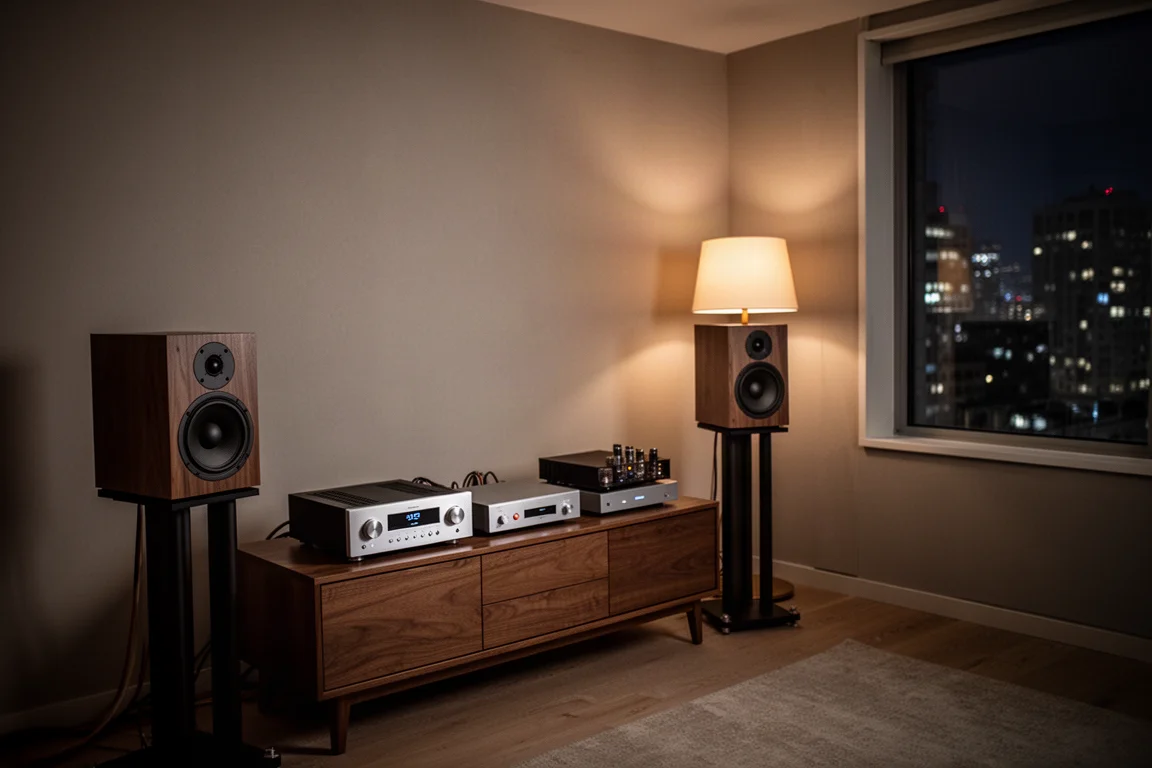
Because the two units were heard together, attributing any single trait to one box alone is difficult. What is clear is that the pairing never sounded like a compromise at these prices.
Living With a Palm-Sized System
The DA1 suits very specific situations. It fits where a full-size amplifier cannot: a bedroom shelf, a small office desk, a garage, or a vacation home. It could also stand in for a soundbar in a secondary room where space and budget are both tight.
The D6S is easier to place. Its mix of Bluetooth, USB, optical, and coaxial inputs makes it a natural hub for a desk system, and it looks tidy enough to leave on display. That same feature set means it can serve as the digital front end for a larger system later on.
The practical caveat applies to both: this is compact, budget-oriented gear, and it works best when expectations match the price. Used at reasonable volumes with reasonably efficient speakers, the pair delivers far more than the price suggests. Pushed hard, the amplifier runs out of headroom first.
Buying Advice
Buy the DA1 if space is the priority and the speakers are efficient. It is a $49 amplifier that performs credibly within its limits, and it suits desk, bedroom, garage, and secondary-room duty. It is not the right choice for a large room, low-sensitivity speakers, or loud playback.
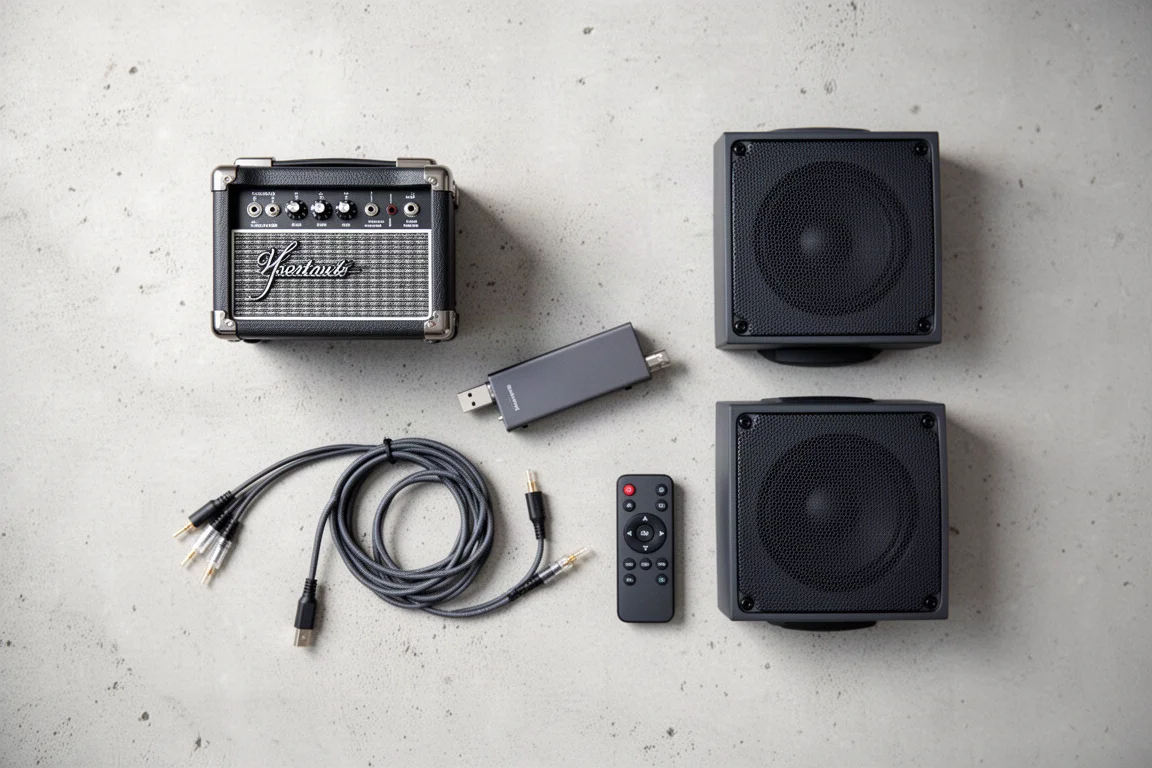
Buy the D6S if you want a well-equipped, transparent DAC with MQA support, Bluetooth, balanced outputs, and a full set of digital inputs at $199. Skip it if you need tone controls or a subwoofer output, because neither is available here.
Buying both makes sense for anyone assembling a first desktop system from scratch. Buying just one is equally reasonable: the D6S slots into almost any existing setup, while the DA1 is a niche solution for genuinely tight spaces.
Conclusion
The SMSL DA1 and D6S show how much capability now fits into very small, very affordable boxes. The DA1 is a $49 amplifier with real limitations and a genuinely useful set of strengths. The D6S is a $199 DAC that covers modern sources without asking much in return.
Bought together, they make a compact desktop system that handles streaming, CD, and computer audio, and that leaves room to grow later. Bought separately, each has a clear place. Neither replaces a full-size system in a large room, but at these prices, neither needs to.
Further reading
Related Reviews
Hi-Fi Audio
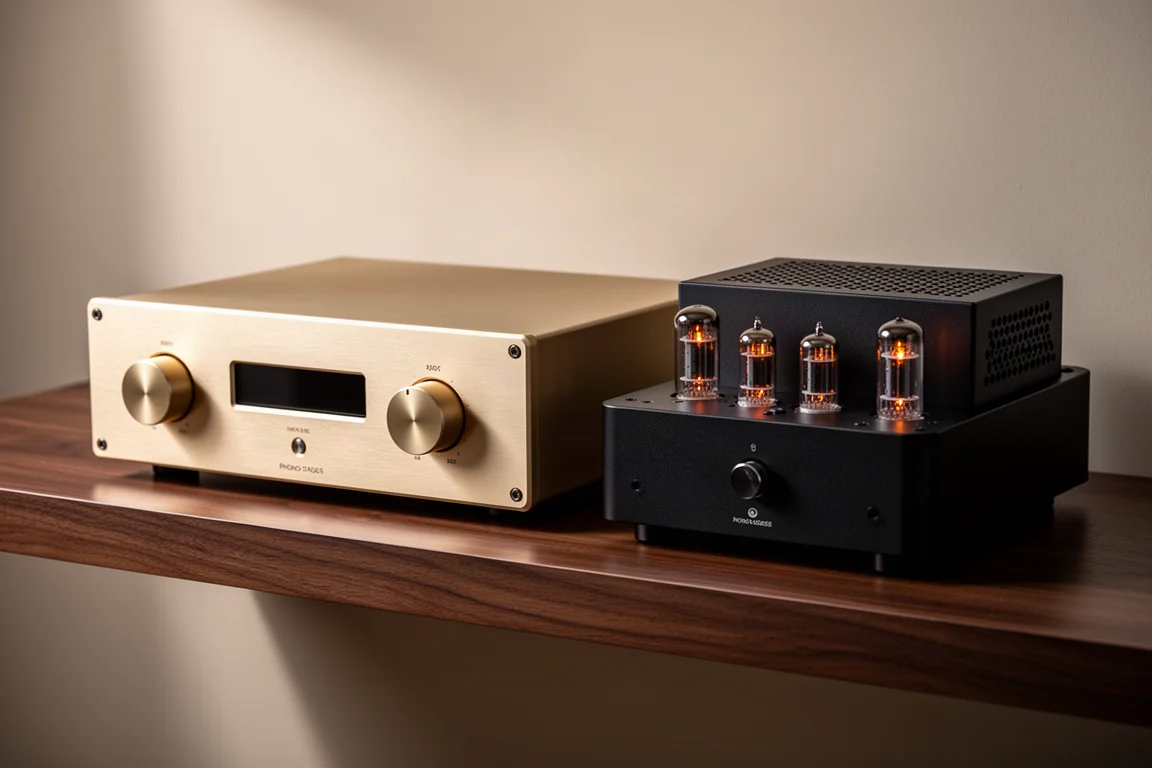
Accuphase C-57 vs Allnic H-7000V: Two High-End Phono Stages Compared
A fully balanced solid-state phono stage with a pitch-black noise floor meets a tube design built for well-loved records. Here is how to choose between them.
Hi-Fi Audio
Active vs Passive Hi-Fi: Five Components for a Modern System
Five components that define modern active and passive hi-fi systems, with the strengths, trade-offs and setup details worth weighing before you buy.
Hi-Fi Audio
Advance Paris A10 Apex Review: A Hybrid Integrated Amplifier That Covers a Lot of Ground
A French hybrid integrated amplifier with a class A tube preamp stage, analogue power meters, and an internal DAC and phono stage good enough to make extra boxes unnecessary.