Desktop DACs
SMSL D6 Review: A Bright, Detail-Forward Budget DAC
A $170 desktop DAC with dual AKM chips, Bluetooth 5.1, and a full remote, plus the bright top end that decides who should buy it.
Introduction
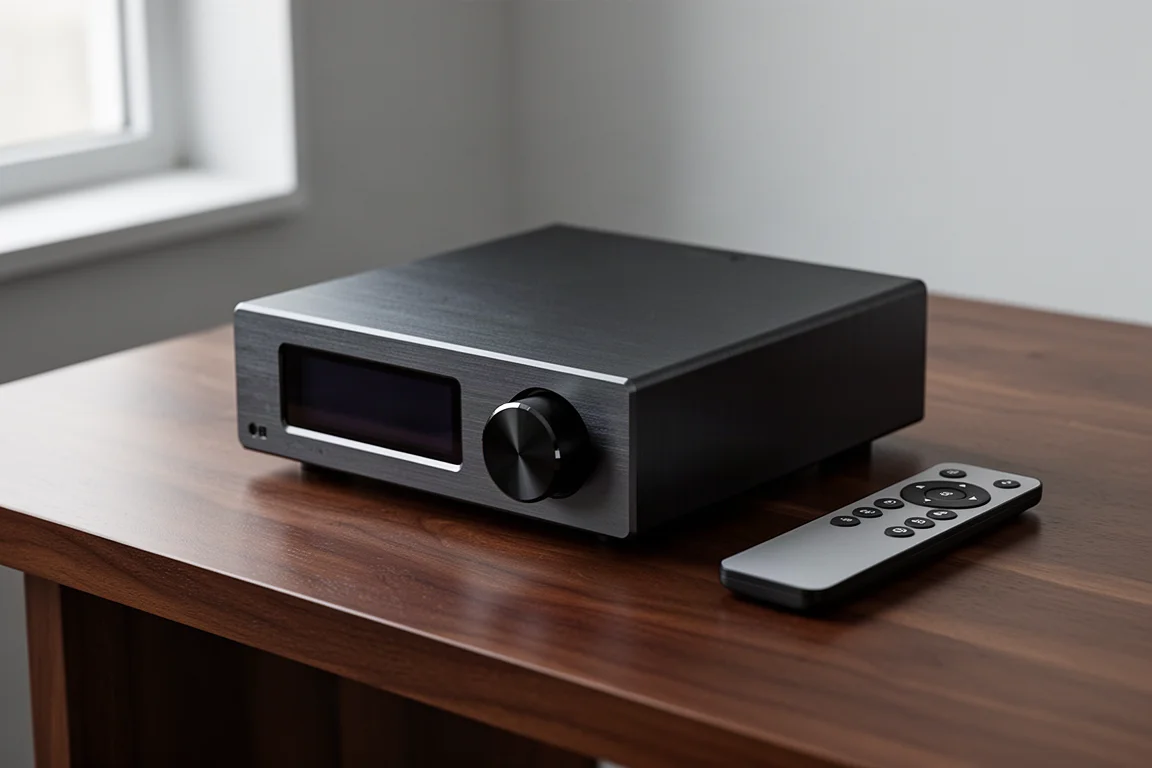
The SMSL D6 is a compact desktop DAC priced at $170, built around a pair of AKM AK4493S converter chips. It also brings an internal low-noise power supply, a machined aluminium chassis, Bluetooth, and a full-size remote control. For the money that is a generous hardware package, and the first listen tends to be genuinely impressive: clearer, more detailed, and more layered than whatever converter most laptops and older receivers ship with.
The catch is tonal. The D6 leans bright, and its top end emphasises detail and air at the cost of naturalness. Cymbals, sibilants, and any recording with a forward treble can become tiring. This review covers what the D6 does well, where it can go wrong, and how it sits alongside the other affordable DACs worth knowing about.
Who the SMSL D6 Is For
The D6 slots in just behind the SMSL SU-6 in the lineup. Both are desktop DACs of similar size, but the SU-6 uses a Sabre converter while the D6 uses AKM silicon, which matters to buyers who have been waiting for affordable AKM designs to return to the market.
At $170, the D6 lands in the bracket that entry-level desktop DACs now occupy. What used to cost around $120 now tends to sit between $150 and $170, so the D6 is priced in line with the category rather than below it. It is aimed at desktop listeners who want volume control, Bluetooth, and a physical remote in a single box.
It suits listeners who want the most apparent detail they can get for the money and do not mind a forward treble. It is a weaker match for anyone who already owns revealing gear and values a relaxed, natural top end.
Main Strengths and Feature Set
On paper the D6 is well specified for its price. Two AKM AK4493S DAC chips handle conversion, supported by an ultra-low-jitter design and PCM support up to 32-bit / 768 kHz. The power supply is built in and described as low noise, so there is no external brick to hide behind the desk, and the chassis is a CNC aluminium alloy shell.
The included remote is the newer SMSL design with up, down, left, and right navigation, a function key, mute, and volume controls. It runs on ordinary AAA batteries, which is more practical than the flat credit-card style remotes found on some rivals. The front display is legible from across a room, and brightness can be set from B1 through B6. Volume runs from 0 to 60.
Bluetooth is version 5.1 with SBC, AAC, LDAC, aptX, and aptX HD, and an antenna is included in the box. There are six filter roll-off settings and four sound colour modes, and the outputs are a single-ended RCA pair at 2 V alongside balanced TRS outputs at 4 V.
How the SMSL D6 Sounds
The first impression is excitement. The D6 sounds ultra clear and hyper detailed, and it will reveal parts of familiar tracks that a laptop output or an older receiver simply does not. Black Sabbath’s “Paranoid” in its 2012 remaster and Diamond Head’s “Am I Evil” both landed well on the first pass.
Then the cymbals arrive. Iron Maiden’s “Run to the Hills” in its 1998 remaster came across as harsh, with heavy sibilance and cymbals that felt brief and unnatural. On “Am I Evil” the guitar riff was detailed and enjoyable until the cymbals entered, at which point the top end became hard to sit with. That is the pattern with the D6: an initial rush of detail, followed by listening fatigue within roughly half an hour to an hour.
The comparisons matter here. Played through a Geshelli Labs J2 with a Sabre chip, the same harsh recording became noticeably more enjoyable. Against the SMSL SU-6, which uses a Sabre 9038Q2M, the D6 is harder on the top end and carries more of a digital sheen, though the SU-6 is not entirely free of brightness either. The D6 also sounds very close to the older SMSL Sanskrit, a DAC that once sold for around $100 and now sits nearer $140.
None of this means the D6 sounds bad in isolation. Coming from a laptop headphone jack or an ageing receiver, it will sound like a substantial upgrade. The problem appears when it is set against converters that are more natural on the top end, more dynamic, and larger in soundstage.
Inputs, Outputs, and Everyday Controls
Around the back, the layout runs from left to right: the power input for the internal supply, a USB-C connector, the Bluetooth antenna connection, a single optical input, a single digital coaxial input, a single-ended RCA output pair, and a balanced TRS output pair. Bluetooth, optical, coaxial, and USB-C are all selectable from the front panel.
The balanced outputs use TRS jacks rather than full-size XLR connectors. That approach saves space and is spreading across desktop gear, but no XLR-to-TRS adapter is included, and most non-professional listeners do not keep TRS cables on hand. Anyone planning to use the balanced output should budget for the right cable or adapter.
Up front there is a single volume knob, finished in black with polished edges, and the display handles input selection, brightness, and the volume readout. One practical limitation: there is no obvious fixed-output mode, and the documentation does not explain the menu system in much detail, so some functions stay unclear in normal use.
Things to Consider Before Buying
The top end is the main thing to weigh. The D6 emphasises treble, and sibilance and cymbal hits are pushed forward. If you listen for long stretches, or if your headphones already lean bright, that character is likely to become tiring.
There are smaller practical points too. The balanced TRS outputs need cables or adapters that are not in the box. The four sound colour modes are DSP adjustments rather than tonal redesigns, and while the fourth mode seemed slightly better behaved, it does not change the underlying character. The six filter settings sounded nearly identical in practice.
Finally, consider what you are upgrading from. If you already run a capable sound card or a well-implemented onboard converter, the D6 may not be the step forward it appears to be at first listen.
Pairing and Setup Notes
The D6 rewards careful matching. It was tested through a single-ended desktop headphone amplifier with planar magnetic headphones, and the bright character showed up clearly on both. Warmer amplifiers and smoother, less treble-forward headphones make the presentation easier to live with.
Small setup details help as well. Set the display brightness to suit the room, keep the volume range of 0 to 60 in mind, and give the filters and sound colour modes a short trial before settling on a preference. If the D6 is on your shortlist, comparing it side by side with the SMSL SU-6 and returning whichever you prefer is a practical way to decide.
Buying Advice
If $170 is the limit and you need volume control, the SMSL SU-6 is the more comfortable listen. If you do not need volume control, the Schiit Modi 3E is a straightforward alternative. If a remote control matters and the budget can stretch, the Topping E50 is worth a look, and if you can go roughly $75 higher without needing a remote, the Geshelli Labs J2 in its Sabre version is the strongest option of the group, though the AKM version has not been evaluated here.
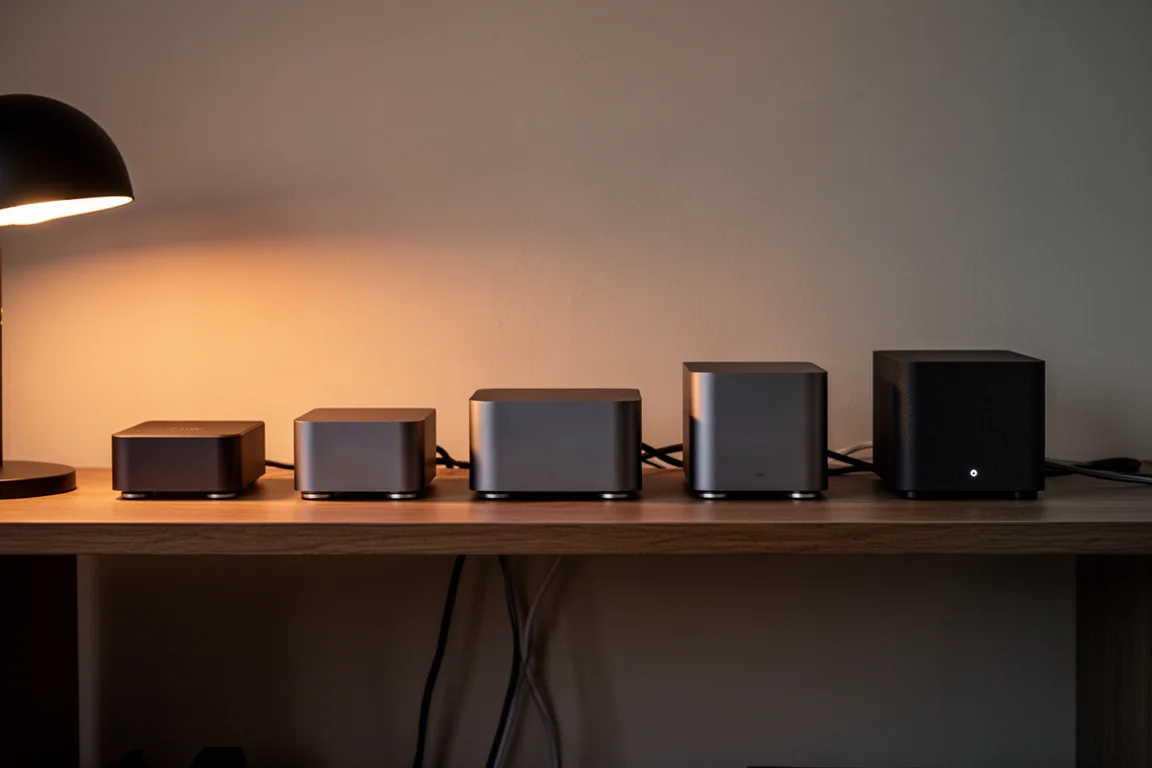
The D6 itself is not a poor piece of hardware. It is a specific flavour: forward, detailed, and bright. Buyers who want maximum apparent detail at an entry-level price, and who pair it with sympathetic equipment, will find plenty to like. Buyers who want a natural, relaxed treble should look at the alternatives first.
Conclusion
The SMSL D6 delivers a strong feature set for $170, with dual AKM AK4493S chips, an internal power supply, Bluetooth 5.1 with LDAC and aptX HD, a readable display, and a practical remote. Its weakness is tonal balance: the bright, sibilance-prone top end can turn detail into fatigue over a long session. Choose it for the feature set and the forward presentation, and choose something else if a natural top end matters more.
Product link
View more details for SMSL D6
This product is mentioned in the review. Check the specifications, options, and compatibility before buying.
View more details for SMSL D6Further reading
Related Reviews
Desktop DACs
Fosi Audio ZD3 Review: A Compact Desktop DAC With HDMI ARC and Swappable Op-Amps
The Fosi Audio ZD3 pairs a Sabre 9039 Q2M DAC with HDMI ARC, Bluetooth, and a socketed op-amp stage at a $179 retail price. Here is what it does well and what to check first.
Desktop DACs
Geshelli Labs J2 Review: AKM 4493 vs Sabre 9038Q2M
A practical comparison of the Geshelli Labs J2 in its AKM 4493 and ESS Sabre 9038Q2M versions, covering sound character, inputs, build options, and how to choose.
Desktop DACs
JDS Labs J2 AKM 4499 Review: A Two-Chip DAC Built for Speaker Listening
The JDS Labs J2 AKM 4499 version pairs two AKM chips with three socketed op amps. Here is what the upgrade adds, how the op amp options change the sound, and where the 4493 version still makes sense.