DACs
SMSL D300 Review: A Rohm-Chip DAC With Two Distinct Voices
The SMSL D300 swaps the usual converter chips for a Rohm design and offers two genuinely different filter modes, but its build quality trails the $400 field.
Introduction
Most affordable desktop DACs share the same small pool of converter chips, so new models often read like reshuffles of the same formula. The SMSL D300 breaks that pattern. Rather than an AKM, ESS Saber, or Burr-Brown converter, it uses a flagship Rohm DAC chip, and that single decision shapes almost everything about how it sounds.
At $400, the D300 lands in a crowded part of the market. What sets it apart is not a longer feature list but a pair of filter roll-off modes that change the presentation enough to feel like two DACs in one enclosure. It also skips MQA decoding entirely, which matters if that format is part of your library.
Who This DAC Is For
This is a DAC for listeners who already have a clean amplifier and a decent pair of headphones or speakers, and who want a converter with a character of its own. If your system leans bright, or if you have grown tired of the slightly hard, digital edge that some entry-level chip DACs bring to cymbals and percussion, the slow filter mode is a useful corrective.
It also makes sense for anyone who wants to change the sound without swapping hardware. Moving between a relaxed and a livelier presentation from the front panel, or from the included remote, is more practical than a menu full of options that all sound the same.
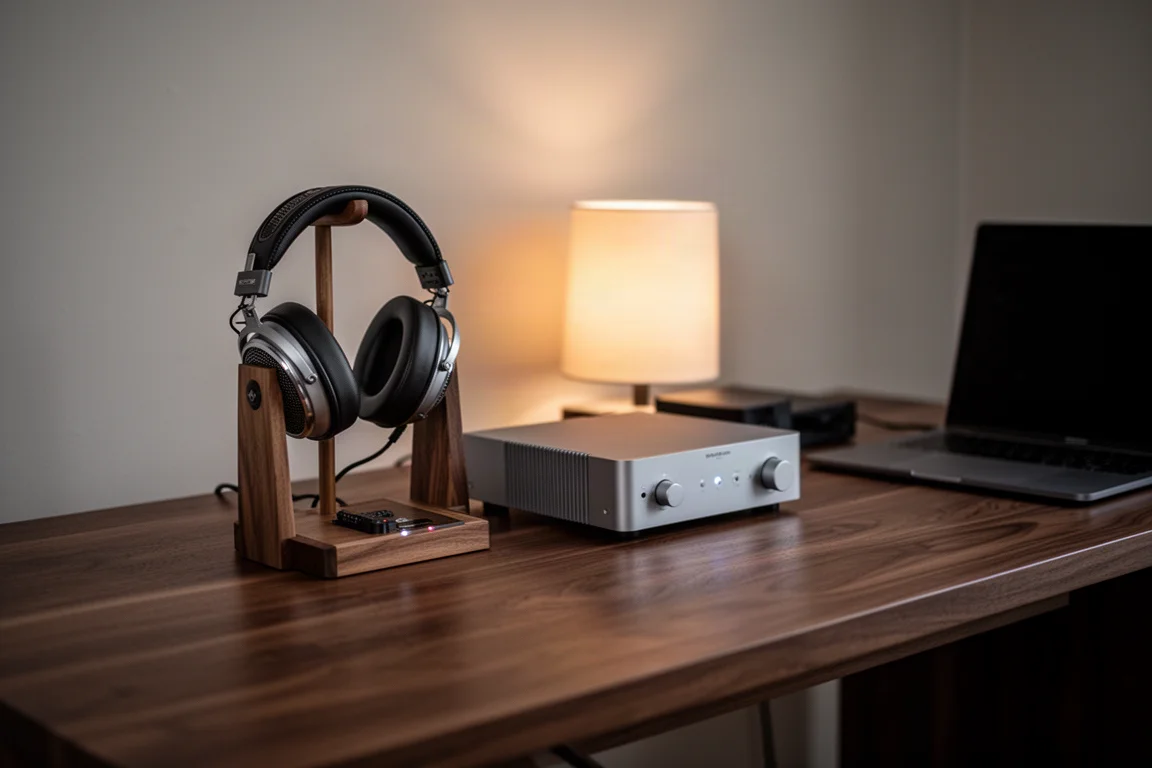
The D300 also handles the practical side of desktop listening well. One USB input, one optical input, and one coaxial input, plus both balanced and single-ended outputs, cover most source and amplifier combinations without adding extra boxes to the desk.
Design, Connections, and Controls
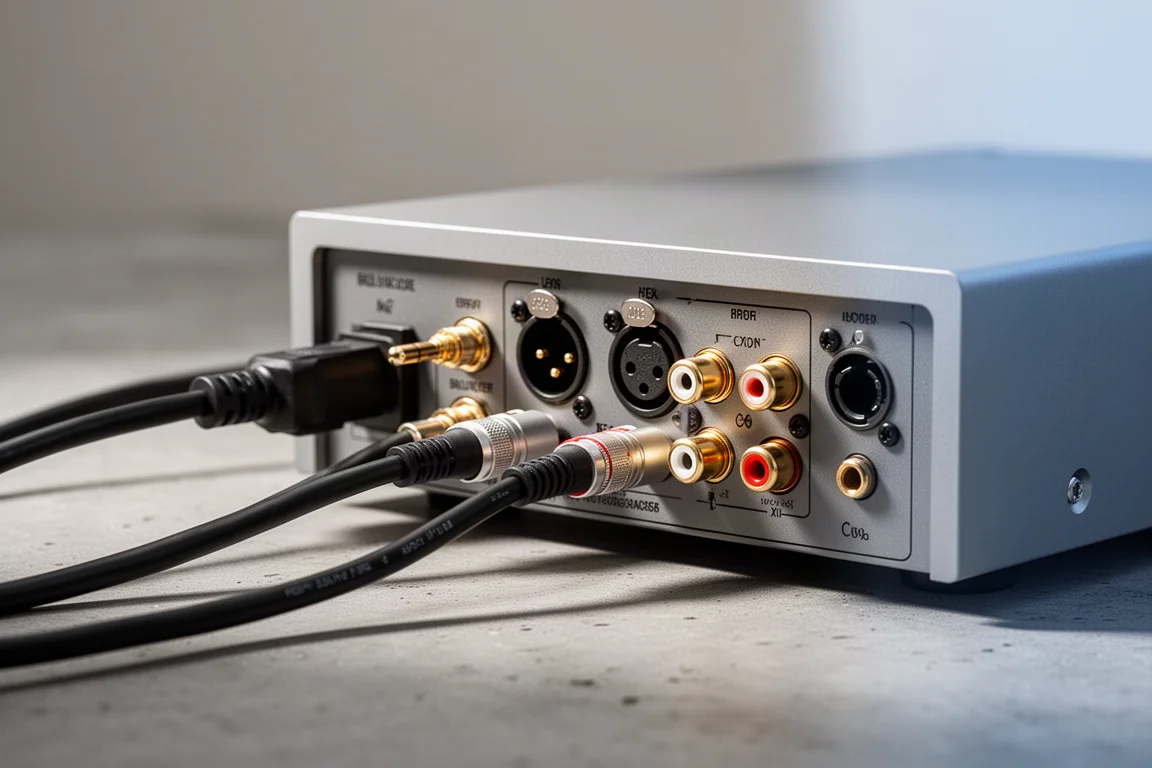
Around the back, the layout is straightforward for a desktop DAC: balanced output, RCA output, coaxial input, optical input, USB input, an IEC power connector, and a master power switch. Inside, the power section is a specially designed discrete component stabilized supply, supported by multiple low-noise stabilized supplies for the analog circuits. There is no linear supply or toroidal transformer in evidence, which is part of why the unit feels lighter than its price suggests.
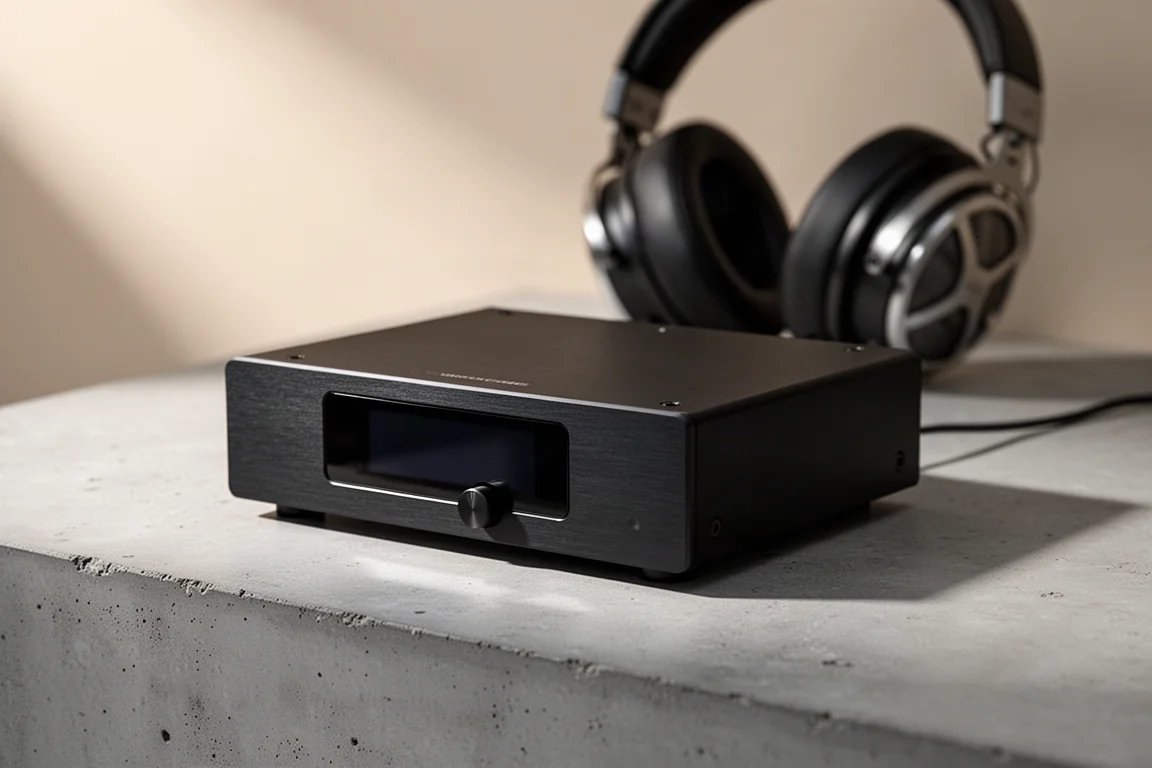
On the front, a small tempered glass display shows input and format information. It is smaller than a business card, but it covers what you actually need. To the right of the display sits a small rotary wheel for menu navigation and three buttons, one of which handles power. Menu access from the front panel is genuinely easy, which matters if you dislike DACs that lock their settings behind a remote. A full-featured remote is included anyway.
Sound Quality and the Two Filter Modes
The D300 sounds better than average, and it steps away from the familiar Saber and AKM presentation. Its measured behaviour is solid too: low jitter across every input, low noise, strong total harmonic distortion figures, and a wide dynamic range.
The headline feature is the pair of filter roll-offs, one fast and one slow. Plenty of DACs advertise several filters and sound colour modes that are nearly impossible to tell apart. Here the difference is audible. The slow roll-off comes across as more natural and easier on the ears, which is welcome on setups that already lean bright. The fast roll-off is a touch less composed but noticeably more exciting, and it is the mode that suits long-term listening in a neutral system.
Testing across open-back planars, dynamic headphones, and a pair of floorstanding speakers driven by monoblock amplifiers showed the same pattern. The two modes shift how the DAC handles attack, percussion, and sibilance rather than merely changing a number on a screen.

Soundstage is good without being the largest available at this price. Front-to-back layering is where the D300 is at its most convincing, giving recordings a sense of depth that budget converters often flatten out.
Bluetooth is included and supports SBC, AAC, aptX, aptX HD, and LDAC. LDAC is the strongest of the group, though a dedicated network streamer will still outperform Bluetooth for focused listening.
Main Strengths
- A distinct Rohm-based sound that avoids the hard, digital edge of some entry-level DACs
- Two filter modes that make an audible difference, effectively offering two voicings in one box
- Balanced and single-ended outputs, plus USB, optical, and coaxial inputs
- Full front-panel menu navigation without needing the remote
- Low jitter, low noise, and strong distortion and dynamic range figures
- Bluetooth with the full set of common codecs, including LDAC
Things to Consider Before Buying
Build quality is the main reservation. The chassis feels light and hollow for a $400 component, and the front rotary wheel is stiff enough that a finger can slip off it in use. The styling is plain, and the finish does not carry the same sense of quality as other DACs in this price bracket.
There is no MQA support, so listeners who depend on that format should look elsewhere. Bluetooth is present but not the strongest reason to buy: a small network streamer typically costs less than a dedicated Bluetooth arrangement and adds AirPlay and better streaming quality.
The display is small, and the overall design is understated to the point of being forgettable. None of this affects the sound, but it does affect how the product feels day to day at this price.
Where It Fits in the Market
The D300’s strongest argument is simplicity. Instead of a long list of modes that few owners ever touch, it offers two filter options that owners will actually use, and that is a more useful form of flexibility than a crowded menu.
Value is the sticking point. At $400, the D300 competes with better-finished converters, including other models from the same brand that feel more substantial in the hand. A price closer to $250 or $300 would change the calculation considerably.
Against the Geshelli Labs J2, an AKM-based converter, the D300 gives up some ground, with the J2 coming across as more dynamic and better balanced, offering cleaner vocals through the midrange and more bass weight and clarity without any adjustment. The D300 answers with its front-to-back layering and the practical value of its two filter modes.
Buying Advice
The D300 is worth buying if you want a converter that sounds different from the mainstream and you value being able to shift its character on the fly. Owners of bright headphones or forward speakers will get the most from the slow filter, while listeners with neutral gear will likely settle on the fast mode and leave it there.
It is a harder recommendation at $400. The sound is good and the two-voice design is genuinely useful, but the chassis does not feel like a $400 product, and there are better-finished options in the same bracket. Buyers who care most about build and finish should compare carefully before committing, while buyers who care most about a distinct and adjustable sound will find the D300 delivers something the alternatives do not.
If the price moves toward $250 or $300, the balance shifts in the D300’s favour and it becomes an easy recommendation for anyone curious about Rohm-based conversion.
Conclusion
The SMSL D300 is a well-executed departure from the standard chip DAC formula. Its Rohm converter gives it a character of its own, the two filter roll-offs are meaningfully different, and the input and output selection covers a typical desktop system. The reservations are about feel and price rather than sound: a light, hollow chassis and a stiff front dial sit awkwardly on a $400 product.
For listeners who want a DAC that does not sound like every other DAC, and who will use the filter modes rather than ignore them, the D300 makes a compelling case. For everyone else, the value question is harder to answer at full price.
Product link
View more details for SMSL D300
This product is mentioned in the review. Check the specifications, options, and compatibility before buying.
View more details for SMSL D300Further reading
Related Reviews
DACs
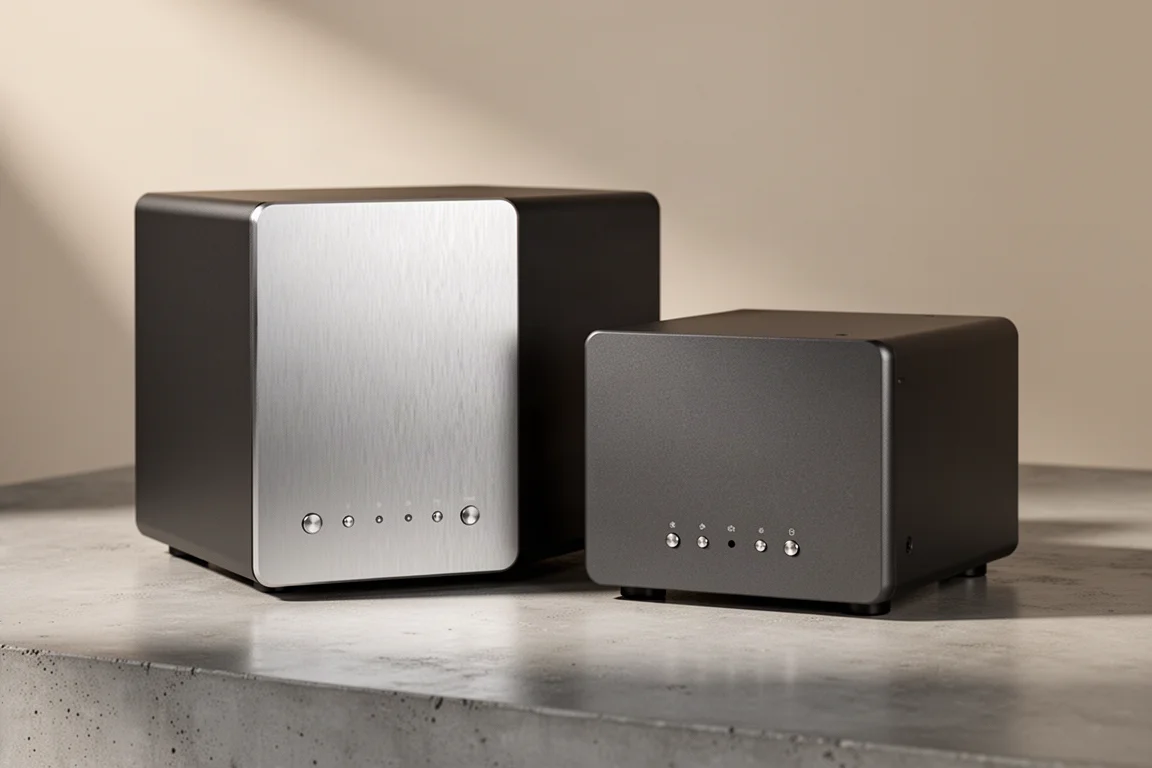
Denafrips Pontus II vs Ares II: Which R2R DAC Fits Your System?
A practical comparison of two Denafrips R2R converters: what the Pontus II adds over the Ares II, and which one makes more sense for a typical system.
DACs
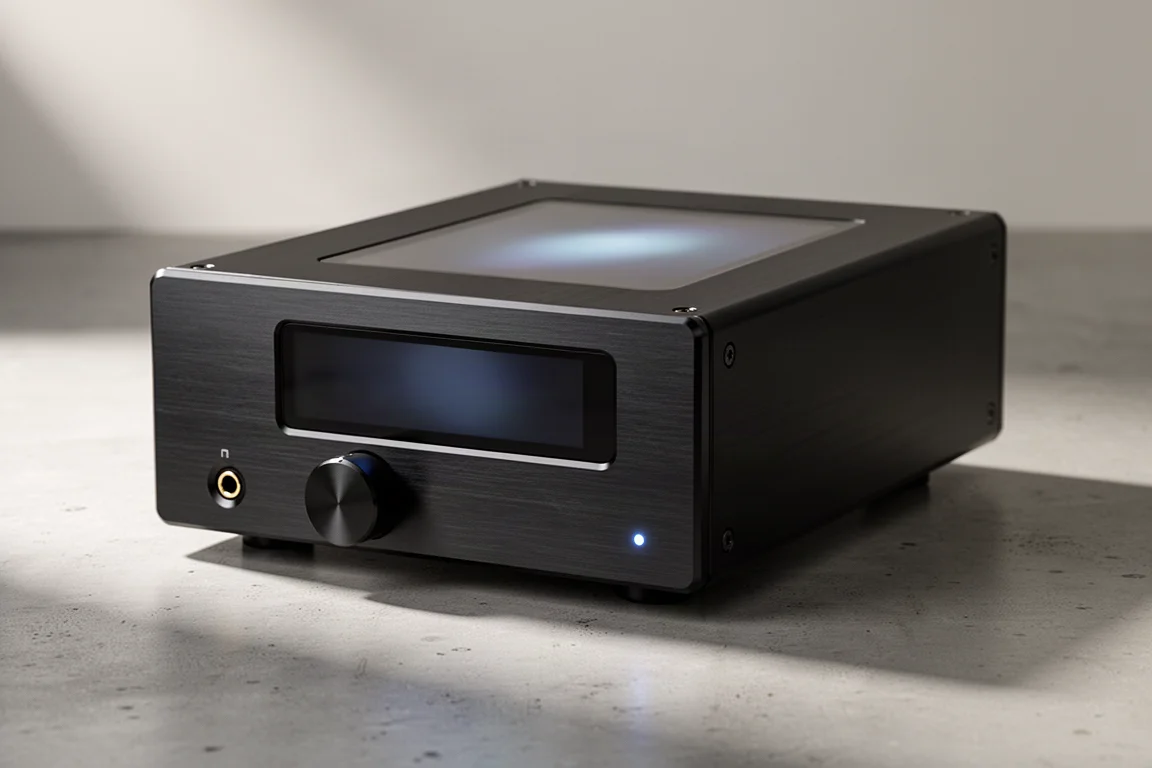
Eversolo DAC-Z10 Review: A Feature-Packed DAC and Preamp in One Box
A close look at the Eversolo DAC-Z10, a $1,980 converter and preamp with a configurable touch display, a very wide input selection, and refined sound.
DACs
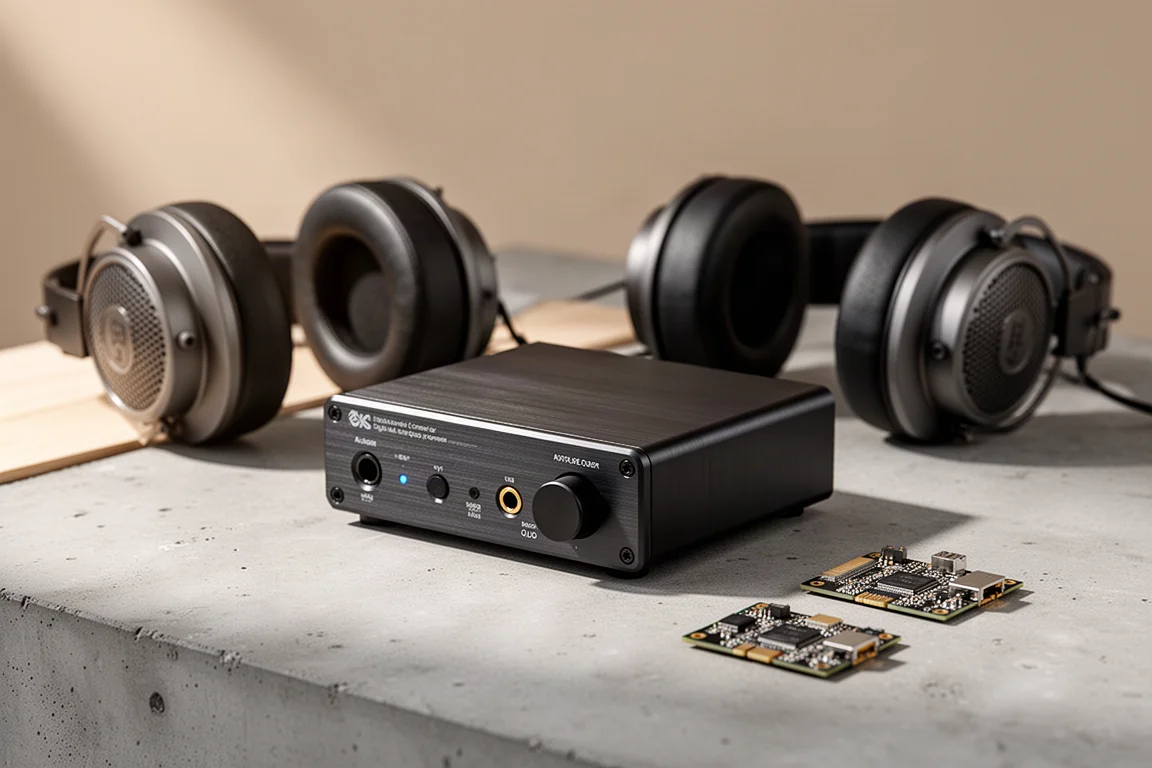
Geshelli Labs Torque DAC Review: A Modular Converter That Changes With Your System
A close look at the Geshelli Labs Torque, a US-made modular DAC that lets you swap converter boards and output modules instead of replacing the whole unit.