DACs
Geshelli Labs Torque DAC Review: A Modular Converter That Changes With Your System
A close look at the Geshelli Labs Torque, a US-made modular DAC that lets you swap converter boards and output modules instead of replacing the whole unit.
Introduction
Streaming now accounts for roughly 84 percent of music revenue, and every one of those streams has to pass through a digital-to-analog converter. DACs live inside laptops, televisions, phones and headphones, but the ones built into everyday devices are usually inexpensive parts added as an afterthought rather than chosen for how music should sound.
The Geshelli Labs Torque takes the opposite approach. Rather than locking you into a single converter chip for the life of the product, it is built around swappable DAC modules, so the character of the conversion can change as your system, your headphones or your taste changes.
That idea is simple, and it is the main reason this converter is worth a closer look. This article covers how the modular design works in practice, where the Torque stands out, and what to weigh before placing an order.
Who This DAC Is For
The Torque suits listeners who already have a desktop amplifier or headphone setup they like, and who want to explore how different converter designs affect the sound without buying and selling a whole new converter each time.
It also makes sense for anyone who has watched converter technology move quickly and would rather not replace an entire unit when a new chip, or a different flavour of conversion, becomes appealing. With the Torque, the enclosure, the power supply arrangement and the rest of your chain stay in place. Only the module changes.
If you want a single box that you buy once, set up and never think about again, a simpler fixed-design DAC will do the job. The Torque rewards listeners who like having options.
How the Modular Design Works
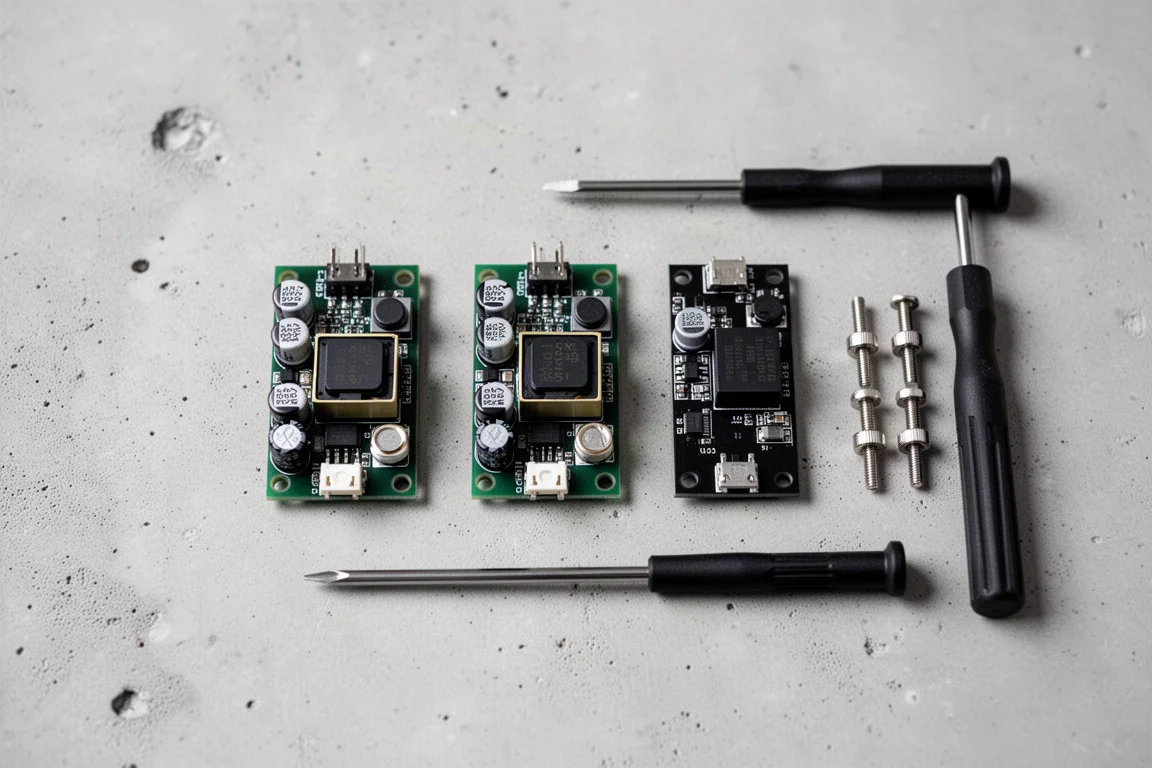
The Torque is sold as one unit, and the converter itself lives on a module that you specify when you order. Each module carries its own internal power supply, so the board you receive is a self-contained converter rather than a chip sitting on a shared board.
Module options include an R2R multibit design that uses old-stock chips, along with AKM 4499, AKM 4493, Sabre and Burr Brown options. Because the boards are modular, changing your mind later means buying a new module rather than a new converter.
The comparison the design invites is a turntable with a removable headshell. You keep the deck, the arm and the rest of the system, and you change only the part that shapes the sound.
Output modules work the same way. If your needs change, you can add outputs, including an additional set of RCA connections, without replacing the converter.
It is worth understanding why the module matters so much. Across converter designs, the analog output stage and the implementation around the chip often shape the sound more than the chip’s specification sheet does. Op-amps differ audibly, power supply noise matters because converter chips work with very low signal levels, and clock accuracy determines when samples are converted, which is where jitter and timing errors enter the picture. A modular design puts those choices in your hands instead of sealing them inside a box.
Main Strengths
The clearest strength is choice. An R2R multibit module connects the Torque to the lineage of early CD players, where laser-trimmed multibit chips earned a strong reputation for linearity. At the other end of the character spectrum, the Burr Brown module is warm and forgiving, which helps with punk rock and early 1980s metal that was not recorded or mastered especially well.
Second, the design saves money over time in a specific way. The usual pattern in this hobby is to buy a converter, hear something new, and then buy another converter. With the Torque, a change of direction costs a board rather than a whole component, and the enclosure and power supply arrangement are reused.
Third, the product is made by a small, family-run company based in Florida that keeps manufacturing in-house instead of outsourcing production in large batches. That vertical integration means the company can design, prototype and put a new product into production within roughly a week, which is a real advantage when converter chip technology moves and older designs can still be refined. The R2R module in particular draws on old-stock chips that date back to the era of those early multibit players.
Things to Consider Before Buying
Demand is the first practical consideration. Production was running roughly six to eight weeks behind, and the company had signalled that it may cap orders so it can look after the customers it already has. If the design appeals, the ordering window is worth watching.
Second, modularity spreads cost rather than removing it. Each additional module is a separate purchase, so the savings appear over time, and only if you genuinely intend to change modules.
Third, module selection deserves real thought, because that is where the character of the sound comes from. A warm, forgiving module flatters rough recordings. A multibit R2R module appeals to listeners who want that older-school presentation. Matching the first module to what you actually listen to matters more than chasing a specification number.
That last point is worth expanding. Measurement charts are useful, but they are not a complete guide to enjoyment. Even-order harmonics can make a converter measure worse while sounding better to many listeners, and character in a converter is largely controlled distortion. The design that measures best is not automatically the design you will prefer.
Buying Advice
Buy the Torque if the idea of changing converter character over time appeals to you, and if you would rather invest once in an enclosure and a power supply arrangement than repeatedly in complete converters. It is a strong fit for a desktop headphone system where the amplifier and headphones are already settled and the converter is the remaining variable.
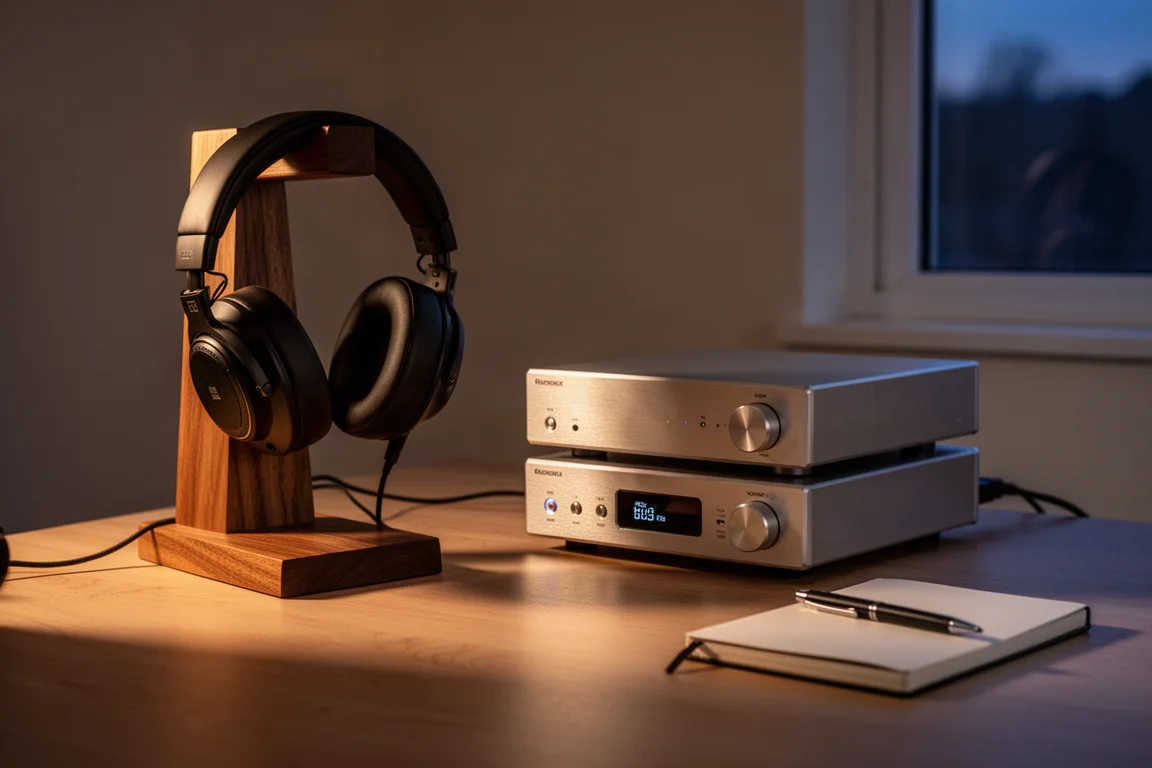
Choose your first module around your library. If a lot of your music is rough around the edges, the warm Burr Brown option is the sensible starting point. If you are drawn to the multibit sound of early digital players, the R2R module is the natural entry point. The remaining options exist for listeners who want to explore different presentations.
Then be patient and be ready to move. With production running six to eight weeks behind and orders potentially capped, planning ahead is part of the purchase.
Conclusion
The Geshelli Labs Torque is interesting because it changes the question. Instead of asking which converter you should buy, it asks which converter you want right now, and it keeps that answer open. For listeners who enjoy that freedom and are willing to choose a module thoughtfully, it is a distinctive option from a small American maker that clearly cares about the details.
Product link
View more details for Geshelli Labs Torque DAC
This product is mentioned in the review. Check the specifications, options, and compatibility before buying.
View more details for Geshelli Labs Torque DACFurther reading
Related Reviews
DACs
Denafrips Pontus II vs Ares II: Which R2R DAC Fits Your System?
A practical comparison of two Denafrips R2R converters: what the Pontus II adds over the Ares II, and which one makes more sense for a typical system.
DACs
Eversolo DAC-Z10 Review: A Feature-Packed DAC and Preamp in One Box
A close look at the Eversolo DAC-Z10, a $1,980 converter and preamp with a configurable touch display, a very wide input selection, and refined sound.
DACs
Gustard X30 Review: A Delta-Sigma DAC That Narrows the Gap to R2R
A full-width desktop DAC built around four ESS ES9039 Pro chips, a custom filter engine and an oven-controlled clock, with the measured noise floor to match.